News
Buhari, Osinbajo to spend N11.92bn on food, foreign trips

• Vice president Yemi Osinbajo and President Muhammadu Buhari
The offices of the President and Vice-President will spend N11.92bn on local and foreign trips and the presidential air fleet.

The amount also includes N1.58bn earmarked for aircraft maintenance and N1.60bn allocated for the overhaul of the Gulfstream GV and CL605 aircraft engines.
Members of the National Assembly, on the other hand, will get N100bn for constituency projects, which according to the Independent Corrupt Practices and Other Related Offences Commission, have been characterised by corruption.
Sunday PUNCH reports that the President, Major General Muhammadu Buhari (retd.), on Friday presented to a joint session of the National Assembly a budget proposal of N20.51tn for the 2023 fiscal year.

The budget is about N750bn higher than the N19.76tn earlier proposed in the 2023-2025 Medium Term Expenditure Framework and Fiscal Strategy Paper.
An examination of the appropriation bill revealed that the Office of the President will spend N2.49bn on local and foreign trips, while that of the Vice-President will spend N846.61m on the same item.
In the document, the PAF’s budget is categorised under the Office of the National Security Adviser.
Aircraft fuelling will cost the government N250m, purchase of air navigational and defence equipment will gulp N1.50bn, while N650m will go for a new mobile helicopter landing pad.
Bank charges will gulp N36.15m and insurance premium on all 10 aircraft in the fleet is expected to cost N180m.
The Presidency had revealed that the PAF maintains 10 aircraft since the inception of the Buhari regime in May 2015.
These are Boeing Business Jet (Boeing 737-800 or NAF 001), one Gulfstream 550, one Gulfstream V (Gulfstream 500), two Falcons 7X, one Hawker Siddeley 4000, two AgustaWestland AW 139 helicopters and two AgustaWestland AW 101 helicopters.
However, not all of the money will be directly flight-related.
Sunday PUNCH also observed that in the PAF budget, N40.45m was earmarked for the construction and equipping of a new presidential kitchen and crew rest area; N80.50m for the construction and equipping of a fleet defence coordination centre; N120m for the renovation and equipping of the PAF Lagos warehouse; N100.75m for the construction of six units (four-bedroom) for senior officers and road network, and N100.45m for the purchase of “one marauder vehicle for force and assets protection.”
Both offices will also spend a total of N508.71m on foodstuffs and refreshments. The amount stands at N331.79m and N176.92m for the offices of the President and Vice-President, respectively.
Closer comparison of the fiscal budgets for 2022 and 2023 revealed a 54.64 per cent drop in the PAF allocations.
In 2022, for instance, the PAF budget stood at N12.48bn, which is 54.64 per cent higher than the N8.07bn allocated for the 2023 fiscal year.
In the 2022 budget proposal, 22 items were designated as new or ongoing projects. These items amounted to N8.13bn.
In the 2023 proposal, however, only nine items were labelled as new or ongoing, amounting to N3.44bn.
Lawmakers’ constituency projects
Amid scarce resources, the Federal Government has again proposed N100bn as constituency budget for the statutory Zonal Intervention Project, which will be implemented by members of the National Assembly.
Despite the fact that the budget will be largely funded with loans, it was observed that the allocation for the statutory N100bn constituency projects was not reduced.
This means that the Federal Government in six years had spent over N600bn on lawmakers’ constituency projects.
There have been controversies over the execution of constituency projects by lawmakers with the President also condemning the abuse of the allocation.
Buhari had said, “It is on record that in the past 10 years, N1tn has been appropriated for constituency projects, yet the impact of such huge spending on the lives and welfare of ordinary Nigerians can hardly be seen.”
The allocation for the renovation of the National Assembly complex was not expressly stated, but it was categorised under government buildings with N1.7bn allocated.
During an oversight of the National Assembly complex renovation work, the Minister of the Federal Capital Territory, Muhammad Bello, had hinted that N21.029bn was needed to complete the rehabilitation.
Varsity lecturers’ salaries
Meanwhile, the government will be spending a total of N299.8bn on salaries and wages of lecturers and other categories of workers in federal universities next year.
The figure does not include the amount that will be paid as salaries to lecturers and workers in inter-university centres such as the Nigerian French Language Village; the Arabic language Village, Borno; National Institute for Nigerian Languages; and the International Centre for Biotechnology, University of Nigeria, Nsukka.
Our correspondents discovered that all the federal universities would spend nothing less than N6.5bn on electricity charges and generator fuelling.
But experts in the sector, including a former Deputy Vice-chancellor of the University of Uyo, Prof Ini Uko, noted that there was a need for the government and other stakeholders to develop alternate funding plans for Nigerian universities so as to remove the strain on the government and better the situation of things in the university system.
According to the 2023 appropriation bill, lecturers and workers in federal universities, including the National Open University of Nigeria, will earn N299,824,662,756 as salaries and wages.
In the breakdown, the University of Nigeria, Nsukka will get the highest amount of N21,245,020,967; the Ahmadu Bello University, Zaria, follows with N18,106,769,124.
University of Benin will receive N14,708,298,696; University of Lagos, N12,109,993,909; University of Ibadan, N13,698,057,825; and University of Calabar, N16,163,662,566.
Others are University of Ilorin, N8,470,227,623; University of Port Harcourt, N10,693,373,602; Federal University of Technology, Owerri, N10,468,542,426; and University of Uyo, N8,845,618,115.
Some of the universities with the lowest wages and salaries include Federal University of Technology Ikot-Abasi, with N912,061,591; David Umahi Federal University of Medical Sciences, N1,207,502,124; and Federal University of Health Sciences, Otukpo, N1,418,218,616, among others.
Further analysis of the budget document revealed that the federal universities would spend nothing less than N6.5bn on electricity and generator fuelling.
The University of Lagos will spend N1.4bn on electricity charges; ABU, N1.04bn; and UI, N60m.
The Nigerian Maritime University will be allocated N80m for plant/generator fuelling; while Bayero University, Kano, will get N89.1m for the same purpose.
Uko said, “Let the students be made to pay something more than they are paying now so that the universities can run without ASUU shouting again.
“Let all the stakeholders sit down and decide how we can run the system properly, otherwise what will happen later, especially now that ASUU will no longer talk again; our people here are saying they will no longer complain about the ways universities are being run again.
“Let the government sit down and decide the role they want to play and the role the parents should also play. For the poor parents and students, let there be a window for them in terms of loan schemes; if not, we will be in for something very funny. With the way new universities are also being added, we need to work more.
“But if the government is insisting that they want to fund the universities 100 per cent, they must set aside a trust fund like the one in Norway, which has a trust fund where the crude oil earnings go into. So, we need to put preparations in place to make the way we run our universities sustainable.”
Another educationist, Dr Dipo Awojide, said, “The model for funding the higher education sector that we have used since the 1980s has largely failed. It has not been sustainable and this is one of the reasons the Academic Staff Union of Universities has gone on strike repeatedly in the last 40 years.
“We need to do things differently going forward. Full autonomy for all our federal universities should be considered. Investments in real estate, grants from the government, philanthropy from individuals and industry partners, endowment from alumni, research grants and tuition from students are different revenue generating sources that can be considered by all federal universities in Nigeria.”
But a professor at the Adekunle Ajasin University, Akungba, Victor Olumekun, disagreed with Uko and Awojide.
“I am never in support of the government abdicating its responsibility to the nation. If you don’t spend on education for national development, what else? Funding of education by the government must be a priority,” Olumekun stated.
Nigeria Air’s budget
Meanwhile, the national carrier, Nigeria Air, will gulp about N1.3bn in the 2023 fiscal year.
The details of the Appropriation Bill indicated that the working capital for the establishment would cost N700m; the establishment of the national carrier would cost N400m, while the consultancy for the establishment of the carrier would gulp N200m.
The Minister of Aviation, Hadi Sirika, announced in September that Ethiopian Airlines Consortium was selected as the preferred bidder after a careful, detailed and the Infrastructure Concession Regulatory Commission-governed selection process.
He said Ethiopian Airlines would own 49 per cent; a consortium of three Nigerian investors, MRS, SAHCO and the Nigerian Sovereign Fund, 46 per cent; while the Federal Government would own the remaining five per cent. (PUNCH)




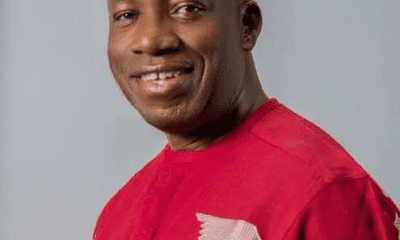



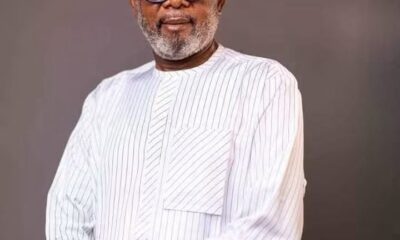

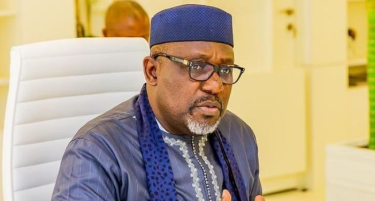
Former Imo State Governor, Senator Rochas Okorocha, was arrested by the Nigeria Police Force (NPF) on Monday night.
The Nigeria Police Force Public Relations Officer, CSP Aniete Iniedu, confirmed the development to Channels Television.
Okorocha, who was arrested at REIZ Continental Hotel in central Abuja, was, however, released on bail by the NPF following an hour of interrogation over allegations of criminal conspiracy, forgery and impersonation.
CSP Iniedu, who confirmed the arrest and subsequent release on bail to our correspondent, noted that the former governor was asked to return to the Force Headquarters on Tuesday for further interrogation as investigations into the allegations continue.
The arrest reportedly followed Okorocha’s failure to honour previous police invitations in connection with the ongoing investigation.
He was initially invited to the Force Headquarters on September 2, but the appointment was rescheduled to September 8 at the request of his lawyers, a date he reportedly failed to honour.
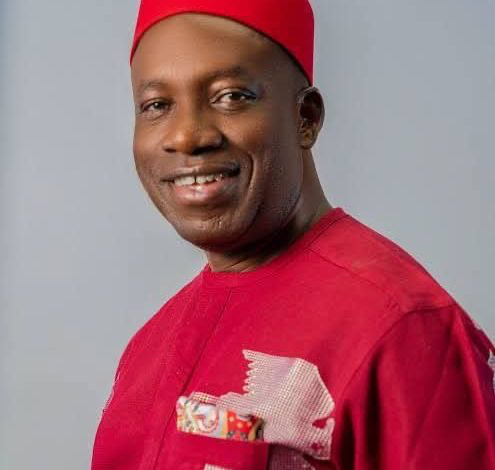
Anambra State Governor, Prof. Chukwuma Soludo, has been appointed a member of the All Progressives Congress (APC) 2027 Presidential Campaign Council list released last night.
This is despite the fact that he is the National Leader of the opposition All Progressives Grand Alliance (APGA).
Similarly, Federal Capital Territory (FCT) Minister Nyesom Wike, the National Leader of the opposition Peoples Democratic Party (PDP) and Osun State Governor, Senator Ademola Adeleke of the opposition Accord Party (AP), are on the expanded and all-inclusive team headed by President Bola Ahmed Tinubu.
Other members include Presidential Adviser on Policy and Coordination, Hadiza Bala Usman, former Ogun State Governor Ibikunle Amosun, former Lagos State Governor Akinwunmi Ambode, Aviation Minister Festus Keyamo, and former House of Representatives member Patrick Obahiagbon.
Also named as members are former Osun APC governorship candidate Bola Oyebamiji, former National Legal Advisers Dr. Muiz Banire and Babatunde Ogala, Chief Ayiri Emami, Victor Giadom, Magnus Abe, and former Ogun State Governor Gbenga Daniel.
The list, according to a report by The Nation, reflects inter-party cooperation and harmony based on the shared vision of propelling the country to the horizon of progress.
The report quoted a statement by APC National Secretary, Senator Ajibola Basiru, as saying that the campaign council will be inaugurated tomorrow in Abuja.
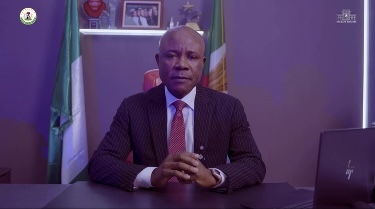
Enugu State Governor, Dr Peter Mbah, has called for a thorough and impartial police investigation into the recent violence surrounding a political gathering in the state, assuring that anyone found responsible will face the law regardless of political affiliation.
Mbah, in an address to the people of Enugu State, expressed concern over reports of violence, particularly a shooting incident that left a citizen injured.
The governor said his immediate concern was the welfare of those injured, residents who experienced fear during the incident, and families affected by the violence.
He assured the victims and affected residents that their safety and well-being remained a priority for his administration.
“I know how much our people value the peace and security we have worked so hard to establish in Enugu. Incidents such as these cause anxiety and deserve our full attention,” the governor said.
Mbah stressed that every citizen, irrespective of political affiliation, must be able to exercise their political rights without fear, intimidation or violence.
He reiterated the state government’s commitment to protecting lives, upholding the law and ensuring that justice was served without favour.
The governor also stated that, in view of the preliminary findings regarding the incident, he expected the police to conduct a comprehensive and impartial investigation to establish the circumstances surrounding the violence and identify those responsible.
According to him, anyone found culpable would be held accountable through the appropriate legal process, irrespective of their political connections.
“The Enugu State Government has made its position clear regarding allegations of involvement in this violence,” Mbah stated, reaffirming his administration’s responsibility to maintain peace and security across the state.
The incident has raised concerns over political tolerance and the safety of citizens participating in political activities in Enugu State.
The governor’s call for an impartial investigation underscores the need for the relevant security agencies to establish the facts surrounding the shooting and ensure that those responsible are brought to justice.
He concluded his address by thanking the people of Enugu State and praying for God’s continued blessings upon the state.
-
 News3 days ago
Why UK varsities are cancelling Nigerians’ admission — Report
-
News2 days ago
2027: Enugu Accuses Opposition of Plotting to Import Armed Thugs, Bandits
-
News2 days ago
Alleged Magistrate Court Order To Arrest Araraume, Okorocha Is Fake, Non-Existent — Imo First Group
-
News2 days ago
Benue APC Delegation Involved in Ghastly Accident En Route to Rally
-
News2 days ago
2027: Over 30,000 Enugu Teachers Endorse Mbah, Tinubu, List Welfare, Increased Education Funding
-
News3 days ago
Why men with braids, tattoos were banned from mosque, Ogun Chief Imam clarifies
-
News3 days ago
Man stabs wife in Anambra community, kills himself with poison
-
News3 days ago
EFCC recovers $105,000 for US-based businesswoman