Education
UK supports Nigeria girls’ education with N45 billion ― UNICEF

The United Kingdom Government has donated $109,196,039.80, which is about N45 billion with the current exchange rate, to support the education of girls and improvement in the livelihood of their parents in Nigeria.
The programme is implemented under the Girls Education Project (GEP3), which commenced in 2012 in the six northern states of Bauchi, Katsina, Niger, Sokoto, Zamfara and Kano (2018). The Project will end in September 2022.

The project, despite the challenges of insecurity, has led to the enrollment of more than 1.3 million girls in primary schools in the two northern states of Sokoto and Zamfara, the United Nations Children’s Fund (UNICEF) has said.
Education Manager, UNICEF Field Office, Miriam Moreso, who made this known at a media dialogue on girls’ education in Sokoto, said this was made possible through the implementation of the Girls Education Project (GEP3) funded by the United Kingdom Agency, Foreign, Commonwealth and Development Fund Office (FCDO), formerly known as DFID.
Moreso noted that the 1.3 million enrolled in primary and Integrated Quranic Schools (IQS, exceeded the target of 1 million in the six states since 2012.

According to her, this was achieved through the community enrollment drives by School-Based Management Committees (SBMCs), and Mothers Associations (MAs), with support from states and local government areas.

Girl Child Education in Nigeria
She lamented that education is seriously underfunded in Nigeria noting that in 2018, only 7 per cent of the national budget was allocated to education, far below the United Nations Educational Scientific and Cultural Organization (UNESCO) recommended 15 to 26 per cent. In 2020 it was 6.7 per cent.
“Nigeria continue to have more out-of-school children than any other country globally. 1 in 3 children are out of school,” she said while adding that though the rates are declining but not at pace with the population.
Globally, she said 129 million girls are out of school, representing 32 million in primary and secondary 97 million, adding that completion rates for girls are lower in low-income countries like Nigeria where less than two-thirds of girls complete primary education and one-third complete lower secondary school.
Speaking on the transition from primary to Secondary education, More so further disclosed that about 1.9million is lost between primary 1 and 6 while 1.4 million is lost between primary 6 and Junior Secondary School (JSS1).
UNICEF Sokoto Chief of Field Office, Maryam Darwesh Said, on her part disclosed that to support efficient and effective governance in Primary Schools and Integrated Quranic schools, 13,094 management committee members (of which 5,353 are women) underwent relevant capacity development pieces of training in Sokoto and Zamfara.
She added that considering the benefits gained from phase 3 of GEP, the sustainability strategy document was developed by both Sokoto and Zamfara states in June 2021 and is now updated in July 2022.
Darwesh said called on the states, to ensure full implementation of the sustainability plan, urging them to take the opportunity of the soon-to-start 2023 budgeting process to capture the required state funding contributions for UNICEF-supported interventions and to provide strategic state resources for the sustainability to all gains obtained so far in the education sector from GEP3 and by and large from the partnership with UNICEF.
Head Teacher of Ali Fodio Primary School, Bodinga, Sokoto State, Malam Abdullahi Abubakar, commended UNICEF for the implementation of the GEP3 programme in his school, which he said has led to massive enrollment of girls and retention.
He told a team of journalists and UNICEF officials on a field trip to evaluate the impact of the project in his school that right now some classes have more girls than boys. Abubakar disclosed further that the school has a total population of 4257 with 1962 that are female.
He called on the State and Federal governments to ensure the sustainability of the project, saying the cash transfer aspect of the programme has really helped to retain the pupils as well as improve the economic well-being of the families of the pupils benefitting from the scheme.



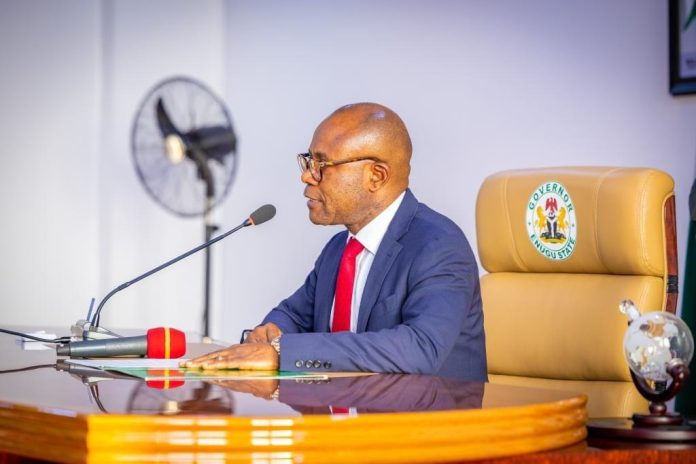
The approval was contained in a letter signed by the Secretary to the Enugu State Government, Prof. Chidiebere Onyia, dated August 11, 2026, and addressed to the Accountant General of the state.
According to the letter, the approval followed a report submitted by the Joint Action Committee on Trade Union (JACTU) in ESUT over issues surrounding a one-month strike ultimatum issued by the university’s unions.
The government also approved an across-the-board increase of N50,000 for all other categories of staff of the university.
The SSG directed the Accountant General to fully implement the approval of Governor Peter Ndubuisi Mbah.
The directive referenced an earlier Government House letter dated August 7, 2026, on the matter.
The letter, which was copied to the Vice-Chancellor of ESUT, Professor Aloysius-Michaels Okolie, for information and necessary action, is expected to take effect from September 1, 2026.
Education
Digital Economy Boost: NCC Leases Digital Industrial Park, Learning Centre to Enugu State Gov’t

…NCC’s CEO lauds Mbah’s Smart Schools, infrastructural, digital capacity initiatives
In a major boost to President Bola Tinubu’s digital economy agenda, the Nigerian Communications Commission (NCC) and the Enugu State Government, on Tuesday, sealed a strategic 15-year lease of the agency’s Digital Industrial Park and Learning Centre to the Enugu State Government.
The move would see the Enugu State Government take over and optimise the facilities located in the state capital as the Enugu Talent City and Artificial Intelligence (AI) Institute in line with the digital economy drive of the Governor Peter Mbah Administration.
Speaking during the lease agreement signing ceremony at Government House, Enugu, the Executive Vice Chairman/CEO of NCC, Dr. Aminu Maida, said the arrangement fully aligned with the Renewed Hope Agenda of the President Bola Tinubu Administration, and its ambition to grow Nigeria into a $1 trillion economy driven by productivity, innovation and private sector growth.

Maida stressed that Mbah had shown a clear agenda to build Enugu State into a digital economic powerhouse through deliberate investment in education, infrastructure, innovation and digital capacity, maintaining that the Mbah Administration was well positioned to advance the objectives for which these facilities were established.
“Our expectation is that this partnership will support Enugu’s ambition to become a leading destination for digital services, artificial intelligence, startup incubation, outsourcing, research and technology-enabled enterprise.
“We also expect these facilities to become spaces where young people acquire relevant skills, entrepreneurs transform ideas into viable businesses and local enterprises connect to opportunities beyond Enugu and Nigeria.
“These facilities were conceived as platforms for innovation, entrepreneurship and human capital development. They were designed to deepen digital skills, support startups, attract investment, create jobs and position Nigeria as a competitive destination for business process outsourcing, knowledge process outsourcing and other technology-enabled services.

“In essence, they were built not merely as physical assets, but as platforms for developing the people and enterprises that will power Nigeria’s digital economy.
“So, for us at the NCC, completing physical infrastructure is only the beginning. Buildings alone do not create innovation. People do. Ideas do. Entrepreneurs do. And partnerships bring all these elements together,” he said.
The NCC boss also commended Governor Mbah’s investment in Smart Green Schools, saying he was building an economy prepared for the future.
“Physical infrastructure is essential to development, but infrastructure alone cannot deliver lasting prosperity. This is what makes the Smart Green Schools initiative significant. It recognises that preparing our children for tomorrow must begin today. Technology-enabled schools, digital learning facilities, robotics and artificial intelligence laboratories demonstrate an understanding that education must evolve alongside technology. That is leadership with the future in mind.
“Investment in education and skills raises productivity, expands economic opportunity and strengthens the ability of individuals and businesses to create value.
“This is even more important today. Artificial Intelligence is reshaping industries. Automation is changing the nature of work. Digital technologies are transforming how governments serve citizens and how businesses operate,” he concluded.
Speaking, Governor Peter Mbah commended President Tinubu for recognising the centrality of the digital economy to the $1 trillion economy he seeks to build, as well as for understanding that much of that growth would come from the states.
He noted that AI would contribute about $20 trillion to the global economy by 2030, saying, “It is not a space you want your young ones to be missing.”
“We also believe that our talents, our brightest talents, should not be exported in person. We believe that they should export their talents outside the country from here, and that is why we see huge benefits in these assets in terms of job creation and opportunities for our young people.
“We are also looking at transforming the Digital Bridge Institute into a world-class AI institute. We will also transform the Digital Industrial Park. If you have followed the news, we have already taken steps, working with some teams from Qatar, to make sure that it becomes a certification centre for AI on the continent.
He said the NCC would not regret its decision to temporarily hand over the facilities to Enugu State.
“I am sure that a few years down the line, we can come back here and be very proud of the decision we made today to activate these assets and to make sure that they are productive,” he concluded.
Earlier in his remarks, the Special Adviser to the Enugu State Governor on Digital Economy and Micro, Small and Medium Scale Enterprises (MSMEs), Arinze Chilo-Ofia, thanked the FG and NCC for the confidence reposed in Enugu State to activate and optimise the two strategic assets and ensure the realisation of the objectives for which they were conceived and built.

The Joint Admissions and Matriculation Board (JAMB) has announced the sales of registration forms for the 2026 Unified Tertiary Matriculation Examination (UTME) and Direct Entry (DE) admissions for the 2026/2027 academic session.
JAMB stated this in a post on its X handle on Tuesday night.
“UTME is open to suitably qualified candidates for admission into Nigerian tertiary institutions for the 2026/2027 academic session,” the photo statement signed by its Registrar, Ishaq Oloyede, read.

“Registration commences January 2026 and closes March 2026 (exact dates to be announced by JAMB),” the post read, disclosing that the UTME examination is scheduled to hold in April 2026.
“The period of registration for UTME candidates, including those from foreign countries, is from Monday, 26th January, 2026 to Saturday, 28th February, 2026,” the statement read in part.`
According to JAMB, candidates must have obtained their National Identification Number (NIN) before registration.
The agency said, “Only candidates who will not be less than 16 years old by 30th September, 2026 are generally eligible to apply/be considered.”
But it clarified that, “Candidates less than 16 years old by 30th September, 2026 will have to undergo an intensive evaluation to determine their eligibility for a waiver. Such must have scored not less than 80% in each of UTME/ALEVEL, PUTME, SSCE, and in the exceptional candidate assessment.”
“The UTME results of the underage candidates will be released only at the conclusion of the complete evaluation process,” JAMB said.
For Direct Entry candidates, the “Sale of 2026 Direct Entry (DE) application documents and E-PIN vending would commence from Monday, 2nd March, 2026, and end by Saturday, 25th April, 2026, and would only be at the Board’s State and Zonal Offices.”
“The 2026 UTME will commence on Thursday, 16th April, 2026 and end on Saturday, 25th April, 2026,” JAMB wrote. “Mock-UTME (optional) shall hold on Saturday, March 28th, 2026.”
-
 News23 hours ago
NOUN bursar shot dead in Zamfara
-
News1 day ago
Gumi took my Moroccan wife from me, Kaduna man alleges
-
News1 day ago
Enugu CP receives Best Crime Bursting police chief award , SP Ndukwe best PRO
-
Health2 days ago
My wife had headaches from oranges preserved with chemicals – Osinbajo
-
News1 day ago
Atiku’s lobbyist deletes Trump appointment claim as White House keeps mum
-
News2 days ago
Enugu Youths unite against terror, declare support for FG, Mbah’s War on Insecurity