News
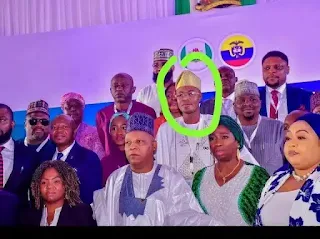
PFIPC Scandal: Dalung raises fresh alarm over State House Access, shares photo of Adeyemi with Shettima, other officials

….alleges ₦200 million bribe demand by lawmakers
Former Minister of Youth and Sports Development, Solomon Dalung, has questioned how Adeniyi Adeyemi, the self-acclaimed Director-General of the alleged non-existent Presidential Foreign Intervention Promotion Council (PFIPC), gained access to the Presidential Villa and senior government officials.
Dalung raised the concern in a post on his 𝕏 account, where he shared a photograph showing Adeyemi alongside Vice President Kashim Shettima and other top government officials.

Reacting to the image, the former minister queried the level of access allegedly enjoyed by Adeyemi despite claims that the agency he represented did not exist.
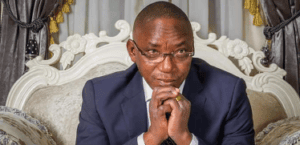
Solomon Dalung
“What can you see? Should we also ask how the DG of the fake Federal Agency accessed the State House and enjoyed this level of proximity to the seat of power?” Dalung wrote.

His comments come after Adeyemi was arrested following a warrant issued by Justice Mohammed Umar of the Federal High Court in Abuja.
Adeyemi is expected to face an eight-count charge in suit No. FHC/ABJ/CR/562/2025 bordering on alleged forgery, fraud and impersonation.
Although the case was listed for arraignment, the defendant did not appear in court despite his lawyer, Genesis Francis, announcing his appearance before the judge.
Dalung alleges ₦200 million bribe demand
In a separate development, Dalung has alleged that members of the National Assembly demanded a ₦200 million bribe from him during his first budget defence as minister under the administration of former President Muhammadu Buhari.
Speaking in a statement reflecting on his time in office, the former minister described the incident as one of his earliest encounters with what he termed entrenched corruption within Nigeria’s public institutions.
According to Dalung, the alleged demand was made shortly after he presented the budget proposal of the Ministry of Youth and Sports Development before lawmakers.
He claimed members of the committee requested ₦200 million despite the ministry having no budgetary provision for such a payment.
“I looked through the budget documents before me and replied that I had not seen any budget line titled ‘bribe.’ I told the committee that since no such provision existed in the ministry’s appropriation, I had no idea where they expected me to obtain ₦200 million,” he said.
Dalung alleged that his response effectively ended his participation in the meeting.
According to him, lawmakers subsequently excused him from the session and informed him that further discussions would continue with the ministry’s Permanent Secretary.
“They simply told me, ‘Okay, Mr Minister, you are excused. We will take it up with the Permanent Secretary,'” he recalled.
The former minister further claimed that after the incident, his involvement in subsequent budget defence exercises was significantly reduced.
He said he was thereafter only required to present a general overview of the ministry’s budget before being excused, while detailed deliberations allegedly continued behind closed doors between lawmakers and senior ministry officials.
Dalung also alleged that the practice extended beyond the Ministry of Youth and Sports Development.
According to him, some ministers particularly those considered to have close ties with the Presidency allegedly complied with similar demands to facilitate the smooth passage of their budget proposals.
He argued that legislative oversight, which is constitutionally intended to ensure transparency and accountability, had in some instances been transformed into a means of personal enrichment.
Dalung maintained that when oversight responsibilities are influenced by illicit financial interests, accountability in public administration is weakened, public resources are more easily diverted, and citizens’ confidence in government institutions is eroded.
He further claimed that recurring corruption scandals involving ministries, departments and agencies have persisted partly because some institutions entrusted with oversight have allegedly become compromised.











Senator Victor Umeh has challenged former Head of State, General Yakubu Gowon (retd.), to publish a truthful account of the Nigerian Civil War and apologise to the Igbo people, accusing him of distorting history and betraying the Aburi Accord.
Umeh, who represents Anambra Central Senatorial District, made the call while speaking with journalists in Awka, Anambra State, in reaction to Gowon’s recent interview on Arise Television, during which the former military leader blamed the late Biafran leader, Dim Chukwuemeka Odumegwu Ojukwu, for the outbreak of the 30-month conflict.
Gowon also maintained that the war was not targeted at the Igbo people, a position Umeh strongly rejected, describing the former leader’s account as false and capable of reopening old wounds.
The senator urged Gowon to emulate former military Head of State, General Ibrahim Babangida, by documenting his version of events surrounding the war, insisting that Nigerians deserved an accurate account of the circumstances that led to the conflict.
According to Umeh, the war, which ended in 1970, left deep scars on the Igbo people, making it necessary for those who played key roles in the conflict to acknowledge their actions and contribute to genuine national reconciliation.
“We will not allow Gowon to lie or twist history. All that he said are false. At 91, I will not want to join issues with him, except, of course, if he is suffering from dementia. He has not done what he should be doing at this late stage of his life,” Umeh said.
He urged Gowon to use his remaining years to tell Nigerians the truth about the war and help heal the pain suffered by victims and their families.
“The war ended 51 years ago and we have moved on, but for him to come back at 91 years of age and begin to lie is unfortunate, and it means that he is not thinking about how to leave Nigeria in peace,” he said.
Umeh also questioned Gowon’s claim that the war was fought to preserve Nigeria’s unity, arguing that persistent violence and divisions across the country raised questions about the extent to which that objective had been achieved.
He further accused the former Head of State of contributing to political tensions and mistrust between the Igbo and Yoruba, alleging that decisions taken during his administration deepened divisions that continue to affect national cohesion.
The senator also accused Gowon of betraying the Aburi Accord reached with Ojukwu before the war, arguing that the failure to honour the agreement contributed to the outbreak of the conflict.
“What happened after Aburi was a complete betrayal, and the attempt now to rewrite history is an insult to the memory of those who died,” he said.
Umeh maintained that the consequences of the war could not be separated from the experiences of the Igbo people. He alleged that Igbo soldiers were targeted, businesses destroyed, and communities subjected to starvation and marginalisation during the conflict.
He also questioned Gowon’s account of events surrounding the January 1966 coup and the subsequent killing of then Head of State, Major-General Johnson Aguiyi-Ironsi.
Umeh challenged Gowon to explain what he knew about the events and the roles played by other military officers. He specifically referenced retired General Theophilus Danjuma, whom he said was still alive and could provide further insight into the circumstances surrounding Ironsi’s arrest and assassination.
The senator urged Gowon to refrain from making statements he considered provocative and instead publish a detailed account of the war for Nigerians to examine and assess.
“If he wants to say the truth, let him go and write his own book, so that when he is no more, his book will be circulated and he will be judged. Ojukwu is no more to join issues with him,” Umeh said.
He added that an honest account of the conflict would help Nigerians understand the causes of the war, acknowledge the suffering of those affected and promote genuine reconciliation.
Umeh insisted that confronting the historical controversies surrounding the Civil War remained necessary for national healing, warning that attempts to present an account that disregarded the suffering of victims could deepen existing grievances.
News
BREAKING: Tension as Video Shows Islamic Group Members Allegedly Calling for AK-47 to Kill Christians in Enugu, Jos
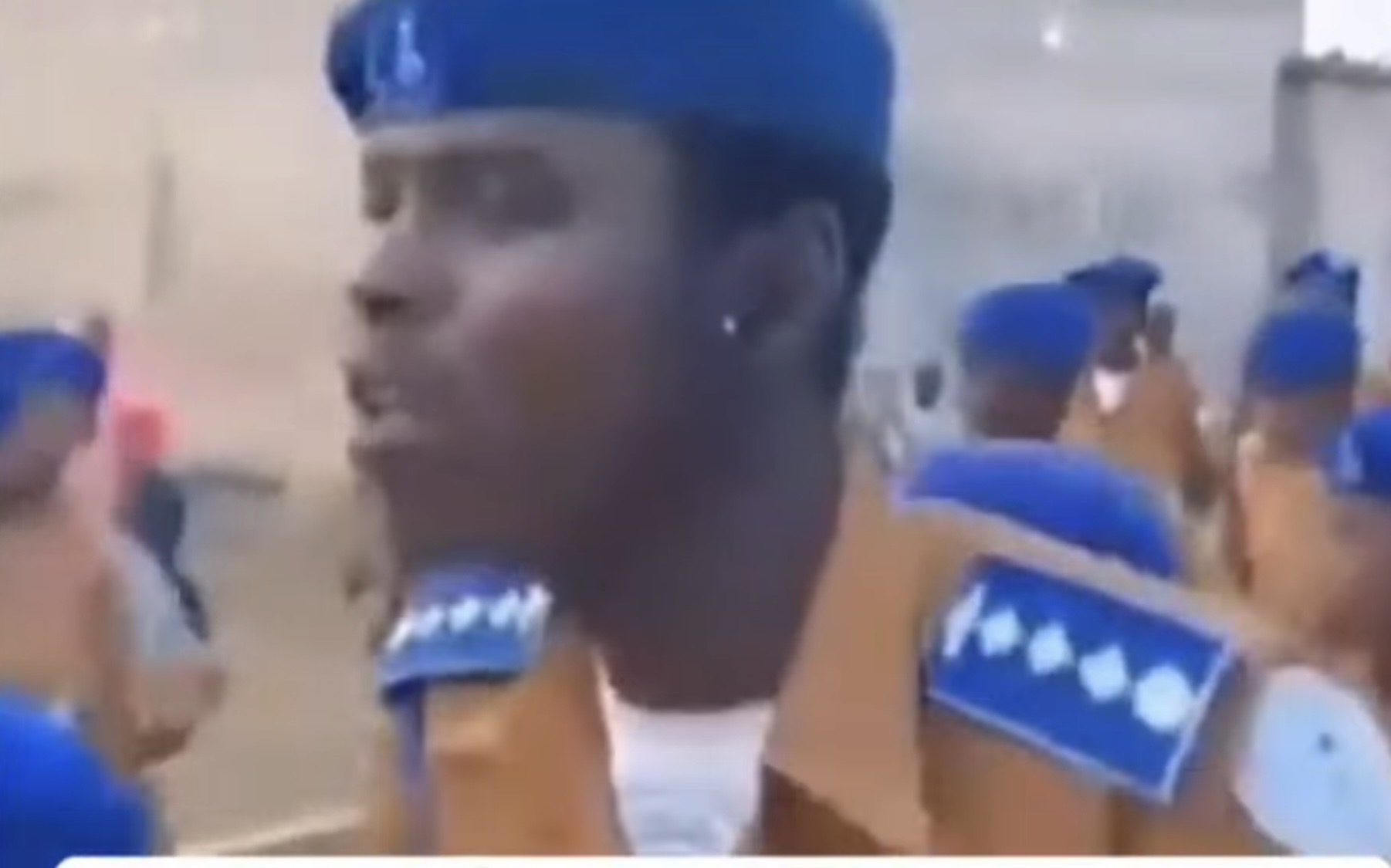
Tension has heightened following the emergence of a viral video purportedly showing members of an Islamic volunteer group chanting lyrics calling for an AK-47 rifle to attack Christians in Enugu and Jos, the Plateau State capital.
The footage, which has sparked outrage and concern on social media, reportedly features members of the Agaji volunteer wing of Jama’atu Izalatil Bid’ah Wa Iqamatus Sunnah (JIBWIS), popularly known as Izala.
The video, shared by counterterrorism expert Zagazola Makama, gained traction on social media, particularly X, on Sunday.
It shows a group of young men dressed in brown uniforms and blue berets, with one of them leading a chant containing violent references to obtaining an AK-47 rifle to attack people described as “infidels” in the two cities.
In one section of the chant, the singer calls for a rifle to enable an individual to travel to Enugu and attack Christians while they are worshipping in church.
“He should be given AK-47. He would then go to Enugu, the land of the infidels. On Sunday, when they are worshipping and clapping, he would then open fire, so that he can kill the infidels,” the lyrics state.
The chant subsequently references Jos, with another call for an AK-47 to attack people described as infidels.
“He asked to be given an AK-47 again, so that he can go to Jos and kill more infidels. That is the training,” the singer says.
The video has triggered widespread concern among Nigerians, with many calling on security agencies to investigate the footage, identify those involved and take appropriate action to prevent any potential threat to public safety.
The references to Enugu and Jos, alongside the explicit calls for armed attacks during Christian worship, have raised concerns about the safety of residents and worshippers in the affected cities.
However, as of the time of filing this report, the governments of Enugu and Plateau states, as well as the relevant security agencies, had yet to issue official statements on the video.
It remains unclear when and where the footage was recorded and whether the individuals featured in it have been identified by security authorities.
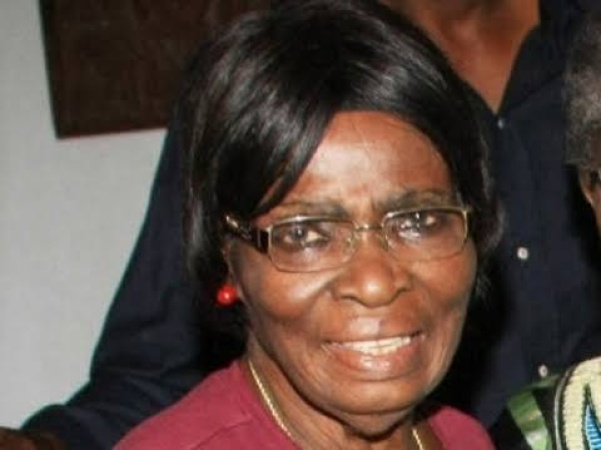
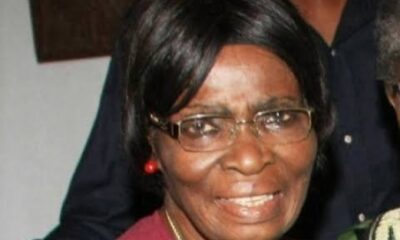
Prof. Kamene Okonjo, matriarch of Umu Obi Obahai Royal Family, mother of Obi Ifechukwude Okonjo ll, traditional ruler of Ogwashi Uku community in Delta has passed on.
The News Agency of Nigeria (NAN) recalls that the matriarch, and mother of the Director- General, World Trade Organisation, Dr Ngozi Okonjo-Iweala, died on Friday at the age of 96.
The late Kamene Okonjo was the beloved wife of late Obi (Prof.) Chukwuka Okonjo, the immediate past traditional ruler of Ogwashi-Uku community, with whom she shared 66 years of marriage.
This is contained in a statement by Chief Ifeakanachukwu Emordi, Palace Secretary of the community on behalf of the royal family on Sunday.
According to the statement, the late Okonjo was an extraordinary woman, whose remarkable life was defined by intellectual brilliance, humility, compassion, dignity and an unwavering commitment to the advancement of humanity.
“An internationally recognised and foremost sociologist, Prof. Kamene Okonjo distinguished herself through her outstanding academic accomplishments, intellectual contributions and lifelong advocacy for women’s rights and empowerment.
“She was a woman of exceptional intellect, yet possessed a rare gentleness of spirit, humility and grace that endeared her to everyone privileged to know her.
“Her achievements transcended the boundaries of Ogwashi-Uku and Nigeria, earning her admiration and respect within academic and intellectual circles internationally.”
The statement added that the late Okonjo represented the very finest qualities of scholarship, womanhood, motherhood and service to society.
“Beyond her considerable professional accomplishments, she was a devoted mother, grandmother, great-grandmother and a cherished pillar of the royal family.
“Her wisdom, kindness, quiet strength and exemplary character will remain an enduring inspiration to generations yet unborn.
“While we mourn her passing, we celebrate a life exceptionally well lived.
“At 96 years, Okonjo left behind an extraordinary legacy of scholarship, service, family values and advocacy for the dignity and advancement of women.
“We take comfort in our Christian faith and the assurance that she is resting peacefully with the Lord, haven completed her earthly journey with grace and distinction,” it said.
The statement said the entire Umu Obi Obahai family extended its deepest and most heartfelt condolences to the Obi of Ogwashi-Uku, her beloved children; Ngozi Okonjo-Iweala, Dr Njideka Okonjo-Udochi, Onyema Okonjo and Chichi Okonjo.
The family also extended their condolences to their spouses, sons and daughters in law, her grandchildren, great-grandchildren and the entire extended Okonjo royal family.
It also enjoined the people of Ogwashi-Uku to join the family in celebrating the extraordinary life and enduring legacy of their remarkable daughter, mother, scholar and matriarch, whose contributions to humanity would never be forgotten. (NAN)
-
 Features2 days ago
Mmesoma Umeorini: When Love Turns Deadly, and a Young Woman Pays With Her Life
-
Features1 day ago
Why Igbos Celebrate New Yam Festival Worldwide: The History, Cultural Significance and Lessons For The Younger Generation
-
News1 day ago
Kogi Police Probe Alleged Murder-Suicide Involving Two Officers
-
News6 hours ago
BREAKING: Tension as Video Shows Islamic Group Members Allegedly Calling for AK-47 to Kill Christians in Enugu, Jos
-
News3 days ago
Mbah: Why We Built 268 Smart Green Schools Across Enugu State
-
News3 days ago
UBA Commences Contempt Proceedings Against WEMPCO Directors over Alleged Disobidence of Court Order
-
News2 days ago
Anambra Police Arrest Suspect Over Murder of 23-Year-Old Woman in Uga
-
News24 hours ago
NCDC Reports Two Suspected Ebola Cases as Contacts Rise to 53