News
Insecurity: Govs back swift establishment of state police

—Say there’s need for state police to be constitutionally aligned with federalism, citizens’ rights
—State attorneys-general to review proposed constitutional amendments, frameworks for state police
The 36 state governors in the country have again thrown their weight behind the immediate establishment of state police, to be constitutionally sound and aligned with federalism and citizens’ rights.
The governors, under the aegis of the Nigeria Governors’ Forum, NGF, also noted the collaborative efforts of other stakeholders, adding that consultation outcomes will strengthen the states’ collective position.

The governors have also reiterated their commitment to ongoing power sector reforms and to strengthen collaboration among stakeholders to expand access to reliable and affordable electricity for Nigerians.
It will be recalled that the House of Representatives on June 11, overwhelmingly voted in favour of a constitutional amendment bill seeking to establish state police across the country, marking a major step in efforts to address Nigeria’s worsening security challenges.
Also, the bill scaled second reading in the Senate on the same day. In the House of Reps, the bill secured the support of 289 of the 290 lawmakers in attendance, while only one member voted against it during plenary.

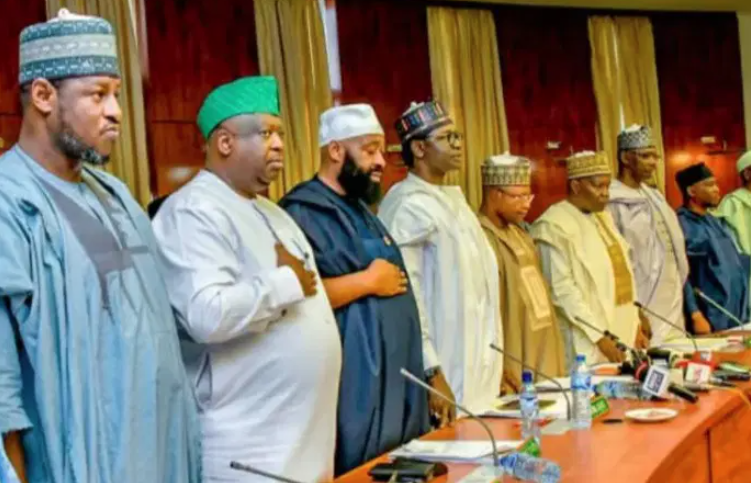
Rising from its second meeting in Abuja from Wednesday to early yesterday, the governors in a communique by NGF Chairman and Kwara State governor, AbdulRahman AbdulRazaq, disclosed that they received a presentation from the Forum’s Secretariat and a delegation of the Attorneys-General of the states on efforts to support establishing state police in Nigeria.
AbdulRazaq disclosed that they also received briefings on a range of federal and development partner proposals and resolved to deepen consultations and coordination between states and national institutions to secure better outcomes for citizens.
According to the governors, they noted a dedicated consultation with the state Attorneys-General to review the proposed constitutional amendments and frameworks.
The governors had in April this year, backed what they described as the proactive development of a state police framework by the secretariat, the umbrella body of the forum, in preparation for the proposed constitutional amendments.
The framework brings out key readiness requirements, including governance structures, financing models, human capital standards, digital systems and oversight mechanisms.
Governors’ resolutions
In a communique read after the meeting by Governor Dapo Abiodun of Ogun State, the Forum said: “We, members of the Nigeria Governors’ Forum at our meeting held today, deliberated on issues affecting the country.
“Following extensive deliberations, the Forum resolved as follows: The Forum received a presentation from the NGF Secretariat and a delegation of the Attorneys-General of the states on efforts to support establishing State Police in Nigeria. It noted a dedicated consultation with the Attorneys-General to review the proposed constitutional amendments and frameworks.
“Governors emphasised the need for the State Police to be constitutionally sound and aligned with federalism and citizens’ rights. The Forum noted the collaborative effort and added that the consultation outcomes would strengthen the states’ collective position.”
The governors have also reiterated their commitment to ongoing power sector reforms and to strengthening collaboration among stakeholders to expand access to reliable and affordable electricity for Nigerians.
According to the Communique, the Forum received a presentation on the National Solar Super-Grid (NSSG) Initiative, a proposal to expand electricity access through large-scale decentralised solar generation integrated with a national high-voltage transmission network.
Reiterate commitment to ongoing power sector reforms
The governors have also reiterated their commitment to ongoing power sector reforms and to strengthening collaboration among stakeholders to expand access to reliable and affordable electricity for Nigerians.
Against this backdrop, the governors noted the initiative’s potential to support industrialisation, improve energy security, strengthen state electricity markets, and accelerate economic growth.
On power, the communique read: “The Forum received a presentation on the National Solar
Super-Grid, NSSG, Initiative, a proposal to expand electricity access through large-scale, decentralised solar generation integrated with a national high-voltage transmission network.
The Forum noted the initiative’s potential to support industrialisation, improve energy security, strengthen state electricity markets, and accelerate economic growth.
“Governors reiterated their commitment to ongoing power sector reforms and to strengthen collaboration among stakeholders to expand access to reliable and affordable electricity for Nigerians.”
National Nutrition 774 Initiative
The governors have also resolved to support the National Nutrition 774 (N-774) Initiative as they reaffirmed their commitment to improving nutrition outcomes and reducing child malnutrition across Nigeria, just as they noted the ongoing work on the National Nutrition Bill and encouraged continued engagement with relevant stakeholders to strengthen the legal and policy framework for nutrition governance.
On nutrition and agriculture, the communique read: “The Forum received a presentation from the Federal Ministry of Budget and Economic Planning on progress under the National Nutrition 774 (N-774) Initiative.
The Forum reaffirmed the governors’ commitment to improving nutrition outcomes and reducing child malnutrition across Nigeria. The Forum also noted the ongoing work on the National Nutrition Bill and encouraged continued engagement with relevant stakeholders to strengthen the legal and policy framework for nutrition governance.
“The Forum received a briefing from the World Bank Country Office on the proposed Country Partnership Framework, CPF, for Nigeria covering the period FY2026–2032; the proposed Nigeria Sustainable Agricultural Value-Chains for Growth, AGROW, Programme, a results-based initiative designed to improve agricultural productivity, strengthen value chains, increase private sector participation, enhance food security, and Early Childhood Development, ECD.›
“The Forum supports ongoing collaboration with the Federal Government, the World Bank, and other stakeholders to ensure successful implementation and deliver benefits to participating states. Governors approved state-specific interventions and stressed the importance of better coordination across sectors like health, nutrition, education, water and sanitation, social protection, and family support.”
Details of proposed constitutional amendments for establishment of State Police
- Establishment of Federal Police and State Police (New Section 214)
- Two distinct police bodies are constitutionally established:
- (a) the Federal Police
- (b) State Police (one per State, established by State law)
The National Assembly must pass an Act prescribing: - Structure, organisation, administration, and powers of the Federal Police
- Framework and guidelines for the establishment of State Police
- State Police cannot commence operational policing until:
- Established by a Law of the State House of Assembly, and
- Certified as meeting national minimum standards (prescribed by an Act of the National Assembly)
- Transitional provision: Until a State Police becomes operational, the Federal Police continues all policing functions in that State. After commencement, the Federal Police handles federal policing functions and may provide assistance to the State Police.
- Responsibilities and Non-Interference (Section 214)
Federal Police is responsible for: - Maintenance of public security, public order, and security of persons/property throughout the Federation (to the extent provided by the Constitution or National Assembly Act).
- Similar functions within a State to the extent the State has legislative power under the Constitution.
Key safeguard against federal overreach (Section 214(6)):
The Federal Police shall not interfere with State Police operations or a State’s internal security affairs except in these limited cases: - To contain serious threats where there is a complete breakdown of law and order and the State Police is unable to respond.
When the Governor requests intervention - When a State Police is unable to function due to administrative, financial, or other problems.
Any such intervention requires prior approval by the National Police Council.
Federal Capital Territory (FCT): Fully under the jurisdiction and operational control of the Federal Police. - Leadership and Command (New Section 215)
- Federal Police: Headed by the Inspector-General of Police (IGP).
- Appointed by the President on the advice of the National Police Council, from serving members of the Federal Police.
- Subject to confirmation by the National Assembly.
- The IGP has command over the entire Federal Police, including contingents in States.
- The President (or authorised Minister) may give lawful directions on public safety and order; the IGP must comply.
- State Police: Headed by a Commissioner of Police (CP).
- Appointed by the Governor on the advice of the National Police Council, from serving members of the State Police.
- Subject to confirmation by the State House of Assembly.
- The Governor (or authorised Commissioner) may give lawful directions on public safety and order; the CP must comply.
- If the CP believes a direction is unlawful or contradicts general policing standards, the matter can be referred to the National Police Council (whose decision is final).
- Removal of Top Officers (New Section 216)
- IGP: Removed only by the President on the recommendation of the National Police Council for specified grounds (grave misconduct, breach of Police Act/Regulations/Code of Conduct, conviction for fraud/dishonesty, bankruptcy, or mental incapacity). Requires two-thirds majority approval of the National Assembly.
- State Commissioner of Police: Removed only by the Governor on the recommendation of the National Police Council for similar grounds. Requires two-thirds majority approval of the State House of Assembly.
- Funding Support (New Section 216A)
The Federal Government shall provide grants or aids to State Police on the recommendation of the National Police Council, subject to approval by the National Assembly. - Oversight Bodies
National Police Council (restructured and renamed from the old Nigeria Police Council; new composition and expanded functions in Third Schedule): - Broad membership including: Chairman (Presidential appointee confirmed by NA), Attorney-General of the Federation, serving senior Federal Police officer, Attorneys-General of all States, retired Commissioners of Police (one per geo-political zone), representatives of NHRC, Public Complaints Commission, NLC, NBA, NUJ, and Traditional Rulers’ Councils.
- Key functions: Appointment and discipline of Federal Police officers (except IGP); recommending State top officers (CP, DCP, ACP) to Governors based on State PSC lists; supervising Federal and State Police activities (within constitutional limits); setting standards for training, intelligence, forensics; assisting State Police on request.
State Police Service Commission (new body established for each State in Third Schedule, Part II): - Composition: Chairman (appointed by Governor, confirmed by State HA), representatives of NHRC, Public Complaints Commission, NLC, NBA, NUJ, retired Assistant Commissioners of Police (one per senatorial district), and Traditional Rulers’ Council.
- Functions: Recommending three qualified candidates for CP/DCP/ACP to the National Police Council; appointment, discipline, and removal of State Police officers below the rank of Assistant Commissioner of Police; other functions as prescribed by Constitution or National Assembly Act.
- Legislative Framework (Second Schedule – Concurrent Legislative List)
- National Assembly may make laws on: establishment/organisation/administration/powers/duties of Federal Police; powers/duties of State Police; national minimum standards for both; policing standards, inspection, certification, complaints mechanisms, criminal information systems, inter-governmental cooperation, federal intervention, use of force, firearms, grants, and accountability.
- State Houses of Assembly may make laws for the establishment, organisation, administration, funding, and oversight of their State Police — but must comply with the Constitution and valid National Assembly Acts.
- States may set higher standards than national minimums but not lower.
- National Assembly laws cannot give federal authorities routine command, deployment, appointment, promotion, transfer, discipline, or control over State Police personnel (except for explicitly authorised federal intervention).
- Other related changes
- Updates to various constitutional provisions (e.g., Sections 34, 35, 39, 42, 84, 89, 129, 153) to replace references to “Nigeria Police Force” with appropriate “Police”, “Federal Police”, or “State Police” terminology.
- Exclusive Legislative List adjustments (e.g., light arms for policing purposes; fingerprints/biometrics/forensics shared with State Police; Federal Police listed separately).
•Consequential amend-ments to the Third Schedule for the new bodies and their compositions/powers.
(Vanguard)











Six mourners are reportedly missing after a boat carrying more 70 people capsized on the Buruku River in Buruku Local Government Area of Benue State on Saturday.
The incident reportedly occurred around 11am as the mourners, who were from neighbouring Gboko Local Government Area, were returning from a burial ceremony.
The Chairman of Buruku Local Government Area, Raymond Zege, confirmed the incident, saying the boat’s engine reportedly developed a fault while it was on the river.
According to him, the occupants struggled to manoeuvre the boat and remain afloat before another boat arrived to rescue them.
He said the boat was overloaded and the occupants reportedly panicked as they encountered water waves, causing the vessel to sink.
Zege said, “There are over 70 people on board but we have not seen about six persons.”
The chairman also expressed concern over compliance with safety measures among commuters using the river crossing, noting that authorities had provided life jackets but enforcement had been difficult because some passengers complained that wearing them was uncomfortable.
Meanwhile, the Commissioner for Marine and Blue Economy, Denis Iyaghigba, said preliminary reports indicated that a strong water current swept the boat into an abandoned barge at a corner of the river, causing it to overturn.
Iyaghigba urged families and members of the public to remain calm while authorities continued efforts to establish the facts and locate those still missing.
He said he had directed boat operators and their union downstream to mobilise and support the ongoing search and rescue operation.
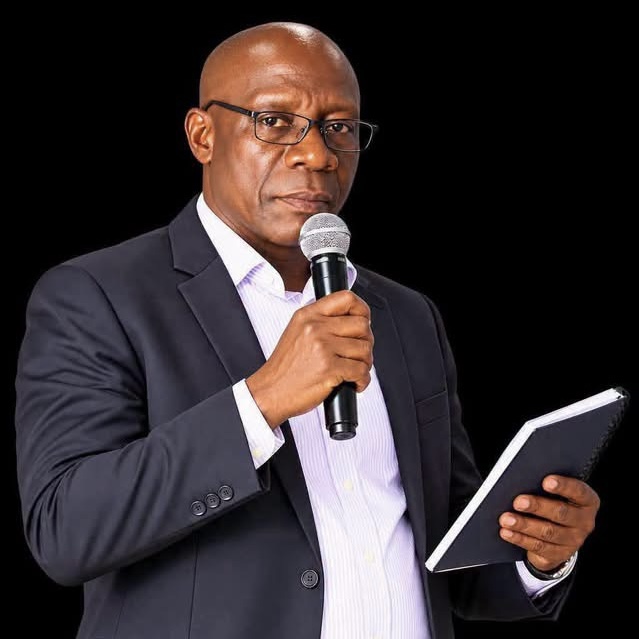
A funeral ceremony in Aleto, Eleme Local Government Area of Rivers State, reportedly turned tragic on Friday after a pastor collapsed and died while delivering a sermon on the certainty of death.
The cleric was identified as Deacon Steve Eyo, the Resident Pastor of the Redeemed Christian Church of God (RCCG), Aleto.
He was preaching before more than 300 mourners when he suddenly collapsed as he was concluding his message.
Eyo’s sermon was titled “The Certainty of Death and Hope Beyond.”
According to eyewitness accounts cited by multiple local news outlets, he began preaching at about 1:10 p.m., speaking about the inevitability of death and urging those present to live their lives with the awareness that nobody knows when death will come.
In illustrating his message, the pastor reportedly compared life to going to the market, explaining that some people leave early while others remain until later, just as some people die young while others live longer.
About 15 minutes into the sermon, at approximately 1:25 p.m., Eyo reportedly collapsed while rounding off his message.
His sudden fall initially confused some mourners, with eyewitnesses saying some thought the pastor was demonstrating the suddenness of death as part of his sermon.
The situation quickly became clear, however, as church ministers, choir members and others rushed to his aid.
People at the scene reportedly prayed for him while individuals with medical knowledge attempted to administer first aid.
He was subsequently taken to a nearby medical facility in the same ambulance that had been hired to convey the remains of the deceased person whose burial was taking place.
He was reportedly confirmed dead at the hospital, after which his remains were taken to a mortuary.
The circumstances surrounding Eyo’s death have not been publicly established in the reports reviewed, and no specific medical cause of death was disclosed.
However, the timing of the incident has left mourners and members of the Aleto community deeply shocked because of the subject of his final sermon.
According to eyewitness accounts, Eyo had urged the congregation to “number your days and prepare, for it can happen anytime” shortly before he collapsed.
The incident transformed what had begun as a solemn farewell for one deceased person into another moment of mourning, as attendees were confronted with the sudden death of the minister delivering the funeral sermon.p pm
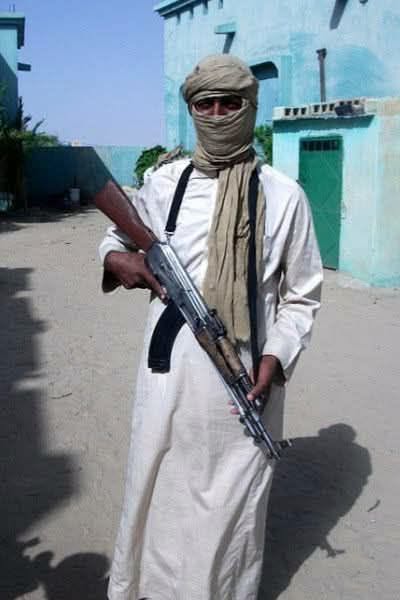
Mahmoud Adam, a suspected militant allegedly linked to deadly attacks on Christian communities in Nigeria’s Middle Belt, has reportedly been arrested in Plateau State.
The arrest was disclosed in an exclusive report published on Friday by the US-based Daily Caller, which identified Adam as an alleged secret leader of the Fulani Ethnic Militia (FEM) operating in Plateau State and surrounding parts of the Middle Belt.
According to the report, Adam was arrested in the early hours of September 12 at his compound in Plateau State, where he was known as a prominent Fulani community leader.
A former US intelligence officer with expertise in Islamist terrorism reportedly confirmed Adam’s alleged role in FEM, while Nigerian journalist Masara Kim of Truth Nigeria was also cited as having reported evidence allegedly linking him to deadly attacks in Plateau State.
The Daily Caller said information from a whistleblower indicated that Adam had previously established contacts with senior Nigerian military figures and had allegedly received high-value gifts from military officers.
The report also alleged that a serving senator had intervened in 2024 to secure Adam’s release following an earlier arrest.
The senator, Shehu Buba, has previously denied allegations of links to criminal networks. Separate reports said photographs showing Buba and Adam together have emerged, prompting calls for further investigation.
The Daily Caller reported that Adam was previously released from custody several days after his 2024 arrest following the alleged intervention.
Photographs cited by the publication reportedly show Adam meeting a Nigerian major general in 2023. According to the account accompanying the photographs, the military officer handed over five motorcycles to Adam and associates as part of efforts described as aimed at restoring peace in Plateau State.
The latest arrest comes amid renewed security concerns in Plateau State, where several communities have experienced deadly attacks in recent weeks. Local reports have linked some of the violence to armed groups, although attribution for individual attacks remains subject to confirmation by security authorities.
Reports of Adam’s arrest have also generated reactions in the United States. US Representative Riley Moore welcomed the reported arrest, describing it as evidence of increased US-Nigeria security cooperation, while the circumstances surrounding the allegations against Adam remain subject to official investigation and clarification.
As of the latest reports, the Nigerian security agencies had not publicly released a detailed statement outlining the charges against Adam or the evidence being relied upon in the investigation.
-
 News23 hours ago
NYSC Abduction: Families panic over N950m ransom demand
-
News1 day ago
I fought to save passengers, says Flydubai pilot
-
News2 days ago
How I killed my girlfriend after HIV dispute — Suspect
-
News13 hours ago
Tragedy as RCCG pastor collapses, dies during sermon at funeral in Rivers
-
News2 days ago
NYSC members, other travellers ‘abducted’ along Owerri-Onitsha Expressway
-
News2 days ago
Police confirm NYSC members among abducted passengers on Owerri-Onitsha Road, rescue 10
-
Features21 hours ago
Mbah Lists Projects Driving Enugu’s Revenue Growth, Says Less Than 13% Comes From Taxation
-
News3 days ago
We can’t erase decades-long problems in 4 years, says Tinubu