Uncategorized
Three Years of Transformation: Governor Peter Mbah’s Scorecard in Enugu


By Maxwell M. Ngene
Three years ago, when Peter Ndubuisi Mbah assumed office as Executive Governor of Enugu State, expectations were as high as they were cautious. The state was grappling with the triple burden of economic stagnation, deepening insecurity, and infrastructural neglect — challenges that had accumulated across successive administrations and had come to define the people’s weary relationship with government. Few dared to hope for swift transformation. Many had grown accustomed to grand make-believe promises dissolving into the familiar disappointments of Nigerian governance. Yet, three years on, Governor Mbah’s administration has rewritten the narrative in ways that are difficult to dismiss.

From his inaugural address to the people of Enugu State, Mbah declared with characteristic conviction that “Tomorrow is Here”, a phrase that might easily have been dismissed as the rhetorical flourish of a freshly sworn-in politician. Instead, it has proven to be a governing philosophy, a lens through which every policy initiative, every capital project, and every social intervention has been conceived and executed. It is not a slogan posted on billboards alone; it is a commitment carved into the institutions, industries, and communities that his administration has touched.
Industrial Revival: Breathing Life into Enugu’s Economic Soul
Perhaps no dimension of Mbah’s governance has been as symbolically powerful as the revival of industries that had long been consigned to decay. Niger Gas, Hotel Presidential, and Sunrise Flour Mills, once proud emblems of Enugu’s industrial ambition, later reduced to rusting monuments of neglect, now hum with renewed commercial activity. Their resuscitation is not merely an economic statistic; it is a statement of political will and a source of renewed pride for a people who had watched the state’s industrial heritage abandoned and allowed to crumble before their very eyes.

More strategically significant is the commissioning of the Haier Factory, a $20 million assembly plant for the manufacturing of laptops, smartphones and their repair spare parts. In a state historically associated with coal mining and civil service, this huge transformative facility marks a decisive pivot toward the knowledge economy. Enugu is repositioning itself not simply as a rehabilitation story but as a forward-looking technology hub, a destination for innovation-driven investment that speaks to the aspirations of its youthful population.
Education Reimagined: Classrooms for a Digital Generation
If industry speaks to economic survival, education speaks to civilisational ambition. Mbah’s administration has undertaken one of the most sweeping educational reforms in Enugu’s recent history through the Smart Green Schools initiative, now operational across most of the 260 wards of the state.
These are not merely refurbished classrooms; they are brand-new laboratories of the future, a place where children engage with robotics, artificial intelligence, and digital technologies. Each pupil is equipped with a personal tablet, and daily school meals address the nutritional dimension of learning that too often goes ignored in policy discourse.
The implications are generational. Children in rural wards who might never have seen or used a computer are now exploring coding platforms and digital problem-solving tools. This bold initiative bridges the digital divide not as a future aspiration but as a present reality preparing Enugu’s next generation for the demands of a global economy that will not wait for stragglers.
Mobility and Connectivity: A State on the Move
Transport infrastructure has long been both a metaphor and a measure of governance quality in Nigeria. On this front, the Mbah administration has invested with visible commitment. The introduction of compressed natural gas (CNG)-powered buses, equipped with Wi-Fi connectivity, has eased commuting between Nsukka and Enugu, offering passengers a glimpse of the modern, liveable city that the governor envisions.
Architecturally impressive bus terminals at Abakpa, Nsukka, and Garki further anchor this vision in physical form, turning transit points into civic landmarks.
Most ambitious of all is Enugu Air, the state-owned airline that has launched with an initial fleet of six aircraft. A state airline is an audacious proposition at any time, but in a Nigerian political environment habitually sceptical of government-run commercial enterprises, Enugu Air carries the weight of both symbolism and strategic intent. Its success will be watched closely, both as a transport solution and as a test of the administration’s capacity to manage complex ventures beyond the political arena.
Healthcare for All: From the Ward to the Specialist Theatre
Governor Mbah’s healthcare vision operates on two complementary axes: breadth and depth. The establishment of Primary Health Centres in every ward ensures that the most basic healthcare is no longer the exclusive preserve of the rich in urban areas. Communities that once relied on patent medicine stores as their first port of medical call now have functional health facilities within reach. Simultaneously, the construction of a 300-bed Super Specialist Hospital signals an ambition that extends beyond basic care into medical excellence. This is an institution designed not only to serve Enugu’s residents but to attract medical tourism and reduce the costly haemorrhage of Nigerians seeking specialist treatment abroad.
Security Restored: Reclaiming the Night
No governance achievement carries greater weight in the daily lives of ordinary citizens than security. Enugu, like much of the South-East, had suffered a period of debilitating insecurity, a situation that severely curtailed economic activities, dampened investor confidence, inflicted fear of untimely deaths into the spines of ordinary citizens and cast a pall over civic life. The establishment of a state-of-the-art Command and Control Centre in the premises of the Enugu State Government House, enabling real-time surveillance and coordinated security response, has been central to the administration’s counteroffensive against criminal networks.
The results have been visible, tangible, and felt. Night markets, once abandoned as too dangerous to patronise, now thrive again. Residents move with a freedom they had almost forgotten. This restoration of public safety is not a rhetorical claim; it is attested by the renewed commercial energy visible in the state’s markets and streets. Security, in this administration, has been treated not as a luxury but as the prerequisite upon which all other development rests.
Agriculture and Rural Development:
Connecting the Farm to the Market
In a state where significant portions of the population derive their livelihoods from farming, the Mbah administration’s investment in agricultural modernisation carries profound economic implications. The introduction of a tractor assembly plant signals a commitment to mechanised, large-scale agriculture, a departure from the subsistence-level farming that has historically characterised rural Enugu. Complementing this, new road construction projects are steadily linking rural farming communities to urban markets, addressing the perennial problem of produce spoilage and the chronic inability of smallholder farmers to access buyers at fair prices.
Assessment: A Record Defined by Ambition and Accountability
A balanced assessment of Governor Mbah’s three years on the saddle cannot ignore the challenges that persist. Infrastructure projects of this scale inevitably carry implementation risks; promises of industrial revival require sustained private sector confidence to bear lasting fruit; and managing a state airline, specialist hospital, and a digital education revolution simultaneously demands institutional depth that must be continually cultivated and resourced. Critics who point to gaps and unmet targets are not wrong to do so; that is the function of democratic accountability.
Yet the overall arc of this administration is undeniable. In sector after sector – education, health, industry, transport, security, and agriculture – Enugu is making the desired progress. The pace may be contested; the direction should not be. Governor Peter Mbah has chosen to govern as though tomorrow genuinely matters, deploying the instruments of state not as patronage tools but as levers of structural transformation. For a state that had grown accustomed to inertia dressed up as governance, that choice is in itself truly historic.
Three years on, the mantra “Tomorrow is Here” has earned its credibility. Tomorrow, for Enugu, is no longer a consolation deferred to some indefinite future. Under Mbah’s watch, it is arriving – imperfect, contested, and still incomplete, as all genuine transformation must be, but arriving, nonetheless.
• Maxwell M. Ngene, PhD is a Senior Lecturer and Postgraduate Programmes Coordinator in the Department of Mass Communication, Enugu State University of Science and Technology (ESUT), and a media analyst and public affairs commentator based in Enugu.





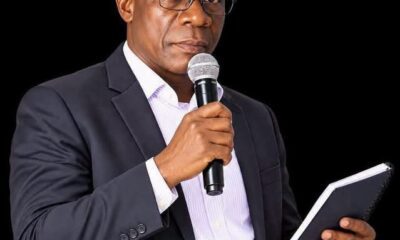





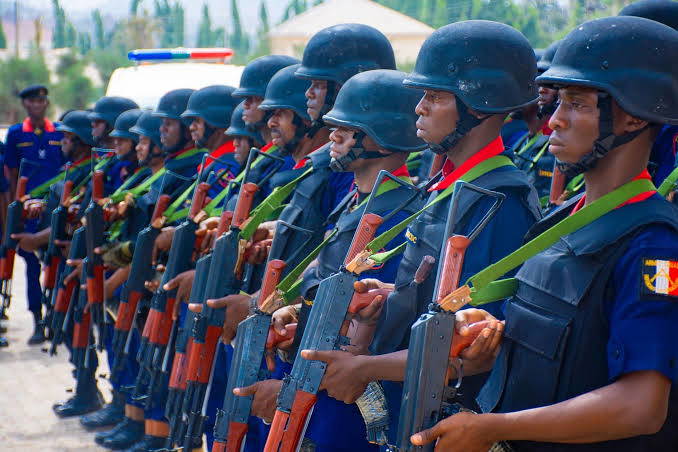
The Nigeria Security and Civil Defence Corps has commenced an investigation into the deaths of some suspected illegal miners arrested during enforcement operations in Niger State.
The suspects were arrested during coordinated operations conducted by the Niger State Command in the M.I. Wushishi/Lukoto axis on September 15 and 16, 2026, as part of efforts to curb illegal mining activities in the state.
The development followed reports that no fewer than 33 suspected illegal miners were feared dead after being detained at an NSCDC facility in Minna.
The deaths were reportedly discovered in the early hours of Thursday, with the Niger State Commandant, Suberu Aniviye, attributing them to a suspected outbreak of disease.
However, the NSCDC National Headquarters said the cause of the deaths had yet to be established, stressing that reports linking them to any specific disease remained subject to medical and laboratory confirmation.
In a statement on Thursday, the Corps’ National Public Relations Officer, Babawale Afolabi, said the Commandant General, Ahmed Abubakar Audi, had directed the constitution of a high-powered investigative team to determine the circumstances surrounding the deaths.
Afolabi said the team, to be led by the Deputy Commandant General in charge of Intelligence and Investigation, had been mandated to conduct a comprehensive inquiry into the incident.
According to him, the investigation would cover the condition of the suspects upon arrest, their period in custody, the conditions of detention, medical attention provided to them and other circumstances surrounding the deaths.
The statement partly read, “NSCDC has confirmed the death of some suspected illegal miners who were arrested during enforcement operations conducted in parts of Niger State on September 15 and 16, 2026.
“Following the development, the Commandant General, Ahmed Abubakar Audi, has directed the constitution of a high-powered investigative team, led by the Deputy Commandant General in charge of Intelligence and Investigation, to immediately look into the circumstances surrounding the incident.
“The team has been mandated to undertake a comprehensive investigation into the circumstances leading to the deaths, including the condition of the suspects upon arrest, their period in custody, the conditions of detention, medical attention provided, and other relevant circumstances surrounding the incident.”
Afolabi also directed that the health and welfare of all persons currently in custody be prioritised, while measures were being taken to protect personnel who might have had contact with the affected persons.
The Corps expressed condolences to the families of the deceased and assured them that the circumstances surrounding the incident would be thoroughly investigated and appropriately addressed based on established facts.
Afolabi added, “The NSCDC wishes to clarify that reports attributing the deaths to any specific disease remain subject to medical and laboratory confirmation. The Corps will therefore refrain from speculation until the outcome of the medical examination is established.
“The Corps extends its condolences to the families of the deceased and assures them that the circumstances surrounding the incident will be thoroughly investigated and appropriately addressed based on established facts.”
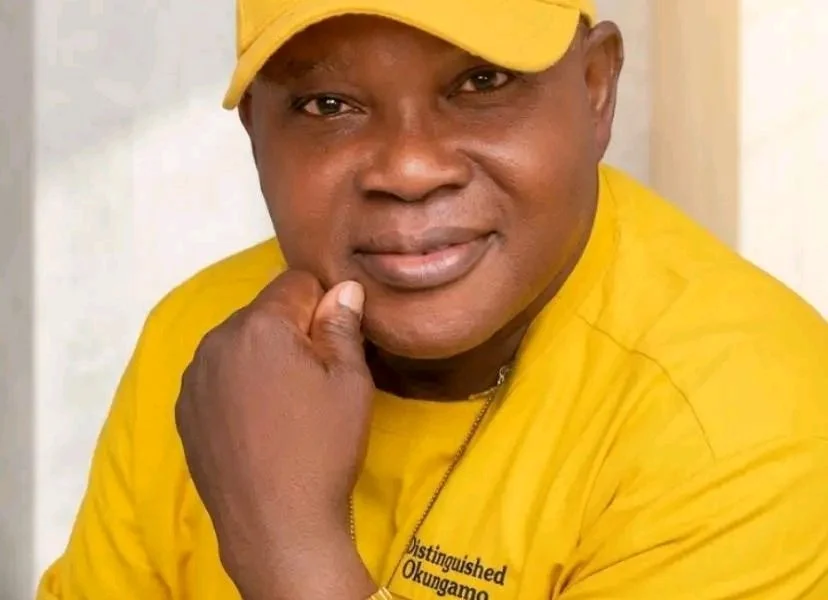
A popular Enugu State politician, Prince Ikechukwu Oloto, also known as Okanga Moo, has reportedly been killed by unknown gunmen in Nsukka Local Government Area of the state.
Oloto was allegedly attacked at his residence in the Odenigbo area of Nsukka on Thursday evening.
The attackers reportedly invaded the politician’s home and killed him during the incident.
The reports also alleged that a knife was used in the attack.
Details surrounding the killing remain unclear, as the circumstances that led to the incident have not been fully established.
The identities of the attackers and their motive were also unknown as of the time of filing the report.
The death was also reported by social media influencer, Sen. Chijinkem Ugwuanyi, in a Facebook post.
Ugwuanyi said the politician was killed at his residence in Odenigbo, Nsukka.
The reported killing comes as political activities and preparations for the 2027 general elections continue to gather momentum across the country.
However, it was not immediately clear whether the incident was connected to Oloto’s political activities.
By press time, the Enugu State Police Command had yet to issue an official statement confirming the killing or providing details of any investigation into the incident.
By Tony Edike
How successive governments have repeatedly promised to open up Kogi’s agricultural powerhouse — and why residents are tired of waiting
For decades, the people of Ibaji Local Government Area of Kogi State have watched politicians arrive with promises of development, particularly the construction of the roads that would finally connect their isolated communities to the rest of Nigeria.
Then the elections come.
Campaigns are held. Political leaders visit. Road projects are announced or flagged off. Contracts are mentioned. Hope rises among the people.
And, according to residents and repeated reports about abandoned projects, the construction often disappears from the political radar once the election is over.
For Ibaji, this has become more than a problem of bad roads. It has become a question of political accountability.
The most enduring symbol of this frustration is the long-promised Otuocha–Ibaji–Idah road corridor, which residents believe could fundamentally transform the local government by opening it to commerce, investment, agriculture and social development.
A food basket trapped behind bad roads
Ibaji occupies a strategically important position along the River Niger and has enormous agricultural potential.
The local government is known for farming and fishing, producing crops including rice, yam and cassava. Yet the same geographical and agricultural advantages that could make Ibaji a major economic hub have been undermined by inadequate transportation infrastructure.
The contradiction is stark: a community capable of contributing significantly to Nigeria’s food supply continues to struggle with the basic infrastructure required to move its agricultural products to markets.
Poor roads increase transportation costs, discourage investment and make it more difficult for farmers to get their produce to consumers.
During the rainy and flooding seasons, the problem becomes even more severe.
Reports have documented the extent to which flooding and damaged roads have isolated communities in Ibaji, with residents sometimes relying on bicycles, motorcycles and waterways where roads become impassable.
For a predominantly agrarian community, this is not simply an inconvenience.
It is an economic handicap.
The promise that keeps returning
The history of the Otuocha–Ibaji–Idah corridor illustrates the frustration.
In 2009, the Federal Government reportedly awarded the approximately 90-kilometre Otuocha–Ibaji–Idah road to Nigercat Nigeria Limited for about N7.2 billion, with reports putting the mobilisation payment at about N2.5 billion.
Yet the project subsequently stalled.
Years later, the road remained a subject of complaints by Ibaji residents and community groups.
The road was still being discussed when another promise came from the Kogi State Government.
Yahaya Bello’s 2017 flag-off
In April 2017, then Kogi State Governor Yahaya Bello visited Ibaji and flagged off the construction of the 40-kilometre Idah–Onyedega road.
The contract was reported to be worth more than N5 billion.
At the ceremony, Bello said the road would be asphalt-overlaid and that its completion would boost the economy of the area.
The message was significant because even the then Deputy Governor, Simon Achuba, an indigene of Ibaji, acknowledged that the local government had long been neglected and that roads were its major problem.
The state’s Works Commissioner at the time described Ibaji as the state’s “Food Basket” and said the lack of roads was an impediment to its development.
The people had every reason to hope.
But according to subsequent reports, the promise did not translate into the completed road residents were expecting.
By 2021, a report on the project stated that work had still not commenced and described the road as practically impassable. The report recalled that Bello had promised that the construction would take 24 months.
In 2023, a motion before the House of Representatives also raised concerns about the condition and neglect of the road, stating that since the flag-off of its rehabilitation, no work had commenced.
The election-cycle question
This is where the political frustration in Ibaji becomes difficult to ignore.
Residents have seen one administration after another return to the same fundamental problem: the road.
The criticism from the community is not that politicians should not promise infrastructure.
It is that promises should be followed by construction.
For a community that has heard road promises repeatedly, the real measure of government commitment is not another flag-off ceremony, another speech or another campaign visit.
It is asphalt on the ground.
Then came another governor
After Yahaya Bello’s tenure, his successor, Governor Ahmed Usman Ododo, also visited Ibaji.
In July 2026, Ododo met with traditional rulers, community leaders, women, youths and other stakeholders in the local government and announced that the design for a proposed Ibaji Road Project had been completed and was available for public review before construction.
The Federal Ministry of Information described the proposed road as a strategic intervention that could improve access to markets, schools and healthcare while unlocking Ibaji’s economic and agricultural potential.
The announcement was naturally welcomed.
But it also raises an unavoidable question:
How many more times will Ibaji hear that its road is about to be constructed?
Because for residents who remember previous promises, the existence of a design is not the same thing as the existence of a completed road.
And now, the Federal Government
Just as the controversy surrounding the road continues, another major development emerged in July 2026.
Anambra State Governor Chukwuma Soludo announced that President Bola Tinubu had approved the Otuocha–Anam–Abaji road for design and procurement, alongside another major South-East highway project.
The Federal Government’s announcement describes the Otuocha–Anam–Abaji corridor as approximately 108 kilometres and says it will link Anambra with Kogi and North-Central Nigeria.
Kogi-based reports subsequently described the project as the Otuocha–Nzam–Ibaji Road and connected it to the long-standing demand for the Otuocha–Ibaji–Idah corridor.
The development has understandably generated excitement.
After all, this is precisely the type of regional infrastructure Ibaji residents have been demanding for years . This is similar to the age long clamor for the provision of electricity in the local government, which has remained in the dark since its creation. The entire people of Ibaji have not enjoyed public power supply for decades yet the area has remained a vote-hunting hub for politicians in all elections.
This has also raises a question that government officials should answer clearly:
Is this move by Ododo finally the road Ibaji has been waiting for — or will it become another announcement that disappears after the political season?
That question is not an accusation of wrongdoing against any individual.
It is a legitimate question arising from the history of abandoned and repeatedly announced road projects in the area.
The Hope Uzodinma connection
The announcement has also attracted attention in the wider South-East, including from political leaders in neighbouring states.
The involvement of Anambra and Imo in the wider regional road agenda is significant because the Otuocha corridor is not merely an Ibaji road.
It has the potential to connect agricultural communities in Anambra and Kogi and strengthen commercial links between the South-East, North-Central and South-South regions.
That is precisely why the project deserves to be treated as an economic corridor rather than merely another local political promise.
Can Ibaji afford another disappointment?
For the people of Ibaji, the issue is bigger than party politics.
The community wants a road.
A real road.
An asphalted, durable and properly engineered road capable of remaining accessible during the rainy season and capable of carrying agricultural produce, commercial vehicles and passengers.
They want the road to connect farmers to markets.
They want businesses to be able to come into Ibaji.
They want easier access to hospitals and schools.
They want young people to have opportunities beyond leaving or dumping their communities because of infrastructural isolation.
They want their agricultural wealth to become economic wealth.
And they want the government to understand that a road can change the destiny of an entire local government.
The politics of promises
The suspicion among some Ibaji residents that politicians remember the road mainly during election seasons is therefore understandable in the context of the project’s long history.
But suspicion is not proof.
If politicians want to demonstrate that the latest promise is different, the answer is straightforward: publish the documents and build the road.
Let the public know the contract sum.
Let the contractor be identified.
Let the scope of work be published.
Let the commencement date be known.
Let the completion date be known.
Let payments and milestones be transparently accounted for.
And, most importantly, let the people see continuous construction activity on the ground.
That is how another campaign promise becomes a development project.
Ibaji is asking for development, not political rhetoric
The people of Ibaji have waited long enough.
They have watched governments come and go.
They have listened to flag-off speeches.
They have heard promises of economic transformation.
They have watched projects stall.
They have endured roads that become almost impassable during the rainy season.
Yet the potential of Ibaji remains enormous.
With adequate infrastructure, the local government could become an important agricultural and commercial corridor between Kogi and the South-East.
The River Niger should be an economic advantage.
Its fertile agricultural land should be an economic advantage.
Its proximity to Anambra and other markets should be an economic advantage.
But without roads, those advantages remain severely constrained.
Enough of promises — let the road be built
The latest federal approval may provide a new opportunity.
But Ibaji residents have heard enough promises to know that approval alone is not the destination.
Design of the road is not construction.
Construction is not completion.
And a flag-off is not a road.
What the people are asking for is simple: an asphalted road that will finally open Ibaji to commerce, investment, agriculture, education, healthcare and the wider Nigerian economy.
They do not want another road project to become an election slogan.
They want to see the bulldozers arrive.
They want to see the earthworks completed.
They want to see bridges and drainage structures constructed.
They want to see asphalt laid.
And they want to drive on a completed road.
For a local government described by its own political leaders as a food basket, the continued infrastructural isolation is a contradiction that can no longer be ignored.
Ibaji does not need another promise. Ibaji needs a road.
President Bola Ahmed Tinubu should please note that there is a place known as Ibaji bordered by four states of Enugu, Anambra, Delta and Edo (across the River Niger). And this local government is being administered by the ruling All Progressives Congress, APC.
Ibaji people have strongly supported his government and they deserve the attention of his government.
-
 News23 hours ago
NYSC Abduction: Families panic over N950m ransom demand
-
News1 day ago
I fought to save passengers, says Flydubai pilot
-
News1 day ago
How I killed my girlfriend after HIV dispute — Suspect
-
News13 hours ago
Tragedy as RCCG pastor collapses, dies during sermon at funeral in Rivers
-
News2 days ago
NYSC members, other travellers ‘abducted’ along Owerri-Onitsha Expressway
-
News2 days ago
Police confirm NYSC members among abducted passengers on Owerri-Onitsha Road, rescue 10
-
Features20 hours ago
Mbah Lists Projects Driving Enugu’s Revenue Growth, Says Less Than 13% Comes From Taxation
-
News3 days ago
We can’t erase decades-long problems in 4 years, says Tinubu