News
Middle-East crises: Experts predict tougher times for poor Nigerians


• Higher prices to directly squeeze low income Nigerians – Egbomeade
Amidst escalation in the Middle-East crises, financial and economy experts have indicated that the spill-over effect will worsen economic hardship in Nigeria especially amongst the vulnerable households.
Though they noted some positive impacts of the crises on the country’s macroeconomic outlook and fiscal position, the overall outcome, they believe, would be largely negative.

The positive outlook according to them includes, higher crude export receipts, improved foreign exchange inflows, strengthening of external reserves, and increased revenue allocations to all tiers of government.
However, they also noted that even these positives are still challenged and more of probability saying revenue gains are critically dependent on production levels. Nigeria’s current crude output has fluctuated around 1.4–1.6 million barrels per day, below installed capacity and vulnerable to oil theft, pipeline vandalism, and underinvestment in upstream infrastructure.
Furthermore they explained that if the conflict escalates and dampens global growth, oil demand could weaken, leading to price corrections, concluding that the fiscal upside is inherently fragile.

They added that geopolitical instability also triggers global risk aversion noting that during periods of uncertainty, capital tends to migrate toward safe-haven assets such as U.S. Treasury securities and gold.
Consequently, emerging and less developed markets such as Nigeria frequently experience portfolio outflows in such episodes.
On the negative impact of the Middle-East crises on poor Nigerians, the analysts said the immediate domestic risk lies in inflation transmission falling out from increases in petrol and other prices, which would erode purchasing power of the low income households.
Experts’ insight
Speaking to Saturday Vanguard on the situation, Dr. Muda Yusuf, Chief Executive Officer Centre for the Promotion of Private Enterprise (CPPE), said: “The escalating conflict involving Iran, the United States, and Israel has injected a new wave of geopolitical risk into the global economy. Energy markets are the first transmission channel.
“For Nigeria, an oil-dependent economy where crude accounts for over 85 percent of export earnings and about half of government revenue, the implications are significant. The effects will be both positive and adverse, depending on the duration of the conflict and the quality of domestic policy responses.”
Continuing, he stated: “For Nigeria, every increase in crude oil price translates into additional export earnings and fiscal revenues.
‘‘The immediate benefits include: Higher crude export receipts, improved foreign exchange inflows, strengthening of external reserves, and increased FAAC allocations to all tiers of government
“However, revenue gains are critically dependent on production levels. Nigeria’s current crude output has fluctuated around 1.4–1.6 million barrels per day, below installed capacity and vulnerable to oil theft, pipeline vandalism, and underinvestment in upstream infrastructure. Without a sustained improvement in production efficiency and security, Nigeria may not fully optimise any price windfall.
There is also a medium-term risk. If the conflict escalates and dampens global growth, oil demand could weaken, leading to price corrections. The fiscal upside is therefore inherently fragile.
Yusuf also noted that there are exchange rate implications and capital flow risks.
Higher oil prices typically strengthen Nigeria’s current account balance and improve foreign exchange liquidity. This could reduce short-term pressure on the naira and reinforce investor confidence.
In recent years, exchange rate stability has been closely tied to oil receipts and capital inflows. Improved export earnings could: Boost gross external reserves, enhance FX market liquidity, reduce speculative pressure on the currency.
“However, geopolitical instability also triggers global risk aversion. During periods of uncertainty, capital tends to migrate toward safe-haven assets such as U.S. Treasury securities and gold. Emerging markets frequently experience portfolio outflows in such episodes.
Given Nigeria’s relatively shallow capital market and sensitivity to foreign portfolio investment, volatility in global financial conditions could offset part of the FX gains from higher oil prices. The net exchange rate impact will therefore depend on the balance between stronger oil inflows and potential capital reversals.”
Yusuf listed inflation transmission and welfare pressures as part of the impact of the conflict on Nigeria.
He stated: ‘‘The most immediate domestic risk lies in inflation transmission. Nigeria operates a deregulated downstream petroleum regime. Higher international crude prices feed directly into higher petrol, diesel and aviation fuel costs.
The likely channels include: rising pump prices, increased transportation/logistics costs, higher food distribution expenses, escalating manufacturing and logistics costs.
Energy costs have a strong multiplier effect in Nigeria’s inflation dynamics.”
It will reduce purchasing power of the poor – CIS President
Commenting, Oluropo Dada President, Chartered Institute of Stockbrokers, CIS said: “The biggest impact will come through higher fuel, transport, and food prices. If the conflict keeps crude oil around $95–$105 per barrel (from about $70–$75 earlier in the year), petrol prices in Nigeria could rise from around N800 per litre to N1,200–N1,500 per litre due to higher landing cost. Transportation fares could increase by 20–40%, which will immediately affect food prices. ‘‘Since low-income households spend about 60–70% of their income on food and transport, even a 10–15% rise in prices significantly reduces their purchasing power. Food inflation could reverse its downwards trend and rise by another 5–8 percentage points, worsening hardship for the poor.
‘‘Although higher oil prices may increase revenue, the overall impact could still be negative. Nigeria’s budget benchmark is about $64–$65 per barrel, so prices near $100 per barrel could add roughly $25–$35 extra per barrel, translating to billions of naira in additional monthly revenue.
‘‘However, higher global energy prices will also increase import costs, and Nigeria still imports a large share of refined fuel.
‘‘Inflation could rise by 3–6%, forcing interest rates to stay high, which slows business activity and borrowing.
‘‘Foreign investors may also move funds to safer markets during war, leading to pressure on the naira and weaker capital inflows.
‘‘In the long run, uncertainty in global markets can reduce investment, slow GDP growth below the current 4% range, and delay economic recovery.”
Higher prices to directly squeeze low income Nigerians – Egbomeade
Commenting as well, Clifford Egbomeade, Economy and Communications Analyst, said: “Before the Iran–Israel conflict escalated, Brent crude traded around $65–$70 per barrel. As tensions intensified, prices spiked above $100 per barrel, at times reaching an intra day high near $116 per barrel, before moderate pullbacks.
‘‘That jump of nearly 50 percent in global crude oil price matters for millions of Nigerians because the domestic fuel market still responds closely to international benchmarks.
“For low income households, the immediate transmission mechanism is fuel price inflation. When crude prices rally, the cost of refined products tends to follow.
‘‘Although Nigeria now has significant local refining capacity, refineries still source a meaningful share of crude at prices linked to global markets. This raises the landing cost of petrol and diesel, and businesses pass those costs to consumers.
‘‘Already in recent days, the gantry price of petrol increased from about N995 per litre to N1,175 or more, and industry groups warn it could approach N2,000 per litre if the crisis persists.
‘‘Diesel has seen similar upward pressure, moving toward N3,000 per litre in some projections.
‘‘Higher fuel prices directly squeeze low income Nigerians. Transport costs are among the first to rise because commercial drivers and riders must cover more expensive petrol or diesel.
‘‘When fares increase, workers who depend on daily commuting must spend a larger share of their limited income on transport. For a market trader or wage earner, that often means cutting back on household essentials.
‘‘Fuel price inflation also ripples into the food chain. Nigerian agriculture relies heavily on road transport and diesel powered equipment to move produce from farms to urban markets.
‘‘A litre of petrol rising from roughly N850 before the crisis to over N1,000 now can push up the prices of basic foodstuffs. Traders and farmers pass increased logistics costs onto consumers, contributing to higher market prices for staples. For example, prices of pepper and tomatoes in some urban markets have recently doubled or tripled.
“Ultimately, although higher global oil prices can increase national export revenues, the lived experience for low income Nigerians is more acute inflation in transport, food, and everyday goods, worsening financial strain for households that already spend most of their income on basic needs.”
It will constrict consumers’ disposable income, exacerbate suffering – Adonri
Commenting also, David Adonri, Analyst and Executive Vice Chairman at High Cap Securities Limited, said: “The low income class in Nigeria has been suffering economic hardship before and after the recent market reforms. Inflation has been the main culprit.
‘‘The global trade disruption arising from the Iran War has started pushing inflation to dangerous levels. Price of petrol has surged and it could reverse the current trend of moderation in inflation.
‘‘This can constrict consumers’ disposable income and exacerbate suffering.
“While FGN benefits from the rising Crude Oil price, the attendant inflation that will arise can be injurious to the economy.”
Investors are pulling out already – Tumba
In his own reaction over the war, Simon Tumba, a Lagos based Business Executive over the, said: “ In almost everything; transportation, food, medications and provisions, everything will go up. Sadly there’s no end in sight concerning this war. It’s tough already.
“On the setbacks to the economy, investors are pulling out already. Although the government will earn more revenue from oil receipts, we are not confident they’d manage the funds well considering the elections coming next year and the experiences of the last few years where revenue targets were not met adding to more loans, yet capital budget execution has been almost zero.
Therefore foreign direct investment will suffer, while living expenses will escalate. Inflation may hit the 20s again.” (Vanguard)













Tension has gripped parts of Kwara State following the reported abduction of members of the Iru Ekun Security Group, a security outfit spearheaded by Yoruba nation agitator Sunday Adeyemo, popularly known as Sunday Igboho.
The assailants reportedly abducted the security operatives and forced them to renounce their activities of protecting communities in the state.
According to reports, the abducted members pleaded for their release and were compelled to renounce their community protection activities.
The Iru Ekun Security Group was established to protect Yoruba communities in Kwara State against terrorist attacks and kidnappings.
The reported abduction has sparked fear among residents who rely on the group for protection against insecurity in their communities.
As of the time of filing this report, Igboho had yet to issue a statement on the reported abduction of the security group members.
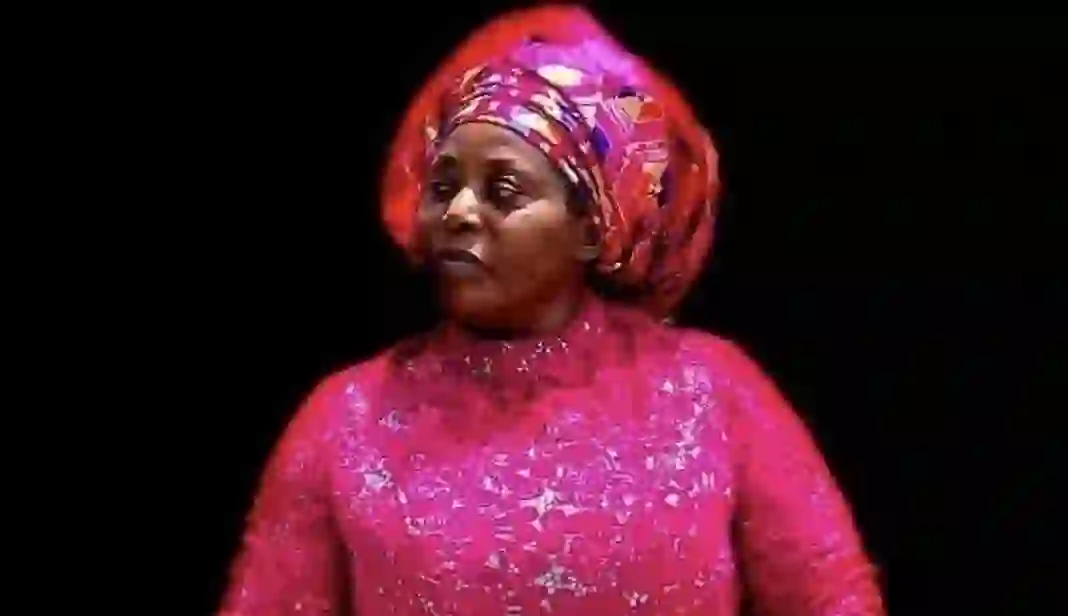
Fidelia Ezinwanne Chigbogu, the immediate elder sister of the late Senator Ifeanyi Ubah, has died at the age of 61.
Mrs Chigbogu, fondly called “Darling” by her husband, reportedly slumped and died on Sunday morning in Lagos while preparing to attend church.
Her husband, Chudi Chidinma Chigbogu, a native of Nnewi in Nnewi North Local Government Area of Anambra State, described her death as a devastating shock, saying she had shown no signs of illness before the incident.
“It was like a shock to me because, even as I am talking to you now, I never believed it,” he said.
Narrating the circumstances surrounding her death, Mr Chigbogu said the family had experienced an electrical incident the previous Thursday when their electricity meter exploded and burnt their changeover room.
He said they had contacted officials of the electricity distribution company, who promised to visit on Monday to replace and relocate the meter.
“We were busy waiting for them. My wife said she would give testimony in church on Sunday, and we were preparing for that,” he said.
According to him, his wife woke up on Sunday morning without any apparent health complaints and was preparing to leave for church when the incident occurred.
“That Sunday morning, she woke up. There was nothing like a headache, nothing like fever, nothing. She finished bathing and was preparing to go to church. She usually leaves home between 7 a.m. and 7:30 a.m. because of the roles she plays in the church,” he said.
Mr Chigbogu explained that he was washing his car because of dust when he became concerned that his wife had not come downstairs.
“I went to wash the car because of dust. Around 8 a.m., I called my son and said, ‘Why has mummy not come down? Go and check.’
“Only for the boy to go and start screaming that he called his mummy and she did not answer. He lifted her hand, and her hand dropped,” he recounted.
He said he immediately rushed upstairs and found his wife lying unresponsive on the bed.
“I called her names, no way. I alerted neighbours, and we carried her to six hospitals. Anywhere we went, they would take me aside and say I didn’t bring her on time, that she had passed on.
“I said no, it was not possible, until we got to Navy Hospital, where they refused to admit her,” he said.
Mr Chigbogu said prayers continued at their home for several hours as the family struggled to come to terms with the tragedy.
He recalled that around 4 p.m., someone told him she had seen his wife in a vision, moving swiftly without looking back, which she interpreted as a sign that the deceased had made it to heaven.
“That was when I changed my mind and allowed an ambulance to come. She left here after 6 p.m. and got to the village around 7 a.m. the next day,” he said.
Describing his late wife, Mr Chigbogu said she was a natural leader, peacemaker and philanthropist who played a significant role in her family, church and community.
“Aside from calling her Darling, I called her many names because she was a leader. No matter the case in the family, she would settle it.
“She is the founder of a women’s group, played a very big role in the church and was known for her charitable work. Before her passing, she was working on her orphanage.
“Even though she is no more, I will not let her down. I will make sure that project comes to pass,” he said.
On her family background, Mr Chigbogu said her parents had seven children—three boys and four girls—and that his late wife was the second daughter.
He added that she was also one of the trustees of the Ubah family.

By Tony Edike
Enugu State Governor, Dr Peter Ndubuisi Mbah, has pledged to sign into law a proposed amendment to the state’s Landlord and Tenant Law aimed at curbing excessive agency and legal fees imposed on prospective tenants.
Mbah gave the assurance while speaking at a recent town hall meeting, where he outlined his administration’s plans to address housing challenges in the state through legislative reforms and increased housing supply.

Enugu Housing scheme
The governor said his administration was working with the Enugu State House of Assembly to ensure the proposed legislation was passed within four weeks, promising to sign it as soon as it was transmitted to him.
He said the government could effectively regulate charges imposed by property agents and lawyers but warned against imposing rent controls that could discourage investment in the housing sector and worsen accommodation shortages.
“One thing that government can regulate effectively is controlling the cost an agent charges as commission, controlling the legal fees. You can clearly make laws to guide that,” Mbah said.
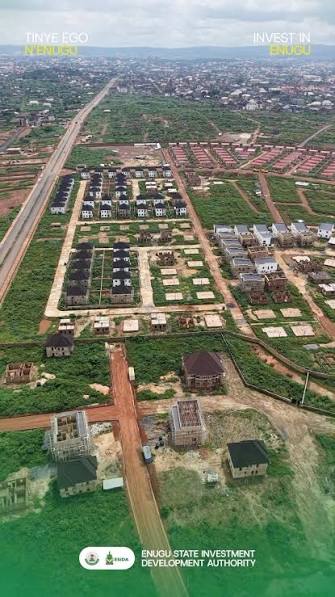
The Enugu Smart City
He explained that fixing a ceiling on the rent landlords could charge might discourage people from investing in residential property, potentially reducing housing supply and pushing rental prices even higher.
“It is extremely difficult to make laws to cap the fee the rent a landlord charges because once you do that, what you’re going to see is scarcity,” he said.
The governor added that his administration was adopting a supply-driven approach to addressing the housing crisis by expanding the city, developing new residential areas and increasing the availability of housing units.

Proposed structures at the Enugu Smart City
“So what we do as government is to try and push supplies in the market to see that we build new houses to ensure that there are enough homes so that that supply would drive down the rent,” he stated.
Mbah said his administration was working with the legislature to regulate tenancy-related fees while protecting residents from excessive charges.
“I’m committing to you that we’re going to work with the House of Assembly to ensure that within the next four weeks we’ll ensure that bill is passed into law, and I’ll be in a hurry to sign it so that we can protect Ndi Enugu,” the governor added.

Housing units ready for relocation of slum residents
The proposed amendment to the Landlord and Tenant Law, Cap. 101, Revised Laws of Enugu State, 2004, was disclosed by the Speaker of the House of Assembly, Rt. Hon. Uche Ugwu, in a Facebook post on Monday, October 26, 2026.
According to Ugwu, the executive bill seeks to establish clearer rules for tenancy transactions, regulate estate agents, limit agency and legal fees, and provide a structured mechanism for handling caution fees and refunds.
The proposed legislation also seeks to reduce disputes between landlords and tenants over property damage through joint inventories and professional valuations where necessary, check arbitrary rent increases and create a more transparent framework for tenancy-related charges.

Screenshot
The executive bill comes after an earlier bill sponsored by the member representing Nkanu East State Constituency, Hon. Okey Mbah, which had passed its first and second readings, with a public hearing also conducted by the House.
While advocating the earlier bill in March 2025, Okey Mbah raised concerns about the high costs prospective tenants were required to pay, including agency commissions, legal fees, caution fees and other charges.
He argued that the absence of effective regulation had created opportunities for exploitation, with some individuals allegedly posing as property agents to collect money from unsuspecting accommodation seekers without providing the promised services.
The earlier proposal sought to limit agency and legal fees to a maximum of 10 per cent of the rent, prohibit caution fees and introduce safeguards against irregular and fraudulent evictions. However, the final provisions will depend on the version of the legislation passed by the House.
Ugwu said the renewed legislative effort aligned with Mbah’s vision of making Enugu a preferred destination for business, investment, tourism and residential living.
The proposed amendment comes amid persistent complaints about the rising cost of accommodation in Enugu, where prospective tenants often face substantial additional charges beyond the rent demanded by landlords.
If passed and signed into law, the legislation could introduce greater transparency into tenancy transactions and provide a regulatory framework for the activities of property agents, while helping to protect tenants from excessive fees.
However, the effectiveness of the proposed reforms will depend on the final provisions of the law, the establishment of appropriate enforcement mechanisms and compliance by landlords, estate agents and legal practitioners.
-
 Features2 days ago
Mmesoma Umeorini: When Love Turns Deadly, and a Young Woman Pays With Her Life
-
Features2 days ago
Why Igbos Celebrate New Yam Festival Worldwide: The History, Cultural Significance and Lessons For The Younger Generation
-
News1 day ago
Kogi Police Probe Alleged Murder-Suicide Involving Two Officers
-
News11 hours ago
BREAKING: Tension as Video Shows Islamic Group Members Allegedly Calling for AK-47 to Kill Christians in Enugu, Jos
-
News3 days ago
Mbah: Why We Built 268 Smart Green Schools Across Enugu State
-
News1 day ago
NCDC Reports Two Suspected Ebola Cases as Contacts Rise to 53
-
News3 days ago
Anambra Police Arrest Suspect Over Murder of 23-Year-Old Woman in Uga
-
News1 day ago
Enugu Traders Pledge Support for Mbah’s Second Term, Cite Market Reforms