News
Outrage over plot to ‘kill many people’ in Nigeria on Christmas Day

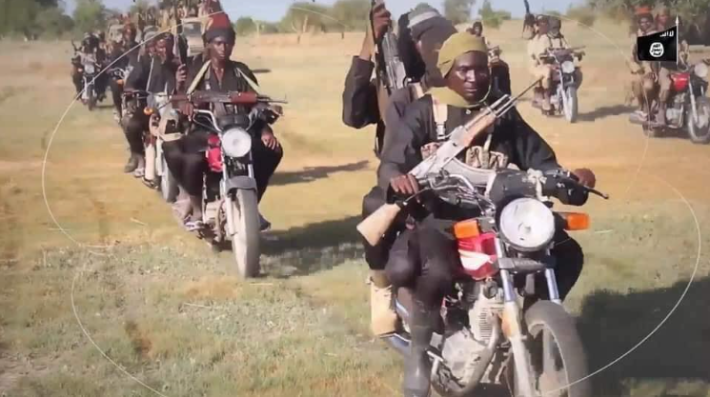
A humanitarian organisation, Equipping The Persecuted, has raised the alarm over what it described as a plot to kill many people in some northern communities on Christmas Day.
But the Presidency, in a swift reaction, questioned the motive of the group, saying the alert was doubtful and could create unnecessary fear among Nigerians.

The founder of the organisation, Judd Saul, spoke during a roundtable meeting convened by the International Committee on Nigeria and the African Jewish Alliance.
The meeting, which was held on Wednesday in Washington DC, United States, was chaired by a former congressman, Frank Wolf.
It was gathered that the meeting was also attended by Congressmen Riley Moore and Chris Smith, Senator James Lankford, and members of the US Commission on International Religious Freedom, alongside some Nigerian delegation.

Saul said terrorists had started regrouping for the planned attacks.
He said, “They are gathering forces around the Plateau and Nasarawa border, along the Nasarawa-Benue border and along the Nasarawa-Kaduna border. They are planning to hit on Christmas Day in Riyom, Bokkos, Kafanchan and Agatu.
“We got very reliable information that they are weaponising for a Christmas Day massacre. I am imploring the Nigerian government and President Donald Trump to do something so we don’t have a bunch of dead Christians in Nigeria.”
Our correspondents gathered that the meeting was among a series of deliberations to resolve the insecurity in Nigeria and address concerns of alleged killing of Christians.
A source close to the US government told Saturday PUNCH that Saul had officially communicated the said report his organisation got to the government through Moore.
“All the congressmen at the meeting have been to Nigeria many times. They’ve been involved in this matter since (Bill) Clinton was president. They classified the attackers mostly as terrorists and jihadists. Saul has officially notified the US through Riley, who will be filing a report to President Trump on it,” the source said.
It was also learnt that after the meeting where Saul spoke, a separate closed-door meeting was held where further deliberation took place.
Discussions at this meeting were not disclosed.
A senior officer of the Department of State Services in Abuja confirmed that the agency was aware of the planned attacks on Christmas Day and had commenced preventive measures.
“The service is aware; we have the intelligence report and we are already working on it,” the officer stated in a short conversation with Saturday PUNCH on Friday.
Another operative of the secret service said the DSS had intensified its intelligence-gathering efforts nationwide.
“We know the trend of attacks in those areas. I was in Kaduna for over two years, and I can tell you that these people (bandits) have a pattern. We (DSS) have always provided intelligence. The intelligence report by the US NGO may be correct, because communities in the Middle Belt have always come under attack during festive periods.
“But I am sure the service would also have got wind of any planned attack by the bandits, and preventive measures would have been put in place,” he said.
Riyom and Bokkos in Plateau State have come under repeated bandit attacks in 2025.
On October 31, bandits attacked the Kwi community in Riyom, killing at least six people.
There was also a major attack on Jebu village in Tahoss District of the same local government, where at least 32 villagers, including women and infants, were killed.
Between June 19 and 21 this year, gunmen invaded Juwan and Manja communities in Bokkos and neighbouring Mangu local government areas, killing about 13 people.
It was gathered that many attacks on communities in the two local government areas remain unreported.
Communities in Agatu Local Government Area of Benue State have also witnessed terror attacks this year, with dozens killed.
The heaviest occurred on June 1 at Edikwu Ankpali and Opaha communities, where no fewer than 28 people, suspected to be predominantly Christians, were killed.
Earlier in November, a pastor was killed and three others kidnapped at Anwule village near the Agatu and Ohimini border.
Also, earlier last month, suspected Fulani herdsmen reportedly raided Chawai communities near Kafanchan in Southern Kaduna, killing an undisclosed number of people and displacing many others.
The Force Public Relations Officer, Benjamin Hundeyin, did not take his calls or respond to a text message on the alleged plot.
The Director, Defence Media Operation, Maj. Gen. Michael Onoja, could not be reached for comments as of the time of filing this report.
Also, efforts to get responses from the Kaduna, Plateau and Benue police commands proved abortive.
While the Benue State Police Public Relations Officer, Udeme Edet, promised to get back to our correspondent, but never did as of press time, spokespersons for other states did not take their calls which rang out.
However, a senior official who doesn’t want his name in print because he was not permitted to speak to the press, promised that necessary action would be taken to avert the attacks.
He said, “We will intensify surveillance for early warning and continue to deepen our intelligence penetration. However there is no specific detailed Intel at this end.”
Presidency dismisses alert
Reacting, the Presidency dismissed the alert, saying the group’s claims are capable of creating unnecessary fear.
Responding to an enquiry, the Senior Special Assistant to President Bola Tinubu on Media and Publicity, Mr Temitope Ajayi, said the public should be cautious about circulating reports from external groups without verifying their intentions.
He said, “We should be very careful how we digest and process some of these doubtful reports by external organisations who are setting a stage for internal crisis in our country. We should not be providing oxygen for reports that heighten a sense of insecurity in our country.”
Questioning the intention behind the alert, Ajayi added, “What is the motive and agenda of this organisation in raising this kind of alarm about a likely terror attack in the three states and on Christmas Day?”
He, however, assured Nigerians that security agencies were fully prepared to prevent any threat.
“Whatever the motive is, our security forces are capable of foiling any terror attack and keeping us safe,” he said.
“Nigerians should not entertain any fear in any part of the country. The police and the military are working to ensure we have a peaceful Christmas and Yuletide season.”
MBF, SOKAPU call for security reinforcement
The Middle Belt Forum said while it had yet to receive such information formally, there were strong indications that the claim was not far from the truth.
Speaking with Saturday PUNCH, the MBF President, Dr Bitrus Pogu, said the forum received a similar intelligence report three weeks before the Yelwata attack and promptly alerted the relevant authorities.
“Before the Fulani militia attacked the Yelwata community, we had already known that the attack would happen three weeks before. So, the Intel may not be far from the truth.
“But we still have a government in place, which hasn’t told us it has failed completely. So, the government will be alerted for them to do the needful and ensure that vulnerable communities in the state, especially those dominated by Christians, are adequately protected for Christmas,” Pogu said.
He added, “Officially, it has to be on record that the government is aware of such a mischievous plan to attack, kill, maim and displace people from their ancestral land, which has been the practice over the years. So, as soon as we get the Intel, we will notify those in government.”
Similarly, spokesperson for the Southern Kaduna Peoples’ Union, Josiah Abraks, said communities in the region often come under bandit attacks during festive periods.
“I am not fully aware of that information. But southern parts of Kaduna have always been attacked during the Yuletide. Bandits attack communities in the area on Christmas Day,” Abraks said.
“We just have to plead with the security agencies to ensure that security operatives are mounted in strategic areas across the state during the festive period.
“Secondly, we will implore our communities to mount surveillance and report any strange movement of unknown persons in their areas to the appropriate authorities,” he added. (Source: Saturday PUNCH)



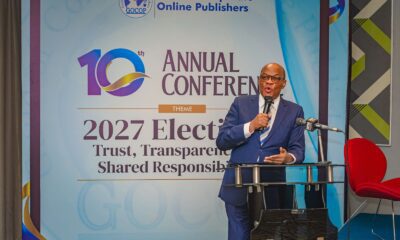








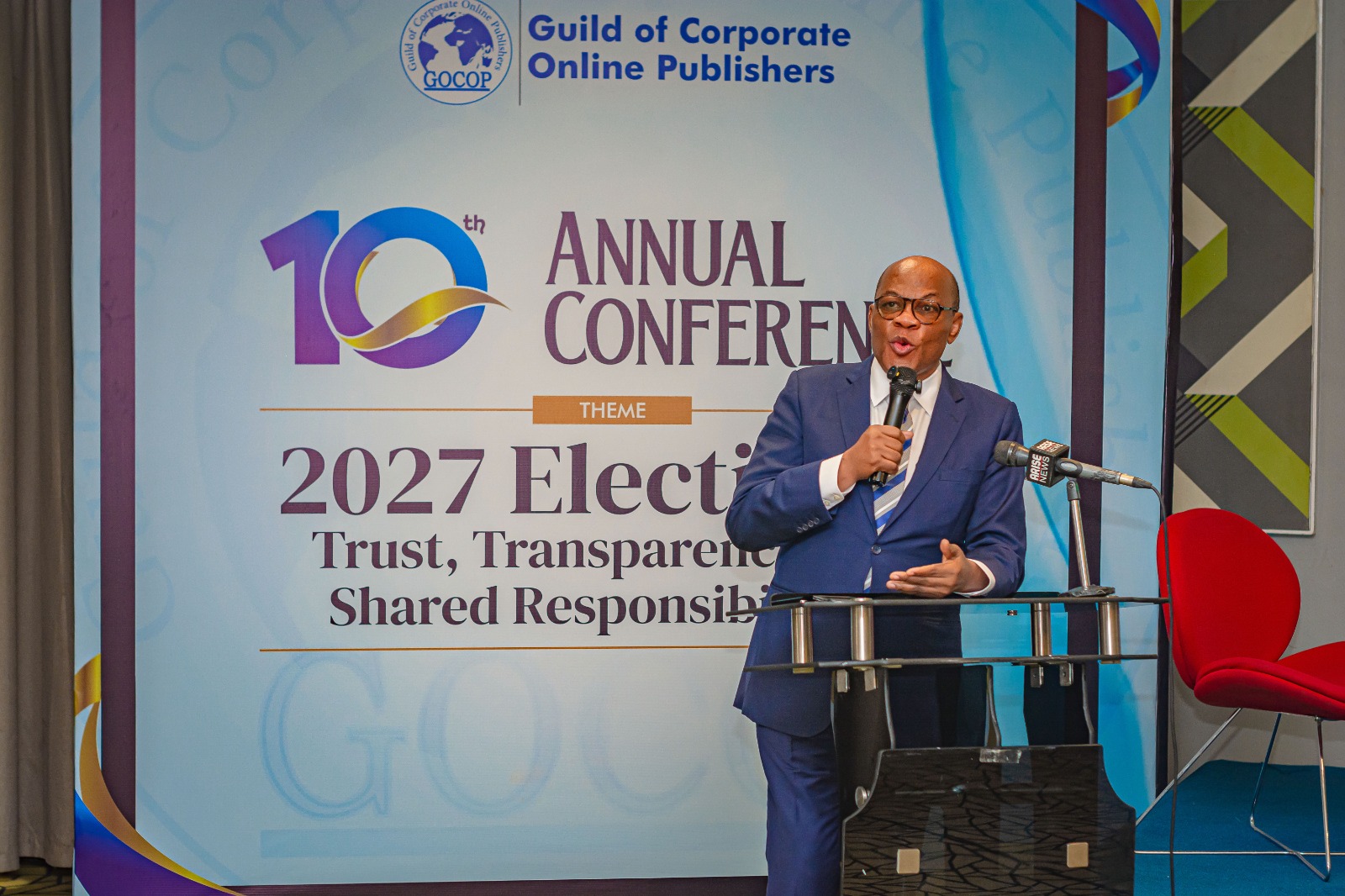
Agbakoba, a former President of the Nigerian Bar Association, made the call at the GOCOP Conference held on Thursday at the Radisson Blu Hotel, Ikeja, Lagos, with the theme, “2027 Elections: Trust, Transparency and Shared Responsibilities.”
He said that while the Electoral Act gives the Independent National Electoral Commission (INEC) authority to announce election results at different levels, Section 39 of the Constitution gives the press the right to obtain and disseminate information.
Agbakoba urged GOCOP and the wider media community to seek judicial clarification on the matter, drawing a comparison with recent legal action by some American media organisations over access to the White House.
“Media will not be gagged. The Rule of Law won in the US case, so test it in Nigeria.”
He also pointed to exit polls and the media’s role in reporting the choices made by voters, arguing that the media should be able to report election-related information within the limits of the law.
Agbakoba said every Nigerian should regard himself or herself as a shareholder in “Nigeria PLC”, with the 2027 general elections serving as an annual general meeting in which citizens would assess the direction of the country.
He also said economic hardship was likely to be a major issue in the 2027 elections, citing the sharp increase in the cost of essential medicines as an example of the pressure facing Nigerians.
In his welcome address, GOCOP President, Danlami Nmodu, mni, said the conference came at an important time as Nigeria approaches the 2027 general elections.
Nmodu said the theme reflected GOCOP’s contribution to democratic development and the need for trust in institutions, transparency in the electoral process and shared responsibility for credible elections.
“As the country moves towards another general election, there is a need for trust in institutions, transparency in the electoral process, and a clear understanding that responsibility for credible elections does not belong to one institution or one group alone.”
He said journalists had a responsibility to scrutinise both the government and the opposition and to report facts fairly and accurately.
“We must report facts and be fair and balanced. Credible journalism is one of the ways we can contribute to a healthy democratic process.
“I also call on government to do more to tackle insecurity, enhance peace, and support economic activity. Better security will give our people greater opportunity to work, invest, and improve their lives.”
In a goodwill message, Imo State Governor Hope Uzodinma, represented by the Commissioner for Information, Declan Emelumba, urged the media to remain objective and focused on facts in its coverage of the electoral process.
He said the media had an important role to play in informing Nigerians about the conduct of elections and used the opportunity to highlight the achievements of his administration in Imo State, including its plans to develop the state as a digital and industrialised economy.
The Federal Government is planning to negotiate a ceiling of N1,350 per litre on the ex-gantry cost of petrol in a move aimed at shielding pump prices from fluctuations in global crude oil prices and exchange rates.
Taiwo Oyedele, Minister of Finance and Coordinating Minister of the Economy, disclosed this on Thursday in Abuja while addressing a press conference on fuel prices and subsidy-related questions.
However, Oyedele acknowledged that the measures being proposed by the Federal Government would not completely ease the pressure on households.
He then outlined the proposed measures, including the N1,350 ceiling on the ex-gantry or landing cost of petrol, which he said was designed to reduce volatility in pump prices.
“We are introducing price modulation. Pump prices should not have to follow every swing in global crude or exchange rate. The government is negotiating a ceiling of N1,350 a litre on the ex-gantry cost of petrol to keep pump prices stable,” he said.
According to him, where the actual cost rises above the ceiling, refiners and importers would bear the shortfall and recover it later when crude prices or exchange rates become favourable, without breaching the ceiling.
“This is neither a subsidy nor a price control; it is designed to smooth prices over time, rather than suppressing them,” Oyedele said.
He explained that the objective was to prevent sharp swings in pump prices, saying, “The reason is simple: N1,400 a litre today and tomorrow is better than N1,500 today and N1,300 tomorrow, because volatility itself adds to uncertainty and fuels go up sharply; they rarely come down as fast.”
Oyedele said the ceiling would be reviewed monthly, with adjustments made where necessary and the figures published for transparency.
He also announced a 30-day discount on petrol dispensed by NNPC Limited, with priority given to public transporters nationwide, while insisting that the measure was not a subsidy.
The NNPC limited had announced a ₦66 fuel discount for customers using the NNPC Fuel App at its stations nationwide.
“We are offering a discount on petrol dispensed by NNPC Limited for the next 30 days in the first instance with priority for public transporters nationwide. It’s not a subsidy; the government is saying we sell to you at a cost,” he said.
The minister said the government was also working on forward crude sales to domestic refiners, adding that rising production would help shield pump prices from volatility in the international market.
“We’re working with the states across the federation under the new tax laws. We are reigning in the taxes and levies that inflate fuel and logistics costs,” he added.
Oyedele said the government was also increasing funding for cash transfers to vulnerable households and subsidising credit for small businesses and consumers, while working with state governments to accelerate the rollout of compressed natural gas.
The proposed measures come amid a renewed political debate over fuel subsidies, with African Democratic Congress (ADC) presidential candidate Atiku Abubakar and Nigeria Democratic Congress (NDC) presidential candidate Peter Obi promising to restore the subsidy if elected in 2027.
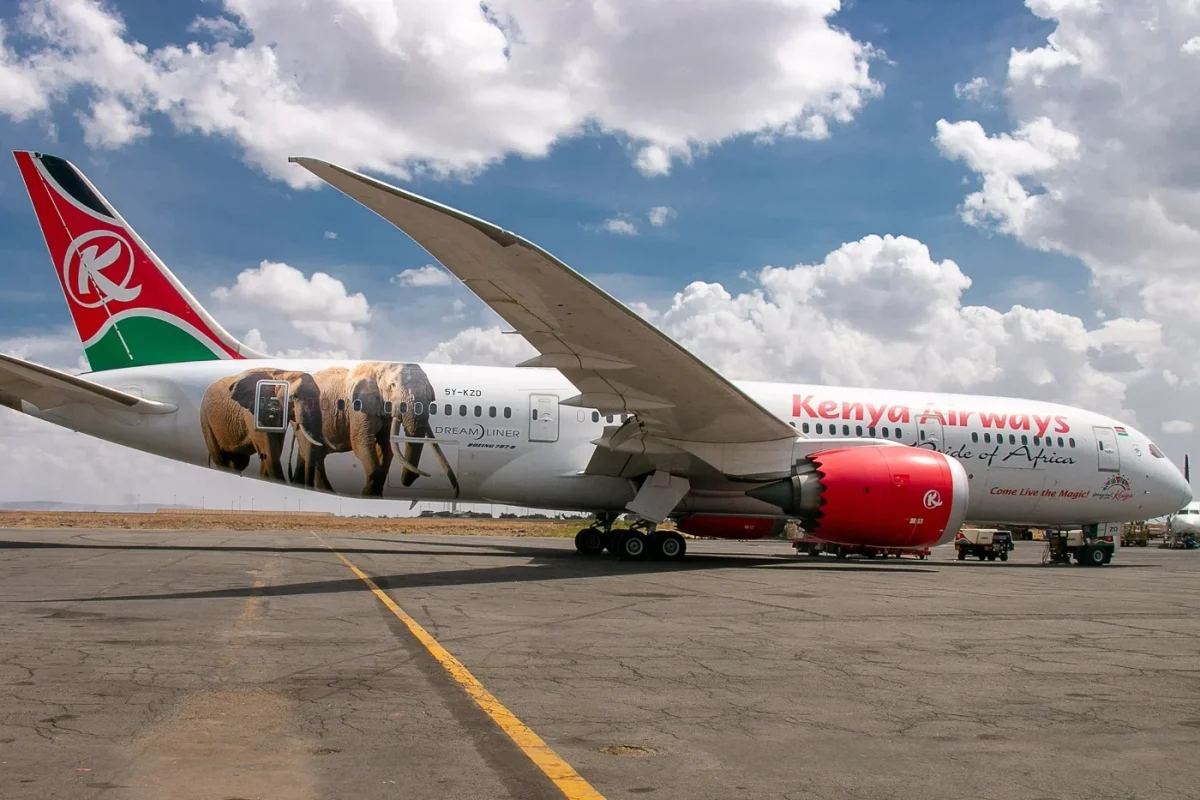
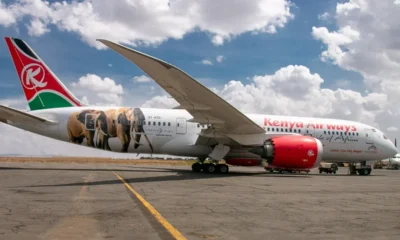
A passenger has died aboard a Kenya Airways flight from Nairobi to Lagos after becoming unresponsive about 20 minutes before the aircraft landed at the Murtala Muhammed International Airport, Lagos.
Kenya Airways confirmed the incident in a statement on Wednesday, saying the medical emergency occurred at about 9:20 p.m. Nigerian time on Tuesday.
The airline said its crew administered first aid to the passenger in line with their training and followed emergency procedures before the aircraft landed at 9:41 p.m.
“Upon landing at Murtala Muhammed International Airport at 21:41 hrs, the aircraft was met by medical personnel, and upon further examination, the medical personnel confirmed that the passenger had passed away,” the airline said.
Kenya Airways expressed condolences to the passenger’s family and friends and said it was providing support in coordination with the family, local authorities and aviation regulators.
The airline did not disclose the identity of the passenger or the cause of death, saying it would respect the privacy and dignity of those involved.
NCAA responds
Responding to the incident, Michael Achimugu, Director of Public Affairs and Consumer Protection at the Nigeria Civil Aviation Authority (NCAA), said the police have taken over the investigation.
Mr Achimugu said he was briefed by Kenya Airways’ country manager on Wednesday morning.
According to him, the passenger had reportedly been picked up in Madagascar after authorities there denied him entry and was being returned to Nigeria by Kenya Airways.
He said the airline was expected to return the passenger because it had transported him to Madagascar.
“The country manager said he was picked from Madagascar, after customs had earlier denied him entry into the country, and as expected, the airline that brought him into the country take him back,” Mr Achimugu said.
He further said the passenger allegedly became restless and aggressive during the return flight, attempted to gain access to the cockpit and later tried to open the rear door of the aircraft.
He explained that the passenger was subsequently restrained by members of the crew.
“When he got into the aircraft, he became restless and aggressive inside the aircraft, wanted to enter the cockpit and later wanted to open the rear door, but was later tied down. His hands were tied to his back to ensure that he stopped the troubles,” he said.
Mr Achimugu said the passenger was pronounced dead after the aircraft arrived in Lagos.
“But when he got to Nigeria, he was declared dead on arrival. I don’t want to pre-empt the police investigation, but they have taken it over for now,” he said.
He added that the deceased’s family could request an autopsy as the investigation progresses.
Police begin investigation
The spokesperson for the Airport Command of the Nigeria Police Force, Muhammed Adeola, confirmed that an investigation had commenced.
Mr Adeola said the incident involved an “inadmissible passenger” and that complications reportedly developed during the return flight.
“Yes, it’s true, and investigations have commenced. It’s an issue of an inadmissible passenger, and the said complications arose on their way back,” he said.
He said the passenger became unable to breathe before medical personnel were alerted ahead of the aircraft’s arrival.
Mr Adeola said the police have taken statements from members of the flight crew, including the captain.
He added that the body had been deposited at a morgue in Ikeja.
Similar incident
The death is not the first reported case of a passenger dying aboard an international flight bound for Lagos.
In March 2019, a 54-year-old passenger aboard a Delta Air Lines flight from Atlanta, United States, to Lagos was found unresponsive shortly before the aircraft landed at the Murtala Muhammed International Airport.
The passenger was confirmed dead after the aircraft landed, with medical personnel meeting the flight at the airport.
Medical emergencies have also led to international flights returning to Lagos.
In September 2025, reports said a that a United Airlines flight from Lagos to Washington, D.C., returned to Lagos after a passenger suffered a medical emergency about 90 minutes into the journey. Medical personnel attended to the passenger after the aircraft landed.
Kenya Airways said it is providing the necessary support in coordination with the deceased passenger’s family, local authorities and aviation regulators.
The airline also apologised for any inconvenience the incident may have caused other passengers.
-
 Editorial2 days ago
Nigeria’s Roads: Where a Driver’s Licence May Not Mean a Driver Can Drive
-
News3 days ago
Nigerian Air Force releases names of passengers on board crashed Aircraft in Ondo
-
News2 days ago
Over 1,000 Islamic clerics ask Tinubu to drop 2027 re-election bid
-
Features2 days ago
TWENTY YEARS IN MEMORY: MARIA UKAMAKA IFEOMA OJUKWU
-
News3 days ago
Ralph Obioha, Ex-NADECO founding member, dies at 80
-
News2 days ago
Military, DSS, police rescue 20 NYSC corps members, civilian in Imo
-
News2 days ago
90-year-old father of ADC Edo South candidate abducted
-
News1 day ago
GOCOP Trains Members On Deployment Of AI Tools to Boost Efficiency, Profitability