The proposed measures include visa bans and asset freezes for individuals associated with these groups.
Representative Smith Christopher, who sponsored the bill, on Tuesday, commended US President Donald Trump for re-designating Nigeria as a Country of Particular Concern, CPC, under the International Religious Freedom Act. The CPC designation is reserved for countries believed to engage in or tolerate particularly severe violations of religious freedom.

This came as the Federal Government said, yesterday, that it remains calm and not in any panic mode over the position of the United States on the alleged genocide against Christians in the country.
The government also said that it has opened up channels of discussion with the US and assured that it is committed as ever to ensure that everyone is safe irrespective of religion or ethnic background.
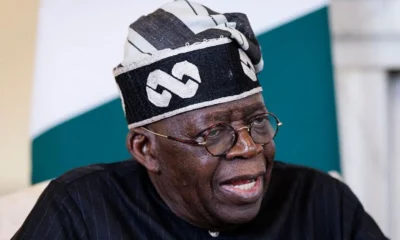
Meanwhile, President Bola Tinubu has said that his administration will defeat terrorism and that he is determined to deepen global engagement and intensify the fight against terrorism and criminality.

President Tinubu, in apparent response to the threats of military attack by President Trump over the alleged persecution and killing of Christians in Nigeria, said that despite the political headwinds, the Nigerian government will continue to engage with its partners.
Tinubu’s remarks came after an economic briefing by the Minister of Finance and Coordinating Minister of the Economy, Mr. Wale Edun, who reported that the administration’s reform agenda continues to stimulate investor confidence and deliver notable economic gains.
President Tinubu said: “The most important thing is the fact that despite the political headwinds and the fear of our people, we will continue to engage with our partners.
“So, the task ahead is immense. We are engaging the world diplomatically, and we assure all of you that we will defeat terrorism in the country.
“The task ahead is immense but we are resolved to move forward with unity and purpose, guided by renewed hope agenda to build a prosperous, inclusive and resilient Nigeria.”
Meanwhile, Senior Pentagon officials reportedly acknowledged that limited airstrikes or drone operations are unlikely to end Nigeria’s protracted insurgency, unless the US undertakes a full-scale campaign. And according to the New York Times, the United States military is preparing contingency plans for potential airstrikes in Nigeria, following a directive from President Trump instructing the Pentagon to “prepare to intervene” to protect Christians from terrorist attacks.
US Congress’s push against MACBAN, others
In addition to the Miyetti Allah groups, the bill in the US Congress also adds “Fulani-Ethnic Militias” operating in Benue and Plateau states to the list of Entities of Particular Concern, EPCs. EPCs are non-state actors accused of committing particularly severe violations of religious freedom. Other previously designated EPCs include Boko Haram, ISIS-West Africa, ISIS-Sahel, Houthis, and the Taliban.
The legislative move comes alongside remarks from US Senator Ted Cruz, who vowed to hold Nigerian officials accountable over claims of Christian persecution. Senator Cruz had earlier proposed the “Nigeria Religious Freedom Accountability Act of 2025,” which called for targeted sanctions against federal or state officials who “promoted, enacted, or maintained Nigerian blasphemy laws,” including through public advocacy, legislative action, or executive enforcement.
Supporters of the US bills argue that these measures are necessary to address ongoing religious violence in Nigeria, where attacks on churches, Christian communities, and individuals have been reported in several northern and central states.
Critics, however, note that the Nigerian government has consistently denied that religion is a primary driver of insecurity, instead pointing to broader social, political, and economic factors contributing to violence in the country.
The proposed sanctions represent a significant escalation in US efforts to address religious freedom violations in Nigeria, potentially affecting not only group leaders but also their international operations and financial networks. Lawmakers behind the legislation say the aim is to hold perpetrators accountable while sending a message about the United States commitment to protecting religious minorities worldwide.
The bill is now under consideration in the US Congress, with its outcome likely to influence diplomatic relations between the United States and Nigeria, particularly regarding security cooperation and human rights issues.
Nigeria is not in panic mode, opened discussion with the US — FG
Minister of Information and National Orientation, Mohammed Idris, while fielding questions from journalists at the end of the Federal Executive Council, FEC, meeting, presided over by President Tinubu at the Council Chamber, Presidential Villa, Abuja, said: “The government of Nigeria is responding to the genuine concerns raised and the politics of it, of course, aside, we genuinely are taking the issues seriously.
“Let me also say that government, even before the events of the last few days, has been extremely committed to ensuring that Nigeria is indeed safe for everyone.
“The killing of even one Nigerian citizen, is of concern to the government of Nigeria. And of course, because our Constitution, and we keep mentioning this, guarantees the right of everyone to worship his or her religion without hindrance.
“The government of Nigeria is committed to that, will continue to do that, and wherever there is any violence affecting any citizen in this country, the government of Nigeria has indeed the responsibility to ensure that that is being tackled.”
Nigerian govt stable
On whether the position of the United States is affecting the way government is being run, he said: “Let me say that the government of Nigeria is really very stable. The President is calm. Like we have said, he’s calm. The Federal Executive Council members are indeed very calm. That is not to discountenance the issue. We are not saying that.
“Are there issues of security in this country? Yes, there are. Are people being killed in parts of this country? Yes. But is there anything that the government is doing to also checkmate that? Yes, indeed, there are. Is the government also responding to this? Yes, it is.
“But this is being done with the greatest sense of responsibility, while maintaining the balance that we require to face these issues head-on.
“Now, to recap, yes, government is responding to some of these issues in a manner that will also reflect who we are as a country, maintain our respect and dignity as a country, and also welcome the partnership that we so dearly need from everyone, the international community, from within, to tackle this issue. Issues of terrorism, violence from extremists are not something that is just done by one country.”
The Minister said Nigeria has porous borders, and because of that it is cooperating with its regional partners. We also have cooperation with national partners, including the United States and Nigeria will continue to engage now.
Opens discussion with US
“Have we had any discussions with the government of United States? Yes. Channels have been opened. We prefer that this situation be solved diplomatically. We don’t want to escalate it through rhetoric — you have said, we have said, and all that.
“The responsibility that we have as a government is to ensure that, whatever genuine concerns there are, to keep our citizens safe, the Nigerian government will continue to do that.
Nigeria not in panic mode
“But there is no panic mode here. We are responding responsibly, steadily, and in the interest of our country, also taking into account the concerns both from within and outside this country, of what the situation in this
“But let me say for the umpteenth time: Nigeria is a country that has tolerance for religion. So whatever you practice, whatever is your faith, our Constitution guarantees that you are free to practice that. The Nigerian government will continue to ensure will continue to impress on the security agencies to maintain law and order wherever they are. We’re also going to do more so that whatever concerns there are, the government of Nigeria will take care of those concerns. “
US military draws up airstrike plans
The New York Times report, released Wednesday, indicates that the US Africa Command submitted a series of operational options to the Department of Defence in response to a request from Secretary Pete Hegseth to develop plans consistent with Trump’s orders.
Officials familiar with the planning told The New York Times that the proposals, described as “heavy,” “medium,” and “light,” detail different levels of military engagement within Nigeria.
The “heavy” option would involve deploying an aircraft carrier strike group to the Gulf of Guinea, accompanied by fighter jets or long-range bombers capable of striking militant targets deep in northern Nigeria.
The “medium” option would deploy MQ-9 Reaper and MQ-1 Predator drones to carry out targeted strikes on insurgent camps, convoys, and vehicles. These operations would be coordinated with U.S. intelligence to ensure “precise and timely” attacks, the report said.
By contrast, the “light” option emphasizes intelligence sharing, logistical support, and joint operations with Nigerian forces to counter Boko Haram and other Islamist groups accused of mass killings, abductions, and attacks on churches.
Senior Pentagon officials reportedly acknowledge that limited airstrikes or drone operations are unlikely to end Nigeria’s protracted insurgency, unless the U.S. undertakes a full-scale campaign similar to those in Iraq or Afghanistan—an approach Washington is not currently pursuing.
Channels Television earlier reported that President Trump on Saturday threatened to send US forces into Nigeria with “guns-a-blazing” if Africa’s most populous country does not stem what he described as the killing of Christians by Islamists.
“If the Nigerian Government continues to allow the killing of Christians, the U.S.A. will immediately stop all aid and assistance to Nigeria, and may very well go into that now disgraced country, ‘guns-a-blazing,’ to completely wipe out the Islamic Terrorists, who are committing these horrible atrocities,” he said on Truth Social.
“I am hereby instructing our Department of War to prepare for possible action. If we attack, it will be fast, vicious, and sweet.”
This is coming a day after the American President declared Nigeria a “Country of Particular Concern” over killings of Christians, describing the situation as a “mass slaughter.”
“Christianity is facing an existential threat in Nigeria. Thousands of Christians are being killed. Radical Islamists are responsible for this mass slaughter,” Trump wrote.
He said the United States “cannot stand by while such atrocities are happening,” directing Congressman Riley Moore and House Appropriations Chairman Tom Cole to investigate the matter.‘Citizens’ Faiths Protected’
Responding on Saturday, President Tinubu, in a statement he personally signed, dismissed claims that Nigeria is hostile toward Christians, insisting the country remains committed to religious freedom and tolerance.
“The characterisation of Nigeria as religiously intolerant does not reflect our national reality, nor does it recognise government efforts to safeguard freedom of religion and belief.
“Nigeria stands firmly as a democracy governed by constitutional guarantees of religious liberty,” he said.
Tinubu explained that since 2023, his administration has maintained open engagement with both Christian and Muslim leaders while tackling security challenges affecting citizens across faiths and regions.
“Since 2023, our administration has maintained active engagement with Christian and Muslim leaders and continues to address security challenges affecting citizens across faiths.
“Religious freedom and tolerance have been a core tenet of our collective identity and shall always remain so.
“Nigeria is a country with constitutional guarantees to protect citizens of all faiths. Our administration is committed to working with the United States government and the international community to deepen cooperation on protecting communities of all faiths,” the president said. (Vanguard)