News
Cooking Gas: Scarcity, price hike artificial, middlemen exploiting customers — NALPGAM


Nigerians have expressed concern over another hike in the price of cooking gas, with a kilogram now selling for as high as ₦2,000 in some parts of the country.
According to gas marketers, the increase has little to do with any official price adjustment.

The Nigerian Association of Liquefied Petroleum Gas Marketers has attributed the surge in cooking gas price to temporary supply disruptions and market exploitation by some operators.
The association’s National President, Oladapo Olatunbosun, stated this on Wednesday while speaking on Channels Television’s The Morning Brief.
He said there had been no official increment in the price of Liquefied Petroleum Gas, blaming the hike on opportunistic marketers taking advantage of supply gaps caused by the recent strike by the Petroleum and Natural Gas Senior Staff Association of Nigeria against the Dangote Refinery.

He said, “I sympathise with Nigerians as the President of NALPGAM because we never intended to have a situation like this.
“I must say it categorically that prices of cooking gas have not gone up. No increment has been done officially.
“What is happening is that some marketers are taking advantage of the shortage in supply and the market forces that have increased demand. They are cashing up to make good money, which is wrong.
“We frown at this as an Association, and I’m happy that by the grace of God, normalcy will return in the next few days.”
Channels TV reports that prices of LPG, which previously averaged between ₦1,200 and ₦1,300 per kilogram, have in recent days risen to between ₦1,700 and ₦2,000, and as high as ₦3,000 in some areas.
Olatunbosun explained that the current situation was artificial and temporary, noting that normal supply and pricing were expected to stabilise in the coming days.
He said the problem began when Dangote Refinery, which had previously improved domestic supply by eliminating middlemen, embarked on maintenance and renovation that slowed truck loading.
He stated, “Before the strike, when you load from Dangote, he sends out about 50 trucks per day, which is good because it served the South West and some part of the North well, and if you add it to what you get from Apapa, and other depots in Lagos, because they also source their products from IOCs and other producers.
“Dangote came in with his own strategy, selling directly to offtakers. That made importation not to be attractive. You won’t be able to compete if you import because you are likely to incur losses.
“But at a time, Dangote also commenced renovation/maintenance, which affected loading. Trucks started spending like 14 days at Dangote yard before they could get products.
“So, marketers switched to Apapa, and nobody felt the impact.”
According to him, while the refinery was undergoing maintenance, marketers turned to Apapa depots for supply, but the subsequent PENGASSAN strike disrupted vessel discharges and inspections, drying up stocks.
“When Dangote finished renovation, and we were about to commence full loading, the strike came in. Although Dangote didn’t stop production, everybody had rushed to Apapa, and it was now out of product, and all the depots there were dry.
“The only vessel that came in from NOJ axes was meant to supply three depots could not berth because of the strike. And even when it berthed, the officers to inspect it weren’t on the ground because of the strike, and that caused about five days’ loss, and the real impact of the backlog became obvious.
“Now that the strike is off, the product has been discharged, and they are trucking out. But because everywhere is dry and the South West is the only place that consumes the largest amount of LPG in Nigeria,” he added.
He said the backlog from the delay worsened the scarcity, particularly in the South-West, which he said consumes the largest share of LPG in Nigeria.
Olatunbosun added that the country’s national LPG consumption had increased from about 1.2 million metric tonnes three years ago to nearly two million metric tonnes, further straining supply whenever there were disruptions.
He advised consumers to buy directly from registered gas plants, noting that those buying through middlemen or third parties were likely to pay inflated prices.
Olatunbosun said, “If you buy a product from a third party, fourth party, the chain has been extended, then the price is going up, which is quite illegal. Just like you buy petrol on the road for people who carry kegs, they will sell it at exorbitant prices. So if you go to gas plants, the price you can buy today is 1,300 maximum.
“People who are claiming to buy gas at 1700 did not disclose the source of their purchase. If you are buying from a third or fourth party, then catch on, and the prices increase.
“But if you buy from gas bottling plants, my members, you will not buy as high as that. Average price within my members in Southwest today is between N1000 to maximum of N1300, depending on the location and the kind of overhead they incur to get the gas into the plant. Before this artificial scarcity, the prices were being sold at 1,050 in some places, N950. So the highest you could get from a gas plant today is N1300, depending on if it’s a very remote area.”
The NALPGAM president assured Nigerians that the association was working with relevant authorities to stabilise.



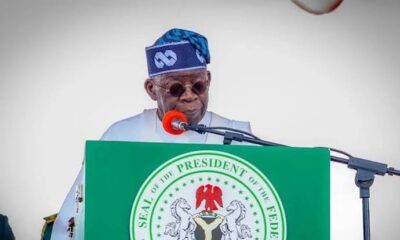






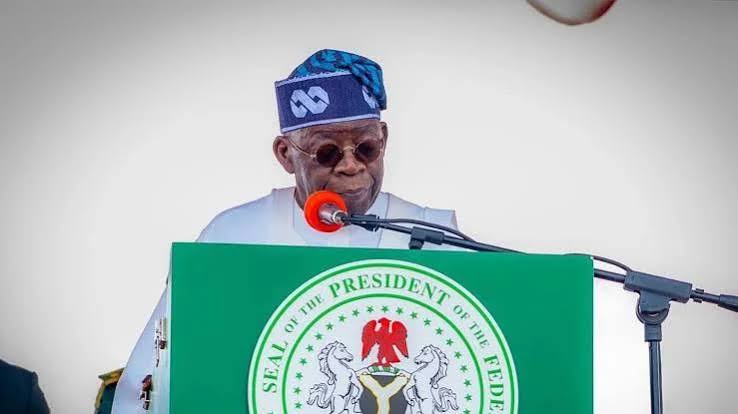
President Bola Tinubu has explained why he will not accompany members of the All Progressives Congress (APC) Presidential Campaign Council to every campaign event ahead of the 2027 general election, saying he must balance the demands of the re-election campaign with the responsibilities of governance.
Tinubu spoke on Wednesday in Abuja during the inauguration of the APC Presidential Campaign Council, where he charged members to take the party’s message to Nigerians across the states and local government areas while he concentrated on running the country.
The President said he agreed with concerns that the rigours of campaigning should not distract him from governance, insisting that Nigeria required his attention at a time when the administration was managing economic responsibilities and international financial obligations.
“You’ve warned me not to allow the rigour of the campaign to distract me from governance, I hear you. I am in full agreement with your decision. Nigeria needs more attention now,” he said.
Explaining further, Tinubu asked campaign council members to excuse him from attending every campaign event, pointing to the need to meet the country’s financial obligations.
“So, you will excuse me from going everywhere with you, we have bills to pay. The American creditors cannot wait,” the President said.
He also emphasised the importance of attracting investors willing to make long-term commitments to Nigeria, arguing that investment was necessary to secure a better future for the country’s children.
“We want those investors to come in, be here to stay, to invest for the future of our children,” he said.
Tinubu, however, assured Nigerians that his decision not to attend every campaign event would not prevent him from engaging directly with voters.
“However, I will still make time to speak directly with Nigerians, even as you lead the campaign in the states and local government areas,” he added.
Describing the inauguration as more than a routine political gathering, the President said the council represented a renewed commitment to Nigerians and the responsibilities entrusted to the APC as the governing party.
“We have not gathered merely to inaugurate a council. We have gathered to renew a covenant. A covenant with Nigerian people and the historic responsibility they have entrusted to us as Nigeria’s governing party,” he said.
He charged council members to communicate the administration’s vision, record and agenda to Nigerians nationwide, expressing confidence in their ability to take the party’s message to every ward.
“This council will carry our vision, our records and our agenda to every Nigerian, and it will carry them to victory every ward of this country,” Tinubu said.
The President also commended APC members for successfully completing the party’s congresses, recalling predictions that the exercise would trigger an internal crisis.
According to him, the party had overcome the challenges and emerged united, with members participating in the process from the ward level to the national leadership.
“They said there will be implosion. We passed through it. We did not fail. You didn’t let us down. We got here together,” he said.
Tinubu’s remarks place governance and economic management at the centre of his stated approach to the coming campaign, while assigning the campaign council the responsibility of coordinating the party’s nationwide mobilisation ahead of the 2027 election.
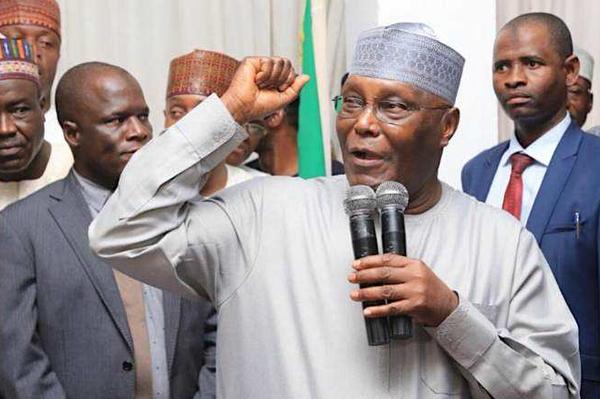
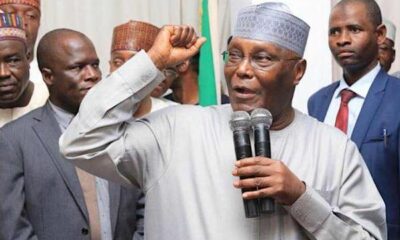
The Economic and Financial Crimes Commission (EFCC) has reopened an investigation into allegations involving former Vice-President Atiku Abubakar following a petition by a former member of the House of Representatives, Hon. Ehiozuwa Johnson Agbonayinma.
The commission acknowledged receipt of the petition, dated August 27, 2026, and received on September 1, 2026, confirming that investigation has commenced.
The former lawmaker through his lawyer, Chief Hannibal Uwaifo (SAN), is seeking a review of the allegations arising from an earlier investigation involving the former vice-president.
As part of the process, the EFCC invited Agbonayinma to its headquarters in Jabi, Abuja, on October 12, where he adopted his petition and responded to questions from investigators.
He arrived at about 9:58 a.m. and left at approximately 4:07 p.m. after the interview.
The commission’s acknowledgement letter, referenced CR:3000/EFCC/HQ/SDC-2/VOL.3/398, forms part of the ongoing investigative process.
He told newsmen that his petition sought to revisit an investigation conducted by the former EFCC chairman, Mallam Nuhu Ribadu, involving Atiku.
He argued that the matter deserved renewed attention in the interest of accountability and the rule of law.
“I want to thank Nigerians, the EFCC and those praying for me in this struggle. The laws are meant for both the rich and the poor. After the EFCC has done a fantastic job, it should not be kept under the table,” he said.
Agbonayinma added that he considered reporting alleged wrongdoing a constitutional responsibility, insisting that nobody was above the law.
He also disclosed that he had written a petition on the matter to United States President Donald Trump, calling for attention to the allegations.

The Senate has passed, for second reading, a bill seeking to establish a national framework for suicide prevention, decriminalise attempted suicide and provide rehabilitation for survivors, despite opposition from Senate President Godswill Akpabio, who insists that the act should remain punishable by imprisonment.
Sponsored by Senator Asuquo Ekpenyong, representing Cross River South, the bill seeks to address what he described as a contradiction in Nigeria’s laws.
Ekpenyong argued that while the National Mental Health Act recognises attempted suicide as a psychiatric emergency requiring treatment, Section 327 of the Criminal Code and Section 231 of the Penal Code still criminalise the act.
He said decriminalisation without accessible care would be incomplete, stressing that suicide has complex causes and requires a humane, health-focused response.
“At the heart of this bill is a simple question: when a Nigerian survives a suicide attempt, should the first response of the state be prosecution or protection?” he asked.
He warned that continued punishment could create a situation in which people experiencing distress feel compelled to ensure their attempts are fatal to avoid prosecution.
The bill proposes replacing imprisonment with mandatory assessment, referral, treatment and follow-up support. It also provides for crisis helplines, training for police officers, teachers and health workers, public education and a national data system for suicide prevention.
However, Akpabio maintained that attempted suicide should remain a criminal offence, arguing that removing the penalties could encourage the act.
“If you attempt suicide, make sure you die. Anyone who attempts and fails will go to jail,” the Senate President said.
Akpabio added that the issue involves both the Criminal Code and the Penal Code, requiring input from State Houses of Assembly during a public hearing to avoid legal conflicts.
The bill has been referred to the Senate Committees on Judiciary and Health for further legislative action and a public hearing.
-
 News2 days ago
Mbah orders impartial Police Probe into Enugu political violence, vows accountability
-
News2 days ago
BREAKING: Soludo, Wike, Adeleke, others appointed member of APC Presidential Campaign Council
-
Features2 days ago
Enugu Political Flashpoint: Mbah orders Impartial Probe as NDC Incidents Trigger Controversy
-
News2 days ago
Rochas Okorocha arrested, released after one-hour Interrogation — Police
-
News2 days ago
Enugu APC demands NDC apology over minute’s silence
-
News1 day ago
Alleged $1bn arms fraud: Funds given to Defence Ministry, not military — Gen. Buratai
-
News2 days ago
Enugu Governor’s Aide, Lucky Chukwu is dead
-
Features7 hours ago
Aguleri/Umuoba Anam Crisis: The Bloody Battle Between Close Neighbours