News
19,100 churches sacked in Nigeria – Intersociety alleges


A civil rights group, the International Society for Civil Liberties and Rule of Law, (Intersociety), has alleged that at least 19,100 churches have been sacked in Nigeria by jihadists.
In a report released by the organisation on Sunday, it claimed that at least 100 churches have been sacked on a daily basis for the past 16 years.

It spans the period between July 2009 and 2025.
The report was signed by Emeka Umeagbalasi, Head, Intersociety, Obianuju Joy Igboeli, Human Rights Lawyer/Head, Dept. of Civil Liberties and Rule of Law, and Chidinma Udegbunam, Human Rights Lawyer/Head, Dept. of Campaign and Publicity.
Intersociety said an estimated 1200 Christian churches had been razed or sacked on yearly basis, “during which 19, 100 churches in all were lost, 100 sacked every month and more than three every day”.

It disclosed that “razing or sacking of an estimated 19,100 Christian churches followed widespread armed religious conflicts.”
The group said apart from estimated 13,000 churches attacked, burnt down or destroyed or violently shut down between July 2009 and December 2014, additional 6,100 others are likely to have been lost to the country’s Islamic Jihadists and Jihad enablers since midyear of 2015 in severely affected States of Taraba, Adamawa, Kebbi, Borno, Kastina, Niger, Kogi, Nasarawa, Plateau, Benue, Bauchi, Yobe, Southern Kaduna and Gombe.
“It is also statistically found that more than 1000 churches (white clothing churches) belonging to members of Organization of the African Instituted Churches, a branch of the Christian Association of Nigeria (CAN) and allied others have also been attacked, burnt down or sacked.
“Church facilities belonging to such white clothing churches have also been falsely labeled as ‘training camps for IPOB/ESN/Biafra Agitators’, leading to their attack and destruction by security forces, during which members of the traditional religion, especially their herbalist-priests were indiscriminately targeted for instant death or abduction and disappearance by security forces.
“Attacks on Christian churches and threatening and uprooting of their congregational members across Nigeria have severely uprooted and emptied thousands of their parishes and outstations and affected many, if not most parts of the 16 Dioceses of the Catholic Mission in Nigeria, to the extent that Archdiocese of Kaduna, covering Diocese of Sokoto-with Parishes of Zamafara, Kebbi and Katsina presently exists with skeletal parishes and outstations, forced them into in a state of near-empty church buildings.
Benue State’s four Dioceses of Makurdi, Gboko, Okukpo and Katsina-Ala; home to largest Catholics and denominational Christians in Northern Nigeria, followed by Plateau State, have been threatened and almost uprooted, with more than twenty of their parishes and hundreds of outstations threatened and closed by Jihadist Fulani Herdsmen.
“In Plateau State, Catholic Archdiocese of Jos (Ecclesiastical Province of Jos), comprising Dioceses of Bauchi, Maiduguri, Jalingo (Taraba State), Pankshin (Plateau State), Shendam (Plateau State), Wukari (Taraba State) and Yola (Adamawa State) are facing serious congregational emptiness and evangelical devastation.
“Same goes to Catholic Dioceses of Minna and Kontagora in Niger State where dominant Christian communities in Shiroro, Munya, Rafi, Paikoro, etc., have been uprooted and placed under siege by combined forces of the Islamic Jihadists led by Jihadist Boko Haram and Jihadist Fulani Herdsmen/Bandits.
“The Catholic Diocese of Lokoja under Archdiocese of Abuja is also facing serious threat, worsened by recent Jihadist activities of “Mahmuda and Lakaruwa Islamic Jihadists and their patrons”, Intersociety further alleged.




• Police Commissioner visits family, vows to get perpetrators
By Chuks Collins, Awka
Some yet to be identified three-man assassins suspected to be cultists have k!lled a very popular media personality in Awka Sunday afternoon.
The popular public announcer and broadcaster/radio guest artiste, comedian -Isaac Nwosu, aka ‘Aiza Nwosu’, was according to eye witnesses shot point while on the steering on the street of the Anambra capital city of Awka.
He was said to have been shot alongside two other victims at separate locations, point-blank, gangster style.
The State Commissioner of Police, Nnanna Oji Ama, today 31st August 2026 after a 2-hour closed-door strategic meeting with the Command’s strategic and operational officers as part of ongoing efforts to reassess information from the public especially within Awka to strengthen security operations and sustain the fight against violent crime, paid a condolence visit to the family of late Nwosu.
In his reaction shortly after the visit, Ama vowed to fish out the assailants.
Eyewitnesses who spoke to journalists said the unfortunate acts were apparently by the same assailants on Sunday, August 30, 2026.
Late Nwosu was shot along S.M. Okeke Street, Amaikwo area of Awka.
Whereas the other victims were shot dead along Capital City Road, Amaenyi area in Awka.
Eyewitnesses and residents believed the dastardly act. were cult related.
According to one of the witnesses, “The assailants, numbering about three and driving in a tinted vehicle, trailed the comedian from his home, double-crossed his vehicle and before attacking and shooting him dead.
“They left the victim in a pool of blood inside his car. As they drove some distance away, they also shot another victim d3ad by the roadside, dispossessed him of his belongings and fled.
“The assailants fired some shots into the air before leaving the scene in a commando-like manner, thereby creating tension in the area. After they left, the security operatives arrived at the scene and recovered the lifeless bodies of the victims.
“The security operatives later beefed up security around the areas following the incident.”
Some videos circulating online showed the lifeless bodies of the victims lying in pools of blood at different locations as onlookers gathered around the scenes.
The Anambra State Police Public Relations Officer, SP Ikenga Tochukwu, confirmed the incident in a statement on Monday, August 31.

Terrorists have shot dead the All Progressives Congress (APC) Chairman of Rantan Ward in Bebeji Local Government Area of Kano State, Alhaji Garba Buba, during an attack on the community.
Buba was killed on Sunday night, August 30, 2026, after terrorists reportedly invaded Rantan community and opened fire on residents. Another resident identified as Sulaiman Zunduma was also killed during the attack.
A resident of the community, Hamza Isah Rantan, confirmed the incident in a Facebook post, saying the attack forced residents to flee their homes in search of safety.
According to Hamza, the terrorists shot Buba inside his house before he was taken to a hospital for treatment. He, however, died from the injuries sustained during the attack.
Hamza also said Zunduma was shot during the invasion and died instantly. He expressed condolences to the families of the victims while praying for the recovery of those who sustained injuries.
“On Sunday night kidnappers attacked our town, Rantan, where they shot Alhaji Garab Buha, the APC ward chairman in Rantan, who later died in a hospital. They also killed another resident, Sulaiman Zunduma,” Hamza said.
The development was also confirmed by the Kano State APC spokesperson, Alhaji Auwalu Soja, who said Buba was killed on Sunday. He added that the party would issue an official statement on the incident.
The killing occurred less than 24 hours after another attack in the area, where three residents of Garun-Mallam were reportedly killed by unidentified attackers. The successive attacks have heightened concerns over the security situation in communities around the area.
The latest killing has further raised concerns over the safety of residents in Kano communities, with calls growing for security agencies to strengthen operations and prevent further attacks.
As of the time of this report, the identities and motives of those responsible for the Rantan attack had not been officially established.
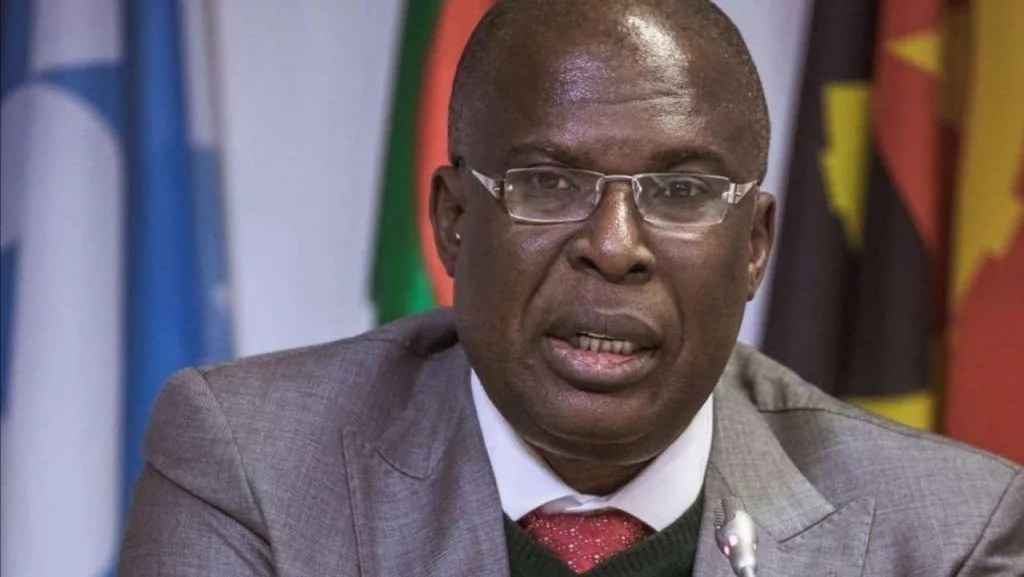
Former Bayelsa State Governor and ex-Minister of State for Petroleum Resources, Chief Timipre Sylva, has resigned from the All Progressives Congress, citing what he described as the party’s departure from its founding ideals.
Sylva, a founding member of the APC, announced his resignation in a letter dated August 31, 2026, addressed to the APC Chairman of Ward 4 in Brass Local Government Area of Bayelsa State.
He said he made the decision after consulting his family, associates, colleagues and sympathisers.
Sylva also criticised the administration of President Bola Tinubu, saying it had disappointed most Nigerians and expressing confidence that voters would seek a change in the 2027 general elections.
In the letter, which was electronically delivered, Sylva said he could no longer remain in a party whose leaders appeared to believe that “all is fair in politics.”
He wrote, “Having consulted widely with my family, associates, colleagues and sympathisers, I wish to formally tender my resignation from the All Progressives Congress (APC), with immediate effect.
“As a founding member of the APC, and one who joined other well-meaning Nigerians in building the party with sweat and money, it is deeply saddening to witness how the ideals we espoused have been so thoroughly and unrecognisably thwarted.
“Moreover, I cannot, in all good conscience, continue to belong to a party whose leaders believe that ‘all is fair in politics;’ and have consistently demonstrated that belief in practice.
“All cannot be fair in any endeavour of life. The demands of basic decency and morality forbid it. Unfortunately, this mentality appears to underpin virtually every action, and even inaction, of this administration.”
The former governor said the APC-led government had failed to meet the expectations of Nigerians, adding that he saw no realistic effort to change its direction.
“The present Government, formed under the banner of the APC we once loved, has disappointed the vast majority of Nigerians. And I can see neither a credible attempt nor any possibility of a revamp,” he said.
Sylva said he had therefore decided to leave the party rather than remain part of what he described as a “floundering ship.”
“I am therefore left with no other choice than to jettison a floundering ship whose fate appears to have been sealed by its irredeemable load of iniquities. I have no doubt that, in the coming election, Nigerians will vote for Nigeria and free the Country from this stranglehold on our beautiful country,” he stated.
Sylva also explained why he copied the Economic and Financial Crimes Commission in his resignation letter.
He said he knew the decision could lead to increased scrutiny of him and his associates but was prepared to face the consequences.
“I am fully aware that this action of mine may invite a redoubled witch-hunt against me and my associates, but that is a risk I am willing to take,” he said.
Copies of the resignation letter were also sent to the National Chairman of the APC, the Executive Chairman of the EFCC and the APC Chairman in Bayelsa State.
-
 News3 days ago
US publishes fresh names, photos of 10 Nigerians to be deported
-
News3 days ago
FG orders closure of first River Niger bridge for one week
-
News2 days ago
Married father of two exposed for posing as Catholic priest
-
Sports2 days ago
Kipyego, Aberu win Enugu City International Marathon
-
Entertainment2 days ago
Dolly Parton: The Coat of Many Colors She Left for the World
-
News3 days ago
Family announces funeral arrangements for former GOCOP President Dotun Oladipo
-
Sports2 days ago
‘The hills tested us, but Enugu carried me’, says Kipyego after winning Enugu Marathon
-
News20 hours ago
‘Nigeria is burning’ — Atiku tackles Tinubu over three-week European vacation