News
Judiciary is on trial —FHC Chief Judge Justice John Tsoho


The judiciary is on trial due to delays, systemic inefficiency and corruption, Federal High Court Chief Judge, John Tsoho, said yesterday.
He said inefficiency allows unethical practices to thrive, but that the issues are being addressed.

The CJ, who lamented that judges are overworked, stated that there is a need to adopt measures that would decongest the dockets.
He recommended the introduction of specialised tribunals to deal with certain disputes to limit what comes to the court for adjudication.
Also, Nigerian Bar Association (NBA) President Mazi Afam Osigwe (SAN) stressed the need to limit the appeals that reach the Supreme Court.

He believes landlord-tenant issues and minor theft cases should be decided at either the High Court or Court of Appeal to allow the Supreme Court to operate as a policy court.
Justice Tsoho and Osigwe spoke during a session at the NBA Annual General Conference in Enugu State, with the theme: “Stand out, stand tall!”
The CJ, represented by Justice Mabel T. Segun-Bello of the Enugu Division, believes the tribunal model for the adjudication of specific matters will lighten judges’ workload.
He said: “I am not saying that tribunals should take the work of judges.
“But what I am saying is that the tribunal model, which is a specialised or quasi-judicial forum for resolving specific types of disputes, should be considered.
“Most judges are overburdened, so they are quick to adjourn cases on the slightest mistake by counsel.
“A judge’s work starts when he is done sitting in court hearing cases – from signing orders to writing rulings and judgments.
“These specialised tribunals can take specialised cases with informal procedures other than the traditional courts.
Read Also: Is the Judiciary faring better under Kekere-Ekun?
“These can include immigration tribunals, intellectual property tribunals, environmental tribunals, etc. We have similar models around the world.”
Justice Tsoho described inefficiency as the “greatest sponsor of corruption”.
“If a system is not working efficiently, you have provided a feeding field for corruption to thrive,” he said.
He recalled that a corrupt affidavit system in a court in Abuja, where even business centres were issuing affidavits, was solved through “a digital infrastructure.”
“If the structure is not in place, such as a photocopier not working, users will look for easy alternatives.
“Justice is on trial for multiple reasons such as delays, systemic inefficiency, corruption, bureaucratic bottlenecks and inconsistent judgments,” Justice Tsoho said.
On what needs to change, he said the digitalisation of the judiciary is both urgent and essential.
He regretted that some of the key players are not embracing digital tools and technology.
“How many lawyers use AI assistance? AI cannot take our jobs because our jobs are rooted in human nuances, but a lawyer who is not AI-compliant will lose his job to a lawyer who is,” Tsoho said.
The CJ added: “Reform is not an option. It is imperative. Let us move from tradition to transformation.
“Justice must be seen to be swift, just and serve.”
NBA President advocates limits to appeals
Osigwe stressed the need to reduce the number of matters that go on appeal to the Supreme Court.
“The Supreme Court should be a policy court. Cases on tenancy, stealing of chicken – these should not get there,” he said.
He said the NBA will set up a support fund for lawyers to offer free legal services in all branches.
Osigwe lamented that the pro-bono system is now being abused by lawyers who merely use it to fulfil the requirement for conferment of the rank of Senior Advocate.
He said such lawyers abandon the cases once they attain the rank.
The NBA President added: “There is now a black market in the Correctional centres where prison officers sell these cases to lawyers.
“We have proposed setting up a pro-bono fund, and we will do that immediately after the conference.
“All branches will be directed to set up a pro-bono desk that will be manned by young lawyers or volunteer senior lawyers.
“The Committee will be chaired by Abiodun Owonikoko (SAN).”
He believes Custodial Centres are congested partly because some judges impose too stringent bail conditions that are difficult to meet, even for offences that may seem minor.
“Insisting that a surety must show evidence of land ownership in FCT, and titles to be verified – that’s nonsense.
“Sometimes they keep suspects locked up after they have perfected their bail conditions.
“Why can’t the identity of a surety be verified through BVN or NIN?
“In some court divisions, the court registrars have become monsters.
“You must give them N1million before they go on the verification exercise after someone has been granted bail.
“Why should the court subject itself to these officials or the prosecutor?
“Until judicial officers stop becoming tools in the hands of complainants or prosecutorial agencies to simply secure a remand, the Custodial Centres will be overstretched.
“But we must dedicate ourselves to helping those in society who are not able to help themselves,” Osigwe said, promising that the NBA will do more. (NATION)










…Says shared prosperity follows
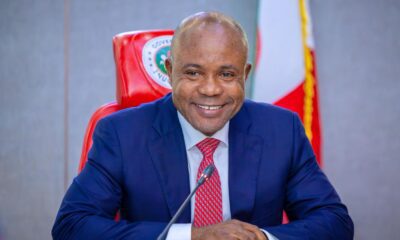
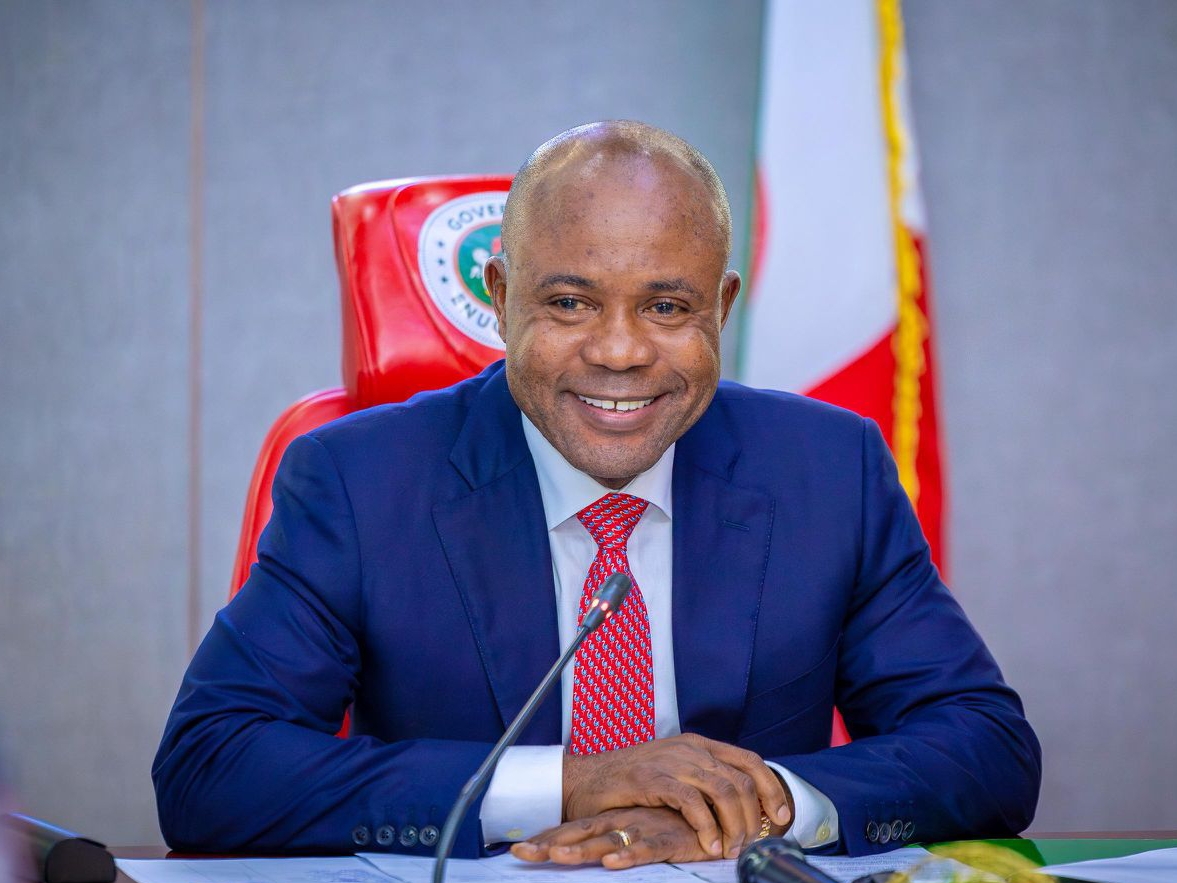
Governor of Enugu State, Dr. Peter Mbah, says Nigeria would have suffered total economic collapse but for President Bola Tinubu’s courageous reforms, arguing that the removal of fuel subsidy and floating of the naira only waited until the President’s assumption of office in 2023 because the nation delayed the ‘evil day’ and lived on borrowed time.
He gave the insights at the weekend during the launch of “As Tinubu Mbah Moves” (ATM), a support group convened by the Minister of Innovation, Science and Technology, Dr. Kingsley Udeh (SAN), and dedicated to the re-election of President Tinubu and Governor Mbah in Enugu.
Speaking to the mammoth crowd, he said, “It would have been a lot easier for any leader to just continue with the status quo and carry on on the basis of business as usual. But for Bola Ahmed Tinubu, it was business unusual that led to the bold initiatives.
“As a person who had played very actively in the oil and gas sector, I had written quite a lot of features and articles arguing against the fuel subsidy regime long before now, for it was clear to me, even from the point of a major player in that sector, that the subsidy regime was not sustainable because of the economic devastation it was causing to us as Nigerians. We were just basically postponing the evil day.
“We were just digging our poverty pits continually. We were actually digging deeper into that pit of poverty. And it would have taken a very courageous leader in his first term to say, ‘Look, if we have to build for the future, if we have to think about our children, then we must take out the subsidy and we must also unify the exchange rate regime.’”
Mbah took a swipe at the foreign exchange regime before the floating of the naira by Tinubu, describing it as a cesspool of corruption.
“We got to a point in this country where even salary earners, once they get paid, would run to the bureau de change to change it rather than hold their salary in naira. Confidence was completely eroded in the naira. Nobody wanted to touch it with the tip of their finger. And that was the recipe for a failed nation.
“If you wanted to do a study or research of any failed nation, it is when the country, the citizens themselves, begin to lose confidence in their currency. And that was the environment that this President inherited.
“It was a major cesspool of corruption. The arbitrage was obvious and people were being taken advantage of. What was happening between the official and the parallel market was terrible. And some people were benefiting from that arbitrage at the expense of the economy. But it took this President’s understanding of the economy to be able to make those bold decisions,” he explained.
Continuing, he said that the stabilisation of the nation’s macroeconomic indicators by the Tinubu administration had encouraged Foreign Direct Investments (FDIs) necessary for improving Nigeria’s microeconomic indices, such as household incomes and employment.
“This essentially is something that is largely driven by private capital. But government enables it by policies because I can tell you that private capital does not go to where you do not have stability.
“If your macro indicators are under pressure; if you have not addressed your foreign reserve, your foreign exchange regime, your inflationary rates, and all that, you do not have any chance of attracting private capital because private capital is blind. It is not emotional. It goes to where it makes return on investment, where it can be guaranteed some high level of security.
“Because we did not have all those before now, private capital was not coming. So, what the bold policies and initiatives this President took have done is that those macro pressures have largely been eased. And what you are now witnessing in our economy is a growth trajectory.
“So, private capital is now looking towards our country. You can see quite a number of FDI deals being closed – not MoA (Memorandum of Agreement) or MoU (Memorandum of Understanding). These are final investment decisions being made across different sectors, particularly in the oil and gas sector. You can see billions of dollars coming towards this direction today.
“People who have dollars are now going back to exchange their dollars because that confidence has been restored.
“So, now that we have stabilised our macro indicators, we have now started witnessing growth, albeit not to the level we aspire.
“The next thing is going to be shared prosperity because you are going to see that growth cascade. You are going to see it get to the households. You are going to see it create employment. So, our unemployed youths would be gainfully employed. That is the way it works,” he explained.
Citing Enugu State as an example, Mbah also credited the President with freeing funds that could have been sunk into subsidy, thus arming states with resources to embark on massive development projects that impact the lives of the people.
The Governor, therefore, urged Nigerians to vote en masse for the President to complete the job he started, saying it was the only realistic option.
“Nations are not built by abandoning challenges halfway through. If we have gone through this whole process of difficult periods when it appeared as if all was doomed to a point where we are beginning to see the light at the end of the tunnel, we cannot abandon what has been started. No great sailor abandons his ship because of a rough sea, mid-sea. You have to sail to get to your destination,” he said.
He urged ATM members to take the message of the successes of Tinubu’s reforms and the President’s various infrastructural and policy interventions in the South East to the electorate.
Meanwhile, Dr. Udeh (SAN) said the support group would focus its mobilisation efforts on non-members of the All Progressives Congress (APC) across the 4,145 polling units of Enugu State ahead of the 2027 general elections, deploying technology to register members, track their participation and monitor its mobilisation activities through an online registration portal.

The convoy of former Kano State Governor and former presidential candidate, Senator Rabiu Musa Kwankwaso, was reportedly attacked by suspected political thugs in Bichi Local Government Area of Kano State on Sunday, leaving several vehicles damaged and some members of his entourage injured.
The incident reportedly occurred as Kwankwaso and his supporters were leaving the area after touring several local government areas as part of their political engagements across the state.
The spokesperson for the Kano State governorship candidate of the Nigeria Democratic Congress, Comrade Aminu Abdussalam Gwarzo, Ibrahim Garba Shuaibu, confirmed the attack in an interview with Arewa Update.
A media aide to Kwankwaso, Saifullahi Hassan, also drew attention to the incident in a Facebook post.
Shuaibu disclosed that the delegation had visited Tofa, Rimin Gado, Kabo, Gwarzo and Shanono local government areas before arriving in Bichi, where they held a political meeting despite an earlier disturbance.
He alleged that the attackers struck as the delegation was preparing to leave, emerging from a location to assault vehicles conveying members of the entourage.
According to him, between six and seven vehicles had their windscreens smashed, while some members of the convoy sustained injuries.
“Senator Kwankwaso told us to enter the town without fear or retreat. When we arrived, there was a sign of disturbance and stone-throwing, but we held our meeting peacefully,” Shuaibu said.
He added: “It was on our way out that some people emerged from a location and started attacking our vehicles, smashing windscreens.”
Despite the incident, Shuaibu insisted that the group would not abandon its political activities, saying the attack would not weaken their resolve.
He described the incident as an indication of fear among their political opponents and reaffirmed the group’s commitment to its political objectives.
As of the time of filing this report, the Kano State Police Command had yet to issue an official statement on the alleged attack.
The state chapter of the All Progressives Congress (APC) had also not reacted to the incident.
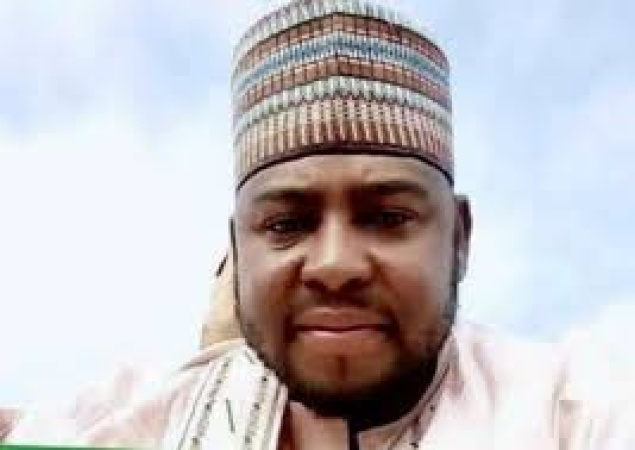
Bandits have killed a Senior Special Assistant (SSA) to Zamfara State Governor, Dauda Lawal, in Kaura Namoda town, Zamfara State.
The governor’s aide, Hon. Nasiru Sani Kaura, was reportedly shot dead when the bandits attacked the Low cost area of Kaura Namoda in the early hours of Sunday.
Residents said the attackers stormed the neighbourhood while Muslims were observing the early morning Subh (Fajr) prayer, shooting sporadically and forcing people to flee for safety.
Nasiru, a grassroots politician and community leader, was reportedly killed during the attack.
His death has triggered grief in Kaura Namoda and other parts of the state, with sympathisers describing his killing as a great loss to the community.
His funeral prayer was subsequently observed in accordance with Islamic rites.
The killing has also renewed concerns over the security situation in Kaura Namoda and other parts of Zamfara North, where communities have continued to experience bandit attacks, killings and abductions.
Residents have called on the state government and security agencies to intensify efforts to protect lives and property, particularly in residential communities.
In a separate development, the Zamfara State Police Command said it had rescued 19 kidnapped victims, comprising women and children, after 22 days in bandits’ captivity.
The victims were abducted from Tungar Haki Village, through Wanke, in Gusau Local Government Area, and taken to a bandits’ hideout around Kungurmi Village.
The police said the victims were rescued on Saturday, November 14, at about 10am during a coordinated operation involving operatives of the Anti-Kidnapping Unit, police personnel attached to Government House, operatives of the Department of State Services (DSS) and local hunters.
The operation followed credible intelligence on the whereabouts of the victims.
A statement issued by the Police Public Relations Officer, DSP Yazid Abubakar, said all 19 victims were found unharmed and had since been reunited with their families.
The Commissioner of Police, Ahmad Muhammad Bello, commended the joint security team for their courage, professionalism and collaboration, which led to the successful rescue.
He reaffirmed the command’s commitment to combating kidnapping and other criminal activities, while urging residents to provide security agencies with timely and credible information.
The two incidents came amid persistent security challenges in Zamfara, particularly in communities in the northern part of the state, where banditry has continued to threaten residents and disrupt normal activities.
-
 News2 days ago
UNN Party Horror: ‘I Woke Up At 9pm To Find My Friends Lying Lifeless’ – Survivor
-
News1 day ago
Police Arrest Three, Including Governor’s Wife’s Orderly, Over Her Unauthorised Departure from Kano Government House
-
News3 days ago
Angry Nigerians Confront INEC Chairman’s Convoy In UK Protest
-
News1 day ago
Kano Governor’s Second Wife, Zainab Kwankwaso, Files for Divorce, Offers to Refund Dowry
-
Politics2 days ago
Obi Defies Lagos Attack, Vows To Campaign Across Every Part Of State As Reps, Police Launch Probe
-
News12 hours ago
10 Killed or Missing, 2,000 Displaced as Communal Clash Destroys 150 Houses in Anambra – NEMA
-
News2 days ago
Archbishop Ibezim Withdraws Lawsuit Against Primate Ndukuba, Dean Enyindah, Signals Move Towards Reconciliation
-
News2 days ago
MACBAN Commends Mbah’s Inclusive Leadership, Urges Calm Over Alleged Killing of 62 Cattle in Enugu