News
330 students abducted, 52 schools shut down in three LGAs – Report

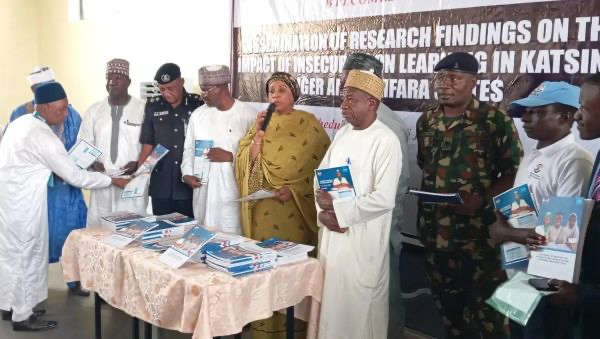
A research conducted by Oxford Policy Management has revealed that from 2020 to 2025, about 330 students were abducted in Batsari, Faskari and Kankara Local Government Areas of Katsina State, with 52 schools shut down.
Hadiza Tijani, a Consultant with Oxford Policy Management, disclosed this, while presenting the findings of the survey at a dissemination workshop.

The News Agency of Nigeria (NAN) reports that the survey was supported by UNICEF in collaboration with the Katsina State Ministry of Basic and Secondary Education.
NAN also reports that the survey, which equally revealed that two students were killed, was conducted on the impact of insecurity on access to education in Zamfara, Niger and Katsina States.
Tijani added that the survey found that about 15 school staff across the three local government areas were abducted, while five other staff were killed.

She said: “Other key findings from the respondents show that 37.7 percent of teachers feel unsafe while teaching, and 79.7 percent of students report difficulty concentrating due to noise and trauma.
“Also, 79.7 percent of the students reported difficulty in concentration due to students’ noise or loud noises, while in Batsari, 50 percent of teachers observed a significant attendance decline.
“This is followed by 45.5 percent in Faskari and 39.1 percent in Kankara.”
Tijani said that the rural and border communities have been most affected by the sharp increase in banditry over the last five years, as 96.1 percent of the respondents have experienced banditry attacks.
According to her, 97.7 percent of the respondents cited incidents of kidnapping across the three study local government areas, saying: “Between 2020 and 2025, 71 insecurity incidents were recorded.
“In Kankara alone, over 300 students were abducted, while across Faskari and Kankara, 14 teachers were kidnapped and five were killed.
“Disruptions to education were most pronounced in rural and hard-to-reach areas of the state, with insecurity in surrounding communities frequently forcing schools to shut down, resulting in prolonged interruptions to learning activities.
“The use of temporary learning centres or hubs has gained notable support, particularly in Kankara LGA, where 84.4 per cent of respondents support this approach.”
According to Tijani, key recommendations of the report to address the crisis include; strengthening school security through political advocacy, infrastructure upgrades, early warning systems, emergency training, and relocation of schools.
She added: “And also to enhance alternative education delivery through local teacher recruitment, community-based learning spaces, and radio teaching.
“Other recommendations are to improve teacher welfare and learner well-being through better compensation, professional development, psychosocial support, tailored support for vulnerable learners.
“Supporting livelihood recovery through economic development and social welfare for conflict-affected households are recommended.”
In his welcome address, Michael Banda, Officer-in-Charge, UNICEF Kano Field Office, observed that education was not only the right of every child, but also the foundation for peace, stability, and sustainable development.
Banda said: “Schools have been closed, teachers displaced, families forced to flee, and communities left vulnerable.
“The consequences are severe, rising numbers of out-of-school children, learning losses, trauma among learners, and weakened community confidence in the school system.
“This study, undertaken in collaboration with government and partners, provides evidence and insights into how insecurity is affecting education outcomes in the region.
“The workshop gives the participants the opportunity to reflect together on the findings, share perspectives, and identify practical solutions.”
In her remarks, the Katsina State Commissioner for education, Hajiya Zainab Musawa, revealed that in the state, banditry had significantly reduced over the past few years.
Musawa, however, lamented that some schools have remained closed due to fear of kidnapping, with students moved to safer environments.









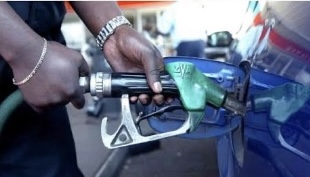
Public servants under the Joint National Public Service Negotiating Council have reaffirmed their September 30, 2026, ultimatum to the Federal Government over the rising cost of petrol, the demand for a wage award and the commencement of negotiations for a new national minimum wage.
The JNPSNC, made up of eight public sector unions, issued a three-day warning strike notice to the Federal Government, beginning October 2, should the government fail to slash the price of petrol to N500 per litre, announce a wage award and introduce other measures to cushion the crushing hardship in the country.
Members of the JNPSNC include the Nigerian Civil Service Union; Medical and Health Workers Union; Association of Senior Civil Servants of Nigeria; and National Association of Nigerian Nurses and Midwives.
Others are the Amalgamated Union of Public Corporations, Civil Service Technical and Recreational Employees; Nigeria Union of Public Service, Reportorial, Secretarial, Data Processors and Allied Workers; National Union of Printing, Publishing and Paper Products Workers; and National Union of Agriculture and Allied Employees.
The council said it had mobilised public servants across the country for a three-day warning strike if the Federal Government failed to address the issues raised in its letter to President Bola Tinubu before the deadline.
Recall that the JNPSNC had, on September 21, written to Tinubu, demanding that the price of petrol be slashed to N500, the immediate announcement of a wage award and the beginning of negotiations for not less than N500,000 minimum wage from 2027, among others.
In a statement on Tuesday, September 29, 2926, leaders of the JNPSNC warned that should the issues of fuel pump prices and the wage award not be addressed by September 30, especially during the Independence anniversary speech by the President, public servants nationwide would commence a three-day warning strike beginning October 2, 2026.
The statement issued by the National Secretary of the JNPSNC and General Secretary of the Nigeria Civil Service Union, Gbenga Olowoyo, said the September 30 deadline remained sacrosanct, stressing that the concerns of Nigerian workers could no longer be ignored.
According to him, “The three critical issues requiring urgent attention are as follows: reduction of fuel price to N500 per litre. The Federal Government should take urgent steps to bring down the price of Premium Motor Spirit (PMS) to N500 per litre.
“This can be achieved through the provision of an intervention fund to address landing costs and support oil and gas operators.
“It is equally important for the Federal Government to ensure the sale of crude oil to the Dangote Refinery and operators of modular refineries at appropriate terms to facilitate increased domestic refining and help bring down the price of petroleum products.
“The current price of PMS, ranging from N1,450 to N2,000 and, in some locations outside major communities and cities, as high as N2,500 per litre, is unacceptable to Nigerian workers.
“The council maintains that the economic hardship occasioned by the high cost of fuel is placing the survival of Nigerian workers, their dependants and the general populace under severe pressure, making it increasingly difficult for Nigerians to live normal and dignified lives.
“The Federal Government should urgently approve a wage award for Nigerian workers to cushion the effects of the prevailing harsh economic conditions being experienced by workers, their dependants, and vulnerable Nigerians.
“The council believes that urgent action on this demand will further enable public servants to consolidate their loyalty, commitment and productivity within the public service ecosystem.”
Minimum wage committee
The workers asked the Federal Government to urgently establish a committee to facilitate negotiations for the new minimum wage.
“The Federal Government should urgently establish a tripartite committee to commence and facilitate negotiations for the new national minimum wage expected to become due in 2027.
“The Nigerian workers’ demand for the immediate constitution of the committee is informed by the need to avoid any administrative or procedural delay that could affect the implementation of the new National Minimum Wage once it is eventually negotiated and passed into law by the National Assembly,” the statement added.
Warning strike
“Consequently, the council states that failure by the Federal Government to take the necessary steps to address these issues on or before 30th September 2026 will leave Nigerian workers with no option but to commence a three-day warning strike, with effect from Friday, 2nd October 2026, to press home their demands.
“It is imperative to state clearly that the Independence Day address of the President of the Federal Republic of Nigeria should adequately address these critical issues.
“Failure to address the concerns raised, according to the Council, will attract the displeasure of Nigerian workers and their dependants, as well as other vulnerable Nigerians who continue to bear the brunt of the prevailing economic hardship,” the statement concluded.

Four Nigerian states reduced their domestic debt by more than 20 per cent in the first half of 2026, with Enugu recording the biggest reduction.
According to an analysis of Debt Management Office (DMO) data, Enugu, Jigawa, Ondo and Zamfara reduced their domestic debt between December 2025 and June 2026.
Four Nigerian states reduced their domestic debt by more than 20 per cent in the first half of 2026, with Enugu recording the biggest reduction.
According to an analysis of Debt Management Office (DMO) data, Enugu, Jigawa, Ondo and Zamfara reduced their domestic debt between December 2025 and June 2026.
The four states had a combined domestic debt of N224.66 billion in December 2025. By June 2026, the figure had fallen to N126.85 billion.
This represents a reduction of N97.81 billion, or 43.53 per cent, within six months.
Enugu recorded the highest reduction at 52.73 per cent, followed by Jigawa with 34.71 per cent, Ondo with 26.82 per cent and Zamfara with 20.86 per cent.
Enugu
Enugu’s domestic debt fell from N157.60 billion in December 2025 to N74.51 billion in June 2026.
This represents a reduction of N83.10 billion, or 52.73 per cent, the largest decline recorded by any state during the period.
The state recorded a 23.84 per cent reduction in the first quarter, before cutting its debt by another 37.93 per cent in the second quarter.
Jigawa
Jigawa reduced its domestic debt from N1.60 billion in December 2025 to N1.04 billion in June 2026.
The reduction amounted to N555.41 million, representing 34.71 per cent.
The state recorded no change in its debt during the first quarter, but reduced it by 34.71 per cent in the second quarter.
Ondo
Ondo’s domestic debt dropped from N8.42 billion to N6.16 billion during the six-month period.
This represents a reduction of N2.26 billion, or 26.82 per cent.
The state reduced its debt by 13.11 per cent in the first quarter and a further 15.78 per cent in the second quarter.
Zamfara
Zamfara’s domestic debt fell from N57.04 billion in December 2025 to N45.14 billion in June 2026.
The state reduced its debt by N11.90 billion, representing 20.86 per cent.
Most of the reduction occurred in the first quarter, when the debt fell by 16.77 per cent. It declined by another 4.91 per cent in the second quarter.
Other states also recorded notable reductions. Kwara’s debt fell by 18.93 per cent, Ogun by 16.89 per cent, Anambra by 16.74 per cent, Ebonyi by 15.55 per cent and Bayelsa by 15.36 per cent.
Overall, 26 states reduced their domestic debt between December 2025 and June 2026, while 10 states and the Federal Capital Territory recorded increases.
Edo recorded the largest increase at 135.72 per cent, followed by the FCT at 89.98 per cent, Borno at 70.52 per cent, Adamawa at 52.74 per cent and Delta at 48.41 per cent.
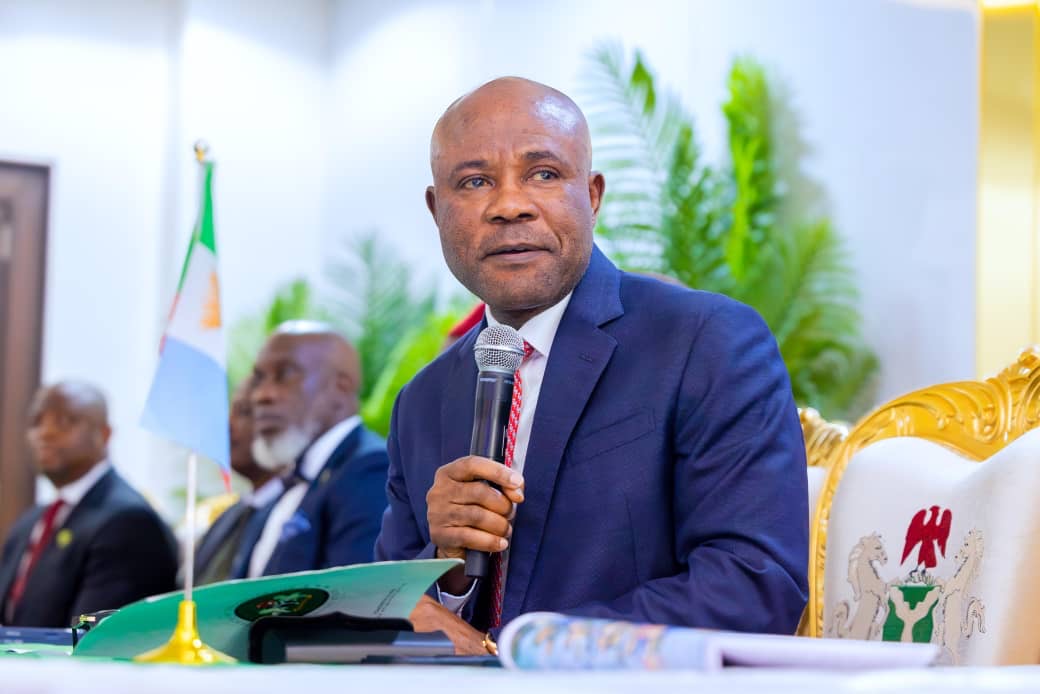
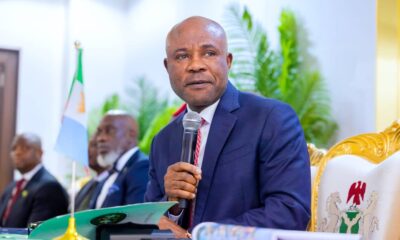
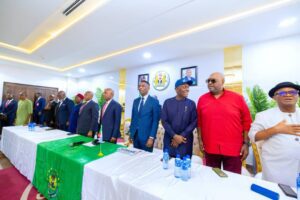
Governor of Enugu State, Dr Peter Mbah, has charged the newly sworn-in chairmen of the 17 local government areas in the state to immediately commence work, stressing that the local government system is not a passive arm of government in the state, but an active partner in the development agenda of the state government.
Mbah gave the charge following the swearing-in of the newly elected local government chairmen and vice chairmen at Government House, Enugu.
The Enugu State Independent Electoral Commission (ENSIEC) had on Sunday declared candidates of the All Progressives Congress (APC) winners of the 17 chairmanship and 260 councillorship seats in the council election conducted across the state on Saturday.
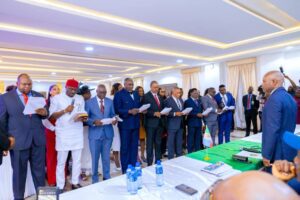
The chairmen and their council areas are John Ogbodo, Nkanu West; Mike Ogbuekwe, Nkanu East; Ugochukwu Nwanjoku, Aninri; Jude Chinedu Asogwa, Nsukka; Caleb Ani, Enugu South; Ugo Ferdinand Ukwueze, Igboeze South; Brendan Emeka Ani, Isi-Uzo; Ibenaku Onoh, Enugu North; Martin Amadieze, Igbo-Etiti; and Innocent Ezeoha, Udenu.
Others are Chris Onyekachi Simon, Igboeze North; Chijioke Ezeugwu, Uzo Uwani; Hyginus Agu, Udi; Uche Okolo, Awgu; Beloved Dan Anike, Enugu East; Greg Anyaegbudike, Oji River; and Vitals Ndu, Ezeagu.
Speaking at the inauguration ceremony the governor reminded the chairmen that the promises they made during the electioneering period had now become obligations to the electorate, describing the relationship between elected officials and the people as a social contract.
“In the last few weeks, you went around the communities, meeting our people, soliciting their votes. They have done you that honour of giving you their mandates to serve them and it is now your turn to discharge those commitments.
“So, what you have just done here today is beyond symbolism. It is quite significant because it means that you have just sealed the social contract you have with the people.
“I would, therefore, imagine that you are going to hit the ground running because there is really no honeymoon when we have quite a whole number of tasks ahead of us at this point,” he asserted.
Mbah stressed the strategic importance of the local government system, describing it as the tier of government closest to the people and a critical partner in the state’s development agenda.
He said the government’s objective to eradicate poverty could not be achieved without addressing poverty in rural communities where there is prevalence of poverty.
He, therefore, urged them to align their programmes and priorities with the broader development agenda of his administration, particularly in education, healthcare, sanitation, agriculture and poverty reduction.
Mbah further charged them to make themselves accessible and accountable to the people.
“You must be accessible to the people that elected you. You must be accountable to them. And you must spend their resources responsibly,” Mbah stressed.
On education, the governor urged the chairmen to go beyond physical infrastructure and focus on measurable outcomes, including literacy, numeracy and school enrolment.
“It should equally interest you to have the statistics of those kids that are of school age that are not in school in your local government and to be actively working to ensure that you have zero — and I mean zero — not even one child who is of school age should be out of school,” he said.
He urged the chairmen to make the welfare of poor and vulnerable residents a priority, saying poverty eradication would require deliberate measurement of progress rather than mere political declarations.
Responding on behalf of the chairmen, the re-elected Chairman of Igboeze South Local Government Area and Deputy Chairman of the Association of Local Government of Nigeria, Enugu State, Barr. Ugo Ferdinand Ukwueze, expressed appreciation to the people of the state and Mbah for giving them the privilege to serve.
He said some of them, who had previously served under Mbah, had acquired valuable experience during the period and pledged the commitment of the chairmen to good governance and expressed confidence that, at the end of their tenure, they would be proud of their contributions to the development of Enugu State.
“For those of us that were privileged to serve under your leadership in the past two years, I can tell you that the knowledge gained, experience acquired cannot be measured in words.
“We want to sincerely commit and recommit ourselves to the course of your good governance so that at the end of our tenure, we will be proud that Enugu State gave you the opportunity to groom us to what we are actually becoming,” he said.
The event was witnessed by the Deputy Governor, Barr. Ifeanyi Ossai; members representing Nkanu East and West, as well as Igboeze North and South Federal Constituencies, Hon. Nnolim Nnaji and Hon. Dennis Agbo, respectively; Deputy National Chairman (South) of the All Progressives Congress, Dr. Ben Nwoye; State APC Chairman, Dr. Martin Chukwunweike; Secretary to the State Government, Prof. Chidiebere Onyia; Chief of Staff, Barr. Victor Udeh, among several other dignitaries and senior government officials.
-
 News2 days ago
2027: How Atiku told me to persuade Peter Obi to accept VP slot – Babachir Lawal Ex-SGF Babachir Lawal
-
News1 day ago
Ojukwu Property Dispute: OTL petitions IGP over demolition, construction at Macpherson Avenue Property
-
News2 days ago
SDGs: Mbah moves Enugu beyond projects, targets lasting development impact
-
News1 day ago
‘I’m strong, ready to work’ – Tinubu speaks after return from vacation
-
News3 days ago
FG slashes interest rate on late tax payment
-
News1 day ago
Xenophobia: Nigerian Consulate condemns killing of three Nigerians in South Africa
-
Politics3 days ago
APC chairmen reject Wike’s coalition, demand defection
-
News1 day ago
Mbah installs N500m Surgical Equipment at Parklane, targets Nigeria’s Best Teaching Hospital