News
Insecurity: Your marching orders not effective – Benue, Plateau Leaders tells Tinubu


After the global outrage that greeted the June 13 massacre of over 200 innocent farmers by armed herdsmen in Yelewata community, Guma Local Government Area, LGA, of Benue state, it was expected that the people would have some respite particularly with the marching order issued to the security agencies by President Bola Tinubu to put a halt to the attacks and killings in the state.
The President, who visited the state on June 18, shortly after the bloody attack, did not mince words when he also directed that those behind the killings should be apprehended and prosecuted.

He also stated that he was in a position to help the people achieve peace, which is vital to development. We were not elected to bury people and have orphans and orphanages. We will work with you to achieve peace. We are here to work with the people. The people of Benue deserve peace,” he added.

Regrettably, however, despite the President’s promise, peace has continued to elude the people of Benue stat,e who have not had respite from the armed herdsmen incursions. The attacks and killings have intensified as if the invaders became emboldened even after the directive for all hands to be on deck to have peace in the state. In fact, the attackers menacingly took the fight to security personnel drafted to the crisis areas, killing some of them and leaving some others with injuries.

Timeline of attacks after Tinubu’s marching order
*June 22: Just four days after the President’s visit, the marauders took hostage 12 passengers of the state government-owned Benue Links transportation company near Eke on Ugbokolo-Otukpo Road in Okpokwu LGA of the state.
*June 30: Four Mobile Policemen were killed by the marauders during an attack on the Udei community in Guma LGA after they were successfully repelled by soldiers stationed at Ortese, an IDPs host community in the same Guma LGA.
*July 3: They stormed the Ukohol community, very close to Yelewata, killing one Uger Sember in his farm while two others were declared missing and were never found. On the same date two farmers on a motorbike reportedly ran into the armed herders at Tse Orkpen in Mbabai Council Ward of Guma LGA. They were lucky to have escaped alive but their motorcycle was taken away by the marauders.
*July 4: Agbu City Village in Tyough-Atee Council Ward of Gwer West LGA was attacked and one person was killed in that incident.
*July 4: A retired Headmaster and Village Head from Daudu, Guma LGA, Zaki Isho Aondohemba and his friend, Mr. Uger Sember, also a retired Headmaster, were gruesomely murdered by the armed herders in their farms at Okohol community, also in Guma LGA. His motorcycle was burnt while four others were declared missing. Luckily, one of the boys who accompanied them to the farm escaped with serious injury.
*July 7: Four Police and Nigeria Security and Civil Defence Corps, NSCDC, personnel on patrol were killed in an ambush by the armed herders at Udei community, near Yelewata in Guma LGA. The patrol team, known as the Buffalo Squad of Operation Zenda, a joint security team comprising officers of the Mobile Police Force, the NSCDC, Counter-Terrorism Unit, CTU, of the Police and the Benue State Civil Protection Guards were said to be on routine patrol along the Daudu-Yelewata road when they came under attack.
*July 16: A church leader of St. Albert Catholic Church Abata, Guma LGA, Vitalis Kenvanger and three others were murdered by the marauders along the Yogbo-Gungu-Aze road while one of the victims remained unaccounted for till date.
*July 19: There was pandemonium in Uikpam, a host community of thousands of IDPs after heavy sporadic gunshots were fired for over 20 minutes from all directions in the community by herders.
*July 24: A middle-aged man, Gabriel Vandefan was killed and beheaded by armed herdsmen in his farm at Uikpam community, Guma LGA. His killers also reportedly chopped off one of his hands and went away with it. The residents of Anyimbe and Awashuwa settlements in Ayilamo, Tombu Council Ward of LGA on July 24 raised the alarm over the massive influx of arms-wielding herdsmen and cattle into their communities.
*July 28: Two middle-aged men were killed by armed herdsmen along the Uikpam–Umenger road in Guma LGA.
*August 3: A mother and her grown-up son, identified as Mlumun Igbawua and Terkimbir Igbawua, respectively, were murdered by armed herdsmen on a rice farm at Tse-Nyibiam, Ngban, Nyiev Council Ward of Guma LGA. Fortunately, the wife of the deceased man, who was caught and tortured by the armed marauders, escaped from her captors. The murder of the duo came less than three months after the deceased woman’s husband was attacked and also killed in the same rice farm by the armed herders during cultivation.
*August 6: At least nine persons, including a Police officer, were killed in a renewed attack by suspected armed herdsmen on communities in Agatu LGA.
*August 11: Three persons were killed at their farms in a fresh attack on Yelewata communities, which sparked angry protests by women of the community who dumped the corpses of the dead on the Makurdi-Lafia road to demand protection from the authorities.
*August 12: A Septuagenarian and two others were murdered by the marauders at Uikpam community, Mbabai Council Ward of Guma LGA. Among the victims was a patent medicine store owner who, at the time of the attack was in his shop and attending to customers when marauders stormed the area.
These attacks within a space of 59 days from the date of the President’s visit, claiming over 32 lives with several others still unaccounted for, have left many wondering if the government has become helpless and overwhelmed by a ragtag gang of untrained militia. The development has brought to the fore the issue of what must be urgently done to save Benue from being completely destabilised by the marauders.
In Plateau state, communities in the Bokkos, Riyom, Kanam, Wase, and Bassa local government areas have been thrown into grief since April 2025. Dozens of lives have been lost in a wave of coordinated attacks by gunmen. The Presidency, in a statement signed by Mr Bayo Onanuga, Special Adviser to the President (Information and Strategy) attributed the killings to communal clashes saying, “the ongoing violence between communities in Plateau State, rooted in misunderstandings between different ethnic and religious groups, must cease”. But stakeholders in the state, including the State Governor, Caleb Mutfwang, have rejected what they termed as a wrong narrative, insisting killings in the State are well coordinated “genocide,” carried out to displace people and grab their lands.
The Governor who has worked tirelessly to end the menace since coming on board, appears unsuccessful because four months later, the killings have not stopped. Instead, the grim toll has risen especially in communities in the Bokkos LGA, leaving survivors questioning the effectiveness of Presidential orders and state-level measures, and wondering when promises will translate into safety.
As it is, much of the rural Plateau is a patchwork of abandoned communities, burnt carcasses of homes, and other property. Residents say the reality on the ground contradicts official reassurances. In many cases, attackers move freely while survivors are left with little protection. However, Security agencies like the State Police Command, and Operation Safe Haven insist they are responding within their means. But survivors say response times remain slow, often measured in hours after an attack has ended.
“We feel forgotten. We are tired of the daily condemnation of these killings as we hear in the media. We bury our dead alone, return to a life of fear and loneliness, waiting for the next batch of condolences, for how long,” asks 42-year-old farmer, Luka Auta from the Bassa local government area, whose wife and two cousins were killed in April.
Across the State, communities want to see attackers arrested, prosecuted, and convicted, not just named as “unknown gunmen” in press releases. The Plateau Initiative for Development and Advancement of the Natives (PIDAN), the umbrella body of the indigenous nationalities, calls for investigations into what it describes as “systematic ethnic cleansing.” Residents demand that security outposts be established in vulnerable communities, not just in local government headquarters, and that personnel be adequately empowered to combat the attackers. They want better intelligence gathering and rapid-response capabilities, the establishment of a well-equipped State Police and an end to open grazing and land grabbing.
Amos Ishaya from Tamiso, Bokkos LGA, stressed that internally displaced persons need more than emergency food rations, and called for the reconstruction of homes, schools, and clinics, as well as livelihood support to restart farming. “If we are not empowered, and communities are not rebuilt, we will remain dependent,” he maintained. As the rains fall on empty farmlands and fresh graves, Plateau’s rural communities await the day when “enough is enough” becomes more than just a political phrase, but an end to the long seasons of mourning.
Despite President Tinubu’s assurances, the attacks and killings have persisted not only in Benue and Plateau states, but Zamfara, Katsina, Niger, Kwara, Sokoto and other states. The residents wondered why the perpetrators of these evils have defied the Commander-in-Chief of the Nigerian Armed Forces and they are asking why the government has been unable to find a lasting solution to these killings across the country.
In their reactions, however, Nigerians called on President Bola Tinubu to go beyond mere directives to the service chiefs to tackle the escalating insecurity in the country and take uncommon measures, which he is presently not doing, to address the potent danger. Activists, lawyers, and stakeholders across the country, who spoke to Saturday Vanguard, maintained that terrorists are assassins and should not be tolerated for their evil acts and that the government should not adorn them with the garb of repentant terrorists or say they have been de-radicalized.
No room for repentant terrorists—Ambakederimo, SSRG convener
Elder Joseph Ambakederimo, the convener of the South-South Reawakening Group (SSRG), said, “It is unfortunate that the country found itself in this quagmire. It appears that we have thrown up our hands in confusion, and the security forces are exhausted and overworked. The killings in the Plateau and Benue States have defied reason and, in a way, have become a recurring issue in our body politic.
The government must continue to provide the funds required to equip the security forces, which includes reviving the supposedly ungoverned areas that have turned into bases of operations for terrorists and kidnappers. For local government autonomy to spread to the grassroots level, the government must fully utilize it so that the populace will have a sense of belonging.
The politicians should stop politicizing insecurity, as it emboldens terrorists and also makes them continue their immoral actions. There should be no whitewashing of a terrorist; a terrorist is a terrorist. They stoke fear and kill people, so we should name them appropriately as terrorists. There shouldn’t be any form of repentant terrorist that has been de-radicalized; the kinetic approach should be intensified to the full extent. Killers should be killed in turn to make them know that killing is bad
The President should ensure implementation of his orders—Omare, lawyer
Eric Omare, a legal practitioner and ex-president of the Ijaw Youth Council (IYC), asserted, “The government has not been able to address the persistent killings in the country because of the absence of political will by the government. I acknowledge that the problem of insecurity is complex and difficult.
However, a government with the requisite political will can stop the killings by deploying all the resources at its disposal because the protection of lives and property is the most important responsibility of the government. Mr. President should go beyond mere instructions to ensure that his orders are implemented. Across the country, the government is responsible for protecting people and property.
The government and military should take extraordinary measures —Robinson, ex-PANDEF spokesperson
Dr. Ken Robinson, the convener of the Concerned Citizens of Rivers State and immediate past national publicity secretary of the Pan Niger Delta Forum (PANDEF), said, “I will highlight two or three possible challenges the government and military may be facing.
To crush an uninformed enemy, especially one driven by deep-seated, primordial motives, is difficult. You cannot distinguish a law-abiding citizen from a lawbreaker, so it is not easy to draw a battle line. You also can’t predict when or where they will strike next. The United States faced similar difficulties in Vietnam and later in Somalia.
In the Niger Delta, for example, the Nigerian government and military tried to tackle the last agitation using brute force. They occupied our communities, killed innocent people, and molested women. Yet, none of that solved the problem. It was when leaders of the region intervened and persuaded the agitators to lay down their arms that peace began to return.
We know the boys and we could reach them directly in their various locations. This was possible, especially because the Niger Delta agitation was resource-based and had clear demands. What is happening in the North, particularly in Benue and Plateau, is different. The attackers are not indigenous to the communities they target. They are strangers, and there are even claims that some are foreigners from neighboring countries. And what exactly is the goal of those carrying out these killings and massacres? What do they want? There has been deliberate misinformation and misrepresentation about the root causes of the crisis in these states.
The other critical challenge is that the Nigerian military is overstretched. And when you are overstretched, efficiency inevitably declines. The government and military high command must employ extraordinary measures in Benue and Plateau States. They might also consider a model similar to the Niger Delta oil theft challenge, where private outfits like the Tantita Security Services Nigeria Limited are engaged. I believe mercenaries could be considered, though the option comes with its challenges.
The other salient fact is that it’s difficult to ignore the possibility that politics plays a role in all this, because killings in Benue and Plateau seem to escalate whenever we have a southern president.”
Killings weaponized and politicized—Agho, activist
The coordinator general of the Edo Civil Society Organizations, Omobude Agho, said “the continued killing and kidnappings in parts of the north have been politicized to achieve some political, religious, and conquest ambitions. During his lifetime, the Sardauna of Sokoto, Alhaji Ahmadu Bello publicly declared the country to be the private property of a particular ethnic group, with long-term plans to seize control of it by displacing the other citizens until the Qur’an was dipped into the Atlantic Ocean to fulfill their agenda.
The killings in parts of the core north and most of the Middle Belt are political and deliberate if the president has permitted the ethnic powers to use the situation as a weapon for his 2027 reelection or if he is unable to understand what is happening.”
The government is nonchalant about people’s well-being — Adima, political activist
A political activist, Mr. Blessing Adima, said the federal government has been unable to find a lasting solution to the problem because it does not have concern for the people it is ruling.”
According to him, “If they have the interest of the people at heart, they will solve the problem. Nigeria is not among the top 10 countries in the world known for cattle production, yet it is only in Nigeria that you hear about the problems that are associated with cattle breeding. If the federal government wants to end this problem, it can enact a law on anti-open grazing, which some state governments have promulgated.
The law is ineffective because the federal police do not arrest the perpetrators, who do not fear the federal government. The federal government will resolve this issue if it enacts legislation requiring cattle ranches and contemporary methods of cattle breeding.”
The military is compromised; Tinubu can’t control it —Gbemre, activist
Zik Gbemre, the coordinator of the Niger Delta Peace Coalition, said, “Perpetrators of this evil defy Tinubu, the commander-in-chief, because the killers have infiltrated the military hierarchy and the entire security architecture of the nation.
The more insecurity they cause, the more security votes the compromised military enjoys in their failure to check the killings. Tinubu has no control over the military, which no longer honors his directives or orders. The senior officers want to serve in the South-South region so that they can post their boys to strategic locations to compromise with oil bunkerers.
It’s a shame that herdsmen/bandits are killing innocent Nigerians. We are not begging Tinubu to protect innocent Nigerians. No person placed a gun in Tinubu to seek to be elected president, and so it is his responsibility to protect Nigerians.”
Tinubu’s order has not been carried out — Chief Ihagh
The Chairman of Benue tribal leaders and President General of Mzough U Tiv, MUT, worldwide, Chief Iorbee Ihagh expressed worry that the killings have continued despite the marching orders by President Tinubu. He said, “I do not know if the order was a serious one because there is no reason why the President would give an order and it will not be carried out.
So I do not understand if Tinubu was serious about the order he gave but if he meant it, by now the killings would have been stopped. Regrettably since his visit to Benue state armed herdsmen have been killing people almost on a daily basis. The President should know that his orders have not come into effect, the killings are still going on to the surprise of everyone and there should be sanctions for those who are not doing their work, to ensure that everyone sits up. Governor Hyacinth Alia should seize the initiative as the Chief Security Officer of the state and talk to President Tinubu and alert him that the order he gave has not been carried out to the letter to enable him monitor the situation and put pressure on the security heads.
I cannot visit my community in Moon Council Ward of Kwande LGA because armed herdsmen have taken over that Ward. So, if President Tinubu was serious with that order there is no reason it will be ignored”.
FG not helpless but negligent —Pastor Ogbole
On his part, a Clergyman and Public Affairs analyst, Pastor David Ogbole blamed negligence on the part of the government for the continued attacks and killings in the state despite the promise of the President to ensure peace returned to the state. He said, “the government, especially the Federal Government is not helpless, it is negligent.
Helpless connotes a sense of inadequacy. But as far as our military might is concerned in terms of personnel and equipment or armament, we have excelled in both regional and international conflicts.
We were one time rated the second best ground forces in Africa, how can the second best ground forces in Africa be unable to combat a rag-tag untrained set of militia? It is not inadequacy, it is negligence. Negligence especially when conflicts are politicized. When a crisis is politicized, that is usually the response it gets.
Also, the security forces deployed have localized their presence to the semi urban centers of those areas leaving the hinterlands where these issues actually occur. The invaders take advantage of the rugged terrain where military vehicles or responses will delay and then they strike in those hinterlands.
Security chiefs should examine themselves —Mnyan, Yelewata community leader
On his part, Matthew Mnyan, a community leader in Yelewata argued that “in other countries, if only one person is killed they tag the government as a failure but here it is never done like that. We know what happened before the present administration came on board.
The country allowed people to migrate into the country with sophisticated weapons and they have been on ground but this present government is taking steps to combat and chase them out. So, if the President gave a marching order after which we never expected anybody to be killed again, but unfortunately the attack and killings still persist, I think that there is something wrong somewhere.
The Security Chiefs should also check the people that they are sending out to see what is happening.
Law enforcement agencies need more equipment —Retd AIG Iwar
Also, a retired Assistant Inspector-General, AIG, of Police, Austin Iwar noted that, “When the President visited Benue State one would have expected there would be a major announcement of maybe a kind of allocation of certain funds to support the police and other law enforcement agencies for a special operation, maybe setup a Special Operation Fund to support the police to procure all that they need to deal with the situation, we haven’t heard that.
So, it is obvious the police and other law enforcement agencies would be deploying what they already have and I know they do not have enough. They have the men but whether they have the equipment and the moral support from the government. (Vanguard)













News
BREAKING: Tension as Video Shows Islamic Group Members Allegedly Calling for AK-47 to Kill Christians in Enugu, Jos
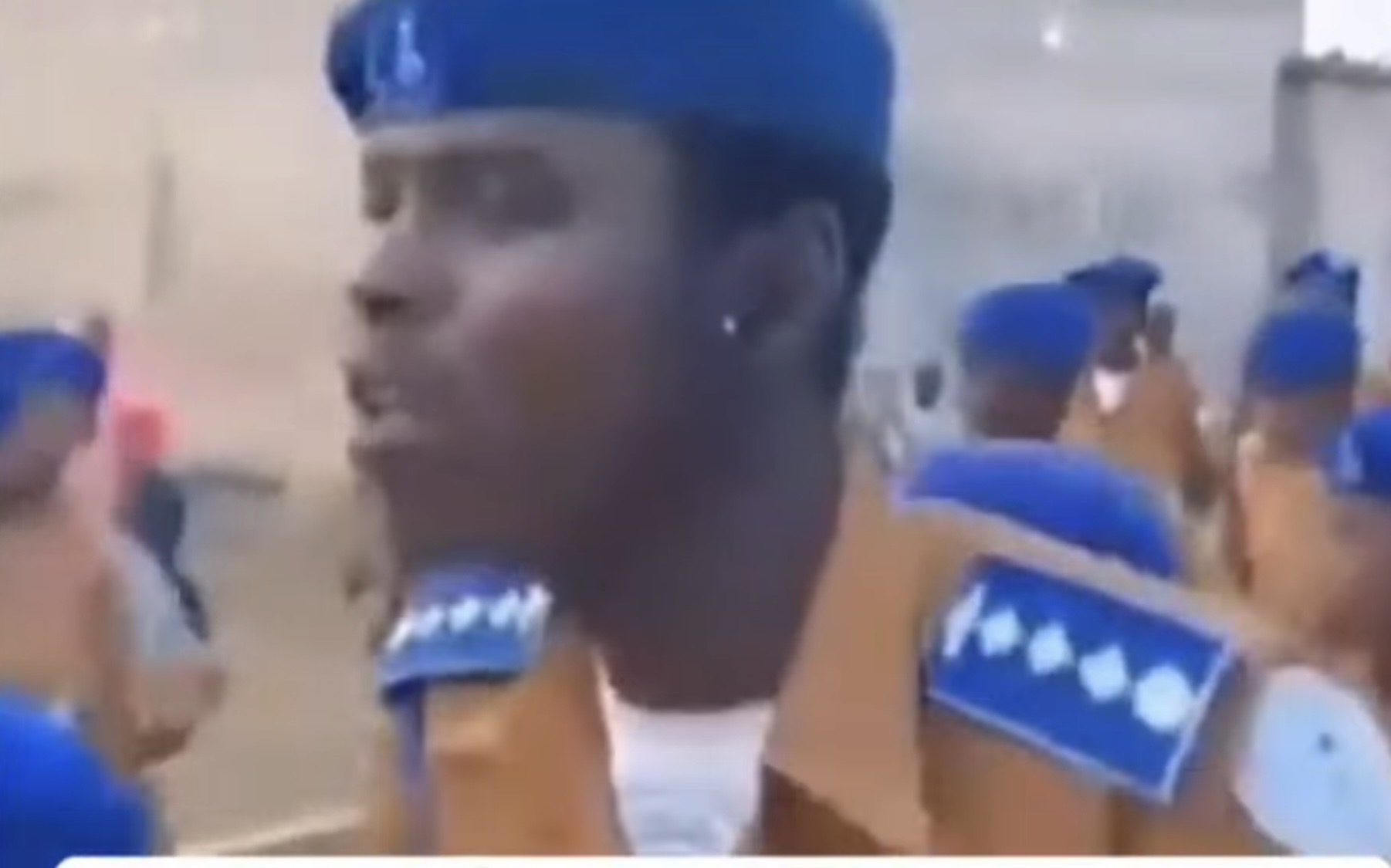
Tension has heightened following the emergence of a viral video purportedly showing members of an Islamic volunteer group chanting lyrics calling for an AK-47 rifle to attack Christians in Enugu and Jos, the Plateau State capital.
The footage, which has sparked outrage and concern on social media, reportedly features members of the Agaji volunteer wing of Jama’atu Izalatil Bid’ah Wa Iqamatus Sunnah (JIBWIS), popularly known as Izala.
The video, shared by counterterrorism expert Zagazola Makama, gained traction on social media, particularly X, on Sunday.
It shows a group of young men dressed in brown uniforms and blue berets, with one of them leading a chant containing violent references to obtaining an AK-47 rifle to attack people described as “infidels” in the two cities.
In one section of the chant, the singer calls for a rifle to enable an individual to travel to Enugu and attack Christians while they are worshipping in church.
“He should be given AK-47. He would then go to Enugu, the land of the infidels. On Sunday, when they are worshipping and clapping, he would then open fire, so that he can kill the infidels,” the lyrics state.
The chant subsequently references Jos, with another call for an AK-47 to attack people described as infidels.
“He asked to be given an AK-47 again, so that he can go to Jos and kill more infidels. That is the training,” the singer says.
The video has triggered widespread concern among Nigerians, with many calling on security agencies to investigate the footage, identify those involved and take appropriate action to prevent any potential threat to public safety.
The references to Enugu and Jos, alongside the explicit calls for armed attacks during Christian worship, have raised concerns about the safety of residents and worshippers in the affected cities.
However, as of the time of filing this report, the governments of Enugu and Plateau states, as well as the relevant security agencies, had yet to issue official statements on the video.
It remains unclear when and where the footage was recorded and whether the individuals featured in it have been identified by security authorities.
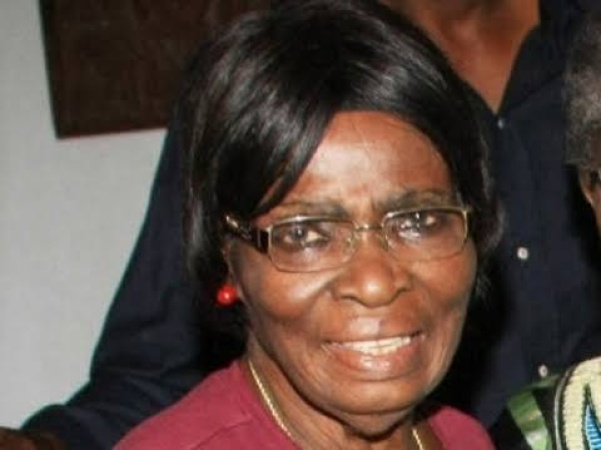
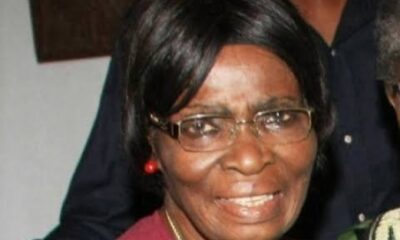
Prof. Kamene Okonjo, matriarch of Umu Obi Obahai Royal Family, mother of Obi Ifechukwude Okonjo ll, traditional ruler of Ogwashi Uku community in Delta has passed on.
The News Agency of Nigeria (NAN) recalls that the matriarch, and mother of the Director- General, World Trade Organisation, Dr Ngozi Okonjo-Iweala, died on Friday at the age of 96.
The late Kamene Okonjo was the beloved wife of late Obi (Prof.) Chukwuka Okonjo, the immediate past traditional ruler of Ogwashi-Uku community, with whom she shared 66 years of marriage.
This is contained in a statement by Chief Ifeakanachukwu Emordi, Palace Secretary of the community on behalf of the royal family on Sunday.
According to the statement, the late Okonjo was an extraordinary woman, whose remarkable life was defined by intellectual brilliance, humility, compassion, dignity and an unwavering commitment to the advancement of humanity.
“An internationally recognised and foremost sociologist, Prof. Kamene Okonjo distinguished herself through her outstanding academic accomplishments, intellectual contributions and lifelong advocacy for women’s rights and empowerment.
“She was a woman of exceptional intellect, yet possessed a rare gentleness of spirit, humility and grace that endeared her to everyone privileged to know her.
“Her achievements transcended the boundaries of Ogwashi-Uku and Nigeria, earning her admiration and respect within academic and intellectual circles internationally.”
The statement added that the late Okonjo represented the very finest qualities of scholarship, womanhood, motherhood and service to society.
“Beyond her considerable professional accomplishments, she was a devoted mother, grandmother, great-grandmother and a cherished pillar of the royal family.
“Her wisdom, kindness, quiet strength and exemplary character will remain an enduring inspiration to generations yet unborn.
“While we mourn her passing, we celebrate a life exceptionally well lived.
“At 96 years, Okonjo left behind an extraordinary legacy of scholarship, service, family values and advocacy for the dignity and advancement of women.
“We take comfort in our Christian faith and the assurance that she is resting peacefully with the Lord, haven completed her earthly journey with grace and distinction,” it said.
The statement said the entire Umu Obi Obahai family extended its deepest and most heartfelt condolences to the Obi of Ogwashi-Uku, her beloved children; Ngozi Okonjo-Iweala, Dr Njideka Okonjo-Udochi, Onyema Okonjo and Chichi Okonjo.
The family also extended their condolences to their spouses, sons and daughters in law, her grandchildren, great-grandchildren and the entire extended Okonjo royal family.
It also enjoined the people of Ogwashi-Uku to join the family in celebrating the extraordinary life and enduring legacy of their remarkable daughter, mother, scholar and matriarch, whose contributions to humanity would never be forgotten. (NAN)
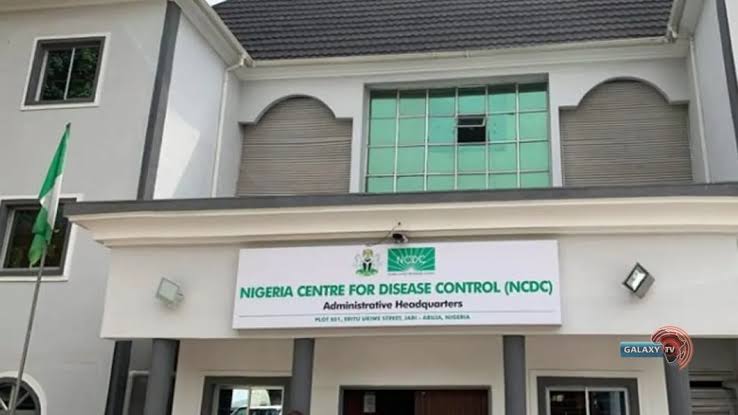
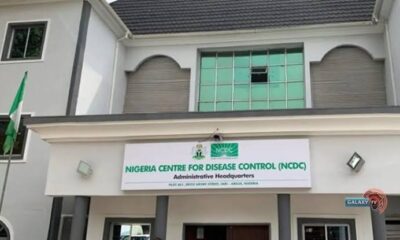
The Nigeria Centre for Disease Control and Prevention (NCDC) has reported two suspected Ebola cases as the number of people being monitored following the country’s confirmed infection rises to 53.
The development has heightened the urgency of efforts to contain the virus and prevent further transmission.
The Director-General of the NCDC, Dr Jide Idris, disclosed this on Sunday, October 25, 2026, during a press briefing in Abuja, where he provided an update on the country’s surveillance and response measures.
“We have established two additional suspected cases and 53 primary contact links. They are primary contacts. We have an isolation centre and a quarantine centre,” Idris said.
However, details surrounding the two suspected cases remained unclear, as other accounts of the briefing indicated that authorities had investigated two cases, including the confirmed infection in Abuja and a suspected case in Rivers State that subsequently tested negative.
The reported suspected cases should therefore not be interpreted as additional confirmed infections without laboratory confirmation.
Providing details of the contact-tracing exercise, Idris said the 53 contacts comprised 44 people linked to the healthcare facility where the confirmed patient received treatment and nine others identified through further investigations.
The additional contacts included three members of the patient’s household, three healthcare workers who attended to her at an earlier medical facility and three personnel involved in collecting samples.
According to the NCDC, the identified contacts had been classified according to their exposure risks and placed under monitoring. None had tested positive for Ebola or developed symptoms as of the briefing.
Idris explained that public health teams would monitor the exposed individuals for 21 days after their last possible exposure, in line with established protocols for detecting and responding promptly to potential infections.
He also disclosed that approximately 12 public and private laboratories were available to conduct Ebola testing in Nigeria as authorities continued to strengthen the country’s diagnostic capacity.
The NCDC director-general urged healthcare facilities nationwide to reinforce screening, patient assessment and infection prevention measures.
He stressed the need to provide healthcare workers with adequate personal protective equipment and ensure the prompt reporting of suspected infections.
Idris further appealed to individuals contacted by public health officials to cooperate with investigators and provide accurate information about their movements, possible exposure and symptoms.
Nigeria confirmed its first Ebola case in the current regional outbreak on October 20, 2026, after a woman with a recent travel history to Uganda tested positive for the Bundibugyo strain of the virus in Abuja.
According to the World Health Organisation, the woman developed symptoms on October 7 and sought treatment at a private health facility on October 11 before laboratory tests confirmed the infection.
The initial contact-tracing exercise identified 44 people, but the figure subsequently increased to 53 as investigations expanded.
The Federal Government has maintained heightened surveillance while strengthening laboratory testing, isolation arrangements and infection prevention protocols.
Health authorities have urged Nigerians to remain vigilant, cooperate with public health officials and avoid spreading unverified information as investigations and monitoring continue.
-
 Features1 day ago
Mmesoma Umeorini: When Love Turns Deadly, and a Young Woman Pays With Her Life
-
Features1 day ago
Why Igbos Celebrate New Yam Festival Worldwide: The History, Cultural Significance and Lessons For The Younger Generation
-
News21 hours ago
Kogi Police Probe Alleged Murder-Suicide Involving Two Officers
-
News2 days ago
Mbah: Why We Built 268 Smart Green Schools Across Enugu State
-
News3 days ago
UBA Commences Contempt Proceedings Against WEMPCO Directors over Alleged Disobidence of Court Order
-
News3 days ago
Macron Postpones Planned Visit to Nigeria Until 2027
-
News3 days ago
Enugu CP Orders Probe into Death of Izuchukwu During Police Raid
-
News2 days ago
Anambra Police Arrest Suspect Over Murder of 23-Year-Old Woman in Uga