News
Obi’s acceptance soaring in Northern Nigeria — Obidients

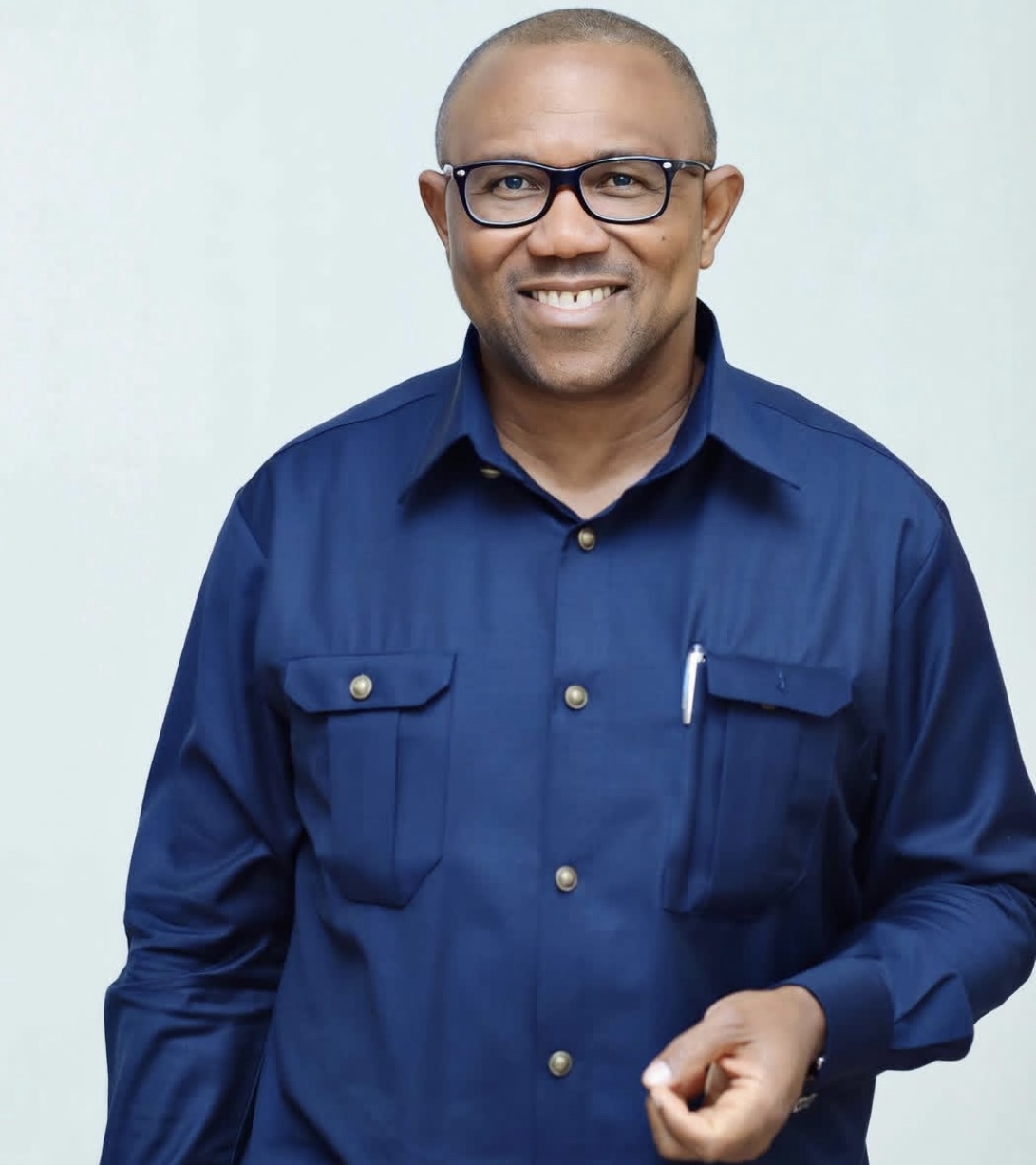
The umbrella body of Peter Obi Support Groups, the Obidient Movement, has declared that their principal’s northern support base is growing by leaps and bounds with more and more Nigerians from that part of the country identifying with him in his quest to build a better nation.
In what can be described as a bold statement to this effect, to the Palace of the District Head of Pantami, in Gombe State, has conferred Obi with the traditional title of Sarkin Maskan Pantami, meaning: “Chief of Shelter and Peace of Pantami.”

The conferment of the title, was contained in an official appointment letter signed by Mai Martaba Alhaji Yakubu Abdullahi, District Head of Pantami, which was made public by the Global Coordinator of the Obidient Movement, Dr. Tanko Yunusa, in Abuja, yesterday.
In the letter, the Royal father commended the former Amambra State Governor for his unwavering dedication to humanitarian service and grassroots development.
The letter read in part: “This appointment is being made in recognition of your dedication and determination towards the development of our community.”

While Peter Obi has a reputation for declining traditional titles as a matter of principle, his supporters under the Obidient Movement accepted this one on his behalf.
The movement described this title as “a cultural endorsement of service and leadership.”
According to the movement, Obi’s rising profile in the North is credited to his hands-on humanitarian work across several states.
In communities like Pantami, the impact is visible.
His intervention in water supply through borehole projects, support for Almajiri education, and youth empowerment initiatives has earned him admiration across religious and ethnic divides.
While receiving the appointment letter on behalf of his principal, in Abuja, Dr. Tanko Yunusa said,
“The people of Pantami now call it ‘Peter Obi’s borehole.’ That tells you he has won their hearts,” said a resident at the title conferment ceremony.
“The title is the first such honor Mr. Obi has received from any northern emirate, and observers say it signals a major shift in regional political alignment.
“This is a moment of real political symbolism. A respected emirate in the North is honoring a politician from the South-East. That speaks volumes about unity, respect, and shared vision.”
Tanko, who himself was conferred the title of Dan Maje Baba Pantami, described the moment as a turning point in the movement’s acceptance nationwide.
Adding, “Mr. Obi may not physically accept titles, but this one represents more than tradition—it represents unity and endorsement from a region many thought was unreachable for him,” said Dr. Tanko.
On Obi’s recent vow to serve only a single term if elected, he said it is further boosting his image in the North, with many viewing it as a bold gesture of sincerity and respect for Nigeria’s rotational power structure.
“It’s not a gimmick. It’s leadership by example. He’s saying: give me four years and watch what I’ll do,” said a Gombe-based youth leader, who was at the event.
According to him, Obi’s recent humanitarian acts—including drilling boreholes, supporting Almajiri schools, providing toilets, and engaging northern youth in entrepreneurship—are helping transform lives in tangible ways. In Pantami, the borehole he facilitated has become a landmark, now popularly referred to as “Peter Obi’s borehole.
“Go to Pantami now, people will say, ‘Go get water from Peter Obi’s borehole.’ It shows the people have connected with him—not just politically, but humanely.”
He noted that Obi’s acceptance in the north in 2025 is “far, far better” than what was seen during the 2023 elections, calling it a paradigm shift that is poised to boost his electoral value in future polls.
Speaking at the ceremony where Mr. Peter Obi was honored with a prestigious traditional title, Ibrahim Hussein Abdukarim, Director General of Big Tent Nigeria, explained the strategic shift in how the Obidient Movement now handles honorary titles offered to the former presidential candidate.
He said, “As we’ve been briefed by Dr. Tanko, our Global Coordinator for the Obidient Movement, Mr. Peter Obi has a personal principle of not accepting chieftaincy titles, as he prefers to remain focused and undistracted in his mission to serve the nation. But almost daily—weekly, monthly—people from across the country continue to offer him titles as a mark of respect and admiration.”
Abdulkarim said that while Mr. Obi himself may not be present to receive these titles, the Obidient Movement will henceforth accept such honors on his behalf.
“Instead of rejecting them outright, we, the Obidient Movement, have resolved to accept titles in his name to demonstrate the depth of his acceptance across Nigeria. These honors serve as a kind of receipt—a cultural expression of ‘we love you, we support you, and we want to work with you.’”
“When people offer you a gift, you don’t reject it. You accept it as a mark of respect to those offering it. This is why this one is special—it’s from a respected northern community, honoring someone from the East. That’s powerful,” he said.
Touching on Obi’s recent declaration that he would serve only a single term if elected, Tanko again stated that the Obidient movement is not only comfortable with it but sees it as a reflection of Obi’s character and integrity.
“He said even four years is too much for what he wants to achieve. That’s how determined and prepared he is to transform Nigeria. Just fixing power alone will put his name in the history books.”
He dismissed Insinuations that the promise of a one-term presidency was a political gimmick, instead framing it as a sincere commitment to national unity and respect for the informal north-south zoning arrangement.
“The coalition has been presented with the one-term proposal. It’s now up to them. But we are ready, and we believe it can be done.
“Peter Obi is a unifier. His presidency will bring this country together and move us from consumption to production. What we need now is integrity—and we’ve found it in him.” (Vanguard)



The Trade Union Congress of Nigeria (TUC) has rejected the Federal Government’s proposed N70,000 wage award, demanding an increase in the monthly salary of the lowest-paid worker to N300,000 to cushion the effects of rising living costs.
The congress described temporary wage allowances as inadequate to address the economic hardship facing Nigerian workers, urging the government to implement a permanent salary review and honour outstanding agreements with organised labour.
The position was contained in a statement issued on Wednesday by the TUC President, Festus Osifo, and Secretary-General, N.A. Toro, following a National Administrative Council meeting held in Abuja on October 8, 2026.
The congress said it had written to the Federal Government through the Office of the Secretary to the Government of the Federation, demanding an immediate review of workers’ salaries in response to rising food prices, transportation costs, healthcare expenses and other essential needs.
According to the TUC, the government does not need to wait for negotiations on the national minimum wage before reviewing workers’ salaries, arguing that there is no legal ceiling on how much employers can pay.
It proposed raising the monthly salary of the lowest-paid worker from N70,000 to N300,000, with corresponding adjustments across other salary grades.
The congress also expressed concern over the implementation of the 2023 wage award, alleging that the arrangement had not benefited workers consistently across the country.
It said some workers were still owed one or two months’ payments, while others had yet to receive the allowance. Some beneficiaries, it added, experienced irregular payments and were repeatedly forced to demand their entitlements.
The TUC further claimed that more than 80 per cent of states and workers in the informal sector had not benefited from any form of wage award.
It questioned the rationale for introducing another temporary relief measure when outstanding obligations under the previous arrangement remained unsettled.
The congress maintained that ongoing negotiations on a new national minimum wage should not prevent the government from implementing urgent salary increases for workers grappling with mounting economic pressures.
Beyond salary adjustments, the TUC called on federal, state and local governments to introduce practical measures to reduce the cost of essential goods and services, ensure prompt payment of salaries and pensions, protect jobs and address exploitative labour practices.
TUC Accuses FG of Breaching Health Workers’ Agreement
The congress also accused the Federal Government of failing to implement an agreement with the Joint Health Sector Unions (JOHESU) on adjustments to the Consolidated Health Salary Structure (CONHESS).
According to the TUC, representatives of organised labour, JOHESU leaders and government officials reached an agreement during conciliation talks at the Federal Ministry of Labour and Employment.
The government delegation included the Minister of Labour and Employment, Dr Muhammad Maigari Dingyadi; the Coordinating Minister of Health and Social Welfare, Prof. Muhammad Ali Pate; and the then Minister of Finance and Coordinating Minister of the Economy, Wale Edun.
The congress said JOHESU suspended its industrial action in good faith following the agreement but alleged that the government had failed to fulfil its commitments seven months later.
It described the delay in implementing the CONHESS adjustment as a breach of the agreement, warning that failure to honour commitments could undermine confidence in collective bargaining.
The TUC consequently demanded the immediate implementation of the salary adjustment, a clear timetable for execution, adequate budgetary provisions and consultations with the relevant unions to resolve outstanding issues.
It also pledged to support affected health workers and pursue lawful measures to compel the government to honour the agreement.
The congress said it was awaiting the outcome of its scheduled meeting with the Federal Government before deciding on its next course of action. It did not announce an immediate nationwide strike.
Nigeria’s national minimum wage was increased from N30,000 to N70,000 monthly in July 2024 after President Bola Tinubu signed the new minimum wage law following negotiations with organised labour.
However, the increase has not ended calls for broader salary reviews and additional measures to protect workers’ purchasing power amid rising living costs.
The TUC maintained that Nigerian workers needed lasting improvements in their earnings rather than temporary relief measures, stressing that government agreements must be honoured and workers’ welfare prioritised.

Four students of the Federal University of Technology, Minna, and a driver attached to the Niger State Government House have died in a road accident involving a vehicle in the convoy of Governor Mohammed Bago.
The accident occurred on Monday at Gidan Kwanu, near Minna, when a Toyota Hilux conveying the Director-General of the Government House, Mr Dauda Chikuba, collided head-on with a vehicle carrying five students of the university.
According to a report by The PUNCH, four of the five students died on the spot, alongside the driver of the Government House vehicle.
The newspaper reported that the governor’s convoy was returning to Minna, while the vehicle conveying the students was travelling towards Bida when the crash occurred.
Eyewitnesses said the governor and his entourage were returning from a condolence visit to the Etsu Nupe and Chairman of the Niger State Council of Traditional Rulers, Alhaji Yahaya Abubakar, following the death of the Sagi Nupe, Hajia Aisha.
One of the eyewitnesses described the incident as a head-on collision and alleged that the convoy was travelling at high speed when the crash occurred.
“It was a head-on collision. We learnt that the convoy was at high speed when the accident occurred. It was a terrible accident,” the eyewitness was quoted as saying.
The eyewitness added that Chikuba was immediately rushed to a hospital for treatment, while the bodies of the deceased students and the driver were evacuated to an undisclosed destination.
The spokesperson for the Niger State Police Command, Superintendent of Police Wasiu Abiodun, confirmed the incident, saying the police had commenced an investigation.
“The accident occurred this morning, and we are investigating it,” Abiodun was quoted as saying by The PUNCH on Wednesday.
…As SEDC seals deal with GasSync, commits $3m
• Tinubu says S’East must rise from potential to reality
• Mbah, governors hail Tinubu, pledge support for 400km pipeline
The Federal Government, through the South East Development Commission (SEDC) has kicked off a $100 million gas distribution pipeline project to boost industrialisation, attract investments and create jobs in the South East.
The 400-kilometre pipeline, designed to connect gas resources to industrial and commercial centres across Enugu, Anambra, Imo, Abia and Ebonyi states, has about 150 potential customers identified, with projected demand of 254 million standard cubic feet of gas per day.
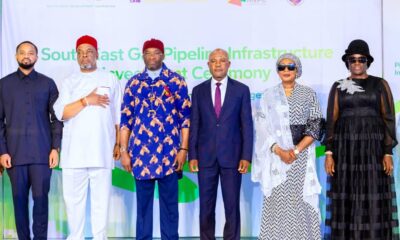
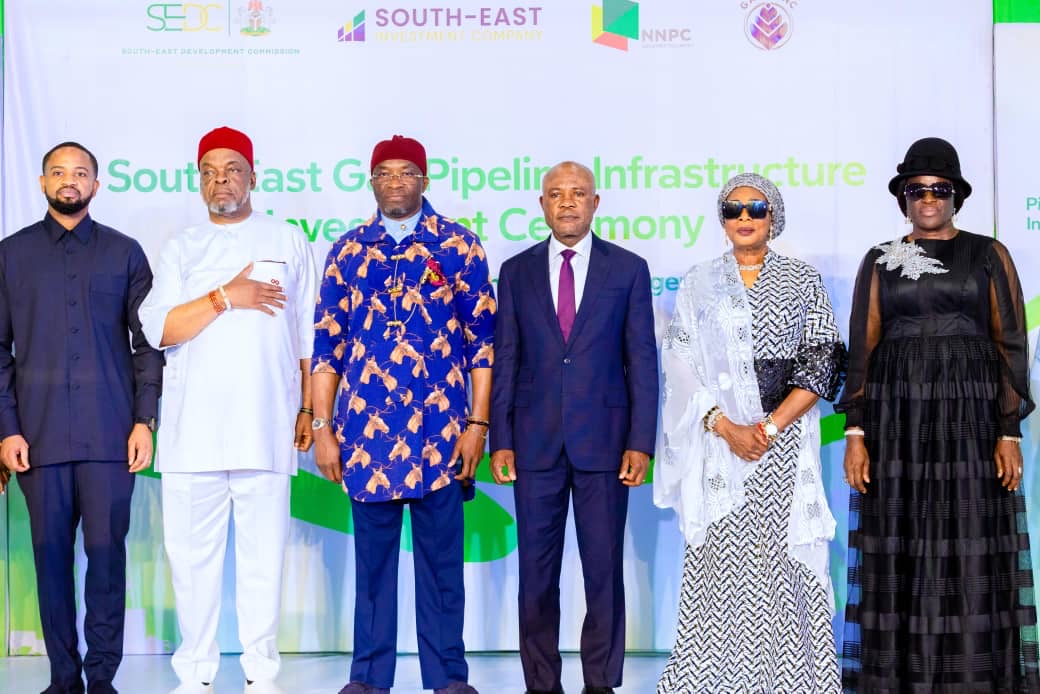
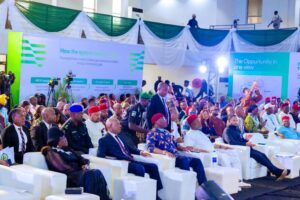
The investment agreement for the project was signed on Tuesday at the South-East Gas Infrastructure Investment and Project Development Ceremony held at Hotel Presidential, Enugu, marking a significant step towards establishing a regional gas distribution network.
Tinubu, represented by the Deputy Speaker of the House of Representatives, Benjamin Kalu, described the project as a strategic investment that would connect the region’s natural gas resources to industries, strengthen manufacturing and unlock economic opportunities across the five states.
“The Southeast’s entrepreneurial spirit is one of Nigeria’s greatest economic assets. I have always believed that the prosperity of the Southeast is inseparable from the prosperity of Nigeria,” the President said.
He said the project aligned with his administration’s commitment to building an integrated regional economy, stressing that gas infrastructure should support industrial development across state boundaries rather than serve isolated markets.
“Gas infrastructure must therefore serve industries and markets, not stop at political boundaries. That is the economic logic of regional integration,” he said.
The President said the pipeline would benefit manufacturers in Aba, strengthen industrial clusters in Nnewi and Onitsha, attract productive enterprises to Enugu, expand agro-processing and manufacturing in Ebonyi and connect Imo’s gas resources to the wider regional economy.
He, however, said the ambition extended beyond supplying existing factories to creating the conditions for new industries, industrial parks and investments that had stalled because of unreliable energy supply.
“Our ambition is not simply to deliver gas to existing factories. It is to make possible factories that do not yet exist, industrial parks yet to be developed, and investments that have remained on the drawing board because reliable energy was unavailable,” Tinubu said.
He described the South-East Development Commission (SEDC) as an institution established to deliver measurable development outcomes, urging it to assess its performance by the investments it mobilised, infrastructure it enabled, opportunities it created and lives it improved.
The President said the South-East Vision 2050 development framework, supported by Vice-President Kashim Shettima and the governors of the region, provided a foundation for coordinated economic growth.
He also cited his approval of the South-East Investment Company as part of efforts to attract private capital into strategic development projects, noting that governments could not finance every development ambition from public funds.
“This is the model I expect from our development institutions: identify strategic economic opportunities, prepare credible projects, commit public resources responsibly and mobilise private capital at a scale government budgets alone cannot achieve,” he said.
Tinubu commended the SEDC for committing $3 million to the gas project and establishing a framework to mobilise additional investments from state governments, institutions and private investors.
He said the project’s initial phase required approximately $100 million, describing the partnership between public institutions and private investors as essential to developing sustainable infrastructure.
“We are not investing in pipelines for their own sake. We are investing in the industries, businesses and jobs those pipelines will make possible,” the President said.
He urged the commission and its partners to uphold commercial discipline, transparency, environmental responsibility, community engagement and the highest safety standards throughout the project’s implementation.
“The true measure of government’s commitment is not what we promise, but what we deliver,” he said, expressing optimism that the investment would help create an industrial economy capable of competing in African and global markets.
Tinubu said the ultimate objective was to translate the region’s natural resources into productive economic activity, employment and improved living standards.
“Let the gas beneath our soil power our industries. Let that energy become production. Let production become employment. Let employment become prosperity for our people,” he said.
The President urged the SEDC, state governments and project partners to establish clear implementation timelines, measurable milestones and regular progress reports, stressing that the project’s success would ultimately be measured by its ability to attract investments, revive industries, create jobs and improve the economic fortunes of people across the five Southeast states.
Enugu State Governor, Dr. Peter Mbah, commended Tinubu for establishing the SEDC, describing the commission as the institutional vehicle needed to realise the Southeast’s longstanding industrialisation aspirations.
“Tinubu loves the Igbo. The SEDC is a commission whose time has come. It was an idea conceived many decades ago, but it took President Tinubu to establish this long-awaited dream of industrialisation of the Southeast,” Mbah said.
He described the signing of the investment agreement as the commencement of the investment process, adding that the initiative would help realise the region’s aspiration for a common market and coordinated industrial development.
“What we have just signed here today is an investment agreement, meaning that investment has commenced,” he said.
Mbah, who said he was excited that the project was advancing less than 13 months after he publicly advocated the idea, praised the commission for adopting an innovative financing model that brings governments and private investors together.
He said the project would create opportunities for young people to build their futures in the Southeast rather than migrate to other parts of the country in search of jobs.
“Before now, it was our young people running out of the region in search of greener pastures. But with what we have now, our young people can sit back and find their future here in the region. This is all thanks to President Tinubu,” he said.
The governor assured the SEDC and its partners that the Southeast governors were committed to the pipeline project, promising to expedite right-of-way arrangements and environmental impact assessment approvals.
“We, the Southeast governors, are committed to this. We will ensure that the right of way and EIA are given accelerated approval,” he said.
Imo State Deputy Governor Lady Chinyere Ekomaru, who represented Governor Hope Uzodimma, commended Tinubu and the SEDC for initiating the project, noting that Imo’s substantial natural gas resources placed the state in a strategic position to benefit.
She said the project was coming at an opportune time, particularly as companies were seeking to become offtakers of gas from the Assa North–Ohaji South development.
Ekomaru urged residents to consider the Federal Government’s infrastructure investments in the Southeast in making their political choices ahead of the 2027 general elections.
“A vote for APC is a direct vote for the continuation of this project. A bird in hand is worth more than 10 in the bush. Let’s reason wisely,” she said.
Anambra State Deputy Governor Dr Onyekachukwu Ibezim, representing Governor Chukwuma Soludo, commended the commission but stressed that its success would ultimately be determined by its impact on the people.
“We will clap for you when we begin to feel the impact of what you are doing,” he said.
Ibezim noted that states across the region had gas resources that could support industrial growth if properly developed. He urged communities along the pipeline route to embrace the project and cooperate with its promoters.
“I want to urge the communities through which the pipelines will pass to have a buy-in. We are strongly behind the commission,” he said, while commending the enthusiasm shown by industrialists at the event.
Ebonyi State Deputy Governor Mrs Patricia Obila, representing Governor Francis Nwifuru, described energy as fundamental to industrial growth, lamenting that inadequate power supply had contributed to the decline of several enterprises in the region.
“Energy is power. Its importance cannot be overemphasised. With it, factories will produce, the economy will blossom and employment will be great,” she said.
Obila expressed the Ebonyi government’s readiness to support the project, promising to provide the necessary cooperation to facilitate its implementation and help moribund companies resume operations.
“We will give you all the support needed to operate in Ebonyi to ensure that our moribund companies return back to operations,” she said.
Permanent Secretary of the Federal Ministry of Regional Development, Dr Mary Ogbe, said the SEDC was developing initiatives capable of improving living standards across the Southeast.
She assured the governors that the commission would complement their development efforts rather than compete with them, while urging investors to take advantage of the opportunities emerging from the project.
Managing Director and Chief Executive Officer of SEDC, Mark Okoye, said the commission had conducted technical, financial and legal due diligence before committing funds to the project, which received approval from its governing board.
Okoye said the commission was targeting aggregate regional investment participation of up to $30 million, including its initial $3 million commitment, as part of efforts to mobilise the private capital required to advance the project.
He said the initiative aligned with the commission’s industrialisation programme and its commitment to developing infrastructure that would benefit the entire region.
Representing GasSync, the project promoter, Callistus Mba said the pipeline would connect gas resources close to the Southeast to industrial users across the five states, reducing dependence on the expensive transportation of compressed natural gas (CNG) and liquefied natural gas (LNG) by road.
Mba said the proposed network would originate from the Ohaji area of Imo State, run through Owerri and branch towards Aba in Abia State and Onitsha in Anambra State, with extensions to Enugu and Ebonyi.
He said the company planned to begin construction at two points simultaneously to accelerate delivery, following concerns raised by Enugu State Governor Peter Mbah that constructing the entire network sequentially from Imo could delay gas supply to other states.
“We are going to start at Ohaji and Onitsha at the same time,” Mba said, explaining that the approach would allow construction towards Enugu and Ebonyi to progress alongside work on the Imo and Anambra sections.
He said the company had identified about 150 prospective customers across the region and was engaging industries to secure demand for the gas, including manufacturing companies, power-generation facilities and agro-processing businesses.
Mba cited Geometric Power in Abia State among the companies with which engagement was already underway. He added that the pipeline would support efforts to revive moribund industries in Enugu and develop agro-processing facilities in Ebonyi.
On the project timeline, he said procurement activities had commenced, funding arrangements were advancing towards financial close, and preparations for engineering, procurement and construction were progressing.
“We intend to start construction in the first quarter of 2027,” Mba said, projecting that the project would be ready for first gas delivery in the second quarter of 2028, subject to the completion of the necessary requirements.
He identified regulatory approvals, right-of-way arrangements, community engagement and coordination among federal and state authorities as critical to meeting the schedule, urging the governors and relevant institutions to facilitate permits and work with host communities along the pipeline route.
-
 News2 days ago
BREAKING: Tension as Video Shows Islamic Group Members Allegedly Calling for AK-47 to Kill Christians in Enugu, Jos
-
News1 day ago
BREAKING: El-Rufai Tests Positive for Drug-Resistant Bacteria, Shows Signs of Possible Severe Infection—Report
-
News2 days ago
Ifeanyi Ubah’s Elder Sister, Fidelia Chigbogu, Dies Suddenly at 61
-
News16 hours ago
FG kicks off $100m Southeast gas pipeline project
-
News2 days ago
Terrorists Abduct Sunday Igboho’s Iru Ekun Security Group Members in Kwara
-
News3 days ago
NCDC Reports Two Suspected Ebola Cases as Contacts Rise to 53
-
News2 days ago
Apologise to Igbos: Senator Umeh Challenges Gowon to Write Book on Civil War
-
News3 days ago
Ngozi Okonjo-Iweala loses mother