News
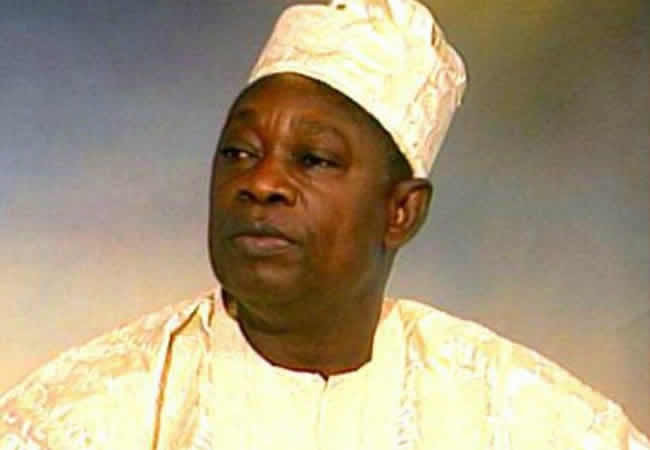
66 out of 120 persons who claimed to be Abiola’s children failed DNA test —Olalekan

…Says ‘my father had a lot of women’
Son of late Chief MKO Abiola, Mr Olalekan Abiola has revealed that 66 persons who claimed to be his father’s children failed a DNA test.
He made the revelation during an interview with Vanguard in commemoration of the anniversary in honour of the late business mogul and widely acclaimed winner of the June 12, 1993 election.

While revealing his late father had a lot of women, he stressed, however, that a lot of the women themselves to him willingly.
“The only thing you could say about my father that was kind of negative was that he had a lot of women but a lot of these women were those that came to him to give themselves to him willingly,” he disclosed.
Olalekan said some of the women came along with their children, claiming that their husbands had abandoned them.

He said out of his generosity, his late father would shelter some of them and carter for their welfare, adding shortly after such women would start calling themselves Mrs. Abiola, even though many of them were not.
“They would change their children’s names to Abiola and that was why my father wrote in his will that DNA test had to be done for all those who claimed to be his children.
“About 120 children came forward to say they were MKO’s children but only 54 of them passed the DNA test at the end of the day (meaning 66 failed).
“So it was these women who were the ones coming to him and not him going around looking for them. When my father was alive back then, we saw women outside the house everyday,” he told Vanguard.
He revealed that about 10 to 15 different women, with different shapes and complexions, would come to see his father then for one thing or the other everyday.
Olalekan equally described his mother’s demise as the most painful going by the manner she was assassinated.
“Honestly, it’s been 27 years of trauma, especially with my mother’s assassination.
“I am saying this because she was all the way with us at home when my father was in detention at that time.
“She was not arrested, she was not detained by the military junta and she was not under house arrest.
“One minute my mom was at home, in good health, and the next minute she had been shot. So that was more painful, more traumatic than the fate my father suffered.
“In my dad’s case, he had been locked up for like four years before he died, so we had been used to not seeing him anymore,” he further stated.
Olalekan also lamented the failure of successive administrations to pay the debt owed to his late father.
He said the late business mogul handled some contracts, including supplies to some government ministries but that the money had not been paid till date.
According to him, former president Olusegun Obasanjo had promised to offset the debt but never did until he left office.
He added that the matter was also brought to the attention of ex-president Goodluck Jonathan who also pledged to pay when he returns for a second term. He said the promise did not materialise as Jonathan lost re-election.
He added that former president Muhammadu Buhari at least gave the family June 12 as Democracy Day.
Olalekan further noted that President Bola Tinubu has not said anything about it yet.
THE FULL INTERVIEW:
Olalekan Abiola, one of the children of the late business mogul and politician, Chief MKO Abiola, the widely acclaimed winner of the election, spoke to Sunday Vanguard during the anniversary at the family residence in Ikeja, Lagos
He also shared his views on the best way to immortalize his father among other issues
Excerpts:
It has been over 30 years since the annulment of the June 12, 1993 election and over 27 years since the demise of your parents. How has the journey been so far for the family?
Honestly, it’s been 27 years of trauma, especially with my mother’s assassination. I am saying this because she was all the way with us at home when my father was in detention at that time. She was not arrested, she was not detained by the military junta and she was not under house arrest.
One minute my mom was at home, in good health, and the next minute she had been shot. So that was more painful, more traumatic than the fate my father suffered.
In my dad’s case, he had been locked up for like four years before he died, so we had been used to not seeing him anymore.
Four years before he (MKO Abiola) died, he was already in detention but my late mom was the one that we could talk to and relate with. All the time, we were on the phone with her a couple of days before she died. We were expecting her to come and see us in the US when she was killed. That was more traumatic than my father’s own, but equally they were both painful, definitely.
“But now that my mother has been killed, we were hoping that my daddy will come back to us, so that we will be able to try to rebuild our lives”, but that never happened. So it happened that, basically, due to June 12th agitation we lost both parents. So it is both painful.
How has the family been able to navigate through all?
Well, we’re quite fortunate that our parents educated us. So we’re all educated. So we all can work and engage in some form of business activities. Both parents were equally well-off. Even though my father’s companies have been hijacked by my older brother, Kola, my mother still left quite enough for us to be able to survive with. I won’t say I cannot complain, because I know that I’m better off.
What about support from your late parents’ friends, and family members
It’s (support) been here and there. Initially, when this current democratic journey began in 1999, we got some level of support but a lot of failed promises from officials of government who would promise to help rebuild my late father’s business concerns. They, Federal Government till date promised to pay the debts that they are owing my father to the family. They never did it till the moment.
How much does the Federal Government owe your late father?
I’m not sure what the figure is but successive administrations, from former President Olusegun Obasanjo, kept promising to pay the debts. They will always promise to set up a committee to pay back the debts but none of them ever did. My father had many outstanding debts accruing to him in several ministries. Ministry of Communications; there is one that I know of in the Ministry of Education because his companies supplied books and the Ministry of Defense. So these are the three ministries where these monies were meant to be paid from.
The Obasanjo government said they had to set up a committee to go and do an audit but they never did before they left office. When (former President Goodluck) Jonathan became President, the first two years, it was almost impossible to get to him and by the time we were able to meet him, it was like election time was approaching. So, he said I should not worry, that once the election was over and he gets a second term, it is one of the first things that he would do but he never came back.
Then, Muhammed Buhari came, he too didn’t act but he gave us June 12 Democracy Day. And maybe, he thought that since he’s done that he felt he didn’t have to pay us. Now that President Bola Tinubu is there, hopefully he is going to do the audit and pay off the long outstanding debts.
Has he (Tinubu) promised the family?
He has not said anything about it yet.
Do you feel betrayed by his (MKO’s) travails in the hands of his military junta’s friends considering their closeness?
I think that the main issue with my father is that he was ahead of his time in so many ways. I am saying so because, today, if anybody wins election in Nigeria, no matter the tribe, that person is going to be sworn-in. The worst thing they will tell you is to go to court. Once you get to the Supreme Court and the Supreme Court declares you the winner, nobody can stop your swearing-in. So my father was ahead of his time, you know.
You see him more as a pathfinder
Yes, he was a pathfinder of some sorts because he was the first Yoruba man to win an election to be annulled in Nigeria. In the past, they didn’t need to annul elections which southerners contested but did not win, but MKO won and he presented some sort of challenge to the status quo who never believed that he was going to break all the barriers that had been placed before him.
This was a Yoruba man who, though was a Muslim with a Muslim running mate, was still voted for massively by Christians. He was a Yoruba man who defeated a Hausa-Fulani man in his home state of Kano. This happened because, MKO had spent so much time cultivating relationships the country.
And when he came out to run, he had support from everywhere. So I think that he was a victim of his own success. He was the first Yoruba man to win an election and he was liked by everybody. Yoruba only win an election in a free and fair contest in the country. They didn’t believe that. They were shocked. So he broke the jinx.
What are the lessons learnt from your late father
I think the most important thing I learnt from him is to hold on to our religion, Islam. I say this because this was what my father did that made people love him. All he did were based on Islam, which teaches us as Muslims to be charitable. My father never drank alcohol. He never went partying. He was not a party freak neither was he a gambler. The only thing you could say about my father that was kind of negative was that he had a lot of women but a lot of these women were those that came to him to give themselves to him willingly. Some of them came with children and said their husbands had abandoned them.
They usually begged him for shelter, school fees and even with food. They used to come and line up in front of this house every month to collect their allowances. My father would get some of them apartments or a house. Then they began to call themselves Mrs. Abiola, even though many of them were not. They would change their children’s names to Abiola and that was why my father wrote in his will that DNA test had to be done for all those who claimed to be his children.
About 120 children came forward to say they were MKO’s children but only 54 of them passed the DNA test at the end of the day (meaning 66 failed). So it was these women who were the ones coming to him and not him going around looking for them. When my father was alive back then, we saw women outside the house everyday.
About 10 to 15 different women, with different shapes and complexion, would come to see him for one thing or the other everyday. I think the main lesson I learnt from my dad was holding fast to religion.
So he was very religious…
He was very religious. And he raised us to be very religious. He raised us to pray five times a day and engage in charity which we call Sadaka in Islam. He used to say “I am not carrying this money anywhere. So let me just help people”. And he believed that the more he helped people, the more Allah helped him. Look at how he won the June 12, 1993 election, Allah helped him and even now. The man has been dead for 27 years, yet Nigerians are still bringing his memory back to life as if he died two weeks ago.
Does that really give you any kind of joy?
Of course yes! I am really happy for him. Because how many Nigerians do something or how many people did something meaningful in life and after they have died, people are still remembering what they did? It is incredible. So I am happy for him.
Your view on efforts by governments at the Federal and Ogun State levels to immortalise him
It means that every year Nigerians will have to remember the struggles of those who brought about the current democracy that everyone in the country is enjoying now for which my father and my mother paid the supreme price. So, that is really important for me as their son who is personally feeling the impact of their struggle which have helped us collectively.
Another thing I want them to do is that they should acknowledge that he was actually an elected president that the people of Nigeria freely and fairly voted for to lead them. To properly immortalize him, I am calling on government to consider giving him the honour of putting his picture in the Presidential Villa among the pictures of past Nigerian presidents who served the country in the past.
This is even more so if people like former Head of State Sani Abacha or General Babangida who were never elected by the people but came into power through military coups have their pictures there as former Heads of State. When you even consider the fact that Chief Shonekan who was even an interim head of state is enjoying the same privilege, then the question would now be, why not MKO who was elected by Nigerians should not have his picture displayed in Aso Rock? Another appeal that I am making to the government is that all the allowances and benefits that should have accrued to him as the president of the country be paid to the family in full like the entitlements that are being paid to former leaders should also be awarded to his family as a form of compensation.
And any debt the Federal Government owes him should also be paid to the family. That is I think the least that the family can ask the government to do. The government should do something to make sure that MKO’s legacy is carried out in accordance to the Nigerian law. The Nigerian government should help make sure that his will is implemented according to the Nigerian law.
What is the plan to bring family members together?
Brother Kola ordinarily ought to be the leader for all the children of the late MKO. He should be the leader of all the children. But what he is doing right now? He is the leader of his mother’s children. So Kola has not been able to bring us all together, he has been unable to do so for whatever reason to step into the role. He seems to only care about his own mother’s kids. The issue is that Brother Kola has not shown proper leadership in bringing other children together.
Your opinion on impacts of June 12 struggle on the country’s democracy
I am happy that this has been the longest span in terms of our democratic attempts. As a country, we have celebrated 26 years of unbroken democratic rule which had never happened before. In the past, the longest span had been five years. Again, unlike what had obtained in the past, nobody is going to dominate the others like we used to have.
No tribe Is dominating any other tribe. Next time the presidency comes to the South, it should go to the South-East because they have not gotten it yet. So the next one now we are going to support hopefully somebody from the South-East. There is more equity in the system now than what it used to be. (Sunday Vanguard)



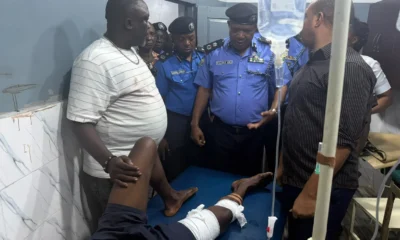






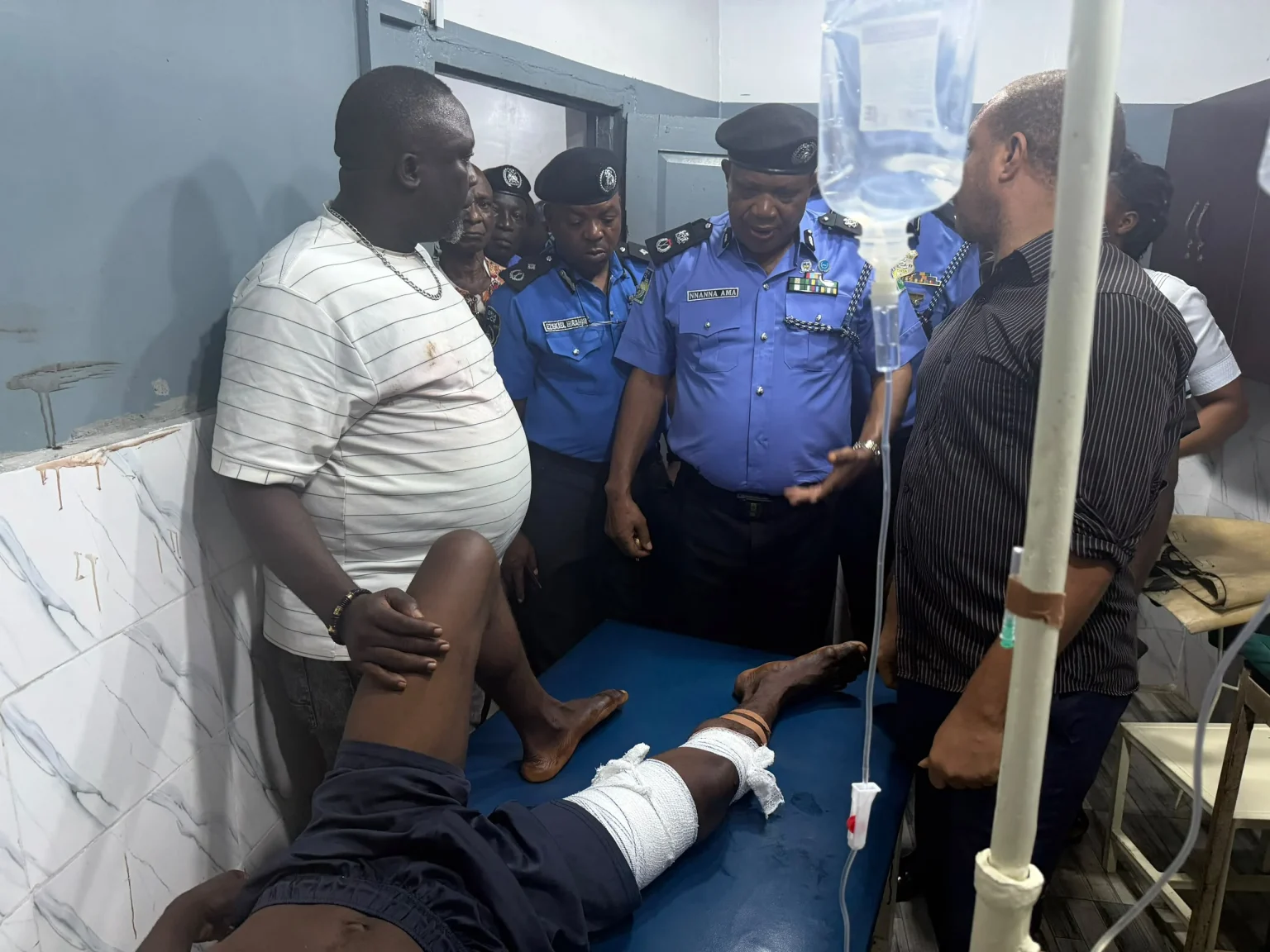
Two persons sustained gunshot injuries on Wednesday during an attempted arrest by police officers at the River Niger Head Bridge, Onitsha, Anambra State, causing panic and disrupting vehicular and pedestrian movement in the area.
The incident, which occurred around noon, caused gridlock along the busy Onitsha-Awka Expressway, as a confrontation reportedly broke out between the security operatives and some hoodlums.
Eyewitnesses near the scene said the victims were shot during the confrontation and later became unconscious before they were rushed to a nearby hospital.
One of the sources said, “The incident occurred this afternoon. It arose from a confrontation between the police officers and the victims. They were being stopped by the officers for questioning. In an attempt to arrest them, they resisted the arrest and the police fired some shots at them.
“The incident resulted in heavy skirmishes around the Bridgehead Market as people scampered to safety. The area remained in chaos until the arrival of another batch of police team. The victims were later rushed to a nearby hospital.”
Confirming the incident, the spokesperson for the Anambra State Police Command, SP Tochukwu Ikenga, said the incident occurred when the suspects allegedly resisted arrest, resulting in gunshot injuries.
Ikenga said the Commissioner of Police, Nnanna Oji Ama, had visited the scene and addressed the crowd, adding that an investigation had commenced to ascertain the circumstances surrounding the incident.
According to him, the CP subsequently visited the victims at the hospital, where he assured them of the command’s support and pledged to personally ensure that their medical expenses were covered.
He said, “The Commissioner of Police, Anambra State Command, CP Nnanna Oji, while addressing the crowd in Onitsha over the incident arising from a confrontation during an attempted arrest, stated that the immediate priority of the Command is to ensure that the victims recover fully.
“The incident occurred when suspects allegedly resisted arrest, resulting in gunshot injuries. The Commissioner of Police subsequently visited the victims at the hospital, where he assured them of the Command’s support and pledged to personally ensure that their medical expenses are covered.
“The CP further ordered a thorough and impartial investigation into the circumstances surrounding the incident, particularly the events leading to the discharge of the firearm.
“He stressed that the investigation will establish the facts and ensure that appropriate action is taken based on its findings.
“The Commissioner of Police appealed for calm and urged members of the public to remain peaceful and allow the investigation to run its course.”
Ikenga reiterated the command’s commitment to professionalism, accountability, respect for human life and the rule of law.
“Meanwhile, traffic and human movement around the Head Bridge area have been de-escalated, with free flow of vehicular and human movement now restored,” he added.
Three churches in Lagos State have been shut down by the Lagos State Environmental Protection Agency (LASEPA) over noise pollution as part of an enforcement exercise targeting 11 establishments in Agege and Mushin.
The affected churches are Holy Temple of Christ on Ayetoro Street, behind NIPCO Filling Station, Mushin; Christ Covenant Gospel Church, Western District, along Ikorodu Road, Fadeyi, Mushin; and Christ Apostolic Church, Oye Iyanu, located at Mushin Road, Church Bus Stop, Itire.
LASEPA carried out the enforcement operation on Tuesday after the affected establishments had received warnings and notices over environmental violations.
The agency said the establishments were given opportunities to correct the problems but failed to meet the required standards.
The shutdown of the three churches was linked to noise pollution, with the agency maintaining that religious activities and other operations must comply with environmental regulations to protect residents and maintain peace within communities.
LASEPA also sealed Akorohunfayo Central Mosque on Akorohunfayo Street, Fadeyi, Mushin, over noise pollution.
Other establishments affected included Biolarique Bakery Academy on Mushin Road, Mushin, which was sealed for failing to comply with the agency’s directives.
Tiles & Marbles on Silver Street, Olorunsogo, Mushin, was also shut over air pollution.
Five scrap yards operating in Agege and Mushin were equally sealed.
The facilities were accused of various environmental offences, including failure to provide evidence of an E-Waste Permit, environmental pollution and non-compliance with directives issued by LASEPA.
The affected scrap yards are Abubakar Scrap at Pipeline, Ifako-Ijaiye, Agege; Benjamin Scrap Yard on Ladoje Street, Oko Oba, Agege; Starlas and Sons Scrap Yard, also on Ladoje Street, Oko Oba, Agege; Jamin Scrap Yard at Jungle Bus Stop, Iju Road, Agege; and a Scrap Yard on Olu Aina Street, Daleko, Mushin.
LASEPA General Manager, Dr Babatunde Ajayi, said the agency would continue to monitor establishments across Lagos and enforce environmental regulations where operators fail to comply.
He urged religious organisations, business owners, facility operators, scrap dealers and other residents to obtain the necessary permits, follow environmental rules and take steps to prevent activities that could affect public health or the wellbeing of people living around their facilities.
The agency said further monitoring and enforcement exercises would continue across Lagos as part of efforts to maintain a cleaner and safer environment.

Governor Peter Mbah of Enugu State has approved the appointment of 23 Special Advisers and Senior Special Assistants to support his administration in various areas of governance.
The appointments, contained in a Public Service Announcement signed by the Secretary to the Enugu State Government, Prof. Chidiebere Onyia, on Wednesday, August 19, 2026, take effect immediately.
Nine of the appointees were appointed Special Advisers, while 14 were appointed Senior Special Assistants.
Among those appointed as Special Advisers are Hon. Chukwudi Ezinwa, Labour Union and Association Matters; Hon. Sunday Nnamani (Orlando), Special Duties; Mr. Williams Chukwu, Agriculture; Prince Afam Agana, Infrastructure Compliance; and Humphrey Onyima, Investment Strategy and Public Relations.
Others are Hon. Tony Ugwu, Rural Development; Chief Ernest Nweze, Party Coordination and Mobilisation; Hon. Emeka Onunze, Monitoring and Evaluation; and Mr. Robinson Odo (mni), Labour and Productivity.
Those appointed as Senior Special Assistants include Pastor Kenneth Asogwa (Ebube Muonso), Heritage and Community Relations; Pastor Tochukwu Ogbodo, Social Engagement; Barr. Lucky Chukwu, Public Affairs; Belonwu Nnaji, Cultural Orientation; and Hon. Steve Odo, Tourism.
Also appointed are Hon. Francis Ikewette Ede, Public Communication; Mr. Sunny Okafor, General Duties; Hon. Chinedu Okwu Otaka, Social Orientation and Mobilisation; Otaba Cosmas Ikechukwu, Protection of Public Utilities; Pius Okeagu, Assets Management; and Rt. Hon. Innocent Emeka Ugwu, Inter-Party Affairs.
The remaining appointees are Mrs. Eucharia Offor, Human Resource Management; Mr. Kenneth Oforma, Policy and Communication; and Kelvin Ede, Research and Strategy.
The state government said the appointments are effective immediately.
The new appointments are expected to strengthen the administration’s capacity across key sectors, including agriculture, infrastructure, investment, labour, rural development, public communication, tourism, human resources and community relations.
The full statement:
ENUGU STATE GOVERNMENT
OFFICE OF THE SECRETARY TO THE STATE GOVERNMENT
PUBLIC SERVICE ANNOUNCEMENT
The Governor of Enugu State, His Excellency, Dr. Peter Ndubuisi Mbah, has approved the appointment of the following persons as Special Advisers (SPAs) and Senior Special Assistants (SSAs):
1. *Hon. Chukwudi Ezinwa* — Special Adviser on Labour Union and Association Matters
2. *Hon. Sunday Nnamani (Orlando)* — Special Adviser on Special Duties
3. *Mr. Williams Chukwu* — Special Adviser on Agriculture
4. *Prince Afam Agana* — Special Adviser on Infrastructure Compliance
5. *Humphrey Onyima* — Special Adviser on Investment Strategy and Public Relations
6. *Hon. Tony Ugwu* — Special Adviser on Rural Development
7. *Chief Ernest Nweze* — Special Adviser on Party Coordination and Mobilisation
8. *Hon. Emeka Onunze* — Special Adviser on Monitoring and Evaluation
9. *Mr. Robinson Odo (mni) — Special Adviser on Labour and Productivity*
10. *Pastor Kenneth Asogwa (Ebube Muonso)* — Senior Special Assistant on Heritage and Community Relations
11. *Pastor Tochukwu Ogbodo* — Senior Special Assistant on Social Engagement
12. *Barr. Lucky Chukwu* — Senior Special Assistant on Public Affairs
13. *Belonwu Nnaji* — Senior Special Assistant on Cultural Orientation
14. *Hon. Steve Odo* — Senior Special Assistant on Tourism
15. *Hon. Francis Ikewette Ede* — Senior Special Assistant on Public Communication
16. *Mr. Sunny Okafor* — Senior Special Assistant on General Duties
17. *Hon. Chinedu Okwu Otaka* — Senior Special Assistant on Social Orientation and Mobilisation
18. *Otaba Cosmas Ikechukwu* — Senior Special Assistant on Protection of Public Utilities
19. *Pius Okeagu* — Senior Special Assistant on Assets Management
20. *Rt. Hon. Innocent Emeka Ugwu* — Senior Special Assistant on Inter-Party Affairs
21. *Mrs. Eucharia Offor* — Senior Special Assistant on Human Resource Management
22. *Mr. Kenneth Oforma* — Senior Special Assistant on Policy and Communication
23. *Kelvin Ede — Senior Special Assistant on Research and Strategy*
The appointments take effect immediately.
Signed:
Prof. Chidiebere Onyia
Secretary to the Enugu State Government
Wednesday, 19th August, 2026
-
 International8 hours ago
Canada invites 1,000 candidates to apply for permanent residence
-
News3 days ago
Sheikh Jingir: Christianity not subordinate to any religion in Nigeria — Pastor Enenche
-
Uncategorized8 hours ago
2027: Obi unfolds agenda as campaigns begin
-
News3 days ago
Wanted banditry kingpin, Ado Aleru, attends fresh ‘peace talks’ with Katsina community residents
-
News4 hours ago
BREAKING: Gunmen attack Adeleke’s convoy in Osogbo shortly after receiving Certificate of Return
-
News16 hours ago
Why I won’t apologise to Okpebholo — Davido
-
News13 hours ago
Access Bank asks court to recover N1.3bn stolen by Yahoo Boys
-
Opinion1 day ago
National Ranching Policy: Whose Land, Whose Ranches, Whose Future?