News
REVEALED: Professor convicted for rigging election for Akpabio not in jail


Peter Ogban, the disgraced Nigerian professor convicted and sentenced to three years’ imprisonment for rigging a 2019 senatorial election for the country’s Senate President, Godswill Akpabio, has been walking free instead of serving his jail term.
Many Nigerians, including journalists, erroneously think Mr Ogban has served or is still serving his jail term.

Mr Akpabio, a former governor of Akwa Ibom State, is a member of the ruling All Progressives Congress (APC) and a strong ally of President Bola Tinubu.
The Court of Appeal, Calabar, on 30 April, upheld the lower court conviction and the three-year jail term for Mr Ogban, a professor of soil science at the University of Calabar and a returning officer in the 2019 general elections in Akwa Ibom North-West District.
A State High Court in Uyo, on 25 March 2021, found Mr Ogban guilty of announcing fake election results in two local government areas—Oruk Anam and Etim Ekpo—in Mr Akpabio’s favour and sentenced him to jail the same day.

Mr Ogban was taken from the courtroom in Uyo to a federal prison in Ikot Ekpene, still in Akwa Ibom, to serve his prison term.
However, the professor spent only about four months in prison as another judge, Pius Idiong of the State High Court, Ikot Ekpene, granted him bail on 12 July 2021, despite the opposition from the Independent National Electoral Commission (INEC), which prosecuted the professor.
The professor was freed on bail while pursuing his appeal against his conviction and sentence by the lower court.
The Court of Appeal judgement, which upheld Mr Ogban’s conviction and jail term, was delivered virtually.
A lawyer knowledgeable about the case told PREMIUM TIMES on Monday that the professor was not at the Court of Appeal courtroom when the judgement was delivered.
“The officials of the Nigerian prisons ought to have made sure Prof Ogban was present in the courtroom during that judgement, and they should have taken him straight to Ikot Ekpene prisons immediately after the judgement,” he said.
A lawyer, identified by Truecaller App as Eddy, a member of the Kanu G. Agabi & Associates, admitted to PREMIUM TIMES on Monday that the convicted professor ought to be in jail but said she did not know his exact location “at the moment.”
Richard Metong, the spokesperson of the Nigeria Correctional Service in Akwa Ibom, said he did not know if Mr Ogban was in any of the prison facilities in Akwa Ibom.
He asked our reporter to give him time to run a check, but did not call back or respond to further calls from our reporter.
How jailed professor got his ‘freedom’
Clement Onwuenwunor was the INEC lawyer during the hearing of Mr Ogban’s bail application, while Kanu Agabi, SAN, represented the professor.
Mr Agabi claimed Mr Ogban had high blood pressure and tuberculosis.
According to a court document seen by PREMIUM TIMES, he pleaded with the court to grant his client bail because of ill health, while he was about to go to the Court of Appeal to challenge his conviction and sentence.
He argued that the professor may suffer injustice if he remained in prison and the Court of Appeal eventually reduced his sentence, gave him an option of a fine, or discharged and acquitted him, an argument Mr Idiong upheld in his ruling on the bail application.
According to the court document, the INEC lawyer, Mr Onwuenwunor, in his argument, said the professor’s claim that he was ill, neither qualified for an exceptional circumstance nor an unusual reason for him to be granted bail.
He said what the Supreme Court has qualified as such exceptional circumstance or unusual reason is where the convict’s ailment cannot be treated in the prison and the prison authorities are unable to arrange for such treatment outside the prison facility.
Mr Idiong said in his ruling, “The Court agrees with the senior learned counsel (Agabi) that it is a possibility that the appeal may be allowed and the applicant (Ogban) discharged and acquitted.
“It is also possible that the sentence imposed on the applicant by the trial court may, at the end of the day, be reduced. At the end, the appellate court may also resolve to give the applicant an option of a fine in count 2 of the charge. And above all, the applicant may be cautioned and discharged by the appellate court.”
In addition, the judge ruled that “This court holds the view that although the applicant’s so-called health conditions and medical report cannot constitute such an exceptional circumstance, he has nonetheless made out a case to warrant being granted a temporary reprieve.”
According to a court document seen by our reporter, Mr Agabi is going to the Supreme Court to challenge the Court of Appeal’s judgement affirming Mr Ogban’s conviction and sentence for election fraud.
Another professor jailed for election fraud, but also enjoying freedom
Another professor, Ignatius Uduk, was recently jailed by a State High Court in Uyo for election fraud.
Mr Uduk, a professor of Human Kinetics in the Department of Physical and Health Education at the University of Uyo, was jailed for three years.
INEC prosecuted him on three charges: announcement of false election results, publication of false results, and perjury during the 2019 general elections in Essien Udim State Constituency, where he served as INEC’s collation and returning officer.
The professor falsified the election results to the advantage of the APC candidate, Nse Ntuen, who was then an ally of Mr Akpabio.
However, Mr Uduk was recently granted bail by a State High Court in Uyo.
PREMIUM TIMES













Fraud-related offences and money laundering feature prominently among the offences listed against 134 Nigerians on a United States immigration enforcement register, an analysis of the records shows.
The Nigerians are among foreign nationals identified by the United States Immigration and Customs Enforcement and listed by the Department of Homeland Security in its “Worst of the Worst” register.
The latest 10 names were added in August, taking the number of Nigerians on the register to 134, following an earlier list of 124 Nigerians published in July. The register identifies individuals arrested by ICE and lists the offences associated with their cases.
An analysis of the offences listed against the 134 Nigerians shows that fraud, including wire and mail fraud, appears in 59 records, making it the most frequently occurring broad category.
Money laundering follows, appearing in 17 records, while sex offences and theft or larceny each appear in 16 records.
Identity theft is also listed against 16 Nigerians, while offences involving assault or other forms of violence appear in 24 records.
Drug-related offences feature in 10 records, while conspiracy is listed in seven cases. Immigration-related offences, including illegal re-entry, alien smuggling and flight to avoid prosecution, appear in six records.
Other offences, including weapons offences, forgery, computer crimes, counterfeiting, driving under the influence and public-order offences, appear in 18 records.
The figures are based on the offences listed in the US records and not a count of convictions.
They also should not be interpreted as 134 separate criminal cases involving only one offence each, as several individuals have multiple offences listed against them.
For example, Temitope Bashua is listed for wire fraud, identity theft and fraud, while Chukwuemeka Okorocha is listed for wire fraud, dangerous drugs, possession of a weapon and aggravated assault.
Similarly, Chukwuemeka Chinye is listed for fraud involving a banking-type institution, larceny, identity theft and conspiracy.
The records also contain a range of violent and sexual offences. They include rape, sexual assault, sexual offences involving children, kidnapping, aggravated assault, robbery and manslaughter.
Drug-related entries include cocaine and heroin offences, drug trafficking, possession of dangerous drugs and marijuana-related offences.
The DHS has described the register as identifying criminal immigrants arrested by ICE. In its wider public communications, the department has also published lists of individuals it says were convicted of specific crimes, although the status varies across individual records.
The August update did not specify when the 10 newly listed Nigerians would be deported. The July publication similarly did not provide a specific deportation date for the 124 Nigerians listed at the time.
Offences listed
Fraud/fraud by wire/mail fraud — 59 records
Assault/violent offences — 24 records
Other offences — 18 records
Money laundering — 17 records
Identity theft — 16 records
Sex offences — 16 records
Theft/larceny — 16 records
Drug offences — 10 records
Conspiracy — 7 records
Immigration-related offences — 6 records
The categories overlap because some of the 134 records contain multiple offences. Therefore, the category figures add up to more than 134. The classification is based on the offence descriptions supplied in the US records.
• Eight deaths recorded in Irele LG
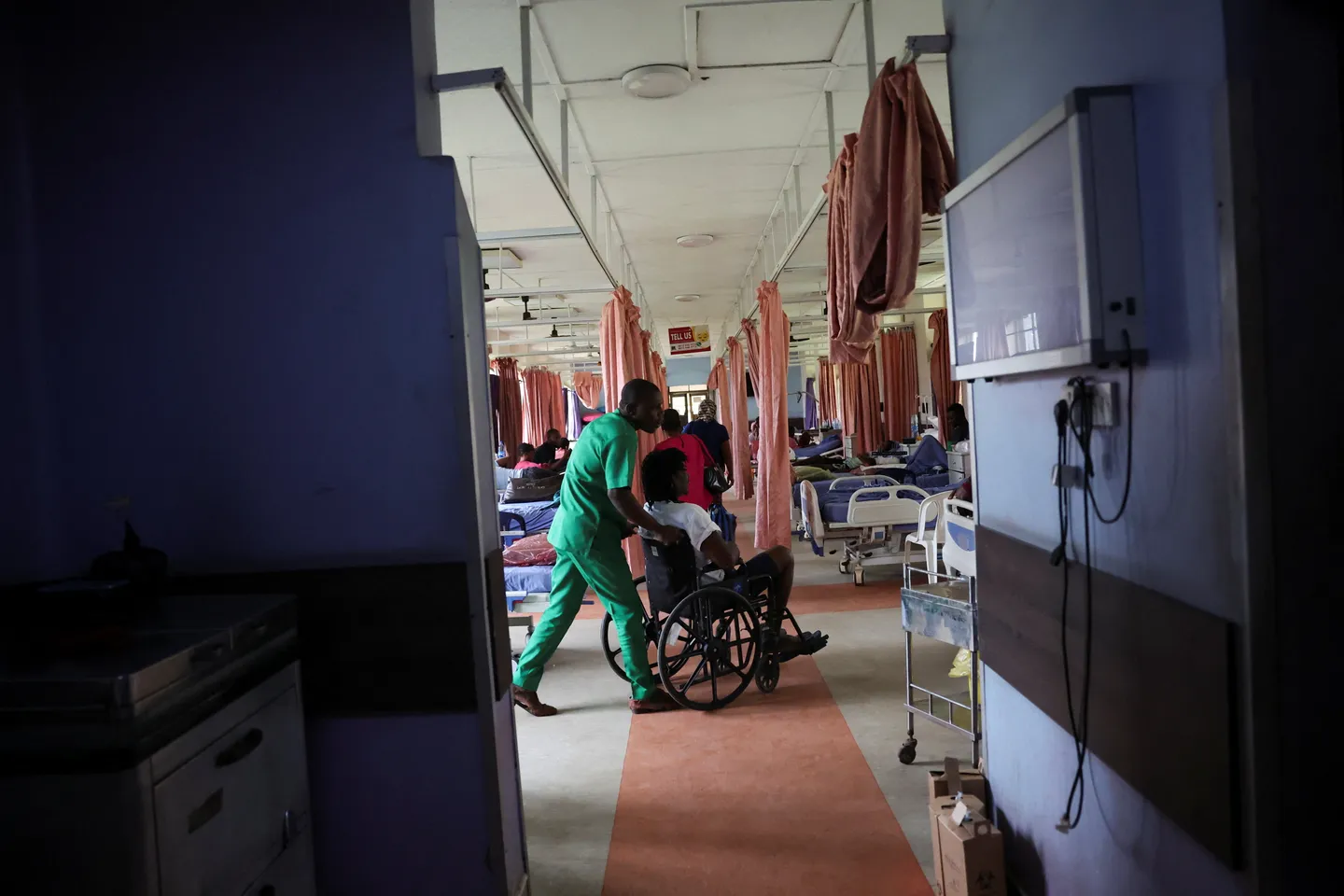
The Ondo State Government has confirmed more deaths in connection with the consumption of suspected poisonous alcoholic drinks in Odigbo Local Government Area.
The Commissioner for Health, Banji Ajaka, told journalists on Wednesday in Akure, the state capital, that 49 fatalities have now been reported, as against 39 reported last week.
The government also said the cases increased from 60 to 170 as of last Friday.
Mr Ajaka said some incidents have been reported in the Irele Local Government Area, with eight fatalities recorded in the area.
The Health Commissioner for Health, while giving an update on the situation, said that health authorities were intensifying surveillance, case management and contact tracing to contain the outbreak and identify the source of the poisonous substance.
He expressed concern that while eight of the deaths were recorded in Irele, the overall number of people affected across the areas by the incident has risen to 170.
He said the government was yet to relent in its efforts to establish the source of the substance, adding that investigators were examining whether the poisoning originated from a single source or multiple sources.
According to Ajaka, teams had been deployed to the affected communities to monitor the situation, manage cases and trace the source of the suspected poisonous substance.
He said the state government was also working with security and regulatory agencies, including the National Agency for Food and Drug Administration and Control, National Drug Law Enforcement Agency, Department of State Services, Nigeria Security and Civil Defence Corps and other relevant agencies.
Ajaka said the matter was discussed at a national meeting involving commissioners for health across the country and officials of the Nigeria Centre for Disease Control and Prevention, where Ondo State’s rapid response in surveillance, case management and tracking was commended.
He said the government would continue its investigation until the source of the poisoning was established.
The latest figures came after the commissioner had earlier disclosed that 29 people had died in connection with the suspected poisoning in Odigbo Local Government Area, with 121 persons affected at that stage.
Ajaka had linked the Odigbo outbreak to locally produced alcoholic and alcoholic-herbal substances consumed during two naming ceremonies in the affected communities.
He said investigations showed that an individual who was not a member of one of the families hosting a naming ceremony procured the substance and brought it to the event for guests to consume.
The affected communities previously identified in Odigbo include New Town, Odole, Okele, Orita Odigbo, Araromi-Obu and Oniparaga.
Following the outbreak, the state government banned the production and sale of locally brewed alcoholic and alcoholic-herbal beverages in Odigbo Local Government Area as a precautionary measure.
The commissioner also confirmed the arrest of a suspect in Araromi-Obu in connection with the production and distribution of the substances.
Ajaka warned residents against consuming unregulated alcoholic and herbal preparations, stressing that substances promoted for medicinal purposes could also pose serious health risks if their contents were unknown or unregulated.

The Management of the University of Nigeria Teaching Hospital (UNTH), Ituku-Ozalla, Enugu State, has appealed to the public, patients, and hospital visitors to remain calm following the recent management of a clinically suspected diphtheria case at its facility.
The clarification became necessary following anxiety generated by the admission and subsequent death of a pediatric patient at the hospital’s Children’s Emergency Room (CHER).
According to a public statement issued by the hospital management, the young patient received full medical intervention upon admission but regrettably passed away two days later despite intensive efforts by the attending medical team.
However, a subsequent clinical post-mortem review indicated that the severe symptoms may have been caused by severe pharyngotonsillitis with massive exudate, rather than diphtheria as initially suspected.
Despite the revised clinical assessment, hospital authorities confirmed that comprehensive contact tracing is currently underway as a precautionary measure to monitor anyone who had close contact with the deceased.
To ensure absolute safety and prevent potential transmission, the hospital management has also completed a standard decontamination exercise of the Children’s Emergency Room in strict compliance with infection prevention and control protocols.
Reassuring the public of the health institution’s capacity, the management emphasized that UNTH has previously managed and resolved sporadic cases of diphtheria successfully.
The statement noted that the tertiary health facility possesses the requisite specialist expertise, isolation infrastructure, and medical equipment needed to handle infectious disease cases effectively.
Addressing broader public health concerns regarding diphtheria across the country, the management advised members of the public to remain vigilant and watch for key symptoms, including persistent fever, severe sore throat, and difficulty in swallowing.
The hospital urged individuals or parents who notice these symptoms in themselves or their wards to seek immediate medical attention at the nearest certified healthcare facility rather than resorting to self-medication.
Furthermore, all healthcare workers, patients, and visitors within the hospital premises were advised to consistently observe standard safety measures, including hand hygiene and respiratory etiquette, as they carry out their daily routines.
Reaffirming its commitment, the UNTH leadership assured the public that it will continue to prioritize community safety, safeguard public health, and provide transparent updates based on verified medical data.
-
 Uncategorized2 days ago
Is Peter Obi parading a fake University Degree Certificate? Facts emerge
-
News2 days ago
BREAKING: Veteran actor, Olu Jacobs is dead
-
News2 days ago
Police raise alarm over planned attacks on worship centres, schools, NYSC camps
-
Uncategorized2 days ago
Army warns of possible attacks on churches, schools
-
Uncategorized2 days ago
Why petrol remains expensive in Nigeria — Dangote
-
News3 days ago
Atiku tackles Tinubu over N1,400 fuel price, demands probe of FAAC allocations
-
News1 day ago
‘No confirmed case of Diphtheria in Enugu State’ – Enugu Govt
-
Uncategorized2 days ago
2 policemen newly deployed to Benue killed in ambush