


Connect with us

News

Over 200 Catholic priests kidnapped, 20 killed in Nigeria in 10 years + (List of Victims)

Published

on

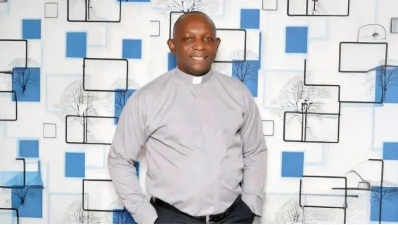
Catholic Priest, Fr Okechukwu Sylvester recently kidnapped ans killed in Kaduna State
Spread the love

Over 200 Catholic priests and seminarians have been kidnapped across 26 dioceses and archdioceses in Nigeria in the last 10 years, with no fewer than 20 of them killed by their abductors.

The chilling figures are contained in a document obtained by News Express from the Catholic Secretariat of Nigeria, entitled “STATISTICS OF KIDNAPPED CATHOLIC PRIESTS IN NIGERIA IN THE LAST TEN YEARS 2015 – 2025”.

The document broke down the list of victims, indicating their dioceses, as well as those kidnapped and released, those kidnapped but escaped, those kidnapped and killed, and those still with their abductors.

The North-West and North Central regions – Kaduna, Minna, Kafanchan, and Sokoto – account for the most number of victims, with over 50 cases of priestly abductions recorded. Kaduna Archdiocese alone witnessed the brutal killing of four priests.

Next is the South-East, with dioceses like Okigwe and Ekwulobia recording large number of kidnappings, with some priests abducted multiple times – one as many as three times.

The South-South comes third, with Edo, Delta, and Rivers states reporting frequent cases.

Maduka College Advert

In terms of dioceses, Okigwe leads with 24 reportedly kidnapped, out of which 23 names were listed, followed by Port Harcourt Diocese with 14 kidnapped, and Nsukka Diocese with 13 abducted.

Read details below:

“STATISTICS OF KIDNAPPED CATHOLIC PRIESTS IN NIGERIA IN THE LAST TEN YEARS 2015 – 2025”:

ZARIA DIOCESE 

Kidnapped and released

1. Rev. Fr. Felix Fidson Zakari

WUKARI DIOCESE

Kidnapped and released

1. Fr Moses Angyian

2. Fr Thaddeus Tarhembe

SOKOTO DIOCESE

Kidnapped and released

1. Fr Micah Yakubu Suleiman

2. Fr. Oliver Opara

3. Fr. Ojapah Stephen MSP

Kidnapped and Killed

4. Fr Alphonsus Bello (Fidei Donum Priest from Archdiocese of Kaduna) was killed by abductors

5. Bro. Micheal Mnadi (Seminarian) was killed by abductors

KAFANCHAN DIOCESE

Kidnapped and returned safe

1. Fr. Andrew Anana

2. Fr. Cleopas Donatus

3. Fr. Gabriel Uke

4. Fr. John Magnus

5. Fr. Joseph Shekari

6. Fr. Emmanuel Silas

7. Fr. Bulus Benson

Kidnapped and killed

8. Fr. John Mark Chetnum

9. Fr. Okechukwu Sylvester

WARRI DIOCESE

Kidnapped and returned safe

1. Fr. Emmanuel Obadjere

2. Fr. Joseph Ojakorotu

3. Fr. Christopher Ogaga

4. Fr. Harrison Egwunu

5. Fr. Peter Dedekuma

6. Fr. Raphael Ogigbah

Kidnapped and later died

7. Fr. Louis Odudu

IDAH DIOCESE

Kidnapped and released safe

1. Rev. Innocent Enemuo

2. Rev. Fr. Benjamin Adama

3. Very Rev. Fr. Jeremiah Musa

4. Rev. Fr. Patrick ?monu

YOLA DIOCESE

Kidnapped and Released safe

1. Fr. Oliver Buba

2. Fr. Matthew David Dutseumi

LAFIA DIOCESE

Kidnapped and returned safe

1. Fr. Augustine Ashigabu

ARCHDIOCESE OF KADUNA

Kidnapped and safely released

1. Fr. Paul Jibrin

2. Fr. Francis BakoAwesu

3. Fr. Godwin Ali

4. Fr. Anthony Dawah

5. Fr. Abraham Kunat

Kidnapped and killed

6. Fr. Joseph Aketeh Bako

7. Fr. Alphonsus Y. Bello

8. Fr. John Bako Shekwolo

9. Fr. Vitus Borogo

MINNA DIOCESE

Kidnapped and released

1. Very Rev Fr Leo Raphael

Kidnapped and Killed

2. Very Rev Fr John Yaji Gbakaan

3. Very Rev Fr. Isaac Achi

ISSELE-UKU DIOCESE

Kidnapped and returned

1. Fr Uche Nwaonwochei

2. Fr Franklin Odiaka

3. Fr Andrew Anah (twice)

4. Fr Jude Onyebadi (Three times)

5. Fr Samuel Agwameseh

OTUPKO DIOCESE

Kidnapped but Released

1. Very Rev Fr Joseph Ameh Onuh

2. Rev Fr David Echoda

3. Rev Fr Anthony Adikwu

4. Rev Fr Mark Ojotu

5. Rev Fr Amodu Cssp

Kidnapped and Died

6. Very Rev Fr John Alex Adeyi

ARCHDIOCESE OF BENIN CITY

Kidnapped and released

1. Fr Stephen Dumbiri

2. Fr Idahosa Amadasun

3. Fr Edwin Omorogbe

4. Fr Joseph Ediae

SHENDAM DIOCESE

Kidnapped and returned Safe

1. Fr. Cornelius Manzak Damulak

PANKSHIN DIOCESE

Kidnapped and released

1. Fr. Anthony Agu

2. Fr. Kenneth Kanwa, Cmf

3. Fr. Jude Nwachukwu, Cmf

4. Fr. Elias Gogwang

PORT HARCOURT DIOCESE

Kidnapped and released

1. Msgr. Pius Kii

2. Msgr. Emmanuel Maru

3. Fr. Donatus Ukulor

4. Fr. Bernardine Anaele

5. Fr. Fabian Anaele

6. Fr. Magnus Anyanugo

7. Fr. Paul Okeregwu

8. Fr. Loveday Bornwin

9. Fr. Ambrose Bani

10. Fr. Samuel Nwika

11. Fr. Uchenna Okere

12. Fr. Paul Nwankwoala

13. Fr. Michael Mbari

14. Fr. Maurice Livinus

CALABAR ARCHDIOCESE

Kidnapped and released

1. Fr. Cyril Essien

ONDO DIOCESE

Kidnapped and released

1. Fr Joseph Ajayi

OKIGWE DIOCESE

Kidnapped and returned safe

2. Fr EvaristusEkweke (2x)

3. Fr. Emmanuel Esiagu

4. Fr. CaniceAmajuoyi

5. Fr. Michael Asomugha

6. Fr. Kingsley Eboh

7. Fr. John Okafor

8. Fr. Francis Eze

9. Fr. Emmanuel Osuji

10. Fr. Fidelis Ekemgba

11. Fr. Jude Kingsley Maduka

12. Fr. Kenneth Osuchukwu

13. Fr. Anthony Jiwuba

14. Fr Emmanuel Azubuike (2x)

15. Fr. Kingsley Eze

16. Fr. Charles Nwachukwu

17. Fr Jerome Okonkwo

18. Fr. Culbert Okeke

19. Fr. Vitus Echedo

20. Fr. Franklin Okoro

21. Fr. John Paul Ogueri

22. Fr. Samuel Okereke

23. Fr. Donatus Eze

24. Fr. Augustine Umeibe

Attacked but Escaped

25. Fr Michael Okafor

26. Fr. Anthony Okafor O.

27. Fr Christian Obioha

28. Fr. Christian Mbara

29. Fr. Marcel Obasi

30. Fr. Anthony Onyeihe

31. Fr. Chukwuma C. Chukwuma

32. Fr Simon Osuchukwu

33. Fr Emmanuel Chinaka

34. Fr. Ernest Odoh

35. Fr. Bonaventure Ukeh

36. Fr. Paschal Ukaegbu

37. Fr Princewill Iwuanyanwu

38. Fr. Finbar Chukwu

39. Fr. Anthony Eziefule

40. Fr. Ambrose Onuoha

41. Fr. Ambrose Onuoha

42. Fr. Paulinus Okwuolise

43. Fr. Christopher Okoli

44. Fr. Cyprian Ukanwa

45. Fr. Chukwuma C. Chukwuma

46. Fr. JohnPaul J. Ogueri

47. Fr. Jude Mbano

KONTAGORA DIOCESE

Kidnapped but released

1. Fr. Linus Arege

JALINGO DIOCESE

Kidnapped and yet to be released

1. Fr. Abraham Saumam

MAIDUGURI DIOCESE

Abducted but escaped

1. Fr. Elijah Juma

KATSINA DIOCESE

Kidnapped but Released

1. Msgr Joseph Keke

UYO DIOCESE

Kidnapped but released

1. Fr. Ernest Udoh

2. Fr. Charles Ekeng

EKWULOBIA DIOCESE

Kidnapped but released

1. Fr. Egbosionu Eugene

2. Fr. Christian Ike

3. Fr. Martin Ezieruaku

4. Fr. Emmanuel Nwafor

5. Fr. Bernard Eguejiofor

6. Fr. Anthony Okoro

7. Fr. Sylvester Igwe

AUCHI DIOCESE

Kidnapped and released

1. Fr. Adorolo Lawrence

2. Fr. Alfred Ebalu

3. Fr. Agabi Isaac

4. Fr. John Bosco Ugwu

5. Fr. Thomas Oyode

Kidnapped yet to be released

6. Fr. Philip Ekweli

Kidnapped and killed

7. Fr. Christopher Odia

AWKA DIOCESE

Kidnapped and released

1. Fr. Paul Onyebuchi

2. Fr. Gerald Ejimbonwu

3. Fr. Peter Ibeazor

4. Fr. Efobi Felix

5. Fr. Joseph Nweke

6. Fr. Cornelius Okoye

7. Fr. Paul Chimezie

EKITI DIOCESE

Kidnapped and released

1. Fr Emmanuel Akingbade

NSUKKA DIOCESE

Kidnapped and released

1. Fr Chijioke Amoke

2. Fr Celestine Eze

3. Fr Lazarus Ekwueme

4. Fr Cyprian Ugwuanyi

5. Fr Victor Ishiwu

6. Fr Titus Ogbu

7. Fr Cyril Okpe

8. Fr Innocent Mba

9. Fr Malachy Asadu

10. Fr Sunday Onah

11. Fr Emmanuel Ugwu

12. Fr Emmanuel Nnadi – (escaped from abductors)

13. Bro. Eric Uroko – (Snr Seminarian)

UROMI DIOCESE Kidnapped but released

1. Fr. Augustine Akogba

2. Fr. Precious Martin Umanholen

3. Fr. Peter Udo (late)

4. Fr. Nicholas Oboh

5. Fr. Philemon Oboh

Source: News Express

News

ACCEPTANCE SPEECH BY MR. PETER OBI FOLLOWING HIS NOMINATION AS THE PRESIDENTIAL CANDIDATE OF THE NIGERIAN DEMOCRATIC COALITION (NDC) – MAY 30, 2026

Published

on

Peter Obi donates ₦10 million to Nursing College
Peter Obi
Peter Obi, NDC Presidential Candidate
Spread the love

Protocols,

Esteemed citizens of Nigeria,

It is with deep humility that I accept the role of presidential candidate for our party.
I express my profound gratitude to the leaders of our party. His Excellency Seriake Dickson, the National Chairman, National Secretary and the National Working Committee, NWC members and members of our relentless supporters, and the Nigerian populace who have steadfastly kept the spirit of hope alive. I commend those who have made the journey from every region of our nation to convene here in Abuja.

I wish to assert unequivocally: a New Nigeria is Possible. This conviction has united us; it must serve as our compass on the challenging road ahead and sustain us through all trials we may face. This pivotal moment transcends the individual ambitions of Peter Obi; it concerns the essence of our nation and the future of our children. It is about rekindling hope for millions who have faced adversity yet remain committed to Nigeria.

Today, our nation finds itself at a crucial juncture, enveloped in uncertainty. Families are anxious about their safety; parents are concerned for their children’s futures; and talented youth increasingly question their prospects in their homeland.

Businesses are struggling, communities are suffering, and an alarming number of citizens have lost faith in the very concept of governance. Yet, I stand before you filled with optimism and strong faith in the resilience of our people, for I firmly believe that a New Nigeria is possible.

Maduka College Advert

UNITY
To realise this New Nigeria, we must first mend the foundational elements essential for the success of any nation.

Nigeria cannot advance while fragmented by ethnic, religious, regional, or narrow political divides. We may communicate in different languages and practise diverse faiths, but we share a singular destiny under one flag. Our diversity should not be a source of division; rather, it is among our greatest strengths.

We should build bridges where others erect barriers, replace mistrust with confidence, division with understanding, and resentment with a collective purpose. A united Nigeria is indispensable. As Will Durant wisely pointed out, “A great civilisation is not conquered from without until it has destroyed itself from within.” We must never self-destruct. We must heal, unify, and progress together.

INSECURITY
In terms of security, the situation in Nigeria has considerably worsened. The global terrorism impact assessments ranked Nigeria as the 8th most affected nation in 2022, 6th in 2024, and 4th in 2026.
Yet, for many years, Nigeria garnered global recognition as a reliable contributor to peacekeeping, regional stabilisation, and conflict resolution. Our troops have not only displayed bravery but have also shown professionalism, discipline, resilience, and empathy in the most challenging operational contexts. Our officers and personnel have successfully commanded multiple international forces, safeguarded vulnerable civilian populations, monitored ceasefires, reinstated constitutional order, and contributed to rebuilding efforts.

Nigeria became one of the leading contributors of troops from Africa to UN peacekeeping missions and earned widespread admiration for operational effectiveness and leadership in various countries, including Rwanda, Sudan, Liberia, Sierra Leone, Mali, Western Sahara, Congo, Lebanon, Cambodia, Haiti, and Kuwait. At one point, a Nigeria, Lt. General Isaac Obiakor (retd) even led global peacekeeping initiatives.

We must address insecurity with resolve and urgency, for no nation can thrive while its citizens live in trepidation. The primary responsibility of government is to ensure the safeguarding of lives and property. Farmers must be able to return to their fields securely; students must be able to learn without fear; communities must be able to rest peacefully; and investors must regain their confidence in Nigeria.

Our strategy will be intelligence-driven, technology-enhanced, proactive, and community-focused. We will fortify our security institutions, enhance operational coordination, support our courageous personnel, and tackle the underlying causes of insecurity—namely poverty, unemployment, and marginalisation.

HEALTHCARE
Regarding health, Nigeria is currently ranked 157th globally, placing it in the lower echelon of healthcare worldwide. Primary healthcare, the cornerstone of our medical system, remains severely not functional with only 10% to 20% of approximately 30,000 primary healthcare centres operational.

As a result, Nigeria suffers from one of the highest infant mortality rates in the world. Furthermore, health insurance coverage in Nigeria hovers around a mere 10%, in stark contrast to countries like Indonesia, which boast over 90% coverage. This situation is regrettable.

I pledge that within four years, our health insurance coverage will more than double to over 20%.
Within these four years, we will increase our healthcare budget to a minimum of 10% of our GDP, up from the current level of below 5%. We will invest heavily in and support our healthcare institutions to ensure the massive training of our healthcare workers, including nurses and other professionals. We shall also adequately staff our medical facilities.

In four years, there will be a fully functional and properly managed primary healthcare centre in all 8,809 wards across the nation. By the conclusion of our term, Nigeria will ensure that at least 50% of its 30,000 primary healthcare centres are fully functional, properly manned, and dedicated to serving the populace.

EDUCATION
Education will remain at the forefront of our national revival, as no country can grow beyond its educational system. Nations that have transformed successfully have done so through sustained investment in human capital. Our children are not burdens; they represent our most valuable assets. We will invest heavily in schools, teachers, technology, and vocational training, ensuring that education equips our youth not only to seek employment but also to generate it. We must pivot Nigeria from a cycle of shared poverty to one of collective prosperity through knowledge, innovation, and productivity.

HUNGER AND AGRICULTURE
In 2023, when the present government took office, Nigeria ranked 109 out of 150 nations on the Global Hunger Index.

And by 2025, our ranking further plunged to 115th, placing us among the hungriest nations globally. Currently, the World Food Programme estimates that over 35 million Nigerians will face acute hunger and food insecurity this year. This is unconscionable, given our vast expanses of uncultivated land.

Rice remains the most consumed food in Nigeria. To illustrate our level of unproductivity, let us compare our capabilities with those of leading rice-producing nations. India is the largest producer of rice, yielding approximately 200 million tonnes of unmilled rice.
Bangladesh is the third largest producer, produces around 60 million tonnes of unskilled Rice, while Vietnam is the 5th, produces about 42 million tonnes.

Let us consider the land-to-population ratios:
India has a landmass of 3,287,263 square kilometres. Distributed across its population of 1.4 billion people, this equals roughly 2. 34 Square meter per person.

Bangladesh, with a landmass of around 148,460 square kilometres and a population of 170 million, has less than 1 square metres per person.

Vietnam’s landmass covers 331,000 square kilometres. Divided by a population of 102 million, it yields about 3.25 square metres per person.

Nigeria has a massive landmass of 923,768 square kilometres. Divided by our population of approximately 230 million, this results in about 4.00 square metres per person.

The foregoing clearly illustrates that we have absolutely no justification for being among the world’s hungriest nations.

Transitioning our nation from a state of consumption to one of production, through significant investments in agriculture, is the sole dependable strategy to escape the current depths of hunger and poverty. As I often emphasise, the uncultivated lands in our northern region represent our most substantial tangible assets. Transforming this sector is our direct pathway to prosperity.

ENERGY SECTOR
Nigeria today is the nation with the highest number of citizens lacking access to electricity globally. We currently generate and distribute a mere 4,000 megawatts (MW) of electricity for a population exceeding 200 million. In contrast, comparable nations worldwide – including several African peers such as South Africa and Egypt – each generate and distribute over 40,000 MW, despite both countries having less than half of our population. This considerable power shortfall continues to cripple businesses, choke industries, and stall overall economic growth.

Over the next four years, I commit to ensuring a minimum of 10,000 MW power increase generation and distribution.

UNEMPLOYMENT AND UNDEREMPLOYMENT
Our large pool of talented youth remains largely unemployed. The current official unemployment rate of 4% grossly misrepresents the true situation; actual underemployment and unemployment in Nigeria exceeds 30%, with youth unemployment sitting at over 40% – among the highest globally, necessitating urgent intervention. We will address this by aggressively supporting the growth of micro, small, and medium enterprises (MSMEs) through targeted tax incentives, special interest rates, and accessible funding in sectors such as agriculture, manufacturing, entertainment, sports, and distribution. These improvements will be both measurable and verifiable.

CORRUPTION AND GOVERNANCE COSTS
Nigerians will witness a tangible and verifiable reduction in corruption and the baseline costs associated with governance. Public resources will be managed with absolute transparency, prudence, and accountability to ensure that every naira spent yields demonstrable value for the citizenry.

RULE OF LAW
The rule of law will be fiercely upheld, and adherence to it will be sacrosanct for both government officials and citizens alike, strictly in accordance with our constitutional frameworks.

DEMOCRACY
Our democracy will exemplify true governance of the people, by the people, and for the people, completely free from interference by the ruling party. Instead, we will institutionalise deep respect for opposition parties and foster constructive engagement in governance.

Under my leadership, democracy will be pursued with integrity, fairness, and transparency.

May God bless you all, and may God bless the Federal Republic of Nigeria.

Continue Reading

News

Kachi Aghasili Clinches Labour Party Ticket for Awka North/South Federal Constituency

Published

on

Kachi Aghasili
Spread the love

AWKA: Legal practitioner and cultural advocate, Kachi Aghasili, has officially emerged as the Labour Party (LP) flag bearer for the Awka North and South Federal Constituency ahead of the upcoming National Assembly elections.

​Aghasili secured the ticket following a closely monitored primary election held in the Anambra State capital, positioning her at the forefront of the party’s drive to capture the strategic federal seat.

​The declaration has sent waves of optimism through her camp, with supporters describing her victory as a turning point for grassroots representation in the constituency.

​In a strongly worded press statement released immediately after her victory, Aghasili described the outcome of the primary as more than just a political win, framing it instead as the continuation of a populist movement.

​”Today marks more than the outcome of a primary election. It marks the continuation of a growing movement built on service, integrity, competence, and the collective hope of the people of Awka North and Awka South,” she declared.

​Expressing deep humility at the confidence reposed in her by the party members, the legal practitioner noted that the ticket represents a mandate given by the people, for the people.

Maduka College Advert

​”I am deeply honored and humbled to emerge as the flag bearer of the Labour Party for the House of Representatives, Awka North and South Federal Constituency,” Aghasili said.

​She quickly dedicated the primary victory to ordinary citizens, particularly the youth and women within the constituency who she said are yearning for inclusive governance and socioeconomic opportunities.

​”This victory is not mine alone,” Aghasili emphasized. “It belongs to every young person yearning for opportunity, every woman whose voice deserves representation, every community seeking responsive leadership, and every citizen who still believes that politics can be anchored on principle, sincerity, and genuine service.”

​The LP candidate extended her appreciation to the party hierarchy, delegates, and volunteers whose tireless efforts and logistics coordination ensured a smooth primary process.

​”I extend my heartfelt gratitude to the leadership of the Labour Party, the delegates, party faithful, supporters, volunteers, and every stakeholder who placed their confidence in this vision and candidacy,” she stated, adding that the trust is a responsibility she does not take lightly.

​Reflecting on her professional background, Aghasili noted that her career as a lawyer and her passion as a cultural advocate have adequately prepared her for the rigorous task of lawmaking and community development.

​”As a legal practitioner and cultural advocate, my journey has always been centered on preserving our heritage, empowering communities, and building institutions that outlive individuals,” she noted.

​She promised to transition these core values into federal legislative duties, promising a departure from transactional politics to a more institutionalized, people-oriented representation at the National Assembly.

​Looking forward to the general election, Aghasili outlined her legislative blueprint, which hinges on economic empowerment, infrastructural lobbying, and educational advancement.

​”Our campaign will remain focused on practical representation, youth and women empowerment, education, infrastructure advocacy, economic opportunities, cultural preservation, transparency, and accessible governance,” she affirmed.

​She called on the electorate of Awka North and Awka South to unite behind her candidacy, promising a clean, issue-based campaign driven by constructive dialogue and direct community engagement.

​”This moment is proof that a new generation of leadership is rising in Anambra State and across Nigeria. A leadership that listens. A leadership that serves. A leadership that understands that public office is a responsibility to the people, not a privilege above them,” Aghasili concluded.

Continue Reading

News

Erosion cuts-off Umudim Imezi-Owa community from the rest of Ezeagu LGA

Published

on

The devastating erosion site in the communy
Spread the love

…As PG begs for urgent govt, publicspirited individuals intervention

Years of ravaging soil erosion at the popular UBA Junction along Enugu-Onitsha expressway near Orie-Owa junction, has cut-off the Umudim community of Imezi-Owa, EzeaguLGA, Enugu State from the rest of the local government and other parts of the state.

The junction, which provides the only access point to the Umudim community, also serves part of Ezema community, particularly those living around the Ugwu-Ezema axis.

But, following intense rainfalls, which swept off the double culvert erected by the community several years ago, through solely community efforts and engagement of youths of the community, they no longer have access to their homes.

The community folks have for more than 30 years, managed to channel the large volumes of water off the Enugu-Onitsha expressway from the MOPOL Junction up to the Umuaji junction, through manual labour and community efforts, now has finally given way due to heavy rainfallon Wednesday.

As at now, the double culvert, earth embankments and other remedial measured put in place by the community to channel rain water successfully through the community, have been washed away.

Collapsed portions of the culvert at UBA Junction, off Enugu-Onitsha expressway, washed away by heavy rainfall (Photo credit: Umudim Youths Assembly)

Maduka College Advert

As of filing this report, the Umudim community has been totally cut-off from the rest of the communities in Imezi-Owa and other parts of Ezeagu Local Government Area, making movement to and from Umudim impossible due to the wash-off of their only access road.

The community folks who returned to either visit their elderly ones or those who commute from Umudim to Enugu daily to eke out a living, have been forced to either abandon their vehicles or motorcycles along the expressway to criminals or other hoodlums or have to navigate through very dangerous but narrow road paths in adjourning communities.

The Umudim community is in dire need of government intervention from the menace of erosion, which occurred following a torrential rainfall that left the community in a state of hopelessness, Barr. Chidi Onuorah, the President-General, Umudim Development Association, stated.

Similarly, Mr. John Nebeife, a Youth Leader, explained how the youths have been working on failed portions of the community roads, carrying laterite, mixing sand and cement to erect several culverts and clearing weeds from the gutters every raining season for over 30 years to ensure that rain water finds easy access after every rainfall.

He lamented that all their efforts “have been laid waste by the last rainfall, which totally damaged everything we have been doing all these years”.

Our reporters observed that the community is yet to benefit from government infrastructure, as every developmental stride ranging from roads, to provision of water (borehole), schools and church building, were shouldered through communal efforts.

Meanwhile, the only primary school in the community, Community Primary School,Umudim, Imezi-Owa, since taken over by government, is totally dilapidated and not fit for learning any longer as it resembles an abandoned school after the civil war without any physical infrastructure in place.

According to the community folks, efforts to get the Chairman of Ezeagu Local Government, Dr. Vitalis Ndu, to assist put up stronger remedial support on the road have met brick walls, the same with the Enugu State government.

We are calling on relevant government machinery at the Local and State levels, including the ecology office to rescue the community from this dire situation.

Communal efforts have been ongoing in the maintenance of the road, but the current level of devastation has gone beyond us,” the community leaders pleaded.

Continue Reading

Trending

Maduka College Advert