News
18 things to know about late Elder-statesman and Ijaw leader Chief Edwin Clark


18 things to know about late Ijaw leader Chief Edwin Clark
1. Edwin Clark was born May 25, 1927.
2. He was 97.

3. He was a Nigerian Statesman, Ijaw leader and politician from Delta State who worked with the administrations of military governor Samuel Ogbemudia and head of state, General Yakubu Gowon between 1966 and 1975.
4. In 1966, he was a member of an advisory committee to the military governor of the Mid-Western Region province, David Ejoor and was appointed Federal Commissioner of Information in 1975.
5. In 1983, he was an elected senator for three months at the twilight of the Shagari administration.

6. Clark was an unofficial advisor to President Goodluck Jonathan.
7. He was a philanthropist who founded the Edwin Clark Foundation and established a university in his hometown in 2015.
8. Clark was born in Kiagbodo, in the Ijaw area of what is now Delta State.
9. He attended primary and secondary schools at Effurun, Okrika and Afugbene before completing further studies at the Government Teacher Training College, which later became Delta State University, Abraka.
10. Clark worked briefly as a school teacher before traveling abroad to earn a law degree.
11. The Nigerian poet J. P. Clark was his younger brother.
12. He was a Federal Commissioner for Information.
13. Clark’s involvement in the political process began during the pre-independence period when he was elected as Councillor for Bomadi in 1953.
14. Clark later joined the National Council of Nigeria and the Cameroons (NCNC).
15. While a student at Holborn College, he was active in the West African Students’ Union.
16. During the second republic, he was a member of the national executive committee of the National Party of Nigeria (NPN) and was the treasurer of the party in Bendel State (now, in part, Delta State and previously the Mid-Western Region province).
17. Since 1996, Clark had been a self-described leader of the Ijaw nation.
18. He supported the Ijaw ethnic group in Delta State during an ethnic crisis in Warri and led Ijaw leadership delegations to meet political leaders. (THE NATION)



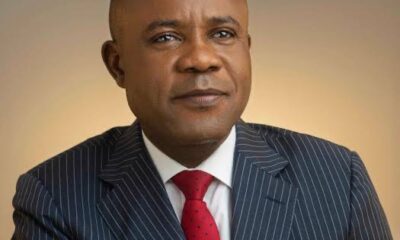







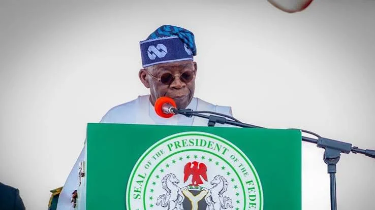

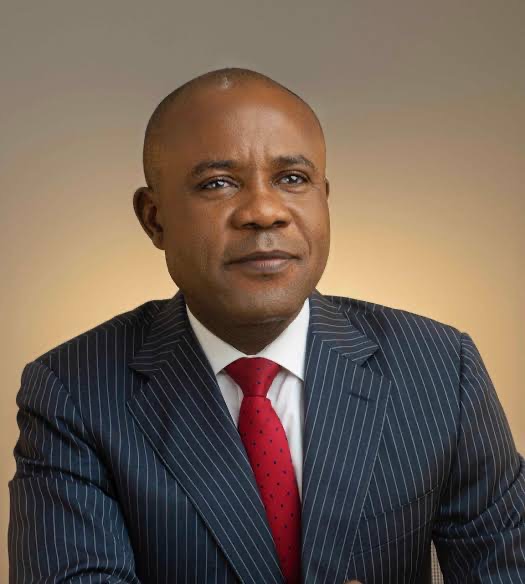
In commemoration of Nigeria’s 66th independence anniversary, Governor Peter Mbah of Enugu State has approved the pardon, release, and commutation of sentences of 13 inmates of the Nigerian Correctional Centres, Enugu State.
This is in the exercise of his power of Prerogative of Mercy under Section 212 of the 1999 Constitution (as amended) and in consultation with the Advisory Council on Prerogative of Mercy, Enugu State.
According to a statement released by the Mbah’s media aide, Uche Anichukwu, on Independence Day, the Governor’s approval was conveyed to the Comptroller, Nigerian Correctional Service, Enugu State Command by the Chief of Staff to the Attorney General and Commissioner for Justice, Barr. Osinachi Nnajieze.
The beneficiary inmates are Kenneth Ozioko, Moses Saliyat, Promise Ndudim Olung, Chijioke Ugwu, Samuel Ani, and Eugene Odo.
Others are Celsus Emeachi, Caleb Jatto, Calistus Eze, Gabriel Onu, Timothy Ani, Ernest Okeke, and Ejike Nwodo.
While some of the inmates were pardoned and released, some had their death sentence commuted to life imprisonment.
Mbah’s decision was predicated on reports of ill health and or proven reform in character, and following recommendation by the Correctional Services to the Advisory Council on Prerogative of Mercy, chaired by the State Attorney-General and Commissioner for Justice.
Membership of the Council equally comprises representatives of the Nigerian Correctional Service, Carmelite Prisoners Interest Organisation (CAPIO), and the Catholic Institute for Development, Justice and Peace (CIDJAP), among other reputable bodies in the justice sector.
Section 212 (1) of the 1999 Constitution (as amended) provides that: “The Governor may (a) Grant any person concerned with or convicted of any offence created by any law of a state a pardon, either free or subject to lawful conditions; (b) grant to any person a respite, of the execution of any punishment imposed on that person for such an offence; (c) substitute a less severe form of punishment for any person for such an offence; or (d) remit the whole or any part of punishment for any punishment imposed on that person for such any offence or of any penalty forfeiture otherwise due to the state on account of such an offence.”
Section 212 (2), however, provides that the powers of the governor under subsection (1) shall be exercised after consultation with an advisory council of the state on the prerogative of mercy as may be established by law of the state.
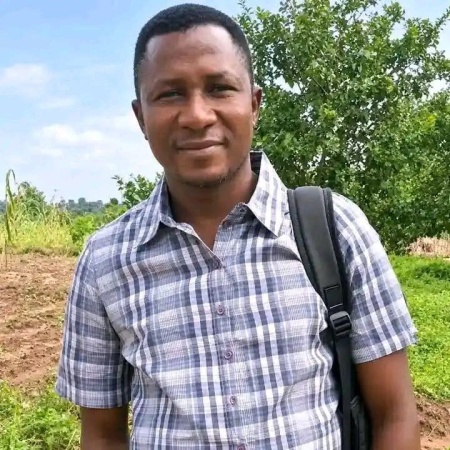
Unknown assailants on Wednesday reportedly murdered Igbu Job Terhemen, Chairman of the Nigeria Democratic Congress (NDC), Fiidi Council Ward, Makurdi Local Government Area of Benue State.
Terhemen was said to have been attacked at about 2:00am by suspected hoodlums, who allegedly tied him with ropes, injected him with substances suspected to be poisonous and abandoned him near his residence around the NNPC depot along Makurdi-Otukpo Road.
He was reportedly found in an almost unconscious state and unable to speak or communicate before he eventually died.
A friend of the deceased, who preferred anonymity, told journalists in Makurdi that Terhemen left his residence on Tuesday evening to watch a local football match in the Kanshio axis of the town but did not return home.
He said, “He left home to watch the match Tuesday evening and he was expected back home, but nobody saw him. It was while people were looking around for him that he was discovered around 2am Wednesday in a bush near his residence unconscious.
“There was also a needle-like injury on his body, indicating that he could have been injected with a substance by his attackers, dumped in the bush and left to die.”
Reacting to the incident, the state chairman of the NDC, Ohini Ojegbe, described the killing as a “broad-daylight evil” and called on security agencies to urgently investigate the incident.
Ojegbe urged the security agencies to arrest those responsible for the alleged killing and ensure they were brought to justice.
The party in a statement by its State Publicity Secretary, Agile Bem, described Terhemen as a committed and dedicated member whose contributions to the growth of the NDC would be greatly missed.
Meanwhile, the Police Public Relations Officer (PPRO), DSP Peter Aondongu, said the command was yet to receive a report on the incident.
…Says Tinubu’s reforms have created opportunities for states
…Bishop Onaga commends Mbah for good governance, improved security
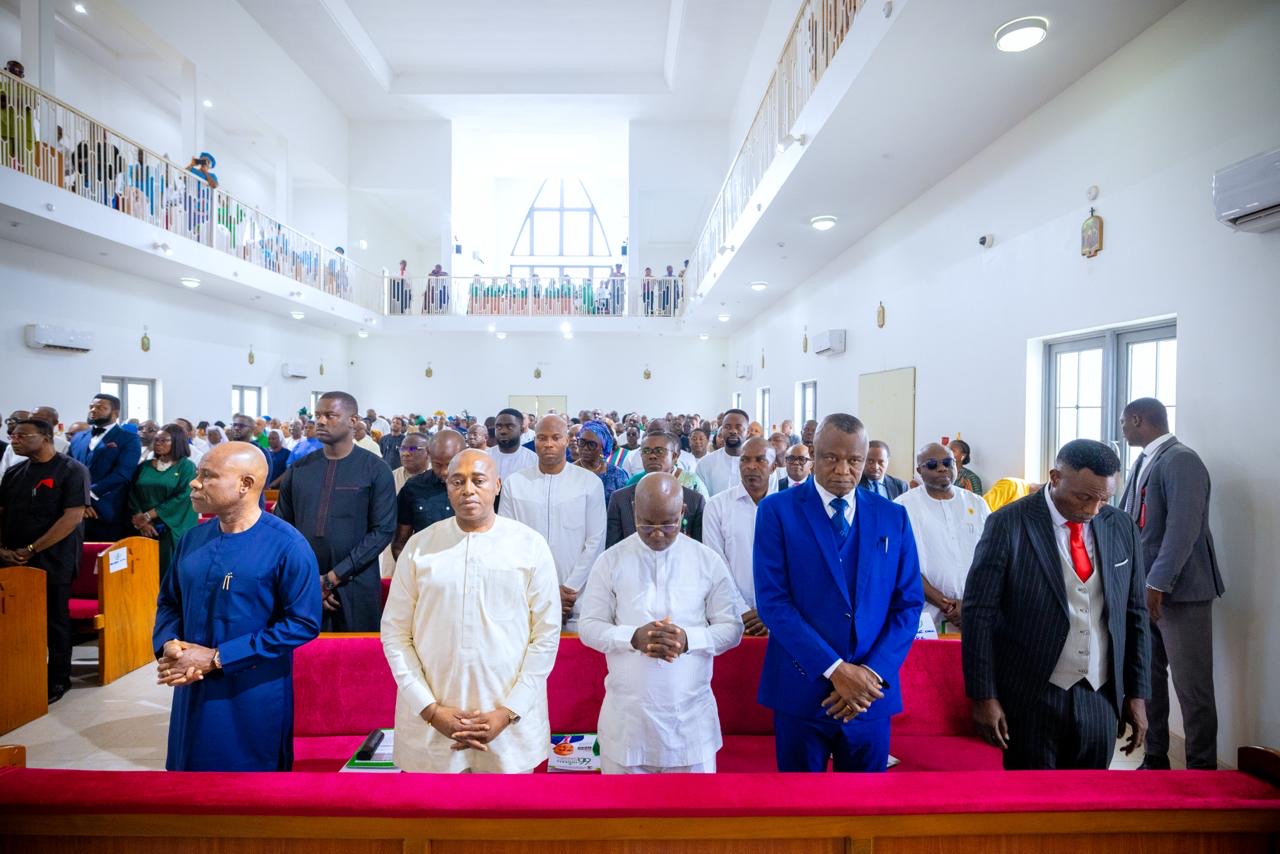
As Nigerians mark the nation’s 66th Independence anniversary, Governor of Enugu State, Dr. Peter Mbah, has urged citizens to embrace courage, optimism and thanksgiving, stressing that nation-building is not always accompanied by fanfare.
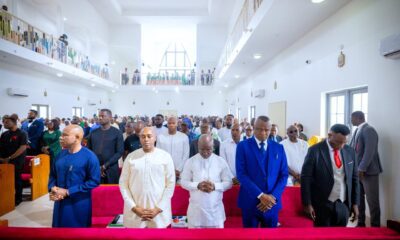
Mbah spoke on Thursday at a thanksgiving Mass held at the Enugu Government House Chapel to mark Nigeria’s 66th Independence Day.
He noted that although this year’s commemoration was largely low-key and devoid of fanfare across the country, the quietness of the celebration should not diminish the significance of the occasion.
“Nation-building is not always accompanied by fireworks,” the governor said.
He observed that some of the most consequential work in the country was being done quietly in classrooms, hospitals, farms, construction sites, factories, businesses, laboratories and security formations, as well as in countless places where Nigerians wake up every morning and continue to contribute to the country’s progress.
“There are moments in a nation’s journey when the difficulties are so immediate that it becomes difficult to see the possibilities beyond them. But dawn does not announce itself with noise. It begins quietly.
“So, even as we acknowledge the difficulties that confront us, we must also acknowledge that Nigeria’s journey has not been an underwhelming one,” he stated.
Continuing, Mbah recalled that Nigeria had survived crises that tore other nations apart, while noting that the reforms introduced by President Bola Tinubu were beginning to create new opportunities and conditions for economic growth.
“Let us acknowledge honestly the challenges before us. But let us also refuse the temptation to define Nigeria only by her difficulties. A nation is not measured only by the problems it faces, but also by the courage with which it confronts them.
“That is the spirit with which we must approach Nigeria at 66 – not with blind optimism, and certainly not with despair, but with faith, courage, honesty and work.
“It is heartwarming that the President’s policies and reforms have created remarkable opportunities for states that are prepared to take advantage of them.
“Today, there are also indications that some of the difficult reforms undertaken at the federal level are beginning to create conditions for greater economic stability and production,” he said.
Mbah described Enugu State as living proof of the promise of independence, resilience and self-belief, saying the state had moved from a narrative of decline to one of renewal.
“There was a time when the dominant conversation about Enugu was about what had been lost – about a city and a state whose best days were behind them.
“Today, a different story is being written. A renaissance is taking place – across our schools and hospitals, our roads and even in the skies, in once moribund factories, our agricultural communities, and our tourism space.
“This is why the story of Enugu is a story about what becomes possible when a people refuse to surrender to the limitations of yesterday. And that, for me, is the optimism that Independence Day should stir in every Nigerian,” he added.
The governor thanked the people of Enugu State for their support, reassuring them of his administration’s determination to remain focused on its development agenda.
“We will not be distracted from the work. We will remain faithful to the policies and projects that have changed the trajectory of our state and earned Enugu a more respectable reckoning, both within Nigeria and beyond.
“We will remain committed to the welfare and security of our people. We will continue to invest in education because the greatest infrastructure we can build is the human being.
“We will continue to strengthen our economy because prosperity must ultimately be measured by the quality of life of our people.
“And we will continue to build a state in which our children do not have to leave home to find a future,” he concluded.
Bishop Onaga commends Mbah for good governance, improved security
In his homily, the Catholic Bishop of Enugu Diocese, Most Rev. Callistus Onaga, expressed regret that Nigeria, despite its enormous potential, had yet to fully realise the promise of independence, particularly in the face of persistent security and economic challenges.
He, however, emphasised that Nigerians had many reasons to give thanks to God.
Onaga commended Mbah for what he described as significant progress in the state, particularly in the area of security, stressing that sustainable investment and development could not take place in an atmosphere of insecurity.
“My dear brothers and sisters, if you were here between 2021 and 2023, the security situation was terrible.
“Those who may not know why I say this, let me tell you. Within that period, I buried four priests, killed. Some were kidnapped. But thanks to God; when the present government of the state came in, something was done immediately.
“I feel it. I think Enugu is the most beautiful state to have in Nigeria.
“Of course, it is not to say that it is all over. No. We need to do more,” he said.
The bishop urged leaders to deploy the mandates entrusted to them for the public good, stressing that political and public authority should be exercised as an opportunity to serve and care for the vulnerable.
“It is the power to love, to serve, and to care for the weak and the poor – those on the fringes of existence,” he said.
Onaga further called for a stronger moral foundation for the country, saying Nigeria’s progress should be anchored not only on material development but also on justice, holiness and truth.
“Our national map will not rest on purely material foundations. It will rest on a new moral condition built on justice, holiness, and truth,” he concluded.
The Mass was attended by heads of other arms of government, senior government officials and other leaders.
-
 News3 days ago
2027: How Atiku told me to persuade Peter Obi to accept VP slot – Babachir Lawal Ex-SGF Babachir Lawal
-
News2 days ago
Ojukwu Property Dispute: OTL petitions IGP over demolition, construction at Macpherson Avenue Property
-
News1 day ago
Fuel Price Hike: Workers to begin strike in October
-
News2 days ago
‘I’m strong, ready to work’ – Tinubu speaks after return from vacation
-
News2 days ago
Xenophobia: Nigerian Consulate condemns killing of three Nigerians in South Africa
-
News1 day ago
Military records 367 attacks, kills 52 terrorists in September
-
News17 hours ago
We can’t erase decades-long problems in 4 years, says Tinubu
-
News1 day ago
Enugu leads as four states cut domestic debt by over 20% in six months