News
EFCC battles internal scandals as operatives loot recovered assets


The Economic and Financial Crimes Commission has come under heavy scrutiny following theft of exhibits by some of its operatives.
Saturday PUNCH gathered that some officials of the agency had been dismissed, while others were being investigated for fraud and theft of recovered assets, including cash and gold bars.

No fewer than 27 officers of the commission were reportedly dismissed for misconduct and fraudulent activities in 2024.
The agency spokesman, Dele Oyewale, in a statement on January 6, 2025, also indicated that the EFCC was investigating “a trending $400,000 claim of a yet-to-be-identified supposed staff of the EFCC against a sectional head.”
Two days later, 10 officers from the Lagos zonal command were detained over theft of operational items.

The detained officers are said to be answering questions regarding their inability to account for certain operational items that went missing under their watch.
A security source disclosed that the missing items included gold bars valued at over N1bn and jewellery, while between $350,000 and $400,000 had also gone missing.
While the news of the corrupt officers had yet to fade, another scandal was uncovered at the Kaduna Zonal Office of the commission on Wednesday.
An officer from the zone, identified as Polycarp, allegedly stole over $30,000 and other valuable exhibits.
The EFCC has remained silent on the Kaduna incident, which has added to the array of corrupt practices among the commission’s staff members.
Why operatives are stealing exhibits
A highly credible security source, who spoke to Saturday PUNCH on condition of anonymity, described the theft of exhibits as “highly disappointing.”
The source blamed the trend on prevailing poverty and skyrocketing cost of living, adding that easy access to the exhibits made the theft inevitable.
He noted that mechanisms should have been instituted to prevent such incidents.
According to him, allowing unchecked access to a place where exhibits like dollars and gold bars are stored could be a serious temptation.
The source stated, “Many of them are exposed and understand the value of money and the worth of items kept in their custody. It is unprofessional not to have mechanisms in place to ensure safety and accountability.”
He explained that high-value items should ordinarily be deposited in bank vaults for safekeeping.
However, if they must remain on EFCC premises, they should be stored in a well-secured location with multiple layers of security measures put in place.
“If the items must be kept in the office, at least three credible officials, who will be held accountable, should have access. To access the exhibit room, all three officials must be present simultaneously, each holding a different key to unlock the secured area. One or two of them should not be able to access the place without the others being present,” he added.
On punitive measures for officials caught engaging in such acts, the source said, “First, outright dismissal, followed by prosecution. Such officers should be treated like the original suspects or even face harsher punishments to serve as a deterrent.”
He continued, “If such an officer has travelled out of the country, the agency has their biometrics on record and can utilise Interpol to track them down.”
The source also raised concerns about the potential fallout from such incidents.
“What happens if the suspect who owns the seized items wins the case at the Supreme Court and demands their return? That would become a major scandal and embarrassment.
“Some of these cases can drag on for up to 20 years. If the Federal Government eventually wins, those valuables are meant to be auctioned, and the proceeds paid into government coffers. Allowing such lapses is unacceptable,” he added.
A senior official of the EFCC, who asked not to be identified, said the development was embarrassing.
“It is not just a shame to us, but it is very embarrassing. Our chairman is a transparent man; that is why he is not hiding the misconduct.
“I am aware of some cases. One of them said the offer was too tempting, and he could not resist it. It is giving us a bad name,” he stated.
A security analyst, Mr Yemi Adeyemi, said no EFCC official had the right to tamper with evidence or exhibits.
“There is no excuse. The EFCC is too sensitive to have officials that cannot control themselves. The chairman must clean up his house,” he said.
A renowned analyst and criminologist, Jackson Lekan-Ojo, said no officer caught pilfering or tampering with exhibits should go unpunished.
He said, “There is no excuse for such misconduct. They (officers) should face the law. The EFCC must clean up its house and make sure that every officer sent out for raids does it professionally and without any blemish. Their job is quite a sensitive one.”
Recently, a popular crossdresser, Idris Okunoye, aka Bobrisky, in a leaked audio, purportedly accused some EFCC officers of collecting N15m from him to cancel a money laundering charge against him when he was arrested.
While Bobrisky has since denounced the audio, the viral tape dented the image of the agency.
EFCC audits exhibits
Findings by Saturday PUNCH revealed that the recent criminal activities of the officers had caused disquiet within the EFCC, forcing its management to order an audit of recovered assets across its zonal offices.
A credible source in the agency confided in our correspondent that the EFCC Chairman, Ola Olukoyode, had directed zonal directors to restrict access to the ‘exhibit room’ and implement more surveillance.
The source said, “The chairman is not happy about the incidents and the backlash from the public. Since the Lagos incident where 10 of our officers were detained for alleged theft of exhibits, the chairman has ordered a full-scale audit of the recovered assets, including property, cash, materials, and other items.
“He also ordered restricted access to exhibit rooms and other classified sections at the zonal offices. He directed high surveillance in those places to ensure that they are under supervision 24/7.”
When contacted, the EFCC’s Head of Media, Oyewale, said the audit was an ongoing exercise.
He said recent developments in the commission were brought to the fore by an ongoing internal audit, adding that it was aimed at cleansing the system.
Oyewale said, “The development in the commission is triggered by internal cleansing that is ongoing. The executive chairman is determined to bring integrity and accountable conduct to the whole realm and the activities of the commission.
“And he is leaving no stone unturned. The audit of our facilities and operations is to ensure that the commission is properly placed on the ladder of accountability and transparency.
“Every audit is always informed by the need to bring sanity, remove wastage, block loopholes and tackle every form of disequilibrium in the system. It is a courageous development and a testament to the leadership to ensure that those who come to equity must come with clean hands.”
He denied allegations that the poor welfare of operatives was responsible for recent cases of theft.
“I want to say there’s no justification for fraudulent practices. Poverty and poor conditions are not a justification. When you fight corruption, you should know it will fight back.
“I think we need to commend what the chairman is doing to remove dead woods and bad eggs and to give the nation an anti-graft agency that can stand the test of integrity.
“Most of these advertisements against us are coming from detractors and people who are negatively affected by our internal cleansing. You should expect that! Twenty-seven people (sacked) in 2024, we expect that they will fight back. Whatever anyone is saying, it is corruption fighting back,” he added.
Outrage over night operations
This comes amid widespread condemnation of the EFCC’s night operations, which led to the killing of one of its operatives, Aminu Salisu, an Assistant Superintendent.
Salisu was fatally shot during a midnight operation in Awka, Anambra State, on January 17, 2025.
The incident occurred two months after the EFCC boss, Olukoyode, directed that sting operations at night be stopped in all the commands of the commission.
Instead of empathising with the commission on the killing of its officer in the Anambra operation, members of the public are questioning the operational protocols of the EFCC’s operations.
Commenting on the incident, a legal practitioner, Darlington Agomuo, condemned the operational protocols of the EFCC, urging the operatives to conduct due diligence before embarking on operations.
Agomuo, who appeared on a TV programme on Tuesday, said, “Are you sure that these are trained officers of EFCC? How do you barge into somebody’s private building in the dead of the night, and you cannot even explain yourself? You can’t even identify yourself!
“Are you expecting the man to open his gate for you? Now that the unfortunate has happened, they are now bringing all manner of charges against this man. Everyone is presumed innocent until proven guilty.”
He asked the EFCC to always follow due process in every matter they handle.
Many Nigerians also took to their various social media handles to condemn the anti-graft operatives for always invading individual residences at night in a clandestine manner.
Some of the victims of the night raids accused the anti-graft officers of criminal conduct.
Nigerian rapper and singer, Raoul Njeng-Njeng, popularly known as Skales, took to social media to share details of a traumatic encounter involving a raid at his home by EFCC personnel.
He wrote on his X account, “Well, when they came to my house, they didn’t ask; they didn’t knock; they just broke the door, and I’m not a fraudster. Plus, my whole family was there with me, including my newborn. Imagine being woken up with four AK-47s and three sledgehammers like a goddamn horror movie, and all this because they saw luxurious cars in front of my house.”
Call for reforms
The Centre for Anti-Corruption and Open Leadership called for an urgent internal cleansing of the EFCC to restore public confidence in the fight against corruption.
The Executive Director of CACOL, Debo Adeniran, lamented that the credibility of anti-corruption institutions had been severely undermined due to the involvement of some officials in stealing recovered loot.
“The confidence that Nigerians repose in anti-corruption agencies has waned. Anti-corruption agencies need internal cleansing. It is not that it is just starting; it has always been there,” CACOL stated.
CACOL urged the EFCC chairman to conduct an “organisational diagnosis” to identify and prosecute corrupt officials within the commission.
“The operatives of the agency have been helping themselves to the loot recovered from those who have committed crimes. Looting the loot has been the trend for a very long time, and we have been shouting about it.
“This also happens in other agencies like the police, ICPC, and the rest of them, and the heads of these agencies must go into action and do internal cleansing and ensure that the bad eggs among them are brought to book to restore public confidence in them.”
The group also cautioned the EFCC against its operational tactics, warning against excessive force and actions that violate the rule of law.
“The EFCC must be circumspect in its operations so that its efforts will not be counterproductive. They must use every other legal means to get suspects arrested instead of bombarding their suspects and engaging in acts against the rule of law,” CACOL stated.
Reacting, a board member of YIAGA Africa, Professor Nnamdi Aduba, stated that the EFCC’s problems stemmed from political interference, greed, and a lack of effective internal controls.
He said, “The problem they have is that the institution has been politicised. It has political interference. It is also about greed. Not all of them working there should even be in the service. There’s a need for in-house cleaning, but the truth is they cannot do it themselves. The best solution would be to bring in an outsider to purge the system.
“We have heard many times that properties recovered by the EFCC were sold, which speaks to the culture of impunity within the system. The control mechanisms are weak.”
He also called for a closer review of the agency.
The former board member of the National Drug Law Enforcement Agency further recommended that their remuneration should be improved on.
Similarly, an intelligence and security consultant, Abuh Adam, called for thorough background checks on EFCC personnel.
He said, “It’s possible that these problems have been going on for years, possibly covered up by previous leadership. The rising incidents could also be the result of individuals who have infiltrated the EFCC, potentially acting on behalf of suspects they are supposed to be investigating.
“Background checks shouldn’t be a one-off exercise. There should be a system that keeps staff under surveillance 24/7. This includes monitoring their relationships and associations, even those of their spouses, to detect any potential influence or wrongdoing.”
On his part, the Executive Director of the Rule of Law and Accountability Advocacy Centre, Okechukwu Nwanguma, stressed that the actions of corrupt EFCC officials undermined the agency’s credibility and mandate.
Nwanguma also criticised the EFCC’s use of night raids as a tactic for intimidation, warning that such heavy-handed practices could lead to allegations of human rights violations and further damage the agency’s reputation.
He said, “The involvement of EFCC officials in corrupt activities betrays the trust of the public. It discourages whistleblowers and tarnishes the credibility of the agency.
“These practices contribute to a negative perception of the agency, undermining its efforts in the fight against corruption.”
He advocated stronger oversight and internal reforms, calling for “robust ethical training programmes, regular audits, and enhanced whistleblower protections.”













President Bola Ahmed Tinubu has returned to Nigeria after spending about four weeks in Europe, declaring that he is hale, healthy and ready to resume work.
Tinubu made the remarks on Tuesday evening after arriving in Lagos from Paris, where he had spent the latter part of his working vacation.
Responding to journalists who asked about concerns raised about his health condition, the President said he remained fit and prepared to continue his duties.
“Rumours will always emanate from politics. I am hale and strong. I am ready to work. The fact remains that I am here, healthy, sound and ready to go,” Tinubu said.
The President had departed Nigeria on August 30 for London before travelling to Paris, with the Presidency describing the trip as a working vacation.
He later extended his stay by a few days before returning to Nigeria on Tuesday.
His prolonged absence from the country had generated public and political debate, with opposition figures questioning the length of his stay abroad and his decision not to personally attend the 81st United Nations General Assembly in New York.
The Presidency, however, maintained that Tinubu remained in touch with officials in Nigeria and continued to direct government affairs while abroad.
Vice President Kashim Shettima represented him at several official engagements, including the UN General Assembly.
During his time in France, Tinubu met French President Emmanuel Macron and businessman Vincent Bolloré.
The Presidency also linked his stay to engagements with investors and discussions around major investment projects, including the proposed Gateway Deep Sea Port in Ogun State.
The President is expected to remain in Lagos for the 66th Independence Anniversary celebrations.
He is scheduled to attend official engagements in the state, including activities marking Nigeria’s independence on October 1, before returning to Abuja.
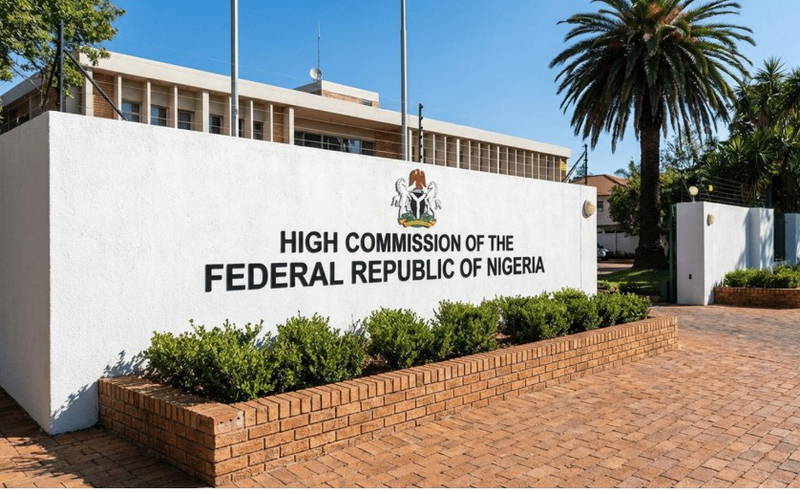
The Consulate General of the Federal Republic of Nigeria in Johannesburg has condemned the deaths of three Nigerian nationals killed in different parts of South Africa in less than one week, between September 18 and 21, 2026.
In a statement issued today, the Consulate said the killings raise fresh concerns over the safety of Nigerians and other foreigners in South Africa and point to what seems to be a pattern of targeting Nigerians.
According to the Consulate, on September 18, 2026, one Kenechukwu Christopher Igwemadu allegedly jumped to his death while trying to escape police harassment and brutality at Kenlin Court on Douglas Street, Central Business District (CBD), Bloemfontein.
On September 20, 2026, another Nigerian, Olaniyi Olaleye Olatunde, was shot dead at Spanata Bar and Grill Night Club in Mamelodi East, Pretoria, by an unidentified South African.
The deceased, who worked as a security guard at the club located in Summer Event Centre, was said to have attempted to stop a customer from leaving the club with a cup belonging to the club.
The encounter degenerated into an altercation, and the customer pulled out his firearm and shot Olatunde in the lower body, leading to serious injury and profuse loss of blood.
“The shooter immediately fled the scene. However, on realising that his identity was known by many at the Club, he later returned to the Club and threatened to also kill any witnesses who dare to report the case and identify him to the Police,” the statement said.
Olatunde was rushed to Mamelodi Hospital, where he was confirmed dead on the morning of September 21, 2026.
The third incident occurred on September 21, 2026, in Primrose, Ekurhuleni, where South African politician-cum-investigative content creator, Xolani Khumalo, and his content creation team, Sizok’thola, allegedly tortured and killed Christian Hillary Nnaemeka.
The Consulate said that, despite not finding anything incriminating on the deceased, the crew beat and tortured him before he attempted to escape by jumping over a fence, after which he collapsed from injuries and exhaustion and was pronounced dead on arrival at the hospital.
The Consulate recalled that on February 9, 2026, another Nigerian, Emeka Clement Uzor, was also shot dead by the same Khumalo’s reality TV crew in Windsor East, Randburg, yet no arrests have been made and Khumalo is currently running for election to become Mayor of Ekurhuleni.
“Reports of these continuous incidents are deeply troubling and continue to raise numerous questions over the safety of Nigerians and other foreigners in South Africa,” the Consulate said, calling on relevant South African authorities to investigate the deaths thoroughly and bring perpetrators to justice.
“Our position remains that Nigerian and all lives matter. In cases where allegations may exist, no matter what they are, there are processes and steps to justice. All should be presumed innocent,” it added.
News
Ojukwu Property Dispute: OTL petitions IGP over demolition, construction at Macpherson Avenue Property
By Tony Edike
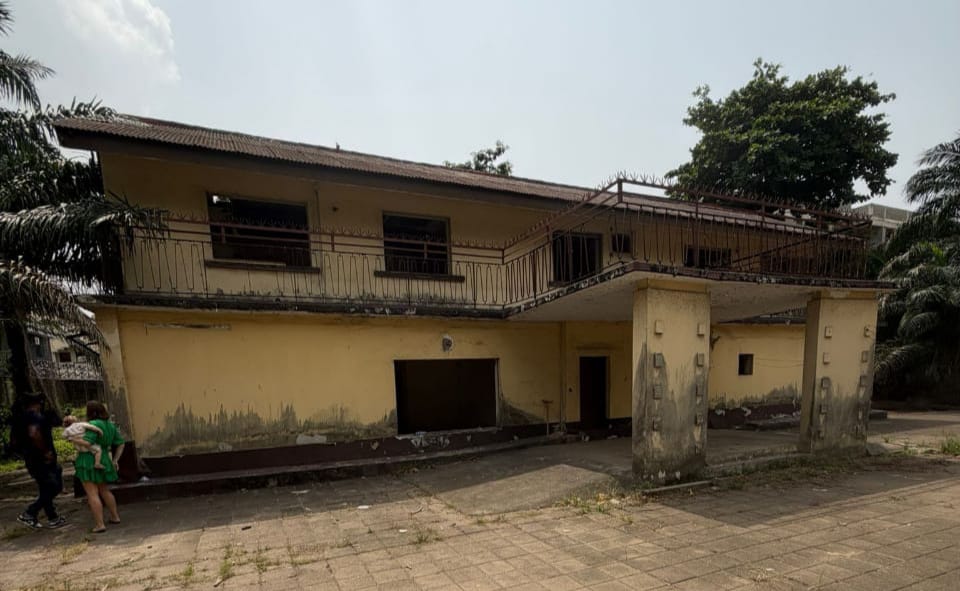
The long-running property dispute involving Bianca Ojukwu and Ojukwu Transport Limited (OTL) has taken a fresh turn following the demolition of a property at 4 Macpherson Avenue, Ikoyi, Lagos, and what the company describes as ongoing unauthorised construction on the site.
In a petition dated August 20, 2026 and addressed to the Inspector-General of Police (IGP), OTL called for the immediate cessation of activities at the property and its return to the company pending the resolution of outstanding court proceedings.
The company said the property was taken over on May 1, 2025, when officers from Zone 2, Lagos, accompanied by lawyers representing Bianca Ojukwu, identified in the petition as Omeye and Duru, took over the premises.
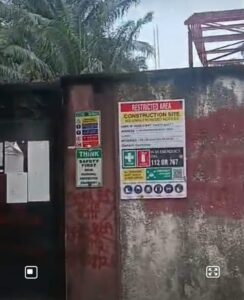
Ongoing construction at the site
OTL alleged that the police action was based on what it described as “false claims” made by Bianca Ojukwu and her lawyers.
According to the company, the property had previously been the subject of litigation and enforcement proceedings. OTL said it had, pursuant to a 2018 judgment by Justice Adedayo Oyebanji, obtained and executed a warrant on the properties in 2022.
The company further stated that it subsequently commenced an appeal process against the 2022 judgment of Justice A.M. Lawal and served the relevant stay processes.
OTL said that despite the unresolved legal proceedings, the property at Macpherson Avenue was demolished and construction subsequently commenced on the site.
OTL’s fresh petition to IGP
In the August 2026 petition, Ojukwu Transport Limited, said it had previously petitioned the IGP on August 22, 2025, with a reminder in January 2026, seeking the return of the property.
The company said that its earlier complaints had not been responded to, while activities at the property had continued.

A new structure under construction at the site
“OTL, the owner of the property, discovered that the same property taken over by police with no response to our previous petitions/demands had been demolished and construction now ongoing,” the company stated in the petition.
It consequently asked the IGP to urgently intervene by stopping all activities on the property and removing persons allegedly occupying or working on the premises.
The company also requested that the property be returned to it while the outstanding court issues are allowed to run their course.
“Criminality and abuse of power should not be condoned,” the petition stated.
Earlier police petitions
OTL said its initial petition in August 2025 was prepared by Chief O. Ugolo, SAN, on the instructions of Chief Chukwuemeka Odumegwu-Ojukwu Jnr, whom the company identified as head of the Ikemba branch of the family as well as a shareholder and director of OTL.
The company maintained that Bianca Ojukwu and her sons, Afamefuna and Nwachukwu, are not shareholders or directors of OTL.
A separate petition was also reportedly submitted to the Assistant Inspector-General of Police, Zone 2, in September 2026, specifically concerning the alleged demolition and ongoing construction at the Macpherson Avenue property.
OTL alleged that the ongoing development was taking place with the knowledge and protection of police personnel.
However, these allegations have not been independently established in the materials made available to The Advocate.
Contempt proceedings
OTL said Bianca Ojukwu and her sons had earlier, in 2024, applied for Form 49 contempt proceedings before Justice Lawal.
The company also alleged that proceedings had suffered delays because the case file earlier requested by Bianca’s lawyers was unavailable or had not been returned to court on two consecutive occasions.
Other properties involved
According to OTL, the matter before Justice Lawal includes, in addition to 4 Macpherson Avenue :
* 30 Gerrard Road, Ikoyi
* 29 Oyinkan Abayomi, Ikoyi
* 13 Ojora, Ikoyi
* 32 Commercial Avenue, Yaba
OTL maintains that it is the owner of the properties.
OTL demands return of property
OTL described the alleged demolition and construction as a “blatant and provocative disregard for the rule of law” and accused a serving federal government minister and her lawyers of abuse of office and power.
Those allegations are OTL’s position and have not been independently established.
The company is demanding that the alleged construction be stopped, all persons allegedly occupying the property be removed and the property returned to OTL pending the conclusion of the court proceedings.
The latest development is another chapter to the long-running legal dispute with Ojukwu Transport Limited.
-
 News3 days ago
Igbo leaders reject Abuja restructuring communiqué
-
International3 days ago
27 feared dead after two mass shootings in South Africa
-
News2 days ago
Pastor abandons Kwara church, flees with family, members over bandit threat
-
News2 days ago
‘Where is Nigeria’s president?’, Peter Obi questions Tinubu’s absence from UNGA
-
News2 days ago
Europe-based newlywed arrested with cocaine at Enugu airport
-
News19 hours ago
2027: How Atiku told me to persuade Peter Obi to accept VP slot – Babachir Lawal Ex-SGF Babachir Lawal
-
News2 days ago
Woman arrested for allegedly smuggling alcohol to inmate in Ogun prison
-
News2 days ago
APC wins all Chairmanship, Councillorship seats in Enugu