Connect with us

Politics

Sunrise Flour Mills: Governor Mbah’s revival crusade sweeps through Enugu’s moribund assets

Published

on

Eid-El-Kabir: Gov Mbah felicitates Muslims, harps on love, sacrifice
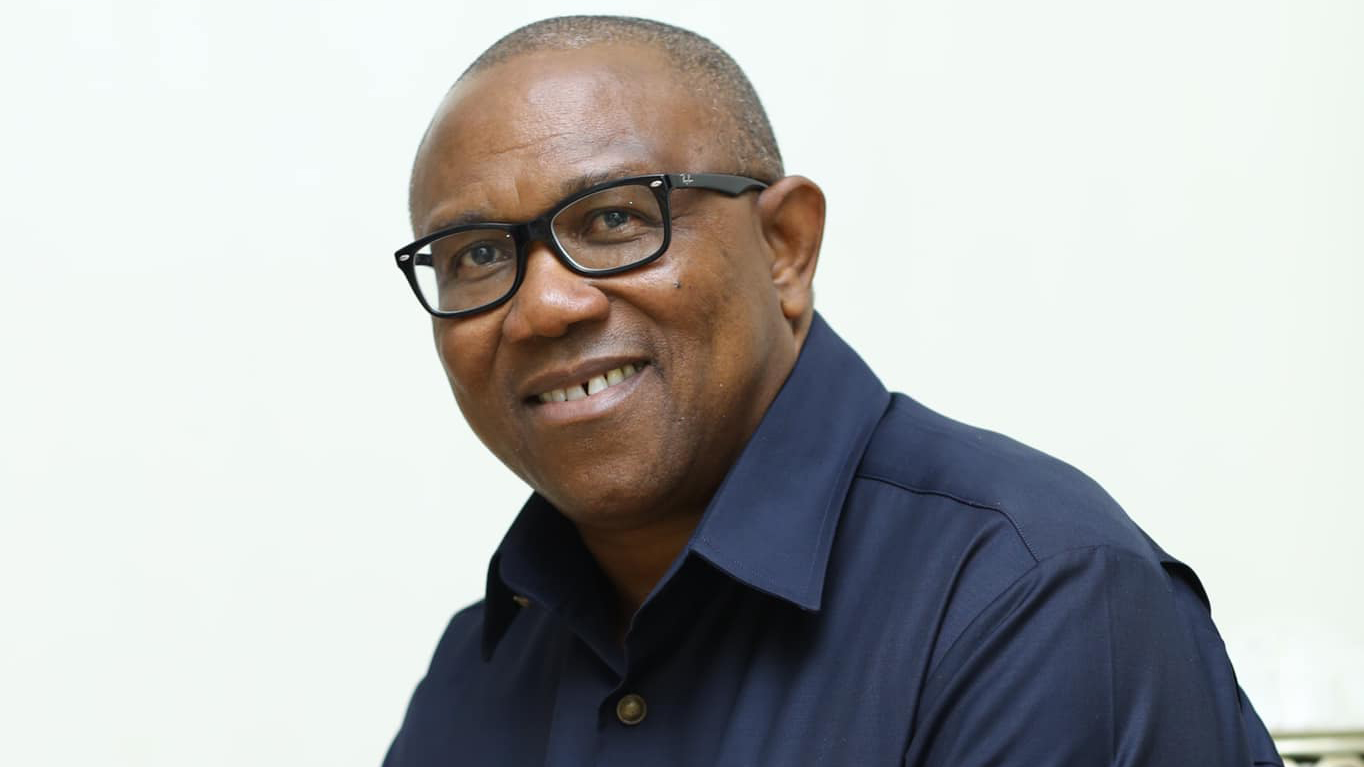
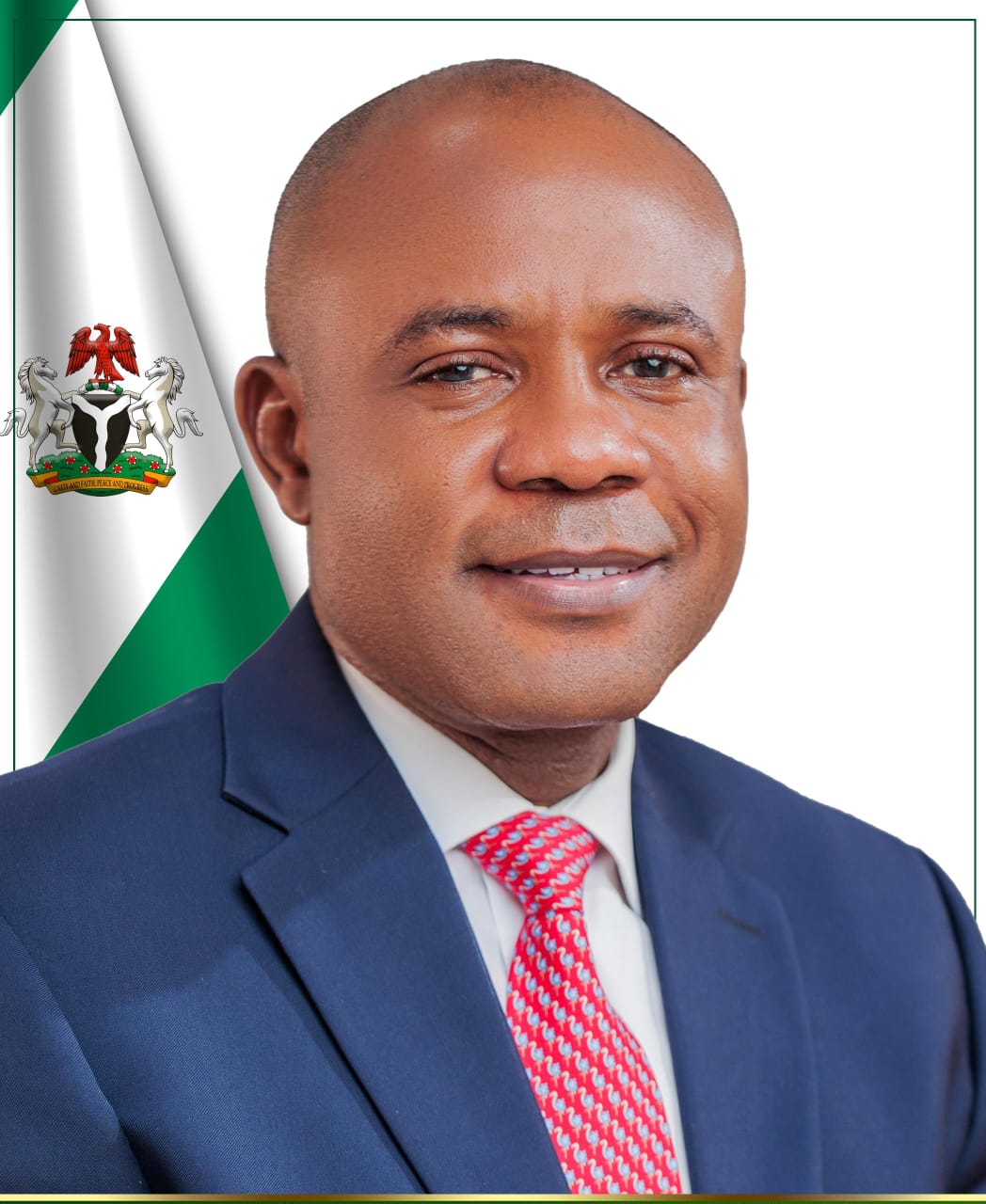
Enugu State Governor, Dr. Peter Mbah
Spread the love
By Uche Anichukwu

Decrepit. Abandoned. Eyesore. Wasted

These and more are the immediate adjectives and pictures that confront any visitor to the once iconic Sunrise Flour Mills, one of the legacies of Senator Jim Nwobodo as the governor of old Anambra State. It was commissioned in 1983 to add to the industrialisation and economic growth of the old Anambra State.

However, no sooner was the Nwobodo Administration kicked out of office by the General Muhammadu Buhari military regime than the going concern pack up in 1985. An attempt by the Sullivan Chime Administration to resuscitate Sunrise in 2013 through a 30-year leasing agreement between Enugu State and DAO-VTV International Trading Services and Investment Limited, a Vietnamese firm, did not work. So, Sunrise has been moribund for the past 39 years.

The same fate also befell other legacies of Nwobodo like Ikenga Hotels in Enugu and Nsukka, Aluminum Ports Factory in Igbo-Etiti LGA, Nike Lake Resort, Anambra Television, Anambra Vegetable Oil Products at Nachi, among others, which are now either half dead or in total ruins.

It is also recalled that the former Eastern Region’s economy was ranked the world’s fastest growing and industrialising economy between 1954 and 1964, courtesy of Dr. Michael Okpara’s principle of “Pragmatic Socialism”. NIGERGAS Company, Niger Steel Company, and Asbestos Cement Factory in Emene, Enugu; the Golden Guinea Breweries in Umuahia, Michelin Factory in Port Harcourt, shoe factories in Owerri, Hotel Presidential in Enugu and Port Harcourt, the Calabar Cement Factory, NIGERCEM Nkalagu; among others and numerous farm settlements and plantations for various cash crops were established across the defunct Eastern Region.

Unfortunately, almost all of them, including the ones inherited by Enugu State, are in either ruins or sold off. No thanks to military rule, a dysfunctional federalism, profligate and unimaginative leaderships.

Consequently, during the 2023 governorship campaign, candidate Peter Mbah, presented an economic vision to grow the Enugu State’s economy from $4.4bn to $30bn by transforming the state from a public service to a private sector-driven economy. And one of his major templates to achieving that is by converting the state’s numerous moribund assets to productive assets.

Maduka College Advert

The N40bn Sunrise Flour Deal

Recently, the Enugu State Government and Jelfah Nigeria Limited, a private investor, signed a N40bn deal to bring the company back to life. Jelfah acquired a 60 per cent equity stake in the company and will in turn invest N24bn in the iconic mills, while the state government retained 40 per cent based on the existing assets of the company.

Throwing more light on the transaction, Governor Peter Mbah said, “This investment will see Jelfah Group investing N24bn into the existing Enugu Sunrise Flour Mills. N22bn will be directed into revamping and resuscitation of the Sunrise Flour Mill, and N2bn is going to come to the State by way of cash.

“The Special Purpose Vehicle (SPV) is also going to own 10,000 hectares of farmland where we are going to cultivate the inputs for the flour mills such as cassava and grain.

“This is a testament that when we say Enugu State is open for business, we are truly committed to it. We understand how to make a win-win deal, both for the investors and for the people of Enugu State. So, we will support you every step of the way to ensure that you succeed because the end is to create jobs and wealth for our people.

“We hope that this signals to other investors, who may still be on the fence that Enugu is actually ready for business. We are committed to not just creating the enabling environment, but also working with investors to help them derisk investments and grow their businesses.”

The Chairman of Jelfah Group, Moses Saromi, predicated the deal on Governor Mbah’s vision, dynamic leadership, improved security, and speedily increasing ease of doing business in Enugu State under his leadership, stressing that the administration had unlocked new opportunities for private sector participation.

“This acquisition of 60 per cent equity not only aligns with Jelfah’s long-term vision, but also furthers the governor’s ambition of empowering the people, revitalising moribund assets, and ensuring sustainable development. And together with our consortium partners, our goal is to transform Sunrise Four Mills into a centre of excellence, harnessing our collective expertise to drive growth and value creation.

“So, we firmly believe that this partnership will catalyse positive change, spark job creation, elevate local production capacities, and contribute significantly to the socio-economic advancement of Enugu State.

“We have worked hard in the last months to get to this point. We have a short term, medium term, and a long term plan for the flour mills. Activities will start in earnest. In another 90 days, you are going to experience a lot of movements and activities with regards to the revitalisation of the flour mills. Our activities will include recruitment of people, who will run the plant, indigenes of the state, obviously,” he said.

N100bn Enugu United Palm Products flagged-off

Originally established by the defunct East Central State in 1970 on 6,700 hectares of land traversing Ibite-Olo in Ezeagu LGA, Ugwuoba in Oji River LGA, and Umulokpa in Uzo-Uwani LGA, the Enugu United Palm Products Limited, EUPPL, was initially viable. But like other public-owned enterprises, it was not long before it was decapitated by mismanagement, obsolete equipment, and limited market access.

However, Governor Mbah recently flagged-off the revitalisation of EUPPL at Ibite-Olo, describing it as the triumph of vision over cynicism – obviously referring to the misgivings in some opposition quarters back in May when his administration and Pragmatics Palms Limited sealed a N100bn deal to resuscitate EUPPL. It was wrongly claimed that the administration awarded a N100bn contract to a new firm, whereas it is a Special Purpose Vehicle (SPV). The deal actually saw Pragmatic Palms Limited, the investor, acquire 60 per cent equity in the company by also providing the finance for 60 per cent of the transaction, while the state government keeps 40 per cent based on its lands and plantations. The government did not pay a dime.

“What this groundbreaking ceremony represents for us is a new lease of life for Pragmatic Palm Product Limited. It also shows that we are getting closer to our dream to transform Enugu State as a premier destination for investment, industry, tourism, business and living,” Mbah stated at the official flag-off.

Rolling out an intensive, five-year plan for repositioning EUPPL, Managing Director/CEO of Pragmatic Palms Limited, Prof. George Nwangwu, said EUPPL would play in the upstream, midstream, and downstream sectors, creating over 3,500 direct and indirect jobs in the process. In the upstream, Nwangwu observed that whereas only 40 per cent of the 6,700 hectres of land was planted since EUPPL’s establishment 54 years ago, the new management had already embarked on aggressive planting of the remaining 60 per cent, and would acquire more lands to increase the planted areas to 20,000 hectres in five years.

Continuing, he stated, “In the midstream, we will set up world-class oil mills across the three locations as well as increasing the oil production capacity over time.

“We will also set up and improve our refining capacity to produce crude palm oil, palm kernel oil, olein, stearin, biodiesel, as well as refined, bleached, and deodorised oil.

“In the downstream, we plan to have a share of the retail market by setting up the largest network of agents to aggregate fresh fruit bunches from around our catchment area.”

Hotel Presidential

The iconic 100-room, four-floor Hotel Presidential was opened in 1963, but was later run aground. It was thoroughly stripped bare, became bushy and only fit to be sold off as scrap. But in April this year, the administration awarded a contract for a total revamp of the moribund complex for completion and reopening before the end of this year.

Int’l Conference Centre

Also, the International Conference Centre commenced by the Senator Chimaroke Nnamani Administration was abandoned after the end of his government in 2007. Mbah Administration awarded a contract for the completion of the 5,000-seater complex and it will now be commissioned around October this year. In addition, the government also awarded a contract to the China Communication and Construction Company for the construction of a five-star International Conference Centre Hotel, which would be completed in 2025. According to the project consultant, Arc. Adibe Njoku, the hotel contains 335 rooms, consisting of 224 single rooms, 64 business suites, 25 diplomatic suites, two presidential suites, and every other facility that would enable the hotel to function as a five-star hotel.

Flagging off the project in May, Mbah said that it was part of connecting the dots in making Enugu State the premier destination for business, investment, tourism, living, and leisure, as a 5,000-capacity conference centre could not be optimized without enough accommodation.

NIGERGAS

NIGERGAS Limited was established by the Okpara Administration in 1962 in partnership with an Italian firm, Siad Machine Impianti, and was producing acetylene, nitrogen, medical oxygen, and welding/process oxygen. It was inherited by Enugu State, although it had since been run aground.  But, like others, it was run aground. In April this year, the State Executive Council approved funds for its total overhaul and revival. According to the Managing Director of Enugu State Investment Development Authority, Dr. Sam Ogbu-Nwobodo, the profitability is high, as NIGERGAS would provide the much-needed medical oxygen and industrial gas, among others, for the South East and the entire country because the country is hugely underserved.

Although it is scheduled to resume production again around the first quarter of 2025, NIGERGAS is likely to bounce back to life before the end of 2024, given the high speed of rehabilitation work.

Enugu International Hospital

Again, the sprawling hospital skeletal structures along Rangers Avenue, Enugu, which had been overgrown by bushes since mid 2000s, was retrieved from the Economic and Financial Crimes Commission by the Mbah Administration and is now being turned into a 300-bed Enugu International Hospital and the best in West Africa.

Meanwhile, as Governor Mbah would normally say, Ndi Enugu have not seen anything yet, for while many regard his efforts across all sectors as giant strides, he sees them as the little beginning of a socioeconomic revolution that lay ahead of the state under his leadership. But what is not in doubt is that the long-expected reindustrialisation and economic turnaround of Enugu State has begun.


•Anichukwu writes from Enugu

Politics

WHEN PRIVACY BECOMES CONTENT: The Dangerous Normalisation of Leaked Private Conversations

Published

on

Senator Akpabio and Sandra C. Duru
Spread the love

By Ken Harries, Esq.

There is a point at which political contestation ceases to be an argument about ideas and becomes an assault on the very boundaries that make civil society possible. That point is reached when a private telephone conversation is allegedly recorded, extracted from its original context and released into the public domain as political ammunition.

The latest controversy surrounding an audio recording purported to be a telephone conversation between Senator Godswill Akpabio and Sandra C. Duru, a.k.a. Professor Mgbeke, therefore deserves to be examined beyond the personalities involved. It raises a much larger question: What happens to a society when private conversations become raw material for public propaganda?

Recent reports indicate that Sandra Duru released a nine-minute audio recording on social media and presented portions of it as a private conversation involving the Senate President. Yet, significantly, the recording has not been independently authenticated, and questions remain about the identity of the voices, the circumstances in which the conversation was recorded, and whether the excerpts constitute the complete conversation. Those uncertainties are not minor technicalities; they are at the heart of responsible public communication.

PRIVACY IS NOT A POLITICAL LUXURY

Maduka College Advert

Nigeria’s Constitution is unequivocal in recognising privacy as a fundamental right. Section 37 guarantees and protects the privacy of citizens, including their homes, correspondence and telephone conversations. That constitutional safeguard does not disappear because the individuals involved are politicians, public officials, activists or controversial personalities. Indeed, public office should never be interpreted as a wholesale surrender of personal privacy.

The Nigeria Data Protection Act 2023 reinforces this principle by establishing a legal framework for protecting personal information and regulating its processing. Among its stated objectives are the protection of fundamental rights and freedoms, the safeguarding of personal data, and the requirement that personal data be processed in a fair, lawful and accountable manner.

The central question, therefore, is not whether an audio recording can generate political excitement; it obviously can. The question is whether private communication can be captured, processed, edited, reproduced and disseminated for political purposes without lawful justification, proper authorisation or regard for the rights of the people whose voices and personal information are involved. That is a much more serious question.

THE CYBER DIMENSION CANNOT BE IGNORED

The Cybercrimes (Prohibition, Prevention, etc.) Act, as amended in 2024, also contains provisions concerning unlawful interception of non-public computer communications and judicially authorised interception of electronic communications. The legislation defines interception broadly enough to include listening to or recording communication data in specified circumstances. But legal precision matters, particularly when criminal liability is being discussed.

It would be premature for commentators to declare, without establishing the facts, that the mere existence or publication of this particular audio automatically constitutes a criminal offence under the Cybercrimes Act. If, however, the evidence establishes that a private electronic communication was intercepted or obtained without lawful authority, the circumstances could raise serious questions under the applicable constitutional, data-protection and cybercrime frameworks. That is precisely why an independent investigation matters: the law should determine the legality, not social media.

PUBLIC INTEREST IS NOT A BLANK CHEQUE

There is another important distinction that the Nigerian public must begin to make. A matter involving a public official may be of public interest without every private conversation involving that official becoming public property. Public interest is not the same thing as public curiosity.

A genuine public-interest disclosure ordinarily requires more than the ability to attract clicks, outrage or political engagement. It requires consideration of authenticity, context, provenance, relevance and the legitimate rights of the people involved. A fragment of an alleged private conversation, detached from the circumstances in which it occurred and presented to millions of people without independent authentication, can easily become something very different from responsible whistleblowing.

It can become narrative engineering, particularly when selected material is used to encourage the public towards a predetermined interpretation. When such narrative engineering is repeatedly used to shape public perception, it begins to resemble propaganda rather than public accountability.

THE MORAL QUESTION

There is also a moral dimension that no statute can completely capture. Politics is already a theatre of suspicion, rivalry and competing narratives. If every private conversation is potentially a future weapon, trust disappears from public life. People stop speaking candidly, officials become afraid of legitimate conversations, and citizens become unwilling to engage public figures.

Political communication then gradually degenerates into a marketplace where the most sensational fragment—not necessarily the most truthful account—commands the greatest attention. This is where the conduct surrounding the dissemination of private conversations raises profound ethical questions.

A society that normalises the conversion of private conversations into political weapons risks producing a culture in which nothing is private, context is disposable and reputation is collateral damage. That is not democratic accountability; it is the erosion of the ethical architecture upon which democratic accountability depends.

THE PROBLEM WITH THE “MERCHANT OF PROPAGANDA” MODEL

There is a growing phenomenon in digital politics in which controversy itself becomes a political commodity. The objective is no longer necessarily to establish facts, but to generate a continuous stream of allegations, recordings, screenshots, insinuations and counter-allegations until the public becomes emotionally exhausted and truth becomes indistinguishable from repetition.

The danger is particularly acute when the communicator becomes both the source of the allegation and the narrator of the evidence. That model creates an obvious credibility problem because the public is effectively being asked to accept not merely the allegation but also the interpretation supplied by the person disseminating it.

That is why independent verification is indispensable. A recording should be authenticated, its provenance established, its full context examined and any editing disclosed. The circumstances of its acquisition should also be investigated. Where there are allegations of unlawful interception or misuse of personal data, the appropriate regulatory and law-enforcement authorities should be allowed to do their work.

FREEDOM OF EXPRESSION HAS RESPONSIBILITIES

Freedom of expression is indispensable to democracy, but so is the right to privacy. These principles should not be presented as enemies. Responsible journalism, legitimate whistleblowing and public-interest disclosure have their place, but none of them should become convenient labels for every unauthorised exposure of private communications.

The democratic answer to disputed conduct is evidence, investigation and due process—not digital vigilantism. If the recording is authentic and contains evidence of wrongdoing, the proper response is to submit the evidence to the appropriate institutions and allow the facts to be tested. If it is unauthorised, manipulated, selectively edited or misleadingly presented, those facts should also be established through proper investigation. Either way, the truth deserves a process more rigorous than a Facebook post.

THIS IS BIGGER THAN AKPABIO

The most important lesson from this episode should not be about Senator Godswill Akpabio alone; it should be about the Nigeria we are creating. Today, it may be a conversation involving a Senate President. Tomorrow, it could be a judge, journalist, businessman, civil servant, academic, clergy member or ordinary citizen.

If the principle becomes that anyone who possesses a private recording is entitled to publish it whenever politically convenient, then privacy ceases to be a right and becomes merely a temporary privilege enjoyed by those who have not yet been recorded. That is a dangerous trend with implications extending far beyond the personalities involved in the present controversy.

The constitutional guarantee of privacy cannot be selectively defended, data protection cannot become a slogan deployed only when convenient, and cybercrime legislation cannot be invoked selectively. Political communication cannot be allowed to become a free-for-all in which reputations are tried and convicted on social media before evidence is examined.

LET THE LAW SPEAK

There is, therefore, a compelling case for the relevant authorities to establish the facts surrounding any purported private telephone recording now circulating. Who made the recording? How was it obtained? Was consent given? Was the communication intercepted? Was it edited? Who first disseminated it, and for what purpose? What personal data were processed? Was there a lawful basis for that processing? And does the dissemination violate any applicable constitutional, statutory or judicial protection? Those are questions for evidence, not conjecture.

There is, however, a broader principle worth defending: private communication should not become political ammunition merely because it can generate attention. A democracy requires trust, evidence, restraint and respect for the law. Public accountability is strengthened, not weakened, when allegations are subjected to verification and established processes rather than determined by the velocity of social-media circulation.

The real moral deficit in contemporary public discourse is not that people disagree. It is that the boundaries between legitimate scrutiny and intrusion can become dangerously blurred when private material is circulated without adequate attention to authenticity, context, provenance and applicable law. Once society becomes indifferent to those boundaries, everyone—not merely public officials—has reason to be concerned about the future of privacy.

• Ken Harries, Esq., is an Abuja-based Development Communication Strategist.

Continue Reading

Politics

APC’s 12.9m membership claim fraud, says ADC group

Published

on

Spread the love

….GMN challenges ruling party to publish register, accuses APC of preparing ground for 2027 rigging

The Grassroots Mobilization Network (GMN), a support group of the African Democratic Congress (ADC), has dismissed the All Progressives Congress (APC)’s claim of 12.9 million registered members as “a scam and outright fraud,” challenging the ruling party to publish its membership register for public verification.

The group alleged that the membership figure was fabricated to create a false impression of massive nationwide support for the APC ahead of the 2027 general elections and potentially provide cover for an alleged plan to manipulate the polls.

The allegation was contained in a statement issued on Monday in Abuja by GMN spokesperson, Comrade Peter Emeka.

Emeka said the APC’s claim was an attempt to deceive Nigerians and the international community about the party’s actual strength, arguing that genuine political popularity could not be manufactured through unverified figures.

“The APC’s so-called 12.9 million membership claim is nothing but fraud and a scam by a party that has lost the confidence of Nigerians,” the group said.

Maduka College Advert

“You cannot manufacture members on paper when your government has failed to deliver food, security and jobs to the people.”

GMN further alleged that the figures could be deployed as part of preparations to manipulate the 2027 presidential election.

“The main aim of manufacturing these figures by the desperate APC is to use it to support their impending rigging plans,” Emeka alleged.

“But that plan will fail. Nigerians are ready to foil whatever illegal and dubious plans to frustrate or win the 2027 presidential election.”

The group also accused the APC of attempting to create a misleading picture of its grassroots support base before the Independent National Electoral Commission (INEC), election observers and the wider international community.

“It’s simply a gimmick to hoodwink Nigerians and the world, but it’s a mockery of our democracy,” Emeka said.

GMN challenged the APC to substantiate its claim by making its membership database available for scrutiny.

“If APC truly has 12.9 million members, let them publish the register, state by state, ward by ward, for Nigerians to verify. The party has not done that because there is nothing to show,” the statement said.

The group argued that political parties should build their support through credible leadership, performance and public trust rather than what it described as propaganda and inflated statistics.

“If APC truly wants to grow its membership, it should first address hunger, insecurity and economic hardship.

“Nigerians will join a party that gives them hope, not one that gives them lies,” it added.

GMN warned that unverified membership figures could further damage public confidence in Nigeria’s electoral system and deepen voter apathy.

“Nigerians are not children. We can see the empty rallies, the deserted party offices and the anger on the streets,” the group said.

“This fake membership claim will only deepen the disconnect between the government and Nigerians.”

The ADC support group accused the APC-led Federal Government of using propaganda to divert attention from what it described as worsening poverty, inflation, unemployment and insecurity.

“Governance is not a census of ghosts. Leadership must be accountable, measurable and people-centred,” GMN declared.

“The APC should stop chasing headlines and face the real problems confronting Nigerians.

GMN called on civil society organisations and the media to demand evidence from the APC and subject its claimed 12.9 million membership figure to independent scrutiny.

The group maintained that Nigerians deserve a credible and transparent electoral process ahead of the 2027 elections, rather than what it described as “manufactured statistics” designed to create a perception of electoral dominance.

Continue Reading

Politics

NDC disowns purported OK Movement PCC, moves to sanction John Ugulu

Published

on

Spread the love

The Nigeria Democratic Congress (NDC) has disowned a purported announcement of a Presidential Campaign Council (PCC) under the name “OK Movement”, saying the publication credited to one John Ugulu did not emanate from the party.

The National Chairman of the party, Senator Cleopas Moses, made the position known in a statement on Saturday, stressing that only the party’s leadership has the authority to constitute and announce a Presidential Campaign Council.

Moses said the NDC “dissociates itself in totality” from the purported announcement and urged members of the public and the media to disregard it.

According to him, all candidates contesting under the platform of the NDC must recognise that they are not independent candidates but products of the party and are therefore subject to its authority and discipline.

“The party wishes to state categorically that only the party’s leadership can constitute and announce a Presidential Campaign Council, PCC,” he said.

Maduka College Advert

The NDC chairman warned that no member, candidate or support group should take actions capable of undermining or demarketing the party, adding that no individual or group was authorised to announce, constitute or publish any campaign council, structure or organ in the name of the party without prior approval from the National Working Committee (NWC).

Moses acknowledged the contributions of support groups to the party, saying the NDC appreciated their efforts and remained open to welcoming more groups committed to its mission of “rescuing Nigeria”.

He, however, cautioned support groups against presenting themselves as alternative structures or parallel organs of the party.

The chairman also urged members and support groups with grievances against the party to use established internal channels rather than resorting to public attacks.

“We expect a stop to unnecessary attacks against the party on whose platform our candidates are running. If there are any differences or grievances, support groups and members are advised to refer such matters to the party through appropriate internal channels for resolution rather than resorting to public attacks,” Moses said.

On Ugulu, the NDC chairman said the party had decided to refer him to its appropriate disciplinary organ over what he described as “this act of affront and his excesses during the primary election in Lagos State” as well as his alleged repeated disregard for party authority.

He said the disciplinary action would be taken in accordance with the provisions of the party’s constitution.

Moses reaffirmed the NDC’s commitment to its issue-based campaign, saying the party remained focused on delivering what it described as “a New Nigeria that is Possible.”

Continue Reading

Trending

Maduka College Advert