Politics
Controversy as INEC’s IREV data shows PDP won Edo election


Controversy has erupted following the announcement of the All Progressives Congress (APC) candidate, Senator Monday Okpebholo, as the winner of the Edo governorship election.
This followed revelation by Independent National Electoral Commission (INEC)’s IREV portal that the Peoples Democratic Party (PDP) won the election and not the APC officially declared winner by the commission.

According to data posted on INEC’s IREV portal as of September 21, 2024, results in multiple Local Government Areas (LGAs) show a clear lead for the PDP, with the party’s votes decreasing significantly by the time INEC announced the official results on September 22, 2024.
In contrast, APC’s vote count increased between the portal’s figures and the final declaration by INEC.
In Akoko-Edo LGA, PDP’s votes posted on IREV stood at 20,101, but were reduced by 21.07% to 15,865 when the result was announced.

Conversely, APC’s IREV total of 22,963 was inflated by 34.10% to 34,847 in the final results.
In Egor LGA, PDP’s votes were 27,621 on the IREV portal but were slashed by 46.93% to 14,658, while APC’s votes moved from 10,202 to 16,760, an increase of 39.13%.
In Esan Central LGA, the PDP’s IREV tally of 10,794 was reduced by 20.16% to 8,618, while APC’s votes jumped from 6,719 to 10,990, a 38.86% rise.
In Uhunmwonde LGA, the PDP’s initial count of 16,741 was drastically reduced by 44.21% to 9,339, while APC’s votes saw a significant increase from 5,972 to 8,776, a rise of 31.95%.
In Esan West LGA, PDP’s votes fell from 17,434 to 11,004, a reduction of 36.88%, while APC’s votes rose by 44.50% from 7,189 to 12,952.
Similarly, in Ovia North East LGA, PDP’s votes dropped by 9.87%, while APC’s votes increased by 25.09%.
The disparities, seen across several LGAs, have raised serious questions about the credibility of the announced results.
According to the IREV portal figures, the PDP secured 314,676 votes before the reductions, while the APC’s tally was initially 223,619 but increased by 8.58% to 244,606 in the final results.
Despite these discrepancies, INEC declared Okpebholo victorious on September 22, 2024 even as results posted on INEC’s Independent Results Viewing (IREV) portal tell a different story, showing that the PDP candidate, Asue Ighodalo, secured more votes.
The data has sparked widespread outrage and calls for transparency in the election process, with many questioning the integrity of the official results.
The discrepancies between the IREV portal and the officially announced results have been highlighted across multiple local governments. The anomalies were consistent across several LGAs, leading many to question the legitimacy of the final results.
The discrepancies have led to a growing public outcry, with many Nigerians taking to social media to express their dissatisfaction using the hashtag #DeclareIREVResults.
Social media has been flooded with posts demanding that INEC address the inconsistencies and align the official results with the data displayed on the IREV portal.
“Democracy demands transparency! INEC’s IREV data clearly shows PDP won, so why the change?” tweeted one user.
Another tweet read, “The numbers don’t lie. PDP had 314,676 votes on IREV, yet INEC reduced them drastically. #DeclareIREVResults.”
“The IREV portal was designed to promote transparency in Nigeria’s electoral process, but these discrepancies undermine that goal,” said one election observer.
“INEC must clarify why there’s such a wide gap between the posted IREV results and the declared results,” he added.
Some have called for the judiciary to step in, demanding that the courts review the election and, if necessary, declare the IREV results as the authentic reflection of the people’s will.









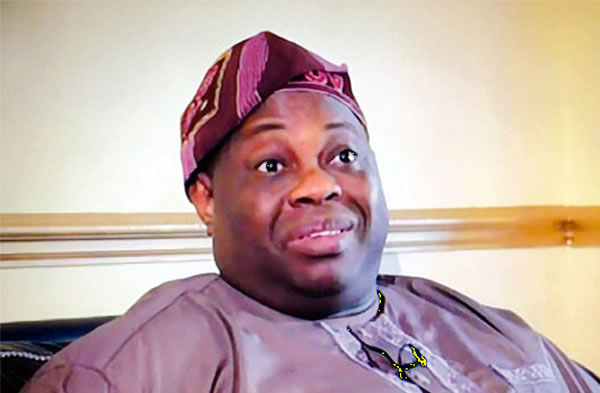
A chieftain of the African Democratic Congress, Dele Momodu, has said Peter Obi could defeat President Bola Tinubu in the South-East and parts of the South-South in the 2027 presidential election.
Momodu said Obi, the Nigeria Democratic Congress’s presidential candidate in the 2027 election, remained popular in the two regions and could pose a major challenge to Tinubu’s re-election bid.
He stated this during an interview on Arise Television on Wednesday, while discussing the opposition’s chances in the 2027 general election.
“I can tell you something. Soludo is the same. I can bet my life on it that Peter Obi will humiliate and disgrace Soludo in Anambra state. I have no question about that,” Momodu said.
He described Obi as a “rock star” in the South-East and South-South, arguing that his popularity could affect Tinubu’s electoral prospects in the regions.
“Peter Obi is a rock star. Where he comes from, especially in the South-East and the South-South,” he said.
Momodu, however, declared his support for former Vice-President Atiku Abubakar, who is also seeking to challenge Tinubu in 2027 under the ADC.
He said he would welcome calls for opposition leaders to unite, noting that their ability to work together could influence the outcome of the election.
“I’m supporting Atiku, but I will be very happy when people say, ‘Oh, if you people don’t come together, you are going to lose election,’” he said.
According to Momodu, Tinubu would face a difficult task if Obi retained his influence in the South-East and South-South, as the President would need substantial support across the southern part of the country while also competing in the North.
“The scenario is different this time. Peter Obi will humiliate Tinubu and all his supporters in the South-East and some parts of the South-South. And that’s dangerous for Tinubu,” he said.
He added that Tinubu would need to secure the three southern regions to strengthen his chances of victory, while also seeking support in the North.
“For Tinubu to win, he needs to lock down all the three regions in the South, and he now has to go and struggle in the North, where, number one, he was supported last time by President Muhammadu Buhari,” Momodu said.
Tinubu won the 2023 presidential election, while Obi finished third behind Atiku, who contested on the platform of the Peoples Democratic Party.
Obi secured significant support in the South-East and parts of the South-South during the 2023 election, while Tinubu’s victory was supported by votes from several parts of the country.
The 2027 presidential election is expected to feature renewed competition among major political parties, with opposition figures facing calls to build a common platform to challenge the ruling All Progressives Congress.
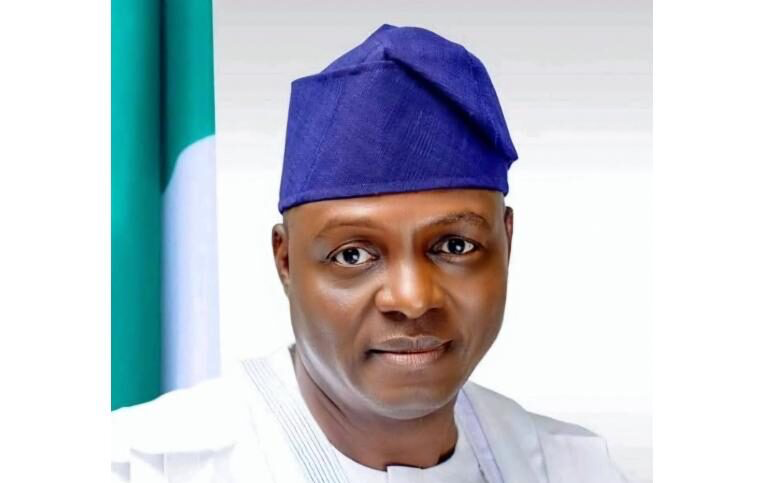
The National Chairman of the All Progressives Congress (APC), Professor Nentawe Goshwe Yilwatda, has charged members of the party’s Presidential Campaign Council to unite national and grassroots structures, communicate the achievements of President Bola Ahmed Tinubu’s administration and mobilise Nigerians for his re-election in 2027.
Speaking at the inauguration of the APC Presidential Campaign Council, Professor Yilwatda described the assignment as a collective responsibility requiring effective coordination, discipline, strategic communication and sustained engagement with Nigerians.
In a statement signed by his Special Adviser on Media and Information Strategy, Abimbola Tooki, he said the party’s campaign must be anchored on the administration’s record, an honest acknowledgement of prevailing challenges and a credible vision for the country’s future.
According to him, the administration’s economic reforms and investments in roads, power, gas, railways, ports, agriculture and digital connectivity must be clearly communicated to Nigerians, with emphasis on their impact on productivity, employment, commerce and national development.
“Our responsibility is to explain what has been achieved, what is progressing and what remains to be done. We must demonstrate how these reforms and investments will translate into practical improvements in the lives of Nigerians,” he said.
The APC National Chairman emphasised that the success of the campaign would depend on the effective collaboration of national leaders, governors, legislators, state chapters, local government structures and ward members to ensure that the party’s message reaches every community.
He also underscored the importance of women, youths and persons with disabilities, calling for their meaningful participation and leadership in the campaign process.
“Our women are indispensable to party organisation and community mobilisation. Our youths must be engaged as partners in shaping Nigeria’s future, while persons with disabilities must enjoy full, accessible and inclusive participation in our democratic process,” he stated.
Professor Yilwatda urged party members to approach the assignment with confidence, while warning against complacency.
“Confidence is not complacency. It is the determination to prepare thoroughly, work together and earn the trust of the people,” he said.
He noted that the APC would seek Nigerians’ support for President Tinubu’s re-election in 2027 by presenting evidence of progress, explaining the administration’s policies and outlining the work that remains to be done.
He stressed that the campaign must directly address citizens’ concerns about the cost of living, security, employment, education, healthcare, agricultural productivity and economic opportunities.
The National Chairman also called for issue-based and peaceful political engagement, recognising the legitimate role of the opposition in a democratic society.
“The APC will present its case with confidence, defend its record with facts and trust Nigerians to make their choice through a credible democratic process,” he said.
Professor Yilwatda reaffirmed the commitment of the APC National Working Committee to working closely with the Presidential Campaign Council and all party structures to achieve their shared objectives.
He charged members to remain united and focused, declaring that the party had a vision to communicate, a future to build and the confidence of Nigerians to earn.
“One mission, one responsibility: to work together, communicate effectively and earn the mandate of Nigerians for President Bola Ahmed Tinubu in 2027.”
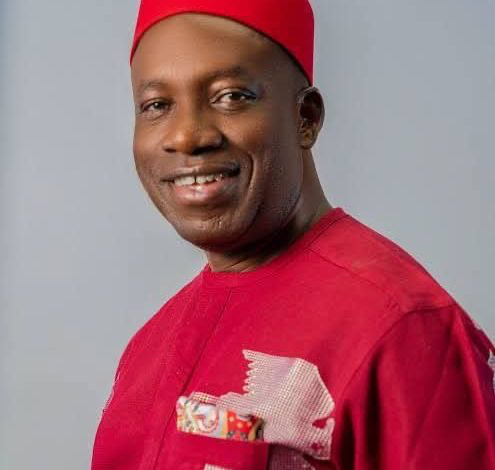
Anambra State Governor, Prof. Chukwuma Soludo, has been appointed a member of the All Progressives Congress (APC) 2027 Presidential Campaign Council list released last night.
This is despite the fact that he is the National Leader of the opposition All Progressives Grand Alliance (APGA).
Similarly, Federal Capital Territory (FCT) Minister Nyesom Wike, the National Leader of the opposition Peoples Democratic Party (PDP) and Osun State Governor, Senator Ademola Adeleke of the opposition Accord Party (AP), are on the expanded and all-inclusive team headed by President Bola Ahmed Tinubu.
Other members include Presidential Adviser on Policy and Coordination, Hadiza Bala Usman, former Ogun State Governor Ibikunle Amosun, former Lagos State Governor Akinwunmi Ambode, Aviation Minister Festus Keyamo, and former House of Representatives member Patrick Obahiagbon.
Also named as members are former Osun APC governorship candidate Bola Oyebamiji, former National Legal Advisers Dr. Muiz Banire and Babatunde Ogala, Chief Ayiri Emami, Victor Giadom, Magnus Abe, and former Ogun State Governor Gbenga Daniel.
The list, according to a report by The Nation, reflects inter-party cooperation and harmony based on the shared vision of propelling the country to the horizon of progress.
The report quoted a statement by APC National Secretary, Senator Ajibola Basiru, as saying that the campaign council will be inaugurated tomorrow in Abuja.
-
 Faith2 days ago
BREAKING: Anglican Church Places Archbishop Ibezim on Six-Month Leave, Bars Him From Church Duties
-
News2 days ago
Senate fumes over death of NYSC Corps member at Enugu Camp, orders probe
-
News2 days ago
How Senator Mandiya died after bathroom fall in Abuja Home – Ningi
-
Politics2 days ago
2027: I can bet my life Obi will humiliate Soludo in Anambra – Momodu
-
News2 days ago
Gunmen Abduct Catholic Priest in Benue, Police Launch Rescue Operation
-
News2 days ago
Tinubu Orders Rescue of Kidnap Victims, Demands Peaceful 2027 Elections
-
News2 days ago
NDC secretariat attacked in Edo
-
News7 hours ago
BREAKING: Mbah Extends Enugu Movement Restriction to 10pm, Scraps Keke Ticketing