Connect with us

News

FG, Govs agree to delay direct LG allocations for three months

Published

on

FG, Govs agree to delay direct LG allocations for three months
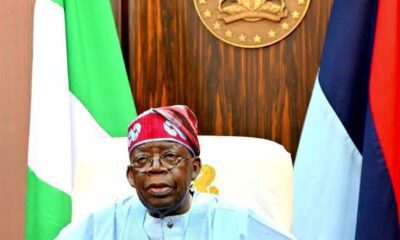
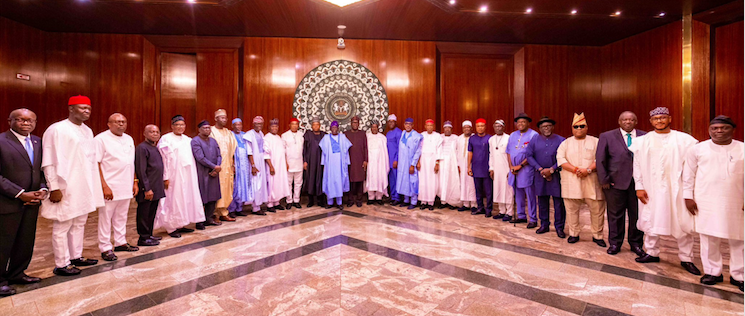
• President Bola Tinubu with Nigerian Governors
Spread the love
The Federal Government and state governors may have agreed to a three-month moratorium on Local Government autonomy, over concerns arising from its impact on salary payments and operational viability.

The development means Local Governments may wait till October before the implementation of the law in the direct payment into their respective accounts.

The Supreme Court, on July 11, 2024, gave a landmark judgment affirming the financial autonomy of the 774 LGs in the country and ruled that governors could no longer control funds meant for the councils.

The apex court also directed the Accountant-General of the Federation to pay LG allocations directly to their accounts, as it declared the non-remittance of funds by the 36 states unconstitutional.

Under former President Muhammadu Buhari, the Nigerian Financial Intelligence Unit issued a regulation, effective from June 1, 2019, which banned transactions on State and Local Governments Joint Accounts. Funds were sent directly to the accounts of the local governments. It also limited cash withdrawals from local governments accounts to a maximum amount of N500,000 per day with penalties for banks that failed to comply. The Nigerian governors under the aegis of the Nigerian Governors’ Forum kicked against this regulation and the NFIU eventually capitulated.

The status quo was maintained until May 2024 when the Attorney-General of the Federation, Lateef Fagbemi (SAN), filed suit marked SC/CV/343/2024 at the Supreme Court to strengthen the autonomy of the local government areas as guaranteed by the constitution. It sought to prevent state governors from unilaterally dissolving democratically elected local government councils and establishing caretaker committees, actions that violate constitutional provisions. The AGF argued that the constitution mandates a democratically elected local government system and does not allow alternative governance structures.

Maduka College Advert

The suit also prayed that the funds from the Federation Account be channelled directly to local governments, bypassing the allegedly unlawful joint accounts managed by state governors. The Federal Government also sought an injunction to stop governors and their agents from receiving or spending local government funds without a democratically elected local government system in place. It contended that the governors’ failure to establish such a system constitutes a deliberate subversion of the 1999 Constitution. The Supreme Court heard parties to the case on June 13, with the state governments, through their respective attorneys-general, opposing the suit.

That was the prelude to the Supreme Court judgment of last Thursday, July 11, 2024, which has now affirmed the financial autonomy of Nigeria’s 774 local governments. In the unanimous judgment of its seven-member panel, the Supreme Court upheld the suit brought by the federal government to strengthen the independence of local governments in the country.

A member of the panel, Emmanuel Agim, who delivered the court’s lead judgment, held that the local governments across the country should henceforth receive their allocations directly from the Accountant-General of the Federation. He ruled that it is illegal and unconstitutional for governors to receive and withhold funds allocated to local government areas in their states.

Many Nigerians, including the LG chairmen, hailed the judgment of the Supreme Court, describing it as a step in the right direction to restructure the country.

Although some governors voiced their concerns, the Nigeria Governors’ Forum, speaking through the chairman and Kwara State Governor, AbdulRahman AbdulRazaq, said the judgment was a relief from the financial burden to state governments.

AbdulRazaq, speaking to journalists after meeting President Bola Tinubu on July 12, a day after the judgment, said, “The governors are happy with the devolution of power regarding local government autonomy. The public really doesn’t know how much states spend on bailing out local governments.”

More than a month after the judgment, the order of the apex court had not been complied with.

In July 2024, total disbursements by the Federation Allocation Account Committee increased to N1.354tn, with LGs receiving N337.019bn.

At the July meeting of FAAC, chaired by the Minister of Finance and Coordinating Minister of the Economy, Wale Edun,  of the total amount shared to the three tiers of government, the Federal Government received N459.776bn, the states received N461.979bn, the LGs got N337.019bn, while the oil-producing states received N95.598bn as derivation (13 per cent of mineral revenue).

The Association of Local Governments of Nigeria, however, waited in vain to get the money paid directly into the LG accounts.

The Incorporated Trustees of ALGON accused the state commissioners of finance of conspiring with governors to obstruct the direct payment of allocations from the federation account to the 774 LGs’ accounts.

In a letter addressed to the Chairman of the Forum of State Commissioners of Finance in Nigeria, dated July 30, 2024, and signed by its counsel, Mike Ozekhome (SAN), ALGON threatened to initiate contempt proceedings against the commissioners if they failed to comply with the Supreme Court order.

Ozekhome stated in the letter that his clients’ enthusiasm over the apex court decision had been thwarted by the finance commissioners committee.

Though another faction of ALGON, led by Aminu Maifata, denied issuing a legal threat against the commissioners’ committee, Ozekhome insisted that he was briefed by the ALGON Board of Trustees in a letter signed by the Secretary-General of the board, Mohammed Abubakar.

The Federal Government confirmed that it had not yet commenced direct payment of the monthly allocations to the 774 Local Government Areas.

Edun attributed the delay to the proceedings of the Supreme Court, which had not been communicated to the Attorney General of the Federation for proper study and implementation.

He said the process was still in its early stages, adding that further steps would be taken once the full details were available.

The minister said the Federal Government was yet to commence direct payment to the respective LGs due to some “practical impediments” and added that a committee had been set up by the FG to look at the practicability of the judgment.

It was gathered that the “practical impediments” were creating challenges for the implementation of the Supreme Court judgment on LG autonomy.

The Federal Government, it was learnt, faced challenges implementing the ruling on local government financial autonomy, with concerns over its impact on salary payments and operational viability.

The Oyo State Governor, Seyi Makinde, who raised concerns over the judgment, called for a homegrown solution to ensure the people did not suffer.

“The law is the law and when there is a conflict, yes, we should go to the court. But it behoves us to look for our own homegrown solutions that can ensure that we have transparency and that our people do not suffer. This is because when two elephants are fighting, it is the grass that will suffer,” Makinde was quoted to have said.

PUNCH

News

Court remands Ex-DSS Officer in Kuje Prison over alleged support for IPOB

Published

on

Spread the love

The Federal High Court in Abuja, on Thursday, ordered the remand in Kuje Correctional Centre of a retired officer of the Department of State Services, Nwaogu Ihechimere Ezeakolam over his support for the outlawed Indigenous People of Buafra, IPoB.

The retired officer was arraigned by the Department of State Services for, among other things, supporting the proscribed terrorist organization.

He was arraigned on a four-count charge, including joining IPOB, posting messages in support of the proscribed organization, and involvement in acts capable of inducing unsuspecting members of the public to join IPOB.

The DSS told the court presided over by Justice Muhammed Umar, that what the retired officer did was contrary to and punishable under Sections 13, 25, 26 of the Terrorism (Prevention and Prohibition) Act, 2022.

When the charges were read out to Ezeakolam, he pleaded “not guilty” to all the four counts. Thereafter, the prosecution applied for a trial date and urged the court to remand him in custody pending trial.

Maduka College Advert

Justice Umar adjourned the matter to October 29 for commencement of trial and ordered that Ezeakolam be remanded at the Kuje Correctional Centre.

Count One of the charges brought against Ezeakolam, reads: “That you, Nwaogu Ihechimere Ezeakolam, adult, male, sometime 2025 and 2026, at Abuja and Abia State, within the jurisdiction of this Honourable Court, did directly and indirectly render support by providing moral assistance and disseminating terrorist information of Indigenous People of Biafra (IPOB, a proscribed organization, through the internet and your social media platforms, and thereby committed an offence contrary to and punishable under Section 13 of Terrorism (Prevention and Prohibition) Act, 2022.

Count Two: “That you, Nwaogu Ihechimere Ezeakolam, adult, male, sometime 2025 and 2026, in Abia State, within the jurisdiction of this Honourable Court, did join Indigenous People of Biafra, a proscribed organization, and thereby committed an offence contrary to and punishable under Section 25 of Terrorism (Prevention and Prohibition) Act, 2022.

Count Three: “That you, Nwaogu Ihechimere Ezeakolam, adult, male, sometime 2025 and 2026, at Abuja and Abia State, within the jurisdiction of this Honourable Court, did knowingly directly and indirectly aid and abet the Indigenous People of Biafra (IPOB) by posting on social media platforms messages calculated to induce unsuspecting members of the public to support Indigenous People of Biafra (IPOB), a proscribed organization, and thereby committed an offence contrary to and punishable under Section 26 of Terrorism (Prevention and Prohibition) Act, 2022.

Count Four:
“That you, Nwaogu Ihechimere Ezeakolam, adult, male, sometime 2025 and 2026, at Abuja and Abia State, within the jurisdiction of this Honourable Court, on social media platforms did post and cause to be accessed, messages aimed at advancing the cause of Indigenous People of Biafra (IPOB), a proscribed organization and thereby committed an offence contrary to and punishable under Section 18 of Cybercrimes (Prevention, Prevention, etc) Act, 2015, as amended,” the charge said.

Continue Reading

News

BREAKING: Tinubu orders EFCC to unfreeze Osun accounts

Published

on

President Bola Tinubu
Spread the love

President Bola Ahmed Tinubu has directed the Economic and Financial Crimes Commission (EFCC) to immediately vacate the court order freezing the Osun State Government’s accounts, citing concerns that the action could undermine public confidence ahead of the state’s governorship election.

In a statement issued on Thursday from the State House, the President said he was “deeply embarrassed” by the timing of the EFCC’s move, stressing that although the anti-graft agency acted pursuant to a court order, the public would inevitably associate the action with his administration.

Tinubu reiterated his long-standing policy of allowing anti-corruption and law enforcement agencies to operate independently without political interference, noting that he had consistently refrained from directing the operational activities of the EFCC and other investigative bodies.

According to the President, strong democratic institutions must be allowed to perform their statutory responsibilities professionally, without fear, favour or political influence.

He, however, said the timing of the EFCC’s action was inappropriate, especially as Osun State is only days away from its governorship election.

Maduka College Advert

“Nothing ought to be done to give the impression that the EFCC or any other federal agency is being used to interfere with the electoral process,” Tinubu stated.

The President said that while he was yet to receive full details of the investigation that prompted the EFCC to obtain the court order, the overriding public interest required urgent intervention to safeguard the integrity, credibility and fairness of the electoral process.

Consequently, Tinubu directed the EFCC to return to court immediately to vacate the order freezing the state’s accounts and discontinue the action against the Osun State Government.

The directive comes amid heightened political attention over the EFCC’s decision to secure a court order freezing Osun State’s accounts as part of an ongoing investigation. The development had sparked widespread reactions from political stakeholders and legal practitioners, with concerns over its potential impact on the forthcoming governorship election.

Continue Reading

News

Army arrests two soldiers over alleged illegal duty at Peller’s wedding

Published

on

Spread the love

The Nigerian Army  has confirmed the arrest of two soldiers, Privates Onasanya Ifeoluwa and Ukpai Onyinyechi, for working as bouncers at the wedding of social media personalities Habeeb Hamzat, popularly known as Peller, and Jarvis in Lekki over the weekend.

Both soldiers were identified as personnel of the Nigerian Army’s Medical Services and Hospital at Obalende, Lagos.

Spokesman for the 81 Division, Lt.-Col Musa Yahaya, confirmed to The Nation that the soldiers were arrested on Tuesday and are in custody.

They were allegedly involved in an unauthorised deployment after footage of the wedding, which went viral across social media platforms, showed the soldiers in military uniform providing security and escorting guests.

One video allegedly showed a soldier escorting TikTok personality Ivanna through the crowded venue.

Maduka College Advert

The videos sparked public debate, with many Nigerians questioning whether serving military personnel were authorised to perform security duties at a private celebrity event.

The videos particularly raised concerns because they flouted earlier directives by President Bola Tinubu, which withdrew police and military escorts from persons not entitled to them by law to beef up security across the country.

The Nigerian Army has consistently maintained that its personnel are prohibited from undertaking unauthorised private security duties or participating in deployments without official approval.

According to sources, preliminary investigations are underway to determine the extent of their involvement and identify any other personnel connected with the incident.

The wedding of Peller and Jarvis attracted entertainers, influencers and other guests, with videos from the ceremony dominating social media over the weekend.

Continue Reading

Trending

Maduka College Advert