News
Tax evasion: Nigeria drops charges against Binance executives, Tigran Gambaryan and Nadeem Anjarwalla

The Federal High Court in Abuja, Nigeria has dropped charges against two executives of crypto exchange company, Binance, Tigran Gambaryan and Nadeem Anjarwalla from the FIRS tax evasion case against the company.
This follows the appointment of a Nigerian representative by Binance.

The court made the ruling following an amended charges application filed by the Federal Inland Revenue Service (FIRS) in response to a notice from Binance that it has appointed a Nigerian representative in the case, Ayodele Omotilewa.
At the resumed proceedings today, counsel for Binance, Tonye Krukrubo (SAN) told presiding Justice Emeka Nwite that Binance has forwarded the name of its official representative in the case to the FIRS and the court. Counsel for the FIRS, Moses Idehu, confirmed the notice and asked the court’s permission to substitute all the previous charges with the fresh amended one.
In FIRS’ fresh application, Binance is now listed as the sole defendant in the case, implying Gambaryan and Nadeem are no longer associated with its case.

In the amended charge, Binance was accused of enabling the buying and selling of cryptocurrencies and the remittance and transfer of those assets to Nigerians while failing to deduct the necessary Value Added Taxes (VAT) from the transactions.
“Binance did aid and abet those subscribers on your trading platform to unlawfully refuse to pay taxes, or neglect to pay those taxes and in so doing committed an offence contrary to and punishable under the provisions of S.94 of the Companies Income Tax Act (as amended)”, the document reads.
The judgement will offer some reprieve to the family of Tigran Gambaryan, who had consistently argued that the US-native executive cannot be held accountable for the actions of the global exchange.
Recall that during the court session last month, Tigran Gambaryan’s lawyer, Mark Mordi SAN contended that his client cannot take his plea because he refused to accept service on behalf of Binance as he is not authorised to do so.
According to him, the Administration of Criminal Justice Act mandates the antigraft agency to ensure that the company (Binance) was served directly. According to him, the company would appoint a representative in writing following that action. Then, notices and processes can be served on Binance or the recognised representative.
“The first defendant (Binance) has no physical footprint in Nigeria and does not have an agent in the country. I urge my lord to discountenance the submission of the EFCC and adjourn so that they can effect service on Binance”, he said.
Tigran Gambaryan, a U.S. citizen and Binance’s head of financial crime compliance was detained alongside Nadeem Anjarwalla, a British-Kenyan who is a regional manager for Africa were charged to court by Nigeria’s tax agency, the Federal Inland Revenue Service (FIRS) on the charges of tax evasion. A few weeks after, Nadeem Anjarwalla reportedly escaped from custody.
A statement from a spokesperson for Tigran’s family also indicates that the wife of the detained American, Mrs Yuki Gambaryan pleaded with the Nigerian government authority to release her husband on the condition that “Tigran is merely an employee“.
“He does not have authority over Binance’s corporate decisions or policies that might have impacted Nigeria. He spends his workday investigating and pursuing criminal activity on the platform. His very job is to help governments, like yours, prosecute and prevent illicit activity“, she said.
Binance vs Nigeria: So much ado about crypto regulation
While Binance CEO, Richard Teng initially claimed that it was working closely with the Nigerian government to resolve the situation, he would later announce that the Nigerian authorities were demanding a hefty bribe from its detained executives to make the money laundering trial initiated against them go away.
In a poignant blog post, Teng projects a strong criticism of the government’s actions, suggesting that detaining Tigran is an unreasonable tactic to pressure Binance. He finds it suspicious that someone seemingly unimportant would be placed in a dangerous prison, implying the true motive might be exerting control over Binance rather than legitimate legal concerns.
In response, the Federal government vehemently debunked the claim and claimed that it would ensure that the law takes its full course.
Yet, the CEO believes that the Nigerian government has extraordinary power to determine the future of Binance and the broader crypto industry within its borders. He insists that inviting a company’s mid-level employees for collaborative policy meetings, only to detain them, has set a dangerous new precedent for all companies worldwide.
He claims that the company understands the importance of cooperation with regulators and law enforcement. And, he said that the company is ready to collaborate with Nigerian authorities “voluntarily”.
“At the end of the day, Binance wants to have a future where we work alongside the Nigerian government to be part of building a strong economy for the Nigerian people. But this crisis must come to a resolution quickly, and Tigran must be allowed to go home if we’re going to move forward”, he said









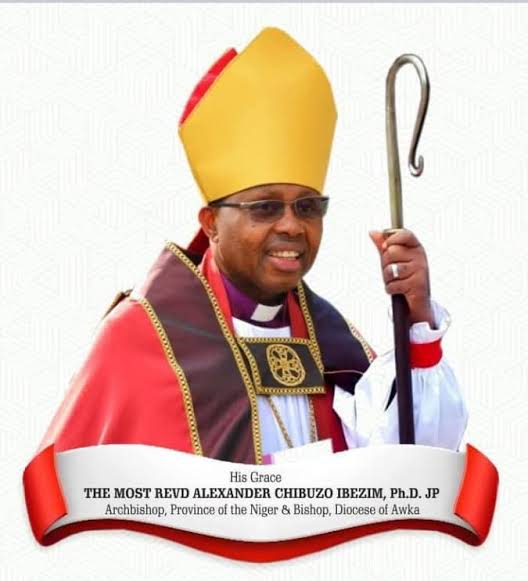
…Insists Archbishop remains in office, warns against interference by Ezeofor
By Tony Edike
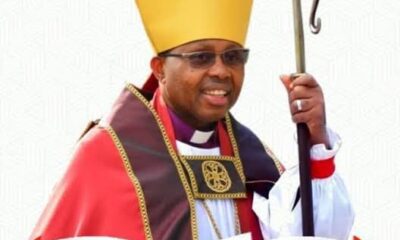
The Diocesan Board of the Diocese of Awka, Anglican Communion, has rejected the six-month compulsory leave imposed on the Archbishop of the Province of the Niger and Bishop of Awka Diocese, Most Rev. Alexander Chibuzo Ibezim, by the Primate of the Church of Nigeria, Most Rev. Henry C. Ndukuba.
The board also rejected the appointment of Bishop Samuel C. Ezeofor as Supervising Bishop of Awka Diocese and Coordinating Bishop of the Province of the Niger, describing the decisions as unlawful, unjustified and contrary to the church’s governing provisions.
The resolutions were contained in a communiqué issued after an emergency meeting of the Diocesan Board held on Friday, October 16, 2026, at the Chapel of Divine Favour, Anglican Village, Ifite Awka, Anambra State.
The meeting deliberated on a letter dated October 13, 2026, issued by Ndukuba directing Ibezim to proceed on six months’ compulsory leave and appointing Ezeofor to oversee the diocese and province during the period.
The board argued that the Primate lacked the constitutional authority to compel Ibezim to proceed on leave or transfer his episcopal responsibilities to another bishop.
It maintained that neither the Constitution and Canons of the Church of Nigeria (Anglican Communion) 2020 nor the Constitution and Regulations of the Diocese of Awka 2023 empowered the Primate to take such action.
According to the communiqué, Section 29(1) of the church’s constitution, which the Primate reportedly cited in his letter, did not authorise the compulsory leave or the appointment of another bishop to assume Ibezim’s duties.
The board further argued that the decision violated Ibezim’s constitutional rights, including the presumption of innocence under Section 36(5) of the 1999 Constitution of Nigeria, as amended, and the right to freedom of thought, conscience and religion under Section 38(1).
Cites pending court cases
The board also faulted the Primate’s decision on the grounds that several cases involving Ibezim and allegations against him were pending before the High Court of Anambra State.
It listed three cases: Suit No. A/Misc. 446/2025, involving Ibezim and the Economic and Financial Crimes Commission; Suit No. A/Misc. 494/2026, involving Ibezim and the Inspector-General of Police and others; and Suit No. A/371/2026, involving Ibezim, Ndukuba and another defendant.
Archbishop Ibezim, Bishop Ezeofor and Primate Ndukuba
The board argued that the matters were sub judice and that the church authorities should refrain from taking actions capable of interfering with the issues before the court.
It further alleged that injunctions granted on September 9, 2025, against the EFCC and Prince Echezona Bonti Onuigbo were renewed by consent of the parties on October 14, 2025.
The communiqué also referred to pending motions seeking to restrain the Primate from issuing suspension letters or taking further steps that could affect Ibezim’s tenure as Archbishop of the Province of the Niger and Bishop of Awka Diocese.
The board maintained that the appointment of a supervising bishop while the legal proceedings remained unresolved amounted to an attempt to pre-empt the outcome of the cases.
Questions inquiry process
The Diocesan Board also challenged the explanation that Ibezim’s compulsory leave was intended to facilitate an impartial inquiry into the affairs of the diocese and promote peace and reconciliation.
It alleged that Ndukuba had previously constituted two panels to investigate allegations against Ibezim but had withheld their reports.
According to the communiqué, the first panel was established through a letter dated August 13, 2025, and headed by Justice Babashola Ogunade, while the second was constituted on June 17, 2026, under the leadership of Archbishop Blessing Enyindah.
The board argued that the failure to release and process the reports violated provisions of the Church of Nigeria’s Constitution and Canons, particularly Sections 75 and 76, which it said prescribe procedures for submitting, considering and ratifying the findings and recommendations of inquiry panels.
It maintained that the reports should be considered by the Episcopal Synod, with the relevant recommendations subjected to the prescribed approvals of the Standing Committee and General Synod.
Reaffirms confidence in Ibezim
Despite the allegations against Ibezim, the board expressed confidence in his leadership and insisted that he remained the duly recognised Bishop of Awka Diocese and Archbishop of the Province of the Niger.
It urged him to continue discharging his episcopal responsibilities, adding that the diocese remained peaceful, united and progressive.
The board also dismissed allegations of financial impropriety against the archbishop, insisting that no diocesan funds had been missing, stolen, misused or misappropriated by him.
It further claimed that neither of the two inquiry panels had indicted Ibezim for financial misconduct.
The board commended the archbishop for what it described as massive infrastructural development in the diocese and urged him not to be distracted by the controversy.
These assertions represent the position of the Diocesan Board as stated in the communiqué.
Warns Ezeofor, threatens withdrawal
The board warned Ezeofor against interfering in the affairs of Awka Diocese, urging him to concentrate on his responsibilities as Bishop of Aguata Diocese.
It cautioned that it would not accept any attempt to destabilise the diocese and threatened to seek legal remedies and involve law enforcement agencies if its warning was ignored.
The communiqué also directed all organs of Awka Diocese to remain loyal to Ibezim and continue their lawful activities, while rejecting what it described as interference or directives from Ezeofor.
It warned that members or diocesan organs that failed to comply with the directive could face appropriate sanctions.
In its strongest warning, the board threatened that Awka Diocese could withdraw from the Church of Nigeria (Anglican Communion) and continue under the Church of England if Ndukuba and Ezeofor persisted in what it described as unlawful interference in the diocese’s affairs.
The communiqué was signed by Sir B.E.I. Nwofor, SAN, Lord Chancellor of the Diocese of Awka; Ven. K.E.N. Chukwukamma, PhD, Synod Secretary; and Mr Eugene Chukwudi Okonkwo, Lay Synod Secretary.
The development marks a further escalation of the leadership dispute within the Anglican Church, with the Diocesan Board openly challenging the Primate’s directive and threatening a possible separation if the disagreement is not resolved.
The Primate and Bishop Ezeofor could not be reached for comments as of the time of filing this report. Their responses will be included in subsequent updates if made available.
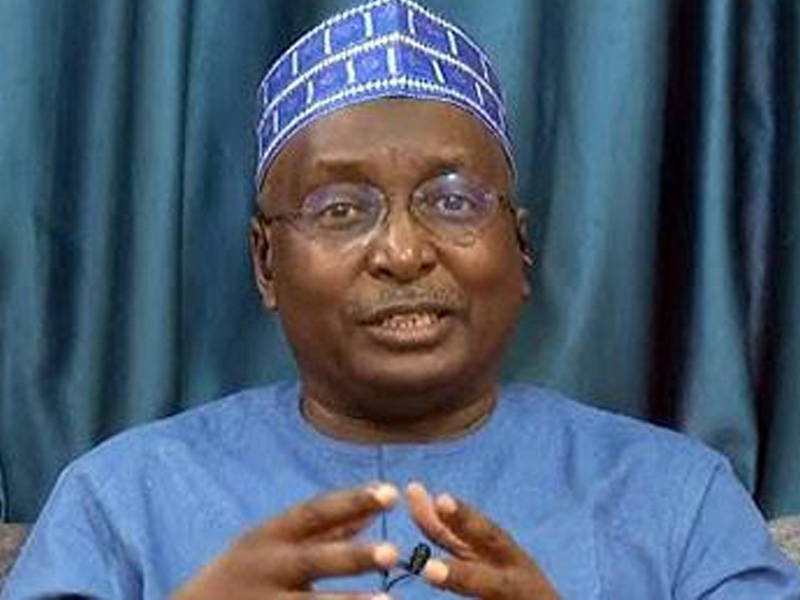
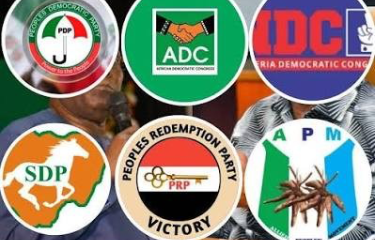
The convener of the G100 political pressure group, Salihu Lukman, has said opposition parties working in alliance with the group will announce a single presidential candidate for the 2027 general elections, possibly only days before the poll.
Lukman, a former National Vice Chairman of the All Progressives Congress (APC), spoke on Channels Television’s programme, Hard Copy.
“I can tell you categorically, and my confidence about that comes from what I see in the leadership of the parties: they are committed and they are working, taking all the steps necessary.
“So it could be two months, some weeks to the election, or a few days to the election; they will come out and tell Nigerians this is the direction, and everybody will queue”, he said.
According to him, the effort has gone beyond the six parties currently involved. “They are also working to expand; they are reaching out to other parties,” he said.
The G100 was formed to push the opposition towards a united front after an all-opposition summit in Ibadan in April 2026 resolved to field a consensus candidate against the ruling APC.
Lukman said the parties and their candidates have since taken over the process from the group.
“When the parties owned the process we had started and took it beyond, took it out of our hands and began to engage each other based on the need to develop the kind of confidence they need to trust one another,” he said.
He identified the biggest obstacle as “the trust deficit among even the parties and the candidates.”
He explained that a summit on August 31 “agreed to have five working groups, and one of the working groups is the one that will work on that single consensus candidate.”
Each party, he said, will nominate members into the group, either through its candidate or through the party itself, under agreed terms of reference.
“The collegiate is basically about ensuring that both the parties and their candidates are the ones taking the decisions, and at the same time the people doing the work are people who have the mandate of both the parties and the candidates, not anybody from outside,” he said.
Asked how the group would handle supporters of Peter Obi, Atiku Abubakar and the Kwankwasiyya movement, who have shown no sign of yielding, Lukman said rigid positions help the ruling party.
“Taking a hardline position, a rigid position, is almost like working for the APC and the Tinubu government at this point,” he said.
He said many signatories to the G100’s open letter support Obi or Atiku, but that the group has told them “the country is superior to any individual.”
Lukman said John Cardinal Onaiyekan recently made the same point on Channels Television, that opposition candidates cannot split votes five ways and expect one of them to defeat a ruling party.
“The arithmetic is simple: you can’t split votes five ways and expect victory in one of you,” Lukman said.
On the differing manifestos of the parties, including the Social Democratic Party (SDP) candidate’s pledge of a 300 naira starting pump price for petrol, Lukman said the group would not merge documents.
“It’s not harmonising manifestos; it’s basically to come up with a minimum programme of action which the government to be produced post-2027 will prioritise implementing,” he said.
He said all candidates would subscribe to the programme in advance, so that “in the event that any of them emerge as the candidate there is no debate.”
Lukman said much of the groundwork already exists, since the candidates’ campaigns have developed their own positions.
“I’m sure the Peter Obi campaign has also done some work; I am also sure Prince Adewole Adebayo and all the other candidates have also done their own work,” he said.
He said the outcome could be “ADC, it could be any other party, or it could be an alliance that will produce a new party,” and added: “I don’t have ambition to contest election and I don’t have ambition to hold any appointive or elective office.”
Warning candidates against clinging to their tickets, Lukman said: “Politicians can lie to themselves, and at the end of the day let the candidates continue to hang on to their candidature; at the end of the day only one person will be president of the Federal Republic of Nigeria.”
Lukman also addressed his withdrawal of membership of the African Democratic Congress (ADC), which he attributed to internal issues in Kaduna and said he has now resumed membership of the party.
He said he feared the party was “shifting to a direction where we will end up reproducing the old parties we have left.” (Saturday Vanguard)
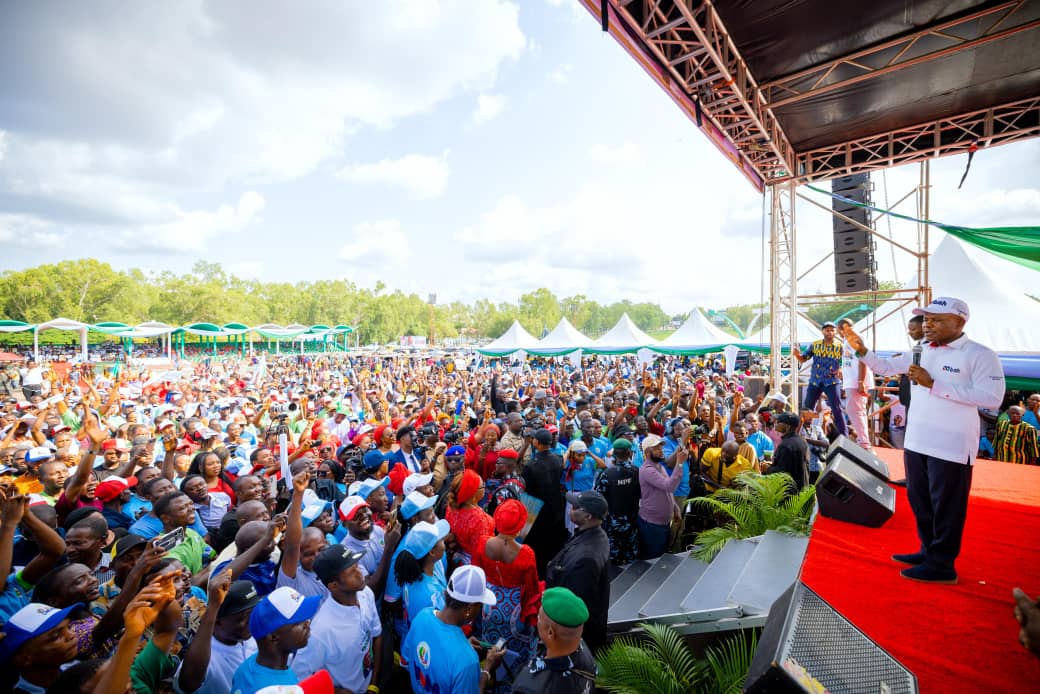
..Reiterates Enugu’s zero tolerance for political violence
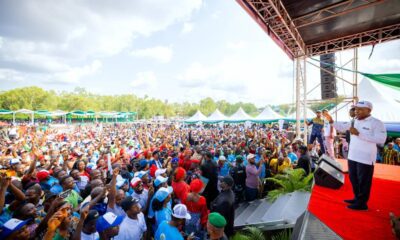
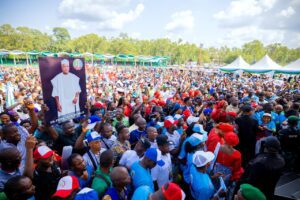
The Tricycle Riders Association of Enugu State has endorsed the state governor, Dr. Peter Mbah, for a second term in office, citing improved security, road infrastructure, and social amenities in the state.
The association, popularly known as Keke Riders, also endorsed President Bola Tinubu, citing the Enugu–Onitsha Road, Enugu–Port Harcourt Expressway, New Artisan Bridge, Obinagu Flyover, and strategic appointments.
This was even as Governor Mbah scrapped the N750 daily payment by tricycle operators and also extended their operational time from 9pm to 10pm.
Mbah also said they would continue to operate at no cost at all the state’s modern transport terminals.
Leading the endorsement at Okpara Square, Enugu, during the conclusion of a “One Million March” event on Saturday, the state Chairman of the Tricycle Riders Association of Nigeria, Comrade Kingsley Edeh, said the endorsements were predicated on achievements, especially those that have impacted the lives and businesses of tricycle riders, their families, and the people of Enugu State in general.
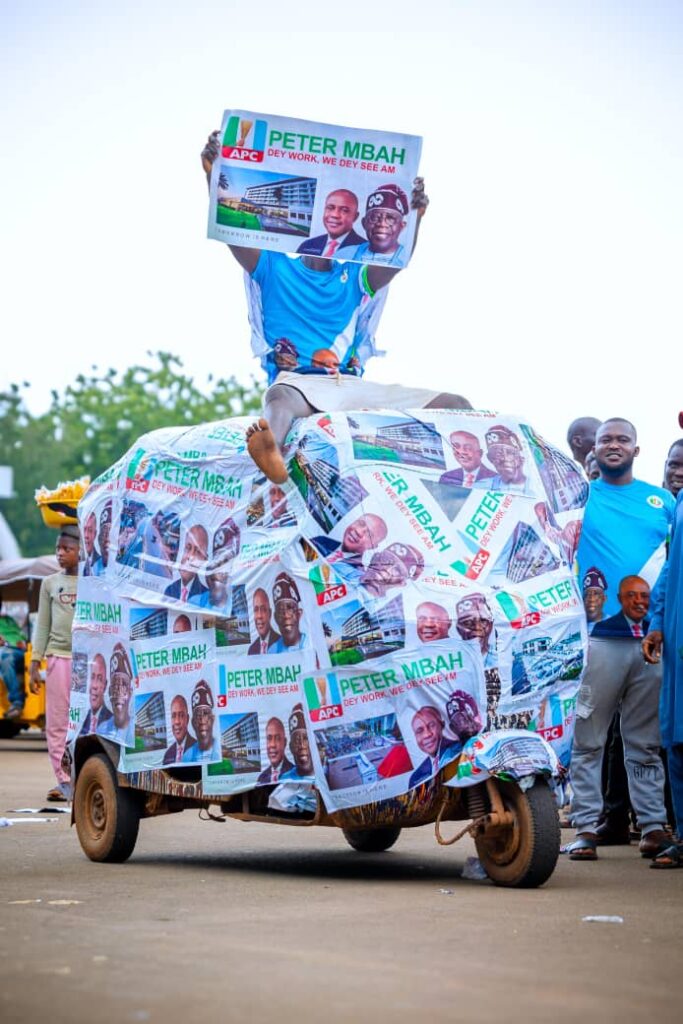
“Which will we reel out and leave the other? Is it the security and good roads, which now enable us to ply our trade without any problems, the 267 Smart Green Schools, the completion of long-abandoned projects such as the International Conference Centre, Nigergas Limited, Sunrise Four Mills, Hotel Presidential, and many more?
“We can also see the infrastructure President Tinubu is building in the South East and the support he is giving to our governors.
“So, we will vote APC from top to bottom come 2027,” he declared.
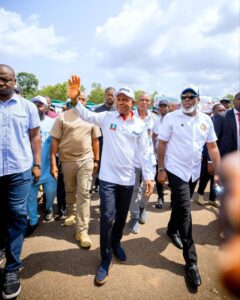
Corroborating the position of the Tricycle Riders Association in Enugu, the body’s National Secretary, Comrade Sunday Enang, described Mbah as a ‘magician’ in the art of governance, stressing that no governor anywhere had done what he was able to accomplish in three years.
“Your ‘Tomorrow Is Here’ vision is evident in the construction of modern transport terminals, the establishment of Enugu Air, investment in an asphalt plant, intra- and inter-city road construction, and efforts to improve traffic flow and urban transportation.
“These initiatives are promoting safer, more organised, and more efficient movement across the state.
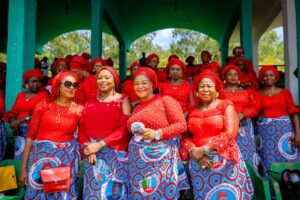
“We also commend the policy allowing tricycle operators to use designated terminals without paying toll fees. This support recognises their contribution to the economy and the livelihoods of thousands of families.
“These practical policies reflect disruptive innovation and demonstrate how effective leadership can turn vision into tangible opportunities,” he said.
In his response, Mbah described tricycle operators as critical players in the state’s economy, stressing that while his administration was focused on growth, it was equally determined to eradicate poverty, hence the various interventions to increase their disposable incomes.
“You are the powerhouse of our economy because you set out early in the morning, working long hours, navigating traffic, taking our workers to work, taking our students to school, moving our people from urban areas to rural communities, connecting businesses, and helping traders get to their businesses. A lot of people earn their living because of what you do.
“But we also see your struggles. So, I have started engaging with your executives on how we can make life better for you. As the Managing Director of the Transport Terminal just said, no more payment by our tricycle riders at any of the transport terminals.
“Let me also recognise something. Our government, as you know, is not just about growth. We are also interested in ending poverty and making sure that you have more money or disposable income to take care of your family. And so, the issue of tickets is sealed. No more tickets for you.
“Again, when we came into the office in 2023, we inherited a curfew on tricycle operators such that they could only operate from 6am to 9pm. There was a sit-at-home, but we have ended that with your support. Today, Enugu State is safe. So, we will be shifting your operational time limit from 9pm to 10pm,” he said.
While acknowledging their commendation for the rapid construction of roads, Mbah said this was part of the government’s deliberate steps to increase their disposable incomes by reducing their spending on repairs, assuring them that his administration would construct and reconstruct all the remaining 1,022 urban roads in the state.
“Because I understand how bad roads can be terrible, not only for your tricycles and the money you spend on repairs, but also for the time you spend at the mechanic, all the roads in Emene, Abakpa, Idaw River, Trans-Ekulu, Awkunanaw Area, Coal Camp, New Haven, Thinkers Corner, Uwani, among others, are paved or being paved.
“I can assure you that there will be no road in our city that will be unpaved. We are going to pave all the remaining 1,022 roads,” he emphasised.
Meanwhile, Mbah has vowed that his administration would take every step within the law to preserve the security and peace that the people of Enugu had worked to build in the state.
“You must treasure it. You must protect it. Enugu is on an upward trajectory. We will not allow those deceptive voices and politicians who campaign in poetry but only govern in prose. With our government, you have experienced real development and real growth.
“Let me also warn that we have worked extremely hard to establish a safe state. Nobody, no matter their ambition, will take that away from us. And we will not stop at anything, deploying all means necessary within the law to bring to book any violator or anybody who tries to import thugs to disrupt the peace and public safety we enjoy in this city and this state. We have zero tolerance for violence.”
He enjoined the people to make good their endorsements by getting their PVCs ready for the 2027 elections and voting massively for him, all APC candidates, and President Bola Tinubu, whose policies, he said, ensured the availability of resources to execute the numerous projects they listed.
Other speakers at the event were the Enugu State Chairman of the APC, Dr. Martins Chukwunweike; Grand Patron of the Enugu State Traditional Rulers Council, HRH Igwe Greg Ugwu; and the Managing Director, Enugu East Zone Transport Terminals, Dr. John Egbo.
-
 Faith2 days ago
BREAKING: Anglican Church Places Archbishop Ibezim on Six-Month Leave, Bars Him From Church Duties
-
News3 days ago
Senate fumes over death of NYSC Corps member at Enugu Camp, orders probe
-
News3 days ago
How Senator Mandiya died after bathroom fall in Abuja Home – Ningi
-
Politics3 days ago
2027: I can bet my life Obi will humiliate Soludo in Anambra – Momodu
-
News2 days ago
Gunmen Abduct Catholic Priest in Benue, Police Launch Rescue Operation
-
News2 days ago
Tinubu Orders Rescue of Kidnap Victims, Demands Peaceful 2027 Elections
-
News3 days ago
NDC secretariat attacked in Edo
-
News14 hours ago
BREAKING: Mbah Extends Enugu Movement Restriction to 10pm, Scraps Keke Ticketing