News
FG plans fresh cash transfer scheme for 75 million Nigerians

The Federal Government on Tuesday said it had reinstated the suspended social investment programme, disclosing the scheme would provide direct payments to 75 million Nigerians in 50 million households to reduce the suffering of citizens, especially vulnerable groups.
It stated that the cash transfer programme was overhauled to tackle fraud.

The Minister of Finance and the Coordinating Minister of the Economy, Wale Edun, announced this at the ministerial sectoral briefing to mark the first year in office of the President Bola Tinubu administration in Abuja.
On January 12, Tinubu suspended all the programmes administered by the National Social Investment Programme Agency for six weeks, as part of a probe of alleged malfeasance in the management of the agency and the scheme.
The president also suspended Betta Edu as the minister of Humanitarian Affairs and Poverty Alleviation on January 8. Edu’s ministry supervises the operations of the NSIPA.

The intervention programmes affected include the N-Power, the conditional cash transfer scheme, the government enterprise and empowerment programme, and the home-grown school feeding initiative.
On March 13, the House of Representatives asked the federal government to resume the implementation of the suspended social investment initiatives.
To revamp the programme, Tinubu approved the establishment of a Special Presidential Panel, led by Edun to carry out an intensive review and audit of the existing financial frameworks and policy guidelines of the social investment programmes.
Giving an update on the steps taken by the committee at the briefing, the finance minister stated that the government had decided to restart the programme to provide succour for poor Nigerians.
Edun said, “I am duty-bound to give you an overview of the strategy, policies, and implementation of Mr President’s reform programme. Immediately upon assuming office, Mr President launched macroeconomic reforms to restore stability to the Nigerian economy, including subsidy reforms and foreign exchange market reforms. These reforms caused a spike in costs for individuals and businesses, but Mr President is committed to counterbalancing the negative effects with interventions across the social spectrum.
“The government has restarted the social investment program, providing direct payments to 75 million Nigerians in 50 million households. Access to credit has been improved, with N1bn allocated to consumer credit and grants of 50,000 Naira being given to 1 million nano industries.”
Food inflation
The National Bureau of Statistics in its April CPI report, said Nigeria’s 33.69 per cent inflation rate was largely driven by food inflation which stood at 40.53 per cent in April, 2024.
Nigerians have continued to lament the steady rise in the prices of goods and services partially fuelled by the removal of petrol subsidies.
But, the minister said with 30 per cent of the world affected by issues of food security, agriculture would play a critical role in addressing global food insecurity.
He stated, “Food security is a worldwide issue, affecting 30 per cent of the world’s active population, and Nigeria is no exception. As I mentioned earlier, agriculture is critical, and success in this area is crucial. Efforts are being redoubled, with N200bn provided by the Ministry of Finance towards an intervention program.
“Just today (Tuesday), we met with the social investment prudential panel and development partners to discuss the President’s emergency plan for food security. We talked about advancing this issue and providing food, nutrition, and security, and this area will receive more attention in the coming weeks. The economy is growing at 2.98 per cent in the first quarter of this year, higher than the population growth rate and last year’s growth rate. Agriculture has the potential to help move the economy forward and reduce inflation.”
Speaking further, the minister stated that the federal government had initiated direct payments to contractors, suppliers, and vendors engaged by the government, evidently aiming to curb corruption in business dealings.
He explained that this measure would guarantee the prudent and accountable expenditure of the nation’s wealth.
Edun also revealed that the government was set to roll out an Economic Emergency Plan that would be implemented in the next six months. The plan, he explained, would help stabilise the economy and set the country on the path of growth.
He explained, “A system of payment has been implemented to ensure that Nigeria’s money is spent wisely and accountably. The government has played a role in helping states in attracting cheap funding and processing projects at the community level. Nigeria’s international credit rating has improved, with Moody’s and Fitch increasing and improving Nigeria’s rates to positive.
“The government is committed to counterbalancing the negative effects of economic reforms with interventions across the social spectrum. Infrastructure is key to growing the economy, building employment, and creating multiplier effects throughout the economy. A fund has been set up to provide institutional long-term funds to support housing construction and low-interest mortgages for the average Nigerian and we are working to attract cheap funding for states and process projects at the community level.”
He added, “And as it was mentioned earlier, the pivot thing to CNG is a government policy not just for vehicles but for generators. They have to be either CNG-fueled or solar-based or electric vehicles.
“That is the new incentive structure. And it continues also in the oil and gas sector. There has just been a new set of incentives that are encouraging new investments. We expect $7bn worth of investment that has been sitting on the sideline to now come; similarly, in other sectors.
“A stable, growing economy attracts investment that increases productivity, grows the economy further, creates jobs and reduces poverty. That is the trajectory that Nigeria is now on.”
Speaking on economic reforms, the finance minister announced that Nigeria has sufficient resources to pay its debts, both domestically and internationally, without strain.
According to him, this is a significant improvement from the previous situation where the government struggled to pay its way through implementing technological change procedures.
The minister said the revenue of the Federal Republic “has been totally revamped, rejuvenated, and increased substantially” due to the implementation of macroeconomic reforms and the restart of the social investment program.
He said, “We met a situation where the government did not have enough money. The government was not able to pay its way through implementing technological change procedures, which does not just require the skill of the workforce but also the political will.
“However, we are now in a situation where the revenue of the Federal Republic of Nigeria has been revamped, related and increased substantially. What did mean is that the government can now pay its way the government is paid is debt service without resulting to Ways and Means, particularly into debt service, the obligations domestically are now being paid.”
This has put the government in a comfortable position to service its debts and meet its financial obligations.
Edun also highlighted the improvement in Nigeria’s international credit rating, with Moody’s and Fitch increasing and improving Nigeria’s rates to positive.
This, combined with the paying up of a $200m shareholding with the Islamic Development Bank, has built confidence and allowed Nigerians to take their rightful place at the table.
“The process that has been put in place is one that we are mandated not just by Mr President, but even the National Assembly passing the 2024 budget insisted that Nigeria’s money that was in the hands of parastatals agencies, or other enterprises needed to be brought in properly and that has been done which puts the government now in a comfortable situation as we would like to where we pay our way domestically internationally.
“There is a whole host of debt that we met. We owe Islamic Development Bank $200m in shareholding, this is not in terms of loans but in terms of shareholding, our subscriptions. These were things that did not allow the confidence to be built and did not allow Nigerians to have that pride of place when they sit at a table when they travel and they owe money. All these are things of the past now,” he said.
The minister emphasised the importance of infrastructure in growing the economy, building employment, and creating multiplier effects throughout the economy.
A fund has been set up to provide institutional long-term support to support housing construction and low-interest mortgages for the average Nigerian.
He added that the companies that exited Nigeria were not to be blamed on the current government.
He said, “Our government inherits the assets and liabilities of the previous administration. The 800 companies or so did not make up their minds overnight. They stayed until they could stay no more, he said.
“For the economy we have inherited, we have pointed out how seriously all obligations, both international and domestic, are being paid. This is being done because the revenue, which the company covers on behalf of Nigerian workers, is being diligently brought in. It is being monitored, collected, and accounted for. As I leave here, I am a member of the National Minimum Wage Committee and Tripartite Committee, and I chair the subcommittee on implementation documentation of the last minimum wage.
“In assessing and analysing the implementation of the 2019 award, we came across people in the private sector, particularly nationals in the south, who asked, ‘Why are you not rescaling?’ Please go and look at the law; it is not a scale, it is a minimum, and it is not mandatory to be anything other than that minimum. We hope to quickly bring discussions to a conclusion on this matter. This is one of the items on our minds, as this is a minimum wage for both the private and public sectors, and it is the law of the land. We need to be guided by discussions, stations, and expectations.
“Mass transit vehicles are being produced, and I have even driven one of them, which will provide us with, for example, a bus that used to be fueled for 50,000 naira will now be fueled with 15,000 naira. That is the kind of change and improvement that is on the way.” (The PUNCH)










News
Sanwo-Olu, Lai Mohammed, Gbenga Daniel to discuss 2027 elections, insecurity at 7th Freedom Online lecture

Challenges facing the economy and insecurity, especially associated with elections in a developing economy like Nigeria, will be the focus of discussion at the seventh yearly lecture of Freedom Online (www.freedomonline.com.ng) on September 3 in Lagos.
Freedom Online, according to a statement by its Managing Director/Editor-in-Chief, Gabriel Akinadewo, is focusing on how to tackle insecurity during the lecture “because it has become a monster, threatening to consume the nation-state called Nigeria.
“What does the future hold for Nigeria after the 2027 general elections? How will the election be conducted in a way that will be acceptable to all? Will the outcome lay a solid foundation for the future of the country?
“We believe that actions of politicians, security agents and INEC officials, before, during and after the election will, one way or the other, decide the fate of the more than 200 million Nigerians in this geographical space. Obviously, insecurity, part of which is thuggery during elections, leads to poverty, underdevelopment and other social vices. Nigeria’s political, economic and social fabric is disintegrating because of this time bomb and the outcome of the election will go a long way to decide Nigeria’s future in global affairs”.
Akinadewo said Governor Babajide Sanwo-Olu of Lagos State is the Special Guest Speaker while former Information & Culture Minister, Alhaji Lai Mohammed and former Ogun State Governor, Senator Gbenga Daniel, are the Chairman and Special Guest of Honour respectively.
The President of the Nigerian Guild of Editors (NGE) and Editor of Vanguard, Eze Anaba, is the Chief Host.
…Property Enumeration App to drive new land revenue regime
The Enugu State Internal Revenue Service (ESIRS) has announced a drastic reduction in land use charges payable by property owners across the state as part of measures to encourage tax compliance and broaden the state’s revenue base.
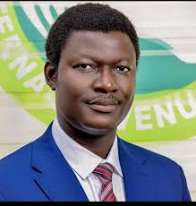
The Chairman of ESIRS, Mr Emmanuel Ekene Nnamani, disclosed this on Monday while briefing journalists on the activities and achievements of the agency in its three years under his leadership.
Under the revised arrangement, property owners in Independence Layout now pay N70,000 annually, while those in Abakpa pay N20,000. Owners of village houses, according to Nnamani, will pay N10,000 annually as land use charge.
Nnamani also announced plans to commence the implementation of a Property Enumeration App, which will facilitate the identification and enumeration of properties across the state and provide a database for the assessment and collection of land use charges.
He said students would be engaged to participate in the enumeration exercise, with each student expected to receive payment on a weekly basis, based on the number of houses enumerated.
According to him, the initiative would help ESIRS establish an accurate property register while creating opportunities for students to earn income through the exercise.
Nnamani explained that the Property Enumeration App would assign identification to properties and their owners, making it easier for the government to determine taxable properties and improve compliance.
He said the exercise was part of ESIRS’ broader strategy to expand the tax net and bring previously untapped sources of revenue into the formal revenue system.
The ESIRS chairman said the agency was also expanding its revenue collection activities to o other areas including haulage fees, land use charges, capital gains tax, stamp duties and withholding tax.
He disclosed that withholding tax would soon become operational in the state, urging individuals and organisations required to deduct the tax to ensure that the deductions were properly remitted to the government.
Giving an insight into the performance of ESIRS under his leadership, Nnamani said the agency had recorded a significant increase in internally generated revenue since 2023.
He said the state generated N37 billion in 2023, rising to N108.5 billion in 2024, while revenue increased substantially to N406.7 billion in 2025, representing tax and non-tax revenues.
Nnamani attributed the growth to the reforms introduced under Governor Peter Mbah’s administration, particularly the autonomy granted ESIRS and the deployment of technology for revenue collection.
He said the agency inherited a system characterised by poorly motivated personnel and fragmented revenue collection, but the autonomy granted by the state government enabled ESIRS to embark on fundamental reforms.
“Our Governor came with disruptive innovation and now it is time to give account,” Nnamani said.
He explained that the autonomy granted to ESIRS was backed by legislation, transforming the agency into a one-stop shop for revenue collection in the state.
According to him, ESIRS moved away from a mono-payment gateway operated through Interswitch and expanded the system to seven payment gateways, including UPS and Flutterwave.
He said taxpayers could now make payments through banks, transfers and more than 300 Point-of-Sale (POS) terminals, including from the comfort of their homes and even during weekends.
The development, he said, had significantly improved convenience and reduced opportunities for revenue leakages.
Nnamani said the agency also embarked on extensive training of its personnel and declared an emergency in which every staff member was required to have access to a laptop or tablet.
He added that ESIRS invested in reliable internet connectivity and solar energy to ensure that its operations were not disrupted by power challenges.
The ESIRS chairman said the agency had also banned cash payments as part of measures to strengthen transparency and accountability in revenue collection.
He said several revenue agencies that previously operated independently had been unbundled and brought under a centralised system, while ESIRS collaborated with relevant unions and revenue agencies to improve its operations.
According to him, the reforms were particularly significant in the informal sector, where revenues were previously paid to non-state actors before the new system was introduced.
Nnamani urged residents and businesses to familiarise themselves with the state’s tax laws, stressing that the agency was not interested in imposing arbitrary taxes but in ensuring compliance with existing legislation.
He said the law provides for certain exemptions, but taxpayers seeking exemption must undertake the required tax filing.
He noted that ESIRS was currently not implementing some provisions of the tax law to their full extent, citing the provision requiring the payment of one per cent of turnover in certain circumstances.
“We are only collecting N36,000 and people are complaining. I’m a tax collector and you have to convince me why you should not pay,” he said.
He urged taxpayers to study the tax laws and understand their obligations rather than evade payment.
The ESIRS boss further disclosed that the state was collecting Development Levy from new construction projects, noting that between 20 and 25 new buildings were being commenced daily across the state.
He said the levy was N150,000 in Enugu North Local Government Area, N100,000 each in Enugu South and Enugu East, N80,000 in Nsukka, while the rate for other local government areas stood at N50,000,”and you must pay to be permitted to commence development of the property”.
READ THIS Government Of Dr Peter Mbah Is Interested Practically, Conveniently To Relate With NUJ – _Aka Eze Aka_
He said ESIRS was also strengthening the collection of capital gains tax, particularly from property transactions, as well as stamp duty.
Nnamani maintained that the objective of the reforms was to create a sustainable and transparent revenue system capable of funding government programmes without placing undue pressure on taxpayers.
The chairman also dismissed concerns that the ongoing tax reforms were designed to frustrate businesses, particularly Igbo traders.
He said the forthcoming implementation of enhanced tax-compliance measures at both the federal and state levels should not be misconstrued as an attempt to shut down businesses.
According to him, the reforms are aimed at ensuring that individuals and businesses fulfil their statutory tax obligations.
“It is not aimed at shutting down Igbo business. People should pay their taxes and not evade it,” he said.
Nnamani said ESIRS would continue to expand the tax net while deploying technology to make payment easier, improve transparency and ensure that revenue due to the state was properly collected.
He said the agency’s ultimate objective was to build a modern revenue administration system in which taxpayers could meet their obligations conveniently while the state would accurately account for every naira collected.
-
 News3 days ago
APC Chairman slumps, dies during reconciliation meeting in Kogi
-
News2 days ago
‘Fake agency’ boss, Nwabueze, fights back with appointment letter
-
News3 days ago
Another fake agency uncovered, FG suspends three perm secs, orders arrest
-
News1 day ago
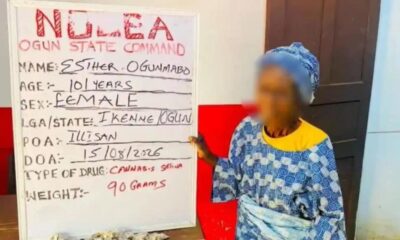
NDLEA arrests 101-year-old woman for selling cannabis in Ogun
-
News3 days ago
Tinubu unveils APC presidential campaign council, appoints self as chairman
-
News2 days ago
‘How fake federal agency tricked us’ – Anambra govt
-
News2 days ago
Four family members, dog die after eating Amala meal in Kogi
-
News2 days ago
1,844 killed in South-East in two years — Amnesty International reports