Health
Japa: Health workers shortage forces hospitals to reduce outpatients, surgeries as 4,000 doctors migrate


The migration of doctors and other health workers to other countries is taking a toll on hospitals across the country as the institutions have reduced the number of their outpatients and surgeries due to a shortage of manpower.
Almost all the health institutions were battling with the shortage as they could not cope with the high number of patients who thronged the government hospitals, which were affordable compared with the private ones.

The Chairman of the House of Representatives Committee on Health had on Wednesday raised the alarm that not less than five wards with about 150 beds, had been closed down at the Lagos University Teaching Hospital, Idi-Araba, due to a shortage of health workers.
The Chairman of the Committee, Dr Amos Mogaji, said the five wards had to be shut because there were no workers to operate them despite the large number of patients received at the institutions daily.
Findings showed that LUTH was not the only hospital battling with the problem as health workers lamented the heavy workload because their counterparts had left the country.

Although the Nigerian Medical Association and the Nigerian Association of Resident Doctors could on Sunday not give the exact number of medical doctors that had left the country, the NMA had a few years ago said 2,000 health workers were leaving yearly.
Also, the NARD had in January 2023 stated that a survey it conducted indicated that more than 2,000 of its members left the country in 2022.
However, the harsh economic conditions in the country have been pushing many doctors to leave the country as 1,197 doctors had moved to the United Kingdom since May 29, 2023.
With health institutions including the Lagos University Teaching Hospital, the Federal Medical Centre, Abeokuta; Aminu Kano University Teaching Hospital, Kano and the Obafemi Awolowo University Teaching Hospital, Ile-Ife losing close to 1,000 doctors to japa in the last two years, there are strong indications that over 4,000 doctors might have left the country in the last two years.
In the FMC, no fewer than 200 doctors, including 50 medical consultants have left the country for greener pastures abroad.
Because of the shortage of doctors, it was gathered that the hospital was forced to reduce the number of its outpatients attended to and elective surgeries.
According to veryhealth.com, an “elective surgery” is the term used for a procedure that can be safely delayed without great risk to a patient’s health, such as cataract surgery. A nonelective (or emergency) surgery is a procedure that must be performed immediately for lifesaving or damage-preventing reasons.’’
In Kano State, The PUNCH gathered that no fewer than 789 nurses and 162 doctors had left the state, while about 50 doctors had left hospitals in Benue State.
One of our correspondents gathered that as many as 65 doctors left the OAUTH, Ile-Ife, in the last year, while about three wards had stopped admitting patients over inadequate manpower in the hospital.

File: A hospital ward in Nigeria
An official of the NARD in the hospital, who spoke on the condition of anonymity, said, “65 doctors left OAUTH last year. 45 of them completed their training and left, while 20 abandoned their training and left for other countries.”
He also said about three wards in the hospital had stopped admitting patients due to inadequate manpower.
“Out of three units we have in the emergency section, only one is admitting patients. Two other units in the emergency ward are not admitting patients due to inadequate staff.
“Also, the psychiatric unit is not admitting new patients because we don’t have enough nurses. The Paediatric Unit is seriously understaffed. Generally, we don’t have enough staff in the hospital. Some people are available to work, but they are not employed,” he said.
OAUTH management could not be reached for reaction to the claim, as calls to Kemi Fasooto, the hospital Public Relations Officer, rang out and she has not responded to a text message sent to her by our correspondent, as at the time of filing this report.
FMC Abeokuta
At the FMC, Abeokuta, the Chairman of the Medical and Dental Consultant Association of Nigeria, Dr Jimoh Saheed, stated that in the last four years, the hospital had lost about 50 consultants and 150 resident doctors to the japa syndrome.
He said, “The japa syndrome has really affected and is still affecting the healthcare system in Nigeria. About 50 medical and dental consultants left FMC Abeokuta alone in the last four years. The number of resident doctors who left for greener pastures should be times three the above number.
“Therefore, the implication is that there is a severe shortage of manpower in the hospital, which has hampered the service delivery and care of patients. We have had to reduce the number of patients seen per clinic and also, and the elective theatre cases per day also dropped.
“As it stands, some segments of our emergencies had to be collapsed for the unit to work efficiently. The implication of all these will mean that we can’t function optimally and the japa wave has affected service delivery, training of medical specialists as well as research.”
Jimoh said the way forward was for the government to declare a state of emergency in the health sector, which would include massive recruitment of various health personnel, and equipping the hospitals to international standards, among others.
Similarly, the Chairman of the National Association of Nigeria Nurses and Midwives, Ogun State Hospital Unit, Ijaye, Abeokuta, Mrs Lola Idowu, said nurses that had left the hospital in the last three years could not be less than 40, including those who had retired.
The Benue State chapter of the NMA confirmed that more than half of the number of medical doctors working in the state Health Management Board had left the country to search for jobs in better locations.
The NMA Chairman, Dr Usha Anenga, described the situation as pathetic.
Anenga said, “We used to have over 100 doctors at the Health Management Board but now there are less than 50 left. We used to have a consultant and epidemiologist at the Federal Medical Centre but they have left. The gynecologist at the University Teaching Hospital has also left.”
At the University of Jos Teaching Hospital, Plateau State, about 100 resident doctors have left the facility as the remaining ones at the hospital lament the shortage of manpower in the health institution.
The President of the ARD in JUTH, Dr Ishishen Artu, stated that last year, more than 70 resident doctors had left the hospital.
“What is happening across the country about japa syndrome is not different from the situation here in JUTH. When I came on board as ARD president about 11 months ago, we had 410 members.
“But during our last nominal roll from the accounting department, we were about 340. So that is to tell you how doctors have been moving away from the hospital,” Artu stated.
He blamed the manpower shortage on poor welfare packages, insecurity, and inadequate equipment, and called on the government to intervene to avoid an imminent collapse of the health system across the country.
He added, “Some of us who are still around are not finding it easy. Many of our mates outside the country including Ghana, and South Africa are receiving three to five times what we are receiving in Nigeria.
“They want to come home to practice but they can’t come under the present situation. That is why the government has to look at the issues holistically to address them so that the health sector will not break down completely in the country.”
Kano hospitals hit
Over 789 nurses and 162 doctors have relocated outside Nigeria from Kano State alone, according to the NMA in the state.
Similarly, over 162 medical doctors relocated to other countries across the world within the same period under review.
The Chairman of the Kano State Chapter of the Nigerian Medical Association, Dr. Abdullahi Sulaiman, disclosed this in a telephone interview with The PUNCH on Saturday.
“Many medical doctors and other categories of healthcare workers are exiting the state in droves. So, I cannot tell you the exact number of doctors and nurses that have left the country. I can only give you an estimate.
“It is a bad situation and this is across almost all healthcare workers, not only doctors. They are leaving for Gambia, Somalia, Rwanda, Saudi Arabia, and many others every week,” he said.
According to him, the shortage of such personnel was causing a lot of problems, as those left behind were forced to bear the brunt in the form of overwork, exhaustion, and burnout in a non-conducive working environment.
“About two years back, we wanted to open some wards that were constructed and donated by some wealthy individuals at the Aminu Kano Teaching Hospital, but because there were no healthcare workers to man the places, we had to suspend the opening until later,” Sulaiman stated.
He stated that recently, five anesthetic doctors were employed by the AKTH but three had since abandoned the work and relocated abroad.
“We have been talking about the issue but the government is not taking deliberate steps to address the problem.
“To prevent doctors and other categories of health workers from going out of the country, the government must take deliberate action to address the issue,” he added.
1,197 doctors move
Findings showed that approximately 1,197 Nigerian-trained doctors moved to the United Kingdom since May 29, 2023, to date.
At the moment, Nigeria is set to overtake Pakistan and become the country with the second-highest number of foreign-trained doctors in the UK. Currently, India remains the country with the highest number of foreign-trained doctors in the UK.
This is according to the register of the General Medical Council of the UK. The GMC is a public body that maintains the official register of medical practitioners within the UK.
Though about 1,197 Nigerian-trained doctors were licensed between May 29, 2023 and December 1, 2023, the total number of Nigerian doctors licensed to practice in the UK is now 12,198.
This figure, however, excludes Nigerian doctors who were trained in other countries.
Presently, there are 73 Nigerian-trained doctors in the field of anaesthetics and Intensive Care Medicine, 61 in the field of emergency medicine, 241 for general medicine, 207 for obstetrics and gynecology, 17 for occupational medicine, 16 for ophthalmology, pediatrics field with 164, and 50 for pathology.
There are 35 of them for public health, 357 for psychiatry, 29 for psychiatry and 135 for surgery.
The rate of migration of medical doctors has recently become a matter of concern. The Nigerian Medical Association, while lamenting the high rate of medical brain drain, had said Nigeria might import doctors in the future.
In 2015, only 233 Nigerian doctors moved to the UK. The number increased to 279 in 2016, while the figure was 475 in 2017. In 2018, the figure rose to 852, while it further increased to 1,347 in 2019.
In 2020, the figure was 833 even though the GMC closed operations during the COVID-19 pandemic. The figure for 2021 was put at 932.
The Chairman of the Committee of Chief Medical Directors of Federal Tertiary Hospitals, Prof. Emem Bassey, commenting on the brain drain said, “Some African countries are also beginning to poach from Nigeria.
“The West Coast is looking for our specialists. So many people are now going to places like Sierra Leone and Gambia and the wages they earn $3000 to $ 4000. It is about three to four times what they earn back home. So we are beginning to see that people are leaving for other African countries too.
“The health sector is currently undergoing a major crisis in terms of manpower. What we are seeing is that medical specialists, not just doctors, even nurses even more nurses are leaving. Doctors, nurses, laboratory scientists, physiotherapists, radiographers, and all manner of health professionals are leaving the country in droves.” ( PUNCH)









Health
NAFDAC urges Stakeholders to lead vigilance on Antimicrobial Resistance, Adverse Drug Reactions
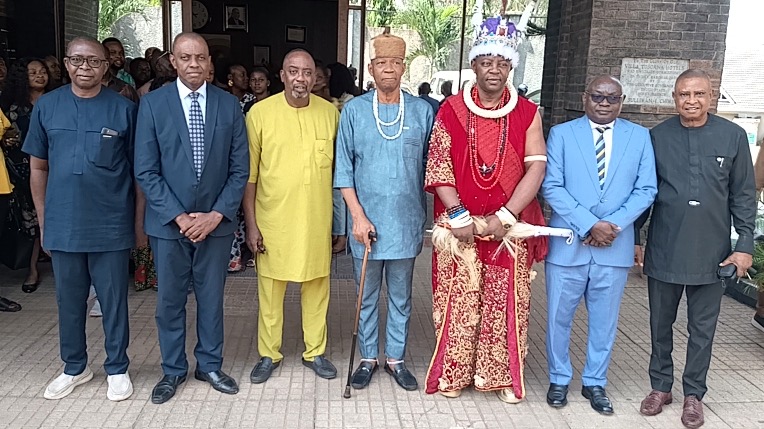
The National Agency for Food and Drug Administration and Control (NAFDAC) has called on stakeholders and Nigerians to lead vigilance against Antimicrobial Resistance (AMR) to medicines/drugs and Adverse Drug Reactions (ADR).
The Director-General of NAFDAC, Prof. Mojisola Adeyeye, made the call on during a one-day Pharmacovigilance Workshop and Stakeholders Town Hall Meeting in Enugu.
Represented by NAFDAC’s Director, South-East Zone, Dr Festus Ukadike, the director-general noted that the gravest consequences of irrational medicine use today is AMR.
She explained that the misuse and overuse of antibiotics had accelerated the emergence of resistant microorganisms that no longer respond to conventional treatment.
“This means that infections previously treatable with common antibiotics are becoming increasingly difficult and expensive to manage.
“If urgent action is not taken, antimicrobial resistance may reverse decades of medical progress and place humanity at serious risk.
“This is why Pharmacovigilance is extremely important. Pharmacovigilance refers to the science and activities relating to the detection, assessment, understanding, and prevention of adverse effects or any other medicine-related problems.
“In simple terms, Pharmacovigilance helps us ensure that medicines remain safe and effective even after they have been approved and released into the market,” she said.
Adeyeye noted that no medicine is completely free from side effects.
“However, through effective Pharmacovigilance systems, healthcare professionals and patients can identify harmful reactions early, report them appropriately, and help regulatory authorities take necessary actions to protect the public,” she said.
She said that Pharmacovigilance remained a core mandate of the agency, adding that stakeholders and general public should play active part in monitoring AMR and ADR to ensure effectiveness of medicine and treatment.
Speaking, the Chairman, Enugu State Traditional Rulers’ Council, Igwe Samuel Asadu, commended NAFDAC for the workshop, while urging the agency to put more effort in curbing sales of fake medicines in the hinterlands.
Asadu said that Pharmacovigilance was needed more in the hinterlands of the state to stop people paddling fake medicines and “selling outright chalk as medicine in villages in the state”.
He gave the commitment of royal fathers in the state in providing necessary support to NAFDAC to check paddlers of fake medicines, “as we see our people die due to their activities.”
Corroborating, the State Coordinator of World Health Organization (WHO), Dr Adaeze Ugwu, said that the organisation would continue to support NAFDAC in the agency’s resolve to strengthen food and healthcare in the country.
Also, Dr Oliver Ezemba, Chairman, Nigerian Association of Patent and Proprietory Medicine Dealers (NAPPMED), urged everybody to get concerned on the issues of AMR and ADR to guarantee quality medicines for everyone.
Ezemba called on Nigerians to imbibe the habit of reporting any irregularities observed while using a medicine to NAFDAC for proper investigation, which would serve the benefit of many Nigerians using same medicine.
The participants asked questions on AMR and ADR as well as made pledge on reporting any suspectable AMR or ADR case through the NAFDAC’s Med Safety Mobile App using their cellphone or computer set.
In the workshop, a presentation was made on “Need for Effective Pharmacovigilance by All’, delivered by Mr Chidi Uche and Mrs Ogechi Udeh, who are NAFDAC officials.

By Dr. Collins Ogbu
In the life of every society, there comes a defining moment when leadership either sustains the status quo or boldly reimagines the future. For Enugu State, that moment is now. At the centre of this transformation is Governor Peter Ndubuisi Mbah, whose administration is not merely responding to challenges in the health sector but fundamentally rebuilding it. Recent public discourse surrounding the suspension of a health assistant trainee by a private institution has, perhaps inadvertently, created an opportunity to restate a deeper truth: the Enugu State Government remains focused, deliberate, and fully committed to repositioning healthcare delivery across the state.
For years, Enugu’s healthcare system reflected a troubling pattern familiar in many subnational contexts; underfunded primary healthcare centres, overstretched personnel, aging and inadequate infrastructure, and an overreliance on private or out-of-state medical services. Rural communities were particularly disadvantaged, often forced to travel long distances for basic care. Training institutions operated with limited capacity, while secondary and tertiary facilities struggled with outdated equipment and insufficient staffing. The system was largely reactive, constrained by years of neglect and unable to meet the growing needs of the population.
Governor Mbah’s administration has decisively broken from that past. Anchored on the principle that healthcare is a right and not a privilege, the government undertook a comprehensive audit of the sector and initiated a far-reaching reform agenda. Rather than incremental adjustments, the approach has been bold and systemic; targeting every layer of healthcare delivery, from primary care to specialised services.
Central to this transformation is the rollout of 260 Type-2 Primary Healthcare Centres across all political wards in the state. This initiative directly addresses the longstanding gap in grassroots healthcare access. Where communities once depended on poorly equipped facilities or distant hospitals, modern, well-positioned centres are now being established to provide quality care within reach. This effort is further strengthened by the recruitment of over 2,250 healthcare workers, a significant intervention aimed at resolving the manpower shortages that previously undermined service delivery.
At the secondary level, general hospitals are undergoing extensive rehabilitation to restore their capacity as reliable referral centres. Facilities such as Uwani General Hospital, which once symbolised infrastructural decline, are being transformed to meet modern standards. These upgrades are ensuring a more efficient continuum of care between primary and tertiary institutions.
The transformation is even more pronounced in tertiary healthcare. The Enugu State University Teaching Hospital (ESUTH), Parklane, is experiencing unprecedented infrastructural expansion, including the construction of a twin six-floor Laboratory and Clinical Complex, a seven-floor Nursing Complex equipped with advanced diagnostic facilities, and a modern Accident and Emergency Department. These developments represent a significant leap from the limitations of the past, positioning the institution as a centre of excellence in both service delivery and medical training.
In the area of medical education, the administration has recorded a landmark achievement with the reaccreditation of the ESUT College of Medicine and the subsequent increase in its admission quota to 350 students – the highest among state-owned institutions in Nigeria. This milestone reflects a strategic commitment to building human capital and ensuring a steady pipeline of highly trained medical professionals for the future.
Equally significant is the completion of the State University of Medical and Applied Sciences (SUMAS) Teaching Hospital in Igbo-Eno. Unlike in previous years when a single teaching hospital struggled to meet demand, Enugu now has a second fully equipped facility, with recruitment already underway to commence full-scale operations. This expansion not only improves access to tertiary care but also strengthens the state’s capacity for medical training and research.
Crowning these efforts is the nearly completed 300-bed Enugu International Hospital, a state-of-the-art, super-specialist facility designed to elevate healthcare standards and reduce the need for outbound medical tourism. For decades, many residents sought advanced medical care outside the state or country, often at great financial and emotional cost. This facility represents a turning point, offering world-class services within Enugu and reinforcing the state’s emergence as a healthcare hub.
Amid these sweeping reforms, the government has also demonstrated a strong commitment to transparency and responsible governance. By clearly distancing itself from the internal disciplinary processes of a private institution while engaging relevant stakeholders, it underscores respect for institutional autonomy alongside responsiveness to public concerns.
What is unfolding in Enugu today is not merely policy execution but a comprehensive transformation. The contrast between the past and the present is both clear and compelling; where there were once gaps, there is now structure; where there was decline, there is now renewal. The state is moving from a system defined by limitations to one driven by vision, investment, and measurable progress.
While challenges inevitably remain, the trajectory is unmistakable.
Enugu State is no longer managing a fragile healthcare system; it is building a resilient, modern, and inclusive one. In the final analysis, Governor Peter Ndubuisi Mbah’s strides in the health sector are redefining not just infrastructure and policy, but the very experience of healthcare for Ndi Enugu, laying the foundation for a future where quality care is accessible, reliable, and sustainable for all.
• By Dr. Ogbu is a Senior Special Assistant, SSA to Enugu State Governor on Strategic Communications

The Enugu State Government has set-up a multidisciplinary Regulatory Task Team to check deaths, substandard and illegal activities in health facilities in the state notwithstanding their remote locations.
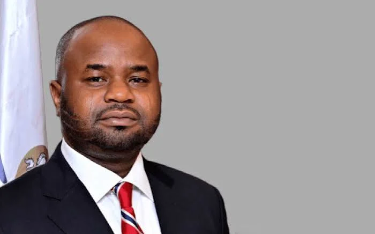
The Commissioner for Health, Prof George Ugwu, disclosed this in a press briefing on Tuesday in Enugu.
Ugwu noted that the Regulatory Task Team had been charged with monitoring, inspecting, and enforcing compliance with health regulations across all 17 local government areas of the state.

According to him, the state government through the ministry of health is unwavering commitment to safeguarding the health and safety of Enugu State residents through the effective regulation of health practices across the state.
The commissioner said that the team would be working with the enabling powers of the Enugu State Health Sector Reform Law 2017, N.7 section 235 and the National Health Act.
The commissioner observed with grave concern that a significant number of private health practitioners and facilities operating in Enugu State had failed to comply with procedural and operational safety standard statutory requirements.
He said, “In particular, many private health facilities have not registered with the Enugu State Ministry of Health.
“Some facilities that are registered have refused or failed to pay their annual renewal fees regularly, in clear violation of the Law.
“Several facilities are operating beyond the scope of services for which they were registered.
“For example, some hospitals registered as 10-bed facilities are operating far beyond their approved bed capacity, some even claim to be multispecialty when they are not.”
He noted the disturbingly trend of untrained and unqualified individuals operating in rural communities, falsely presenting themselves as doctors or nurses and rendering illegal and dangerous health services to the people..
“The ministry views these developments as acts of quackery and unwholesome practices that pose serious risks to public safety, undermine professional standards and erode confidence in the health system.
“The ministry is urging all stakeholders in the health sector — including professional bodies, facility owners, community leaders and the general public — to assist the government in reducing sub-standard and illegal practices in some private health facilities.
“Collective vigilance and cooperation are essential to sanitising the health sector and protecting the lives of Enugu residents,” he said.
Ugwu directed all private hospitals, chemist shops, medical laboratories, and other health facilities operating in the state to:ensure immediate registration with the ministry where applicable and maintain regular and timely payment of annual renewal fees.
“Defaulters will be sanctioned in accordance with the provisions of the Enugu State Health Sector Reform Law, including the payment of appropriate penalties, suspension of operations, or closure of facilities where necessary.
“For further enquiries, or useful information to the State Ministry of Health, please contact: Cyril – 08037955742,” he added.
Responding, the Vice Chairman, National Association of Nigerian Nurses and Mid-Wives, Mr Innocent Ezema, and Vice Chairman, Guild of Medical Laboratory Directors, Enugu State, Mr Chukwumerije Anuluw, gave maximum support of their associations to the task team.
-
 News3 days ago
Army rescues kidnapped Lieutenant Colonel, civilian in Enugu
-
News2 days ago
‘Nigeria is bleeding,’ says Yoruba Union, asks Nigerians to vote Tinubu out in 2027
-
News1 day ago
Soldier, police officer killed as army rescues nine abductees in Zamfara
-
News3 days ago
Police rescue kidnap victim, kill suspect after gun duel in Enugu forest
-
News20 hours ago
Six soldiers killed, father, sons burnt alive as terrorists attack Zamfara, Sokoto communities
-
News1 day ago
Facts, not fear: A point-by-point response to Atiku Abubakar on Nigeria’s reform journey, By Bayo Onanuga
-
Uncategorized2 days ago
Mbah, Gen. Musa, others extol Ogalla’s service, as Enugu Gov’t honors Ex-Naval Chief
-
International3 days ago
Thousands begin journey home from Morocco border with Spain