




News
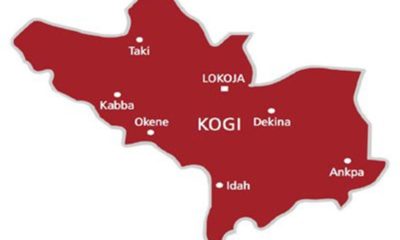
Kogi Election: APC’s alleged plan to use herbicides procured as FG’s palliatives for vote buying uncovered
The move by the All Progressives Party, APC in Kogi State to distribute herbicides to voters willing to cast their votes for the party’s governorship candidate, Usman Ododo during Saturday’s election has been exposed by some concerned leaders of the state.
Reports from different communities in Kogi East, on Thursday, indicated that the chemicals meant for grass weeding by farmers, which were procured as federal government’s palliatives by the Kogi State Government, were withheld and kept for distribution on election day.
“The strategy adopted by the APC to distribute chemicals (herbicides) to voters as condition for voting for their candidate is well known to us. As we speak, the chemicals are in all the communities across the local government areas in Kogi East senatorial zone. This is purely a case of vote buying and the INEC and security agencies should take note.
“These chemicals were bought with the subsidy palliative funds from the Federal government and the Kogi state government withheld them from being distributed to the beneficiaries only to hand them over to their campaign coordinators to distribute during the election as a way to getting undue advantage for their candidate. We must resist this and anyone found with such chemicals at the polling booths should not be allowed to go scot-free as such will be against the letters of the Electoral Act,” a political stalwart stated this while addressing voters in Ibaji local government area on Thursday.
“If they meant well for the people, they should have distributed these chemicals before the election. This cannot be regarded as palliatives as they are purely intended for vote-buying. We are used to this strategy being adopted by the APC to cajole our people into supporting an unpopular candidate and they can’t have their way in this election,” he added.

The Advocate reports that members of the three major political parties in the contest namely APC, SDP and PDP, on Thursday, intensified their campaigns for the Saturday’s election in the state as many of their campaign teams were seen at the grassroots level mobilizing voters to support their respective candidates.
However, it was observed that political violence and thuggery that preceded preparations for the election, appeared to have subsided following heavy deployment of security operatives to different parts of the state especially local government areas within Kogi East where several lives and property had been lost to politically-motivated mayhem.
News
PFIPC probe: ICPC uncovers two more fake agencies linked to Adeyemi
The Independent Corrupt Practices and Other Related Offences Commission (ICPC) has uncovered two more fake agencies operated by the self‑styled Director‑General of the Presidential Foreign Intervention Promotion Council (PFIPC), Adeniyi Matthew Adeyemi.
ICPC Chairman Dr. Musa Adamu Aliyu, SAN, disclosed this while briefing State House correspondents after he submitted the commission’s interim report on the existence and operation of the fake agency at the Presidential Villa, Abuja.
Dr. Aliyu said the investigation revealed that Adeyemi was never appointed by the Federal Government and that the Presidential Foreign Investment Promotion Council was never established by law or executive order.
According to the interim report, the appointment letter presented by Adeyemi was forged, while the PFIPC illegally appropriated offices and instruments from the former Presidential Economic Advisory Council (PEAC).
He said the fake agency, using the former PEAC office, engaged in false representation, widespread impersonation and various illegal activities that exploited weaknesses in verification and inter‑agency oversight.

He further stated that the investigation uncovered two additional fake government agencies: the FCT Investment Promotion Agency (PIFA) and the Foreign Investment Promotion Agency (PIPA).
“These agencies were created using forged legislative instruments and were used to open bank accounts for illegal activities,” he said.
The ICPC boss said Adeyemi changed the name of the fake agency from Foreign Investment Promotion Council to Foreign Intervention Promotion Council and attempted to expand its mandate to include revenue generation.
He said: “The investigation found no funds were approved or disbursed for the fake PFIPC/PEAC, and there were no weaknesses in the State House or CBN system.”
Some recommendations of the committee, which was given 30 days to unravel the mystery behind the existence of the fake agency, include prosecution of Mr. Adeyemi; imposing administrative sanctions on public officers who facilitated the illegal operations; and instituting reforms to improve internal controls
Related News
ICPC clears Gbajabiamila, says Adeniyi’s appointment letter was forged
Fake Agency: State House denies requesting budget code from OAGF
PFIPC Probe: Family raises alarm over planned Reps’ interrogation of Adeyemi in custody
The public officers who were said to be collaborators are from the Office of the Secretary to the Government of the Federation (SGF), the Head of the Civil Service of the Federation, the Accountant‑General’s Office, the Budget Office and the National Information Technology Development Agency, NITDA.
“The report is interim and the investigation continues to uncover more details to file criminal charges against Adeyemi and his collaborators,” he said.
Dr. Aliyu added that President Tinubu has taken note of the findings and has expressed his commitment to transparency and accountability in addressing the issue.
News
Atiku raises alarm over ‘mysterious’ payment into his private bank account
Former Vice President and African Democratic Congress (ADC) presidential candidate, Atiku Abubakar, has raised concerns over what he described as a suspicious and unauthorised payment into one of his private bank accounts.
In a statement issued on Friday by his Senior Special Assistant on Public Communication, Phrank Shaibu, Atiku said the transfer originated from an individual or entity unknown to him and carried the narration, “Contribution Electioneering Campaign.”
According to the statement, neither Atiku nor his campaign solicited, authorised or had any knowledge of the payment.
The former Vice President said the account was strictly private and its details were not in the public domain, raising concerns about how the information could have been obtained.
“How did unknown persons obtain the confidential banking details of a private citizen?”

Atiku said the incident raised broader concerns about the security of Nigerians’ financial information, particularly if the private banking details of a former Vice President and presidential candidate could allegedly be accessed without his consent.
“If the private banking information of a former Vice President and a leading presidential candidate can be accessed and deployed for reasons yet unknown, then no Nigerian’s financial privacy is safe.”
He further expressed concern that the alleged disclosure could have involved individuals with privileged access to confidential information.
According to him, if such access is established, it could expose account holders to criminal elements, including kidnappers, terrorists, bandits and fraudsters.
The former Vice President also called the attention of Nigerians and security agencies to the incident, describing it as part of what he termed a series of “suspicious activities” ahead of the 2027 general elections.
“We therefore put the Nigerian public and the security agencies on notice about this latest incident in a litany of suspicious activities leading up to next year’s general elections.”
Atiku also alleged that the incident could be part of an attempt to damage his reputation as political activities intensify ahead of the elections.
He urged Nigerians not to be distracted by what he described as “tired tactics” aimed at character assassination.
“Such desperate antics have failed before and will fail again.”
The ADC presidential candidate said he remained focused on his political agenda and his stated commitment to providing solutions to the country’s challenges.
“The Waziri Adamawa remains focused on offering Nigerians credible leadership and practical solutions to the nation’s challenges.”
News
Court remands man for allegedly hacking SunTrust Bank Server, diverting N800 million
The Department of State Services (DSS) has arraigned a 47-year-old man, Ugochukwu Eze, popularly known as “Amazon,” before a Federal High Court in Lagos over allegations that he hacked into the server of SunTrust Bank Plc and fraudulently diverted N800 million into several accounts.
The court has remanded him in correctional custody pending hearing and determination of his bail application.
Eze was brought before Justice Friday Ogazi on Thursday, August 6, 2026, on a five-count charge bordering on cybercrime, unauthorised access to critical financial infrastructure, and money laundering.
According to the prosecutor, Muhammed Bajela, the defendant and others still at large allegedly conspired between 2023 and 2026 to unlawfully interfere with the bank’s computer system, resulting in the diversion of over N800 million belonging to SunTrust Bank.
The DSS further alleged that Eze concealed and transferred proceeds linked to the alleged cyberattacks through some financial institutions and unlawfully accessed critical national financial information infrastructure.

Bajela maintained that the offences violated Sections 5, 6(1), and 8 of the Cybercrimes (Prohibition, Prevention, etc.) Act, 2024, as well as Sections 10, 20, and 18(2)(d) of the Money Laundering (Prevention and Prohibition) Act, 2022.
When the charges were read, Eze pleaded not guilty. Based on his plea, the prosecutor urged the court to fix a trial date and remand the defendant in the custody of a correctional centre pending the conclusion of the trial.
However, the defence counsel, Ezekiel Afrogha, informed Justice Ogazi that a bail application had been filed on behalf of the defendant and that he had been in the custody of the DSS for over a month. Responding, the prosecution stated it had not been served with the bail application but added that its witnesses were available to proceed.
Justice Ogazi subsequently adjourned the case until August 24, 2026, for the hearing of the bail application and ordered that the defendant be remanded in the custody of the Nigerian Correctional Service (NCoS) until his bail request is determined.
One of the counts alleges that Eze, between 2023 and 2026, unlawfully hindered the operation of SunTrust Bank Plc’s computer system and fraudulently diverted over N800 million belonging to the bank, an offence punishable under Section 8 of the Cybercrimes (Prohibition, Prevention, etc.) Act, 2024.History
The SunTrust Bank cyber heist is one of the largest banking fraud cases to be prosecuted in Nigeria in recent years.
The DSS, which has constitutional responsibility for protecting the country’s critical national infrastructure, has been investigating the case for several months.
Sources close to the investigation revealed that the bank’s server was compromised over a three-year period, with funds gradually siphoned into multiple accounts across various financial institutions.
The arrest and arraignment of Eze mark a significant breakthrough in the investigation, but the prosecution has indicated that other suspects remain at large and are being pursued.
The case has drawn attention to the growing threat of cybercrime in Nigeria’s financial sector, where sophisticated hackers have increasingly targeted banks and other financial institutions.
The Cybercrimes (Prohibition, Prevention, etc.) Act, 2024, which was enacted to strengthen Nigeria’s legal framework for combating cybercrime, provides for severe penalties for offences such as unauthorised access to computer systems, data interference, and computer-related fraud.
The Money Laundering (Prevention and Prohibition) Act, 2022, also criminalises the concealment and transfer of proceeds of crime.
As the case progresses, the court will determine whether the prosecution can prove its case beyond a reasonable doubt.
For now, Ugochukwu Eze, the man known as “Amazon,” remains in custody, with his bail application scheduled to be heard on August 24, 2026.
SunTrust Bank, meanwhile, continues its battle to recover the N800 million allegedly lost to the hackers, a saga that has now moved from the digital realm into the corridors of justice.
-
News2 days agoBREAKING: EFCC freezes Osun govt bank account days to election
-
Entertainment2 days agoPopular Nollywood Actress dies after battle with cancer
-
Faith3 days agoRCCG Founder’s Daughter speaks on viral statement criticising church leadership
-
News2 days agoMalpractice: WAEC withholds 167,486 WASSCE results
-
News7 hours agoIGP appoints new Police Commissioners
-
News22 hours agoCourt remands Ex-DSS Officer in Kuje Prison over alleged support for IPOB
-
Uncategorized24 hours agoFG to forge stronger partnership with Catholic Bishops, others — Akume
-
News2 hours agoAtiku raises alarm over ‘mysterious’ payment into his private bank account