
Editorial
Senator Umeh: I am grateful to Peter Obi for rescuing me politically


Former National Chairman of All Progressive Grand Alliance (APGA) and the Senator representing Anambra Central Senatorial on the platform Labour Party( LP), Senator Victor Umeh, has expressed gratitude to the 2023 LP presidential candidate, Peter Obi, over his prompt political rescue when his enemies planed to terminate his political career on May 28, 2022.
.
Umeh, speaking during his thanksgiving ceremony at St. Patrick Catholic Church Aguluzigbo in Anaocha Local Government Area of Anambra State said that despite his political estrangement with Obi for 10 years he (Obi) carried him along when all hope was lost.
.
Umeh narrated his ordeal when APGA denied him his senatorial ticket in 2023 but God almighty used Obi to demonstrate his goodness in his political career.

Peter Obi and Sen. Victor Umeh during the thanksgiving service.
The senator recalled how he was paid back in bad coin by the present governor of Anambra State after he had “campaigned vigorously for him, acted as collation officer for him in INEC and eventually delivered him as Governor”.
.
He said that he bears no grudges but has handed everything over to God.
.
Umeh warned all bad eggs to stay away from Labour Party, adding, “Labour party is the party we will use in our political journey.”
.
He said “The party which Obi is now the National Leader is our own. I know practically everything about party politics having been APGA National Chairman for 10 years. If this thing going on in Labour Party continues, I will draw my dagger and that party will be quiet. Nothing will happen that will destroy the party”
.
“God works in mysterious ways. My victory was made possible through the immense goodwill of my brother Peter Obi. I started my political journey with him in 2001, fought all the battles with him, he triumphed, we triumphed too until the enemies of progress came in and separated us but after 10 years, God said, against the wishes of people and men, that two of us will come together again.
.
“When I was returned as the party flag-bearer, I made a speech and it is on record that I said that above all things that God has done for me, none is greater than the reconciliation I’ve achieved with my brother Peter Obi. This is because my disagreement with him was uncalled for at the first instance. It was the handiwork of some people who put spanner in our wheel of progress.
.
“The governor of Anambra state presently, I was totally involved in his campaign, acted as his collation agent in INEC, delivered him as Governor before the ugly development happened. If what happened pleased God, I wouldn’t be here today but it did not please God. Ingratitude is a cardinal sin and it is important I said this so that you can know my stand.

“I’m not against anybody but in the house of God, what is not proper should be described as what it is. So I’m appealing to all of you to be focused because we need leadership that is combined with good work and empathy towards fellow human being in Anambra. I’ve made my point and I want to say my Lord that having unburdened my heart, I bear no grudges anymore. Whatever anyone did badly to me, I’ve forgiven. Whatever God says will be, will be and no human can stop that.”


Senator Umeh with dignitaries that graced the occasion
.
The Thanksgiving mass was officiated by Cardinal Peter Okpaleke of Ekwulobia Diocese and con-celebrated by Archbishop Valerian Okeke of Onitsha Archdiocese and Bishop Paulinus Ezeokafor of Awka Diocese.










Editorial
FG, Soludo, Nollywood Stars Pay Glowing Tributes to Late Pete Edochie, Celebrate His Enduring Legacy
The Federal Government, Anambra State Governor, Prof. Chukwuma Soludo, and Nollywood stars have mourned veteran actor Pete Edochie, who died at the age of 79.
The Federal Ministry of Art, Culture, Tourism and the Creative Economy, in a tribute posted on its X handle on Wednesday, described Edochie’s contributions to Nigerian theatre and film as unforgettable.
The ministry said the actor dedicated decades to his craft, delivering memorable performances and mentoring generations of actors.
The statement read, “Forever in our hearts. For decades, Pete Edochie has dedicated his life to his craft, giving Nigerian theatre and film some of its most memorable performances. His contribution to Nollywood and the generations of actors he has mentored will not be forgotten.
“Thank you for the years, the stories and the legacy. May his soul rest in peace.”
Soludo also mourned the actor, describing him as an institution, a distinguished custodian of culture, a sage and a source of pride to the people of Anambra State.
The governor’s condolence message was contained in a statement issued on Wednesday by his Chief Press Secretary, Christian Aburime.
He described Edochie as a proud son of Anambra and a cultural giant whose work projected Igbo identity, wisdom and dignity to audiences across Nigeria, Africa and beyond.
The statement read, “Chief Pete Edochie was more than an actor. He was an institution, a distinguished custodian of our culture, a sage, and a source of immense pride to Ndi Anambra.
“Through his craft, he taught generations the value of dignity, courage, family and the wisdom of our elders. His passing leaves a void in our creative landscape and in the heart of our State, but his legacy will endure in the stories he told and the lives he touched.
“The Anambra State Government will ensure the late icon is honoured in a manner worthy of his stature and contribution to the State and the nation.”
Soludo extended his condolences to Edochie’s wife, Josephine, their children, the Edochie family, the people of Ifite Nteje, the Nigerian film community and his admirers.
He also prayed for the family to receive the strength to bear the loss and for the deceased to find eternal rest.
Meanwhile, Nollywood actors, entertainers and media personalities have continued to pay tribute to the late actor, highlighting his contributions to the film industry, influence on younger performers and memorable portrayal of Okonkwo in the 1987 Nigerian Television Authority adaptation of Chinua Achebe’s Things Fall Apart.
Actress Uche Jombo described Edochie as one of Nollywood’s greatest pillars, an institution, a master of his craft and a custodian of Nigerian culture.
In her tribute on X, she said, “He gave Nigerian storytelling a face, a voice and a legacy that will outlive generations.”
She added that although the industry had lost a legend, his work, wisdom and legacy would continue to speak for generations.
Comedian Sabinus also mourned the actor, describing him as an oracle and a legend, while disc jockey DJ Kaywise wrote, “Rest in paradise, Chief Pete Edochie. Thank you for everything. May your soul rest in peace.”
On Instagram, Neon Adejo expressed shock over the news, writing, “Omg.”
Actor Browny Igboegwu also paid tribute, saying, “Daddy you have done your part and we will miss you. Rest daddy rest in peace.”
Media personality Morayo Brown wrote, “May His Soul Rest in Peace.”
Edochie died at 12:30am on Wednesday, November 25, 2026, in Enugu, after a prolonged battle with prostate cancer. His death was announced in a family statement signed by his son, Leo Pete Edochie.
He rose to prominence for his portrayal of Okonkwo in the 1987 NTA adaptation of Things Fall Apart, which brought him recognition beyond Nigeria.
Before becoming widely known as an actor, Edochie worked as a broadcaster, beginning his career in 1967. His acting career spanned several decades, during which he featured in numerous Nigerian films.
He was also a recipient of the national honour of Member of the Order of the Niger (MON).
ADVOCATE SUNDAY DISCOURSE
By Tony Edike
As counterfeiters devise new ways to deceive consumers, the agency records hundreds of enforcement cases, thousands of product seizures and dozens of convictions, raising fresh concerns about the safety of medicines, food, water and everyday consumer products in Nigeria.
The growing circulation of fake, adulterated and substandard products in Nigeria has assumed an alarming dimension, prompting the National Agency for Food and Drug Administration and Control (NAFDAC) to demand tougher punishment, including life imprisonment or the death penalty, for manufacturers and distributors of counterfeit regulated products.
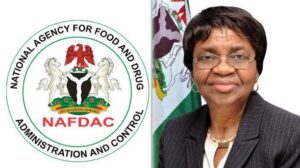
NAFDAC DG, Professor Mojisola Adeyeye
The agency’s Director-General, Professor Mojisola Adeyeye, recently described individuals involved in the production and distribution of fake products as “merchants of death”, arguing that their activities amount to a deliberate threat to the lives of millions of Nigerians.
Her demand comes amid renewed efforts by the agency to dismantle networks involved in the manufacture, importation and distribution of counterfeit medicines, adulterated food, contaminated water, fake cosmetics and other potentially dangerous consumer products.
The concern is that while NAFDAC continues to intensify its enforcement operations, those involved in the illicit business are equally devising new methods to evade regulatory authorities, exploit weaknesses in the supply chain and maximise profits at the expense of public health.
A disturbing picture of counterfeit products
The scale of the problem is reflected in NAFDAC’s enforcement statistics.
Between January and August 2026, the agency recorded 474 new cases, 821 product seizure entries and 213 raids nationwide.
Its Directorate of Investigation and Enforcement also reported 52 arrests, 179 establishments closed or sealed, 218 administrative sanctions and 295 concluded cases within the eight-month period.
The operations covered medicines, cosmetics, packaged water, drinks, food, medical devices and chemicals.
Cosmetics accounted for the highest number of seizure entries, with 401, followed by drinks with 215 and drugs with 112.
The figures demonstrate that the threat extends beyond counterfeit medicines to virtually every category of regulated product consumed by Nigerians.
In another surveillance exercise between May and July 2026, NAFDAC’s Post-Marketing Surveillance Directorate reportedly visited 5,738 facilities across the 36 states and the Federal Capital Territory, mopping up 7,210 brands of products considered non-compliant.
Food and water accounted for 3,633 products, while drugs and herbal products accounted for 2,459.
These figures provide an indication of the scale of regulatory concerns confronting the agency.
From fake medicines to counterfeit drinking water
One particularly disturbing dimension of the menace is the counterfeiting of products belonging to established and trusted manufacturers.
NAFDAC recently uncovered the activities of three companies allegedly involved in counterfeiting CWay dispenser water bottles.
According to Professor Adeyeye, the operators collected empty 19-litre bottles bearing the identity and branding of the legitimate water company, refilled them with water from unapproved production sources and reintroduced them into the market.
The counterfeit products were reportedly distributed to major hotels and supermarkets.
The development raises serious concerns about the safety of drinking water consumed in homes, offices, hotels, restaurants and other public establishments.
Unlike properly manufactured and regulated bottled water, water obtained from unapproved sources may not have undergone the necessary treatment, filtration and quality-control procedures.
Contaminated water can expose consumers to dangerous microorganisms and waterborne diseases, including cholera, typhoid and diarrhoeal infections.
The CWay incident also demonstrates how counterfeiters exploit the reputation of established brands to deceive unsuspecting consumers.
For many Nigerians, the appearance of a familiar brand on a product is enough to create confidence, without necessarily verifying where the product originated or how it was manufactured.
Fake toothpaste, medicines and cosmetics
The counterfeiting of everyday household products has also become a source of concern.
NAFDAC disclosed that it had investigated the production of counterfeit Oral-B and Colgate toothpastes and arrested individuals allegedly involved in the operations.
The agency also uncovered the counterfeiting of products bearing the Nivea and Listerine brand names during an enforcement operation at Igbudu Market in Warri, Delta State.
The operation, conducted by officers from NAFDAC’s Asaba Zonal Office with the support of the Department of State Services, the Nigerian Army and the market union, led to the seizure of suspected counterfeit cosmetics and other regulated products.
In a related warning, NAFDAC cautioned Nigerians against purchasing KY Jelly lubricant currently circulating in the market.
According to the agency, the product’s marketing authorisation holders confirmed that the last authorised supply was made more than five years ago. Consequently, any such product currently being sold should be treated as suspect.
Although the agency did not declare every product bearing the affected brand names counterfeit, the developments underscore the importance of verifying the authenticity and source of consumer products before purchase.
The danger associated with counterfeit cosmetics and personal-care products is particularly worrying because such products are applied directly to the skin or used in sensitive parts of the body.
Where their ingredients, manufacturing conditions and safety standards are unknown, consumers may be exposed to harmful substances, contamination, skin reactions and other health complications.
The deadly consequences of fake medicines
Perhaps the most dangerous aspect of the counterfeit products business is the circulation of fake and substandard medicines.
Medicines are manufactured to treat specific illnesses, control medical conditions and save lives. However, when counterfeiters introduce products containing the wrong ingredients, inadequate quantities of active substances or harmful contaminants, the consequences can be devastating.
A patient who purchases a fake antimalarial drug, for instance, may continue to suffer from malaria because the medicine does not contain the required active ingredients.
Similarly, counterfeit antibiotics may fail to treat bacterial infections, allowing illnesses to worsen and potentially contributing to antimicrobial resistance.
The consequences can be particularly severe for children, pregnant women, elderly people and patients battling serious medical conditions.
There is also the danger of patients losing confidence in genuine medicines after experiencing treatment failures caused by counterfeit alternatives.
In some cases, victims may spend additional money treating complications arising from the consumption of fake medicines, thereby worsening the financial burden on families already struggling with the rising cost of healthcare.
The business is therefore not simply an economic crime. It is a serious public health threat capable of causing avoidable illnesses, permanent injuries and deaths.
Pharmaceutical Insecurity: Pharmacists Sound the Alarm
The concerns surrounding counterfeit medicines have also attracted strong warnings from the Pharmaceutical Society of Nigeria (PSN), which believes that the country’s drug crisis has reached a level that requires urgent government intervention.
The society has called on the Federal Government to declare a state of pharmaceutical insecurity in Nigeria, warning that drug diversion, illicit trafficking, uncontrolled distribution and the circulation of counterfeit medicines pose serious threats to public health and national security.
Speaking at the opening ceremony of the PSN’s 99th Annual National Conference, tagged PSN-IJELE 2026, in Awka, Anambra State, the society’s President, Ayuba Ibrahim Tanko, expressed concern that the government appeared to have surrendered significant control of the nation’s pharmaceutical supply chain to private interests, resulting in uncontrolled distribution and dispensing of medicines.
Tanko maintained that medicines should not be treated as ordinary commercial commodities because their misuse, diversion and circulation outside regulated channels carry serious public health, regulatory and security consequences.
He specifically warned that the diversion and abuse of controlled medicines were closely connected to the country’s insecurity challenges, insisting that pharmaceutical distribution required stronger government supervision and regulatory control.
According to him, the activities of unregulated open drug markets and the uncontrolled movement of medicines across the country undermine public health protection and national security.
The PSN president also raised concerns about the possible consequences of allowing private operators to dominate critical aspects of the pharmaceutical supply chain, arguing that such arrangements could weaken collaboration among government agencies responsible for regulating medicines.
Nigeria’s pharmaceutical regulatory framework relies significantly on the activities of NAFDAC, the Pharmacists Council of Nigeria (PCN) and the National Drug Law Enforcement Agency (NDLEA), which have distinct responsibilities covering medicine quality, pharmaceutical premises and practitioners, and controlled substances.
Tanko warned that weakening coordination among these agencies could create further opportunities for illegal operators to exploit gaps in the system.
To address the situation, the PSN called for the establishment of a Federal Drug Management Agency, backed by legislation, to provide a transparent and accountable framework for the procurement, distribution and management of medicines across federal health institutions.
The society also advocated replacing unregulated open drug markets with licensed Coordinated Wholesale Centres, integrating community pharmacists into the national security architecture and establishing a Presidential Committee on the Pharmaceutical Sector.
The PSN’s intervention underscores an important dimension of Nigeria’s fake drug crisis: the problem is not limited to the manufacture and importation of counterfeit products but also involves the channels through which medicines are distributed, stored, diverted and eventually sold to unsuspecting consumers.
Until these weaknesses are addressed, enforcement efforts against counterfeit drug manufacturers and dealers may continue to face significant challenges.
NAFDAC moves beyond seizures to convictions
In defending its enforcement record, Adeyeye disclosed that NAFDAC had secured 64 convictions against individuals involved in counterfeiting across the country.
The offenders reportedly received prison sentences ranging from one to seven years without an option of fine.
The agency also recalled its major enforcement operations between February and March 2025 in Idumota, Lagos; Aba, Abia State; and Onitsha Bridgehead, Anambra State.
Those operations resulted in the seizure and destruction of more than 137 truckloads of counterfeit and substandard products valued at over N1.5 trillion.
In February 2026, NAFDAC also destroyed fake, expired, counterfeit and banned medicines worth more than N15 billion in Ibadan, Oyo State.
The products included Analgin, co-codamol, codeine syrups, tramadol, oxytocin and expired vaccines.
Another destruction exercise in Kuje, Abuja, in March 2026 involved counterfeit medicines and other regulated products valued at N1.8 billion.
At the Lagos Trade Fair Market in February 2026, the agency seized more than 10 million doses of counterfeit malaria medicines and cosmetics valued at approximately N3 billion.
Four suspects were reportedly arrested following the discovery of the products in a three-storey building allegedly used as a warehouse.
These operations indicate that the agency is increasingly focusing on the criminal networks behind the trade rather than limiting its activities to the removal of suspicious products from markets.
Why NAFDAC wants the death penalty
Against this background, Adeyeye has called for the introduction of tougher penalties for individuals who deliberately manufacture and distribute fake regulated products.
She argued that existing punishments are insufficient to deter individuals who continue to risk human lives for financial gain.
“The penalties should include death penalty or life imprisonment to people who produce and sell fake regulated products,” she said.
The NAFDAC boss disclosed that the agency’s enabling laws and other relevant legislation were undergoing review, expressing the expectation that the revised legal framework would provide stronger sanctions.
Her position is based on the argument that individuals who knowingly manufacture and distribute products capable of killing unsuspecting consumers should face punishment proportionate to the harm their activities can cause.
However, the proposed death penalty has also opened up a wider debate about criminal justice, proportionality of punishment and the effectiveness of severe sanctions in addressing economic crimes.
Under the existing Counterfeit and Fake Drugs and Unwholesome Processed Foods (Miscellaneous Provisions) Act, Cap C34, Laws of the Federation of Nigeria 2004, a person convicted of producing, importing, manufacturing, selling or distributing counterfeit, adulterated, banned, substandard or expired drugs, or unwholesome processed food, faces a fine of up to N500,000 or imprisonment for between five and 15 years, or both.
The law also provides punishment for the unauthorised sale of drugs in unlicensed premises.
Importantly, the death penalty is not the punishment prescribed under this existing law for these offences. NAFDAC’s proposal would therefore require legislative action before it could become an applicable punishment.
The challenge of enforcement and prosecution
While tougher legislation may serve as a deterrent, the fight against counterfeit products requires more than the introduction of harsher punishments.
One major challenge is the ability of regulatory authorities to identify and dismantle the entire supply chain, including manufacturers, importers, financiers, warehouse operators, distributors and retailers.
In many instances, the individuals selling counterfeit products in markets may not be the same people responsible for manufacturing them.
This makes intelligence gathering, investigation, laboratory analysis and successful prosecution particularly important.
NAFDAC must also strengthen its surveillance of production facilities, warehouses, distribution networks, border entry points and online marketplaces where counterfeit products may be advertised and sold.
The involvement of other security and regulatory institutions, including the Nigeria Police Force, Nigeria Customs Service, Department of State Services and relevant state authorities, is equally important.
Another concern is the possibility of regulatory compromise, inadequate monitoring and the continued operation of illegal production facilities despite repeated enforcement exercises.
For the proposed tougher penalties to achieve their intended purpose, investigations must be thorough, prosecutions must be successful and offenders must be held accountable regardless of their financial status or political connections.
Consumers must also become more vigilant
NAFDAC has repeatedly stressed that the fight against counterfeit products cannot be left entirely to government agencies.
Consumers have a responsibility to pay attention to the products they purchase and report suspicious items to the appropriate authorities.
Nigerians are advised to purchase medicines from licensed pharmacies and other authorised outlets rather than relying on roadside vendors or unverified online sellers.
They should also examine product packaging, registration numbers, manufacturing and expiry dates, batch numbers and seals before purchasing regulated products.
However, consumers must understand that the presence of a NAFDAC registration number does not, on its own, guarantee authenticity, as counterfeiters can reproduce the registration details of genuine products.
Product details should therefore be checked against NAFDAC’s official registration databases, including its Greenbook and NAPAMS platforms.
Suspiciously cheap products, damaged packaging, spelling errors, unusual changes in colour or texture and sellers unable to explain the source of their goods should also attract caution.
NAFDAC has urged Nigerians to report suspected fake and unsafe products through its official complaint channels.
The agency can be reached on 0800-1-623322 or through its official reporting channels.
Beyond death penalty: Nigeria needs a sustained war against counterfeiters
The growing circulation of fake products raises fundamental questions about the effectiveness of Nigeria’s consumer protection and public health regulatory systems.
How can a country guarantee the safety of its citizens when counterfeit medicines, questionable drinking water, fake cosmetics and adulterated food products continue to find their way into markets?
How can legitimate manufacturers compete when criminal operators can exploit established brands, avoid quality-control expenses and make enormous profits from products that may endanger human lives?
And how many Nigerians have unknowingly consumed counterfeit products without realising that what they purchased could expose them to serious health risks?
These are questions that require urgent answers.
NAFDAC’s demand for life imprisonment or the death penalty reflects the seriousness of the threat confronting the country. However, the ultimate measure of success will not be the severity of the punishment announced but the agency’s ability to prevent dangerous products from reaching consumers, dismantle the criminal networks behind their production and distribution, and secure convictions against those responsible.
Nigeria must also strengthen public awareness, support genuine manufacturers, improve product traceability and ensure that regulatory agencies have the resources and institutional independence required to carry out their responsibilities.
Ultimately, the fight against fake products is a fight to protect human lives. No Nigerian should have to worry that the medicine purchased from a pharmacy, the water served in a hotel, the toothpaste used by a child or the food consumed by a family could become a source of illness or death.
The business of counterfeiting must no longer be treated as an ordinary commercial offence. It is a threat to public health, consumer confidence and national development that demands sustained action from government, industry stakeholders and citizens.
• The Advocate
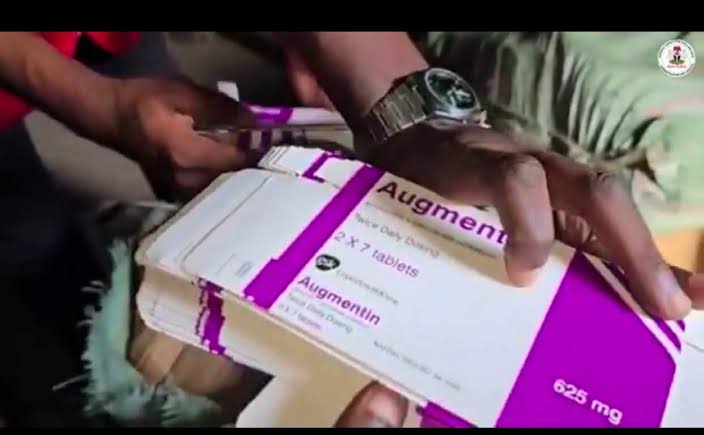
The booming trade in counterfeit and substandard medicines exposes dangerous gaps in Nigeria’s drug regulatory system, border security and law enforcement. Until those who manufacture, import and distribute fake drugs face the full weight of the law, innocent Nigerians will continue to pay for the greed of unscrupulous merchants with their lives.
By Tony Edike
There is perhaps no more dangerous form of commercial greed than making money from products that can kill the very people who buy them in the hope of saving their lives.
Yet, this is the disturbing reality of Nigeria’s pharmaceutical market, where counterfeit and substandard medicines continue to find their way into drug shops, pharmacies, hospitals and other distribution channels, despite years of government interventions and the efforts of the National Agency for Food and Drug Administration and Control (NAFDAC).
For millions of Nigerians, buying medicine is an act of trust. A patient who purchases antibiotics to fight an infection, malaria drugs to treat fever or medication to manage a chronic illness expects the product to work. The buyer does not ordinarily have the technical knowledge or laboratory equipment to determine whether the medicine contains the correct active ingredients, whether it was properly manufactured or whether it has been stored under appropriate conditions.
That trust is being dangerously exploited.
The business of counterfeit medicines is not simply an economic crime. It is an attack on public health, a threat to national security and, in many cases, a calculated assault on the right to life.
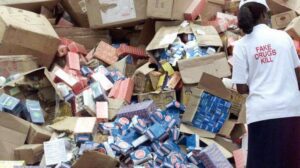
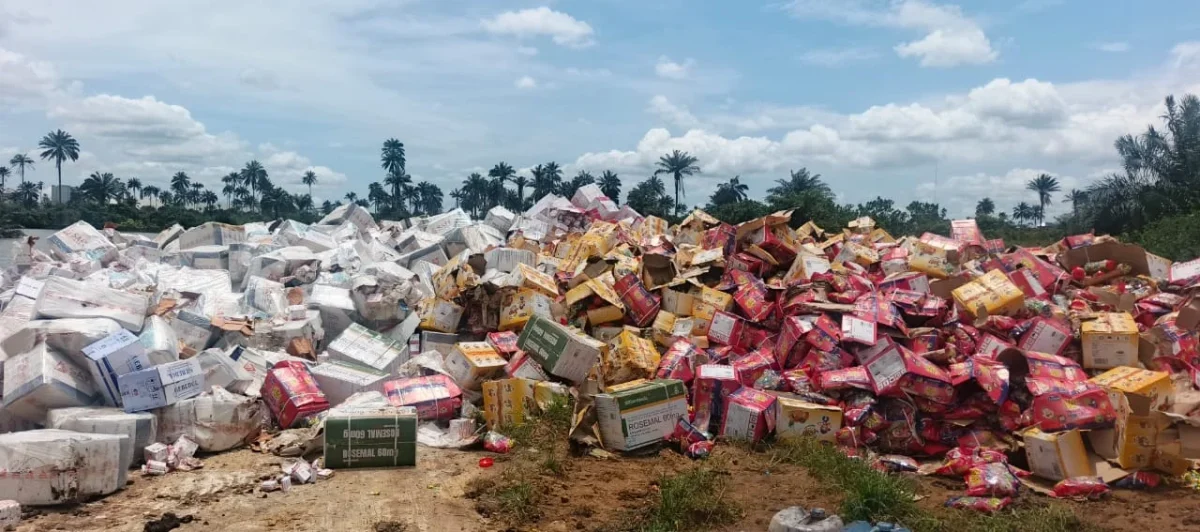
Fake drugs seized and destroyed by NAFDAC
The recent discovery of suspected counterfeit pharmaceutical packaging materials at the Trade Fair Complex in Lagos should therefore serve as another wake-up call to the Federal Government, NAFDAC, security agencies, pharmaceutical manufacturers and the entire healthcare system.
According to the information released by NAFDAC, the agency, acting on credible intelligence, raided a warehouse on the top floor of the Tools and Hardware section of the complex over the weekend.
During the operation, officers reportedly recovered packaging materials and leaflets bearing the names of two widely used antibiotics, Augmentin and Ampiclox. The agency said the materials were not from the original manufacturers.
Bottle caps bearing the Gordon’s Gin brand were also reportedly recovered, alongside unlabelled and unregistered cosmetic products.
Although the discovery of packaging materials does not, by itself, establish that finished counterfeit medicines were being manufactured or distributed at the location, it raises serious questions about the activities of those behind the operation and the possible destinations of such materials.
Why would anyone stockpile packaging materials bearing the identities of established pharmaceutical brands if not for purposes that require urgent investigation?
The possibility that counterfeiters are attempting to reproduce the packaging of trusted pharmaceutical products is particularly alarming. Once fake medicines are packaged to resemble genuine products, unsuspecting consumers may find it almost impossible to distinguish between them.
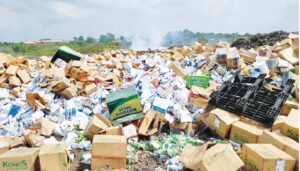
Impounded fake drugs
The implications are grave. A patient could purchase what appears to be a genuine antibiotic, take it faithfully and yet receive little or no therapeutic benefit because the product is fake, substandard or improperly formulated.
In cases of serious infections, such deception could mean the difference between recovery and death.
Why does the fake drugs business continue to thrive?
This is the fundamental question Nigerians must demand answers to.
NAFDAC has, over the years, conducted raids, destroyed seized products, shut down illegal facilities, intercepted suspicious consignments and prosecuted offenders. Its public enlightenment campaigns have also helped raise awareness about the dangers of counterfeit medicines.
Yet, the trade persists.
This suggests that the problem is deeper than occasional enforcement operations. It points to weaknesses in the pharmaceutical supply chain, inadequate surveillance, possible corruption, insufficient deterrence and the ability of criminal networks to adapt their operations whenever regulatory pressure increases.
A raid that uncovers counterfeit packaging materials is commendable. But the bigger question is whether investigators can trace the suppliers, identify the financiers, establish the intended buyers and dismantle the entire criminal network.
Destroying seized products without dismantling the business structures behind them will not solve the problem.
Are Nigeria’s borders and ports adequately protected?
One of the most troubling areas requiring urgent attention is the country’s porous borders and the effectiveness of surveillance at seaports, airports and land entry points.
Nigeria has major international seaports, airports and numerous land borders through which legitimate commercial goods enter the country. Pharmaceutical products, active pharmaceutical ingredients, packaging materials and other regulated substances may pass through these channels.
The question is whether the relevant agencies have the personnel, technology, intelligence and institutional discipline required to detect illegal pharmaceutical consignments.
Are all imported medicines subjected to adequate regulatory scrutiny? Are suspicious consignments properly profiled and inspected? Are there effective mechanisms for tracking pharmaceutical imports from their points of entry to their final destinations?
More importantly, are some unscrupulous importers exploiting weaknesses in the system, possibly with the cooperation of compromised officials?
These questions must not be dismissed as mere speculation. They require independent investigations and evidence-based answers.
The Nigeria Customs Service, NAFDAC, the Nigeria Police Force and other relevant security agencies must strengthen their collaboration to ensure that the country’s ports and borders do not become easy entry points for counterfeit medicines.
Where there is evidence of official complicity, those involved must be investigated and prosecuted. No individual should be protected because of their position or influence.
Does NAFDAC have the capacity to win this battle?
Another critical issue is the operational capacity of NAFDAC itself.
The agency has a statutory responsibility to regulate and control the manufacture, importation, exportation, distribution, advertisement and sale of drugs and other regulated products in Nigeria.
However, the scale of the Nigerian pharmaceutical market is enormous. It is therefore legitimate to ask whether the agency has enough qualified personnel, functional laboratories, modern surveillance equipment, operational vehicles and funding to effectively monitor the country’s pharmaceutical supply chain.
How many pharmaceutical inspectors does NAFDAC have nationwide? How many are deployed to monitor drug manufacturers, importers, wholesale distributors, retail pharmacies and open drug markets?
How frequently are pharmaceutical warehouses inspected? How many samples are collected and subjected to laboratory analysis every year? Are there sufficient laboratories to test suspicious medicines promptly?
These are important questions that NAFDAC should answer publicly.
The agency’s 2024 annual report documented routine inspections of 153 pharmaceutical manufacturing facilities and the sampling of 112 products for laboratory analysis. These activities demonstrate that regulatory work is ongoing, but they also underline the need for greater surveillance and transparency about the scale of the challenge. NAFDAC
NAFDAC cannot effectively police a pharmaceutical market of Nigeria’s size if its manpower, funding, laboratory infrastructure and technology are inadequate.
The Federal Government must therefore invest more in the agency, recruit additional pharmaceutical inspectors, strengthen its zonal offices and equip its laboratories with modern testing technology.
There must also be a system of continuous monitoring rather than relying heavily on intelligence-led raids after counterfeiters have established their operations.
Are imported drugs the problem, or are locally manufactured medicines equally vulnerable?
Nigeria’s dependence on imported medicines is another dimension of the problem.
NAFDAC, in a May 2026 publication, acknowledged that Nigeria historically depended on imported medicines for about 70 per cent of its pharmaceutical needs. The agency explained that this dependence exposes the country to global supply chain disruptions and the possible influx of substandard and falsified medicines.
However, it would be wrong to conclude that every imported drug is fake or that medicines manufactured locally are automatically safe.
There are genuine, internationally recognised pharmaceutical manufacturers producing quality medicines in Nigeria. Many operate under regulatory supervision and are expected to comply with Good Manufacturing Practice (GMP) standards.
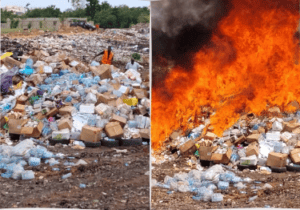
Banned sachet alcohol, drugs seized from hawkers, fake chemicals, unwholesome products and expired items
NAFDAC’s regulations require pharmaceutical manufacturing facilities to undergo inspection and demonstrate compliance with applicable GMP requirements before receiving authorisation to manufacture medicines. NAFDAC
The real challenge is ensuring that these standards are consistently maintained, independently verified and enforced.
Imported medicines must undergo proper registration, verification of manufacturing facilities, risk-based inspection and quality testing. The same standards must apply to locally manufactured products.
NAFDAC must also pay particular attention to the quality of active pharmaceutical ingredients, which are the substances responsible for the therapeutic effects of medicines.
A drug may have attractive packaging, a familiar brand name and an apparently genuine registration number but still contain insufficient active ingredients, harmful contaminants or substances that are not declared on its label.
There is also the danger of medicines that have been poorly stored during transportation and distribution. Some pharmaceutical products require strict temperature control. When the cold chain is compromised, the medicine may lose its effectiveness even if it was originally manufactured to the required standard.
This is why quality assurance must extend beyond the manufacturing factory to the entire distribution chain.
Are the penalties for counterfeit drug merchants sufficient?
Perhaps one of the most troubling aspects of Nigeria’s fight against counterfeit medicines is the question of punishment.
The Counterfeit and Fake Drugs and Unwholesome Processed Foods Act prohibits the production, importation, manufacture, sale, distribution and possession of counterfeit, adulterated, banned, fake, substandard or expired drugs.
Under the Act, a person convicted of offences covered by Section 1 faces imprisonment of between five and 15 years, a fine of up to N500,000, or both. The law also provides for penalties against those who illegally hawk or sell drugs in unlicensed premises.
The question is whether these penalties, particularly the financial component, reflect the realities of today’s economy and the enormous profits that can be generated from the illegal pharmaceutical trade.
A fine of N500,000 is grossly inadequate as a deterrent against a criminal enterprise capable of generating millions or even billions of naira.
Where counterfeit medicines are involved, the consequences can extend beyond financial losses. People may suffer prolonged illnesses, treatment failure, permanent complications and death.
The law must reflect the seriousness of the offence.
The Federal Government and the National Assembly should review the existing legal framework, particularly the financial penalties, to ensure that punishment is proportionate to the scale of the crime and the harm caused.
Beyond imprisonment and fines, convicted offenders should face confiscation of assets proven to have been acquired through criminal activities, closure of illegal manufacturing facilities and disqualification from operating pharmaceutical businesses.
Corporate directors, financiers, suppliers and distributors who knowingly participate in the trade must also be held accountable.
The prosecution of offenders must be swift, transparent and consistent. There should be no sacred cows.
What must Nigeria do to end the menace?
The fight against counterfeit medicines requires more than occasional raids and public announcements. It demands a comprehensive national strategy involving government institutions, pharmaceutical manufacturers, healthcare professionals, security agencies and ordinary citizens.
The Advocate believes the following measures are necessary:
1. Strengthen security at all ports of entry
NAFDAC, the Nigeria Customs Service, the Nigerian Immigration Service and other security agencies must establish a more effective joint surveillance system at seaports, airports and land borders.
All pharmaceutical imports should undergo proper documentation, risk assessment and verification. Suspicious consignments must be subjected to laboratory testing before they are released into the Nigerian market.
There should also be investigations into allegations of corruption or complicity by officials responsible for inspecting imported goods.
2. Increase NAFDAC’s funding and manpower
The Federal Government must provide NAFDAC with adequate funding to recruit more pharmacists, pharmaceutical scientists, laboratory technologists, inspectors and enforcement officers.
The agency also needs modern testing laboratories, mobile inspection facilities and digital surveillance systems capable of tracking suspicious pharmaceutical products across the country.
Its presence must be strengthened in all states, particularly in major commercial centres and areas known for pharmaceutical trading.
3. Introduce nationwide pharmaceutical traceability
Every registered medicine should have a verifiable identification system that allows consumers, pharmacists and regulators to establish its authenticity.
NAFDAC should accelerate the deployment of digital product authentication systems, including secure barcodes, serialisation and traceability technology.
Consumers should be able to scan a medicine’s code with their mobile phones to verify its registration, manufacturer, batch number and authenticity.
This would make it more difficult for counterfeiters to reproduce trusted pharmaceutical brands.
4. Strengthen regulation of pharmaceutical markets
Open drug markets and wholesale distribution centres must be subjected to stricter supervision.
Only properly licensed operators should be permitted to distribute pharmaceutical products. NAFDAC and the Pharmacy Council of Nigeria must work together to enforce professional standards and ensure that medicines are sold through authorised channels.
Warehouses, pharmacies and wholesale outlets should undergo regular and unannounced inspections.
5. Review and strengthen existing laws
The National Assembly should review the penalties for manufacturing, importing and distributing counterfeit medicines.
Financial penalties must reflect the enormous profits associated with the illegal trade. Offenders should face substantial fines, lengthy imprisonment and confiscation of proceeds from proven criminal activities.
The government should also establish specialised prosecution mechanisms to ensure that cases involving counterfeit medicines are not allowed to linger indefinitely in the courts.
6. Support genuine local pharmaceutical manufacturers
Nigeria must deliberately strengthen its domestic pharmaceutical industry.
The government should provide incentives, affordable financing, improved infrastructure and a more favourable operating environment for genuine pharmaceutical manufacturers.
Local production will reduce excessive dependence on imported medicines, improve national drug security and create employment opportunities.
However, promoting local manufacturing must not mean compromising quality. Every manufacturer, regardless of ownership or investment size, must comply with strict regulatory standards.
7. Establish stronger intelligence and whistle-blower mechanisms
NAFDAC should strengthen its intelligence-gathering operations by working with pharmaceutical associations, community leaders, healthcare professionals, journalists and members of the public.
People who provide credible information leading to the discovery of counterfeit drug operations should be protected.
There should also be a confidential reporting mechanism through which suspicious warehouses, manufacturers, distributors and retailers can be reported without fear of intimidation.
8. Intensify public enlightenment
Nigerians must understand that buying medicines from unlicensed vendors and roadside hawkers can be dangerous.
NAFDAC should intensify public education through radio, television, newspapers, social media, churches, mosques, schools and community organisations.
Consumers should be encouraged to purchase medicines from licensed pharmacies and report suspicious products.
Pharmacists and healthcare professionals must also educate patients about the dangers of self-medication and the importance of obtaining medicines from legitimate sources.
9. Make pharmaceutical enforcement more transparent
NAFDAC should regularly publish reports detailing the number of counterfeit drug operations uncovered, products seized, suspects arrested, prosecutions initiated and convictions secured.
The public deserves to know whether those arrested are eventually prosecuted and whether their criminal networks have been dismantled.
A raid should not end with the publication of photographs and videos of seized products. Nigerians need to see the outcome of investigations.
The Federal Government must act before more lives are lost
The Lagos Trade Fair discovery is a disturbing reminder that the counterfeit drug business may be operating through organised networks with access to sophisticated packaging materials and distribution channels.
The investigation must therefore go beyond the warehouse and its immediate operators.
Who supplied the packaging materials? Who financed the operation? Where were the intended products supposed to be distributed? Were there existing customers and distribution networks? Were any registered pharmaceutical businesses involved?
These questions must be answered.
NAFDAC deserves commendation whenever it uncovers illegal pharmaceutical operations. Its officers should be encouraged and adequately supported to do more. However, the agency must also be prepared to confront the possibility that some counterfeit drug networks are larger, better organised and more sophisticated than individual enforcement operations can handle.
The Federal Government must recognise that the fight against fake medicines is not an ordinary regulatory exercise. It is a battle to protect the lives of millions of Nigerians.
There is no justification for allowing criminal merchants to turn human suffering into a profitable business.
A country that cannot guarantee the authenticity and safety of medicines available to its citizens is exposing its healthcare system to a dangerous contradiction: hospitals may diagnose illnesses correctly and prescribe appropriate treatments, but patients could still die because the medicines they purchase are fake.
That is unacceptable.
The government must move from raids to sustained enforcement, from public warnings to effective prosecutions, and from promises of regulation to measurable results.
NAFDAC must be strengthened, border security must be tightened, the laws must be enforced and every individual involved in the manufacture and distribution of counterfeit medicines must be made to face the consequences.
The lives of Nigerians must be worth more than the profits of fake drug merchants.
Nigeria must not surrender its pharmaceutical market to criminals. The time to end this deadly trade is now.
The Advocate
-
 Entertainment14 hours ago
BREAKING: Veteran Nollywood Actor Pete Edochie Dies at 79 After Battle With Prostate Cancer
-
News2 days ago
INEC selects 520 polling units for mock election in Enugu
-
Politics2 days ago
BREAKING: 2027: Tinubu woos Lagos-based Igbos, seeks support for re-election
-
News3 days ago
How My Wife Was Taken Away From My Home – Gov. Abba Yusuf
-
News3 days ago
NDLEA Intercepts 160 Explosives Bound for Zamfara, Seizes Over 6 Tonnes of Cannabis
-
Politics21 hours ago
‘Tinubu Must Go’ Chants As Atiku Takes Campaign To Kogi
-
News13 hours ago
‘We’ve Lost a Titan, Legend, an Icon’, Gov Mbah Mourns Pete Edochie
-
News1 day ago
APC Mourns Members Killed in Zamfara Road Accident, Condoles with Governor, Families