News
New minimum wage may be negotiated to N100, 000 or N200,000 — NLC


While the union and the Trade Union Congress (TUC) had planned to go on strike on Tuesday owing to the impact of the fuel subsidy removal, they shelved it following a meeting with government authorities in Abuja late Monday.
But according to the President of the NLC Joe Ajaero, the move was to give the government time to fulfill its part of the agreement reached with organised labour, adding that the N35,000 wage award – part of the government’s offers – is not a new minimum wage which he said may be up to N200,000.

“So, it is not a minimum wage but it is a wage added to the minimum wage. So, should we in March, April, or before that time negotiate the new wage to be N100,000 or N200,000, it would be inscribed as minimum wage law which should be the law in existence,” he said on Channels Television’s Politics Today.
‘Realistic Amount’
Maintaining that the N35,000 wage award is not an addition to the country’s minimum wage of N30,000, the NLC chief said many factors would be considered in arriving at a new minimum wage.
“Certain things would come into play when we discuss it – inflation, cost of living. Every other thing would come into it,” he added. “We would not go to ask for N65,000. We would go for a realistic amount because N65,000 is about $70 which is not up to minimum wage.”

According to him, for a new minimum wage to take effect, the National Assembly will play a crucial role.
“The minimum wage is a product of law. Until it is legislated in the National Assembly, it is not a minimum wage,” Ajaero argued. (Channels TV)




The Obi-Kwankwaso Movement on Thursday unveiled a 59-member presidential campaign council comprising zonal and state coordinators as well as directors for mobilisation, women’s affairs, strategy, security, legal affairs and other key areas ahead of the 2027 general elections.
The council, as announced in a statement on Thursday, has the Director-General of the movement, John Ughulu, as Director-General of the campaign, while National Secretary, Saadatu Sani, is also listed among the campaign leadership.
The structure has representatives from the six geopolitical zones and the Federal Capital Territory, with state coordinators appointed for the 36 states.
The council also includes directors responsible for grassroots mobilisation, women affairs, contact and engagement, special duties, procurement, information technology, legal affairs, strategy and planning, security and intelligence, and administration.
The development comes as the movement intensifies preparations to mobilise support for the joint presidential ticket of Nigeria Democratic Congress candidate, Peter Obi, and his running mate, Rabiu Kwankwaso, ahead of the 2027 election.
In a congratulatory message to the newly appointed council members, Sani explained that their selection was a call to duty and tasked them with taking the message of its principals to communities across the country.
She said, “Your selection is not merely an appointment; it is a call to duty, sacrifice, leadership and service to Nigeria. At this critical moment in our nation’s history, the responsibility before the presidential campaign council is enormous.
“You have been entrusted with the task of taking the vision, message and aspirations of our principals directly to the Nigerian people from the cities to the grassroots, from the states to the local governments, and from the wards to every community across the federation.
“Your appointment is an honour, but more importantly, it is a responsibility. The journey has begun. The assignment is clear. The mission is Nigeria.”
Continuing, she highlighted that the Obi and Kwankwaso campaign would not be built around individuals seeking personal recognition, but around what it described as a broader national vision.
“The OK Movement is not built around individuals seeking personal recognition. It is a movement driven by a larger national vision: to mobilise Nigerians around the possibility of a better, more prosperous, united and functional Nigeria.
“We therefore expect every member of the Presidential Campaign Council to approach this assignment with discipline, loyalty, humility, courage and an unwavering commitment to the collective vision of the movement.
“The road ahead will require hard work. It will require strategic thinking, grassroots mobilisation, effective communication and, above all, the ability to work together as one formidable political family,” she stated.
The national secretary added that their immediate responsibility was to ensure that the message of its principals reached voters nationwide.
She said, “Our responsibility is to ensure that the message of our principals reaches every Nigerian and that the voice of the people is heard across the length and breadth of our nation.”
Among those appointed are Suleiman Abubakar as North-Central coordinator; Hashimu Dungurawa (North-West); Amadu Gwambe (North-East); Dr Adebayo Adefolaseye (South-West); Christopher Ighodaro (South-South) and El-Shaddai Ikeh (South-East).
The council also appointed state coordinators for each of the 36 states and the FCT.
Others appointed include Rev Mike Agbon as Director, Inter-Ethnic Group in Northern Nigeria; Sabo Gashua (Grassroots Mobilisation); Glory Adayi (Women Affairs); Kabir Yahaya (Contact and Engagement); Abdumumini Tijjani (Mobilisation); Yusuf Mani (Special Duties); Peace Daful (Procurement); Prof Charles Nwekeaku (South Eastern Town Hall) and Sunmisola Adebayo (Information Technology).
Kingdom Okere was appointed Director of Legal Affairs; Abiodun Dabiri (Strategy and Planning); Richard Enemona CSP (retd.) (Security and Intelligence), while Aisha Abdulrahaman was named Director of Administration.
Last month, the group reaffirmed that it would retain its independent structure rather than merge with another political organisation ahead of the 2027 elections, while backing Ughulu as its founder and Director-General.
The unveiling comes days after the movement condemned the reported disruption of Obi’s convoy during his visit to Benue State and called for an impartial investigation into the incident.
The OK Movement said its security personnel deliberately exercised restraint to prevent the situation from escalating into violence.

Former governorship candidate in the 2023 election, Alhaji Murtala Ajaka, has expressed deep sorrow over the passing of former Governor of Kogi State, Alhaji Ibrahim Idris, describing his death as a significant loss to his family and the people of Kogi State.
This was contained in a statement issued on Monday by his Head of Media & Public Communications, Prince Tijani Daud.
In a condolence message, Ajaka noted that the former governor occupied an important place in the political history of Kogi State, having served the state for nearly nine years between 2003 and 2012.
He said Alhaji Ibrahim Idris would be remembered for his years of public service and his role as an elder statesman who contributed to the political and developmental journey of the state.
“This is a painful loss, not only to his immediate family but to the people of Kogi State and everyone whose life he touched during his years of public service.
“His Excellency, Alhaji Ibrahim Idris, served our state at the highest level and remained an important figure in the political history of Kogi State. His passing marks the end of a significant chapter in our state,” Ajaka said.
He extended his condolences to the immediate family of the deceased, the people of Omala Local Government Area, the Igala Kingdom and the entire people of Kogi State.
Ajaka prayed to Almighty Allah to forgive the former governor’s shortcomings, accept his good deeds and grant him Al-Jannah Firdaus, while giving his family and loved ones the strength to bear the loss.
• Women, children flee Barkin Ladi as gunshots persist
• I’ll protect our people with all I have — Mutfwang
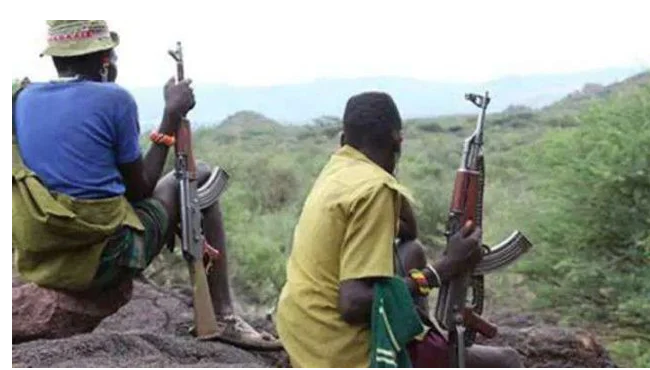
At least nine persons have been killed in fresh attacks in Barkin Ladi, Riyom and neighbouring communities in Plateau State between Saturday night and Sunday morning, triggering tension and evacuation of women and children.
Five of the victims were passengers travelling to Gana-Ropp in Barkin Ladi Local Government Area when they were attacked on Saturday night, while two others, including a pastor, were reportedly killed on their way to church at Dorowa Babuje yesterday morning.
A woman was also reportedly killed at Baten Wereng in Riyom LGA on Saturday night, September 19, while another person was killed at Ratyidi in Fan District.
Several cattle were also reportedly killed or stolen at Dorowa Maranba and the Kantoma axis at about 3 a.m. on Sunday.
National President of the Mwaghavul Development Association, MDA, Bulus Dabit, confirmed the killing of the five persons at Gana-Ropp, condemning the attack and calling on security operatives to arrest the perpetrators.
Pyem Youth Leader in Gana-Ropp, Ukasha Garaba, said: “We evacuated the corpses of five persons from Gana-Ropp.
They were passengers who were travelling as labourers.
”Spokesman of the Berom Youth Moulders, BYM, Rwang Tengwong, also confirmed the attacks and condemned the killings, describing them as worrisome and unacceptable.
Meanwhile, tension has gripped Dorowa Bubuje community in Barkin Ladi following renewed gunshots reportedly heard from the direction of Kantoma, forcing women and children to flee to safer locations.
A community member, Lawrence Shong, said: “As I speak to you, at about 12:15 p.m. on Sunday, we are still hearing sounds of gunshots. Women and children are currently being evacuated because of the ongoing attack.”
Tengwong, who was at the community, said: “Military personnel have been drafted to the community, and what we need now is sustained security deployment to protect the people and prevent further attacks.”
Secretary of the Miyetti Allah Cattle Breeders Association of Nigeria, MACBAN, in Barkin Ladi, Gambo Abubakar, also confirmed reports of cattle being stolen in the area and urged security agencies to investigate.
Reacting to the attacks, Plateau State Governor, Caleb Mutfwang, on Sunday reaffirmed his administration’s commitment to protecting lives and property.
Mutfwang, who spoke amid renewed attacks in parts of the state, said he would not abandon his responsibility of securing the people, insisting that Plateau would not be defeated by violence or the gun.
The Governor spoke at the 2026 Plateau Annual Convention of the General Council of the Assemblies of God Nigeria, North East Zone, held at the Assemblies of God Nigeria, Jos District Headquarters, Gyel, along the Bukuru Expressway, Jos South Local Government Area.
The convention was held under the theme, “Breaking Barriers into Your Next Level.”
Mutfwang said his administration had continued to work with security agencies to confront perpetrators of violence and restore lasting peace across the state.”
“I cannot abandon my responsibility of securing the people of Plateau State. We will protect our people with all that we have, within the ambit of the law. Plateau State will not be defeated by violence or the gun. We must remain united because our collective strength is critical to overcoming the challenges confronting us.”
“We are ready to die here,” miners return to site
That was the grim declaration of some teenage and adult miners who returned to the M.I. Wushishi mining site in Minna, Niger State, even as the mass arrest of suspected illegal miners was still underway, insisting that they had no other means of livelihood.
The miners returned to the site despite the arrest of scores of their colleagues by the Nigeria Security and Civil Defence Corps, NSCDC, and the subsequent deaths of 37 of those detained.
Many of the miners, including boys, women and adults, were seen working at the site on Saturday, digging for gold with shovels, picks and other hand tools.
Some of them said they had returned to the mining site on the same day the NSCDC carried out the mass arrests, arguing that abandoning mining would leave them without any source of income.
Their return came after the NSCDC conducted operations around the Lt. Gen. Mohammed Inuwa Wushishi Estate in Minna on September 15 and 16.
The corps said the operation led to the arrest of suspected illegal miners.
Suberu Aniviye, the suspended NSCDC commandant in Niger State, subsequently said “scores” of the detained suspects were found dead in the early hours of Thursday following a suspected outbreak of disease.
However, the deaths did not stop some miners from returning to the site.
During a visit to the M.I. Wushishi mining site on Saturday, no security personnel were seen in the area, while miners continued their activities.
Some scooped loose soil into sacks and pans, while others used a flowing stream to separate the excavated material. Piles of freshly dug earth and muddy soil were scattered across the site.
One of the miners, Salisu DanMallam, said he was not at the site when the arrests were made but stayed away for two days because of the NSCDC operation.
“I wasn’t here when the incident happened on Monday and they made the arrest,” he said.
“I did not come out again since they made the arrest. I was not here on Tuesday and Wednesday because of the way the civil defence raided and that was why I did not come out.”
DanMallam, who said he had been mining in the area for more than 15 years, said staying away from the site had immediately affected his livelihood.
“If you don’t come out for a day or two you will feel it because there are no profitable jobs,” he said.
He said the miners had developed close relationships over the years, describing them as a family despite not being related by blood.
“We just treat each other like family here,” he said.
“I don’t have direct blood among those who died in the custody of NSCDC.”
DanMallam said he was still unable to establish the number of miners who had died or remained in detention following the arrests.
“I have not ascertained the number of people who are dead or alive. I know that some people were arrested but I haven’t seen them,” he said.
He also said miners in the area avoided digging deep into the earth because of the risk of landslides.
“Even if we dig, we don’t dig beyond our knee level. We don’t dig much because of landslide,” he said.
DanMallam said he also worked as a driver for a block-making business but found the job unprofitable compared with mining.
Another miner, 26-year-old Buhari Rabiu, said he had spent about two years working at the site.
Rabiu said he and others fled the area after receiving information that NSCDC officers were approaching.
“I was informed earlier that the officers were coming. One of the women informed us, and we left,” he said.
“Not long after we left, we heard that civil defence was arresting us.”
Rabiu also alleged that he had previously been arrested and assaulted by NSCDC personnel during a raid on suspected illegal miners.
He claimed that he sustained injuries during the encounter and was taken to hospital for treatment before his release after his parents intervened.
“When my parents wanted to bail me, they insisted that NSCDC must treat me. They took me to the hospital to stitch my wounds,” he said.
Rabiu further alleged that N120,000 was collected for his release.
He also alleged that one of his friends was shot at close range by NSCDC personnel during an encounter with miners.
“They did not even want to grant me bail. It was barely four weeks ago. I was there for four days at the time. They did not grant me bail until my relative arrived,” he said.
Rabiu added that his involvement in mining had prevented him from working as a truck pusher at the market. (Vanguard)
-
 News3 days ago
Soludo frees jailed Akwa Okuko tiwara aki
-
Uncategorized3 days ago
Gunmen kill popular politician
-
Editorial1 day ago
Why Nigerian Graduates and Youths Are Jobless — and Increasingly Vulnerable to Crime and Other Vices
-
News3 days ago
Appeal Court upholds NDC registration, overturns Lokoja ruling
-
News3 days ago
FG suspends NSCDC Commandant over miners’ deaths in custody
-
Uncategorized3 days ago
NSCDC orders probe as 40 illegal miners die in custody
-
News2 days ago
Lecturer arrested over ‘WhatsApp post’ on Kogi road project
-
News23 hours ago
Woman allegedly kills husband over plans to marry second wife