News
Gov Mbah seeks IFAD’s partnership for establishment of world-class rice mills in Enugu

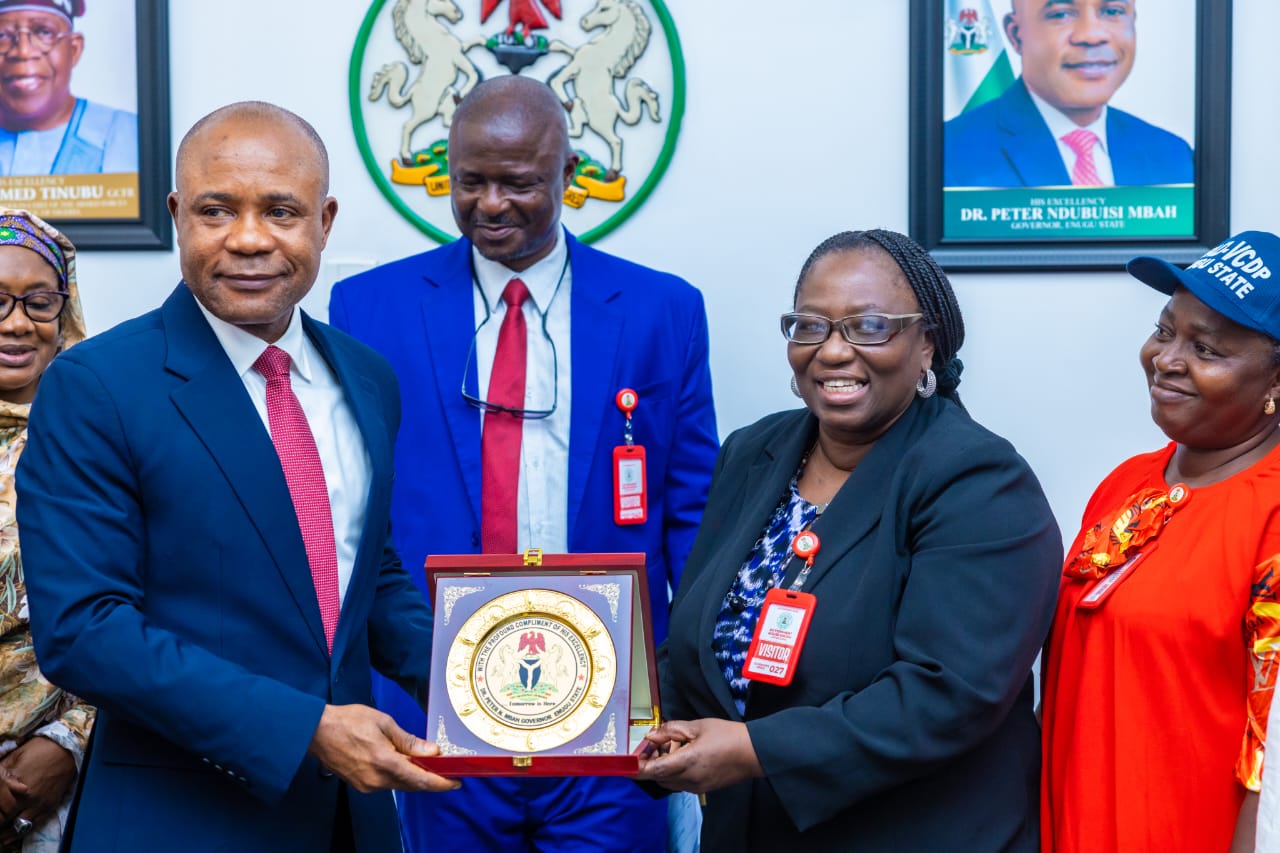
• IFAD extols governor’s Commitment to Fighting Rural Poverty
The international Fund for Agricultural Development, IFAD, a specialised international agency of the United Nations, UN, for eradicating poverty and hunger in developing countries, has commended the Dr. Peter Mbah administration for its commitment to fighting rural poverty in Enugu State.
It also said the prompt release by the administration of the N274 million counterpart fund for IFAD’s Value Chain Development Programme (VCDP) would ensure the effective continuation of the programme in Enugu State.

This was even as Governor Peter Mbah made a case for increased funding to boost intervention in the provision of access roads and world class rice mills for farmers in the state.
The IFAD Country Director for Nigeria, Mrs. Dede Ekoue, gave the commendation during a courtesy visit to the governor on the sidelines of the launch of the 10th supervision mission for the IFAD/VCDP development programme in Enugu State.
She said the programme in Enugu State was reaching more than 5,000 families, among which more than 50 per cent were women, while 30 per cent were young farmers, producers, processors and traders.

“The time is really a positive time because you have taken an action that is strong for this programme by ensuring that all the counterpart fundings are being released and it is really important because it will allow the programme to scale up its impact.
“This release of the counterpart funding demonstrates your strong commitment to fighting rural poverty because we know that your agenda is to have zero per cent poverty in your state.
“This counterpart funding payment, also, is a clear signal of your determination to re-energise agriculture and agro-industry in general.
“We are here to express our deep appreciation to you for this, and we want to renew IFAD’s commitment to work closely with all the partners involved, to scale up the impact of this programme”.
The IFAD Country Director said the programme would continue to leverage on the strength and services provided by the Enugu State Government as well as the strong investment of the farmers, producers, and processors to succeed.
On his part, Dr. Mbah reiterated the commitment of his administration to ensure the enhancement of income for rural dwellers, create food security, and have enough to export to the world.
“Beyond food security, we are also looking at exports. We want to make Enugu State the export hub for food.
“So, the objective of the IFAD/VCDP programme in general is something that we are very much interested in, and which is why we spared no time in making sure we put in place our counterpart funds because we have made humongous projections of where we want to see Enugu in the next 4 to 8 years.
“A lot of that growth will come from the agriculture and agro-allied industrialisation sector. We believe that with the set of partnerships we have with IFAD, this will be realised.
“We want to unlock our rural economy, and we want to scale up our production; and in scaling up our production, it means that we will have to add value to the things we are producing, which is why the VCDP is a welcome programme for us”.
He however appealed for more funding by IFAD to scale up agricultural production and value-addition in the state.
“We have a risk factor being access to the farms, as most of the post-harvest losses that we have to deal with are largely because of access.
“We see a lot of efforts from the state government, but certainly, we are also expecting that we are going to get support from you in constructing these access roads to the farmlands so we can expand our scale, but above all, be able to easily move those produce outside without much worries.
“We are also looking at expansion in terms of IFAD coverage. You are intervening currently in five local government areas. So, we are hoping that this would be expanded because our plan is to scale up production across the state. We are building land banks across the local governments. We are also zoning these land banks, and positioning them for different crops. I know that your bias is cassava and rice, and we are quite ambitious on those two crops as well”.
The governor equally sought the intervention of IFAD in building world class rice mills across the State, pledging the readiness of his administration to continue to provide the needed counterpart funds to effective partnership with IFAD and other international development agencies.




Former Deputy Speaker of the House of Representatives and Chairman of the Governing Board of the South-South Development Commission, SSDC, Chibudom Nwuche, has urged the Federal Government to grant amnesty to repentant cultists and militant youths in the Orashi area of Rivers State who are willing to lay down their arms and embrace peaceful and productive lives.
Nwuche also called for the rehabilitation, reorientation and reintegration of such youths into society, saying the initiative would help restore peace and security to the troubled communities.
The Orashi area comprises Ahoada East, Ahoada West, Abua/Odual and Ogba/Egbema/Ndoni local government areas of the state.
Nwuche made the appeal through his representative, Chief Kingdom Ajugo, at the commencement of the 2026 Upata Folklore, Ele, at Ula Upata, Ahoada East Local Government Area, on Tuesday.
He expressed concern over the deterioration of security in Ahoada and other parts of the Orashi region, saying the area had witnessed killings and various forms of criminality.
He recalled the gruesome killing of the then Divisional Police Officer, DPO, late CSP Bako Amgbashim, whom he described as a dedicated, intelligent and gallant police officer.
According to him, several appeals have been made to Rivers State government for an amnesty programme for repentant youths in the area, with no action taken.
Nwuche, therefore, appealed to the federal government, particularly the Office of the National Security Adviser, ONSA, headed by Mallam Nuhu Ribadu, to consider an amnesty programme for repentant cultists and violent youths.
He said the programme should include proper rehabilitation, reorientation and reintegration measures to enable beneficiaries become productive members of society.
He also appealed to youths still involved in cultism, kidnapping, robbery and other criminal activities to abandon violence and embrace legitimate livelihoods.
Related News
2027: APC govs divided over Wike, Uzodimma, AbdulRazaq’s feud
Nigeria must process agro commodities to boost export earnings — Stakeholders
Fish import bill drops 14% to N167bn in Q2’26 – NBS
“Those who are still carrying guns and killing our people indiscriminately should stop and accept amnesty and be ready to be reintegrated into society,” he said.
Nwuche said the predominantly farming and trading Ekpeye people should be able to carry out their legitimate businesses without molestation, harassment or fear.
He said hundreds of Ekpeye people had lost their lives to cultism and related violence over the years, declaring that the situation must end.
He urged traditional rulers, community leaders, government and the people to work together to restore peace, insisting that Ekpeye land could no longer be allowed to become a haven for criminals.
Urges Ekpeye unity
Nwuche also urged Ekpeye traditional rulers to provide exemplary leadership and work together to advance the interests of the people.
He appealed to the people of Upata to support their monarch, Eze (Dr.) Felix E. Otuwarikpo, Eze Igbu Upata III, and preserve the cultu ral heritage of the kingdom.
He described the annual Upata Folklore as an important platform for promoting unity, culture and hospitality among the people.
The monarch had earlier declared the 2026 celebration open, describing it as an enduring tradition through which the people celebrate their culture and heritage following the harvest season.
Use your votes wisely in 2027
On politics, Nwuche urged the people of Ekpeye to vote wisely in the 2027 general elections, saying they should support politicians who had demonstrated commitment to the development of the area.
“We have seen and known all those seeking our votes, and I will therefore urge you not to waste your votes but to support those who have shown attention and developed Ekpeye land,” he said.
Nwuche also spoke in support of President Bola Tinubu’s second-term bid and the political platform associated with FCT Minister and former Rivers State governor, Nyesom Wike.
He said he would, at the appropriate time, tour Ekpeye and the wider Orashi region to mobilise support for the political coalition led by Wike.
He recalled projects executed during Wike’s tenure as Rivers State governor, saying they remained significant to the development of Ekpeye land.
The event attracted traditional rulers, chiefs, community leaders, women and youth groups, students and representatives of Ahoada East and Ahoada West local governments. It featured cultural displays, traditional dances, goodwill messages and presentation of gifts to the monarch, chiefs and participants.

The Chairman of the Economic and Financial Crimes Commission (EFCC), Ola Olukoyede, on Wednesday alleged that some pilgrim boards have been involved in corrupt practices in the country.
Olukoyede stated this at the Inter-Religious Council meeting in Abuja and the public presentation of the commission’s inter-faith manual to religious bodies.
While speaking about past investigations carried out by the commission, the EFCC chairman spoke on how monies released by government for both Christian and Muslim pilgrimages were siphoned.
He urged Christian leaders to use their platforms to champion the anti-corruption fight, explaining that the moral dignity of honest living must return through preaching.
Olukoyede also underscored the importance of the inter-faith manual in addressing topical issues that affect religious adherents.
The EFCC, therefore, urged religious leaders to deploy their influence to sharpen the conscience of their faithful as part of Nigeria’s anti-corruption campaign.
The leaders of the two major religions in the country, Sultan of Sokoto, Muhammad Sa’ad Abubakar, and President of the Christian Association of Nigeria, Rev. Daniel Okoh, in their separate remarks, emphasis end the importance of fostering unity for a better Nigeria and leading the effort against corruption in the country.
The Executive Secretary of NIREC, Prof. Cornelius Omonokhua, said the second edition of the anti-corruption preaching and teaching manual was developed through the Interfaith Anti-Corruption Advisory Committee of the EFCC.
He said the manual and facilitators’ guides were designed to assist Christian and Muslim preachers in communicating authentic religious teachings against corruption while promoting peaceful coexistence.
Omonokhua said, “No nation can flourish in the face of corruption at all levels,” adding that a religious leader involved in corrupt practices could not claim to uphold the teachings of his faith.
Also speaking, the Secretary to the Government of the Federation, George Akume, who represented President Bola Tinubu, said religious leaders and other stakeholders had a role to play in addressing insecurity and other challenges confronting the country.
Akume said violence, banditry, kidnapping, communal clashes and terrorism had left many Nigerians afraid, including parents who were reluctant to send their children to school.
He said religious leaders, traditional rulers and the government must work together to counter narratives of division and conflict.
The event was attended by the President of the Christian Association of Nigeria, Rev. Daniel Okoh; the Sultan of Sokoto, Alhaji Muhammad Sa’ad Abubakar; former JAMB Registrar, Prof. Ishaq Oloyede; the Emir of Zazzau, Alhaji Ahmed Nuhu Bamalli; and the Shehu of Borno, Abubakar Umar El-Kanemi, among others.
The EFCC has previously identified engagement with faith-based organisations as part of its preventive anti-corruption strategy, including the development of interfaith manuals for Christians and Muslims.
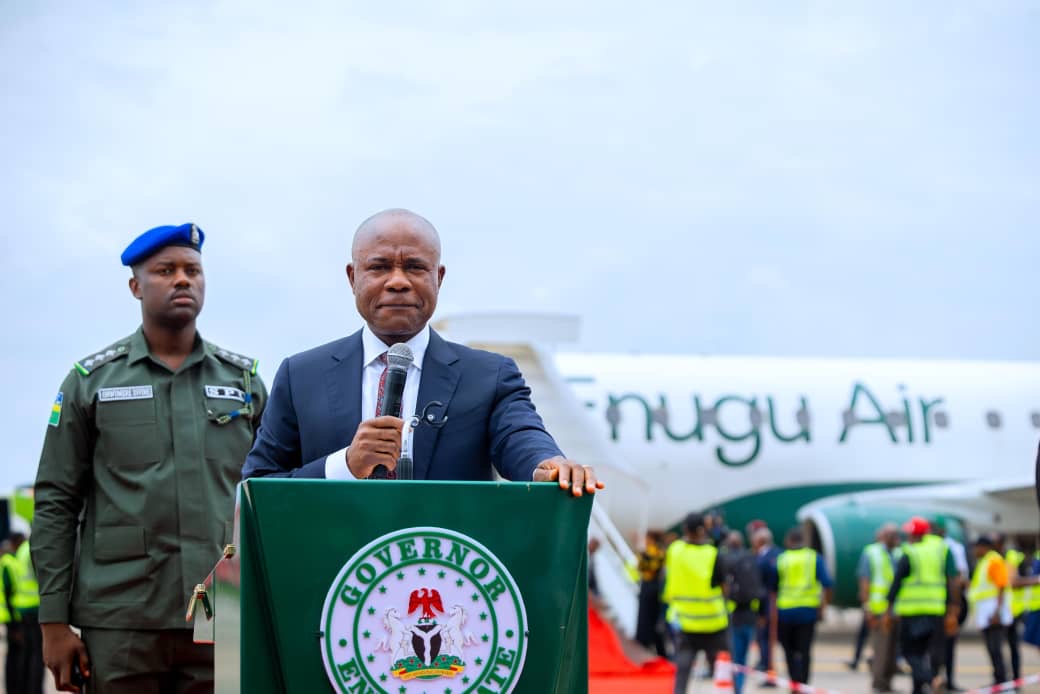
• Enugu Air CEO: Enugu becoming a gateway
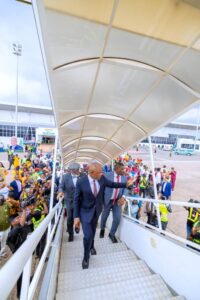
The Governor of Enugu State, Dr. Peter Mbah, has flagged off the first-ever international service by Enugu Air, describing it as a major milestone in his administration’s vision to grow Enugu State into a major aviation hub and make it the preferred destination for investment, business, tourism, and living.
Speaking at a brief ceremony at the Akanu Ibiam International Airport, Enugu, on Wednesday, Mbah, who heaped commendations on the leadership of the state-owned airline for the fast growth of Enugu Air, said it was not an isolated story, but a part of connecting the dots as his administration strives to grow Enugu State into a $30 billion economy.
“Months ago, right here, we watched Enugu take to the skies. In just barely six months after a rigorous regulatory process, Enugu Air obtained her Air Operator’s License. This is not a mean feat.
“Today, 14 months after, we can see that dream flying beyond our expectations, as Enugu Air is one of the fastest-growing airlines in Nigeria, without a doubt.
“But we did not conceive of Enugu Air as a bragging right or because of the clamour, or to gain some political acclaim. Enugu Air is part of the masterplan to make Enugu State the premier destination for investment, living, business and tourism. For us, Enugu Air is part of connecting the dots,” he stated.
Mbah described Enugu Air as a campaign promise kept, saying the Enugu–Douala service was the beginning of many more international flight operations to many parts of the world.

“What you are seeing here today is performance above promises. So, we ask you to judge us by the things we have promised and have delivered to you.
“Besides, today is Douala, but I am hoping tomorrow, we are not only going to be talking about the continent of Africa, we will be talking about Enugu to the world,” he added.
He thanked President Bola Tinubu “for consistently demonstrating his commitment to aviation infrastructure and for the support he is also giving to the states to enable us to create businesses like Enugu Air,” commending also the Minister of Aviation and Aerodrome Development, Festus Keyama, SAN; and the agencies under him such as the Federal Airports Authority of Nigeria (FAAN) and the Nigerian Civil Aviation Authority (NCAA) supporting Enugu Air’s growth and making Nigeria a standard bearer in the African aviation industry.

Speaking, Enugu Air CEO, Capt. Tolu Ita, said Enugu Air was not merely launching a flight, stressing, “we are launching a new chapter.”
“This is a chapter in which Enugu is no longer simply where a journey begins or ends. Enugu is becoming a gateway.
“Today, much bigger than an aircraft will be moving across our skies. Opportunity will be moving. Business will be moving. People will be moving. Ideas will be moving. And Enugu will be moving with them. This is what makes today so significant.
“Enugu Air was never built with the vision to simply put aircraft in the sky. The vision was to build an airline that connects people, connects markets and connects possibilities.
“We began by strengthening our domestic network — connecting Enugu with Lagos, Abuja, Port Harcourt, Kano, Owerri, Asaba, Benin City and Warri.
“Today, we take our first major step beyond Nigeria. Enugu to Douala. Nigeria to Cameroon. The Southeast to Central Africa. And this is only the beginning.
“Our ambition is to continue building a stronger regional network across Africa, while progressively opening the door to wider international markets,” she said.
In growing Enugu Air, Ita reaffirmed the airline’s responsibility and commitment to authorities, passengers, and all stakeholders, upholding the highest operational and ethical standards.
In her goodwill message, the Managing Director/CEO of the FAAN, Mrs. Olubunmi Onabanjo-Kuku, said Enugu Air’s inaugural international flight was “a strong statement of Nigeria’s growing capacity to connect7 people and businesses across West and Central Africa.”
Represented by Mrs. Onyeka Udenze, the7 FAAN DG said, “Akanu Ibiam International Airport now takes a firm step as a regional hub.”
While congratulating Enugu Air for the fast growth in 14 months, she assured that FAAN remained committed to providing the infrastructure, safety standards and support that make such services possible.
The DG of NCAA, represented by the Director of Air Transport Regulations, FAAN, Mrs. Olayinka Babaoye-Iruobe, said connecting Enugu to Douala directly represented would create opportunities for increased trade, investment, tourism, and movement of people, while strengthening social and economic ties between Nigeria and Cameroon.
In his welcome address, the Commissioner for Trade, Investment, and Industry, Dr. Sam Ogbu-Nwobodo, said the new service to Douala marked a monumental leap forward in the state’s trade, investment, and economic integration strategy.
“For decades, the vibrant traders, manufacturers, and entrepreneurs of Enugu and the broader region have navigated complex transit routes to access Central African markets.
“Today, that barrier is dismantled. This direct link directly advances our goal of transforming Enugu State into a premier regional hub for commerce and industrial development. We are now effectively bridging markets, shortening supply chains, and unlocking unprecedented opportunities for cross-border commerce across Central and West Africa,” he said.
The Maiden flight, which departed Akanu Ibiam International Airport in the early hours of the afternoon, touched down safely at the Douala International Airport where it was well received by the Cameroonian authorities in a brief ceremony before it returned to Enugu on the history trip.
-
 Politics3 days ago
WHEN PRIVACY BECOMES CONTENT: The Dangerous Normalisation of Leaked Private Conversations
-
News2 days ago
UK excludes Nigerian, Ghanaian-trained teachers from teaching qualification list
-
News3 days ago
BREAKING: Gov Mbah appoints 101 new aides
-
News2 days ago
Nigerian cleric flees after body found buried in Cameroon church
-
Opinion3 days ago
Who is in Charge of Nigeria?
-
Business2 days ago
Enugu Air Launches New Website
-
News2 days ago
Kidnapped female Police officer found dead in Ebonyi
-
News1 day ago
NSCDC arrests truck driver, two others for pipeline vandalism in Abuja