Health
Palliative poor Nigerians need is food not provision of condom — Ogah


Member representing Isuikwuato/Umunneochi Federal Constituency of Abia State, Rep. Amobi Ogah has said the call on President Bola Tinubu to use condoms for palliative for the poor as a measure to prevent the spread of HIV/AIDS is unnecessary.
Ogah also expressed gratitude to the leadership of the House for naming him the chairman of the Committee on HIV/AIDS, Tuberculosis & Malaria, saying it is an opportunity to contribute to the development of Nigeria’s health sector.

Featuring on TVC’s legislative programme, Hallowed Chambers monitored by ABN TV, Ogah said the most suitable palliative for the poor at this moment who are affected by the removal of fuel subsidy is food and measures that will ameliorate the economic hardship confronting many families and not the provision of condom.
Ogah, an expert in oil and gas noted that despite being relatively new in the field of his committee, he is poised to make the best out of the privilege to advance effective service delivery in health sector.
“I’m glad though I never expected to be chairman of that committee”, he stated. “It’s an honour to me, an honour to learn, it’s an honour to save lives, an honour to be part of people that will improve our health sector”, he added.

The lawmaker noted that since he was named chairman of the committee, he had embarked on a study to bring new innovative ideas in delivering this assignment.
While noting that it requires a political will to entrench a permanent turnaround in the sector, the Abia lawmaker emphasized that he has engaged some consultants who will offer technical support in discharging the mandate of the committee.
Hon. Ogah while decrying the endemic of fake drugs in circulation, said it is largely attributable to why malaria has become a hydra-headed health challenge in Nigeria.
“I can tell you that out of every ten Nigerians, eight are suffering from malaria. It’s a very serious issue.
“Anything I put my head to, I do it very well. At a point I started thanking God, maybe there are lives He wants me to go and save out there.
“With the robust plan we have, in the shortest period of time, we are going to expose a lot. From the consultations we have carried out, we are poised in making a change. It requires a political will and that will is there”, he stated.










…Set to launch hospital, targets large share of medical tourism
_…Facility attracts outpouring of interest from diaspora medics
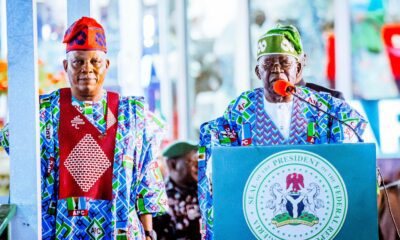
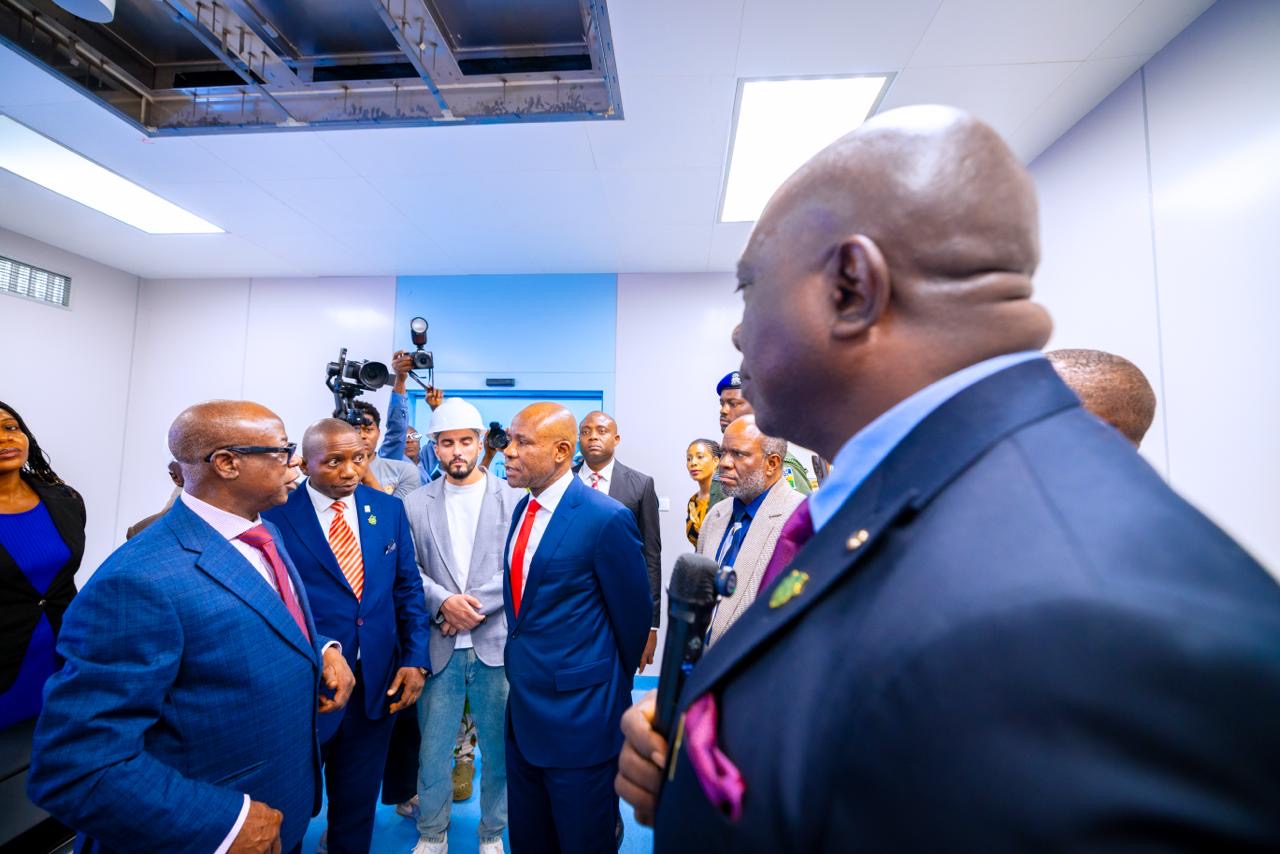
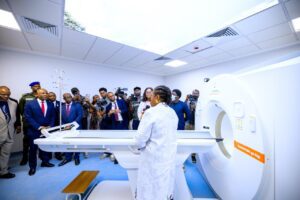
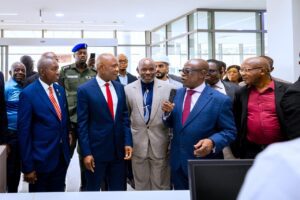
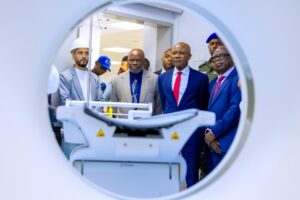
Ahead of the imminent inauguration of the Enugu International Hospital, Governor Peter Mbah of Enugu State has undertaken a tour of the facility, declaring that Enugu State was ready to welcome the world.
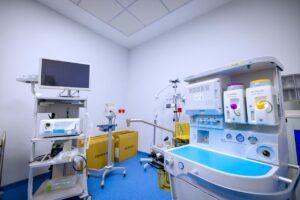
Mbah said the hospital was now fully installed with state-of-the-art medical equipment and would help to reverse medical tourism out of the country, ensuring that the state secures a large chunk of the multibillion-dollar market.
Fielding questions from newsmen on Thursday evening after a pre-launch walkthrough of the facility situated at Rangers Avenue, Independence Layout, Enugu, Mbah said the hospital was a product of a deliberate health agenda.

“If you recall our manifesto during our campaign for office, we made it clear that we were committed to making Enugu a medical tourism hub on the continent.
“We knew the size of that market and wanted to have a good share of that market. But we knew also that it was never going to be wished into existence.
“We knew that we needed to do things differently and build a world-class facility and, most importantly, attract top-notch professionals to provide services. We cannot wait to welcome the world to Enugu,” he stated.
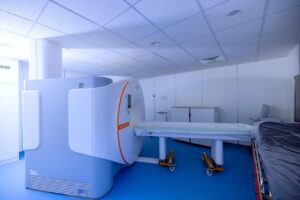
Mbah regretted that there was just about one functional location for PET Scan services in the country, but noted that the hospital would now bridge the wide gap in advanced medical services in the country.
“We have quite a lot of Ndi Enugu, and Nigerians who travel to India, Turkey, the United States, and the United Kingdom to seek medical attention. So, what we are asking for is just a fraction of what they would have spent overseas for the same quality services,” he said.
“We felt that if we want to compete globally, then we must also have the ability to provide advanced oncology services. Therefore, we are not only able to give you an advanced diagnosis, but we’re also able to treat. So, both diagnostically and therapeutically, the place to come to is right here in Enugu.
“We have also received an outpouring of interest from our healthcare professionals in the diaspora. Some of them were doing well here at some point and now went overseas to practice. They are now happy to come back home and give back to the society that nurtured them. We are excited about that,” he stated.
He added that the Enugu International Hospital would equally engage in telemedicine as one of its areas of strength.
“Of course, you may be in love with the building and the equipment, but you should also engage professionals from across the globe. You see this in our commitment to telemedicine, digital and electronic medical practices and equipment,” he explained.
He emphasised that the hospital was part of his administration’s agenda for the health sector as a major part of his government’s vision to grow the state’s economy from $4.4bn to $30bn, and ensure high quality and increased life expectancy for the people.
“If you look at our intervention in the healthcare sector, from the primary healthcare to the secondary, tertiary, and now the quaternary, it is intentional.
“We are investing heavily in security and healthcare because we know that these are what investors would ask you: ‘Am I safe? If I fall sick, would I have a place where I can get quality medical attention?’” he said, adding that the hospital would also create jobs.
Speaking, the Chief Executive Officer, Prof. Sam Agwu, listed six specialty areas the hospital would provide services in once commissioned.
“We have earmarked six specialty centres here. In the Cancer Centre, we are going to provide medical, surgical, and nuclear medicine therapeutics and diagnostics.
“Then we are going to have the Heart and Vascular Centre of Excellence to deal with all heart problems and open-heart surgery, as you may know; cardiology consultation and diagnostics, electrophysiology and arrhythmia care, coronary care and acute cardiac pathways, interventional cardiology and cath-lab procedures, heart-failure and cardiac rehabilitation clinics, and of course vascular assessment and collaborative surgical care.
“We are going to have the Neurosciences Centre where we will deal with stroke, epilepsy, brain and spine tumours, neurosurgical procedures, among others.
“We are going to have a Renal and Transplant Centre of Excellence covering full kidney, chronic kidney disease clinics, early nephrology review, dialysis support and transplant assessment.
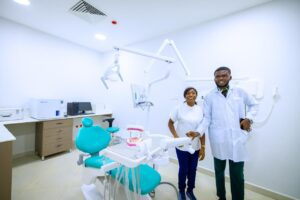
“Then, apart from all the centres of excellence, we are going to have wellness and regenerative medicine, while the usual departments that you know of – mother and child, general surgery, ENT, dental, ophthalmology, among others – will all be here.
Former Chairman of the Nigerian Medical Association, Enugu State, Dr. Sunday Nwafor, hailed the milestone, saying the hospital would promote brain gain by reversing the mass exodus of medical doctors from the country.
“Going forward, our doctors have a place of international standard where they can practice with state-of-the-art equipment and also earn well,” he said.
Mbah was accompanied by the Commissioner for Health, Prof. George Ugwu, among others.
MORE PHOTOS


Health
NAFDAC urges Stakeholders to lead vigilance on Antimicrobial Resistance, Adverse Drug Reactions
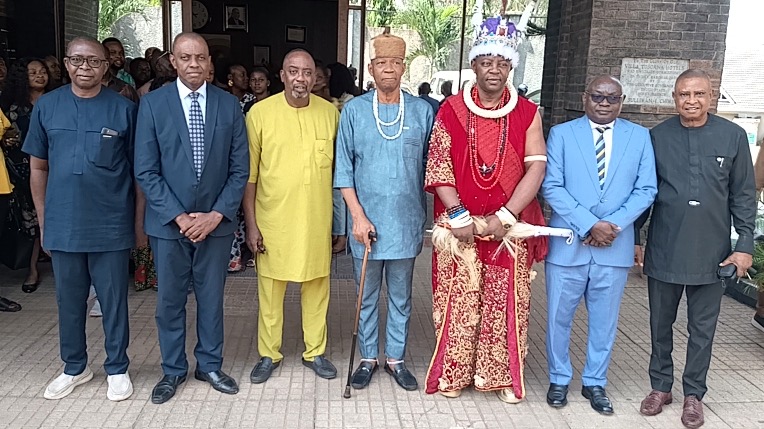
The National Agency for Food and Drug Administration and Control (NAFDAC) has called on stakeholders and Nigerians to lead vigilance against Antimicrobial Resistance (AMR) to medicines/drugs and Adverse Drug Reactions (ADR).
The Director-General of NAFDAC, Prof. Mojisola Adeyeye, made the call on during a one-day Pharmacovigilance Workshop and Stakeholders Town Hall Meeting in Enugu.
Represented by NAFDAC’s Director, South-East Zone, Dr Festus Ukadike, the director-general noted that the gravest consequences of irrational medicine use today is AMR.
She explained that the misuse and overuse of antibiotics had accelerated the emergence of resistant microorganisms that no longer respond to conventional treatment.
“This means that infections previously treatable with common antibiotics are becoming increasingly difficult and expensive to manage.
“If urgent action is not taken, antimicrobial resistance may reverse decades of medical progress and place humanity at serious risk.
“This is why Pharmacovigilance is extremely important. Pharmacovigilance refers to the science and activities relating to the detection, assessment, understanding, and prevention of adverse effects or any other medicine-related problems.
“In simple terms, Pharmacovigilance helps us ensure that medicines remain safe and effective even after they have been approved and released into the market,” she said.
Adeyeye noted that no medicine is completely free from side effects.
“However, through effective Pharmacovigilance systems, healthcare professionals and patients can identify harmful reactions early, report them appropriately, and help regulatory authorities take necessary actions to protect the public,” she said.
She said that Pharmacovigilance remained a core mandate of the agency, adding that stakeholders and general public should play active part in monitoring AMR and ADR to ensure effectiveness of medicine and treatment.
Speaking, the Chairman, Enugu State Traditional Rulers’ Council, Igwe Samuel Asadu, commended NAFDAC for the workshop, while urging the agency to put more effort in curbing sales of fake medicines in the hinterlands.
Asadu said that Pharmacovigilance was needed more in the hinterlands of the state to stop people paddling fake medicines and “selling outright chalk as medicine in villages in the state”.
He gave the commitment of royal fathers in the state in providing necessary support to NAFDAC to check paddlers of fake medicines, “as we see our people die due to their activities.”
Corroborating, the State Coordinator of World Health Organization (WHO), Dr Adaeze Ugwu, said that the organisation would continue to support NAFDAC in the agency’s resolve to strengthen food and healthcare in the country.
Also, Dr Oliver Ezemba, Chairman, Nigerian Association of Patent and Proprietory Medicine Dealers (NAPPMED), urged everybody to get concerned on the issues of AMR and ADR to guarantee quality medicines for everyone.
Ezemba called on Nigerians to imbibe the habit of reporting any irregularities observed while using a medicine to NAFDAC for proper investigation, which would serve the benefit of many Nigerians using same medicine.
The participants asked questions on AMR and ADR as well as made pledge on reporting any suspectable AMR or ADR case through the NAFDAC’s Med Safety Mobile App using their cellphone or computer set.
In the workshop, a presentation was made on “Need for Effective Pharmacovigilance by All’, delivered by Mr Chidi Uche and Mrs Ogechi Udeh, who are NAFDAC officials.

By Dr. Collins Ogbu
In the life of every society, there comes a defining moment when leadership either sustains the status quo or boldly reimagines the future. For Enugu State, that moment is now. At the centre of this transformation is Governor Peter Ndubuisi Mbah, whose administration is not merely responding to challenges in the health sector but fundamentally rebuilding it. Recent public discourse surrounding the suspension of a health assistant trainee by a private institution has, perhaps inadvertently, created an opportunity to restate a deeper truth: the Enugu State Government remains focused, deliberate, and fully committed to repositioning healthcare delivery across the state.
For years, Enugu’s healthcare system reflected a troubling pattern familiar in many subnational contexts; underfunded primary healthcare centres, overstretched personnel, aging and inadequate infrastructure, and an overreliance on private or out-of-state medical services. Rural communities were particularly disadvantaged, often forced to travel long distances for basic care. Training institutions operated with limited capacity, while secondary and tertiary facilities struggled with outdated equipment and insufficient staffing. The system was largely reactive, constrained by years of neglect and unable to meet the growing needs of the population.
Governor Mbah’s administration has decisively broken from that past. Anchored on the principle that healthcare is a right and not a privilege, the government undertook a comprehensive audit of the sector and initiated a far-reaching reform agenda. Rather than incremental adjustments, the approach has been bold and systemic; targeting every layer of healthcare delivery, from primary care to specialised services.
Central to this transformation is the rollout of 260 Type-2 Primary Healthcare Centres across all political wards in the state. This initiative directly addresses the longstanding gap in grassroots healthcare access. Where communities once depended on poorly equipped facilities or distant hospitals, modern, well-positioned centres are now being established to provide quality care within reach. This effort is further strengthened by the recruitment of over 2,250 healthcare workers, a significant intervention aimed at resolving the manpower shortages that previously undermined service delivery.
At the secondary level, general hospitals are undergoing extensive rehabilitation to restore their capacity as reliable referral centres. Facilities such as Uwani General Hospital, which once symbolised infrastructural decline, are being transformed to meet modern standards. These upgrades are ensuring a more efficient continuum of care between primary and tertiary institutions.
The transformation is even more pronounced in tertiary healthcare. The Enugu State University Teaching Hospital (ESUTH), Parklane, is experiencing unprecedented infrastructural expansion, including the construction of a twin six-floor Laboratory and Clinical Complex, a seven-floor Nursing Complex equipped with advanced diagnostic facilities, and a modern Accident and Emergency Department. These developments represent a significant leap from the limitations of the past, positioning the institution as a centre of excellence in both service delivery and medical training.
In the area of medical education, the administration has recorded a landmark achievement with the reaccreditation of the ESUT College of Medicine and the subsequent increase in its admission quota to 350 students – the highest among state-owned institutions in Nigeria. This milestone reflects a strategic commitment to building human capital and ensuring a steady pipeline of highly trained medical professionals for the future.
Equally significant is the completion of the State University of Medical and Applied Sciences (SUMAS) Teaching Hospital in Igbo-Eno. Unlike in previous years when a single teaching hospital struggled to meet demand, Enugu now has a second fully equipped facility, with recruitment already underway to commence full-scale operations. This expansion not only improves access to tertiary care but also strengthens the state’s capacity for medical training and research.
Crowning these efforts is the nearly completed 300-bed Enugu International Hospital, a state-of-the-art, super-specialist facility designed to elevate healthcare standards and reduce the need for outbound medical tourism. For decades, many residents sought advanced medical care outside the state or country, often at great financial and emotional cost. This facility represents a turning point, offering world-class services within Enugu and reinforcing the state’s emergence as a healthcare hub.
Amid these sweeping reforms, the government has also demonstrated a strong commitment to transparency and responsible governance. By clearly distancing itself from the internal disciplinary processes of a private institution while engaging relevant stakeholders, it underscores respect for institutional autonomy alongside responsiveness to public concerns.
What is unfolding in Enugu today is not merely policy execution but a comprehensive transformation. The contrast between the past and the present is both clear and compelling; where there were once gaps, there is now structure; where there was decline, there is now renewal. The state is moving from a system defined by limitations to one driven by vision, investment, and measurable progress.
While challenges inevitably remain, the trajectory is unmistakable.
Enugu State is no longer managing a fragile healthcare system; it is building a resilient, modern, and inclusive one. In the final analysis, Governor Peter Ndubuisi Mbah’s strides in the health sector are redefining not just infrastructure and policy, but the very experience of healthcare for Ndi Enugu, laying the foundation for a future where quality care is accessible, reliable, and sustainable for all.
• By Dr. Ogbu is a Senior Special Assistant, SSA to Enugu State Governor on Strategic Communications
-
 International3 days ago
Canada invites 1,000 candidates to apply for permanent residence
-
News3 days ago
BREAKING: Gunmen attack Adeleke’s convoy in Osogbo shortly after receiving Certificate of Return
-
Uncategorized3 days ago
2027: Obi unfolds agenda as campaigns begin
-
News3 days ago
Lagos shuts churches over noise pollution
-
News3 days ago
Two shot as police attempt to arrest suspects in Anambra
-
News3 days ago
Even if Tinubu appoints Seyi as INEC chairman, he’ll be defeated in 2027 — Dalung
-
News6 hours ago
APC Chairman slumps, dies during reconciliation meeting in Kogi
-
News2 days ago
Alleged Drug Trafficking: Tinubu seeks 10-day delay in release of records