Opinion
All eyes on the judiciary billboards and hushing the cry for justice – By Law Mefor


It is political and self-incriminating to destroy billboards for reading “All eyes on the judiciary.”
This is a message of patriotism dressed up for the general good, which all honourable people should identify with. Therefore, it is shocking that top officials of the Advertising Regulatory Council of Nigeria (ARCO) have been suspended and their unit disbanded following the “All eyes on the judiciary” billboards that surfaced in Abuja and a few other states.

The statement is targeted at no one and solely calls on the judiciary to exercise caution and extreme diligence in carrying out its duties because the issues at hand, particularly the presidential election petitions, are among the most divisive in the country’s electoral history.
Nobody wants to see Nigeria burn for the simple reason that the judiciary appeared callous and rendered decisions that most Nigerians could not comprehend. A judgement must not only serve justice but must also appear to have done so to be considered just.
Normally, ARCO should convey such a message as part of its social corporate responsibility. Such messages are provided by tobacco companies: “Smokers are liable to die young”; “Drink responsibly” is yet another common message of CSR, this time from Nigeria Breweries.

Some patriotic Nigerians hosted the all-eye on judicial message, which was something that ARCO should have done as CSR. But rather than praising these Nigerians, ARCO denounced the initiative as though it’s urging the judiciary to act against someone. This is untrue. The message is merely calling for judgment with justice.
Now that I think about it, Nigerians easily recall that the Independent National Electoral Commission (INEC) moved accountability from itself to the judiciary. The renowned advice to “go to court” was given by Professor Mahmood Yakubu, the head of the Commission. Out of the 18 political parties that presented candidates in the 2023 presidential election, five urged their supporters to follow the INEC’s directive and headed to court.
Prof Mahmood Yakubu intentionally shifted Nigerians’ focus away from INEC and towards the courts when he advised political parties and their candidates to file lawsuits. In other words, it was INEC and its chairman who originally offered that phrase—”all eyes on the judiciary”—and Nigerians have since followed suit by focusing their attention there.
Some patriotic Nigerians had put up a few billboards here and there, repeating the same advice: “All eyes on the judiciary,” to underscore the need to trust the country’s judicial system and for the bench not to let down their guards.
We must permit the judiciary to carry out its duties and this has been the case. Aside from the lament of Her Lordship Ngozi Azinge of the Kano State Tribunal, who alerted Nigerians that she was being pursued with a sack of bribe money, the Nigerian judiciary has not complained of being tormented, let alone bothered by the unprecedented interest being displayed by some patriotic Nigerians who are urging Nigerians look up to the PEPT and Supreme Court.
I also believe that Nigerians have a right to remind the judiciary of the significance of this election. They want to remind the judiciary that this election cannot be decided by technicalities, such as making a candidate who finished fourth in a gubernatorial race the first and victor.
An obvious breach of various regulations governing political parties in Nigeria is when some persons who did not participate in party primaries are currently sitting in the national assembly. Or, lucid legal issues are obscured by a fog of technicalities. Thus, after navigating dubious smokescreens, a man gets identified as a lady.
There is a saying: “Expressio unius est exclusio alterius”, which means, “expressly mentioning one thing is explicitly excluding another”. When an existing law specifies what should be done, such as when the constitution requires that a winning candidate secure 25% of the vote in the Federal Capital Territory (FCT), when the law specifies that forgery and indictment disqualify a candidate, etc., when statistics demonstrate wilful falsification of numbers recorded as votes, etc. The literary meanings of these legal and constitutional clauses as understood by ordinary Nigerians are what they are looking out for, and hoping and fervently praying there should be no judicial abracadabra to obfuscate simple issues in the so-called national interest.
The men who work in legal profession consider themselves the only learned people. The rest of us experts in learning. Fair enough! Bench as the pinnacle of the judiciary needs to educate Nigerians, who are willing to learn and have been patiently waiting and admiring the two apex courts – the Presidential Election Petitions Court and the Supreme Court – where the presidential election will ultimately be dispensed with and concluded.
You can hold Prof. Mahmood Yakubu and INEC accountable for everything that happened because they started doing a great job and gave up in the closing hours by purposefully disabling IReV as Amazon witnesses testified, and by refusing to hear petitions that were lawfully presented before it prior to the final declaration of presidential election result as allowed by the Electoral Act of 2022.\
Again, if INEC and Prof Mahmood Yakubu had sought clear interpretations of the points of law from the Supreme Court even before the election, such problems wouldn’t be included in the current petitions and litigations by candidates and political parties For instance, INEC could have asked the Supreme Court for its opinion and legal position on the 25% in the FCT issue, especially after being alerted to it by a renowned Nigerian attorney, Olisa Agbakoba.
The country reached this deadlock as a result of the abdication of statutory duties by INEC. The problems relating to substantial compliance with the Electoral Act and the computation of results at various levels should be the only issues before the tribunals. But INEC’s failure to resolve critical points of law before election result declarations has now given the tribunals, particularly the PEPT and Supreme Court, additional work to do and created the anxiety heating up the polity.
Normally, the judiciary shouldn’t have any direct role in determining election outcomes. Wherever that occurs, the judiciary replaces the electorates, and it could get worse if the courts return candidates on technicalities rather than relying on the electorate’s votes. In the 2019 governorship elections, it occurred in the cases of Hope Uzodinma in Imo state and Ademola Adeleke in Osun state. Adeleke’s case was extremely pitiful. He lost simply because one of the judges hearing the case failed to act within time as required. The main factor in Hope Uzodinma’s victory was that INEC (the same INEC) failed to provide copies of annulled results in roughly 360 polling units.
This strange muddle was caused by what INEC did, which was either to upload 18,000 unreadable or blank results; to fail to upload election results in real-time from the polling units as required by Electoral Act 2022 section 64 (Procedures at Election) sub-section 4, which expressly states: “A collation officer or returning officer at an election shall collate and announce the result of an election, subject to his or her verification and confirmation that the – (a) number of accredited voters stated on the collated result are correct and consistent with the number of accredited voters recorded and transmitted directly from polling units under section 47 (2) of this Act; (b) the votes stated on the collated result are correct and consistent with the votes or results recorded and transmitted directly from polling units…”
Going by such extensive provisions of the aforementioned Electoral Act, the General Election of 2023 should rank among the best in the country’s history. Prof Yakubu and INEC were confident and prepared to deliver , inspiring much confidence, until monkey hands that appeared to be human hands intervened at the last minute.
By violating its own guidelines and ignoring the Electoral Act’s explicit prescriptions, INEC acted in a manner comparable to one making the best soup possible and then adding a plate full of salt to it so that no one could taste it. That is what turned the 2023 General Election —which ought to have been the best—into the worst one ever.
Since INEC failed both itself and Nigerians, the judiciary should be the centre of attention so that it does not also fail. There is no other option or place for Nigerians to go. The judiciary is, after all, the common man’s last resort. Why, then, do some individuals get nervous when Nigerians look at the PEPT and Supreme Court in the hope of obtaining justice? Would they rather that Nigerians seek out self-help?
Dr. Law Mefor, an Abuja-based forensic and social psychologist, is a fellow of The Abuja School of Social and Political Thoughts; drlawmefor@gmail.com; Twitter: @DrlawsonMefor.









BY EMUOBOHWO RICHES OGHENEYOMA
With the help of social media, life has become easier through the dissemination of information through platforms like instagram, TikTok, facebook, Snapchat and twitter now renamed X. Through the help of social media people have been able to learn various skills without going anywhere to acquire them.
Social media technologies appear to have affected many young people’s way of thinking so much that they even take everything as a joke, they do anything just to go viral on social media. Because of what they have watched online they no longer have respect for their elders to the extent that if you are not their parents you cannot correct them. Our youth no longer dress decent because of what they have seen or watched on social media, they want to dress just like their role model on social media. Social media has influenced our youth to embrace immoral dressing. Some influencers on social media, sometimes do not do as they have said online causing problems in the life of our youths.
Social media has led many of our youths into criminal activities like killing their loved ones just to make money and meet up with what they see online, some even start stealing to be able to buy what they see online, some even pressure their parents because they couldn’t afford that lifestyle for them. Our young girls are selling their body to men in order to buy the trending things online like clothes and phones just to meet up with social media trends.
Our youth no longer see their naked pictures and videos trending online as a big deal they even use it as a medium to go viral on social media, some even send their naked pictures to men just for money.
Students no longer take their studies serious because of social media, they want to do the latest trend on social media. They wake up every morning just to do blog, making them not to perform very well academically. They even sacrifice their night sleep which is not good medically just to watch videos on social media causing damages to their eyes from their phone screen.
Social media has made some youths to have low self-esteem, they do not have confidence in themselves because of the pressure on social media. Some youth have made attempts to commit suicide because of the pressure in social media.
I know social media has done a lot of things in the society like passing information but we cannot forget the fact that it has done more harm than good to the youths in the society. It is rare to find well-mannered youth because of the negative impact of social media. Some even start taking drugs because of peer-pressure from social media.
It has therefore become imperative for the various arms of government ans security agencies to put in place a regulatory framework that will checkmate social media abuse among the youths in the country in order to prevent or eliminate the negative consequences.
• Written by RICHES EMUOBOHWO, a 200 Level Student of Delta State University

By Samson Ezea
There is no meaningful development without infrastructure, and no infrastructure impacts the daily lives of the people more directly than roads. Roads connect communities, drive commerce, reduce travel time, improve security, attract investments, and open up rural areas for economic growth. In Enugu State today, one of the most visible signatures of Governor Peter Ndubuisi Mbah’s administration is the aggressive push in road construction and reconstruction across the state. From urban renewal projects to strategic rural link roads, the administration has continued to redefine the state’s infrastructural landscape.
Recently, I had cause to travel to Nsukka. I began my journey from Independence Layout through the Enugu–Port Harcourt Expressway and passed through Abakpa Junction. What immediately caught my attention was the impressive level of work on the second lane of the Enugu–Onitsha Expressway, which has already been opened for use, as well as the ongoing construction of the flyover bridge at Abakpa Junction.
On getting to Penoks Junction, I became even more excited seeing the extent of the dualisation project stretching from the junction down to the flyover bridge at T-Junction as part of the ongoing dualisation of the Penoks–Opi–Nsukka Road by Governor Mbah’s administration. Unlike in the past, when journeys to Nsukka were stressful and time-consuming, I arrived in less than 40 minutes.
Apart from the already completed sections, construction work is progressing rapidly on other parts of the road, particularly from the Opi Nsukka Junction axis towards Enugu. Just like every other road, Governor Mbah’s administration has constructed and reconstructed in the state, one remarkable feature of the project is the provision of proper drainage systems on both sides of the road to ensure easy flow of erosion and floodwater. This was largely absent on the old road and had contributed significantly to its deterioration over the years.
Beyond eliminating the usual traffic congestion and gridlock associated with the route, the economic benefits and long-term impact of the dualisation of this strategic road cannot be overemphasized. It is a major gateway linking Enugu State to northern Nigeria and other parts of the South-East.
Also, during the grand finale of the Tomorrow Is Here Movement, the vibrant support group of Governor Mbah’s administration, held at Owo Junction last month, I took time to travel through the ongoing 44.5-kilometre dual carriage road being constructed from scratch from Owo Junction through Ubahu down to Ikem. The road, when completed, will serve as another major access route connecting Enugu State to Northern Nigeria, while opening up several rural communities to development and economic opportunities.
Across Enugu State, from urban centres to rural communities, I have personally driven through several strategic roads either under construction or undergoing rehabilitation by Governor Mbah’s administration, roads I never even knew existed from my undergraduate days in Enugu till date.
Despite the huge backlog of infrastructural deficits inherited from decades of neglect by successive administrations, even before the creation of Enugu State in 1991, Governor Mbah’s administration has performed remarkably well in critical infrastructure development, particularly in roads, schools, hospitals, and related sectors. These projects are gradually transforming the developmental outlook of the state and positioning Enugu as an emerging investment destination.
From the outset, it was obvious that Governor Mbah came prepared for governance. This became even clearer on August 31, 2024, when he commissioned the Enugu State ultra-modern Mega Asphalt Plant, one of the best in the South-East region. The plant was established specifically to tackle the high cost and logistical challenges associated with road construction, especially asphalt production, which constitutes a major component of road projects.
The establishment of this important facility has significantly accelerated the pace and quality of road construction across the state.
Aside from occasional delays caused by the rainy season, most of the roads awarded by the administration are progressing steadily. Importantly, none of the projects awarded by Governor Mbah’s government has been abandoned. Construction activities are ongoing on virtually all of them, earning commendations from residents and indigenes alike.
Even as political activities ahead of the 2027 general elections intensify, with many politicians focusing more on strategies for electoral victory, Governor Mbah appears determined to allow his performance speak for him. This perhaps explains why the administration has continued to award more strategic road projects across the state.
Among the recently flagged-off projects is the 52.2-kilometre Nsukka–Leija–Aku–Akpakumeze–Eke-Ebe Road, inaugurated during the Enugu North Mega Endorsement Rally in May 2026. Other newly awarded projects include:
Beach Junction–Ovoko Afor Road, Nsukka
Enyichiru Barracks Junction Road, Nsukka – 1.2km
Mechanic Road Barracks Junction, Nsukka – 1.15km
Ugwuachara Road, Nsukka – 1.55km
Ezeagu–Umumba–Orie Engine Ebenebe Road – 10.1km
Enugu United Palm Plantation (EUPP) Access Road at Ibite Olo, Ezeagu – 14.5km
Umabi–Umuaga Link Road – 3.6km
Eke Obinagu–Obodo Nike–Umuode–Oruku–Aguikpa–Amaechi Idodo Road – 18.23km
Obodo Ukwu–Inyi Road – 5.6km
Ehuhe–Achi–Umabi Road – 13.05km
Amanpunato Achi–Amoli Road – 16.47km
Altogether, these projects cover over 151 kilometres of roads across different parts of the state.
These are not just ordinary roads; they are economic lifelines. They will boost agriculture, enhance rural commerce, improve access to healthcare and education, reduce travel time, and strengthen connectivity between rural communities and urban centres.
That is why it is amusing to read the propaganda and misinformation being circulated by some sponsored social media hirelings attempting to downplay the achievements of Governor Mbah’s administration in road construction. Their aim may be to score cheap political points ahead of the 2027 elections, but facts remain sacred.
Even to the blind, it is obvious and indisputable that Governor Mbah’s administration has done remarkably well in road construction and reconstruction across Enugu State. The administration has not abandoned any road project awarded so far and continues to initiate new projects despite growing political distractions.
The construction of the Mega Asphalt Plant at the early stage of the administration clearly demonstrated foresight, seriousness, and preparedness to tackle the long-standing challenge of deplorable roads across the state.
However, one undeniable reality remains: the infrastructural decay inherited over several decades is enormous.
Even if Governor Mbah were given another eight years focused solely on road construction, it would still be difficult to completely erase the backlog of dilapidated roads across the state. That is simply the magnitude of neglect accumulated over the years.
Nevertheless, the progress made so far deserves recognition and appreciation. Road construction is highly capital-intensive and requires careful planning, technical expertise, and time to ensure durability and quality delivery. Therefore, development should not only be assessed based on whether roads in one’s immediate community have been reconstructed. Governance must be viewed from a broader perspective.
In all fairness, Governor Peter Mbah’s administration has shown commitment, vision, and determination in addressing Enugu State’s infrastructural challenges. The ongoing road revolution across the state is not merely about laying asphalt; it is about opening up communities, stimulating economic growth, improving the quality of life of the people, and laying a solid foundation for future generations.
Indeed, the roads are speaking for the administration.
• Ezea writes from Independence Layout, Enugu State
Nigeria’s oil infrastructure has a habit of telling uncomfortable truths. Not just about barrels and flow rates, but about how a country chooses to value what it cannot afford to lose, and what it risks when it gets that calculation wrong.
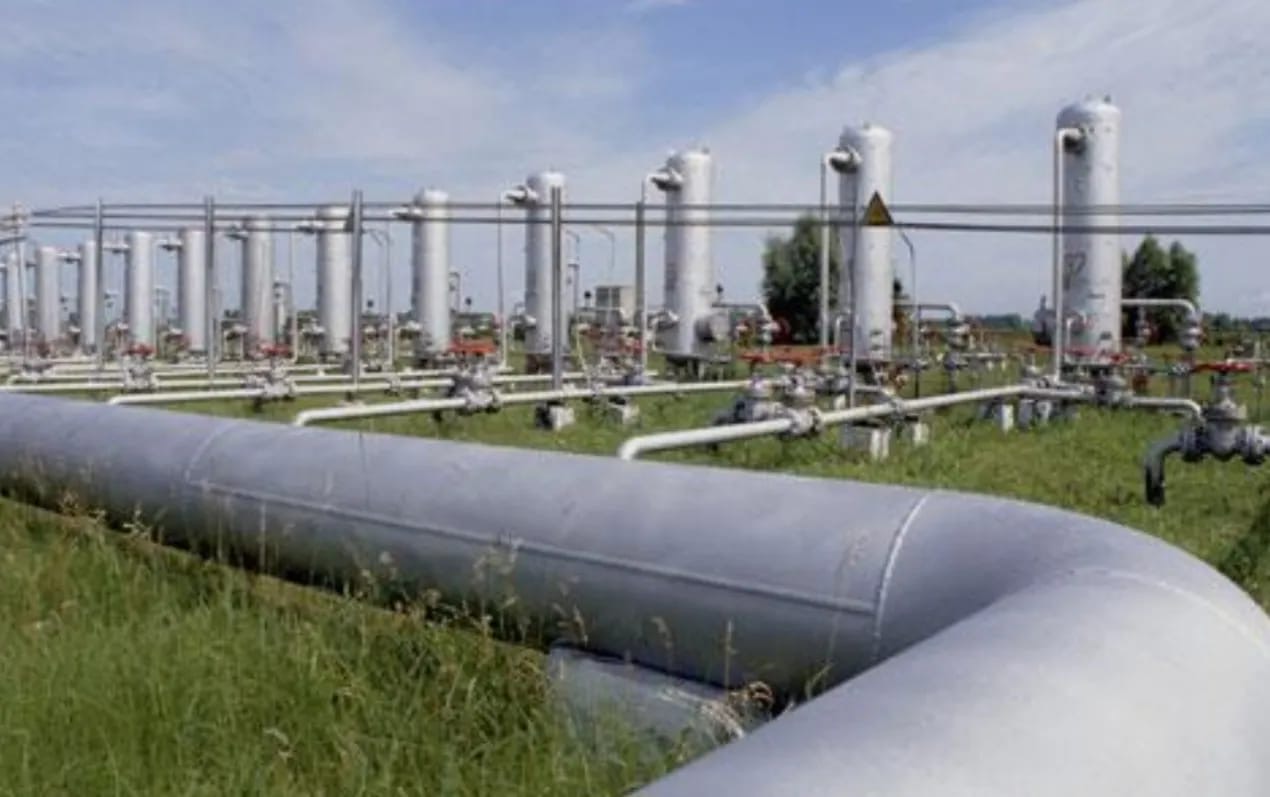
Take the Amukpe-Escravos Pipeline, for example. A syndicate of lenders, led by Sterling Bank, is pushing back against efforts to revive a collapsed transaction involving a 40% stake in the asset. Their argument is not complicated. It is rooted in numbers and contractual discipline.
To be clear, a deal that fell apart in 2024 is being reconsidered using a valuation from that same year. However, since then, the asset has proved its worth. Independent assessments now place that stake closer to $600 million. The earlier benchmark sits far below that. The gap is not cosmetic. It is material. And if left unaddressed, it becomes a cost.
The original $243 million offer did not collapse by accident. It was terminated in October 2024 after Conpurex Limited failed to meet payment obligations, breached key terms, and sought to shift risk back to the seller. By the time the Technical Committee closed the process, confidence had already drained out of it. That much is settled.
Ordinarily, that should have been the end. Instead, there are moves to return to a September 2025 approval linked to that same process. The lenders describe this as an administrative carryover. Their response is simple. Start again. Set aside the old approval. Bring in an independent adviser. Return the asset to the market and let current value speak.
What is striking is not just the position itself, but how unusual it sounds in the Nigerian context. In a system where strategic assets have too often travelled through corridors of convenience, an insistence on valuation and process can sound almost rebellious. It should not be so.
Because this is not entirely about one pipeline. It is about whether a terminated deal remains terminated. Whether contracts still mean what they say. Whether performance counts for anything once the paperwork has been filed away. And, crucially, who bears the cost when value is ignored.
The numbers, as always, are blunt. A 2025 independent valuation, referenced in the March 2026 edition of Africa Oil+Gas Report, places the 40% stake at a mid-case of $372 million, a high case of $544 million, and an upside of $641 million. These are not speculative figures. They reflect an asset that has quietly done its job in a difficult environment.
With a capacity of 160,000 barrels per day and uptime consistently above 95%, the Amukpe-Escravos Pipeline has become one of the more reliable evacuation routes in a system where reliability is often in short supply. While other corridors struggle with theft and disruption, this one works.
That fact matters a great deal. Because when an asset proves itself under pressure, its value does not stand still. It moves. To price it as though nothing has changed is not just a technical choice. It is a financial one. And every financial choice has consequences.
It says performance can be ignored. It says time does not count. It says administrative continuity can outrun economic reality. To be fair, the earlier process gave enough warning signs. Lenders questioned the assumptions. Coordination was weak. When Continental Oil and Gas stepped back, Conpurex entered without a clean transition and soon began to reopen settled terms, shifting obligations and introducing new conditions that unsettled the commercial balance. The eventual termination was not dramatic. It was inevitable.
What unsettles stakeholders now is the possibility that a process that ran its course may still shape the outcome. If a concluded transaction can reappear without a clear restart, the line between closure and continuity begins to blur. Once that line blurs, contractual uncertainty follows. And when certainty weakens, serious capital takes notice.
This is where the issue widens beyond the pipeline itself. Back in March, Africa Oil+Gas Report described the Amukpe-Escravos matter as no longer just a transaction story, but a test of how Nigeria governs, values, and safeguards strategic oil infrastructure. That reading feels even more relevant now.
Because what is at stake is not simply who acquires a stake in a pipeline. It is how the country signals to those willing to invest in its most critical assets. It is about whether value is recognised only in theory, or protected in practice. It is about whether losses are acknowledged, or quietly absorbed.
The lenders’ position is often described as resistance. It is better understood as discipline. Reset the process. Revisit the approval. Bring in independent oversight. Return the asset to the market through a transparent and competitive process that reflects present realities. Ensure capable counterparties. Align all stakeholders.
These are not extravagant demands. They are the basics. Nigeria has seen too many assets drift from promise to regret. Too many structures that once worked reduced to cautionary tales. When something works, when something proves resilient in a difficult system, the least that can be done is to treat it with the seriousness it has earned.
Moments like this do not announce themselves as turning points. They arrive quietly, dressed as routine decisions.
But they reveal everything. For an economy seeking disciplined capital and trying to rebuild confidence, the signal matters. Let the process be reset. Let valuation reflect reality. Let the outcome show that when Nigeria recognises value, it also knows how to protect it, and what it stands to lose when it does not.
Until then, the lenders’ position stands as a reminder that in a system where too much has been taken for granted, some lines are too important to be crossed and must be held.
● Sufuyan Ojeifo publishes THE CONCLAVE online newspaper.
-
 News1 day ago
Four policemen arrested for extorting ICPC chairman of N53,000 in Abuja
-
News1 day ago
Group sues Umahi, IGP, others over Mary Habila’s death
-
Bello BodejoBello BodejoNews1 day ago
Alleged $2.63m money laundering: Court grants Miyetti Allah president N2bn bail
-
News2 days ago
Minimum wage review: We’re battle ready for major national struggle — NLC
-
News2 days ago
49,498 Nigerian workers got UK work visas in five years
-
International2 days ago
US launches strikes to ‘punish’ Iran after troops killed
-
News2 days ago
Terrorists kill 16 soldiers in Niger Republic
-
News2 days ago
Obi marks 65th birthday, reflects on service, donates ₦10m to rural hospital