News
IBB opens up on Dele Giwa’s death and 159 Officers on crashed plane

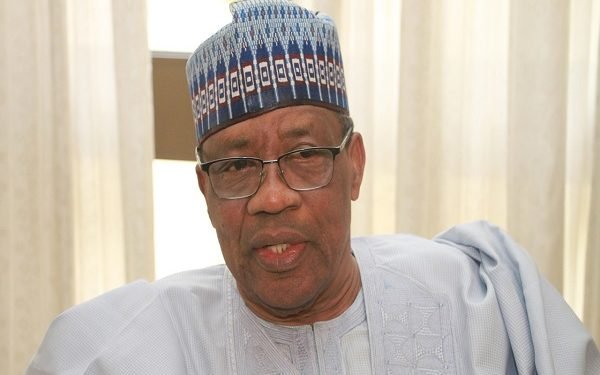
Former Nigerian President Ibrahim Babangida Breaks Silence on Tragic Military Plane Crash and Dele Giwa’s Assassination.
Thirty-one years after a military plane crash in which more than 159 officers lost their lives in Ejirin swamp in Lagos in 1992, then military ruler, General Ibrahim Badamosi Babangida (IBB) has finally spoken on the ill-fated incident.

During an exclusive interview featured in the inaugural edition of The Interview magazine, Babangida revealed that, based on maintenance concerns and the aircraft’s accumulated flying hours, the crashed plane should not have been operational on that particular day.
In response to The Interview’s inquiry about the events leading up to the crash and whether a thorough investigation was conducted, the 82-year-old former president affirmed that an investigation did take place and the incident was duly reported. However, he lamented that certain individuals and the public had preconceived notions, which hindered genuine interest in the investigation report.
Babangida emphasized that the investigation had indeed occurred and concluded that the aircraft’s flight was in violation of mandatory stages, flying hour limits, and maintenance requirements. It was evident that crucial protocols and procedures had not been adhered to.

When he was asked on what happened to the people who authorized the plane to fly on that ill-fated day, Babangida said there was no penalty meted out, adding: “They ought to have been punished. I know that blame was apportioned. I wouldn’t know about the punishment. We investigated; we even apportioned blame but no penalty.” On why that was so, he simply remarked, “That is the Nigerian factor.”
Responding to inquiries on who killed renowned journalist, Dele Giwa who died from a parcel bomb blast, Babangida said, “A Bomb”.
When asked in the interview on who sent the bomb, he replied: “Would you ever think somebody could sit and ask a soldier or anybody, go and kill that man?”
Upon the interviewer’s response that “It depends….”, IBB was quoted to have replied: “It depends on who? If what you hear about other African leaders is anything to go by, you are right to believe that it could happen because of what happened in the case of the Mobutus of this world.
But there is also one human being who believes in God, who believes you cannot take away life, who believes that God forbids you to do that, who believes that God created you equally. Somebody of that nature cannot, in all fairness order the execution or killing of another person.”
When he was pressed on his relationship with late Dele Giwa, Babangida replied: “We were friends. Very soon, somebody is going to accuse me of saying he is my friend. I knew him very closely. I have correspondence between him and me. But that is not enough for you to believe that we were friends. What is enough is that I took a bomb and killed him.”
When The Interview countered that “There was a general feeling that he knew a lot of military guys and knew more than he was supposed to know….”, IBB cut in..
”That he knew we were dealing in drugs and Gloria Okon. Somebody should have come out with it by now. He must have left some manuscripts.”
When he was asked if he suppressed the investigation, the former president replied,
“There was a report on that investigation if you may be interested to know.”
On the interviewer’s remark that witnesses in the investigation were apparently hidden, Babangida replied, “No. Most of what you guys talked about was fictitious. Even one of the persons you guys said was involved does not seem to exist. Gloria Okon; she does not seem to be in existence. And then you came out with, what is the name of the other girl who was supposed to be my wife’s friend? She was in prison or something; you came out with that one. There is virtually no truth in it all. People are not very good in putting stories together to make it look credible. They only make it look fantastic.
If you are dealing with an idiot, of course you can do anything. But you deal with a man who thinks, a man who tries to rationalize”.
On Saturday, September 26, 1992, a Nigerian Air Force Hercules C-130 (NAF 911) transport plane, carrying more than 200 persons, took off at 5:27 pm from the Runway 19 of the Murtala Muhammed International Airport, Lagos, with its destination the city of Kaduna in northern Nigeria.
However, a few minutes after take-off, the heavy-laden plane, which was said to be carrying not just the military boys and girls but young students of the Nigerian Military School (NMS), Zaria, alongside civilians, relations and friends of military officers, developed a fault and nose-dived into the deep swamp not too far from the Lagos State Low Cost Housing Estate, Ejigbo to the Festac Town, Lagos, killing all those onboard.
In the crash officers of the 19, 20, 21 and 22 Regular Courses of the Nigerian Defence Academy were badly hit. A list of 159 names of those officially listed as passengers of the C-130H was released on October 1 by the Director of Army Public Relations, Colonel Fred Chijuka.
The list was made up of seven Lieutenant Colonels, 96 Majors, a Sergeant, Michael Bahago, two students – Mr. O B Oshodi, Mrs. M A Abu, and a reporter, Mr. Augustine Okpe. There were also the eight-officer crew including Alaboson, Mamadi, Squadron Leader J A Adeiza and Flight Lieutenant S O Adamu.
The other men, Alum Wakala, Tarfa Saidu, W T Datong and A Soyemi in addition to 19 Air Force officers, were made up of 18 Squadron Leaders and a Sergeant, O. Jaja.
The Nigerian Navy lost 16 Lieutenant Commanders, Ghanaian Armed Forces, five; Tanzania lost Major M S Mgonja while Ugandan Major J.R Mulazi also lost his life in the crash.
The Nigerian Army Education Corps lost a total of 19 officers, Infantry 17, Artillery 15, Intelligence nine, Signals nine, Supply and Transport eight, Military Police seven while the Electrical and Mechanical Armoured and Medical Corps lost four officers each. Others included Ordinance three while Finance and Personnel and Training lost two men each.



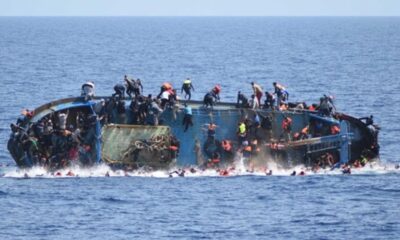






Six mourners are reportedly missing after a boat carrying more 70 people capsized on the Buruku River in Buruku Local Government Area of Benue State on Saturday.
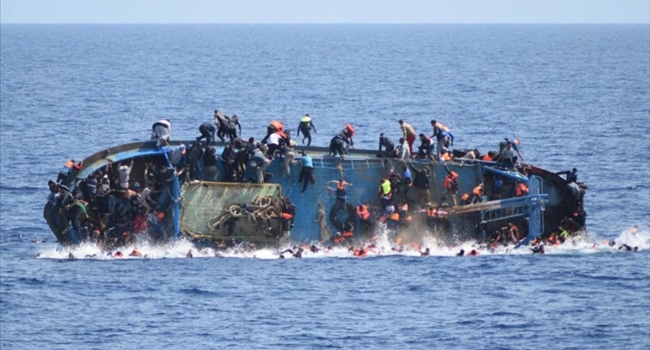
The incident reportedly occurred around 11am as the mourners, who were from neighbouring Gboko Local Government Area, were returning from a burial ceremony.
The Chairman of Buruku Local Government Area, Raymond Zege, confirmed the incident, saying the boat’s engine reportedly developed a fault while it was on the river.
According to him, the occupants struggled to manoeuvre the boat and remain afloat before another boat arrived to rescue them.
He said the boat was overloaded and the occupants reportedly panicked as they encountered water waves, causing the vessel to sink.
Zege said, “There are over 70 people on board but we have not seen about six persons.”
The chairman also expressed concern over compliance with safety measures among commuters using the river crossing, noting that authorities had provided life jackets but enforcement had been difficult because some passengers complained that wearing them was uncomfortable.
Meanwhile, the Commissioner for Marine and Blue Economy, Denis Iyaghigba, said preliminary reports indicated that a strong water current swept the boat into an abandoned barge at a corner of the river, causing it to overturn.
Iyaghigba urged families and members of the public to remain calm while authorities continued efforts to establish the facts and locate those still missing.
He said he had directed boat operators and their union downstream to mobilise and support the ongoing search and rescue operation.
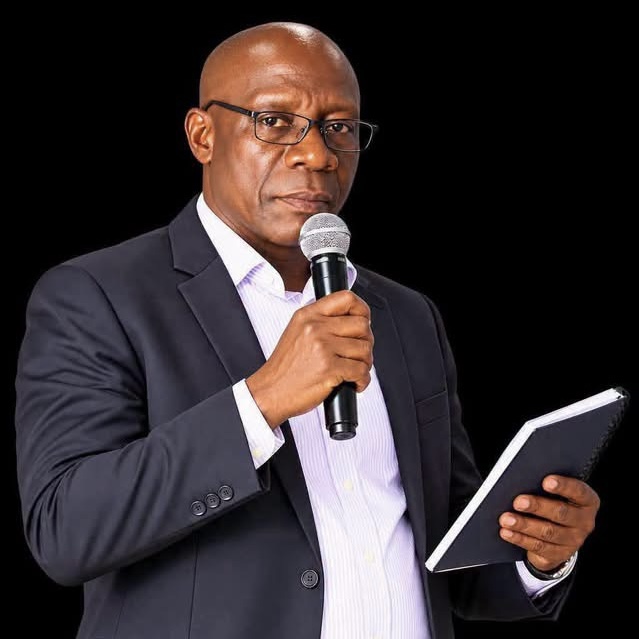
A funeral ceremony in Aleto, Eleme Local Government Area of Rivers State, reportedly turned tragic on Friday after a pastor collapsed and died while delivering a sermon on the certainty of death.
The cleric was identified as Deacon Steve Eyo, the Resident Pastor of the Redeemed Christian Church of God (RCCG), Aleto.
He was preaching before more than 300 mourners when he suddenly collapsed as he was concluding his message.
Eyo’s sermon was titled “The Certainty of Death and Hope Beyond.”
According to eyewitness accounts cited by multiple local news outlets, he began preaching at about 1:10 p.m., speaking about the inevitability of death and urging those present to live their lives with the awareness that nobody knows when death will come.
In illustrating his message, the pastor reportedly compared life to going to the market, explaining that some people leave early while others remain until later, just as some people die young while others live longer.
About 15 minutes into the sermon, at approximately 1:25 p.m., Eyo reportedly collapsed while rounding off his message.
His sudden fall initially confused some mourners, with eyewitnesses saying some thought the pastor was demonstrating the suddenness of death as part of his sermon.
The situation quickly became clear, however, as church ministers, choir members and others rushed to his aid.
People at the scene reportedly prayed for him while individuals with medical knowledge attempted to administer first aid.
He was subsequently taken to a nearby medical facility in the same ambulance that had been hired to convey the remains of the deceased person whose burial was taking place.
He was reportedly confirmed dead at the hospital, after which his remains were taken to a mortuary.
The circumstances surrounding Eyo’s death have not been publicly established in the reports reviewed, and no specific medical cause of death was disclosed.
However, the timing of the incident has left mourners and members of the Aleto community deeply shocked because of the subject of his final sermon.
According to eyewitness accounts, Eyo had urged the congregation to “number your days and prepare, for it can happen anytime” shortly before he collapsed.
The incident transformed what had begun as a solemn farewell for one deceased person into another moment of mourning, as attendees were confronted with the sudden death of the minister delivering the funeral sermon.p pm
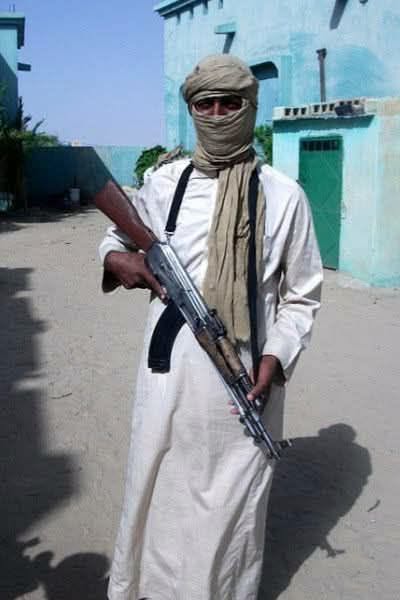
Mahmoud Adam, a suspected militant allegedly linked to deadly attacks on Christian communities in Nigeria’s Middle Belt, has reportedly been arrested in Plateau State.
The arrest was disclosed in an exclusive report published on Friday by the US-based Daily Caller, which identified Adam as an alleged secret leader of the Fulani Ethnic Militia (FEM) operating in Plateau State and surrounding parts of the Middle Belt.
According to the report, Adam was arrested in the early hours of September 12 at his compound in Plateau State, where he was known as a prominent Fulani community leader.
A former US intelligence officer with expertise in Islamist terrorism reportedly confirmed Adam’s alleged role in FEM, while Nigerian journalist Masara Kim of Truth Nigeria was also cited as having reported evidence allegedly linking him to deadly attacks in Plateau State.
The Daily Caller said information from a whistleblower indicated that Adam had previously established contacts with senior Nigerian military figures and had allegedly received high-value gifts from military officers.
The report also alleged that a serving senator had intervened in 2024 to secure Adam’s release following an earlier arrest.
The senator, Shehu Buba, has previously denied allegations of links to criminal networks. Separate reports said photographs showing Buba and Adam together have emerged, prompting calls for further investigation.
The Daily Caller reported that Adam was previously released from custody several days after his 2024 arrest following the alleged intervention.
Photographs cited by the publication reportedly show Adam meeting a Nigerian major general in 2023. According to the account accompanying the photographs, the military officer handed over five motorcycles to Adam and associates as part of efforts described as aimed at restoring peace in Plateau State.
The latest arrest comes amid renewed security concerns in Plateau State, where several communities have experienced deadly attacks in recent weeks. Local reports have linked some of the violence to armed groups, although attribution for individual attacks remains subject to confirmation by security authorities.
Reports of Adam’s arrest have also generated reactions in the United States. US Representative Riley Moore welcomed the reported arrest, describing it as evidence of increased US-Nigeria security cooperation, while the circumstances surrounding the allegations against Adam remain subject to official investigation and clarification.
As of the latest reports, the Nigerian security agencies had not publicly released a detailed statement outlining the charges against Adam or the evidence being relied upon in the investigation.
-
 News1 day ago
NYSC Abduction: Families panic over N950m ransom demand
-
News2 days ago
I fought to save passengers, says Flydubai pilot
-
News18 hours ago
Tragedy as RCCG pastor collapses, dies during sermon at funeral in Rivers
-
News2 days ago
How I killed my girlfriend after HIV dispute — Suspect
-
News2 days ago
NYSC members, other travellers ‘abducted’ along Owerri-Onitsha Expressway
-
News2 days ago
Police confirm NYSC members among abducted passengers on Owerri-Onitsha Road, rescue 10
-
Features1 day ago
Mbah Lists Projects Driving Enugu’s Revenue Growth, Says Less Than 13% Comes From Taxation
-
News18 hours ago
Six missing as boat carrying 70 Benue mourners capsizes