Connect with us

Business

CBN revokes licenses of 179 Microfinance banks, others

Published

on

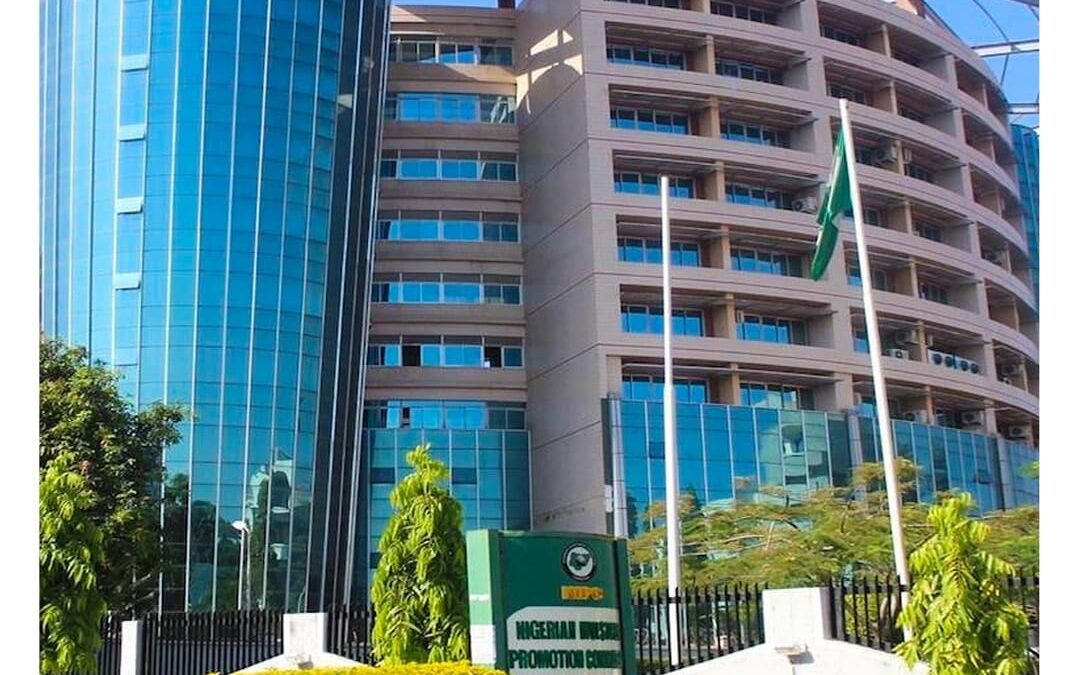
Central Bank of Nigeria building
Spread the love

The Central Bank of Nigeria has revoked the licences of 179 microfinance banks in the country, as well as four primary mortgage banks and three finance companies.

This was disclosed in the official gazette of the Federal Government, which was published on the website of the CBN on Tuesday.

The gazette said that the licences of the financial institutions were revoked because they “ceased to carry on, in Nigeria, the type of business for which their licences were issued for a continuous period of six months;  failed to fulfil or comply with the conditions subject to which their licences were granted; or failed to comply with the obligations imposed upon them by the Central Bank of Nigeria in accordance with the provisions of Banks and Other Financial Institutions Act (BOFIA) 2020, Act No. 5.”

The CBN Governor,  Godwin Emefiele, revoked the licences in the exercise of the powers conferred on the Central Bank of Nigeria under Section 12 of BOFIA 2020, Act No.5.

The microfinance banks include; Atlas Microfinance Bank, Bluewhales Microfinance Bank, Everest Microfinance Bank, Igangan Microfinance Bank, Mainsail Microfinance Bank, Merit Microfinance Bank, Minna Microfinance Bank, Musharaka Microfinance Bank, Nopov Microfinance Bank, Ohon Microfinance Bank, and others.

Maduka College Advert

Finance companies whose licences were revoked include HHL Invest & Trust Limited, TFS Finance Limited and Treasures & Trust Limited while the four primary mortgage banks whose licenses were revoked were Resort Savings & Loans, Safetrust Mortgage Bank, Adamawa Savings & Loans and Kogi Savings & Loans.

Meanwhile, the licences of another set of 47 microfinance banks were also revoked by the CBN, which brings the total of affected microfinance banks to 179.The official gazette for the last batch stated that the banks have “Either remained inactive, insolvent, failed to render returns, closed shop, or ceased to carry on the type of banking business for which they were licensed for more than six months in contravention of the Banks and other Financial Institutions Act (BOFIA), 2020 and the Revised Regulatory and Supervisory Guidelines for Microfinance Banks in Nigeria.”

Some of the affected financial institutions include; Evangel Microfinance Bank, Dominion Microfinance Bank, Anya Microfinance Bank, Akwengwu Microfinance Bank,  Fadama Farmers Microfinance Bank, Sal-Fol Microfinance Bank, Mautech Microfinance Bank, Wase Microfinance Bank, Smartmicro Microfinance Bank, Amba Microfinance Bank, Bridge House Microfinance Bank, Moneywell Microfinance Bank, Otukpo Microfinance Bank and others.


Business

NRS releases guidelines on Cryptocurrency, virtual assets taxation

Published

on

Chairman of the Nigeria Revenue Service, Zacch Adedeji
Spread the love
The Nigeria Revenue Service has issued comprehensive guidelines on the taxation of virtual assets, providing a regulatory framework for the taxation of cryptocurrency and other digital asset transactions in line with the Nigeria Tax Act, 2025, and the Nigeria Tax Administration Act, 2025.
The new guidelines are aimed at taxpayers, Virtual Asset Service Providers, Peer-to-Peer marketplace operators, tax practitioners and individuals engaged in virtual asset activities, as the Federal Government intensifies efforts to expand the country’s tax base and strengthen compliance within the rapidly growing digital economy.


In a public notice issued on Monday, the NRS said it had formally released the Guidelines on the Taxation of Virtual Assets.

According to the agency, the document establishes a clear administrative framework governing tax obligations for virtual asset transactions in Nigeria.

“The Nigeria Revenue Service (NRS) wishes to inform taxpayers, Virtual Asset Service Providers (VASPs), Peer-to-Peer (P2P) marketplace operators, tax practitioners, and all persons engaged in virtual asset activities that it has issued the Guidelines on the Taxation of Virtual Assets.

“The Guidelines provide a clear administrative framework for the taxation of virtual assets in Nigeria. They set out the applicable tax obligations including registration, reporting and record-keeping obligations, valuation principles, and the tax treatment of virtual asset transactions in accordance with the provisions of the Nigeria Tax Act, 2025, and the Nigeria Tax Administration Act, 2025.”

Maduka College Advert

The NRS said the initiative forms part of broader reforms designed to improve certainty in tax administration as digital assets become increasingly integrated into the country’s financial system.

“The issuance of these Guidelines is part of the Service’s commitment to providing clarity, certainty, and consistency in the administration of Nigeria’s tax laws as they relate to the rapidly evolving virtual asset ecosystem. The Guidelines are intended to promote voluntary compliance, enhance transparency, and support the development of a fair and efficient tax framework for digital asset transactions.”

The agency urged all affected stakeholders to study the new provisions and ensure full compliance with their tax obligations.

“All affected taxpayers and stakeholders are encouraged to familiarise themselves with the provisions of the Guidelines and ensure full compliance with the applicable tax obligations.”

It added that the guidelines are available for download on its official website.

The release of the guidelines marks another step in Nigeria’s evolving regulatory approach to digital assets. In recent years, Nigerian authorities have moved from largely restricting cryptocurrency-related activities to establishing clearer legal and tax frameworks for the sector.

The guidelines also follow the enactment of the Nigeria Tax Act, 2025, and the Nigeria Tax Administration Act, 2025, which introduced sweeping reforms to the country’s tax system, including provisions covering emerging sectors such as virtual assets.

The reforms are expected to improve tax administration, increase government revenue and provide greater regulatory certainty for businesses and investors operating in Nigeria’s digital economy.

Continue Reading

Business

Court dismisses suit by Bayelsa traditional ruler challenging Shell’s divestment,pollution

Published

on

Spread the love

The Yenagoa Division of the Federal High Court on Friday dismissed a suit challenging the divestment of Shell from onshore assets.

The suit filed by King Bubaraiye Dakolo, traditional ruler of Ekpetiama in Yenagoa Local Government Area of Bayelsa also sought redress and remediation of cumulative pollution of Dakolo’s domain for 40 years.

Dakolo alleged that the divestment by Shell did not follow the stipulated guidelines in the Petroleum Industry Act (PIA) 2021.

However, presiding judge, Justice Ayo Emmanuel in a ruling dismissed the case for being filed out of time adding that under the statute, any objections to divestment on guy to be filed within three months.

Emmanuel also held that the traditional ruler lacked the ‘locus standi’ to institute the case as he had no role in the divestment.

Maduka College Advert

The judge further stated that the plaintiff failed to explore and exhaust the conflict resolution mechanism mechanisms by the Nigerian Upstream Petroleum Regulatory Commission,

The judge noted that the failure according to the Petroleum Industry Act (PIA)asked the suit invalid.

“Plaintiff’s failure to satisfy the mandatory statutory conditions precedent under the Petroleum Industry Act (PIA) strips this Court of jurisdiction.

“The Plaintiff further contended that the injuries complained of constitute a “continuing injury, thereby creating a continuous cause of action that escapes the limitation periods.

“However, looking closely at the pleadings, the Plaintiff joins historical grievances stretching back decades with specific events that allegedly took place around 2024. A continuous injury means a recurrence of the legally wrongful act itself, not the continuous persistence of the injurious effects of a singular past act.

“From the facts presented, the alleged causes of action against the public officers (the 4th, 5th, and 6th Defendants) arose well outside the mandated 3-month period prescribed by POPA.

“Furthermore, the claims touching on tortious liability are caught by the 5-year limitation threshold under Section 16 of the Limitation Law of Bayelsa State,” Emmanuel ruled.

Reacting, Counsel to the Minister of Petroleum Resources, Lawrence Edet who spoke for the defendants thanked the court for dispensing justice to their favour.

Counsel to Dakolo said that they will pursue the case beyond the trial court and will be heading to the court of appeal.

Environmental justice group, Social Action in its reaction to the judgement expressed regret that the court had to ignore the quest for environmental justice and technicalities.

Dr Prince Edegbuo
Resource Justice Manager at Social Action said: “It is very very unfortunate that a matter as important as this that is gaining international traction in home countries where these international companies come from and the activities being condemned but our legal system finds it convenient to discard a case that has caused so much hardship and suffering on the people.

“The pollution had devastated the environment and denied people of their livelihoods and even affected the reproductive health of the people, it is heartbreaking that the Federal High Court struck out this case.

“We will meet at the Appeal Court, we will not relent, we shall continue to support the Ekpetiama people in this litigation, this is just the court of first instance,” he said.

Ekpetiama community is in the neighbourhood and part of host communities to the Gbarain-Ubie gas plant and Gbarain oilfields.

Listed as defendants in the suit No. FHC/YNG/CS/81/2025, are Shell Petroleum Development Company of Nigeria, Shell Petroleum N.V, Shell UK PLC.

Others are Attorney General of the Federation, The Nigerian Upstream Petroleum Regulatory Commission, Minister of Petroleum Resources and Renaissance Energy Africa Ltd.

It will be recalled that Renaissance Energy Africa, a consortium of indigenous oil firms in March 2025 acquired the onshore and shallow waters oil and gas assets hitherto operated by SPDC, following the divestments by Shell UK PLC, the parent company to SPDC.

Continue Reading

Business

Dangote launches ₦500,000 reward program to encourage whistleblowing

Published

on

Dangote Group CEO, Aliko Dangote
Spread the love

•Says illegal goods on Dangote trucks to be confiscated

Dangote Industries Limited has intensified efforts to combat illegal haulage activities involving its trucks by unveiling a public whistleblowing initiative that offers a cash reward to individuals who provide credible information leading to the arrest of offenders or the interception of unauthorized goods and transportation of persons.

The company said the initiative, which will reward whistleblowers with N500,000.00 cash award, forms part of its broader commitment to protect the integrity of its logistics operations and eliminate the activities of unscrupulous individuals who illegally use Dangote-branded trucks to transport unauthorized goods.

In a statement issued in Lagos, the management urged members of the public to support the campaign by reporting any suspected cases of illegal haulage involving Dangote trucks, stressing that only specifically approved products are permitted to be transported by vehicles belonging to its various subsidiaries.

Dangote trucks

According to the company, Dangote Cement trucks are authorized to carry only cement, limestone, high-grade gypsum, coal and clinker, while Dangote Sugar Refinery trucks are restricted to the transportation of sugar products. Trucks belonging to NASCON Allied Industries are expected to carry Dangote Salt and DanQ Seasoning products, while Dangote Packaging vehicles are designated for bags and packaging materials.

Maduka College Advert

Similarly, trucks operated by Dangote Petroleum Refinery and Petrochemicals are permitted to transport polypropylene products, while Dangote Fertiliser Limited vehicles are authorized for the haulage of urea fertilizer.

The company warned that any Dangote truck found transporting unauthorized goods would be treated as being involved in illegal haulage activities, adding that both the drivers and owners of such goods risk arrest, confiscation of the cargo and prosecution under applicable laws.

“Anyone with verifiable information that leads to the arrest of persons involved in illegal haulage activities or the recovery of unauthorized goods transported on Dangote trucks will receive a cash reward of Five Hundred Thousand Naira,” the company stated.

To aid investigations and enforcement efforts, the management of Dangote Group advised whistleblowers to provide detailed information when making reports. These include the truck type, registration plate number, cab number, location of the vehicle, description of the goods being transported, colour of the truck and photographs of the vehicle and cargo where possible.

The company has therefore established dedicated hotlines across its operations to receive reports relating to illegal haulage activities. Members of the public can report incidents involving trucks operating from the Obajana, Okpella and Gboko plants through certain dedicated telephone lines.

The Company stated that law enforcement agencies, including the Police, have been authorized to arrest any driver found using company trucks for unauthorized commercial haulage.

It reiterated its zero-tolerance stance against logistics-related fraud and called on the public to join hands with it in safeguarding legitimate business activities by exposing illegal operators.

Dangote Group emphasized that the initiative is designed not only to protect company assets and operations but also to strengthen transparency, accountability and compliance across its nationwide logistics network.

“Public cooperation remains critical in our efforts to eradicate illegal haulage activities. We encourage anyone with credible information to come forward and help us maintain the integrity of our transportation system,” the statement added.

The company reaffirmed that all reports would support ongoing efforts to protect the Dangote brand, promote lawful business practices and ensure that offenders are brought to justice.i

Continue Reading

Trending

Maduka College Advert