News
Naira Redesign: Rich Nigerians deposit bales of cash in banks

Days after the Central Bank of Nigeria announced the redesign of the N1,000, N500 and N200 notes, with a directive that the current notes be remitted to the commercial banks, wealthy individuals and organisations with huge cash stashed away have begun depositing them.
It was gathered from different sources and workers in the operations department of many commercial banks that though there has yet to be any rush by customers, there was a gradual increase in the volume of cash and amounts being remitted by customers.

The Governor of the CBN, Mr Godwin Emefiele, while announcing the issuance of the new naira notes on October 26, said bank customers should start paying their current notes to enable them to withdraw the new bank notes once circulation begins on December 15, 2022.
Emefiele said the apex bank had become concerned over some daunting challenges in the management of the existing banknotes in circulation, especially those outside the banking system, noting that such portend some consequences for the integrity of the CBN and the country.
Among the challenges that informed the decision, he lamented the “significant hoarding” of the banknotes in which case N2.73tn out of the N3.23tn currency in circulation as of September 2022 was outside the vaults of the commercial banks across the country.

Emefiele also cited the worsening shortage of clean and fit banknotes; increasing ease and risk of counterfeiting evidenced by several security reports and compliance with global standard to circulate new legal tender every five to eight years.
He noted further that the naira redesign would help to rein in the currency outside the banking system and make its monetary policies more efficacious, deepen its cashless economy drive and minimise incidents of terrorism and kidnapping as the access to large sums used for ransom payment.
He noted, “On the basis of these trends, problems, and facts set out above, and in line with provisions of Sections 2(b), section 18(a) , and section 19, Subsections a and b of the CBN Act 2007, the Management of the CBN has sought and obtained the approval of President Muhammadu Buhari to redesign, produce, release and circulate new series of banknotes at N200, N500, and N1,000 levels.
“In line with this approval, we have finalised arrangements for the new currency to begin circulation from December 15, 2022 after its launch by President Muhammadu Buhari. The new and existing currencies shall remain legal tender and circulate together until January 31, 2023 when the existing currencies shall cease to be legal tender.”
Huge cash deposits
Meanwhile, our correspondents’ interactions with many bank staff indicated that individuals have begun depositing huge cash sums stashed away with the commercial banks.
A top banker with one of the first generation banks, who spoke on condition of anonymity, said there was a gradual increase in the sums of money being deposited by some customers. “We have seen an increase in the amount being brought to some of our branches by some customers,” the source said.
When asked the highest amount an individual had remitted so far, the source, who heads a branch of the bank in Oshodi, Lagos, said, “The amounts vary, but we have seen people bring between N5m and N20m cash. It’s only rich customers that can have huge sums stashed away. The poor live on daily income and can hardly have enough to save.”
He said it was easy to identify the money stashed away for a long time because of the smell, the dates on them and other elements she refused to disclose. “There are ways to identify them but I don’t want to go into that because the focus of the CBN policy is to rein in the volume of cash in circulation. The regulators would deal with the rest.”
The branch manager of another first generation bank in Ikoyi area of Lagos confirmed that there was already a rise in the amount of cash being deposited by some customers.
She said, “The normal deposit by average income earners and businesses continues, but some customers have been coming with huge sums to deposit. We have seen some persons bring N2m cash and there have been higher and lesser amounts respectively from some other branches.”
Meanwhile, a senior staff at the headquarters of another first generation bank noted that feedback from some of their branches showed that some customers brought in billions, some in millions and some in hundreds of thousands.
The source said, “When the redesign of the naira was announced, the CBN asked all the banks to report the amount in their vault per day so they could monitor the remittances across board. The way it works is that branches route that information through their respective zones and the zones supply the information to the headquarters.
“We have to protect the customers, even if you suspect the possible source of such funds. The information from some of our branches indicate that in the last few days, specifically since October 26 when the CBN made the announcement, there have been individuals who brought in billions while some came to deposit millions.
“From what the CBN governor said in his briefing, he said about 85 per cent of the cash in circulation was outside the bank vaults and that alone is over N2tn, which shows that we might even see more billions being brought to the banks for remittance in the coming days.”
“But I can tell you that across all the financial institutions, there has been a surge in deposits. It’s not natural; the naira redesign and the fact that the Economic and Financial Crimes Commission has been going after some people has made it so. How come we have over N2tn in people’s hands?
“I have had interactions with some of my colleagues in other banks and they confirmed that it’s the same in their banks. The deposit has been in billions. It might come as a surprise to many, but it’s the reality. I came across a report that some states are considering paying salaries in cash, because they have stashed away huge cash and they need to expend it.”
Similarly, a senior management staff member of another commercial bank, told Saturday PUNCH that the huge cash deposits being witnessed justified the concerns expressed by the CBN in its October 26 briefing.
The source said, “The CBN said about N2.73tn is outside the banking sector, no economy in the world can survive such a percentage of its money in circulation being outside the bank vaults. That policy must have been well thought out, because people are already making huge deposits.
“I can’t tell you how much has been deposited so far, because there is a reporting line the CBN gave to know how much is coming in, but people have been coming to make deposits. If you look at the amount so far paid as ransom, you would imagine the volume of cash in circulation and then people keep a lot of money in the bush and other places.
“I sense that people who kept money would have issues bringing them in now because it raises suspicion and don’t forget that banks are under obligation to alert the anti-graft agencies like the EFCC, and the Nigerian Financial Intelligence Unit, in accordance with the Money Laundering (Prevention and Prohibition) Act.”
The source revealed that the heads of Corporate Communications Departments had an interaction with the CBN three days ago to make sure that they work in sync with the CBN to make sure the exercise was hitch-free.
Across other banks where our correspondents interacted with senior staff, they affirmed that there was noticeable increase in the volume and amount of cash being brought for deposit.
Meanwhile, the CBN has written to the banks on how to implement the naira redesign policy. The memo was titled ‘Re: Implementation of naira redesign policy’.
In a memo signed by the Director of Banking Supervision, Haruna B. Mustapha, with Reference Number BSD/DIR/CON/LAB/015/064, dated October 31, 2022, the apex bank said banks’ currency processing centres “shall remain open from Monday to Saturday to accommodate all cash that will be deposited by customers.”
‘Don’t split deposits’
The apex bank in the memo said in furtherance of the Emergency Bankers’ Committee meeting on October 28, 2022 and as part of arrangements to ensure the seamless implementation of the new currency redesign policy, it decided that under no circumstance should large deposits be split into different accounts. It also warned that no cash deposit by any customer should be rejected provided such deposits were lodged into an account with a BVN.
It added, “All deposits by new or walk-in customers should be accepted by banks subject to compliance with the requisite account opening documentation and KYC requirements. No deposit should be boxed and or credited to any suspense account, general ledger or any other internal account of a bank.
“Splitting of deposits is not permitted under any circumstance. All unusually large deposits should be paid into customers’ accounts with BVNs as a bulk amount.”
It also charged banks to ensure full compliance with extant Anti-Money Laundering/Combating the Financing of Terrorism regulations on reporting of currency and suspicious transactions. It stressed that banks should ensure that customers were promptly attended to and well treated to avoid delays and long queues or congestion in banking halls.
“Banks shall deploy measures to detect fake or counterfeit notes and avoid any form of competition to ensure a smooth implementation of the policy,” it added.
On the issue of reporting, the apex bank said, “Banks are required to furnish the CBN with their daily vault cash position effective October 26, 2022 in line with the attached template. The first set of returns up to November 1, 2022 is due before close of business on November 2, 2022.
“Thereafter, banks are to provide the daily returns on their cash position on or before 10am of the business day following the reporting date.”
The CBN noted that deposit of mutilated notes in the denominations covered under the dispensation (N200, N500 and N1,000 denominations) would be permitted without fees. It added that mutilates notes received would be processed in due course to check for counterfeit, forged or composed notes. It however noted that banks would be responsible for any defective notes and shortages in line with extant regulations.
The CBN had stressed that until January 31, 2023, the present notes remained legal tender and should not be rejected, noting that no bank customer would bear any charges for cash returned/paid into their accounts, as bank charges for cash deposits above limits had been suspended with immediate effect.
Banks write customers
Meanwhile, findings by Saturday PUNCH revealed that the CBN had been having meetings with the banks on the naira redesign.
Most of the banks, including the United Bank for Africa, Ecobank, Polaris Bank, First Bank, and First City Monument Bank have sent text messages and e-mails to their customers to deposit their cash, adding that in line with the directive of the CBN, their branches would be open on Saturday to enable more people to deposit their cash.
“Maybe because the policy is still new, many have not started rushing to the bank to deposit their cash, but we are making preparations and extending our working days,” an official of one of the banks said.
UBA, in a statement, noted that in a bid to help customers through the transition, it had put together a number of points to guide customers.
It partly read, “Start depositing your existing naira notes into a UBA branch closest to you.
Don’t panic, we are adjusting our branch opening hours for your convenience. We will open Saturday (Cash deposit only) from 10am to 2pm. Zero charges will apply for all cash deposits.”
Group faults CBN
A northern group, Concerned Northern Forum, has said the CBN’s plan to redesign some naira notes will further worsen the nation’s economy.
The group’s spokesperson, Abdulsalam Kazeem, while addressing journalists in Kaduna, called for the immediate suspension of redesigning the naira notes.
He said, “It is important for Concerned Northern Forum, a coalition of over 73 civil society organisations in Northern Nigeria, poised with the aim of advocating, promoting and defending the interest and values of the people of the north, to say this move is not only illogical, considering its economic implications at the moment, but a way to plunge Nigeria and Nigerians into more economic depth and crises that would require many years to resuscitate.
“There is no law against saving and keeping one’s money and transacting business outside the purview of the banks. Banks have always been perceived by our people as the creation of the elite used to run businesses and make profits from the savings of the masses.
“We must state categorically clear that the large population of Nigerians have lost confidence in the current leadership of the CBN to initiate and introduce policies that would improve the economy of our dear nation, and so therefore we maintain our earlier position which includes the immediate suspension of the whole process of the new naira design; the immediate sacking of Mr Godwin Emefiele and his team for failing Nigerians and prosecution of those behind this devilish and wicked agenda.”
It said failure to meet with its demands within the next seven working days would lead to a massive protest across the region and the Federal Capital Territory. (Saturday PUNCH)



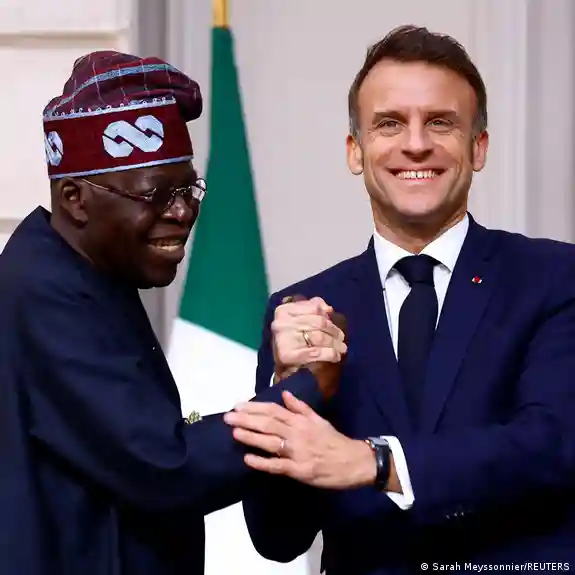
French President Emmanuel Macron has postponed his planned state visit to Nigeria until early 2027 following an agreement with President Bola Tinubu.
The visit, initially scheduled for October 29 to November 6, 2026, was deferred by both leaders, according to information on the trip obtained by Nairametrics.
A French presidential source also confirmed on Friday that Macron had postponed his planned visits to Nigeria and Senegal.
The source did not explicitly state the reasons for the postponement but described the trip as involving a “diplomatic and cooperation agenda”.
The specific reasons for the change in schedule have not been officially disclosed, while new dates for the visit are yet to be announced.
Macron’s visit was expected to strengthen bilateral relations between France and Nigeria, with discussions anticipated to focus on trade, investment, economic cooperation and other areas of mutual interest.
The postponement comes amid unrest in France, where demonstrations reportedly triggered by staff shortages and poor facilities in schools have spread across the country. The protests have also drawn attention to concerns over the rising cost of living.
However, the French presidential source did not explicitly link the unrest to the decision to postpone the visits.
Macron’s planned trip would have followed Tinubu’s three-day state visit to France in November 2024, during which the two leaders discussed finance, energy transition, solid minerals, trade, investment and communications.
At the time, presidential spokesperson Bayo Onanuga said Tinubu’s visit was aimed at “strengthening political, economic, and cultural relations and establishing more opportunities for partnership”.
Since assuming office in May 2023, Tinubu has visited France several times for official engagements, working visits and private trips.
Macron, whose second and final presidential term is due to end in May 2027, has maintained diplomatic relations with Tinubu since the Nigerian leader took office.
The rescheduled visit is expected to provide another opportunity for both countries to deepen cooperation, although the new dates and agenda remain unconfirmed.
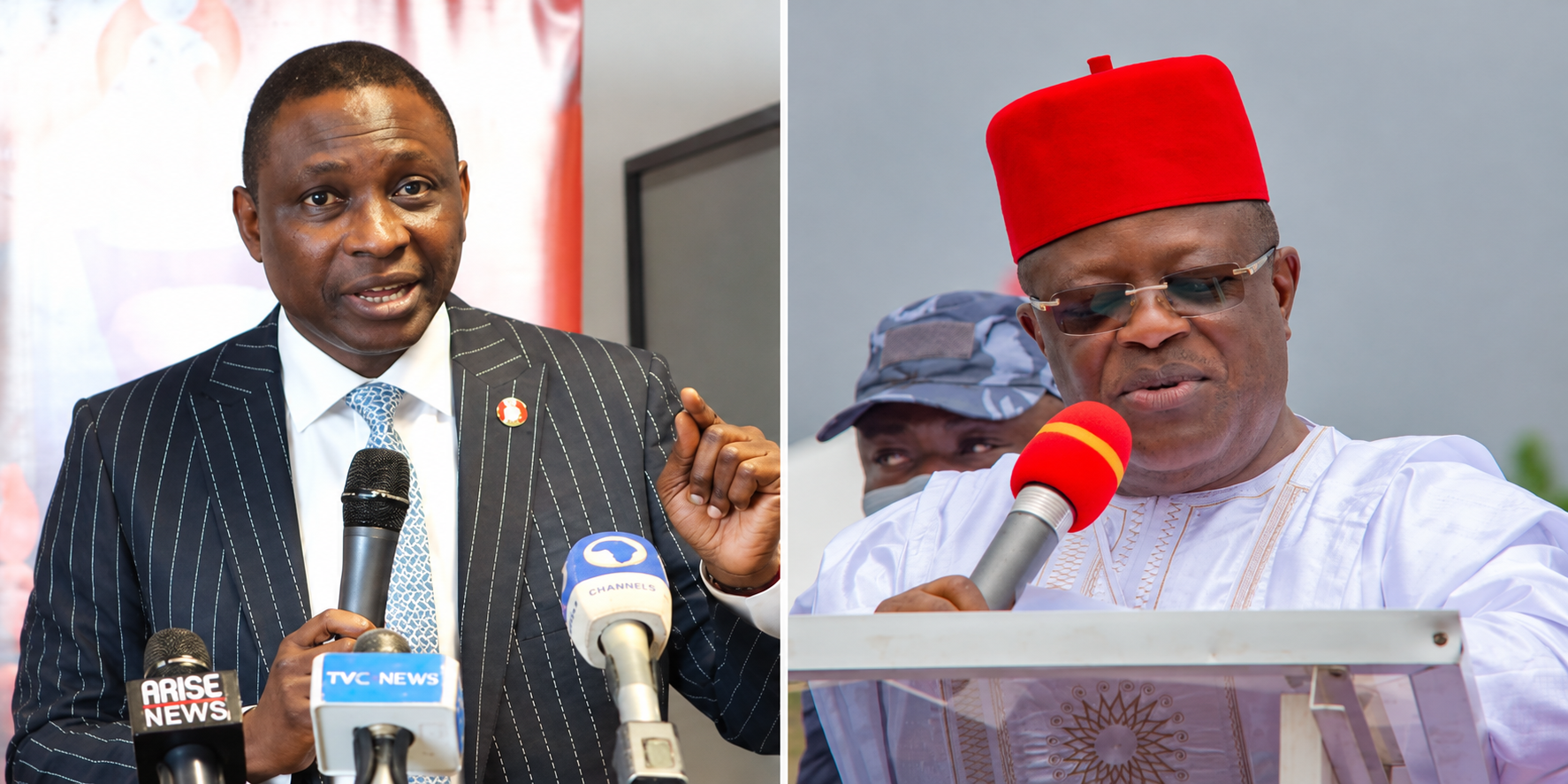
The Minister of Works, Chief David Nweze Umahi, has urged Nigerian journalists to promote democracy and maintain impartiality by avoiding bias towards political parties or candidates ahead of the 2027 general elections.
Umahi, a former Governor of Ebonyi State, gave the charge on Thursday evening while delivering a lecture at the Nigeria Union of Journalists (NUJ), Enugu Correspondents’ Chapel Press Week.
The event was themed, “Strengthening Democracy Through Responsible Journalism: 2027 Polls in Focus.”
Represented by his media aide, Emmanuel Uzor, the minister said journalists should not take sides in the political process or determine which candidate has the best manifesto.
He noted that as the watchdog of society and the Fourth Estate of the Realm, the media must discharge their constitutional responsibilities impartially, without favouring one political party or candidate over others.
While acknowledging the media’s critical role in holding leaders accountable, Umahi cautioned against partisan reporting and urged journalists to remain objective in their coverage of political activities.
“Journalists should not take sides. 2027 is here, and every party and all the candidates are presenting their manifestos. It is not your duty to say that this candidate or that candidate is better,” he said.
He maintained that the media had a responsibility to bridge the gap between leaders and the people, stressing that democracy thrives when journalists discharge their duties professionally.
Umahi, however, observed that journalists often face hostility when they hold those in authority accountable, adding that they are more readily accepted when they engage in praise-singing.
He warned journalists against abandoning their professional responsibilities, urging them to continue serving as a link between the government and the governed.
“You should fill in the gap between the leaders and the led,” he said.
Olukoyede Tasks Media on Anti-Corruption Fight
In his keynote address, titled “The Role of Media and Other Critical Stakeholders in Sustaining the Fight Against Corruption,” the Chairman of the Economic and Financial Crimes Commission (EFCC), Mr Ola Olukoyede, underscored the importance of the media in combating corruption and financial crimes.
Olukoyede, who was represented by the EFCC’s South Zonal Director, Mr Daniel Isei, said the media had continued to play a critical role in promoting good governance and building a better society.
He urged journalists to sustain their efforts in holding public officials and institutions accountable.
According to him, the Nigerian media deserve commendation for their contributions to sanitising society and promoting accountability.
“The media in Nigeria deserve their flowers for the critical roles they play in ensuring good governance and a better society.
“You have been playing your watchdog role, and that is holding the people and institutions accountable,” he said.
The EFCC chairman noted that the importance of the media’s watchdog function was recognised by the framers of the Nigerian Constitution, who assigned the press the responsibility of holding the government accountable to the people.
However, he cautioned journalists against losing focus or allowing cynicism to undermine their anti-corruption reporting.
“In fighting corruption, the media should not amplify public cynicism of the facts,” he warned.
Ani Emphasises Fact-Checking
The Chairman of the occasion, Chief Anthony Ani, SAN, also acknowledged the media’s significant role in society.
Ani urged journalists to verify information thoroughly before publishing or disseminating it to the public, stressing the importance of accuracy and responsible reporting in strengthening democracy.
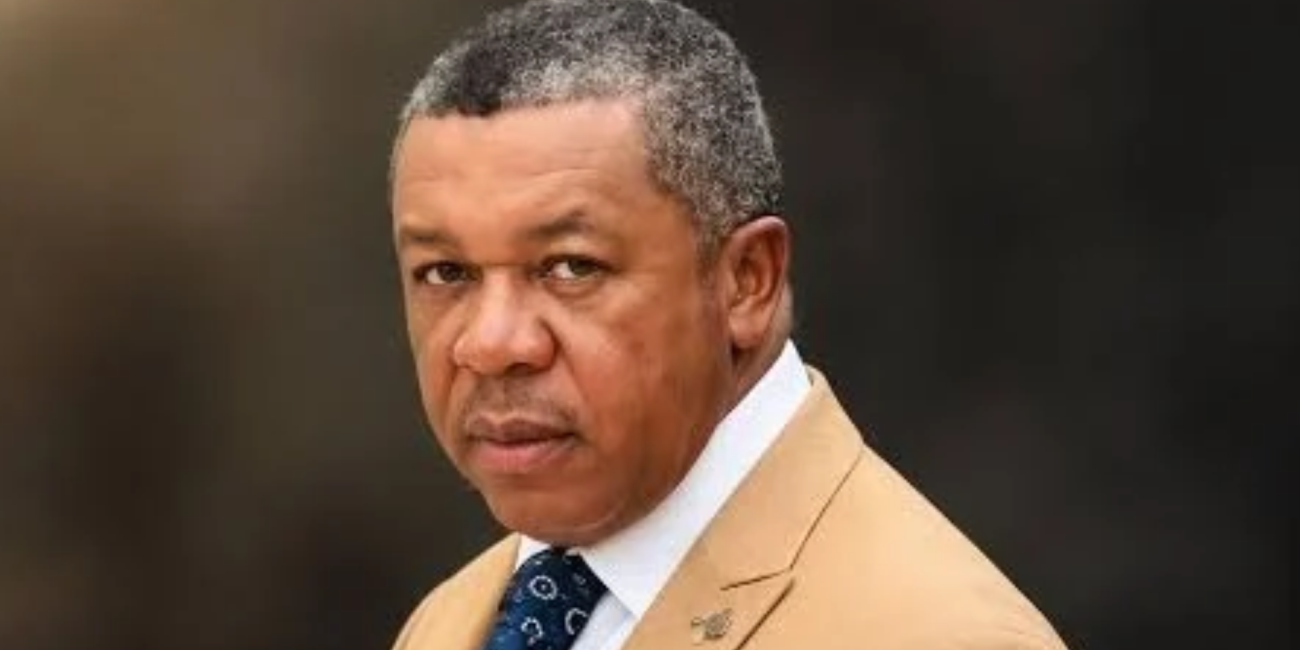
Veteran Nollywood actor Francis Duru has died at the age of 57 following a brief illness, his family has announced.
The family disclosed his death in a statement posted on the actor’s official Instagram page in the early hours of Friday, expressing gratitude to fans, colleagues and well-wishers for their prayers and support.
“We, the family of Francis Duru, regret to announce his passing following a brief illness.
“We appreciate your prayers, love, and understanding. May his soul rest in perfect peace. Amen,” the statement read.
The family did not disclose the nature of the illness or announce funeral arrangements as of the time of filing this report.
Duru’s death comes months after he dismissed reports that he was battling a life-threatening illness. In June, a video showing him looking frail circulated on social media, raising concerns among fans and colleagues.
The actor subsequently released a video on Instagram, describing the footage as “fabricated and malicious” and dismissing the claims about his health.
Early Life and Education
Born Francis Ogide Duru on July 27, 1969, in Cameroon to Nigerian parents from Imo State, the actor spent his formative years in the Central African country, where he completed his primary and secondary education.
He later returned to Nigeria to pursue his university education at the University of Port Harcourt, Rivers State, where he studied Theatre Arts and graduated with a Bachelor of Arts degree in 1996.
His academic background in theatre helped lay the foundation for a career that spanned more than three decades, during which he established himself as one of Nollywood’s recognisable performers.
Rise to Fame in Nollywood
Duru began his acting career in 1989 with Missing Mark, a film directed by the late filmmaker Ndubuisi Oko.
However, his breakthrough came in 1995 when he played Ahanna in Rattlesnake, an action-comedy produced by the late filmmaker Amaka Igwe.
The film became a defining production in the history of Nollywood, and Duru’s performance helped bring him wider recognition among Nigerian audiences.
His portrayal of Ahanna remains one of the roles associated with his rise during the formative years of Nigeria’s home-video film industry.
Over the years, Duru demonstrated his versatility by featuring in films across different genres, including drama, crime, family stories and comedy. He worked alongside several established actors and filmmakers, building a reputation for his ability to interpret diverse roles.
Notable Movies
Throughout his career, Duru featured in numerous Nigerian films and productions. Some of his notable screen credits include:
- Missing Mark (1989)
- Rattlesnake (1995)
- Blood Money (1997)
- Narrow Escape (1999)
- Home in Exile (2010)
- Nnenda (2009)
- Stigma (2013)
- Mortuary Gate (2014)
- Lipstick (2016)
- Who Killed Chief? (2017)
- Merry Men: The Real Yoruba Demons (2018)
- Why Not? (2019)
- The Good Husband (2020)
- Mboputa (2020)
- The Locals (2021)
- Blood Vessel (2023)
- Abigail’s Memoir (2024)
- Ugly Bird (2024)
His extensive filmography reflected his ability to remain relevant across different generations of Nollywood productions, from the industry’s early video-film era to more recent cinematic releases.
Awards and Industry Contributions
Duru received several honours in recognition of his contributions to the Nigerian entertainment industry.
In 2007, he was named a United Nations Ambassador of Peace in recognition of his positive influence on young people.
He was appointed interim president of the Actors Guild of Nigeria (AGN) in 2010, reflecting his involvement in the affairs of the professional body representing Nigerian actors.
In the same year, he received a nomination for Best Actor in a Supporting Role at the Africa Movie Academy Awards.
In 2020, he won the Best Actor in a Leading Role in an Igbo-language film category at the Best of Nollywood Awards for his performance in Mboputa.
Beyond his acting career, Duru was also associated with humanitarian and youth-development initiatives, contributing to efforts aimed at improving the welfare and opportunities available to young people.
Family Life
Duru married his wife, Adokiye, in 2003, and they had four children together.
The family suffered a devastating loss in August 2024 when their son, Ifeanyi, died at the age of 15.
The actor publicly mourned his son at the time, attracting messages of sympathy and support from colleagues, fans and members of the entertainment community.
His death on Friday marks the loss of a veteran performer whose career connected different generations of Nigerian cinema.
With memorable roles in productions such as Rattlesnake, Blood Money and Mboputa, Duru leaves behind a body of work that reflects his contribution to the growth and development of Nollywood over more than three decades.
-
 News3 days ago
FG confirms Ebola case in FCT, identifies 44 contacts
-
Features23 hours ago
Kogi’s Kidnapping Crisis: Why Do Forests Remain Safe Havens for Criminals Under Ododo’s Watch?
-
News2 days ago
“It’s not debatable, we can’t go back,” Mbah Backs Tinubu on Fuel Subsidy Removal
-
News23 hours ago
Kidnappers kill seven-year-old boy after ransom demand
-
News3 days ago
Afenifere leader, Fasoranti, dies at 100
-
News2 days ago
Mbah: Enugu Now Produces 120 Million Litres of Water Daily, Expands Agricultural Investment
-
Politics2 days ago
Mike Igini: Politicians Infiltrate Agencies Responsible for Election Personnel as Electoral Laws Go Unenforced
-
Politics2 hours ago
2027: Atiku, Obi, Duke, Others in Talks on Single Opposition Candidate – Coalition