
Politics
Peter Obi hit Jos for solidarity rally (Photos + Video)

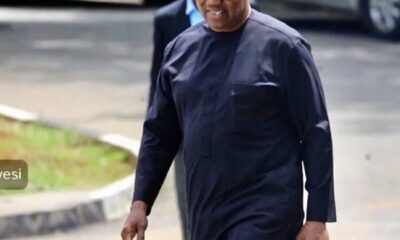
Labour Party’s Presidential candidate, Dr. Peter Obi has arrived Jos, Plateau State for a solidarity walk towards actualising his 2023 presidential ambition.
Obi was accompanied on his visit to Jos by his running mate, Dr Yusuf Datti Baba-Ahmed.


On arriving Jos, he would meet with the Gbong Gwom Jos, HRM Jacob Gyang Buba

He called on the Federal Government to end the Academic Staff Union of Universities (ASUU) strike and allow the children to go back to school.


Obi uploaded photos of his arrival in Jos on his Twitter handle and wrote: “Arriving Jos with Dr Yusuf Datti Baba-Ahmed, to meet with Gbong Gwom Jos, HRM Jacob Gyang Buba, and also honour the invitation of the Middle Belt Forum to a solidarity rally.

“We continue to call on the FGN to end the ASUU strike and allow our children to go back to school.
This looks very PRESIDENTIAL, Nigerians very proud to sing their national anthem.
Peter obi in Jos#PeterObiForPresident2023 pic.twitter.com/heUdZtAxLR
— P O F E V (@_POFEV) September 28, 2022











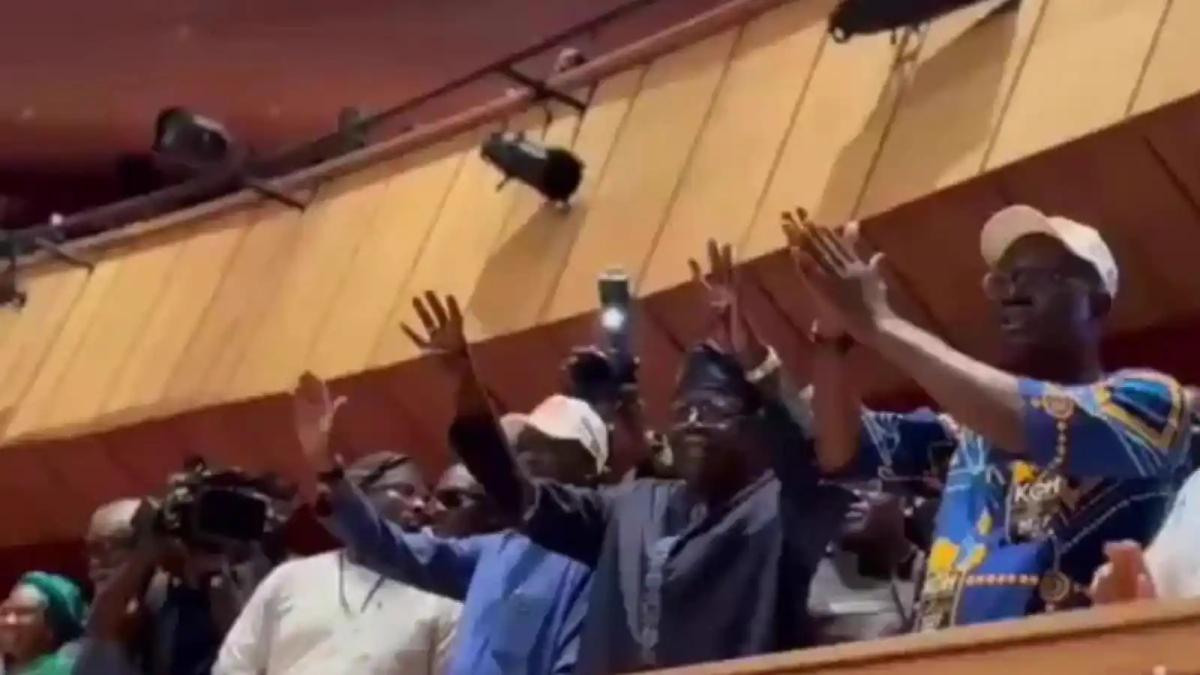
President Bola Tinubu has met with Igbo stakeholders residing in Lagos as part of efforts to secure their support ahead of the 2027 general elections.
The meeting, which is holding at the Wole Soyinka Centre for Culture and Creative Arts, formerly known as the National Theatre, was organised under the platform of the Ndigbo National Dialogue and Development Initiative.
The town hall meeting is being chaired by the Minister of State for Budget and Planning, Doris Uzoka-Anite.
Tinubu, who arrived at the venue to a reception by Igbo leaders, businessmen, market women and youths, was welcomed by enthusiastic supporters carrying placards with inscriptions such as “Ndigbo For Tinubu 2027” and “Igbo Lagos Love Tinubu”.
Speaking at the gathering, Uzoka-Anite said the engagement provided an opportunity for the Igbo community to interact directly with the President, noting that the people had been left out of important national conversations for too long.
She said the time had come for Igbos to engage with Tinubu and discuss issues affecting their community and their role in national development.
Addressing the gathering, the President described Igbos as an important component of Nigeria’s socio-economic development, stressing that neither Lagos nor the country could function effectively without their contributions.
Tinubu said his administration had been working for the benefit of all Nigerians, including the Igbo people, and assured them that their interests would not be forgotten.
“I am here to listen to you. I am here to work with you. Igbos are my brothers and sisters,” the President said.
The meeting is seen as part of the political engagements and consultations ahead of the 2027 presidential election, as Tinubu seeks to strengthen his support base among different ethnic and socio-economic groups across the country.
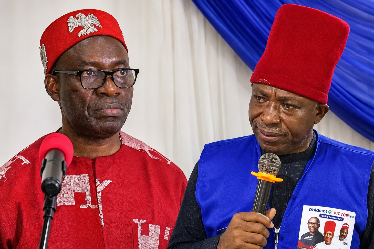
Senator representing Anambra Central, Victor Umeh, has apologised to the people of Anambra State for his role in the emergence of Governor Chukwuma Soludo, saying he deeply regrets supporting his election.
Umeh tendered the apology in Awka on Thursday, expressing disappointment with Soludo’s leadership and accusing him of working against the political interests of Anambra State and the wider Igbo nation.
The senator recalled that he served as Director-General of Soludo’s first governorship campaign alongside other prominent political figures, including Chief Primus Odili, who served as Chief of Staff to former Governor Willie Obiano.
He said he and other members of the campaign team worked tirelessly to secure Soludo’s victory, disclosing that the governor personally approached him during the campaign to seek financial assistance after admitting that he lacked the resources to prosecute the election.
According to Umeh, he subsequently contacted wealthy Anambra indigenes to raise funds for the campaign, with three prominent industrialists responding with donations of N1 billion, N100 million and $100,000, respectively.
He further alleged that the N1 billion contribution made by one of the businessmen had yet to be refunded, although he maintained that the outstanding money was not his major source of disappointment.
Rather, Umeh said his greatest concern was Soludo’s opposition to the presidential ambition of former Anambra State Governor, Peter Obi.
The senator accused Soludo of acting against the interests of his people by opposing Obi, arguing that the governor’s position amounted to working against the political aspirations of Anambra State and the wider Igbo nation.
Expressing regret over his role in Soludo’s emergence, Umeh said he never imagined that the governor would turn out the way he has.
“I am sorry for bringing him. I did not know he would turn out like this.
“Soludo is working against Ndigbo. You can’t be the governor of Anambra State and work against its interests,” he said.
• APC chairman says Tinubu is building a safer Nigeria, urges continuity ahead of 2027 presidential election
The National Chairman of the All Progressives Congress (APC), Prof. Nentawe Goshwe Yilwatda, has commended the 36 state governors and all 36 State Houses of Assembly for their unanimous support for the proposed constitutional amendment to establish State Police Services in Nigeria.
Yilwatda described the development as a landmark achievement in the country’s democratic evolution and a demonstration of political maturity, national consensus and constructive cooperation among the different tiers of government.
In a statement issued by his Special Adviser on Media and Information Strategy, Mr Abimbola Tooki, the APC chairman said the unanimous endorsement by the 36 State Houses of Assembly represented an unprecedented collective commitment to addressing one of Nigeria’s most pressing challenges: the security of lives and property.
Speaking during a meeting with party stakeholders in Abuja, Yilwatda particularly applauded the governors for their positive disposition, constructive engagement and support for the initiative.
He also commended the Speakers and members of the various State Houses of Assembly for recognising the urgency and importance of the proposed security reform.
According to him, the willingness of all states, irrespective of political affiliations and differences, to support the constitutional amendment demonstrates that national security transcends partisan considerations and remains a collective responsibility.
“This development is a powerful affirmation that when the national interest is placed above political differences, our democratic institutions can work together to deliver meaningful solutions to the challenges confronting our country,” he said.
Yilwatda described the proposed establishment of State Police Services as a major component of President Bola Tinubu’s broader reform agenda aimed at building a more responsive, effective and practical security architecture for Nigeria.
He argued that the country’s security challenges had exposed the limitations of an overly centralised policing structure in responding adequately to the peculiar security realities of different communities and geographical locations.
According to him, State Police would provide an additional layer of policing, bringing security administration closer to the people and enabling authorities to respond more promptly to threats within their jurisdictions.
He said the proposed framework would give state governments greater institutional capacity to complement the Federal Police Service in crime prevention, intelligence gathering, maintenance of law and order, and protection of communities.
Among the anticipated benefits, he listed improved grassroots intelligence gathering, faster response to security emergencies, more effective community policing, better understanding of local security threats and stronger collaboration between federal and state security institutions.
He added that the reform would strengthen efforts to tackle kidnapping, banditry, communal violence, armed robbery, terrorism and other criminal activities threatening the safety and economic wellbeing of Nigerians.
“Most importantly, State Police will enhance the capacity of government to identify emerging security threats before they escalate into major security emergencies,” he said.
However, the APC chairman stressed that the success of the initiative must be anchored on professionalism, adequate training, accountability, respect for fundamental human rights and strict adherence to constitutional provisions.
He warned that State Police Services must be established to protect citizens and enforce the law, rather than serve as instruments of political intimidation or partisan interests.
Yilwatda also commended President Tinubu for what he described as his courage, determination and commitment to addressing the country’s security challenges through institutional reforms and practical solutions.
He said the President’s approach was driven by the understanding that the primary responsibility of government was the protection of lives and property and that every Nigerian deserved to live in safety, dignity and peace, irrespective of geographical location, ethnic background, religious affiliation or political persuasion.
“The President’s determination to advance the State Police initiative demonstrates his willingness to take difficult but necessary decisions in the overriding interest of national security,” he said.
Yilwatda maintained that security should not be treated as a privilege reserved for residents of particular cities or regions, insisting that Nigerians in metropolitan centres, rural communities, farming settlements and border towns all deserved adequate protection.
He expressed confidence that, with the necessary constitutional processes and implementation safeguards, the State Police framework would become an important instrument for strengthening national security and restoring public confidence in the country’s policing system.
The APC chairman further argued that the proposed State Police reform, alongside other ongoing institutional and economic reforms, underscored the need for continuity in leadership under President Tinubu.
He urged Nigerians to look beyond political rhetoric and assess the country’s direction based on the policies, decisions, institutional reforms and measurable commitments of the present administration.
According to him, nation-building requires courage, consistency, experience and the willingness to confront difficult challenges rather than abandon necessary reforms whenever they become politically inconvenient.
“Nigeria cannot afford to repeatedly interrupt its reform journey or return to the uncertainties of leadership approaches that have failed to deliver sustainable solutions to the country’s fundamental challenges,” he said.
As the country approaches the January 16, 2027 presidential election, Yilwatda called on Nigerians across the 36 states and the Federal Capital Territory to vote for President Tinubu’s re-election.
He said continuity would provide an opportunity to consolidate ongoing reforms, strengthen the security architecture, deepen economic recovery, improve infrastructure, expand opportunities for young Nigerians and build on the foundations already being established for a more prosperous country.
The APC chairman said the forthcoming election presented Nigerians with an important choice between sustaining an ongoing reform programme and embracing political alternatives whose records in public office should be critically assessed.
He cautioned Nigerians against entrusting the country’s future to political actors whose overriding ambition, according to him, was to occupy the highest political office rather than present credible, practical and sustainable solutions to national challenges.
Yilwatda noted that the ambition to become President did not, in itself, qualify anyone for leadership, stressing that what mattered was the capacity to lead, clarity of vision, courage to make difficult decisions and a demonstrable record of responsible governance.
“It would be dangerous for the country to surrender its future to individuals whose previous opportunities to serve in positions of authority did not produce the economic stability, institutional strength and national development they now promise Nigerians,” he said.
He further argued that some politicians seeking a return to power had been part of previous administrations whose economic policies and governance decisions contributed to the difficulties the country subsequently faced.
He urged Nigerians to critically examine the records of presidential aspirants by asking what they achieved when they had the opportunity to govern, the lasting institutions they built and the solutions they provided to the economic and security challenges of their time.
Yilwatda insisted that Nigeria’s future must not become an experiment in political nostalgia, personal ambition or desperation for power.
-
 News3 days ago
2027: Obi Urges Nigerians to ‘Sacrifice One Day for Nigeria to Be Good Again’
-
News2 days ago
Pomp, Pageantry as 37th NAFEST Opens in Enugu; Mbah Champions Cultural Economy
-
News2 days ago
2027: ‘I’ll Defeat Natasha Without Spending a Dime,’ Yahaya Bello Boasts, Calls Dino Melaye Noise Maker
-
News1 day ago
Police Take Over Fountain of Life Church as Jimmy Odukoya’s Leadership Crisis Deepens
-
Editorial2 days ago
Fake Drugs: NAFDAC Seeks Death Penalty as Counterfeit Products Flood Nigerian Markets
-
News2 days ago
Abductions: 640 Nigerians Still in Captivity as Families Cry Out Over Government Silence
-
News1 day ago
South-East Policy and Impact Conference to chart pathway from economic reforms to regional prosperity
-
News1 day ago
2027 Elections: Controversy Trails Inauguration of 200-Man Security Outfit by Umahi’s Son