News
Nigerian int’l travellers to pay extra $11.5 charge per ticket from Dec. 1


• New charge raises Nigeria’s security levy to $31.5 per ticket
• NCAA to earn additional $46 million yearly
• Nigerian travellers pay 264% more taxes than other African countries, says IATA
• Experts query multiple taxes, cumulative $150 per international ticket
• More travellers will jettison Nigerian airports, say analysts
Nigeria’s inbound and outbound passengers are in for an additional tax regime, with a $11.5 security levy effective December 1, 2025. This new tax, also known as the Advance Passenger Information System (APIS), increases Nigeria’s security levy to $31.50 per flight ticket and is estimated to generate a cumulative sum of $46 million for the Nigeria Civil Aviation Authority (NCAA) yearly.
On the other hand, the development will further increase the cost of international travel borne by Nigerian travellers. The apex regulatory body, NCAA, in a notice to airlines, stated that the levy aimed to create a “single window” approach for all agencies at the airport, and the collection is expected to last for 20 years.

According to the agency, the system would help to track passenger movements, improve border control, and provide airlines with a cost-recovery mechanism for the system’s maintenance.
The regulatory agency also stated that the $11.5 levy would streamline passenger clearance at Nigerian airports by collecting and processing passenger data before arrival. This initiative is in partnership with the Nigeria Immigration Service (NIS).
According to the NCAA’s memo to the airlines: “The APIS charge will be collected as a point of sale and will be levied on all tickets issued from December 1, 2025, for each passenger departing from or arriving in Nigeria. The lifting airline is responsible for remitting the APIS charge to the NCAA.

“Therefore, all airlines (including Nigerian carriers) operating international flights into and out of Nigeria are required to take immediate steps to update ticketing and reservation systems to reflect the new APIS charge, as invoicing for the charge will commence from 1st December 2025 for tickets issued to passengers from 01DEC2025 for travel to and from Nigeria.”
Capt. Chris Najomo-led NCAA insists that the levy aligns with international best practices and the International Civil Aviation Organisation (ICAO) standards.
However, the levy is different from the extant $20 security levy introduced in 2010 by the former Director-General of NCAA, Dr Harold Demuren, in the wake of the Umar Abdulmutallab suicide bomber crisis of December 25, 2009, which was expected to last for 20 years.
The $20 levy was also intended to enhance security infrastructure at Nigerian airports and implement advanced passenger information systems, though industry experts noted that there has been no appreciable improvement in infrastructure 15 years later.
Notably, the regulatory authority exempted infants, diplomats, airline crew on duty, transit/transfer passengers within 24 hours and involuntary re-routing due to technical problems or weather conditions, from the new levy. Information gathered indicated that the exempted class of passengers constitutes about 10 per cent of the total travelling public.
Checks by The Guardian indicated that an average inward or outbound passenger in Nigeria will now pay about $150 as either taxes, charges or levies.
For instance, each inbound and outward passenger currently pays $20 and five per cent as security and Ticket Sales Charge (TSC), respectively, to NCAA, while FAAN receives $100 as Passenger Service Charge (PSC).
The additional levy, however, is creating confusion in the sector as experts wonder if it is different from the current $20 security levy collected by the same NCAA.
The NCAA, on behalf of four other agencies, collects the five per cent TSC and Cargo Sales Charge (CSC) from both domestic and international passengers.
The TSC/CSC is shared among parastatals as follows: NCAA, 56 per cent; the Nigerian Airspace Management Agency (NAMA), 22 per cent; Nigerian Meteorological Agency (NIMET), nine per cent; Nigerian College of Aviation Technology (NCAT), seven per cent, and the Nigerian Safety Investigation Bureau (NSIB), with six per cent.
Apart from these, international passengers departing or arriving in Nigeria are required to pay the sum of $80 and $100 as PSC to FAAN for citizens of the Economic Community of West African States (ECOWAS) and other African and non-African citizens, respectively.
The PSC sum, FAAN said, is also for airport operations (maintenance and upgrades of airport facilities, security (screening of passengers and baggage), safety (emergency response services and equipment and comfort (provision of amenities and services for passengers).
Indigenous and foreign airlines pay a five per cent fuel surcharge to FAAN for every litre of fuel purchased in the country. Additionally, foreign airlines pay unspecified over-flying charges, terminal navigation charges, and extended hours service to NAMA.
Related News
NCAA tasked to regulate drone operations in Nigeria
NCAA warns airlines against non-compliance with financial obligations
Aviation experts kick as Kalu accuses pilots of smoking marijuana
According to IATA, Nigerian air travellers pay an average of $180 per foreign departure and arrival, which is about 264 per cent higher than any other African country.
IATA also said that charges and levies in Nigeria were among the world’s most expensive, yet without any significant value to show for it. Data obtained from IATA indicated that at least 90 countries require airlines to submit Advance Passenger Information (API) before a flight’s arrival.
Airlines are responsible for collecting this data from passengers during the check-in process and transmitting it to the border control authorities of the destination country.
Some of the countries are the United States of America (USA), Canada, Mexico, the United Kingdom, France, Germany, Spain, Italy, the Netherlands, Ireland, Switzerland, Austria, South Korea, Taiwan, India, Thailand, Indonesia, Jamaica, Antigua and Barbuda, Barbados, Bermuda, Brazil, and Costa Rica.
However, most of the aforementioned countries, particularly in Europe and the Americas, do not charge passengers or airlines an additional fee for providing this information before departure or arrival. In fact, it is part of the required standards expected from the airlines.
With the 2024 Executive Summary on International and Domestic Flight Operations, obtained from the NCAA, which recorded a total of 4,135,830 passengers as inbound and outbound, the regulatory agency is projected to earn about $46 million (about N69 billion) from the new levy in one year.
However, since the levy excludes certain segments of passengers, such as infants, diplomats, airline crew on duty, transit/transfer passengers within 24 hours, and involuntary re-routing due to technical problems or weather conditions, the revenue expected to be generated from this source alone by the regulatory body may be slightly lower.
Aviation industry analyst Chris Amokwu stated that the various charges or levies imposed on airlines and the travelling public were harming the country’s air business, while also leading to a hike in airfares both within and outside the country.
Amokwu explained that Nigeria had the privilege and opportunity to rule African aviation but lacked the strategy to do so. He regretted that the government and its agencies still view aviation as elitist, rather than an economic driver, a reason he said the government imposed various levies on air travel, contradicting the International Civil Aviation Organisation’s (ICAO) practices and recommendations against making the sector profit-oriented.
Also, one of the staff of foreign airlines operating on the Nigerian routes said that once the new levy comes on board, it would lead to an additional burden on airlines and passengers.
The airline source regretted that the same passengers who would be slammed with an additional $11.5 levy were already struggling with the naira devaluation. He added that the current sordid economic situation had driven away air travellers from the sector, while the majority of them patronise the road sector.
He said: “Do you know that a lot of Nigerians go by road to neighbouring countries in West Africa to join flights to the world? Before now, they went by flight to these countries. Now, economic reality has forced them onto the streets. Visit Agege, Jibowu, and Maza Maza to see the number of vehicles departing for our neighbouring nations. It is a critical issue today and can only worsen with additional charges.
“APIS is a national security programme. Why are we passing it to the passengers? How did we get to the value of $11.5 per passenger? This is more like an App. Why the high cost? Nigeria needs to encourage more people to fly. We have the population.
“Many countries do not charge the APIS fee. Those that do. It is almost negligible. Like five dirhams in the UAE. The UK does not charge. The U.S. does not charge. You can check them out.”
Also, an aviation security expert, Group Captain John Ojikutu (rtd), questioned the essence of the levy. Ojikutu expressed that the NCAA was already charging passengers through airlines the sum of $20 as a security levy, while an additional five per cent TSC/CSC is also warehoused by the same NCAA on behalf of the other four agencies.
Ojikutu described the proposed levy as multiple taxation on the travelling public, but said the new charge would only be acceptable to the public if the agency planned to abolish the current $20 fee for the same security purpose.
When contacted, the Director, Public Affairs and Consumer Protection, NCAA, Michael Achimugu, promised to get across to the reporter “next week. I don’t want to give you half-baked information.”
Also, when contacted, the Area Manager, West and Central Africa, IATA, Dr Samson Fatokun, did not respond. However, the global airline association has, over the years, criticised high taxes and levies imposed by Nigeria, describing them as “the highest in Africa.”
The Vice President of IATA, Africa and Middle East, Kamil Al Alwadhi, stated in a recent meeting in Abuja, Nigeria, that research shows Nigeria ranks highest in airport charges in Africa, with Abuja Airport becoming the most expensive airport on the continent, followed closely by Lagos Airport. According to him, there are about 27 charges imposed on airlines by the Nigerian government. (The Guardian)



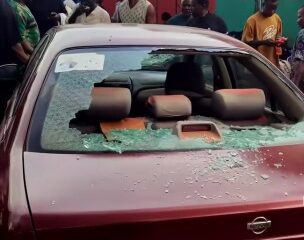








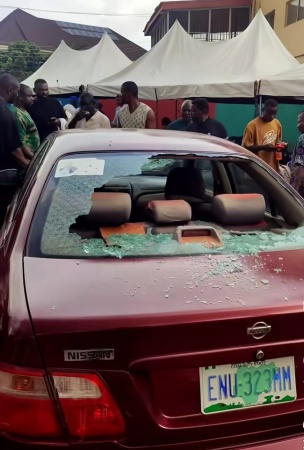
Four people were reportedly shot when a convoy of the National Democratic Congress (NDC) came under attack in Ebonyi State, with one of the campaign vehicles set ablaze.
The incident occurred during a campaign movement in the state, according to sources familiar with the development.
The identities and conditions of those injured were not immediately available at the time of filing this report.
The motive for the attack remained unclear, while the attackers had yet to be identified.
Security agencies were expected to investigate the incident and determine the circumstances surrounding the shooting and burning of the campaign vehicle.
Further details were awaited from the NDC, the Ebonyi State Government and the relevant security authorities.
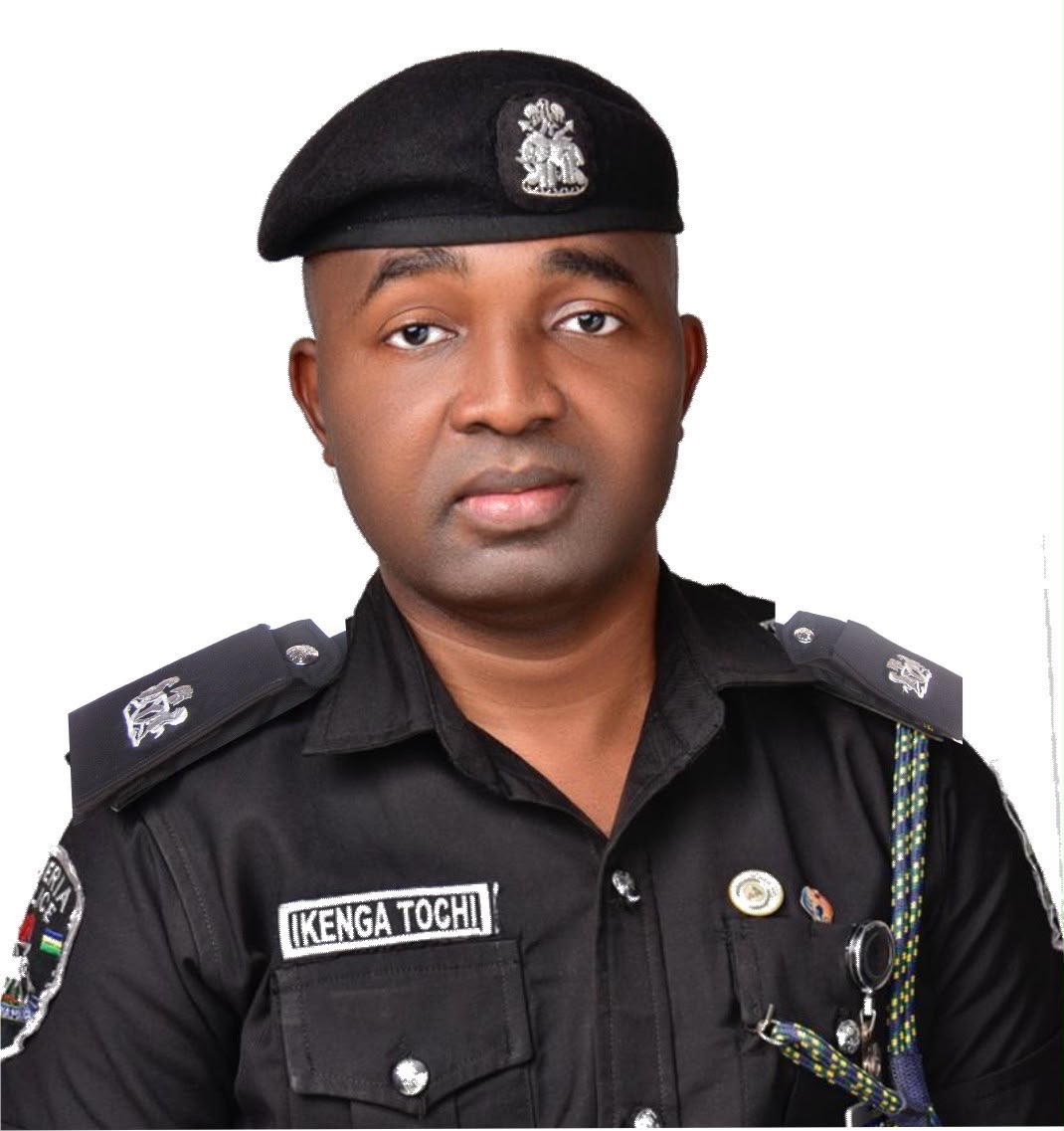
The Anambra State Police Command has arrested a man, identified as Chima Ofoeke, over the suspected murder of 23-year-old Mmesoma Umeorini in Uga, Aguata Local Government Area of the state.
The arrest followed a report by the deceased’s mother to the Divisional Police Officer (DPO) of Umuchu Division that her daughter had been missing since October 16, 2026, despite efforts to locate her.

According to the police, operatives, working with members of the Agunechemba security outfit in Uga, apprehended the suspect following intelligence-led information.
The suspect was identified as the deceased’s alleged former boyfriend.
During preliminary interrogation, Ofoeke allegedly confessed to killing the young woman following the breakdown of their relationship. He reportedly led detectives to the location where her remains were discovered and recovered.
Following the development, the Commissioner of Police in Anambra State, CP Nnanna Oji Ama, has directed that the case be transferred to the State Criminal Investigation Department (SCID), Awka, for a thorough investigation.
The police said the investigation would establish the full circumstances surrounding the incident and ensure that justice was served.
The command reiterated its commitment to protecting lives and property, urging residents to promptly report missing persons and suspicious activities to the appropriate authorities.
It added that further information would be made available as the investigation progresses.
…Assures defects will be addressed
…Threatens to blacklist contractors over defects
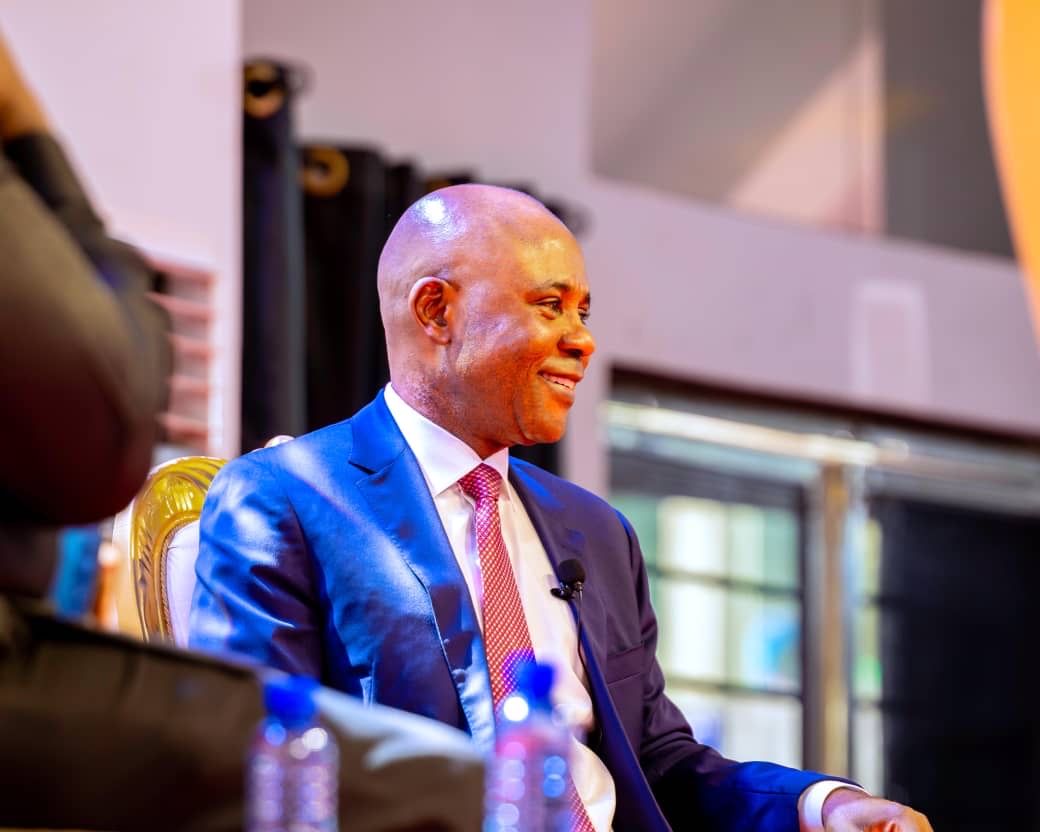
Enugu State Governor, Dr Peter Mbah, has defended the construction of 268 smart green schools across the state, assuring residents that structural defects and other challenges identified in some facilities will be addressed.
Mbah gave the assurance during a town hall meeting, where he explained that the state government deliberately adopted an accelerated approach to the construction of the schools to ensure that every child in Enugu had access to quality education.
According to the governor, the scale of the projects delivered within three years would ordinarily take between 10 and 20 years to accomplish under conventional implementation timelines.
He acknowledged that the speed of execution had resulted in some teething problems, including defects in certain buildings and roofing challenges, but maintained that the government was committed to ensuring that all the facilities were fit for purpose.
“When you have fast-tracked projects at that scale, you are bound to have teething problems, and we are not oblivious of it,” he said, adding that the government was resolved to address the identified shortcomings.
Mbah explained that the decision to build 268 smart green schools was driven by the administration’s determination to expand access to quality education rather than concentrate resources on a few model institutions.
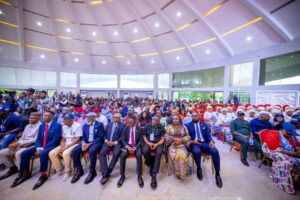
Participants at the Town Hall meeting
He said the government could have opted to construct only three smart schools, one in each senatorial zone, or 17 schools across the state, but chose a broader approach to reach more children.
“We said every child in this state must have access to quality learning, and we did 268 smart green schools,” the governor stated.
He stressed that the administration would not abandon the projects because of the defects identified, adding that corrective measures were already part of the government’s response.
The governor’s remarks come amid concerns over defects reported in some of the newly constructed school facilities.
He maintained that the administration remained committed to ensuring that the projects delivered their intended educational benefits to pupils across Enugu State.
Mbah Threatens to Blacklist Contractors Over Defective School Projects
Governor Mbah also warned contractors handling the state’s smart green school projects that they will face consequences for failing to address defects in their work.
Mbah gave the warning while responding to questions about structural defects and other problems reported in some of the 268 smart green schools constructed by his administration.
The governor said the government had records of the contractors responsible for the projects and would require those whose work was found defective to return to their sites and carry out necessary repairs.

He, however, warned that contractors who refused to comply with the government’s directives would be blacklisted.
“For those that have been recalcitrant, we blacklist. And there are consequences for that,” he said.
Mbah explained that although the projects were executed on an accelerated timeline to expand access to quality education, the fast-tracked approach did not absolve contractors of responsibility for the quality of their work.
He also disclosed that the government obtained advance payment guarantees from the contractors, providing an additional mechanism for enforcing compliance where necessary.
“We do have an option to call those up if it becomes necessary,” the governor said, referring to the guarantees.
The administration has come under scrutiny over reported defects in some of the newly constructed school buildings, including roofing and other structural concerns.
Mbah acknowledged the existence of such challenges but described them as issues the government was determined to resolve.
He said the overriding objective was to ensure that all the smart green schools were fit for purpose and capable of providing the learning environment intended by the state government.
The governor’s comments signal the administration’s intention to hold contractors accountable while continuing its investment in education infrastructure across Enugu State.
-
 Features2 days ago
Kogi’s Kidnapping Crisis: Why Do Forests Remain Safe Havens for Criminals Under Ododo’s Watch?
-
News2 days ago
Kidnappers kill seven-year-old boy after ransom demand
-
News3 days ago
“It’s not debatable, we can’t go back,” Mbah Backs Tinubu on Fuel Subsidy Removal
-
News1 day ago
Macron Postpones Planned Visit to Nigeria Until 2027
-
News24 hours ago
Enugu CP Orders Probe into Death of Izuchukwu During Police Raid
-
Politics1 day ago
2027: Atiku, Obi, Duke, Others in Talks on Single Opposition Candidate – Coalition
-
News20 hours ago
UBA Commences Contempt Proceedings Against WEMPCO Directors over Alleged Disobidence of Court Order
-
Politics1 day ago
Ebonyi Council Restricts Political Gatherings Without Prior Approval