Connect with us

News

Ebonyi communities where residents are dehumanised, banished for alleged witchcraft

Published

on

Leo Igwe and Ugadu The Sun
Spread the love

Trial by ordeal, witch-hunt, dehumanisation, banishment and other forms of human right abuses are becoming the order of the day in Ebonyi State.

In the state, many people have been paraded naked, beaten and tortured or killed by youths in their communities with their property destroyed on the allegation of diabolism and witchcraft.

HRH Ugadu Ogba

Joseph Agwu banished from his community

Maduka College Advert

Some of the victims were accused of murdering their family members and members of communities through occult means. In many cases, mischievous individuals connived with local prophets, and traditional priests to carry out the ugly trend.

Local mobs in the communities, after torturing the victims, subject them to oath-taking and force them to drink harmful and poisonous concoctions which led to their deaths or damage their health. The mobs have also destroyed houses, farms and crops of the victims after subjecting them to the inhuman and degrading treatments in public places. Those who are often targeted are political opponents, elderly, widows and other vulnerable persons in the state in most cases.

Places where the incidents have been recorded in the state included Izzi, Okposi, Afikpo, Ohaukwu, Ishielu, Ezza North, Ezza South and other places. Most of the victims who survived the human degradation have not recovered from the barbaric acts as they continue to count their losses.

Nnennaya Chuwu forced to drink concotion

Lamentations of victims

Joseph Agwu, a native of Ekwashi, Ngbo autonomous community in Ohaukwu Local Government Area of the state, was banished from the area on 4th August, 2025 after being tortured by villagers who tied palm fronds all over his body and paraded him round the community, including market squares.

Onwe Nwamaka

The villagers accused him of killing his brother’s child as well as other people in the area through diabolism. The villagers set his belongings, including his two compounds ablaze, and banished him for five years from the community after parading him against the plea of their traditional ruler.

Thomas Eze

Since that 4th August, the septuagenarian, who has been taking refuge in his maternal home, Umuezeaka autonomous community in Ohaukwu Local Government Area, has been in exile without any effort to take him back to his community.

He narrated his ordeal thus: “I married four wives. One is late and the remaining three have many children and grandchildren for me. I am a native of Ekwashi Ngbo autonomous community in Ohaukwu LGA of Ebonyi State.

“This happened on 4th August 2025 and since then I have been in my maternal home in Umuezeaka autonomous Community Ohaukwu Local Government Area. I ran to my maternal home for safety, when my people tortured me to near death against our traditional ruler’s order.

“My attackers said I confessed to killing them when I was drunk at a burial ceremony. But to be honest with you, I am a traditional worshiper and not a wizard. I have not killed anybody.

“If I ever killed anybody, let me not see the next day, let moving vehicles kill me on the road as I go on my bicycle, to the extent that vultures feed on my flesh and I will not be given any burial rites.

“One of my brothers accused me of confessing to have killed his child who died years ago and many other people when I was drunk, but I am innocent. I am not a trouble maker. I am a good farmer. They just conspired and intimidated me out of my community so as to take over my vast lands and farms.

“When the incident was reported to our traditional ruler, he instructed my accusers to stop beating me but go to my compounds in search of evidence for their claims. He directed them to organise oath-taking process as our tradition demands to prove my innocence or otherwise, but they ignored all the orders.

“My children who tried to stop them from assaulting me were also assaulted, despite that the search parties didn’t find any evidence to their claims in my compounds.

“I also learnt that they accused one of my wives of hiding my objects of worship and compelled her to take oath, whereas they stopped me from taking an oath as the prime suspect.

“They have even come here to threaten my maternal relatives to throw me out.

“One of my brothers supplied the fuel used to destroy my property. I demand that government and all people of goodwill help me get justice and return to my home.

“According to our tradition, they are supposed to let me take an oath of innocence and not to beat and banish me from my family, lands and farms. After the said oath, if I am guilty as they claimed, I will die before the end of the year. If not, I will live to care for my family,” he lamented.

The story of 65-yearold Nnennaya Donatus-Chukwu of Mebiokpa Amaeke, Okposi community in Ohaozara Local Government Area of the state is even more pathetic. She also suffered inhuman treatment unleashed on her and two other members of the community by their village youths over the alleged killing of her husband ‘s nephew, Innocent Chukwu through witchcraft.

The said late Innocent Chukwu reportedly died in a road accident on his way home from Calabar, Cross River State to continue erection of his building. The woman and two other elders in the family compound were accused of killing him because they had earlier objected to his choice of the building site which they said was too close to their family deity.

Said the woman: “I was behind my house in the village where I was processing some palm fruits into palm oil on 21st February 2025 when a multitude of youths invaded our compound, chanting war songs and started destroying everything.

“Our windows and doors, household items, fully stocked yam barn, goat pens, 50 gallons of palm oil, my box of wrappers, those of my children, our motorcycles, solar panels and inverters, mattresses etc were destroyed.

“On sighting them, I hid myself but they later found me and beat me black and blue, accusing me of causing the death of Innocent Chukwu in collaboration with two others through witchcraft.

“The protesting youths looted and destroyed everything in both our family compound and that of my first son. They said since Innocent would not be alive to live in his house, that we would not have a house to live. I thank God my children were not at home because they would have been killed. Before now, I had no quarrel with Innocent, the mother or anybody. The more I tried to explain that I am innocent of the accusations, the more they beat me.

“After some time, I was taken to our traditional ruler who blamed the youths for beating me and destroying my family belongings. He advised them to hand us over to the police at Obiozara for in-depth investigations and prosecution in the court of law. But they refused.

“Rather, they took me and the other two persons back to our compound where they washed the dead man’s armpits, reproductive organs, mouth and face, added four kola nuts, and forced us to drink the water to prove our innocence. After the oath, they banished us out of the community till after our next new yam festival, if we are still alive.

“I plead with the state government, the wife of Ebonyi State governor, NGOs, National Human Rights Commission, human rights activists, security agencies and other groups to help me get justice. They accused me of killing someone who died in a road accident in the city the same day and time I was preparing palm oil in rural village. Since then, I’ve been on admission at the hospital,” the victim lamented.

On his part, first son of the victim, Ogbonnaya Donatus regretted that the youths also went to his personal compound and destroyed property worth about N50 million for alleged witchcraft perpetuated by his mother

“I call on both state and federal government to intervene in this issue. My property destroyed is not less than N50 million despite that I was not one of those directly accused of the alleged witchcraft,” he told Saturday Sun.

Kingsley Ibeh was also accused of witchcraft. Ibeh who hails from Afikpo area of the state said his accusers mixed faeces and fermented cassava and rubbed the mixture all over his body.

He further alleged that the villagers stripped him naked, tied rope on his waist and instructed women to parade him round the market in the area.

He called for arrest and prosecution of all those who dehumanised him.

He disclosed that the villagers accused him of causing misfortunes in the area, including causing deaths of some members of the community through diabolism.

He said: “I was accused of witchcraft in the month of June 2025. During the execution, my accusers mixed faeces and fermented cassava and rubbed the mixture all over my body. As if that was not enough, they striped me half naked, tied rope on my waist and instructed the women to drag me on the rope round our market,” he lamented.

Mrs Onwe Nwamaka from Ebele village, Umuogudu Akpu Ngbo community in Ohaukwu Local Government Area of the state and her children, have been banished from the area after her husband was banished also for alleged witchcraft.

She said there have been many issues in her husband’s family since nine years of her marriage.

She said her husband’s brother became sick and later died of the sickness and her husband was accused of being responsible for his death.

The woman alleged that immediately the husband’s brother died, his brothers started accusing the man of being behind his death and he was banished from the community. She said she had not set eyes on her husband since then.

Nwamaka, who was later banished from the community alongside her children, narrated her ordeal: “I’ve been married to my husband for nine years. There have many issues in my husband’s family since I married him. This year, one of his brothers became sick and died later. His brothers alleged that he was the one that killed the man.

“My husband told his brothers that he was innocent. But they still mobilised villagers who beat him to near death and inflicted severe injuries on him. They banished him from the community and also banished me and our children from the community.

“They demolished my husband’s houses and destroyed every property he has. I have no father, I have no mother, I don’t have anyone. I took my children to where I was born. Few months ago, I went to our farm in my husband’s place to harvest crops and the villagers heard of it, came there and beat me to stupor.

“They harvested all the crops in our four farms and destroyed the farms. They reported me to our traditional ruler and said that they wanted to go and look for what killed my husband. We don’t have what we are eating now, our traditional ruler has been the one feeding us since they harvested all our crops and destroyed our farms.

“They have destroyed our economic trees, household belongings and every other property. I have not seen my husband since they banished him in 2022. I have not heard from him since the banishment and he has no phone for contact.

“My children have dropped out of school since they banished my husband. I want my husband to be taken back to his place, I want his houses to be rebuilt because they have destroyed our houses. We have no house anymore.”

Thomas Eze, from Ebele, Umuogudu Akpu in Ngbo community, Ohaukwu Local Government Area of the state is still having bruises arising from the severe injuries inflicted on him by his villagers.

He was accused of burying a charm in his farm by one of the villagers and the villagers alleged that he was responsible for the misfortunes of some members of the community.

All efforts by the traditional ruler of the community to stop the people from torturing him, proved abortive. He was bound with ropes and tortured with sharp objects till he sustained severe injuries. He was subsequently banished from the community and warned not to set his toes on the community.

His words: “I was accused of witchcraft by a member of our community. He said that I buried charms in my land and I told him no, I didn’t do such a thing.

“They insisted that I buried charms on my land. I told him that I have been severally accused of this by the community and I was made to take an oath to prove my innocence.

“I then went and reported the incident to the traditional ruler

“The man went and informed our community members. Our community members said I should leave the community and banished me immediately. Before they banished me, they beat me up and inflicted several injuries on me. They tied my hands at the back.

“Our traditional ruler took me and started taking care of me. I want to go back to my community. The government should come to my aid.”

Action barbaric, wicked

The traditional ruler of Ngbo community, Godwin Ugadu Ogba condemned the actions of people of the area against the victims, describing it as barbaric, wicked and unconstitutional. He lamented that despite his appeal to the perpetrators to stop the acts, they have continued to disobey him. He vowed to work with relevant agencies to end the menace in the community.

“Some villagers in Ebele are driving people out of the village on allegation of witchcraft. These people don’t behave like human beings and I have been warning them to stop banishing people because their actions are against the constitution of the Federal Republic of Nigeria.

“They said they are government, that no one tells them what they should be doing in the community. I brought those they banished back to the community but they refused to allow them to stay.

“I have been telling these people that are doing all these things that there is no law in Nigeria that permits what they are doing. This is why I came to the Human Rights Commission to complain about it, let this ugly trend stop. I will not allow them to continue dehumanising and banishing people,” he said.

A member of the community, Onwe Sunday called for sensitisation in the community to end the menace.

He said those perpetrating the acts are illiterates who never travelled out of the community. He advocated diplomacy in the community when sensitising the people to avoid being killed as according to him, those perpetrating the evil are heartless and can kill at will.

“Poverty and ignorance are the causes of what they are doing. When you go to the village, you see them selling Indian hemp indiscriminately.

“We need sensitisation in this community to stop these things they are doing. They need orientation, they need somebody to be going to them to talk about what they are doing and caution must be taken in talking to them because they are illiterate and they behave anyhow.

“If you want to talk to them when you get there, you must be diplomatic, otherwise they will kill you. These people are evil and they don’t reason like humans. They are an angry mob,” Onwe said.

The community had, in November 2024, stripped two teenage girls naked and flogged them to near-death on allegation of stealing fowls. The girls were forced to parade the community naked with the fowls (chickens) they allegedly stole.

The incident happened in Ojiegbe in the community. The video of their dehumanisation went viral on social media and the state police command arrested two members of the community who super-headed the torture.

The suspects, Dennis Ali and Ituma Sunday were later arraigned and remained in Abakaliki correctional centre after investigation by the police. The National Human Rights Commission (NHRC) in the state has called for an end to the human right abuses. The commission described the acts as gross human rights violation.

Speaking to Saturday Sun, the state Coordinator of the commission, Christopher Okorie said the inhuman treatment has become a pandemic. He noted that it is difficult to fight the ugly trend when the fighter believes strongly in the superstitions.

Okorie said: “This issue of unlawful accusations, meting out human rights violation at citizens of the state, is grossly against the law. It is also criminal in nature and now that all these matters are all coming up from here and there, they must be looked into.

“Unfortunately this ignorance is perpetuated by some human rights activists and even some members of law enforcement agents.

“It’s difficult to fight against the ills of superstition when the fighters believe strongly in those superstitions.

“We must find a way to first destroy the seeming appearance of those superstitions through constant enlightenment based on critical thinking, even when such approach is detested by those within the circles mentioned.”

Plea for action

On his part, the Director of Advocacy for Alleged Witches, Leo Igwe condemned the wanton destruction of property and inhuman treatment meted out to some residents of the communities people over alleged killing via witchcraft activities and called on the security agencies for in-depth investigations and prosecution of the culprits.

He said his group will continue to fight the acts through advocacy.

“We advocate to protect the rights of those whose rights are abused as a result of allegations of witchcraft. We emphasise on highlighting these allegations that often lead to banishment, torture, intimidation, killing and all sorts of human rights abuses.

“We also highlight abuses related to ritual attacks/believes. We are in Ebonyi to draw attention to these cases of human rights violations and hoping that we can rally supports of all the necessary institutions in the state to close the gaps. We advocate for stoppage of witch-hunt because witchcraft is superstition.”

Igwe has petitioned the state Deputy Speaker, Chinedu Onah, urging him to use his good offices to end the acts in his Ngbo community.

“The Advocacy for Alleged Witches is drawing your attention to cases of witch hunts and trial by ordeal in Ohaukwu in Ebonyi State. We understand that this community is a part of your constituency. We have received videos and reports of community members accused, paraded naked, beaten, tortured, disappeared or killed by youths in your community. Some of them have been accused of murdering other community members through occult means, without any evidence to support such claims and allegations.

“In many cases, mischievous individuals connive with local prophets, and traditional priests to carry out these atrocities. Local mobs in your community have beaten those so accused, subject them to oath-taking and forcing them to drink harmful and poisonous concoctions that have led to their death or health damage.

“Mobs from your community have destroyed houses, farms and crops of those so accused. They subject them to inhuman and degrading treatment in public squares. We have been informed that those who are often targeted are political opponents, the elderly, widows and other vulnerable members of the population.

“Hon Onah, these vile and repulsive practices in Ohaukwu must stop. The Advocacy for Alleged Witches urges you to use your good offices to end the abuses and ensure that perpetrators, including those who make false accusations of Igwo Nsi, magical poisoning, killing and harming others are brought to justice. Witchcraft accusation is against the law.

“Witch-hunting is against the constitution and violates human rights of Nigerians. As the deputy speaker, you need to act and help uphold the law, constitution and human rights of the people in Ohaukwu. You should not turn a blind eye to these abuses or enable them in any form.

“As a state actor, and a citizen, you need to ensure the state’s responsibility to protect citizens and victims of witch-hunts and false accusations of killing and harming people through magical means is guaranteed Thank you in anticipation of your support and intervention,” Igwe wrote. (By Uchenna Inya/The Sun)

Editorial

Fake Drugs: NAFDAC Seeks Death Penalty as Counterfeit Products Flood Nigerian Markets

Published

on

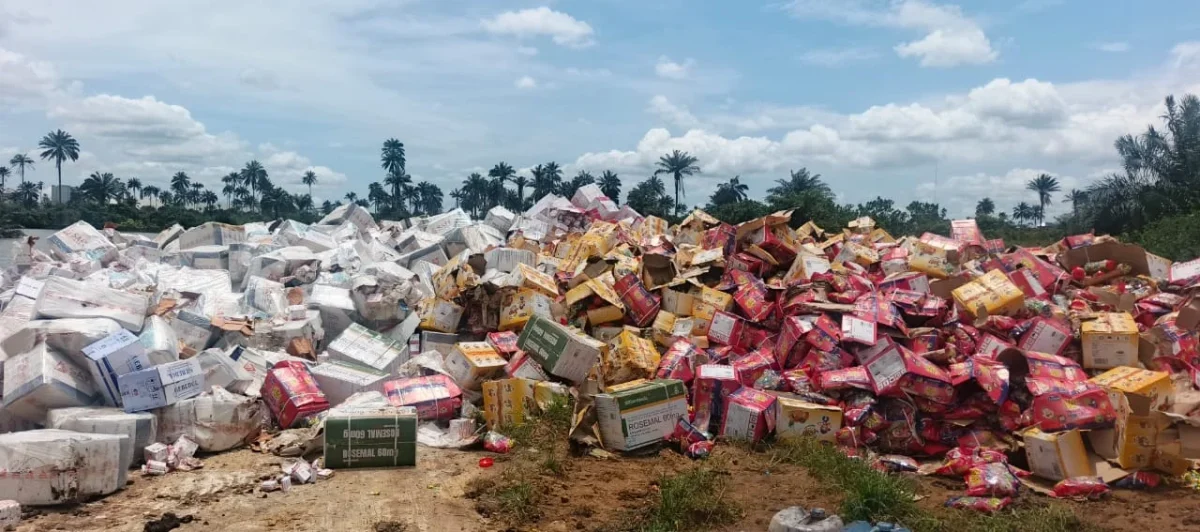
Fake drugs and other products seized and destroyed by NAFDAC in June 2026
Spread the love

ADVOCATE SUNDAY DISCOURSE 

By Tony Edike

As counterfeiters devise new ways to deceive consumers, the agency records hundreds of enforcement cases, thousands of product seizures and dozens of convictions, raising fresh concerns about the safety of medicines, food, water and everyday consumer products in Nigeria.

The growing circulation of fake, adulterated and substandard products in Nigeria has assumed an alarming dimension, prompting the National Agency for Food and Drug Administration and Control (NAFDAC) to demand tougher punishment, including life imprisonment or the death penalty, for manufacturers and distributors of counterfeit regulated products.

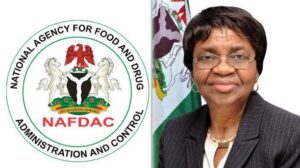
NAFDAC DG, Professor Mojisola Adeyeye

The agency’s Director-General, Professor Mojisola Adeyeye, recently described individuals involved in the production and distribution of fake products as “merchants of death”, arguing that their activities amount to a deliberate threat to the lives of millions of Nigerians.

Her demand comes amid renewed efforts by the agency to dismantle networks involved in the manufacture, importation and distribution of counterfeit medicines, adulterated food, contaminated water, fake cosmetics and other potentially dangerous consumer products.

Maduka College Advert

The concern is that while NAFDAC continues to intensify its enforcement operations, those involved in the illicit business are equally devising new methods to evade regulatory authorities, exploit weaknesses in the supply chain and maximise profits at the expense of public health.

A disturbing picture of counterfeit products

The scale of the problem is reflected in NAFDAC’s enforcement statistics.

Between January and August 2026, the agency recorded 474 new cases, 821 product seizure entries and 213 raids nationwide.

Its Directorate of Investigation and Enforcement also reported 52 arrests, 179 establishments closed or sealed, 218 administrative sanctions and 295 concluded cases within the eight-month period.

The operations covered medicines, cosmetics, packaged water, drinks, food, medical devices and chemicals.

Cosmetics accounted for the highest number of seizure entries, with 401, followed by drinks with 215 and drugs with 112.

The figures demonstrate that the threat extends beyond counterfeit medicines to virtually every category of regulated product consumed by Nigerians.

In another surveillance exercise between May and July 2026, NAFDAC’s Post-Marketing Surveillance Directorate reportedly visited 5,738 facilities across the 36 states and the Federal Capital Territory, mopping up 7,210 brands of products considered non-compliant.

Food and water accounted for 3,633 products, while drugs and herbal products accounted for 2,459.

These figures provide an indication of the scale of regulatory concerns confronting the agency.

From fake medicines to counterfeit drinking water

One particularly disturbing dimension of the menace is the counterfeiting of products belonging to established and trusted manufacturers.

NAFDAC recently uncovered the activities of three companies allegedly involved in counterfeiting CWay dispenser water bottles.

According to Professor Adeyeye, the operators collected empty 19-litre bottles bearing the identity and branding of the legitimate water company, refilled them with water from unapproved production sources and reintroduced them into the market.

The counterfeit products were reportedly distributed to major hotels and supermarkets.

The development raises serious concerns about the safety of drinking water consumed in homes, offices, hotels, restaurants and other public establishments.

Unlike properly manufactured and regulated bottled water, water obtained from unapproved sources may not have undergone the necessary treatment, filtration and quality-control procedures.

Contaminated water can expose consumers to dangerous microorganisms and waterborne diseases, including cholera, typhoid and diarrhoeal infections.

The CWay incident also demonstrates how counterfeiters exploit the reputation of established brands to deceive unsuspecting consumers.

For many Nigerians, the appearance of a familiar brand on a product is enough to create confidence, without necessarily verifying where the product originated or how it was manufactured.

Fake toothpaste, medicines and cosmetics

The counterfeiting of everyday household products has also become a source of concern.

NAFDAC disclosed that it had investigated the production of counterfeit Oral-B and Colgate toothpastes and arrested individuals allegedly involved in the operations.

The agency also uncovered the counterfeiting of products bearing the Nivea and Listerine brand names during an enforcement operation at Igbudu Market in Warri, Delta State.

The operation, conducted by officers from NAFDAC’s Asaba Zonal Office with the support of the Department of State Services, the Nigerian Army and the market union, led to the seizure of suspected counterfeit cosmetics and other regulated products.

In a related warning, NAFDAC cautioned Nigerians against purchasing KY Jelly lubricant currently circulating in the market.

According to the agency, the product’s marketing authorisation holders confirmed that the last authorised supply was made more than five years ago. Consequently, any such product currently being sold should be treated as suspect.

Although the agency did not declare every product bearing the affected brand names counterfeit, the developments underscore the importance of verifying the authenticity and source of consumer products before purchase.

The danger associated with counterfeit cosmetics and personal-care products is particularly worrying because such products are applied directly to the skin or used in sensitive parts of the body.

Where their ingredients, manufacturing conditions and safety standards are unknown, consumers may be exposed to harmful substances, contamination, skin reactions and other health complications.

The deadly consequences of fake medicines

Perhaps the most dangerous aspect of the counterfeit products business is the circulation of fake and substandard medicines.

Medicines are manufactured to treat specific illnesses, control medical conditions and save lives. However, when counterfeiters introduce products containing the wrong ingredients, inadequate quantities of active substances or harmful contaminants, the consequences can be devastating.

A patient who purchases a fake antimalarial drug, for instance, may continue to suffer from malaria because the medicine does not contain the required active ingredients.

Similarly, counterfeit antibiotics may fail to treat bacterial infections, allowing illnesses to worsen and potentially contributing to antimicrobial resistance.

The consequences can be particularly severe for children, pregnant women, elderly people and patients battling serious medical conditions.

There is also the danger of patients losing confidence in genuine medicines after experiencing treatment failures caused by counterfeit alternatives.

In some cases, victims may spend additional money treating complications arising from the consumption of fake medicines, thereby worsening the financial burden on families already struggling with the rising cost of healthcare.

The business is therefore not simply an economic crime. It is a serious public health threat capable of causing avoidable illnesses, permanent injuries and deaths.

NAFDAC moves beyond seizures to convictions

In defending its enforcement record, Adeyeye disclosed that NAFDAC had secured 64 convictions against individuals involved in counterfeiting across the country.

The offenders reportedly received prison sentences ranging from one to seven years without an option of fine.

The agency also recalled its major enforcement operations between February and March 2025 in Idumota, Lagos; Aba, Abia State; and Onitsha Bridgehead, Anambra State.

Those operations resulted in the seizure and destruction of more than 137 truckloads of counterfeit and substandard products valued at over N1.5 trillion.

In February 2026, NAFDAC also destroyed fake, expired, counterfeit and banned medicines worth more than N15 billion in Ibadan, Oyo State.

The products included Analgin, co-codamol, codeine syrups, tramadol, oxytocin and expired vaccines.

Another destruction exercise in Kuje, Abuja, in March 2026 involved counterfeit medicines and other regulated products valued at N1.8 billion.

At the Lagos Trade Fair Market in February 2026, the agency seized more than 10 million doses of counterfeit malaria medicines and cosmetics valued at approximately N3 billion.

Four suspects were reportedly arrested following the discovery of the products in a three-storey building allegedly used as a warehouse.

These operations indicate that the agency is increasingly focusing on the criminal networks behind the trade rather than limiting its activities to the removal of suspicious products from markets.

Why NAFDAC wants the death penalty

Against this background, Adeyeye has called for the introduction of tougher penalties for individuals who deliberately manufacture and distribute fake regulated products.

She argued that existing punishments are insufficient to deter individuals who continue to risk human lives for financial gain.

“The penalties should include death penalty or life imprisonment to people who produce and sell fake regulated products,” she said.

The NAFDAC boss disclosed that the agency’s enabling laws and other relevant legislation were undergoing review, expressing the expectation that the revised legal framework would provide stronger sanctions.

Her position is based on the argument that individuals who knowingly manufacture and distribute products capable of killing unsuspecting consumers should face punishment proportionate to the harm their activities can cause.

However, the proposed death penalty has also opened up a wider debate about criminal justice, proportionality of punishment and the effectiveness of severe sanctions in addressing economic crimes.

Under the existing Counterfeit and Fake Drugs and Unwholesome Processed Foods (Miscellaneous Provisions) Act, Cap C34, Laws of the Federation of Nigeria 2004, a person convicted of producing, importing, manufacturing, selling or distributing counterfeit, adulterated, banned, substandard or expired drugs, or unwholesome processed food, faces a fine of up to N500,000 or imprisonment for between five and 15 years, or both.

The law also provides punishment for the unauthorised sale of drugs in unlicensed premises.

Importantly, the death penalty is not the punishment prescribed under this existing law for these offences. NAFDAC’s proposal would therefore require legislative action before it could become an applicable punishment.

The challenge of enforcement and prosecution

While tougher legislation may serve as a deterrent, the fight against counterfeit products requires more than the introduction of harsher punishments.

One major challenge is the ability of regulatory authorities to identify and dismantle the entire supply chain, including manufacturers, importers, financiers, warehouse operators, distributors and retailers.

In many instances, the individuals selling counterfeit products in markets may not be the same people responsible for manufacturing them.

This makes intelligence gathering, investigation, laboratory analysis and successful prosecution particularly important.

NAFDAC must also strengthen its surveillance of production facilities, warehouses, distribution networks, border entry points and online marketplaces where counterfeit products may be advertised and sold.

The involvement of other security and regulatory institutions, including the Nigeria Police Force, Nigeria Customs Service, Department of State Services and relevant state authorities, is equally important.

Another concern is the possibility of regulatory compromise, inadequate monitoring and the continued operation of illegal production facilities despite repeated enforcement exercises.

For the proposed tougher penalties to achieve their intended purpose, investigations must be thorough, prosecutions must be successful and offenders must be held accountable regardless of their financial status or political connections.

Consumers must also become more vigilant

NAFDAC has repeatedly stressed that the fight against counterfeit products cannot be left entirely to government agencies.

Consumers have a responsibility to pay attention to the products they purchase and report suspicious items to the appropriate authorities.

Nigerians are advised to purchase medicines from licensed pharmacies and other authorised outlets rather than relying on roadside vendors or unverified online sellers.

They should also examine product packaging, registration numbers, manufacturing and expiry dates, batch numbers and seals before purchasing regulated products.

However, consumers must understand that the presence of a NAFDAC registration number does not, on its own, guarantee authenticity, as counterfeiters can reproduce the registration details of genuine products.

Product details should therefore be checked against NAFDAC’s official registration databases, including its Greenbook and NAPAMS platforms.

Suspiciously cheap products, damaged packaging, spelling errors, unusual changes in colour or texture and sellers unable to explain the source of their goods should also attract caution.

NAFDAC has urged Nigerians to report suspected fake and unsafe products through its official complaint channels.

The agency can be reached on 0800-1-623322 or through its official reporting channels.

Beyond death penalty: Nigeria needs a sustained war against counterfeiters

The growing circulation of fake products raises fundamental questions about the effectiveness of Nigeria’s consumer protection and public health regulatory systems.

How can a country guarantee the safety of its citizens when counterfeit medicines, questionable drinking water, fake cosmetics and adulterated food products continue to find their way into markets?

How can legitimate manufacturers compete when criminal operators can exploit established brands, avoid quality-control expenses and make enormous profits from products that may endanger human lives?

And how many Nigerians have unknowingly consumed counterfeit products without realising that what they purchased could expose them to serious health risks?

These are questions that require urgent answers.

NAFDAC’s demand for life imprisonment or the death penalty reflects the seriousness of the threat confronting the country. However, the ultimate measure of success will not be the severity of the punishment announced but the agency’s ability to prevent dangerous products from reaching consumers, dismantle the criminal networks behind their production and distribution, and secure convictions against those responsible.

Nigeria must also strengthen public awareness, support genuine manufacturers, improve product traceability and ensure that regulatory agencies have the resources and institutional independence required to carry out their responsibilities.

Ultimately, the fight against fake products is a fight to protect human lives. No Nigerian should have to worry that the medicine purchased from a pharmacy, the water served in a hotel, the toothpaste used by a child or the food consumed by a family could become a source of illness or death.

The business of counterfeiting must no longer be treated as an ordinary commercial offence. It is a threat to public health, consumer confidence and national development that demands sustained action from government, industry stakeholders and citizens.

• The Advocate

Continue Reading

News

ESIRS Raises Alarm Over Fake Property Tax Notices in Enugu

Published

on

ESIRS Chairman Emmanuel Nnamani
Spread the love

• ESIRS Moves Against Those Behind Fake Notice

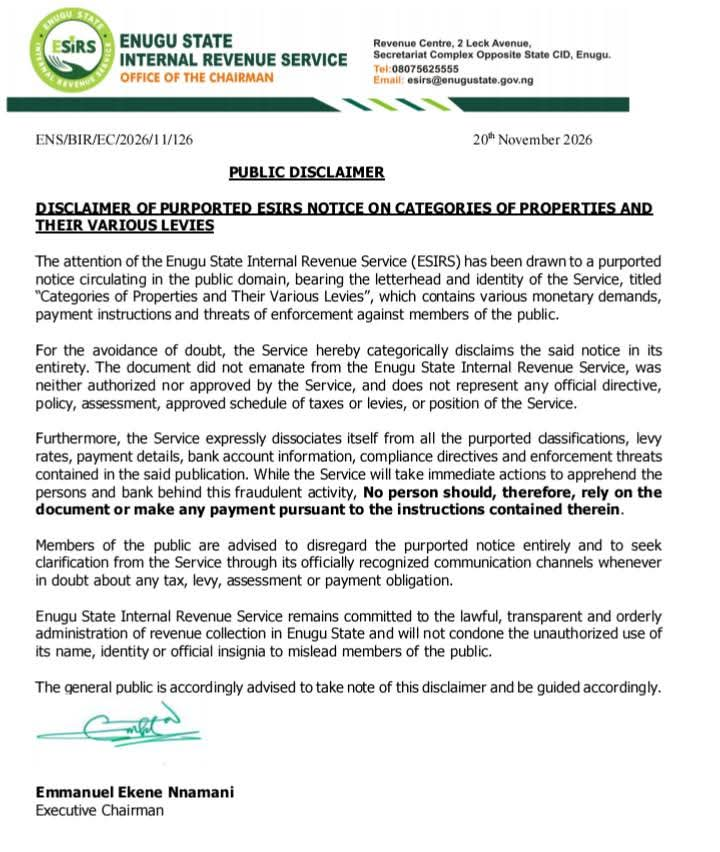
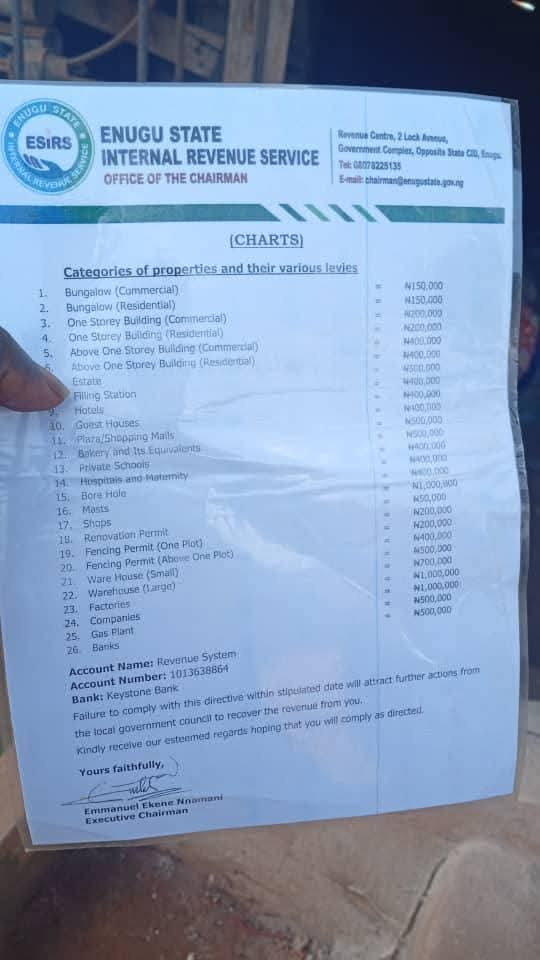
The Enugu State Internal Revenue Service (ESIRS) has disowned a purported property tax notice circulating across the state. It described the publication as fraudulent and unauthorised.

The document reportedly contains property classifications, corresponding levies, payment instructions and threats of enforcement. However, the agency insists that it did not issue or approve the notice.

In a public disclaimer dated November 20, 2026, ESIRS said the publication carried the title, “Categories of Properties and Their Various Levies.”

The disclaimer bears reference number ENS/BIR/EC/2026/11/126. The agency’s Executive Chairman, Emmanuel Ekene Nnamani, signed the statement.

Maduka College Advert

According to ESIRS, the document has circulated publicly as though it were an official communication from the state revenue authority.

The agency expressed concern that the publication contains monetary demands and purported bank account details. It warned that unsuspecting residents could suffer financial losses by acting on the information.

ESIRS Disowns Circulating Property Tax Notice

Clarifying its position, the revenue agency rejected the entire publication. It stressed that nobody should treat its contents as an official government directive or revenue policy.

ESIRS specifically distanced itself from the property classifications, levy rates and payment instructions. It also rejected the bank account details, compliance directives and enforcement threats.

The agency explained that the document does not represent any official assessment or approved tax schedule. It also does not reflect any established position of the Service.

“For the avoidance of doubt, the Service hereby categorically disclaims the said notice in its entirety,” the statement read.

The clarification follows recent public discussions about taxation and revenue administration in Enugu. ESIRS recently addressed tax exemptions under Nigeria’s new tax laws in its explanation of protections for low-income earners.

Meanwhile, the state’s revenue figures have attracted public attention. The latest NBS figures on Enugu’s tax revenue-to-IGR ratio provides further context for the ongoing discussions.

Residents Warned Against Making Payments

ESIRS warned residents, property owners and other members of the public against relying on the purported notice. It also advised them not to make payments based on its instructions.

The agency cautioned that anyone who follows the document could fall victim to fraudulent activity. It particularly highlighted the purported bank account details and financial demands.

“No person should, therefore, rely on the document or make any payment pursuant to the instructions contained therein,” the disclaimer stated.

Furthermore, ESIRS urged residents to disregard the publication entirely. It advised them to seek clarification through its recognised communication channels whenever they have questions about taxes, levies or assessments.

The warning comes amid wider conversations about revenue collection and government charges. ESIRS Chairman Emmanuel Nnamani previously clarified the revised payment structure for commercial tricycle operators following the state government’s Keke e-ticket reduction.

The state government has also addressed public concerns about transport-related collections.

ESIRS Moves Against Those Behind Fake Notice

Meanwhile, the revenue agency said it would take immediate steps to apprehend those responsible for circulating the purported notice.

It warned against the unauthorised use of its name, identity or official insignia. According to the Service, such actions could mislead residents and create confusion around revenue administration.

ESIRS described the development as an attempt to undermine public confidence in its operations. It also reiterated its commitment to lawful and transparent revenue collection.

The agency’s position comes as Enugu continues to pursue reforms in its revenue administration. The state government has highlighted fiscal  reforms and development initiatives aimed at strengthening public institutions and accountability.

Governor Peter Mbah’s administration has also identified revenue automation as part of its wider economic strategy. The government outlined several reforms in its development scorecard and economic growth agenda.

Service Reaffirms Commitment to Transparent Revenue Administration

ESIRS assured residents that legitimate revenue collection would continue under approved policies and procedures. It maintained that the Service would follow due process in all its operations.

The agency urged the public to remain vigilant against unofficial publications. It specifically warned residents about documents that claim to introduce new taxes, property levies or payment obligations.

It also advised residents to verify every revenue-related demand directly with the Service before making payments. This is particularly important when demands contain unfamiliar bank details or threats of enforcement.

Property-related charges and housing regulations have also featured in recent state policy discussions. The Enugu State House of Assembly recently passed a tenancy bill proposing limits on agency fees and rent increases.

The November 20 disclaimer was signed by Nnamani in his capacity as Executive Chairman of the Enugu State Internal Revenue Service.

Continue Reading

News

Bayelsa Boat Tragedy: NEMA Recovers 24 Bodies as Rescue Operations Continue

Published

on

Spread the love

The National Emergency Management Agency (NEMA) says 24 bodies have so far been recovered following a boat mishap in Bayelsa State, as search and rescue operations continue.

Manzo Ezekiel of NEMA’s Press Unit, Abuja, disclosed this on Saturday, saying, “So far, 24 bodies have been recovered from the scene of the incident, while search and rescue operations are ongoing.”

Ezekiel said the agency had deployed a technical team to Bayelsa State to strengthen the coordination of ongoing search and rescue operations following the tragic boat mishap at the river junction between Oweikorogha and Otuan communities in Southern Ijaw Local Government Area on Friday, November 20, 2026.

Maduka College Advert

He explained that NEMA had earlier activated its South-South Zonal Directorate and deployed an emergency response team from its Port Harcourt Operations Office to the scene.

According to him, NEMA personnel are working alongside the Bayelsa State Emergency Management Agency (SEMA), Nigerian Red Cross Society, Nigeria Police Force, Nigeria Security and Civil Defence Corps (NSCDC), local divers and other stakeholders to sustain the rescue operations.

The boat was reportedly conveying passengers from Ayama to Ukubie community to attend a burial ceremony when the accident occurred.

Governor of Bayelsa State, Senator Douye Diri, visited the scene of the tragedy, where he expressed deep sorrow over the loss of lives and extended his condolences to the bereaved families.

Newsdiaryonline reports that the governor commended NEMA, SEMA, the Nigerian Red Cross Society, the police, NSCDC, local divers and other stakeholders for their prompt mobilisation, collaborative efforts and commitment to the ongoing rescue operations despite the difficult riverine terrain.

NEMA also commiserated with the government and people of Bayelsa State, particularly the families who lost loved ones in the unfortunate incident.

The agency assured that it would continue to work closely with relevant authorities and emergency responders to support the ongoing operations and ensure effective coordination of the response efforts.

Continue Reading

Trending

Maduka College Advert