News
Nigerians in anguish over building demolition in cities

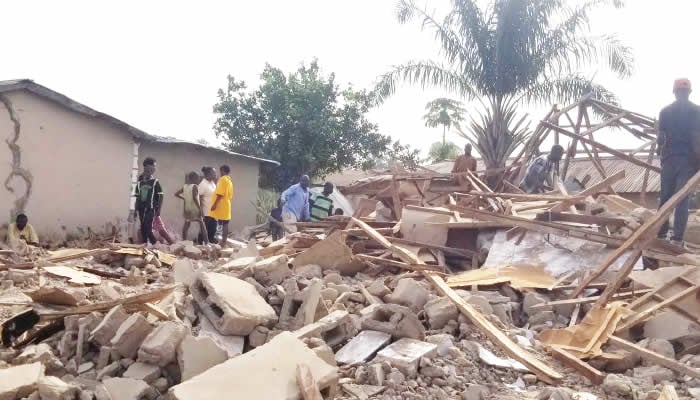
Till date, Bernard Nzerem, an engineer, is still in shock over the demolition of his over N2.2billion property at Naze, Imo State.
The property, comprising a two-storey building plaza, housing a church auditorium, another two-storey plaza, about 70 percent completed and multiple shops, was marked on June 28, 2025, and demolished on July 5, 2025, within a week notice, despite the presentation of Certificate of Occupancy and a Power of Attorney to the government agencies.

“This was not just a building. It was my entire life’s sweat,” Nzerem, an elder statesman, a member of the All Progressives Congress (APC), ruling party and an indigene of Naze, cried out.
Nzerem is not facing the trauma alone, as many shop owners and businesses within the property complex have either packed up or are still struggling to raise money to pay for new shops elsewhere.
So also are owners of the 15 buildings around the Federal Polytechnic Nekede area in Owerri, demolished in July, crying over their huge losses, especially shelter. The same scenario is playing out across the country.

For instance, house demolition is not new in Lagos State, which perhaps, accounts for the highest number of house demolitions in Nigeria, followed by Abuja.
In 2023, a five-storey building at 7 Breadfruit Street, Lagos Island, was demolished, among many over the years.
The state also marked 39 buildings for demolition, amid issuance of quit notices to owners and tenants at Oral Extension Estate, Westend and Mega Mond Estate in Eti-Osa, LGA.
The above-mentioned are few of the many property demolitions in the state over the years.
However, the brazen way a community was demolished in the Oworonshoki area of the state, this September, raised alarm over the exercise, which was intended for the residents’ good.
According to Balogun Jamiu, chairman of a Community Development Association in Oworonshoki, the residents, who are now homeless, were left in shock when bulldozers moved in at night, despite efforts at meeting the requirements of the government.
“The demolition came to us as a surprise,” he said, decrying why such an exercise was carried out at night when residents were home, sleeping and vulnerable.
Afeez Ayeni, a displaced resident, lamented that the government betrayed them as there was a gentleman agreement, which the residents were complying with.
“When the government people came from Alausa, they asked us to restructure our houses and make them stronger because the Oworonshoki area is swampy, with the closeby lagoon. We have done that and we have proof.
So, why come from behind to demolish our houses, especially now that our government does not build for the poor,” Ayeni lamented.
Following the demolition, Ayeni noted that house rent, which was already high due to the area’s proximity to the island, has more than doubled.
“Landlords are now saying that their houses are government approved and using it to increase rent in Oworo. We are now ex-landlords, and cannot even pay for a room again,” he decried.
Esther Morakinyo Fabiyi, a senior nurse at a government hospital, noted that the government keeps overlooking houses under high tension, waterways and buffer zones, which are more dangerous and rather demolishing the ones that the owners are making efforts to enhance in this hard time.
“I saw fellow mothers, who were displaced, crying.
“The government is no longer building cheap houses as Jakande did and yet it is demolishing the ones the owners have invested heavily to meet their high requirements,” she said.
Also, residents of Rimin Zakara village in Ungogo Local Government Area of Kano State, particularly, landlords, were traumatised over the demolition of over 40 houses during a recent operation by the state agencies, where no fewer than four casualties were recorded.
In defence of the demolition operation, a source at the state Ministry of Lands and Physical Planning said that the land in dispute belongs to the Bayero University Kano (BUK).
But many argued that the explanation is not enough reason for the demolition of the houses belonging to the poor.
Also, while it is about two years since the demolition of a set of buildings belonging to the Bayelsa State Government on Akassa Street, Old GRA axis of Port Harcourt, by the River State government, the evictees still recall their ordeals, amid pain.
Then, many described the demolition exercise as uncalled for, but while the two governments fought, the staff members of the Bayelsa State Liaison office in Port Harcourt, felt the impact of the eviction.
Isaac Board, a staff and evictee, recalled hurriedly packing out of the building and had no place to stay for some time.
“My family slept in the corridor of a friend’s place last night,” he lamented then.
Not only him, Woseebimu Frank-Oputu, an administrator officer at the liaison office then, sought refuge for his family at a church.
“It was my pastor that came with a truck to carry my property. My family and I are putting up in the church,” he stated then.
Though the staff members have been sorted out long ago, the worry for many is why government property and staff members were treated in such a way and that also points to why most governments don’t treat citizens with human face.
But in Abuja, many houses went down when Nasir El-Rufai was the Minister of Federal Capital Territory Abuja.
That wave of house demolition has resurfaced since Nyesom Wike became the FCT Abuja minister, with the Federal Housing Authority and the Abuja Metropolitan Management Council (AMMC) of the Federal Capital Territory Administration (FCTA), leading the onslaught.
Speaking on the issue, Andrew Osarhieme, a property expert, noted that while house owners share the blame for the demolition of their properties, the government and its multiple agencies share more of the blame for not putting the right measures in place and also being selective in the enforcement of building laws and demolition exercises.
“I live in Lagos and I have seen many houses built under high tension and the owners have been there for decades,” he said.
“Where is the government when the foundation was being laid and their agents who report fresh foundations to them for sealing off the premises if the owners have no approvals?
“The government is being more reactive than proactive in the enforcement of building laws, especially in Lagos and Abuja,” he said.
He insisted that if the government clearly marks areas and their purposes, fight enthronement, provide roads long before people start building, and deal with the omo-onile issue, there would be less properties to demolish across the country.
Mathias Egem, an Owerri-based property lawyer, also thinks that the government is reactive in the enforcement of building laws, while some demolitions are just for land grabbing.
Citing an instance with the demolition of a building allegedly used as a criminal hideout within the Ama Hausa axis in Owerri, the lawyer decried that instead of flushing the criminals out or turn the property to school or hospital, the government demolished it and probably, with an intent of taking over the land and reselling to individuals.
Countering the above, the Lagos State Building Control Agency (LASBCA) noted that its demolitions, which come after several notices, are aimed at safeguarding lives and property.
Last year, the Lagos State Government, through LASBCA, directed the removal of all illegal structures erected under high-tension and power lines, giving property owners until January 31, 2025, to comply, after which enforcement actions will commence.
For Gbolahan Oki, general manager, LASBCA, the directive aligned with the Lagos State Urban and Regional Planning and Development Law, which prohibits construction within restricted zones such as power line corridors.
Those who are crying foul today, according to the LASBCA boss, are owners who failed to adhere to the directive.
“Removing illegal structures is a crucial step in preventing tragedies caused by electrical hazards,” Oki stated.
“High-tension power lines transmit electricity at extremely high voltages, and any structure within their clearance zone poses serious risks, including electrocution, power surges, fires, and infrastructural damage due to safety violations,” he added.
Also, to ensure safety of lives and property across the state, in 2024, Babajide Olusola Sanwo-Olu, governor of Lagos State, granted amnesty to property owners to regularize their documents, which was extended to December 31, 2024, after which the LASBCA commenced enforcement, starting with Ogudu GRA.
Reviewing the exercise, LASBCA has noted that the enforcement drive is restoring order to Lagos physical planning, amid preventing structural hazards, such as recurring building collapse.
The Lagos State government has also taken safety further and started demolishing unapproved buildings following the expiration of the amnesty period granted by Governor Babajide Sanwo-Olu.
For the Federal Housing Authority (FHA), there is nothing wrong with demolishing buildings, especially when there is a need such as structural failure, which then requires controlled demolition.
Based on the above and for the safety of the residents, the FHA has carried many controlled house demolitions, especially in Abuja.
The most recent, according to the housing authority, was on March 24, 2025, when it demolished one of the authority’s buildings in Gwarinpa Estate, Abuja; a block consisting of six 3-bedroom flats.
Ojo, managing director and chief executive of FHA, explained that the authority considered the safety of human lives over any other thing in the demolition of the block due to structural defects.
For those accusing the government of being reactive, the FHA boss insisted that his management cannot wait until there is a disaster before acting, hence, proactive steps have been taken to salvage the situation.
The FHA also cleared the air on fear of forfeiture of properties when demolished, citing the demolition of one the 24 two-storey buildings illegally constructed on a waterway in Guzape District, Abuja.
The FHA boss owned up that the dilapidated buildings were FHA’s, but assured that the authority would complete the new building in one year and all the allottees would get back their houses at no cost.
While the above sounds interesting, considering the many cases where house owners and allottees often lose after demolition, the court is also offering respect to some owners who still have faith in the legal system and have taken legal actions against the government.
In July, an Abuja High Court declared recent demolitions of homes across the FCT illegal.
It also ordered the Federal Capital Development Authority (FCDA), responsible for the demolition, to pay N200?million to people whose homes were wrongly destroyed.
Though the case dated back to 2023 when the FCDA was demolishing buildings alleged to be on government land, it is justice at last for home owners, who despite having valid title documents or were in the process of securing them, lost their houses to the demolition exercise.
The ruling, according to Egem, will curb the excesses of government agencies, which often enforce laws without human face.
The property lawyer decried that most of the demolitions in the country violate homeowners’ rights to fair notice and a hearing.
“As Nigerians, part of our fundamental rights is the right to property. But our governments often act as if the citizens should not own property.
“What they should do is to harmonise property laws and give them a human face because many pour their life savings into their buildings and also depend on them for earnings, especially at old age,” he said.
He urged for a win-win bargain, as most owners of demolished buildings do not live long after their properties are gone and land grabbing is on the rise due to many demolition exercises in the country.
Osarhieme called for harmonising of building laws, easy facilitation of necessary documents and approvals and reducing of the too many agencies In building regulations in the country, especially Lagos State.
Egem urged for stiffer laws against land grabbing and use of demolition as political weapons by government officials.
Harry Emetuma, a senior banker and house owner, urged would-be landlords to start with documentation and authorisation to avoid unnecessary harassment from the many and yet to establish government building regulatory agencies. (BusinessDay)



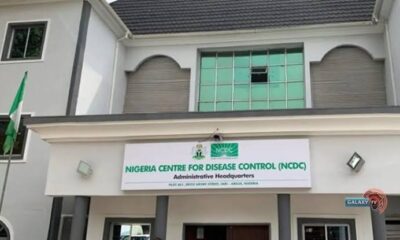









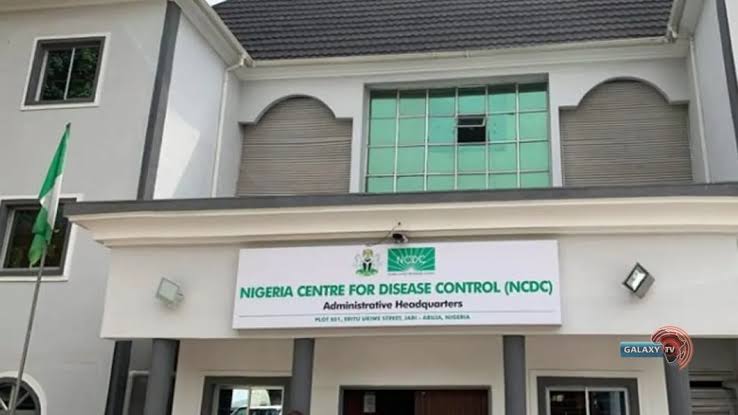
The Nigeria Centre for Disease Control and Prevention (NCDC) has reported two suspected Ebola cases as the number of people being monitored following the country’s confirmed infection rises to 53.
The development has heightened the urgency of efforts to contain the virus and prevent further transmission.
The Director-General of the NCDC, Dr Jide Idris, disclosed this on Sunday, October 25, 2026, during a press briefing in Abuja, where he provided an update on the country’s surveillance and response measures.
“We have established two additional suspected cases and 53 primary contact links. They are primary contacts. We have an isolation centre and a quarantine centre,” Idris said.
However, details surrounding the two suspected cases remained unclear, as other accounts of the briefing indicated that authorities had investigated two cases, including the confirmed infection in Abuja and a suspected case in Rivers State that subsequently tested negative.
The reported suspected cases should therefore not be interpreted as additional confirmed infections without laboratory confirmation.
Providing details of the contact-tracing exercise, Idris said the 53 contacts comprised 44 people linked to the healthcare facility where the confirmed patient received treatment and nine others identified through further investigations.
The additional contacts included three members of the patient’s household, three healthcare workers who attended to her at an earlier medical facility and three personnel involved in collecting samples.
According to the NCDC, the identified contacts had been classified according to their exposure risks and placed under monitoring. None had tested positive for Ebola or developed symptoms as of the briefing.
Idris explained that public health teams would monitor the exposed individuals for 21 days after their last possible exposure, in line with established protocols for detecting and responding promptly to potential infections.
He also disclosed that approximately 12 public and private laboratories were available to conduct Ebola testing in Nigeria as authorities continued to strengthen the country’s diagnostic capacity.
The NCDC director-general urged healthcare facilities nationwide to reinforce screening, patient assessment and infection prevention measures.
He stressed the need to provide healthcare workers with adequate personal protective equipment and ensure the prompt reporting of suspected infections.
Idris further appealed to individuals contacted by public health officials to cooperate with investigators and provide accurate information about their movements, possible exposure and symptoms.
Nigeria confirmed its first Ebola case in the current regional outbreak on October 20, 2026, after a woman with a recent travel history to Uganda tested positive for the Bundibugyo strain of the virus in Abuja.
According to the World Health Organisation, the woman developed symptoms on October 7 and sought treatment at a private health facility on October 11 before laboratory tests confirmed the infection.
The initial contact-tracing exercise identified 44 people, but the figure subsequently increased to 53 as investigations expanded.
The Federal Government has maintained heightened surveillance while strengthening laboratory testing, isolation arrangements and infection prevention protocols.
Health authorities have urged Nigerians to remain vigilant, cooperate with public health officials and avoid spreading unverified information as investigations and monitoring continue.

The Kogi State Police Command has commenced an investigation into the deaths of two individuals in Ajaokuta Local Government Area amid reports of an alleged murder-suicide involving two police officers.
The command’s Public Relations Officer, Afusat Saliu, confirmed the development in an interview with Sunday Punch on Saturday.
According to reports, a police corporal identified as Amos, attached to the Ajaokuta Division, allegedly shot his girlfriend, Grace, who was also a corporal, before turning the weapon on himself.
A source disclosed that Amos reported for night duty as a station guard at about 6 p.m. on Friday but allegedly left his duty post a few hours later.
He was said to have proceeded to Grace’s quarters at about 9 p.m., where he allegedly fired three shots at her, hitting her shoulder, lower abdomen and leg, before shooting himself with his AK-47 rifle.
The source attributed the incident to a lingering crisis in the couple’s relationship.
Reports indicated that the two officers had been dating for several years, but their relationship reportedly deteriorated in recent months amid allegations of infidelity and a breakdown of trust.
Their disagreements allegedly escalated into physical altercations and threats, prompting the Divisional Crime Officer (DCO) to detain them at one point and advise them to end the relationship.
“The two junior police officers had been dating for some years now, but a few months ago, they started having trust issues and cheating allegations. There had been physical fights and threats to the extent that they were detained at some point by the DCO, who later advised them to end the love relationship for the sake of peace,” the source said.
The source added that the disagreements persisted despite the DCO’s intervention.
Confirming the incident, Saliu said the command was investigating the circumstances surrounding the deaths and would provide further information when the investigation was concluded.
“We are aware of the incident, and the case is currently under investigation; we will update members of the public after the investigation is concluded,” she said.
However, the police spokesperson declined to immediately confirm whether the deceased were members of the command.
“I cannot confirm that to you right now, but we are investigating the circumstances that led to their death,” she stated.
Saliu also declined to categorically describe the incident as a murder-suicide, stressing that the police had yet to establish the circumstances surrounding the deaths.
“I cannot also tell you if the couple committed suicide or not until the investigation is concluded. We will release an official statement once I get a conclusive report on the matter,” she added.
The police are expected to provide further details after completing their investigation.
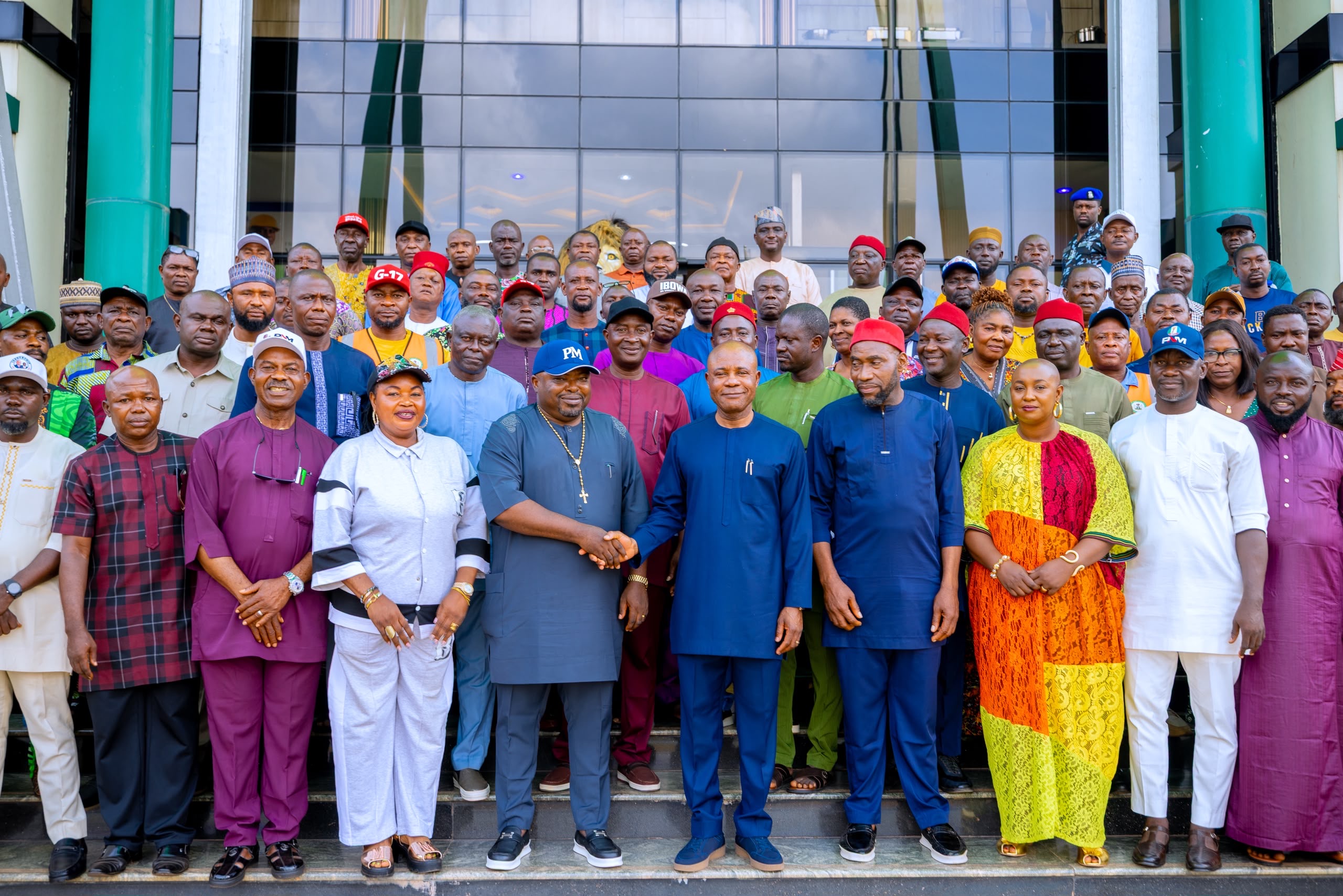
…ESMATA hails end of Monday sit-at-home, improved market infrastructure; governor announces cargo terminal, direct China imports plans
Market leaders across Enugu State have pledged their support for Governor Peter Mbah’s second-term ambition, citing improvements in market infrastructure, the restoration of Monday trading activities and policies aimed at strengthening commercial activities.
The traders, under the umbrella of the Enugu State Market Amalgamated Traders Association (ESMATA), made their position known during a meeting with the governor on Friday, October 23, attended by chairmen and secretaries representing more than 50 markets across the state.
Leading the delegation, ESMATA President, Chief Chinwuba Igwesi, said traders across the 17 local government areas of the state were satisfied with what he described as the administration’s commitment to improving their business environment and addressing challenges confronting the trading community.
Igwesi particularly commended Mbah for ending the Monday sit-at-home disruption, which he said had previously deprived traders of substantial income by forcing them to close their businesses at the beginning of each week.
He noted that the restoration of normal commercial activities on Mondays had enabled traders to operate throughout the week, recover lost business opportunities and improve their earnings.
The ESMATA president also praised the administration for providing transformers to markets experiencing electricity challenges, rehabilitating internal market roads, installing solar-powered streetlights and constructing toilet facilities.
He added that the government had provided utility vehicles to market leadership and appointed some market leaders to positions in the administration, describing the gestures as recognition of traders’ contributions to the state’s economic development.
Igwesi also expressed appreciation for pilgrimage opportunities approved for some market leaders, noting that the administration had demonstrated its willingness to engage with and support the market community.
According to him, Mbah’s background in business has enabled him to understand the challenges traders face, including access to goods, operating costs, infrastructure deficits and the need for a stable commercial environment.
Traders Defend Unified Tax System
Addressing concerns about taxation, Igwesi dismissed reports of a general tax increase, explaining that the administration had introduced a system for consolidating taxes into a single account.
He said traders were willing to fulfil their tax obligations because they could see development projects and infrastructure being delivered across the state.
The ESMATA president maintained that visible investments in public infrastructure had strengthened traders’ confidence in the government and encouraged greater cooperation between the business community and the state authorities.
He also attributed improved commercial prospects in the building materials sector partly to the administration’s directive that contractors handling projects in Enugu should patronise local suppliers where the required materials were available within the state.
According to him, the policy had helped retain business transactions within Enugu, increased patronage for local merchants and created opportunities for businesses dealing in construction materials.
Igwesi further commended the government’s investments in healthcare infrastructure, particularly the international hospital project, which he said had impressed him with its scale and standard.
Describing the development, he said the facility briefly made him feel as though he had travelled to Dubai.
He argued that projects of such magnitude could improve the state’s image, stimulate economic activities and create new opportunities for businesses.
‘No Opposition in Our Markets’
Declaring the traders’ support for Mbah’s second-term bid, Igwesi said the governor’s performance had strengthened his standing among market operators ahead of the next governorship election.
He urged the governor to sustain the pace of development, assuring him that traders would continue to support his administration.
“When the time comes, your work will speak for you,” he said, reiterating the association’s position with the declaration: “No opposition in Enugu State.”
Other market leaders echoed the commitment, arguing that improvements in infrastructure, security and the business environment had reinforced their confidence in the administration.
Mbah Unveils Plans for International Trade
Responding, Governor Mbah thanked the traders for recognising his administration’s efforts and assured them that more development initiatives were in the pipeline.
He said his government remained committed to expanding commercial opportunities, improving infrastructure and positioning Enugu as a major destination for business and investment.
Among the initiatives highlighted was a proposed cargo terminal at the Akanu Ibiam International Airport, Enugu, which the governor said would improve the movement of goods and connect local businesses to international markets.
Mbah also disclosed plans for direct cargo operations between Enugu and China, saying the initiative would enable traders to import goods more directly and at more competitive costs.
He explained that improved access to international supply chains would reduce some of the difficulties traders encounter when sourcing goods, while strengthening the competitiveness of businesses operating in the state.
The governor also highlighted the ongoing construction of the Idodo International Market, describing it as part of the administration’s broader strategy to expand commercial infrastructure and create additional opportunities for traders and investors.
He said the government was deliberately investing in infrastructure and connectivity to attract more businesses, stimulate economic activities and create employment opportunities.
ICC to Boost Commercial Activities
Mbah further explained that the construction of the International Conference Centre (ICC), Enugu, was part of his administration’s efforts to restore the state’s historical prominence as a major political, administrative and commercial centre in the South-East.
According to him, hosting national conferences, major gatherings and other high-profile events in Enugu would attract visitors and businesspeople, creating increased patronage for hotels, restaurants, transport operators, traders and other service providers.
He stressed, however, that sustained investment in security was essential to achieving the ambition, noting that businesses and visitors needed a safe environment to operate and move freely.
The governor said his administration was working to strengthen the state’s security architecture, adding that security, infrastructure and economic planning must complement one another to make Enugu more attractive to investors.
Mbah Targets $30bn Economy
Reaffirming his administration’s economic ambition, Mbah said he was working towards growing Enugu’s economy from an estimated $4 billion to $30 billion.
He linked the target to efforts to increase productivity, attract investments, strengthen local enterprises and expand economic opportunities for residents.
The governor maintained that Enugu possessed considerable economic potential and expressed confidence that ongoing and planned projects would help accelerate the state’s development.
He also assured the traders that their interests would remain a priority, pledging not to support policies designed to undermine their businesses.
Drawing on his own business experience, Mbah said he understood the challenges associated with running enterprises, sourcing goods, meeting financial obligations and sustaining livelihoods.
He assured the market leaders that his administration would continue to consider the impact of its policies on traders and other business operators.
The meeting was attended by key government officials, including the Senior Special Assistant to the Governor on Market Liaison, Hon. Dr. Chinedu Mbah; the Senior Special Assistant to the Governor on Security, Mr. Vincent Onyeaboor; and the Special Adviser to the Governor on Political Matters, High Chief Frank Anioma. The three officials accompanied the governor in receiving the market leaders.
The engagement underscored the importance of sustained dialogue between the state government and the market community, with traders expressing appreciation for completed interventions while the governor outlined further plans aimed at improving infrastructure, expanding access to international trade and strengthening Enugu’s commercial position.
With the ESMATA leadership and representatives of more than 50 markets expressing confidence in the administration, the meeting highlighted the growing significance of the trading sector in the state’s economic and political conversations ahead of the next governorship election.
For the traders, the central message was that market infrastructure, reliable security, access to goods, improved business opportunities and visible development would remain important measures of government performance. For Governor Mbah, the meeting provided an opportunity to reaffirm his commitment to building a more connected, secure and commercially vibrant Enugu State.
-
 Features18 hours ago
Mmesoma Umeorini: When Love Turns Deadly, and a Young Woman Pays With Her Life
-
Features15 hours ago
Why Igbos Celebrate New Yam Festival Worldwide: The History, Cultural Significance and Lessons For The Younger Generation
-
News6 hours ago
Kogi Police Probe Alleged Murder-Suicide Involving Two Officers
-
News2 days ago
Mbah: Why We Built 268 Smart Green Schools Across Enugu State
-
News2 days ago
UBA Commences Contempt Proceedings Against WEMPCO Directors over Alleged Disobidence of Court Order
-
News2 days ago
Enugu CP Orders Probe into Death of Izuchukwu During Police Raid
-
News2 days ago
Macron Postpones Planned Visit to Nigeria Until 2027
-
Politics2 days ago
2027: Atiku, Obi, Duke, Others in Talks on Single Opposition Candidate – Coalition