Politics
Nigeria is bleeding, broken and we’re tired

By Agbeze Ireke Kalu Onuma, AI-KO.
I’m writing this essay in a vehicle, on the Ijebu Ode Benin Expressway, because my heart is heavy, and Nigeria is in deep pain. Today June 6th. 2025, our country is bleeding. The unusual presence of armed security men of all sorts, seemingly doing nothing more than extort, brought back to my mind: Just days ago, armed men killed 43 innocent Christians in Benue State. They shot people in their homes, chased families into wells, and hurt even pregnant women and a two-year-old child – all while soldiers nearby did nothing. At the same time, violent herder attacks killed over 50 people in the Northwest, and kidnappers are terrorizing Sokoto.

These aren’t just bad news stories. They’re signs that Nigeria is falling apart. Yet, the government is throwing parties to celebrate two years in power – two years of economy crashing, security disappearing, and broken promises.
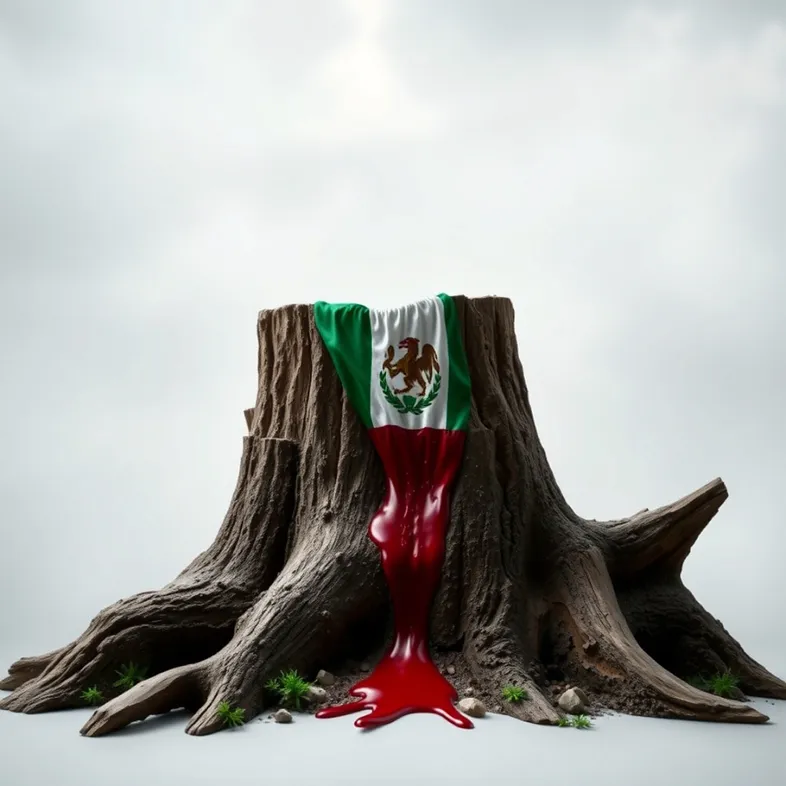
This is what our elders mean by leaning on a “dead stump.” Nigeria feels like a rotten tree trunk – looks solid but is crumbling inside. Our leaders have let everything break down:
• Farmers bury children killed in land fights

• Doctors run away from hospitals falling apart
• We pay for light, security guards, and water because the government fails us
This essay is my reflection and exploration of how a country with so much promise became a shell picked clean by the rich and powerful.
In today’s Nigeria:
• Big people break laws without punishment
• 87 million live in deep poverty despite our oil money
• Nobody trusts the government – worst in Africa!
• Hope is leaving: 15,000 doctors fled in 7 years
The Benue killings show the truth: A government that can’t protect its people has failed. When killers murder civilians near soldiers who do nothing, the “dead stump” isn’t just rotten – it’s collapsing under us. Violence now costs Nigeria $132 billion yearly – money that could fix schools, hospitals, and roads.
I write this not from hopelessness, but from angry love for our country. Nigeria doesn’t need small fixes – it needs total rebirth. We must dig up the old roots of injustice and plant new seeds of fairness, equality, and the stubborn will to take back the future stolen from us all.
Nigeria perches precariously, leaning with unsettling trust on what Yoruba wisdom grimly identifies as a “dead stump.” This potent metaphor captures the essence of a nation seemingly balanced on rotten foundations, its immense potential – vast natural wealth, a vibrant cultural mosaic, teeming human capital – grotesquely overshadowed by the daily reality of systemic collapse, normalized irrationality, and profound disillusionment. The lived experience of Nigerians paints a picture of a country dangerously close to decomposition, where entrenched corruption, deep social fragmentation, and a worrying cultural numbness have become the defining features of national life. The irrationality of governance isn’t an occasional lapse; it is the pervasive, suffocating air we breathe.
This decay didn’t sprout overnight. Its roots dig deep into historical traumas, weaponized by generations of failed leadership. The arbitrary borders drawn by British colonizers forced disparate ethnic nations into a fractious administrative whole, a fault line expertly exploited by post-independence elites who replaced the dream of unity with the brutal calculus of competitive plunder. Military regimes merely institutionalized this corruption, building governance structures designed solely for extraction. The much-vaunted return to civilian rule in 1999 promised regeneration but delivered, tragically, recycled predation. Former military strongmen seamlessly rebranded as democrats, perpetuating kleptocratic traditions. As the prophetic Fela Anikulapo-Kuti declared decades ago, Nigerian democracy became “demo-cracy, crazy demo, demonstration of craze” – a hollow theatrical performance where elections serve only to legitimize grand theft. Decades later, Fela’s scathing critique remains painfully apt; the rituals persist, utterly divorced from democratic substance.
Nigeria as I have repeatedly said, is a country leaning on a rotten tree stump – it looks like it’s standing, but inside, it’s dead and crumbling. We see the proof everywhere: the terrible killings in Benue where soldiers watched and did nothing, kidnappings terrorizing Sokoto, millions trapped in deep poverty while oil money vanishes, hospitals losing doctors every day, and powerful people breaking rules without any punishment. We can’t pretend any longer. The old system – our “dead stump” – is collapsing under us.
The core pathology is a kleptocratic ecosystem operating with near-total impunity. A cabal of political elites, bureaucratic tacticians, and corporate magnates treat the nation as their personal criminal franchise, shielded by immense wealth, intricate connections, and a deeply compromised judiciary. The brazen looting of pension funds meant for retirees, where billions simply vanished, stands as a stark monument to this impunity – perpetrators faced mere slaps on the wrist despite public fury. Similarly, the fuel subsidy fraud saw trillions siphoned away through a complex web of institutionalized complicity involving oil magnates and state officials. This pervasive corruption fuels a parallel tragedy: the normalization of madness. Chronic electricity collapse, despite staggering investments, has made the incessant drone of personal generators the national soundtrack of state failure. The dilapidation of public education – underfunded institutions, unpaid teachers, perpetual strikes – now evokes weary resignation rather than outrage. This collective desensitization allows governance absurdities to replicate endlessly, from collapsing infrastructure to policies utterly divorced from the people’s reality. We witness the glaring contradictions daily: democratic accountability promised, yet “untouchable thieves” reign supreme; vast oil wealth flaunted, yet 33% unemployment and 63% multi-dimensional poverty grip the populace; national unity proclaimed, yet deepening ethnic and regional fissures make Chinua Achebe’s observation – “Nigerians don’t believe Nigeria exists” – resonate ever louder; rule of law enshrined, yet a two-tiered system prevails where elites enjoy “plea bargains” while the masses face brutalization.
This decomposition violently fractures the social fabric along lines of inequality and escalating violence. Ethnic and religious schisms, cynically manipulated by elites to distract from shared predation, deepen daily. The disillusionment felt by Northern Nigerians witnessing violence against southerners in India revealed a painful irony: despite perceived cultural affinities fostered by Bollywood, Nigerians abroad are crudely stereotyped as “drug traffickers” or “Boko Haram terrorists.” As one commentator starkly put it, “Outside Nigeria, a Christian southerner is as likely to be stereotyped as a Boko Haram terrorist as a northern Muslim is to be tagged a drug trafficker.” Meanwhile, deliberate resource maldistribution creates stark realities of abandonment. Blinder-Oaxaca decomposition analyses lay bare how material deprivation drives profound inequity. Rural women bear a staggering burden, experiencing 79.77% of sexual violence among disabled populations. Contraceptive access reveals a rural-urban gap where 82% of the disparity stems purely from wealth and education deficits. Healthcare apartheid persists grimly: maternal mortality is 14% higher in rural areas, where 72% of women lack skilled birth attendance. These aren’t accidents; they are the calculated outcomes of systemic neglect.
Perhaps the deepest decay is spiritual and ethical – a collective numbness, a normalization of the abnormal. Society increasingly worships at the altar of ill-gotten wealth. Opulence commands adulation regardless of its criminal provenance, framing wealth accumulation as life’s ultimate, and often only, metric. This pervasive moral ambivalence actively enables the cycles of rot: “Unethical conduct is lauded, perpetuating institutional rot.” The symbolism is potent when even high-ranking officials stumble over reciting the National Pledge – a vanished moral compass laid bare. Fela’s enduring diagnosis – “poor man dey cry, rich man dey mess” – still perfectly encapsulates the void where a social contract should reside. Cultural influencers, from Chimamanda Adichie’s piercing novel Americanah to Joy Alagbe’s powerful visual art, document this profound existential disillusionment. Alagbe’s 2023 Democracy Day piece, literally inscribing Fela’s “demo-crazy” critique onto the canvas, serves as a haunting reminder that the fundamental pathologies diagnosed decades ago remain stubbornly, tragically unchanged.
This internal decay inevitably tarnishes Nigeria’s global standing and the dignity of its citizens abroad. The nation suffers from toxic branding. The 2013 murder of a Nigerian in Goa ignited tensions, exposing how internal failures export shame, with Indian media and top ranking officials quick to stereotype Nigerians as “cancers” and “drug traffickers” – labels conspicuously absent when describing Russian or Israeli narcotics operatives. Studies, including one from Sweden, confirmed India as “the most racist society” for Africans, facing hostility comparable to that endured by India’s own 200-million-strong Dalit community. Unsurprisingly, a massive brain drain exodus is underway, a haemorrhaging of human capital driven by sheer disillusionment. Over 15,000 doctors fled between 2015 and 2022 alone, stripping the nation of the very innovators it desperately needs for any hope of renewal.
The unrelenting bloodshed across Nigeria – from the coordinated slaughter of 43 Christians in Benue to the mass kidnappings in Sokoto and the 50 lives erased in Northwest attacks – demands more than perfunctory condemnations. It compels piercing questions about a security architecture rotting from within, funded by billions yet yielding only corpses and despair. These are not isolated tragedies, but symptoms of systemic collapse.
The Theatre of Security: Why Do Checkpoints Exist If Soldiers Watch Killers Operate “Within Earshot”?
In Benue, attackers executed civilians opposite military checkpoints while soldiers stood passive . This mirrors the Dapchi schoolgirl abduction, where security forces received five separate warnings over four hours about approaching Boko Haram fighters yet took no action . What operational philosophy justifies deploying soldiers to “secure” highways if their role is spectral – recording atrocities but never preventing them? When the Army itself admits withdrawing troops from hotspots like Dapchi months before attacks , is this incompetence, cowardice, or complicity?
2. The Arithmetic of Betrayal: Where Do ₦4.1 Trillion Security Budgets Vanish?
Customs intercepts in 2023 – 2024 alone seized 451,771 firearms , yet terrorists still wield General Purpose Machine Guns on highways . Nigeria spends 8% of GDP ($132 billion/year) on violence containment , but soldiers lack bullets, communities have no police, and hospitals hemorrhage doctors. Who profits from this economy of carnage? Why does weaponry flow ceaselessly through 10,000 porous borders , while security chiefs flaunt promotions based on political loyalty, not merit ?
3. The Supply Chain of Terror: Which “Powerful Sponsors” Fuel the Arms Pipelines?
Firearms seizures expose Turkish smuggling networks shipping shotguns concealed in furniture , while Libyan conflict spillover floods the North with arms . Yet arrests of financiers vanish. The UAE named five Nigerians as terror sponsors in 2022 – why has none been prosecuted ? When elites openly fortify political thugs with weapons for elections , and state actors enable herder militias to seize Tiv farmlands , is the state arming its own enemies?
4. The Currency of Complicity: Why Do Officials Prefer “Speeches Over Action”?
After the Benue massacre, the federal government celebrated its second anniversary while villages buried their dead . When 110 Dapchi girls were abducted, authorities first denied it, then falsely claimed rescue . This mirrors the Chibok playbook: investigations ordered, reports buried. Senior Advocate Terkaa Aondo accuses state governments of complicity in land grabs, noting that attacks “are not random” but strategic dispossessions backed by official silence . Who issues the orders to stand down?
5. The Machinery of Impunity: Why Are Security Forces Rewarded for Failure?
Police kill 785 “robbers” in 100 days but lose 62 officers – a kill ratio signaling extrajudicial executions . Yet not one officer faced consequences for ignoring Dapchi’s warnings . When 72% of Nigerians deem police irredeemably corrupt , and officers extort bribes at checkpoints instead of patrolling, why are they deployed as VIP guards for politicians? What perverse incentive structure rewards incompetence with promotions?
6. The Cost of Collusion: When Did Citizens Become Sacrificial Lambs?
Farmers bury children butchered over contested land . Parents in Dapchi heard their daughters’ cries as Boko Haram marched them into darkness . South Easterners cower under sit-at-home orders while police vanish from streets – a tacit state surrender to non-state terror . Every life lost is a referendum on a state that taxes the poor to arm the rich, protects elite mines in Nasarawa but leaves schools defenseless.
Nigeria bleeds from self-inflicted wounds. The “dead stump” is not just rotten – it is fertilized by a ruling class that profits from chaos. Until we demand answers to these questions, until we trace the blood money funding terror, and until we dismantle the architecture of impunity, the stump will collapse – and bury us all.
Yet, decomposition need not be terminal. Biological truth teaches us that rotting wood nourishes new growth. Nigeria’s salvation demands radical honesty about the depth of the rot and the courageous cultivation of new foundations. An institutional overhaul is non-negotiable – anti-corruption agencies like the EFCC require genuine constitutional autonomy, transparent operations, and sweeping judicial reform to finally hold elites accountable. Pension and subsidy looters must face exemplary consequences, not the insult of plea bargains. This must be coupled with a profound civic reawakening. Reclaiming nationhood demands sustained grassroots mobilization, rejecting electoral apathy and holding leaders to account through vibrant civil society and fiercely independent media. Crucially, leadership paradigms must shift from corrosive patronage to rigorous meritocracy. Initiatives like a National Values Charter must move beyond rhetoric, with elites compelled to visibly use Nigerian hospitals and products. Blinder-Oaxaca analyses prove that equitable wealth redistribution is essential. Universal healthcare, pro-poor education funding, and rural electrification are not luxuries but necessities to reduce the desperation fuelling fragmentation.
General Christopher Musa’s recent disclosure – that Boko Haram thrives on fuel siphoned by commercial drivers, buried in jerrycans, and phoned in to terrorists – is less a revelation than a damning indictment of institutional paralysis. This supply chain has fueled genocide, yet the military’s response remains confined to speeches. rather than systemic action. When intelligence identifies drivers colluding with terrorists, what tangible steps follow? Are these enablers arrested, prosecuted, or dismantled? Musa’s admission echoes a pattern: security elites know the mechanics of terror but outsource responsibility to civilians while evading their own failures .
Consider the lethal irony: soldiers idle at checkpoints as terrorists slaughter civilians “within earshot,” yet the Air Force repeatedly bombs vigilantes and displaced camps – killing 120 in Tudun Biri (2023), 40 during Eid prayers (2024), and 20 more in Zamfara (2025) – all branded “mistakes” . These are not errors but symptoms of a rot: poor training, outdated intelligence, and zero accountability. When a jet can bomb citizens pursuing kidnappers but fail to intercept fuel smugglers, the system isn’t malfunctioning; it’s complicit.
Musa’s plea – “report suspicious activities” – rings hollow when communities doalert forces, only to face military brutality or airstrikes. In Borno, civilians reporting Boko Haram movements risk being labeled “sympathizers” and detained without trial . Meanwhile, security budgets vanish: ₦4.1 trillion evaporates while terrorists wield machine guns and troops groan over unpaid allowances . The Army Chief’s intelligence is useless if it never translates into raids on fuel depots, sting operations against informants, or protection for whistleblowers.
Terrorists evolve: they exploit borders, hack financial systems, and globalize recruitment via preachers like Ahmad Musa Jibril . Yet Nigeria’s security playbook stagnates in denial – blaming “external forces” like “Californium in Borno soil” while ignoring internal treachery . When bandits overrun villages, commanders peddle conspiracy theories; when airstrikes massacre civilians, investigations are buried. This isn’t incompetence – it’s a conspiracy of indifference where excuses are perfected as policy.
This recent disclosure about Boko Haram’s fuel supply chain – where commercial drivers siphon fuel, bury jerrycans, and phone terrorists – is not intelligence but a confession of institutional surrender. For 16 years, this same supply network has operated with impunity while security checkpoints function as passive observers to genocide. When terrorists slaughtered 43 Christians in Benue “within earshot” of military posts, soldiers reportedly stood passive – a pattern echoing the 2024 Dapchi abduction, where five advance warnings were ignored . Musa’s solution? A surreal proposal to fence Nigeria’s 4,477 km of borders , despite failing to secure a single highway checkpoint. This disconnect reveals a leadership culture prioritizing grandiose, unworkable projects over tactical competence. As security analyst Kabiru Adamu notes: “When a military cannot intercept fuel smugglers in areas it controls, fencing borders is like building a mansion on quicksand.”
Nigeria’s security budget has ballooned to ₦4.1 trillion annually, yet terrorists wield machine guns while troops ration bullets.
Recent findings expose catastrophic mismanagement:
• Airstrike misfires killed 120 civilians in Tudun Biri (2023) and 40 Eid worshippers in Zamfara (2024) due to “poor intelligence” – yet no commanders were court-martialed .
• Border security funds vanish amid weapons proliferation: Over 450,000 firearms were seized in 2023–2024 , yet terrorists still import drones and explosives through “protected corridors” . Governor Zulum’s warning that “Borno is losing ground” underscores the collapse .
Former Defence Minister Bashir Magashi’s admission is damning: “Appropriations are siphoned through phantom contracts – bulletproof vests become substandard, surveillance drones never arrive.”
Security agencies now operate as autonomous criminal enterprises:
• EFCC “sting operations” continue despite a 2023 ban, with officers raiding nightclubs and assaulting citizens .
• DSS death squads illegally detain journalists and invade courts to re-arrest defendants .
• Police extortion networks institutionalize bribery at checkpoints, with officers paying superiors for “lucrative” postings .
This lawlessness is shielded by a judicial cabal: 72% of corruption cases against security elites stall indefinitely, while #EndSARS and other protesters remain jailed without trial .
While officials blame “foreign fighters,” evidence points to domestic complicity:
• Weapons pipelines flow through ports controlled by political godfathers. The 2023 Sokoto arms haul traced AK-47s to a former governor’s warehouse .
• Terrorist financiers named by the UAE in 2022 remain unprosecuted, with two holding VIP access to National Security Council meetings .
• Military promotions favor loyalists over competence. Major General Abdulsalam Abubakar’s recent appointment as Northeast commander – the 15th in 16 years – followed ISWAP’s drone strike killing 26 in Borno . No overhaul followed.
As it is today, Nigeria’s security crisis is not a resource problem but a crisis of malignant intent. As the CDD West Africa concludes: “When security agencies become profit centers, citizens become expendable commodities” . Until:
1. Budget transparency publishes monthly security spending;
2. Command accountability jails officers for operational failures;
3. Civilian oversight empowers independent investigators to audit arms deals;
4. Community militias receive legal recognition and direct funding, bypassing corrupt chains –
The bleeding will continue. The dead stump isn’t leaning; it’s being monetized.
The solution isn’t more and more speeches. It demands:
1. Targeted dismantling of supply networks: Track fuel sales, arrest collaborators, and publicize prosecutions.
2. Reform airstrike protocols: Mandate visual confirmation, integrate ground intelligence, and punish “mistakes” as war crimes .
3. Purge corruption: Audit security budgets; jail officers diverting funds while soldiers starve .
Until then, Musa’s words are ash in the wind – another confession without consequence, as Nigeria burns.
As historian Toyin Falola reminds us, nations leaning on dead stumps face only two futures: collapse or a deliberate uprooting to fertile ground. Nigeria’s dangerous perch at the nadir of coherence and hope demands urgent action. Fela’s eternal cry – “God Help Nigeria” – echoes still, but the response cannot come from heaven alone. It must spring from Nigerians finally reclaiming their soil, branch by branch, value by value, decomposing the corrupt systems to make space for institutions rooted in justice and nurtured by active, unwavering citizen agency. The alternative is not stagnation, but implosion. The time to step off the dead stump is now.
Picture a huge, old tree in a forest that’s been dead for a long time. Beetles ate it from the inside. Disease spread through it. Storms scarred it. But because it still looks tall, people keep leaning on it, trusting it to hold them up – even though it’s rotten inside and could collapse any moment. That dead tree stump is Nigeria.We’re leaning on the empty shell of a country. The things that made it strong – fairness, honesty, working together – are gone. We’re just holding onto the name and the land, pretending it’s still alive while the ground shakes under our feet.
But here’s the important thing: rotting wood isn’t just falling apart – it’s getting hot inside. Tiny things are breaking down the old wood, turning it back into soil that can grow new life. That heat? That’s our pain. It’s the families crying in Benue after the killings. It’s the fear of people kidnapped in Sokoto. It’s the sadness of doctors and nurses forced to leave the country. It’s the anger of farmers ignored by the government. This heat isn’t bad – it’s powerful. It’s a sacred power, a sign we can’t ignore how broken things are anymore. If we stay numb, if we keep pretending the dead stump is safe, the heat will explode – either in chaos that destroys everything, or as a fire we control to clear the way for something new.
So, what do we do? We have to stop leaning on the dead stump. It’s scary to step away. We might feel unsteady. But only then can our feet touch the good soil underneath – the soil made rich by the rotten wood. This soil is the truth we’ve forgotten:
• Real power belongs to ordinary people, not to thieves in big houses.
• Real safety comes from everyone getting fair treatment, not from letting the powerful do whatever they want.
• Real wealth is a healthy child, a good harvest from a safe farm, a bright student learning – not stolen oil money.
Building a new Nigeria means:
1. Stop admiring stolen wealth. Respect honest work instead.
2. Demand clean government. Leaders and thieves must face real consequences, not secret deals.
3. See each other as Nigerians first. Forget dividing lines like North/South or Christian/Muslim. Our strength is in our shared humanity and right to a good life.
Let the terrible killings in Benue and Sokoto be the final warning – the loud crack that tells us the dead stump is breaking. Let the government celebrating two years of failure be the last empty noise from the old ways.
But here’s the hope hidden in this mess: just like rotting wood eventually becomes rich soil that grows new trees, our pain and anger can become the fuel for rebuilding Nigeria. This won’t happen by wishing or waiting. It needs all of us to act, starting with practical steps we can take right now.
First, we must fix justice. We need special courts dedicated only to corruption cases – courts that work fast and can’t be bribed. If you steal money meant for pensions or fuel subsidies, you must pay back every single kobo and go to jail. No secret deals, no exceptions for big names.
Second, government must start working for the people, not the politicians. Leaders should be required to use Nigerian hospitals and schools like everyone else – no more flying abroad for treatment. Our oil wealth needs to be shared fairly: used to feed the hungry, fix rural clinics, and pay teachers properly so they stay.
Third, we have to choose unity over division. See each other first as Nigerians – not just as Christian, Muslim, Yoruba, or Hausa. Celebrate people who earn money honestly through hard work, not those who flaunt stolen wealth. Teach our children that good character – what the Yoruba call Ìwà lẹwà – is true beauty, worth more than flashy cars or empty fame.
Fourth, we must protect our homes and communities. Retrain the police and army to focus on protecting ordinary people, not just guarding politicians. Give communities safe, anonymous ways to report kidnappers and criminals so everyone feels safer.
Finally, change starts with us, every single day. Register to vote and actually hold leaders accountable for their promises. Support Nigerian businesses – buy local products to create jobs here at home. Mentor a child, plant a tree, clean your street. Rebuild Nigeria from the ground up, one act of responsibility at a time.
The choice is clear: we can keep leaning on the dead stump until it crashes down on us, or we can step onto the solid ground of truth and start planting new seeds for our future. This isn’t about politics; it’s about our survival and dignity. Our own traditions show us the way: the Yoruba value good character, the Hausa know that Gaskiya (truth) is greater than anything, and the Igbo teach Egbe bere, ugo bere – live and let live. We have the wisdom. We have the people. What we need now is the courage to act together.
Stop leaning on the rotten past. Feel the good soil beneath your feet – the soil made fertile by our shared struggle and hope. Start planting the seeds of a new Nigeria today. Remember this old wisdom, renewed for our time: “A tree rots from the roots, but mighty forests grow from scattered seeds.” Let’s be the ones who scatter those seeds.
The time for just leaning is over. The time for planting is now.
Gather the good seeds from our deepest traditions – the Yoruba Omoluabi (good character), the Hausa Gaskiya (truth), the Igbo Ezi Omume (righteous conduct). Plant them firmly in the burned ground of our disappointment. Water them with the tears of those who mourn and the hard work of those ready to rebuild. Protect these seeds with the organized will of a people who finally know their own strength.
The new Nigeria won’t grow overnight. It needs patience, hard work, and watching carefully so the old rot doesn’t come back. But it will grow. Not as a sad memory of the past, but as a living future where our children and grandchildren can finally find shelter and peace.
If you have read this far, I say:
Step off the dead stump. Feel the good soil. Start planting.












The presidential campaign council of former Vice President Atiku Abubakar under the African Democratic Congress (ADC) has criticised President Bola Tinubu’s 90-day cost-of-living relief plan, describing it as “election bait” and demanding details of how the proposed measures would ease the economic hardship facing Nigerians.
The council’s Director of Strategic Communication, Phrank Shaibu, stated this on Friday during a world press conference at the party’s secretariat, questioning the timing of the initiative and the government’s ability to deliver meaningful relief within the proposed timeframe.
Shaibu argued that with the presidential election reportedly 86 days away, the 90-day timeline would extend beyond the poll, raising concerns that Nigerians might not experience the promised benefits before deciding whether to renew the administration’s mandate.
“After three and a half years of hardship, this government is asking families to carry another promise into the polling booth and wait for relief until the votes are counted,” he said.
He urged Nigerians to judge the Tinubu administration by its economic performance and the impact of its policies on household incomes rather than promises announced ahead of the election.
The Federal Government’s 90-day plan identifies five priority areas: food affordability, tax harmonisation, completion of key projects, removal of investment bottlenecks and household support.
However, Shaibu maintained that these issues had remained unresolved for too long, citing rising food and transportation costs, growing pressure on manufacturers and the closure of businesses.
He also criticised the government’s handling of petrol subsidy removal, arguing that adequate measures to protect vulnerable households should have accompanied the policy from the outset.
According to him, Nigerians were made to bear the immediate economic consequences of the reform while being asked to wait for its promised benefits.
“A government cannot put a 90-day deadline on hunger, the cost-of-living crisis and insecurity and call it an economic policy,” he said.
ADC Questions Tinubu’s Planned Kaduna Visit
The ADC campaign official also questioned President Tinubu’s planned visit to Kaduna State to launch his re-election campaign, citing concerns over insecurity, civilian casualties from military airstrikes, abductions and natural disasters in the state.
He recalled the December 3, 2023, military drone strike on civilians attending a Maulud celebration in Tudun Biri, which killed at least 85 people.
He also referenced a reported military airstrike in Giwa in September 2024 that allegedly killed at least 24 civilians, as well as reported kidnappings in Kachia in September 2025 and the impact of storms and flooding on communities across the state.
Shaibu challenged the President to explain what his administration had done to support victims of the incidents and what concrete measures had been introduced to protect residents from abductions and other security threats.
Demands Transparency Over NNPC Fuel Discount
Shaibu also questioned the effectiveness of a fuel discount promotion reportedly introduced by the Nigerian National Petroleum Company Limited (NNPC) on October 1.
He claimed that he visited NNPC retail outlets but was told that no discount was available, adding that he subsequently purchased petrol at ₦1,405 per litre.
He challenged the company to publish comprehensive details of the promotion, including the number of motorists who benefited, the participating stations and the volume of petrol sold at discounted prices.
The ADC official further questioned the reach of a reported ₦66-per-litre discount, arguing that the impact of the initiative needed to be assessed against the number of NNPC retail outlets and the country’s wider fuel retail network.
Demands Details of Five-Point Relief Plan
On food affordability, Shaibu asked the government to explain which production and distribution costs would be reduced for farmers, transporters and traders, when consumers should expect lower market prices and how the reductions would be sustained beyond the 90-day period.
He also demanded the publication of the proposed tax harmonisation measures, a list of projects scheduled for completion within the timeframe and details of the government’s plans to remove obstacles affecting manufacturers and investors.
Regarding household support, Shaibu called for disclosure of the eligibility criteria, payment amounts, commencement dates, funding arrangements and plans for beneficiaries after the initiative expires.
He argued that without clear implementation details and measurable targets, the plan risked becoming another government announcement without demonstrable benefits for ordinary Nigerians.
Raises Concerns Over ‘Arise for Tinubu 2027’ Registration Form
Shaibu also raised concerns about a registration form circulating under the name “Arise for Tinubu 2027”, which he said requested voter identification, bank details and phone numbers.
He demanded clarification on the identity of those collecting the information, the purpose of the exercise and whether it was connected to the proposed household support programme.
He insisted that Nigerians should not be required to surrender sensitive personal information to a political organisation as a condition for accessing public relief.
He further urged the government to explain what safeguards would prevent the misuse of personal data or the diversion of public assistance for political purposes.
Atiku’s Alternative Economic Position
Shaibu said Atiku had pledged to make Nigeria more affordable through disciplined public spending, targeted household assistance, lower production and transportation costs for essential goods, and policies designed to help local manufacturers expand and create jobs.
He maintained that the success of economic policies should be measured by improvements in household purchasing power, reduced living costs and increased economic opportunities, rather than official announcements.
The ADC campaign council urged Nigerians to demand verifiable evidence that the proposed relief measures would reach intended beneficiaries, deliver measurable improvements and remain effective beyond the election period.

The Chairman of Ezza South Local Government Area in Ebonyi State, Hon. Chinedu Mkpuma, has directed political parties and groups to obtain prior approval from his office before organising political campaigns and gatherings in the area.
The directive follows a recent security breach in Amaezekwe community amid growing concerns over political violence ahead of the 2027 general elections.
In a statement made available to journalists in Abakaliki, Mkpuma expressed concern over the security situation, saying the measure was necessary to protect lives and property, maintain public order and prevent further security breaches.
While acknowledging the constitutional rights of citizens to freedom of association and peaceful assembly, the chairman insisted that all political gatherings within the local government area must receive prior approval from his office.
He warned that anyone who violates the directive would face appropriate action in accordance with the law.
Meanwhile, the Labour Party governorship candidate, Eze Oko, has condemned the reported killings and alleged attacks on opposition parties in the state, calling on political leaders to end violence and intimidation.
Oko questioned the alleged targeting of opposition members and urged youths to resist attempts by politicians to use them as instruments of violence.
He called for a level playing field for all political parties and candidates, insisting that political competition should be based on ideas, manifestos and records of performance rather than violence.
The Labour Party candidate also cautioned political leaders against making inflammatory statements capable of escalating tensions during the electioneering period.
He urged candidates seeking re-election to allow their achievements to speak for them rather than allegedly engaging political thugs to intimidate opponents.
Oko further appealed to youths to reject political thuggery and violence, while extending his condolences to the families of those reportedly killed in the incident.
The development comes as political activities gather momentum ahead of the 2027 general elections, amid renewed calls for security agencies to investigate reported attacks and ensure that all political parties can operate without intimidation.
The directive applies specifically to Ezza South Local Government Area. The information available does not establish that the Ebonyi State Government has imposed a statewide ban on political campaigns and gatherings.
Opposition leaders under the G-100 coalition have said discussions among major presidential hopefuls on the emergence of a consensus candidate to challenge President Bola Tinubu in the 2027 general election are progressing steadily.
The coalition said leading opposition candidates had begun engaging one another on possible cooperation ahead of the polls, expressing optimism that a common candidate would emerge from the ongoing negotiations.
The group disclosed this in Abuja on Thursday during the inauguration of its legal and media committees, established to provide the necessary framework for inter-party negotiations and collaboration.
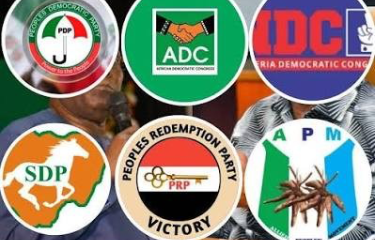
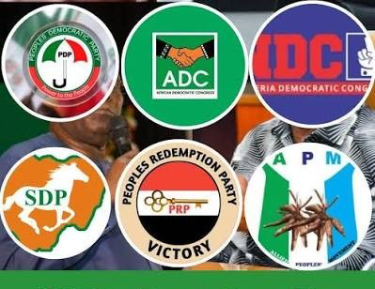
The parties participating in the initiative are the African Democratic Congress (ADC), Nigeria Democratic Congress (NDC), Peoples Redemption Party (PRP), Social Democratic Party (SDP), Peoples Democratic Party (PDP) and Allied Peoples Movement (APM).
Among the presidential hopefuls being considered are former Vice-President Atiku Abubakar of the ADC, Peter Obi of the NDC, Donald Duke of the PRP and Adewale Adebayo of the SDP.
National chairmen of the participating parties and other representatives attended the meeting.
Speaking at the event, SDP National Chairman, Prof. Sadiq Umar Abubakar Gombe, who inaugurated the committees, said the coalition was putting in place the structures required to facilitate negotiations and cooperation among the parties.
He disclosed that party leaders had been engaging presidential aspirants, adding that the candidates themselves had also commenced discussions on possible collaboration before the end of the year.
“Our ambition is to present a candidate that can defeat APC and form the next government. And we’re making very good progress,” Gombe said.
He described the feedback from the participating parties and presidential hopefuls as encouraging, expressing confidence that outstanding issues would be resolved before the 2027 general election.
Although the coalition has yet to disclose the formula for selecting its preferred candidate, Gombe said it was moving beyond political declarations to establish a structured process for achieving its objective.
“Today, we take a deliberate step from intention to structure. The work of this coalition will be judged not only by the strength of our convictions, but by the discipline, precision and unity with which we carry it out,” he said.
Legal Committee to Address Electoral and Constitutional Issues
Gombe described the legal committee as a critical component of the coalition’s efforts to establish a workable and legally sound framework for cooperation.
The committee, comprising national legal advisers of the participating parties and other senior legal representatives, is expected to review outstanding legal disputes involving the parties, examine the actions of the Independent National Electoral Commission (INEC) in relation to relevant Supreme Court judgments and advise the coalition on available legal options.
It will also scrutinise working-group documents and negotiated agreements, identify potential legal risks, recommend safeguards and establish mechanisms for resolving disputes before any coalition agreement is adopted.
Gombe warned that overlooking critical legal provisions could jeopardise the entire process.
“We cannot afford surprises. A single overlooked clause can undo months of honest negotiation,” he said, urging members to demonstrate diligence, transparency and independent judgment.
Media Committee to Coordinate Coalition’s Messaging
The media and publicity committee, comprising national publicity secretaries and spokespersons of the presidential campaign councils of the participating parties, will coordinate the coalition’s public communication strategy.
Its responsibilities include harmonising public statements, coordinating media engagements and announcements, and ensuring consistency in the coalition’s positions.
The committee is also expected to establish procedures for authorising joint statements and consult the legal committee on sensitive constitutional and legal issues.
Gombe urged members of both committees to operate within their respective mandates, coordinate their activities and submit regular reports to the coalition’s leadership.
Coalition Cites Economic Hardship, Insecurity
The SDP chairman said the coalition was responding to the need for credible political alternatives amid the country’s economic and security challenges.
He noted that insecurity, rising living costs, unemployment and declining purchasing power continued to affect Nigerians, adding that the performance of the Tinubu administration should be assessed against its record and policy outcomes.
According to him, persistent policy failures, declining public confidence, institutional weaknesses and inadequate accountability could become entrenched if the concerns of citizens were not adequately addressed.
“Any decision concerning the continuation of the present administration under President Bola Ahmed Tinubu must be assessed against its record, its policy outcomes, and its capacity to address the country’s pressing problems,” he said.
Gombe maintained that no administration was above public scrutiny, stressing that political office should be regarded as a responsibility entrusted by the electorate rather than an entitlement.
He said the opposition was committed to presenting credible alternatives, defending constitutional democracy and ensuring that political debates remained peaceful, informed and focused on the national interest.
“The strength of this coalition will not be measured by the number of parties represented here, but by our unity of purpose, discipline, credibility, and commitment to the Nigerian people,” he said.
He urged the participating parties to place national interest above personal ambitions and partisan differences, warning that the coalition’s success would depend on their ability to work together towards a common objective.
-
 Features2 days ago
Kogi’s Kidnapping Crisis: Why Do Forests Remain Safe Havens for Criminals Under Ododo’s Watch?
-
News2 days ago
Kidnappers kill seven-year-old boy after ransom demand
-
News3 days ago
“It’s not debatable, we can’t go back,” Mbah Backs Tinubu on Fuel Subsidy Removal
-
News1 day ago
Macron Postpones Planned Visit to Nigeria Until 2027
-
News1 day ago
Enugu CP Orders Probe into Death of Izuchukwu During Police Raid
-
News1 day ago
UBA Commences Contempt Proceedings Against WEMPCO Directors over Alleged Disobidence of Court Order
-
Politics1 day ago
2027: Atiku, Obi, Duke, Others in Talks on Single Opposition Candidate – Coalition
-
News1 day ago
$242m Petroleum Products Diversion Claim: UBA Secures Court Order Against Vitol, Four Others