Uncategorized
Enugu on the right path of investment under Mbah – Budget Minister, Bagudu


…as Austrian Ambassador lauds Enugu’s investment-friendly environment
Nigeria’s Minister of Budget and Economic Planning, Senator Abubakar Bagudu, has commended Enugu State Governor, Dr. Peter Mbah, for the deliberate commitment of his administration to creating a sustainable business environment for investors, saying that the state was already on the right trajectory of investment and development.
This was even as the Ambassador of Austria to Nigeria, Thomas Schlesinger, lauded the eco-friendly business environment, which he said motivated the Austrian development partners and investors to invest in the state.

The minister, who was on a working visit to Enugu alongside the Austrian Ambassador, to inspect some of the projects executed by the country’s development partners, as well as select facilities implemented under the Nigeria COVID-19 Action, Recovery and Economic Stimulus (NG-Cares), expressed satisfaction with the prudent and responsible use of the funds in executing the projects.
While congratulating Mbah on the successful hosting of President Bola Tinubu and the commissioning of some of the landmark projects by the governor earlier in the month, the minister expressed optimism that more projects would be completed and commissioned.
He stressed that his visit was necessitated by the need to inspect the European Business Park and the Austrian Eco-Social Market Economy Programme located at the Godfrey Okoye University where young entrepreneurs are trained, with their services outsourced in Europe and other developed countries. He said that he also inspected NG-Cares Basic Services Projects at Enugu-Ngwo, Amagu Akaegbe Ugwu and Obeagu-Uno water schemes.

“We visited 5 Local Government Areas today, namely Enugu East, Udi, Enugu North, Nkanu West and Enugu South, and all the women we met there were dancing and sent their regards. They were dancing for a good reason because you underscored the development. We visited your massive waterworks at 9th Mile delivered in 180 days.
“We’re so impressed given that the mandate of the Ministry is to appraise programmes that can either be expanded, replicated or serve as proof of consent. We are quite impressed. Apart from what we saw, we saw the practical education; we saw the outsourcing in practice and we saw partnership with the university and the bakery.
“But more than that, we saw the enthusiasm of a development partner, the Austrian Government, that appreciates that to share prosperity, you must be partners. And what we saw is a real partnership. It wouldn’t have been possible without the cooperation, leadership and guidance of Enugu State. So we must say a big thank you on behalf of all of us in the Ministry of Budget and Economic Planning,” the Minister added.
Senator Bagudu also noted that Enugu State under the Mbah Administration was one of the top performing states in the utilisation of the NG-Cares funds, promising that the state stood to benefit immensely from the new phase that was being negotiated by the ministry.
He called on investors across the globe to see Enugu State and Nigeria in general as an environment receptive of businesses with high returns on investments.
“We want investors. We want people who will come to our country and make money. Our country is a haven for those who want to make money and we want to partner with them through the instrumentality of those with whom God blessed us with, such as yourself,” he added.
On his part, the Austrian Ambassador described the administration of Governor Mbah as not only business-friendly but also inspiring entrepreneurial growth among the populace.
He maintained that the state possessed the ideal condition for training of young entrepreneurs, who could outsource their skills, adding that the Austrian Government was open for partnership with Nigeria on mutual grounds that will foster development.
Reacting, Mbah argued that Nigeria could only attain its development trajectory, create wealth and eradicate poverty through a shift from the federal to the sub-national development orientation.
He said the federal government had already started beaming light towards the recommended state-to-centre development approach through the series of reform initiated by the President Tinubu Administration, maintaining that the federal government was already treating the state governments as partners in progress to be able to touch lives.
Mbah, who underscored that development waits for nobody, said the state has the capacity to absorb high skills investment across various sectors with bankable projects that can yield good returns-on-investment.
The governor said some of the interventions undertaken by his administration were deliberate attempts to lift people out of poverty by creating employment opportunities, raising better living standard and ending open defecation in the state through urban and rural water projects.
“Our development model is grassroots-based. If you take for example what our intervention in the education sector which we described as a cut-off point, we are building 260 brand new Smart Green Schools across the 260 wards. The Smart Green Schools; it’s not just about the infrastructure like the blocks which are over 7000 classrooms in total, but it’s about the features. The fact that it will finally ensure that our children have access to quality learning and they are imbued with the right skill-set required to deal with the rapidly shifting world.
“We are not only bullish about sustainable development but also inclusive prosperity, which is also what we are doing in the primary healthcare sector, with 260 Type-2 Primary Healthcare Centre. We hope to accomplish them before our second anniversary. It is also not about the structure, but making sure they are well-equipped. I have just approved the recruitment of 2,500 healthcare personnel to make sure they are well-staffed and provide 24/7 services,” he added.
According to him, the administration was also intervening in the agriculture sector through the construction of 260 farm estates to boost and upscale production across all the electoral wards, each having at least 200 hectares of land.
While adding that the farm estates will help in the training of small holder farmers with the right crops to grow, and other facilities that would ensure zero post-harvest losses, the governor urged the minister to pay special attention to Enugu State in terms of intervention that would boost micro, small and medium enterprises.
Additional Photos on the visit:
Minister of Budget and Economic Planning, Senator Abubakar Bagudu, the Ambassador of Austria to Nigeria, Mr Thomas Schlesinger, the Commissioner for Local Govt, Chief Okey Ogbodo, the Commissioner for Agriculture, Hon Patrick Ubru, the Special Adviser to the Governor on Water and Waste, Mr Andreas Gebauer, alongside the Vice Chancellor, Prof Christian Anieke, inspecting the European Business Park and the Austrian Eco-Social Market Economy Programme at the Godfrey Okoye University as well as the NG-Cares facilities executed the Governor Peter Mbah administration in partnership with the Federal Government and the World Bank.










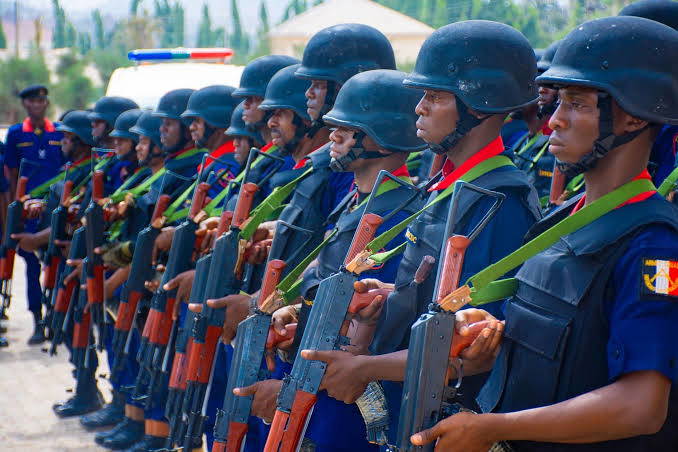
The Nigeria Security and Civil Defence Corps has commenced an investigation into the deaths of some suspected illegal miners arrested during enforcement operations in Niger State.
The suspects were arrested during coordinated operations conducted by the Niger State Command in the M.I. Wushishi/Lukoto axis on September 15 and 16, 2026, as part of efforts to curb illegal mining activities in the state.
The development followed reports that no fewer than 33 suspected illegal miners were feared dead after being detained at an NSCDC facility in Minna.
The deaths were reportedly discovered in the early hours of Thursday, with the Niger State Commandant, Suberu Aniviye, attributing them to a suspected outbreak of disease.
However, the NSCDC National Headquarters said the cause of the deaths had yet to be established, stressing that reports linking them to any specific disease remained subject to medical and laboratory confirmation.
In a statement on Thursday, the Corps’ National Public Relations Officer, Babawale Afolabi, said the Commandant General, Ahmed Abubakar Audi, had directed the constitution of a high-powered investigative team to determine the circumstances surrounding the deaths.
Afolabi said the team, to be led by the Deputy Commandant General in charge of Intelligence and Investigation, had been mandated to conduct a comprehensive inquiry into the incident.
According to him, the investigation would cover the condition of the suspects upon arrest, their period in custody, the conditions of detention, medical attention provided to them and other circumstances surrounding the deaths.
The statement partly read, “NSCDC has confirmed the death of some suspected illegal miners who were arrested during enforcement operations conducted in parts of Niger State on September 15 and 16, 2026.
“Following the development, the Commandant General, Ahmed Abubakar Audi, has directed the constitution of a high-powered investigative team, led by the Deputy Commandant General in charge of Intelligence and Investigation, to immediately look into the circumstances surrounding the incident.
“The team has been mandated to undertake a comprehensive investigation into the circumstances leading to the deaths, including the condition of the suspects upon arrest, their period in custody, the conditions of detention, medical attention provided, and other relevant circumstances surrounding the incident.”
Afolabi also directed that the health and welfare of all persons currently in custody be prioritised, while measures were being taken to protect personnel who might have had contact with the affected persons.
The Corps expressed condolences to the families of the deceased and assured them that the circumstances surrounding the incident would be thoroughly investigated and appropriately addressed based on established facts.
Afolabi added, “The NSCDC wishes to clarify that reports attributing the deaths to any specific disease remain subject to medical and laboratory confirmation. The Corps will therefore refrain from speculation until the outcome of the medical examination is established.
“The Corps extends its condolences to the families of the deceased and assures them that the circumstances surrounding the incident will be thoroughly investigated and appropriately addressed based on established facts.”
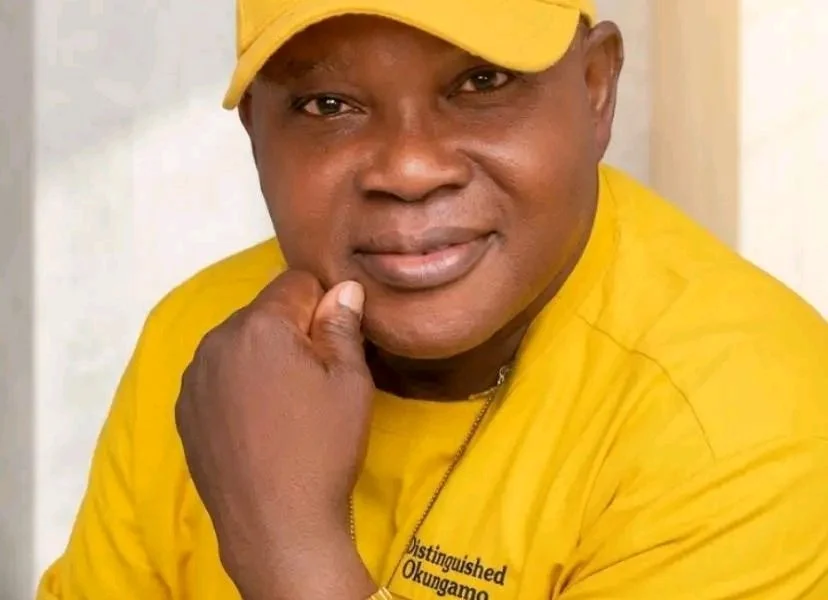
A popular Enugu State politician, Prince Ikechukwu Oloto, also known as Okanga Moo, has reportedly been killed by unknown gunmen in Nsukka Local Government Area of the state.
Oloto was allegedly attacked at his residence in the Odenigbo area of Nsukka on Thursday evening.
The attackers reportedly invaded the politician’s home and killed him during the incident.
The reports also alleged that a knife was used in the attack.
Details surrounding the killing remain unclear, as the circumstances that led to the incident have not been fully established.
The identities of the attackers and their motive were also unknown as of the time of filing the report.
The death was also reported by social media influencer, Sen. Chijinkem Ugwuanyi, in a Facebook post.
Ugwuanyi said the politician was killed at his residence in Odenigbo, Nsukka.
The reported killing comes as political activities and preparations for the 2027 general elections continue to gather momentum across the country.
However, it was not immediately clear whether the incident was connected to Oloto’s political activities.
By press time, the Enugu State Police Command had yet to issue an official statement confirming the killing or providing details of any investigation into the incident.
By Tony Edike
How successive governments have repeatedly promised to open up Kogi’s agricultural powerhouse — and why residents are tired of waiting
For decades, the people of Ibaji Local Government Area of Kogi State have watched politicians arrive with promises of development, particularly the construction of the roads that would finally connect their isolated communities to the rest of Nigeria.
Then the elections come.
Campaigns are held. Political leaders visit. Road projects are announced or flagged off. Contracts are mentioned. Hope rises among the people.
And, according to residents and repeated reports about abandoned projects, the construction often disappears from the political radar once the election is over.
For Ibaji, this has become more than a problem of bad roads. It has become a question of political accountability.
The most enduring symbol of this frustration is the long-promised Otuocha–Ibaji–Idah road corridor, which residents believe could fundamentally transform the local government by opening it to commerce, investment, agriculture and social development.
A food basket trapped behind bad roads
Ibaji occupies a strategically important position along the River Niger and has enormous agricultural potential.
The local government is known for farming and fishing, producing crops including rice, yam and cassava. Yet the same geographical and agricultural advantages that could make Ibaji a major economic hub have been undermined by inadequate transportation infrastructure.
The contradiction is stark: a community capable of contributing significantly to Nigeria’s food supply continues to struggle with the basic infrastructure required to move its agricultural products to markets.
Poor roads increase transportation costs, discourage investment and make it more difficult for farmers to get their produce to consumers.
During the rainy and flooding seasons, the problem becomes even more severe.
Reports have documented the extent to which flooding and damaged roads have isolated communities in Ibaji, with residents sometimes relying on bicycles, motorcycles and waterways where roads become impassable.
For a predominantly agrarian community, this is not simply an inconvenience.
It is an economic handicap.
The promise that keeps returning
The history of the Otuocha–Ibaji–Idah corridor illustrates the frustration.
In 2009, the Federal Government reportedly awarded the approximately 90-kilometre Otuocha–Ibaji–Idah road to Nigercat Nigeria Limited for about N7.2 billion, with reports putting the mobilisation payment at about N2.5 billion.
Yet the project subsequently stalled.
Years later, the road remained a subject of complaints by Ibaji residents and community groups.
The road was still being discussed when another promise came from the Kogi State Government.
Yahaya Bello’s 2017 flag-off
In April 2017, then Kogi State Governor Yahaya Bello visited Ibaji and flagged off the construction of the 40-kilometre Idah–Onyedega road.
The contract was reported to be worth more than N5 billion.
At the ceremony, Bello said the road would be asphalt-overlaid and that its completion would boost the economy of the area.
The message was significant because even the then Deputy Governor, Simon Achuba, an indigene of Ibaji, acknowledged that the local government had long been neglected and that roads were its major problem.
The state’s Works Commissioner at the time described Ibaji as the state’s “Food Basket” and said the lack of roads was an impediment to its development.
The people had every reason to hope.
But according to subsequent reports, the promise did not translate into the completed road residents were expecting.
By 2021, a report on the project stated that work had still not commenced and described the road as practically impassable. The report recalled that Bello had promised that the construction would take 24 months.
In 2023, a motion before the House of Representatives also raised concerns about the condition and neglect of the road, stating that since the flag-off of its rehabilitation, no work had commenced.
The election-cycle question
This is where the political frustration in Ibaji becomes difficult to ignore.
Residents have seen one administration after another return to the same fundamental problem: the road.
The criticism from the community is not that politicians should not promise infrastructure.
It is that promises should be followed by construction.
For a community that has heard road promises repeatedly, the real measure of government commitment is not another flag-off ceremony, another speech or another campaign visit.
It is asphalt on the ground.
Then came another governor
After Yahaya Bello’s tenure, his successor, Governor Ahmed Usman Ododo, also visited Ibaji.
In July 2026, Ododo met with traditional rulers, community leaders, women, youths and other stakeholders in the local government and announced that the design for a proposed Ibaji Road Project had been completed and was available for public review before construction.
The Federal Ministry of Information described the proposed road as a strategic intervention that could improve access to markets, schools and healthcare while unlocking Ibaji’s economic and agricultural potential.
The announcement was naturally welcomed.
But it also raises an unavoidable question:
How many more times will Ibaji hear that its road is about to be constructed?
Because for residents who remember previous promises, the existence of a design is not the same thing as the existence of a completed road.
And now, the Federal Government
Just as the controversy surrounding the road continues, another major development emerged in July 2026.
Anambra State Governor Chukwuma Soludo announced that President Bola Tinubu had approved the Otuocha–Anam–Abaji road for design and procurement, alongside another major South-East highway project.
The Federal Government’s announcement describes the Otuocha–Anam–Abaji corridor as approximately 108 kilometres and says it will link Anambra with Kogi and North-Central Nigeria.
Kogi-based reports subsequently described the project as the Otuocha–Nzam–Ibaji Road and connected it to the long-standing demand for the Otuocha–Ibaji–Idah corridor.
The development has understandably generated excitement.
After all, this is precisely the type of regional infrastructure Ibaji residents have been demanding for years . This is similar to the age long clamor for the provision of electricity in the local government, which has remained in the dark since its creation. The entire people of Ibaji have not enjoyed public power supply for decades yet the area has remained a vote-hunting hub for politicians in all elections.
This has also raises a question that government officials should answer clearly:
Is this move by Ododo finally the road Ibaji has been waiting for — or will it become another announcement that disappears after the political season?
That question is not an accusation of wrongdoing against any individual.
It is a legitimate question arising from the history of abandoned and repeatedly announced road projects in the area.
The Hope Uzodinma connection
The announcement has also attracted attention in the wider South-East, including from political leaders in neighbouring states.
The involvement of Anambra and Imo in the wider regional road agenda is significant because the Otuocha corridor is not merely an Ibaji road.
It has the potential to connect agricultural communities in Anambra and Kogi and strengthen commercial links between the South-East, North-Central and South-South regions.
That is precisely why the project deserves to be treated as an economic corridor rather than merely another local political promise.
Can Ibaji afford another disappointment?
For the people of Ibaji, the issue is bigger than party politics.
The community wants a road.
A real road.
An asphalted, durable and properly engineered road capable of remaining accessible during the rainy season and capable of carrying agricultural produce, commercial vehicles and passengers.
They want the road to connect farmers to markets.
They want businesses to be able to come into Ibaji.
They want easier access to hospitals and schools.
They want young people to have opportunities beyond leaving or dumping their communities because of infrastructural isolation.
They want their agricultural wealth to become economic wealth.
And they want the government to understand that a road can change the destiny of an entire local government.
The politics of promises
The suspicion among some Ibaji residents that politicians remember the road mainly during election seasons is therefore understandable in the context of the project’s long history.
But suspicion is not proof.
If politicians want to demonstrate that the latest promise is different, the answer is straightforward: publish the documents and build the road.
Let the public know the contract sum.
Let the contractor be identified.
Let the scope of work be published.
Let the commencement date be known.
Let the completion date be known.
Let payments and milestones be transparently accounted for.
And, most importantly, let the people see continuous construction activity on the ground.
That is how another campaign promise becomes a development project.
Ibaji is asking for development, not political rhetoric
The people of Ibaji have waited long enough.
They have watched governments come and go.
They have listened to flag-off speeches.
They have heard promises of economic transformation.
They have watched projects stall.
They have endured roads that become almost impassable during the rainy season.
Yet the potential of Ibaji remains enormous.
With adequate infrastructure, the local government could become an important agricultural and commercial corridor between Kogi and the South-East.
The River Niger should be an economic advantage.
Its fertile agricultural land should be an economic advantage.
Its proximity to Anambra and other markets should be an economic advantage.
But without roads, those advantages remain severely constrained.
Enough of promises — let the road be built
The latest federal approval may provide a new opportunity.
But Ibaji residents have heard enough promises to know that approval alone is not the destination.
Design of the road is not construction.
Construction is not completion.
And a flag-off is not a road.
What the people are asking for is simple: an asphalted road that will finally open Ibaji to commerce, investment, agriculture, education, healthcare and the wider Nigerian economy.
They do not want another road project to become an election slogan.
They want to see the bulldozers arrive.
They want to see the earthworks completed.
They want to see bridges and drainage structures constructed.
They want to see asphalt laid.
And they want to drive on a completed road.
For a local government described by its own political leaders as a food basket, the continued infrastructural isolation is a contradiction that can no longer be ignored.
Ibaji does not need another promise. Ibaji needs a road.
President Bola Ahmed Tinubu should please note that there is a place known as Ibaji bordered by four states of Enugu, Anambra, Delta and Edo (across the River Niger). And this local government is being administered by the ruling All Progressives Congress, APC.
Ibaji people have strongly supported his government and they deserve the attention of his government.
-
 News3 days ago
Igbo leaders reject Abuja restructuring communiqué
-
International3 days ago
27 feared dead after two mass shootings in South Africa
-
News3 days ago
Pastor abandons Kwara church, flees with family, members over bandit threat
-
News2 days ago
‘Where is Nigeria’s president?’, Peter Obi questions Tinubu’s absence from UNGA
-
News2 days ago
Europe-based newlywed arrested with cocaine at Enugu airport
-
News21 hours ago
2027: How Atiku told me to persuade Peter Obi to accept VP slot – Babachir Lawal Ex-SGF Babachir Lawal
-
News2 days ago
Woman arrested for allegedly smuggling alcohol to inmate in Ogun prison
-
News2 days ago
APC wins all Chairmanship, Councillorship seats in Enugu