News
Bill proposing return to regional govt to be presented to Tinubu Friday
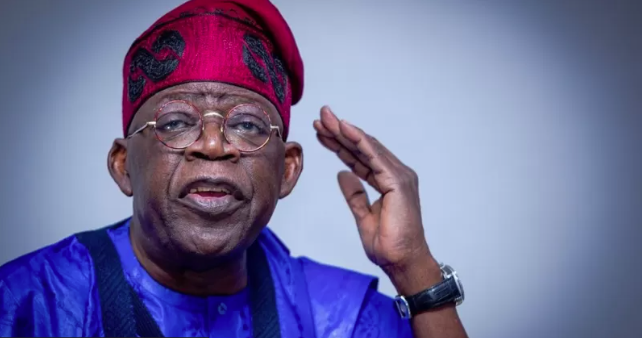
President Bola Tinubu will, on Friday, receive a draft bill seeking a return to a regional system of government for Nigeria.
The proposed legislation authored by a chieftain of the Yoruba socio-cultural association, Afenifere, Akin Fapohunda, and titled, “A Bill for an Act to substitute the annexure to Decree 24 of 1999 with New Governance Model for the Federal Republic of Nigeria’, seeks among others, new extant laws to be cited as “The Constitution of the Federal Republic of Nigeria New Governance Model for Nigeria Act 2024.
The bill was disowned by the House of Representatives last week as its spokesman, Akin Rotimi, and the Chairman, Committee on Rules and Business said it has not been listed for deliberation in the ongoing moves to review the 1999 Constitution (as amended).
However, Fapohunda told our correspondent on Thursday that the bill would be transmitted to the President on Friday.
“I’m submitting my letter (draft bill) today but I will wait for seven days before releasing it to the public,” he told our correspondent.

Meanwhile, Fapohunda who also represents the Coalition of Indigenous Ethnic Nationalities told The PUNCH that the organisation is proposing the division of the country into eight geo-political regions with approximate interim boundaries.
The proposed regions. according to Fapohunda. include the southern region to be made up of Akwa-Ibom, Bayelsa, and Cross Rivers States and “Optional inclusions of the Annang, Effik, Ekoi, Ibibio, Oro Ohaji/Egbema in Southern Imo, the Adonia, Efemia, Ijaw, Ogoni, Bini, Ishan, Isoko, Urhobo and the Ijaw-speaking people in Northern Ondo State with land contiguity.”
He continued, “The South Eastern region consists of Abia, Anambra, Ebonyi, Enugu, and Imo States. The Western region comprises Lagos, Ogun, Ondo, Osun, Oyo, and Ekiti States, incorporating the Yoruba-speaking people in Kogi and the Igbomina people in Kwara State. Additional options would be the Itsekiri people of Delta State and Akoko-Edo people of Edo State to make their respective choices.”
Others include the Mid-Western Region “Made up of Edo and Delta States, possibly incorporating the Anioma people and the Eastern Middle Belt Region comprising Northern Cross River, Southern Kaduna, Southern Borno, Adamawa, Benue, Kogi, Plateau, Nasarawa and Taraba States.”
The Western Middle Belt Region comprises Southern Kebbi, parts of Kwara and Niger States while the North Eastern Region will be made up of parts of Borno, Gombe, Bauchi, Jigawa, and Yobe States.
The North Western Region, according to the Afenifere chieftain, comprises Kaduna, parts of Kebbi, Kano, Katsina, Sokoto and Zamfara States.
Fapohunda said the coalition envisaged a two-tier government, federal and regions, adding that the latter would be at liberty to manage her affairs, “Including the creation of sub-entities, based on the stipulations that are agreed upon and embedded in their respective constitutions.”
In its proposed governance stipulations, CIEN stated that “In the quest for re-configuration and downsizing, an option to consider might be to retain the present boundaries of the 36 States, as would have been adjusted, but to creatively downgrade the paraphernalia of political administration as follows:
“To introduce a new regional government framework with executive and legislative functions and bodies with the headship title of Premier.
“In the new dispensation, the present States (for example the six in the Western region) would be converted to provinces. Governance at this level shall be by Provincial Councils that integrate executive and legislative functions, with Chairman and Support Specialist Administrative Officers. The regions shall be at liberty to create provinces, subject to viability and self-sustainability.
“The present Local Government Areas are to be transformed into divisions, with divisional managers and specialist administrative officers; to operate as socio-economic development institutions. The new provinces shall also be at liberty to create divisions, subject to viability and self-sustainability.”
The coalition also proposed a new constitution to embody novelties including freedom of the regions to “Create, merge and or re-configure their sub-political units and may adopt provinces, divisions or districts as may suit their circumstances without interference from any other authority.
“Regions and sub-regional entities are to be reconfigured such as would reduce the cost of public and civil service administration to less than 20 to 30 per cent of generated revenue.
“In drafting their Constitutions, the peoples of the respective regional territories will take a cue and also dismantle any arrangement or configuration that will favour the politicians and the political class; with a focus on freeing resources for true development.
“A uni-camera federal legislature comprising members that are elected at the discretion of the regions for which they would be representatives at Abuja.
“Decentralization of federal power in favour of not more than 10 regions on which there is a general national consensus, rather than the presently unwieldy number of 36 States. These old States are inconsequential indeed in being a viable unit of a truly federal system of government.”
In all, the coalition proposes that the Federal Government “Shall comprise not more than nine Ministries and Ministers,” adding that “The very big United States has just 15 Cabinet Ministers, while Nigeria is not even up to just a State of Texas or New York.”
The group is also advocating a return to the parliamentary mode system of government “Built-in statutory rotation of headship among the regions.”
News
#OsunDecides: Adeleke takes early lead with 177,572 votes in ongoing collation
Governor Ademola Adeleke of the Accord Party is leading in the collation of results from Saturday’s governorship election in Osun State.
Checks by our correspondent on the Nigeria Elections Intelligence System shows result from 303 of the state’s 332 wards with Adeleke polling 177,572 votes, representing 50.5 per cent, ahead of his closest challenger, Bola Oyebamiji of the All Progressives Congress (APC), who had 158,588 votes, representing 45.1 per cent.
Najeem Salaam of the African Democratic Congress was placed third with 5,917 votes as at the time of filing this report, with collation still ongoing across the state’s 30 local government areas.
Figures from the collation showed that out of 845,100 registered voters in the state, 361,500 were accredited, translating to a voter turnout of 42.8 per cent. A total of 351,500 valid votes were recorded, while 7,200 ballots were rejected.
The Independent National Electoral Commission (INEC) said 43.41 per cent of polling units had reported results as collation entered its concluding stages.

Adeleke, who is seeking re-election, defected from the Peoples Democratic Party (PDP) to the Accord Party ahead of the poll, which INEC cleared 14 political parties to contest after the PDP and the Labour Party failed to field candidates.
Adeleke’s running mate is Kola Adenusi, while Oyebamiji, a former Managing Director of the National Inland Waterways Authority (NIWA), is running with Benjamin Adereti as his deputy.
Results are expected to be formally declared by INEC’s Returning Officer at the state collation centre once all outstanding wards have reported.
News
Kidnapping: My life in captivity — Justice Bunza
After nine days in captivity and subsequently regaining freedom, Weekend Trust tracked Justice Faruk Hassan Bunza to his residence at Unguwar Chaki quarters, Bunza, for an insight into his experience in the bush and more. Although he had to undergo medical checks after his release, the judge, who appeared to still be recuperating from the ordeal in the bush, opened his door to our correspondent.
Justice Bunza of the Kebbi State High Court was abducted from his residence in the early hours of Saturday, July 26, 2026, and he regained freedom on Monday, August 3, 2026, about nine days after.
It was earlier gathered from his relatives that the sum of N50 million was paid as ransom.
It was learnt that five-armed men stormed the judge’s residence at about 12 midnight, fired several shots into the air to scare residents, and whisked him away. No one was killed or injured during the operation, which lasted only a few minutes.
The following day, Sunday, July 27, the abductors contacted the family and demanded N200 million as ransom. After negotiations, the amount was reduced to N50 million. On Monday, August 3, it was gathered that the ransom was paid and the bandits abandoned Justice Bunza on top of a hill before deserting their camp.

Speaking with our correspondent, the judge said he was held about 49km from his hometown at Dutsen Bandan, on a hill behind the National Youth Service Corps (NYSC) permanent orientation camp in Dakin Gari, Suru Local Government Area of Kebbi State.
A resident of Bunza, who pleaded anonymity, told our correspondent that Dutsen Bandan is a known bandits’ hideout and that, “People have been complaining about the movement of suspected bandits around the hill.”
The kidnap
In an interaction with Weekend Trust, Justice Bunza said, “When the five-armed men stormed my residence and asked me to follow them, I didn’t resist. We came out and moved east through a road adjacent to my house, passing behind other residences. From there we turned north toward a small irrigation site, Fadama. We trekked for a few meters, turned west and returned to the main road. We crossed it and headed to the hill on the western part of Bunza town.
“On getting to the hill, we moved south toward the Bunza-Kamba Road. We crossed the road and continued trekking. After trekking for about 25km barefooted, we arrived at Tungar Bandan junction where they parked their motorcycles to avoid detection. From there we rode for about 24km before arriving at Dutsen Bandan, their main camp in Dakin Gari, headquarters of Suru LGA. In all, I was kept about 49km away from my family for nine days. I suspect my abductors had been monitoring me for a long time. They have informants who gave them details about me.”
Life in captivity
At the camp, Justice Bunza said there were not more than 20 bandits. “I was asked to climb the hill. I had trekked 25km barefooted, so it was difficult, but they didn’t care. On top of the hill, I met two other Fulani men who had also been kidnapped. Five-armed bandits guarded us while the rest stayed with their families down the hill.
“The next day, Sunday, they brought two photographs — mine and that of the chairman of Bugudu LGA in Zamfara State, Nura Umar Abdullahi. They asked if it was me and said they were ordered to kidnap both of us, but they didn’t mention who gave the order.
“They also showed me a newspaper report about my abduction. They said they heard President Bola Ahmed Tinubu had directed that N200m be paid for my release, but someone stopped it. That shows they monitor news and social media.”
Justice Bunza further observed that the bandits live normal lives with their wives and children at their camps, noting that “At the Dutsen Bandan camp, I observed that the bandits sleep, cook and interact with their families there just as we do in our houses.
“Unfortunately, the bandits do not observe the five daily prayers. When it was time for prayer, I prayed alone. I performed dry ablution, Tayammum, and observed my prayers. However, I could hear them reciting the Holy Qur’an every day. I could hear the five bandits guarding us reciting the Qur’an daily, but they did not pray at all,” he said.
He recalled that the bandits at the Dutsen Bandan camp were not many. The bandits were not more than 20 at the camp. So, the government can easily crush them. They rely on informants who bring them information from town.
“Most of these informants are young children of bandits. From my observation, roles among the bandits depend on age. While the younger ones serve as informants and errand boys, the adults are the foot soldiers. They carry arms and actively participate in operations.
“Though the bandits were armed, they were always fearful and on high alert. They warned us kidnap victims to remain quiet and calm. There was a day they warned me to stop coughing. They were very scared because they thought I was coughing to alert people to our location.
“At night, they would hide a few meters away from us and remain vigilant. They were very conscious of movements around them,” he added.
My abductors were friendly, fed me twice daily
However, the judge said his abductors did not torture him. “They were friendly throughout the nine days. They never humiliated me.
“The only things that troubled me were climbing the hill and the long trek. My face was covered anytime I ate so I wouldn’t see them. I was asked what food I wanted and I chose tuwon shinkafa or semo with okra soup. They fed me twice daily with bottled water and Maltina.
“Whenever they brought me food, they would tell me to eat to my satisfaction. And anytime I didn’t finish, they would say I shouldn’t be shy to eat it all because it was meant for me.
“However, the two Fulani men were not given any food. Whenever they asked for drinking water, they were given dirty water from the stream. They were always told that only I would get proper meals and clean drinking water.”
According to the judge, two reasons informed his abduction, “One, as a judge I handle high-profile criminal cases including banditry and kidnapping. For that reason alone, the bandits might have targeted me. Two, they are money mongers looking for rich people. I was told they were informed I am one of the richest people in Bunza with five cars, several houses and farmlands. So, I think these are the main reasons.”
Justice Bunza told Weekend Trust that during conversations with his abductors, they told him they were informed that he was a rich man with “plenty of money and assets, including landed properties.”
“Based on my interaction with them, I fully understood that my abduction was purely for ransom. My abductors were just money mongers. They had no intention to kill me. Their target was to collect money,” he said.
“Although my captors were friendly, my face remained covered throughout my stay in captivity. Whenever it was time to eat, they would hide behind me and ask me to uncover my face so I wouldn’t see them. After I finished eating, they would ask me to cover my face again before coming out of their hideout.
Justice Bunza lamented the lack of security for judicial officers especially at their residences, recalling that “When I was a magistrate and chief magistrate, I had permanent security at my house. Now I don’t. Security is on a shift basis. Despite the risk of our job, we are not provided with security at our residences. We are prone to attack. It is unfortunate and the government must do something urgently.”
“Though Allah is our ultimate protector, it is good if the government can provide quarters for judges with adequate security. Every judge should have security at his residence, at least at night. We are targets because we convict bandits in the courts. Due to the nature of our job, we are also targets to the bandits. In fact, we are at high risk of attack by the terrorists.”
How I regained freedom
Justice Bunza said the two Fulani captives escaped on Saturday, August 1, and that on Monday, August 3, after collecting the N50 million ransom, most of the bandits left the camp, leaving two persons to guard him.
“I overheard them arguing. One said the other should shoot me, but he didn’t, probably to avoid attracting security operatives or passersby. They eventually abandoned me and ran away.
“Around 5-6pm, I realized that I was alone. I then removed the covering from my face and came down from the hill. I trekked until I got to a village at night but feared it might be occupied by bandits, so I hid until morning.
“In the morning, I continued trekking until I got to Kwanar Bandan and met some villagers. I asked for a commercial motorcyclist that will take me to Bunza. I got one and he asked for N8,000 to take me to Bunza. Then a tinted commercial Toyota Corolla with three passengers arrived. The driver agreed to take me for N2,000.
“However, at Dakingari junction I bought firewood for N3,000. I did that in order to convince the driver to take me directly to my house. We finally agreed on N3,000. When I got home, relatives and other sympathizers were outside. Because of the tinted glass, no one recognized me until I came out from the car. Then people started jubilating and sympathizers continued to troop to my house.”
When asked if his recent abduction would affect his commitment to work, Justice Bunza said: “Never. I swear to Almighty Allah, nothing on this earth can change my attitude and commitment to my duties as a judge. Remember, I am under oath. So, nothing can make me change my mind toward discharging my responsibilities as a judge.
“In fact, this experience will only motivate me to double my commitment to discharging my duties. I can assure you, Wallahi, nothing on this earth can make me deviate from what is right. I have learnt many lessons from this incident and I will continue to keep many things to myself.”
The High Court judge told Weekend Trust that prayers from family, friends and well-wishers played a significant role in his release.
“Relatives, friends and well-wishers from within Bunza, Kebbi State and even beyond prayed for me. People prayed fervently for my release and, by God’s infinite mercy, He answered our prayers.
“Here I am today a free man. I’m hale and hearty; nothing worries me. While in captivity, I always told myself that my captors were ignorant about Almighty Allah. If they knew God, they wouldn’t involve themselves in this evil,” he said.
How to end banditry, kidnapping
“As I said earlier, the bandits at the camp where I was kept are not many. They could be easily crushed if our security operatives are allowed to confront them squarely.
“Secondly, from my observation, poverty and illiteracy are the main factors driving these terrorists into banditry and kidnapping. If the government can provide adequate job opportunities for citizens and create a conducive environment for educating the young generation; both Islamic and Western education, that will greatly help in addressing the situation.
“The government should invest heavily in education; I mean both Islamic and western education. Teachers and other stakeholders should be equipped to impart knowledge on the people. The issue of unemployment must also be addressed. Citizens should be provided with adequate job opportunities so that money can circulate among the majority, not just among the few as it is now.
“If government tackles the problems of poverty, unemployment and education, the menace of banditry and kidnapping will be drastically reduced, if not completely wiped out,” he said.
News
Rigging Attempt: Police aiding APC to intimidate voters in Osun — Adeleke
Osun State Governor, Ademola Adeleke, has accused the police of aiding alleged attempts by the All Progressives Congress to intimidate voters and manipulate the ongoing governorship election in the state.
Adeleke made the allegations while speaking to journalists shortly after casting his vote, alleging that some security personnel were being used to disrupt voting in parts of the state.
He called on the Inspector-General of Police and other security agencies to investigate the situation and ensure that security personnel remained neutral throughout the election.
The governor alleged that a police officer from Port Harcourt, whom he identified by the nickname “London,” had been brought to Ede to disrupt the election.
“On authority information that there is one police officer that they brought to come and do a hatchet job in the APC Osun, from Port Harcourt. They call his nickname London. He’s here in Ede hiding,” Adeleke said.

“His own job is to come and destroy Ede and then avoid so that he can scare people, shooting so that they will not vote. So I’m calling Inspector-General of Police to take note. I am calling on the security agencies to take note. They should redeploy him.”
Adeleke said he did not want violence in the state, stressing that the election should allow residents to freely exercise their constitutional rights.
“We don’t want him in Osun, we don’t want violence in Osun. All we want is free and fair election so that people can perform their civic duties,” he said.
The governor also raised concerns about the collation of results, insisting that election results should follow the established process from polling units to wards and then local government areas before reaching the state level.
“The pattern of voting should be from units to wards to local government. Not that they will take local government collation straight to state capital. That is unacceptable,” he said.
Adeleke further alleged that the APC had attempted to introduce fake ballot papers into the election, urging voters and election officials to remain vigilant.
“That is a form of rigging, and I am calling on the authorities that the APC have tried to rig and have some fake ballot papers. I want Osun people to watch out for that too,” he said.
The governor also alleged that police officers were aiding the use of tear gas against voters in Modakeke and Obaagun, claiming the incidents were intended to scare voters away from polling units.
“Right now, as I’m voting, I just received a call in Modakeke and Obaagun that police is aiding them to teargas them so that people can run away. People are resolute. They just want to perform their civic duty,” Adeleke said.
He added that alleged political thugs had also made away with a ballot box in one of the affected areas.
“The thugs took the ballot box and ran away. We have already reported this to the security agencies. I hope they do something so that they will not turn Osun State into a war zone,” he said.
Adeleke, however, said voting in his immediate area had remained peaceful and expressed hope that the situation would remain calm across the state.
“I’ve already told you, so far so good, it’s been peaceful in my area here. I hope it’s like that cut across. But it’s not peaceful in Modakeke and, of course, in Obaagun,” he said.
Despite the allegations, Adeleke expressed confidence in his chances of winning the election, saying he was relying on the support of the people and his faith.
“But I can assure you, at the end of the day, I have God on my side and I have my people on my side. I am going to win this election,” the governor said.
-
News2 days agoMammoth crowd as Peter Obi makes triumphant entry into Benin, dares Gov Okpebholo [VIDEO]
-
News2 days agoICPC exposes Payroll Scandal: Official paying 14 family members, another worker collects 13 salaries
-
News16 hours agoPolice confirm release of abducted Jezco Chairman, Ezeokafor, Rev Sister
-
News3 days agoEbonyi Assembly passes bill regulating scrap trade, rents, agent fees
-
News2 days agoVanguard Alumni to Unveil Book Chronicling Newspaper’s 40-Year Journey, Legacy
-
Education3 days agoEnugu govt approves N82,000 minimum wage for ESUT staff
-
Politics16 hours agoOsun Election: APC, Accord wage N20,000-per-vote war
-
Health2 days agoMbah tours 300-Bed Enugu Int’l Hospital, says ‘We’re ready to welcome the world’ (PHOTOS)