Uncategorized
Traders in massive food diversion to Niger Republic, Cameroon, others

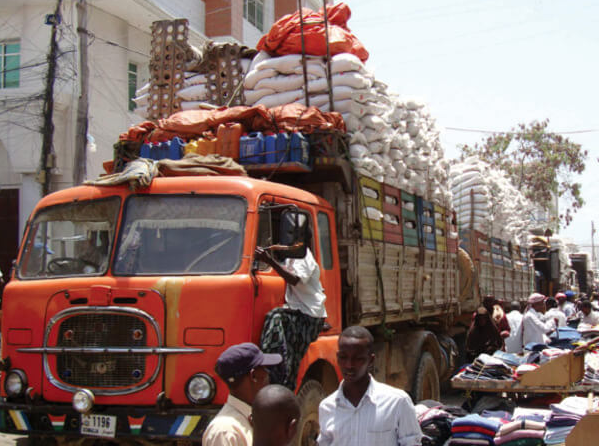
Amid the free fall of the naira to the United States dollar, traders who deal in grains have devised a way to sell their wares to neighbouring countries for higher profits, Sunday PUNCH has learnt.
Many of them, who spoke to our correspondents, claimed that they preferred to sell their wares to the countries because they had stronger currencies compared to the naira.

This, several experts have said, may lead to hoarding and an artificial grain scarcity and can cause the price of the goods to further head north, thereby leading to a food crisis if nothing is done about it.
This is coming at a time when the country is battling severe hunger, as the prices of staples have increased by over 300 per cent.
The country is also witnessing the highest inflation in 28 years, with the food inflation rate in January hitting 35.41 per cent.

Nigeria’s annual inflation rate rose to 29.90 per cent in the same month from 28.92 per cent in December 2023, according to official figures from the National Bureau of Statistics.
For instance, a bag of long grain rice now sells for almost N80,000 as against N45,000, which it sold for in December 2023. A crate of eggs now sells for almost N5,000; in December, it sold for N2,700.
Several other food items have also seen an astronomical increase in prices owing to several market forces, chief of which is the free fall of the naira.
As of Thursday, the naira fell to a new record low, selling for 1,851 to a dollar in intra-day trading compared with around 1,800 quoted in street trading, FMDQ Exchange data showed on Friday.
It, however, recovered later in the day to close around N1,571 to the dollar, according to the FMDQ data.
There have also been cases of traders accused of hoarding food items for transfer to neighbouring countries like Cameroon, Chad, and Niger Republic, among others.
This is not unconnected to the fact that the currency used by these West African countries has strengthened against the naira in recent years.
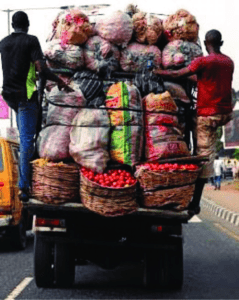
Foodstuff being transported
For instance, in Borno, Niger, Adamawa, Katsina, Sokoto and several other northern states, grain farmers and traders told Sunday PUNCH that they preferred to sell their goods in the neighbouring countries and earn CFA franc instead of selling in Nigeria and earning naira.
Several sources also said that the draining of Nigeria’s grains to neighbouring Niger had almost tripled over the last couple of months in a trans-border trade upheaval.
This is following the historic depreciation of the naira and the consequent exponential appreciation of the CFA franc.
The upheaval has drastically crashed the flow of Nigerian grains and other essential commodities’ merchants to the Francophone country for trade.
CFA franc
The CFA franc stands for the West African CFA franc and the Central African CFA franc, two currencies which though different, are interchangeable and have a fixed exchange rate to the euro.
The Central African CFA is the official currency of six countries under the Central African Economic and Monetary Union and is symbolised by the abbreviation XAF in currency markets.
The countries are Cameroon, Central African Republic, Chad, Republic of the Congo, Equatorial Guinea, and Gabon.
On the other hand, the West African CFA franc is the official currency of eight member nations under the West African Economic and Monetary Union consisting of Benin, Burkina Faso, Côte D’Ivoire, Guinea-Bissau, Mali, Niger, Senegal, and Togo.
According to a short history on the website of the Central Bank of West African States, the CFA franc was created on December 26, 1945, remarkably the date France ratified the Bretton Woods Agreements and made its first declaration of parity to the International Monetary Fund.
In recent times, the currency has climbed up in value against the naira as N1 exchanges for 1.38 XOF compared to 3 XOF, which it exchanged for in 2015.
In 2015, data available on the website of Exchange Rate United Kingdom shows a 54 per cent decline in the exchange between naira and XAF and XOF within six years.
That same year, the CFA began to take a spot as a competitive currency. Between August 2015 and August 2016, the naira lost about 69 per cent against the CFA year-on-year, according to official data by the Exchange Rate UK.
As of Saturday, Aboki FX Limited, an online platform that provides daily updates and information on the parallel market (black market), noted that 1,000 West African CFA francs (XOF) traded at N2,400.
This means one can get N2,400 for every 1,000 CFA franc that one exchanges.
It should be noted that the black market exchange rate is typically higher than the official exchange rate because it is not regulated by the government.
There are several factors that can affect the XOF black market exchange rate, including the supply and demand for the CFA franc; the political and economic situation in XOF and Nigeria; and the value of the US dollar.
So, Nigerian grain traders who rush to countries like Senegal, Cote d’Ivoire, Niger, Mali, Burkina Faso, Benin Republic, and Guinea Bissau, among others, to sell their wares would be making double the profits they would have made if the grains were sold in Nigeria.
The traders also stated that constant harassment by hoodlums on the highway, the ravaging insecurity in the country and bad roads were other reasons why they would prefer to sell in neighbouring countries than in Nigeria.
Last Sunday, for instance, the Nigeria Customs Service declared that it had intercepted 15 trucks that were fully loaded with food items and were heading out of the country through the Sokoto State border.
It said the trucks were stopped and the food items were returned to Nigeria, adding that this was part of measures to stabilise the prices of food items across the country in line with the mandate of the Federal Government.
The PUNCH had reported days before that the Federal Government had set up a committee comprising the National Security Adviser, the Director-General of the Department of State Services, and the Inspector-General of Police to clamp down on traders hoarding grains.
The report also stated that the government had ruled out the importation of food as part of strategies to address the high costs of foodstuffs and the economic hardship troubling the country.
It stated that this formed part of the resolutions reached at an emergency meeting between President Bola Tinubu, Vice-President Kashim Shettima, and state governors at the Aso Rock Villa, Abuja.
When contacted by one of our correspondents on Saturday to confirm whether the service had clamped down on food hoarders or those trying to move food out of Nigeria, the National Public Relations Officer of the NCS, who is a Chief Superintendent of Customs, Abdullahi Maiwada, stated that interceptions had been made.
On Tuesday, Shettima while addressing a conference on public wealth management in Abuja, noted that the Federal Government had uncovered 32 routes used to smuggle food to neighbouring countries.
The VP said the routes were found in the Illela Local Government Area of Sokoto State.
Despite these clampdowns, traders have continued to smuggle foodstuffs, mostly grains, out of the country for illegal sales in neighbouring countries.
C’River to Cameroon
It was gathered that in Cross River State, an unholy alliance exists between Nigerian and Cameroonian traders dealing not only in foodstuffs but other items of value to earn CFA franc.
A Cameroon-based Nigerian, simply identified as Ebere, described Cameroon as one country that was good for trans-border trade, adding that it was not lacking food.
He, however, said traders from Cross River State and other nearby states sold stockfish heads to Cameroonians to earn CFA franc.
Ebere said that apart from stockfish heads sold by Nigerians to Cameroonians, iron rods were also being exported to the country.
He added that Nigerian traders also move stockfish heads to Gabon, adding that the increase in such trade had further strengthened the CFA franc against the naira, especially in the black market.
Ebere stated, “There is an increase in the sale of stockfish heads and iron rods by Nigerians. They (Nigerians) are ready to do business, especially when the currency they will receive will mean doubling or tripling their gains.
“Cameroon has food; the country even sells food items to Gabon, which is also a neighbouring country, but Nigerians make a lot of money selling stockfish and iron to Cameroonians. The interest there is the CFA franc.”
A road transport operator, Mr Godwin Eze, who plies the Ikom-Mfum-Ekok border roads in the state, told Sunday PUNCH that high trade volume between Nigerian and Cameroonian traders stemmed from the cascading fall of the naira against the backdrop of the high value of the Cameroonian CFA franc.
He further noted that Cameroonian traders had infiltrated the Nigeria-Cameroon borders to neighbouring towns in the Ikom Local Government Area of Cross River State to buy foodstuffs and other valuables and ferry same to their country for further sales.
It was also gathered that apart from that, traders in Nigeria had also found Cameroon as a safe haven to market their foodstuffs, among other trade items, to have unfettered access to the Cameroonian currency, which at the moment is higher in value than the naira.
A trader involved in the trade, who begged to remain anonymous, confirmed this to one of our correspondents.
She said, “It is no longer news that we have a trading alliance with traders from Cameroon. Our politicians are stealing billions, so we too must find a means of making enough money to cater to our family needs since we don’t have access to government money.
“What crime did we commit by buying and selling with Cameroonians?”
Borno grain traders
A major trans-border grains and commodities merchant, Alhaji Abdullahi Aliyu, said that 1,000 CFA francs were exchanged for N2,900 in the black market as of Saturday.
He said, “This shows a sharp contrast to just a few years ago when 1,000 CFA francs exchanged for as little as N320.
“With a comparatively strong naira to the CFA franc, we used to troop to Niger to buy so much rice and other essential commodities not available here just a few years ago.
“Now, the table has turned against us because the Nigeriens now seize the advantage of the drastic depreciation of the naira and exponential rise of their CFA franc to troop into Nigeria to buy as much of our grains as they can to resell in their country.
“To make sure they benefit from the depreciation of the naira to the utmost, many grain merchants in Niger, in a hot race for Nigeria’s food grains and other commodities, now even sell their residential houses to generate enough money for as much of the maize and millet as they can purchase from Nigeria to resell in their country.
“A bag of rice will cost around 22,000 CFA francs but in naira, it is around N75,000.”
The trader lamented that a Nigerien merchant having just enough to buy 10 sacks of Nigerian maize or millet just about a year ago, could now afford to buy 100 to 150 sacks with the same amount of money he traded for the 10 sacks a year ago.
Aliyu stated, “In one year, the draining of Nigerian grains to the Niger Republic through the Geidan (Yobe State) and Damasak (Borno State) borders has more than tripled.
“If the naira does not gain strength against the CFA franc, the situation may worsen next year.”
The trader also absolved any Nigerian farmer selling his grains to Nigeriens of any blame.
He added, “With the persisting economic hardship, the Nigerian farmer or grains merchant, who needs cash for pressing needs, will be tempted to sell his grains to the Nigerien who has the cash to give him than to his fellow Nigerian who doesn’t have the cash.
“So, in a short time, the food grains needed to feed a large population of Nigerians will be drained to the neighbouring countries, leaving Nigerians hungry, especially as they now do not have the money to cross the borders to buy food when they need to.”
Sokoto traders
Most exporters of foodstuffs from Sokoto State to the neighbouring Niger Republic have explained that their decision is the only way to make more money by selling their goods.
They added that most of them shared family ties with Niger with many intermarriages happening between them.
A trader within Sokoto’s old market, Mallam Abubakar Salisu said he was in business to make money, hence he decided to sell his goods at any available market to maximise profits.
Salisu stated, “I honestly don’t know why there is a lot of noise about where we decide to do our business and who we sell to.
“I believe everyone is doing business to make money. Why will our own be different from others that Nigerians now take us to be criminals?
“I believe you know there is a huge difference between the Nigeria currency and CFA franc, which is the legal tender in Niger and Cameroon. That is one of the major reasons why I decided to go there to sell my grains.
“If I take my goods to Niger Republic, I will make double what I will get in the Nigerian market here. So, why will I remain here to sell when I can make more money by simply changing location?
“The government should fix the economy and allow us to do our business in peace. They should stop harassing us. We are not the ones who caused the economic woes.”
A Nigerian rice seller in Niger Republic, Nuhu Illela, said even though he does a legal service, agents of the government still disturb him unnecessarily.
He said, “I have been selling the same rice in Illela (a border town in Sokoto) for over 20 years now without any rancour or disturbances.
“Since the closure of the border by the Economic Community of West African States, the rice we used to get from Niger Republic has stopped coming. That is one major reason food prices are increasing beyond the reach of ordinary citizens.
“I normally sell my products to our people in Illela, which is a border community between us and Niger Republic.
“Now that we don’t have the opportunity to get rice from Niger Republic, we resort to selling local rice here in the market and now the government looks at it as if we are criminals.
“I know some of my people here who have their families over there in Konni, Niger Republic. So, can’t I take my own goods to them to buy? What is my offence?
“Now that the government is setting up a task force to stop it, how do they expect us to survive and take care of our business and families?
“What they are supposed to do as a government, they are not doing. Why can’t the government find a solution to the falling naira, which is the reason we are taking our goods to these countries to sell?”
Sokoto task force
Meanwhile, in order to curtail the continued exportation of foodstuffs to Niger Republic from the state and to tackle the smuggling and hoarding of foodstuffs in the state, the Sokoto State Government, on Thursday, approved the task force to deal with the menace.
The nine-member committee is headed by Dalhatu Sidi Mamman, while Col. Ahmed Usman (retd.) serves as the secretary.
Others members are the Garrison Commander, 8 Division; Comptroller of Customs; Comptroller of Immigration; Commissioner of Police; representatives of the DSS and the NSCDC; the Sultanate Council; and the Grain Sellers Association of Nigeria.
According to a statement signed by the Chief Press Secretary to the Governor, Abubakar Bawa, and made available to newsmen, the governor charges the task force members to identify all the routes through which smuggling activities are taking place.
The statement read in part, “To identify all hoarding facilities and ensure foodstuffs are released and sold to the general public at controlled prices.
“To identify hoarders and smugglers and take appropriate action against them.”
It also noted that the government would take any necessary measure to ensure food sufficiency in the state, while the committee would report to the secretary to the state governor’s office periodically on all its activities.
Smuggled foodstuffs intercepted
Meanwhile, the Nigeria Customs Service, on Saturday, declared that it had intensified efforts to halt the illegal export of food items from the country, adding that it had intercepted food smugglers in Kano, Katsina, and Sokoto states.
It also warned members of the public to desist from smuggling food items out of Nigeria for selfish reasons to the detriment of the larger masses, stressing that culprits would be caught.
Recall that on Sunday the NCS revealed that it intercepted 15 trucks that were fully loaded with food items and were heading out of the country through the Sokoto State border.
It said the trucks were stopped and the food items were returned to Nigeria, adding that this was part of measures to stabilise the prices of food items across the country in line with the mandate of the Federal Government.
When contacted on Saturday and asked whether there had been fresh seizures by the service, Maiwada, stated that interceptions were made in three states in the North.
He said, “We have some seizures or interception of some grains that were to be illegally exported out of the country for selfish desires by some members of the public.
“We have made several interceptions in Katsina, Sokoto, Kano, and around the Jigawa area.”
Maiwada urged Nigerians to desist from the illegal export of food items.
He said, “Our call on members of the public is not to fall for these unpatriotic acts by some elements who are only out to benefit themselves financially without recourse to the masses.
“So we encourage Nigerians to partake in legitimate trade and avoid anything that has to do with smuggling of items either into or out of the country.
“We will continue to re-strategise our enforcement strategies so that we will be ahead of them (smugglers).”
Recall that while assessing the government’s action to tackle the hardship in the country, the All Farmers Association of Nigeria and the organised private sector had supported the decision of the President and the governors not to adopt importation as a solution to the biting food crisis facing the nation.
They also backed the planned action against hoarders as the NCS vowed to stop the smuggling of food out of the country.
The AFAN President, Kabir Ibrahim, had told one of our correspondents that the decision of the government to order food producers to release their products to the market would help check the continued rise in the prices of food items.
He said, “I encourage the security agencies to move in with some other government officials and ask people to open their stores to sell what they have at the prevailing prices. The commodities should be sold at the prevailing prices.
“Nobody is asking them to bring down their prices, for once they sell at the prevailing prices they will not lose anything. But hoarding is not allowed anywhere in the world. You cannot keep what is needed and make it scarce.
“So the government should move in and do all it can to address this situation in Nigeria now. The prices of commodities are rising and the government has to intervene to tackle this issue, and it has our support on this.”
Taraba, Adamawa smugglers
The Nigeria Customs Service said on Saturday that it had, within the past month, seized contraband items worth over N13.352m.
This, it said, was across 15 different raids.
The seized items include 16,675 litres of petrol packed in 643×25-litre jerry cans and three × 200L drums; 20×50kg bags of foreign parboiled rice; and one used V/Wagon Golf with a big, reconstructed fuel tank, according to the Adamawa/Taraba Area Controller of the NCS, Salisu Abdullahi.
AFAN’s reaction
Ibrahim said on Saturday, “To put things into perspective, when someone takes things out of the country without paying duties, it is called smuggling.
“But if you look again at the Africa bilateral agreement, it presents that all of Africa is one market.
“By that, it is not illegal for any foreigner from Africa to come into Nigeria and Nigerians to go into neighbouring states for trade, but there are conventions and agreements which also require that things be done right.
“There is no rule that says you cannot take things from Nigeria to Europe by exporting. It’s not that there is no food, it’s just that it is not affordable.
“Anybody who smuggles anything should be punished according to the law. But if they are taking it out legitimately, there is nothing wrong with that because we also encourage people to export what they produce.”
He further advised the government to invest more in agriculture because of the drop in productivity.
Economist caution govt
Reacting to the development, a professor of Economics, Adebayo Abayomi, said rice merchants taking their produce to neighbouring countries because of the rise in the exchange value of CFA franc to naira were private economic agents rationally reacting to their selfish interest as dictated by the realities of the current economy.
He added that it was a normal business phenomenon as entrepreneurs do business to maximise their profits, noting that their actions indicated their efforts towards getting the best value in the current economy.
Abayomi also appealed to the Federal Government to stabilise the value of the naira.
Sunday PUNCH












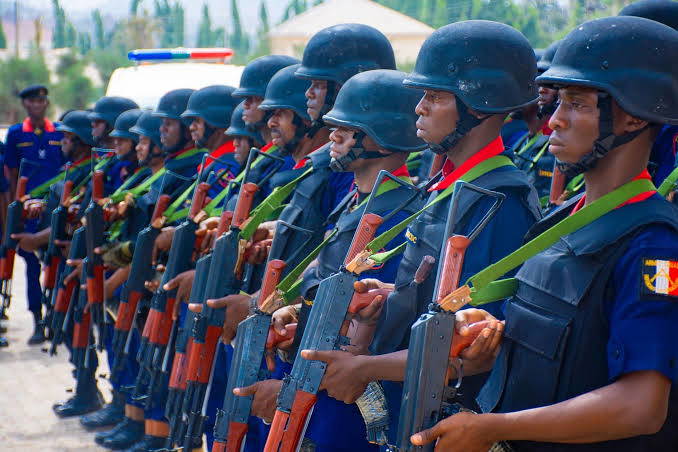
The Nigeria Security and Civil Defence Corps has commenced an investigation into the deaths of some suspected illegal miners arrested during enforcement operations in Niger State.
The suspects were arrested during coordinated operations conducted by the Niger State Command in the M.I. Wushishi/Lukoto axis on September 15 and 16, 2026, as part of efforts to curb illegal mining activities in the state.
The development followed reports that no fewer than 33 suspected illegal miners were feared dead after being detained at an NSCDC facility in Minna.
The deaths were reportedly discovered in the early hours of Thursday, with the Niger State Commandant, Suberu Aniviye, attributing them to a suspected outbreak of disease.
However, the NSCDC National Headquarters said the cause of the deaths had yet to be established, stressing that reports linking them to any specific disease remained subject to medical and laboratory confirmation.
In a statement on Thursday, the Corps’ National Public Relations Officer, Babawale Afolabi, said the Commandant General, Ahmed Abubakar Audi, had directed the constitution of a high-powered investigative team to determine the circumstances surrounding the deaths.
Afolabi said the team, to be led by the Deputy Commandant General in charge of Intelligence and Investigation, had been mandated to conduct a comprehensive inquiry into the incident.
According to him, the investigation would cover the condition of the suspects upon arrest, their period in custody, the conditions of detention, medical attention provided to them and other circumstances surrounding the deaths.
The statement partly read, “NSCDC has confirmed the death of some suspected illegal miners who were arrested during enforcement operations conducted in parts of Niger State on September 15 and 16, 2026.
“Following the development, the Commandant General, Ahmed Abubakar Audi, has directed the constitution of a high-powered investigative team, led by the Deputy Commandant General in charge of Intelligence and Investigation, to immediately look into the circumstances surrounding the incident.
“The team has been mandated to undertake a comprehensive investigation into the circumstances leading to the deaths, including the condition of the suspects upon arrest, their period in custody, the conditions of detention, medical attention provided, and other relevant circumstances surrounding the incident.”
Afolabi also directed that the health and welfare of all persons currently in custody be prioritised, while measures were being taken to protect personnel who might have had contact with the affected persons.
The Corps expressed condolences to the families of the deceased and assured them that the circumstances surrounding the incident would be thoroughly investigated and appropriately addressed based on established facts.
Afolabi added, “The NSCDC wishes to clarify that reports attributing the deaths to any specific disease remain subject to medical and laboratory confirmation. The Corps will therefore refrain from speculation until the outcome of the medical examination is established.
“The Corps extends its condolences to the families of the deceased and assures them that the circumstances surrounding the incident will be thoroughly investigated and appropriately addressed based on established facts.”

A popular Enugu State politician, Prince Ikechukwu Oloto, also known as Okanga Moo, has reportedly been killed by unknown gunmen in Nsukka Local Government Area of the state.
Oloto was allegedly attacked at his residence in the Odenigbo area of Nsukka on Thursday evening.
The attackers reportedly invaded the politician’s home and killed him during the incident.
The reports also alleged that a knife was used in the attack.
Details surrounding the killing remain unclear, as the circumstances that led to the incident have not been fully established.
The identities of the attackers and their motive were also unknown as of the time of filing the report.
The death was also reported by social media influencer, Sen. Chijinkem Ugwuanyi, in a Facebook post.
Ugwuanyi said the politician was killed at his residence in Odenigbo, Nsukka.
The reported killing comes as political activities and preparations for the 2027 general elections continue to gather momentum across the country.
However, it was not immediately clear whether the incident was connected to Oloto’s political activities.
By press time, the Enugu State Police Command had yet to issue an official statement confirming the killing or providing details of any investigation into the incident.
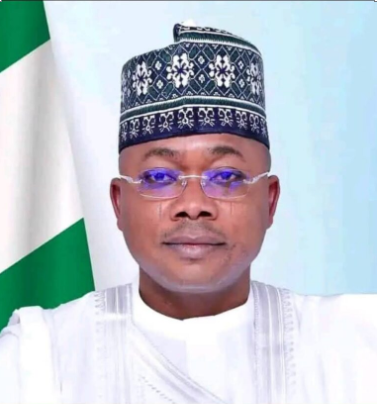
By Tony Edike
How successive governments have repeatedly promised to open up Kogi’s agricultural powerhouse — and why residents are tired of waiting
For decades, the people of Ibaji Local Government Area of Kogi State have watched politicians arrive with promises of development, particularly the construction of the roads that would finally connect their isolated communities to the rest of Nigeria.
Then the elections come.
Campaigns are held. Political leaders visit. Road projects are announced or flagged off. Contracts are mentioned. Hope rises among the people.
And, according to residents and repeated reports about abandoned projects, the construction often disappears from the political radar once the election is over.
For Ibaji, this has become more than a problem of bad roads. It has become a question of political accountability.
The most enduring symbol of this frustration is the long-promised Otuocha–Ibaji–Idah road corridor, which residents believe could fundamentally transform the local government by opening it to commerce, investment, agriculture and social development.
A food basket trapped behind bad roads
Ibaji occupies a strategically important position along the River Niger and has enormous agricultural potential.
The local government is known for farming and fishing, producing crops including rice, yam and cassava. Yet the same geographical and agricultural advantages that could make Ibaji a major economic hub have been undermined by inadequate transportation infrastructure.
The contradiction is stark: a community capable of contributing significantly to Nigeria’s food supply continues to struggle with the basic infrastructure required to move its agricultural products to markets.
Poor roads increase transportation costs, discourage investment and make it more difficult for farmers to get their produce to consumers.
During the rainy and flooding seasons, the problem becomes even more severe.
Reports have documented the extent to which flooding and damaged roads have isolated communities in Ibaji, with residents sometimes relying on bicycles, motorcycles and waterways where roads become impassable.
For a predominantly agrarian community, this is not simply an inconvenience.
It is an economic handicap.
The promise that keeps returning
The history of the Otuocha–Ibaji–Idah corridor illustrates the frustration.
In 2009, the Federal Government reportedly awarded the approximately 90-kilometre Otuocha–Ibaji–Idah road to Nigercat Nigeria Limited for about N7.2 billion, with reports putting the mobilisation payment at about N2.5 billion.
Yet the project subsequently stalled.
Years later, the road remained a subject of complaints by Ibaji residents and community groups.
The road was still being discussed when another promise came from the Kogi State Government.
Yahaya Bello’s 2017 flag-off
In April 2017, then Kogi State Governor Yahaya Bello visited Ibaji and flagged off the construction of the 40-kilometre Idah–Onyedega road.
The contract was reported to be worth more than N5 billion.
At the ceremony, Bello said the road would be asphalt-overlaid and that its completion would boost the economy of the area.
The message was significant because even the then Deputy Governor, Simon Achuba, an indigene of Ibaji, acknowledged that the local government had long been neglected and that roads were its major problem.
The state’s Works Commissioner at the time described Ibaji as the state’s “Food Basket” and said the lack of roads was an impediment to its development.
The people had every reason to hope.
But according to subsequent reports, the promise did not translate into the completed road residents were expecting.
By 2021, a report on the project stated that work had still not commenced and described the road as practically impassable. The report recalled that Bello had promised that the construction would take 24 months.
In 2023, a motion before the House of Representatives also raised concerns about the condition and neglect of the road, stating that since the flag-off of its rehabilitation, no work had commenced.
The election-cycle question
This is where the political frustration in Ibaji becomes difficult to ignore.
Residents have seen one administration after another return to the same fundamental problem: the road.
The criticism from the community is not that politicians should not promise infrastructure.
It is that promises should be followed by construction.
For a community that has heard road promises repeatedly, the real measure of government commitment is not another flag-off ceremony, another speech or another campaign visit.
It is asphalt on the ground.
Then came another governor
After Yahaya Bello’s tenure, his successor, Governor Ahmed Usman Ododo, also visited Ibaji.
In July 2026, Ododo met with traditional rulers, community leaders, women, youths and other stakeholders in the local government and announced that the design for a proposed Ibaji Road Project had been completed and was available for public review before construction.
The Federal Ministry of Information described the proposed road as a strategic intervention that could improve access to markets, schools and healthcare while unlocking Ibaji’s economic and agricultural potential.
The announcement was naturally welcomed.
But it also raises an unavoidable question:
How many more times will Ibaji hear that its road is about to be constructed?
Because for residents who remember previous promises, the existence of a design is not the same thing as the existence of a completed road.
And now, the Federal Government
Just as the controversy surrounding the road continues, another major development emerged in July 2026.
Anambra State Governor Chukwuma Soludo announced that President Bola Tinubu had approved the Otuocha–Anam–Abaji road for design and procurement, alongside another major South-East highway project.
The Federal Government’s announcement describes the Otuocha–Anam–Abaji corridor as approximately 108 kilometres and says it will link Anambra with Kogi and North-Central Nigeria.
Kogi-based reports subsequently described the project as the Otuocha–Nzam–Ibaji Road and connected it to the long-standing demand for the Otuocha–Ibaji–Idah corridor.
The development has understandably generated excitement.
After all, this is precisely the type of regional infrastructure Ibaji residents have been demanding for years . This is similar to the age long clamor for the provision of electricity in the local government, which has remained in the dark since its creation. The entire people of Ibaji have not enjoyed public power supply for decades yet the area has remained a vote-hunting hub for politicians in all elections.
This has also raises a question that government officials should answer clearly:
Is this move by Ododo finally the road Ibaji has been waiting for — or will it become another announcement that disappears after the political season?
That question is not an accusation of wrongdoing against any individual.
It is a legitimate question arising from the history of abandoned and repeatedly announced road projects in the area.
The Hope Uzodinma connection
The announcement has also attracted attention in the wider South-East, including from political leaders in neighbouring states.
The involvement of Anambra and Imo in the wider regional road agenda is significant because the Otuocha corridor is not merely an Ibaji road.
It has the potential to connect agricultural communities in Anambra and Kogi and strengthen commercial links between the South-East, North-Central and South-South regions.
That is precisely why the project deserves to be treated as an economic corridor rather than merely another local political promise.
Can Ibaji afford another disappointment?
For the people of Ibaji, the issue is bigger than party politics.
The community wants a road.
A real road.
An asphalted, durable and properly engineered road capable of remaining accessible during the rainy season and capable of carrying agricultural produce, commercial vehicles and passengers.
They want the road to connect farmers to markets.
They want businesses to be able to come into Ibaji.
They want easier access to hospitals and schools.
They want young people to have opportunities beyond leaving or dumping their communities because of infrastructural isolation.
They want their agricultural wealth to become economic wealth.
And they want the government to understand that a road can change the destiny of an entire local government.
The politics of promises
The suspicion among some Ibaji residents that politicians remember the road mainly during election seasons is therefore understandable in the context of the project’s long history.
But suspicion is not proof.
If politicians want to demonstrate that the latest promise is different, the answer is straightforward: publish the documents and build the road.
Let the public know the contract sum.
Let the contractor be identified.
Let the scope of work be published.
Let the commencement date be known.
Let the completion date be known.
Let payments and milestones be transparently accounted for.
And, most importantly, let the people see continuous construction activity on the ground.
That is how another campaign promise becomes a development project.
Ibaji is asking for development, not political rhetoric
The people of Ibaji have waited long enough.
They have watched governments come and go.
They have listened to flag-off speeches.
They have heard promises of economic transformation.
They have watched projects stall.
They have endured roads that become almost impassable during the rainy season.
Yet the potential of Ibaji remains enormous.
With adequate infrastructure, the local government could become an important agricultural and commercial corridor between Kogi and the South-East.
The River Niger should be an economic advantage.
Its fertile agricultural land should be an economic advantage.
Its proximity to Anambra and other markets should be an economic advantage.
But without roads, those advantages remain severely constrained.
Enough of promises — let the road be built
The latest federal approval may provide a new opportunity.
But Ibaji residents have heard enough promises to know that approval alone is not the destination.
Design of the road is not construction.
Construction is not completion.
And a flag-off is not a road.
What the people are asking for is simple: an asphalted road that will finally open Ibaji to commerce, investment, agriculture, education, healthcare and the wider Nigerian economy.
They do not want another road project to become an election slogan.
They want to see the bulldozers arrive.
They want to see the earthworks completed.
They want to see bridges and drainage structures constructed.
They want to see asphalt laid.
And they want to drive on a completed road.
For a local government described by its own political leaders as a food basket, the continued infrastructural isolation is a contradiction that can no longer be ignored.
Ibaji does not need another promise. Ibaji needs a road.
President Bola Ahmed Tinubu should please note that there is a place known as Ibaji bordered by four states of Enugu, Anambra, Delta and Edo (across the River Niger). And this local government is being administered by the ruling All Progressives Congress, APC.
Ibaji people have strongly supported his government and they deserve the attention of his government.
-
 Faith3 days ago
BREAKING: Anglican Church Places Archbishop Ibezim on Six-Month Leave, Bars Him From Church Duties
-
News3 days ago
Gunmen Abduct Catholic Priest in Benue, Police Launch Rescue Operation
-
News3 days ago
Tinubu Orders Rescue of Kidnap Victims, Demands Peaceful 2027 Elections
-
Faith1 day ago
Awka Anglican Diocese Rejects Ibezim’s Suspension, Threatens to Leave Church of Nigeria
-
News2 days ago
BREAKING: Mbah Extends Enugu Movement Restriction to 10pm, Scraps Keke Ticketing
-
Politics1 day ago
Nigeria’s Weak Opposition and the Cost of One-Party Dominance: Can the Opposition Rebuild Before 2027?
-
News1 day ago
2027: Keke Riders Endorse Mbah, Tinubu
-
News2 days ago
Enugu Approves ₦32bn Legacy Gratuity Payment, Begins Disbursement Next Week