Connect with us

News

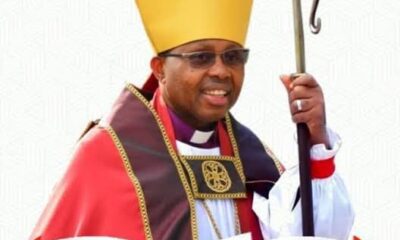
Governor Peter Mbah to receive Vanguard’s Good Governance Award

Published

on

Governor Peter Mbah to receive Vanguard's Good Governance Award
Enugu State Governor, Dr. Peter Mbah
Spread the love

…Determined ‘To get the future right, get education right’

It is not for nothing that Peter Mbah, the forward-thinking and futuristic governor of Enugu State, is making bold moves to implant his paradigmatic approach to business as a private citizen, into the modus operandi of governance in his state. Strange yet impactful, Governor Mbah’s first steps as the chief executive of Enugu State have signposted him as one interested in and, therefore, committed to lifting the state out of the doldrums.

Derisively described as a civil servants’ state, Enugu, as it had been known, wore the sombre looks of a dingy landscape begging for sociopolitical and economic emancipation because of its once rich history as the capital of South East Nigeria.

Therefore, even within his first year in office, Governor Mbah has stamped his imprimatur of seriousness on the state.

First, he made it clear that the psychological masturbatory pleasure derived from the Monday sit-at-home in the entire South East geo-political zone was not only wasteful but also destructive to economic growth. He put a stop to it.

Whereas he had made a campaign commitment to ensure that within his first six months in office, he would fix the water problem in Enugu city, he achieved this as promised. According to him, “If indeed, water is life, Ndi Enugu had lived their lives without water, for years.

Maduka College Advert

They are probably one of the few species of beings who possess the ruggedness to live a life devoid of life. As an administration, we were poised to bring life back to our people. No one needed to sermonize to us on the centrality of water to our people’s existence.

Thus, all we planned to achieve as an administration was woven around this central theme of the restoration of life where our people were living suboptimal lives that lacked the life that water brings. Water, to us as a government, was both literal and figurative…. We have recently launched the ultramodern water scheme at Ninth Mile which has a daily production capacity of 70 million cubic meters (70,000,000m3) of clean water, combined with the production of 50 million cubic litres from Oji River.

This gives a total volume of 120 million cubic meters per day as against less than 2,000,000m3 we met on resumption of office. This achievement disrupts over two decades of water scarcity in Enugu urban, and also fulfils our promise to Ndi Enugu to provide Enugu urban residents with water within 180 days.”

Signature projects of immediate impact are good and desirable but Governor Mbah has moved to the realm of looking ahead. He believes education – and quality education at that – is the future of any society and he is going ahead to demonstrate that in speech and deed.

In a media report, the United Nations Education, Scientific and Cultural Organisation, UNESCO, in its Education For All, EFA, paper tagged “a Dakar framework for action, called for a significant increase in financial commitment by national governments and donors to the education sector to accelerate progress toward the EFA goals.

According to the document, the Dakar framework recommended governments to take the lead in increasing financial commitments to EFA, with the EFA high-level steering committee proposing that 15 per cent to 20 per cent of annual budgets be earmarked for education”.

The media report was in the wake of a controversy raised by former Education Minister, Mallam Adamu Adamu, on whether UNESCO had recommended a threshold allocation of 25%/ 26% budgetary provision to education. For Mbah, the best way to tackle the challenges of the future is through education. That is why he has allocated 33% of his 2024 budget to education, the highest ever by any state government in Nigeria or even by the Federal Government of Nigeria. He plans to build smart schools that would serve multi-dimensional purposes and yield multi-dimensional output and outcomes.

In his words, “As I mentioned earlier, education is a key plank in our strategy to eradicate poverty in our state. Consequently, ?134,587,982,647.78, representing 73.6% of the social sector has been earmarked to help reinvent education in our state by developing the new Smart schools which I mentioned earlier as well as repositioning our senior secondary and tertiary institutions by training and retraining teachers and updating our curricula across all levels of education to infuse technology and technology appreciation and skills. This capital expenditure on education combined with the planned recurrent expenditure in the sector will bring our total spending on education to 33% of the total budget.

“The 2024-2026 Multi-Year Budget is named Budget of Disruptive Economic Growth. This is because it is structured to drive growth in a markedly different pattern than we had attempted to do hitherto. This departure from the usual is most apparent in two main areas.

First, our approach to basic education where we are bringing into effect our cut-off program through the development of the 260 model schools to which I had earlier alluded. These schools are unique, not only in the fact that they will house the entire basic school classes from creche to JS3 but also in terms of the significant changes we are making to the curriculum of the children, where we will be infusing new subject areas like Technology, Robotics, Artificial Intelligence, to mention but three.

In addition, the approach to teaching in these schools will be experiential, with extensive use of practicals, examples, dramatization, gamification, and so on. This naturally requires extensive re-training of our teachers to enable them to grasp these new learning approaches as well as the various technology-based teaching and learning tools which we shall deploy examples of which are tablets, interactive whiteboards, learning management systems, etc.

Beyond the ‘hard’ elements of learning, we will also infuse many ‘softer’ elements such as ethics, morals, critical thinking and hygiene to prepare our children to become the leaders we need tomorrow”.

The governor is making giant strides in other areas like the health, agriculture and industrial sectors. That is why he is worthy to be a Good Governance Awardee.

Vanguard

News

PFIPC probe: ICPC uncovers two more fake agencies linked to Adeyemi

Published

on

Adeniyi Matthew Adeyemi
Spread the love

The Independent Corrupt Practices and Other Related Offences Commission (ICPC) has uncovered two more fake agencies operated by the self‑styled Director‑General of the Presidential Foreign Intervention Promotion Council (PFIPC), Adeniyi Matthew Adeyemi.

ICPC Chairman Dr. Musa Adamu Aliyu, SAN, disclosed this while briefing State House correspondents after he submitted the commission’s interim report on the existence and operation of the fake agency at the Presidential Villa, Abuja.

Dr. Aliyu said the investigation revealed that Adeyemi was never appointed by the Federal Government and that the Presidential Foreign Investment Promotion Council was never established by law or executive order.

According to the interim report, the appointment letter presented by Adeyemi was forged, while the PFIPC illegally appropriated offices and instruments from the former Presidential Economic Advisory Council (PEAC).

He said the fake agency, using the former PEAC office, engaged in false representation, widespread impersonation and various illegal activities that exploited weaknesses in verification and inter‑agency oversight.

Maduka College Advert

He further stated that the investigation uncovered two additional fake government agencies: the FCT Investment Promotion Agency (PIFA) and the Foreign Investment Promotion Agency (PIPA).

“These agencies were created using forged legislative instruments and were used to open bank accounts for illegal activities,” he said.

The ICPC boss said Adeyemi changed the name of the fake agency from Foreign Investment Promotion Council to Foreign Intervention Promotion Council and attempted to expand its mandate to include revenue generation.

He said: “The investigation found no funds were approved or disbursed for the fake PFIPC/PEAC, and there were no weaknesses in the State House or CBN system.”

Some recommendations of the committee, which was given 30 days to unravel the mystery behind the existence of the fake agency, include prosecution of Mr. Adeyemi; imposing administrative sanctions on public officers who facilitated the illegal operations; and instituting reforms to improve internal controls

Related News
ICPC clears Gbajabiamila, says Adeniyi’s appointment letter was forged
Fake Agency: State House denies requesting budget code from OAGF
PFIPC Probe: Family raises alarm over planned Reps’ interrogation of Adeyemi in custody
The public officers who were said to be collaborators are from the Office of the Secretary to the Government of the Federation (SGF), the Head of the Civil Service of the Federation, the Accountant‑General’s Office, the Budget Office and the National Information Technology Development Agency, NITDA.

“The report is interim and the investigation continues to uncover more details to file criminal charges against Adeyemi and his collaborators,” he said.

Dr. Aliyu added that President Tinubu has taken note of the findings and has expressed his commitment to transparency and accountability in addressing the issue.

Continue Reading

News

Atiku raises alarm over ‘mysterious’ payment into his private bank account

Published

on

Atiku Abubakar
Spread the love

Former Vice President and African Democratic Congress (ADC) presidential candidate, Atiku Abubakar, has raised concerns over what he described as a suspicious and unauthorised payment into one of his private bank accounts.

In a statement issued on Friday by his Senior Special Assistant on Public Communication, Phrank Shaibu, Atiku said the transfer originated from an individual or entity unknown to him and carried the narration, “Contribution Electioneering Campaign.”

According to the statement, neither Atiku nor his campaign solicited, authorised or had any knowledge of the payment.

The former Vice President said the account was strictly private and its details were not in the public domain, raising concerns about how the information could have been obtained.

“How did unknown persons obtain the confidential banking details of a private citizen?”

Maduka College Advert

Atiku said the incident raised broader concerns about the security of Nigerians’ financial information, particularly if the private banking details of a former Vice President and presidential candidate could allegedly be accessed without his consent.

“If the private banking information of a former Vice President and a leading presidential candidate can be accessed and deployed for reasons yet unknown, then no Nigerian’s financial privacy is safe.”

He further expressed concern that the alleged disclosure could have involved individuals with privileged access to confidential information.

According to him, if such access is established, it could expose account holders to criminal elements, including kidnappers, terrorists, bandits and fraudsters.

The former Vice President also called the attention of Nigerians and security agencies to the incident, describing it as part of what he termed a series of “suspicious activities” ahead of the 2027 general elections.

“We therefore put the Nigerian public and the security agencies on notice about this latest incident in a litany of suspicious activities leading up to next year’s general elections.”

Atiku also alleged that the incident could be part of an attempt to damage his reputation as political activities intensify ahead of the elections.

He urged Nigerians not to be distracted by what he described as “tired tactics” aimed at character assassination.

“Such desperate antics have failed before and will fail again.”

The ADC presidential candidate said he remained focused on his political agenda and his stated commitment to providing solutions to the country’s challenges.

“The Waziri Adamawa remains focused on offering Nigerians credible leadership and practical solutions to the nation’s challenges.”

Continue Reading

News

Court remands man for allegedly hacking SunTrust Bank Server, diverting N800 million

Published

on

Spread the love

The Department of State Services (DSS) has arraigned a 47-year-old man, Ugochukwu Eze, popularly known as “Amazon,” before a Federal High Court in Lagos over allegations that he hacked into the server of SunTrust Bank Plc and fraudulently diverted N800 million into several accounts.

The court has  remanded him in correctional custody pending hearing and determination of his bail application.

Eze was brought before Justice Friday Ogazi on Thursday, August 6, 2026, on a five-count charge bordering on cybercrime, unauthorised access to critical financial infrastructure, and money laundering.

According to the prosecutor, Muhammed Bajela, the defendant and others still at large allegedly conspired between 2023 and 2026 to unlawfully interfere with the bank’s computer system, resulting in the diversion of over N800 million belonging to SunTrust Bank.

The DSS further alleged that Eze concealed and transferred proceeds linked to the alleged cyberattacks through some financial institutions and unlawfully accessed critical national financial information infrastructure.

Maduka College Advert

Bajela maintained that the offences violated Sections 5, 6(1), and 8 of the Cybercrimes (Prohibition, Prevention, etc.) Act, 2024, as well as Sections 10, 20, and 18(2)(d) of the Money Laundering (Prevention and Prohibition) Act, 2022.

When the charges were read, Eze pleaded not guilty. Based on his plea, the prosecutor urged the court to fix a trial date and remand the defendant in the custody of a correctional centre pending the conclusion of the trial.

However, the defence counsel, Ezekiel Afrogha, informed Justice Ogazi that a bail application had been filed on behalf of the defendant and that he had been in the custody of the DSS for over a month. Responding, the prosecution stated it had not been served with the bail application but added that its witnesses were available to proceed.

Justice Ogazi subsequently adjourned the case until August 24, 2026, for the hearing of the bail application and ordered that the defendant be remanded in the custody of the Nigerian Correctional Service (NCoS) until his bail request is determined.

One of the counts alleges that Eze, between 2023 and 2026, unlawfully hindered the operation of SunTrust Bank Plc’s computer system and fraudulently diverted over N800 million belonging to the bank, an offence punishable under Section 8 of the Cybercrimes (Prohibition, Prevention, etc.) Act, 2024.History

The SunTrust Bank cyber heist is one of the largest banking fraud cases to be prosecuted in Nigeria in recent years.

The DSS, which has constitutional responsibility for protecting the country’s critical national infrastructure, has been investigating the case for several months.

Sources close to the investigation revealed that the bank’s server was compromised over a three-year period, with funds gradually siphoned into multiple accounts across various financial institutions.

The arrest and arraignment of Eze mark a significant breakthrough in the investigation, but the prosecution has indicated that other suspects remain at large and are being pursued.

The case has drawn attention to the growing threat of cybercrime in Nigeria’s financial sector, where sophisticated hackers have increasingly targeted banks and other financial institutions.

The Cybercrimes (Prohibition, Prevention, etc.) Act, 2024, which was enacted to strengthen Nigeria’s legal framework for combating cybercrime, provides for severe penalties for offences such as unauthorised access to computer systems, data interference, and computer-related fraud.

The Money Laundering (Prevention and Prohibition) Act, 2022, also criminalises the concealment and transfer of proceeds of crime.

As the case progresses, the court will determine whether the prosecution can prove its case beyond a reasonable doubt.

For now, Ugochukwu Eze, the man known as “Amazon,” remains in custody, with his bail application scheduled to be heard on August 24, 2026.

SunTrust Bank, meanwhile, continues its battle to recover the N800 million allegedly lost to the hackers, a saga that has now moved from the digital realm into the corridors of justice.

Continue Reading

Trending

Maduka College Advert