News
EFCC reopens case of 13 ex-governors over alleged N772bn fraud


Findings revealed that the amount at stake in the high-profile cases involving the former governors and ex-ministers was not less than N772.2bn, however, the anti-graft agency is currently investigating the N81.6bn that was allegedly looted in the Ministry of Humanitarian Affairs and Poverty Alleviation.
However, another $2.2bn was alleged to have gone missing through money laundering, fund diversion and misappropriation in recent times. The $2.2bn was allegedly diverted by a former National Security Adviser, Sambo Dasuki; late media mogul, Raymond Dokpesi; former governor of Sokoto State, Attahiru Bafarawa; and former Minister of State for Finance, Bashir Yuguda, and others.

According to the EFCC, the money was meant for arms procurement in support of the war against terrorists, but it was laundered, diverted, and misappropriated.
While Dasuki was in custody of the Department of State Services in 2015, the EFCC arrested Dokpesi, Bafarawa, Yuguda and others.
They were all arrested after being indicted by a presidential committee that investigated arms procurement under former President Goodluck Jonathan’s administration.

The committee said about $2.2bn was diverted for purposes other than arms procurement.
The affected persons include two former Ekiti State governors, Kayode Fayemi and Ayo Fayose; former Zamfara State governor, Bello Matawalle; two former Enugu State governors, Chimaroke Nnamani and Sullivan Chime; former Nasarawa State governor, Abdullahi Adamu; former Kano State governor, Rabiu Kwankwaso.
Others are former Rivers State governor, Peter Odili; former Abia State governor, Theodore Orji; former Gombe State governor, Danjuma Goje; former Sokoto State governor, Aliyu Wamako; former Bayelsa State governor, Timipre Sylva; and former Jigawa State governor, Sule Lamido.
Matawalle, who is currently serving as the Minister of Defence in the administration of President Bola Tinubu, is being probed for alleged N70bn money laundering; while Fayemi, who served as Minister of Solid Minerals Development in former President Muhammadu Buhari’s cabinet from November 11, 2015 to May 30, 2018, before resigning to contest the governorship election for his second term, is being investigated for an alleged N4bn fraud, while Fayose, a two-term governor of Ekiti State, is being investigated by the anti-graft agency for an alleged N6.9bn fraud.
Nnamani is being probed for an alleged N5.3bn fraud; Chime is being investigated over an alleged N450m campaign fraud as part of the N23bn allegedly shared by a former Minister of Petroleum Resources, Diezani Alison-Madueke, while Adamu is under probe for alleged N15bn fraud.
Kwakwanso is being probed for alleged non-remittance of N10bn pension fund; Orji is being investigated over alleged N551bn money laundering; while Odili is similarly being probed for alleged N100bn fraud. It is not yet clear how the probe of the ex-Rivers State governor will be handled as he obtained an order of perpetual injunction restraining the EFCC and other security agencies from a Federal High Court in March 2008, which has not been vacated to date.
Goje is being probed by the commission for an alleged N5bn fraud; Wammako is being investigated for allegedly diverting N15bn; Sylva, a former Minister of State for Petroleum under Buhari, is under probe for alleged N19.2bn money laundering; while Lamido is being investigated over an alleged N1.35bn fraud.
Diezani is being probed over several alleged money laundering cases running into several billions of naira and millions of dollars.
Sources privy to the development told our correspondent on Friday that the EFCC Chairman, Ola Olukoyede, was reviewing all the high-profile cases, and had since his assumption of office reappointed investigators to take up the several probes without prejudice to the suspects’ social or political status.
“The chairman is reviewing all high profile cases, and he has ordered the investigators not to treat anyone differently, especially politically exposed persons, such as former governors and ministers, who were indicted for money laundering,” an impeccable source told Sunday PUNCH.
The EFCC had also recently commenced the probe of some former ministers, Olu Agunloye (power, mines and steel), Olu Agunloye, over an alleged $6bn fraud on the Mambilla Power Project; and Sadiya Umar-Farouk (humanitarian affairs), over an alleged N37.1bn fraud.
Agunloye and Umar-Farouq served under former Presidents Olusegun Obasanjo and Muhammadu Buhari, respectively. The EFCC is probing both former ministers and arraigned Agunloye, who was remanded in a custodial centre pending the perfection of his N50m bail.
The commission is also probing the suspended Minister of Humanitarian Affairs and Poverty Alleviation, Betta Edu, and the embattled Coordinator of the suspended National Social Investment Programme Agency, Halima Shehu, over alleged N81.6bn fraud uncovered in the ministry.
It was learnt that the commission was also probing the chief executive officers of several banks, civil servants, and contractors in connection with the humongous fraud uncovered in the ministry.
Olukoyede had on Friday declared that all high-profile cases would be reviewed and revisited, while noting that indicted former or incumbent public officials’ corruption cases would not be overlooked or abandoned by the commission.
He made the declaration in Abuja through the acting Director of Public Affairs, EFCC, Wilson Uwujaren, who spoke to journalists following a protest by members of the Zamfara Alternative Forum at the commission’s headquarters in Jabi, Abuja.
Members of the group had urged the anti-graft agency to revisit the probe of the immediate past governor of the state, Matawalle, over alleged N70bn money laundering.
Responding to the request of the protesters, Uwujaren revealed that Olukoyede had reviewed all inherited high-profile cases since he assumed office, adding that the commission would proceed with the probe of every indicted high-profile person.
He said, “I want to assure you that, as far as the commission is concerned, nobody is above the law. What the EFCC Chairman, Ola Olukoyede, has done since assuming office is that he has reviewed all the high-profile cases he inherited.
“And the EFCC Chairman has asked me to assure you that this case, like others, will not be an exception. The case will be reviewed, and the chairman assures you that something will be done under the law, and no one is above the law and no case shall be swept under the carpet.
“Rest assured that these cases will be revisited because the EFCC believes that no case should be swept under the carpet. If you have done something wrong and if our investigation is able to establish that you have a case, we will proceed with the matter.”
Sunday PUNCH




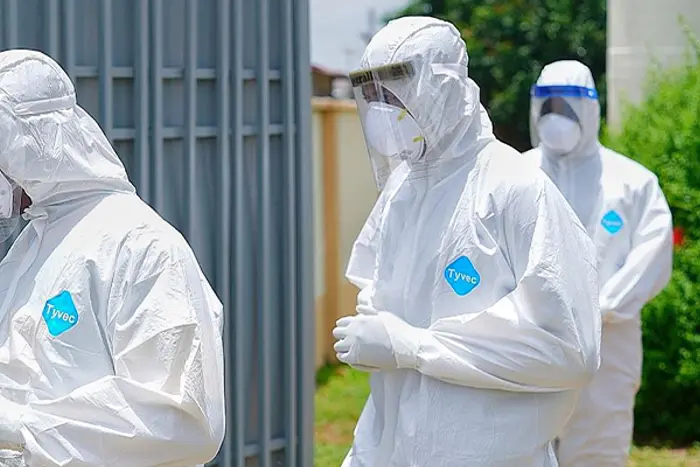
The Federal Government has confirmed a case of Ebola disease in the Federal Capital Territory (FCT), identifying 44 close contacts as health authorities intensify efforts to contain the infection and prevent further spread.
The Coordinating Minister of Health and Social Welfare, Professor Muhammad Ali Pate, disclosed this in a statement issued on Tuesday, October 20, 2026, following laboratory confirmation of the case.
According to the statement, the patient is a woman who recently arrived in Nigeria on an international flight from Uganda.
She was admitted to a private hospital in the FCT, where she received treatment for several days before the diagnosis was confirmed.
The Minister said the patient was currently in isolation and receiving medical care.
He added that the Federal Ministry of Health and Social Welfare, the Nigeria Centre for Disease Control and Prevention (NCDC), the FCT Health Services Secretariat and other relevant authorities were working together to contain the infection.
Contact tracing has commenced, with public health teams identifying and monitoring individuals who may have been exposed to the patient, including healthcare workers, patients, caregivers and travel contacts.
The government has also intensified disease surveillance, while the hospital where the patient received treatment is being supported to strengthen its infection prevention and control measures.
The Federal Government called on public and private healthcare facilities across the country to remain on high alert and promptly report suspected cases to public health authorities.
It urged healthcare workers to maintain a high index of suspicion, identify and isolate suspected cases without delay, and strictly observe infection prevention and control protocols.
The government also explained that Ebola spreads through direct contact with the blood or other body fluids of an infected person who is sick or has died from the disease, as well as contact with contaminated materials.
It further clarified that a person infected with Ebola cannot transmit the disease before symptoms develop.
The government urged Nigerians to remain informed and follow public health guidance as authorities continue efforts to contain the confirmed case and prevent further transmission.
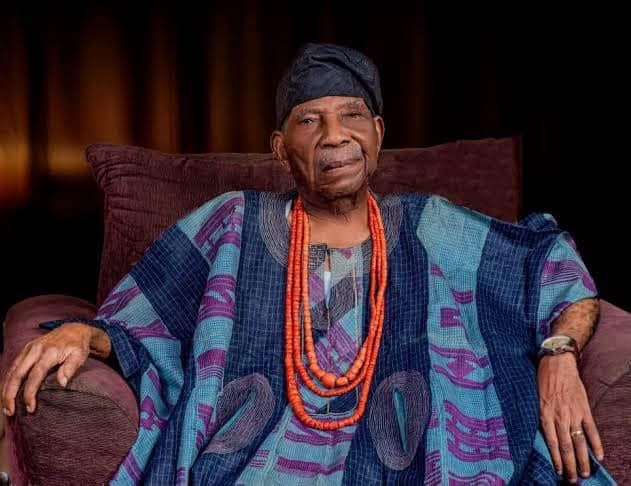
Pa Reuben Famuyide Fasoranti, the revered Yoruba elder statesman and national leader of the pan-Yoruba socio-political organisation, Afenifere, has died at the age of 100.
Announcing the death of the centenarian, Governor Lucky Aiyedatiwa, in a statement personally signed on Tuesday, mourned the death of the elder statesman and community leader.
Aiyedatiwa described the late Fasoranti as a symbol of wisdom, integrity and selfless service whose contributions to the development of Ondo State, Yorubaland and Nigeria would remain indelible.
The governor, in a condolence message issued on Tuesday, said the centenarian’s fatherly counsel, guidance and principled positions on justice and good governance would be sorely missed.
He said Fasoranti lived a fulfilled life and left behind an enduring legacy that would continue to inspire generations.
“Pa Fasoranti was a patriarch, a beacon of wisdom, integrity and selfless service whose century-long life was marked by uncommon commitment to the development of our dear State, Yorubaland and Nigeria at large,” Aiyedatiwa said.
Aiyedatiwa, who expressed sadness over the elder statesman’s death, said his administration and the people of Ondo State shared in the grief of the deceased’s family and associates.
On behalf of the state government and its people, the governor extended his condolences to the Fasoranti family, the people of Akure Kingdom, and the entire state over the loss.
He prayed for the peaceful repose of the deceased’s soul.
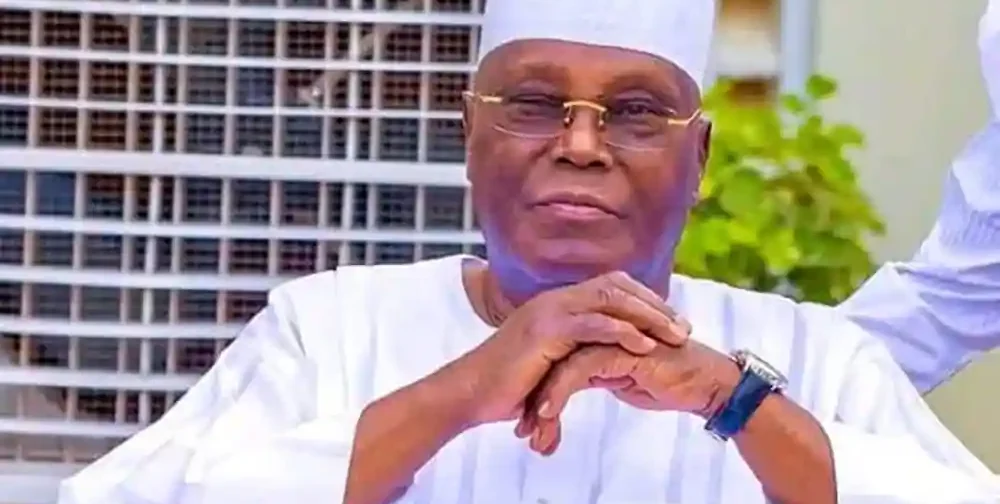
The All Progressives Congress (APC) Presidential Campaign Council has denied allegations of a plot to assassinate former Vice-President Atiku Abubakar, the African Democratic Congress (ADC) presidential candidate for the 2027 general election.
Dele Alake, spokesperson for the APC Campaign Council, made the denial while reacting to the allegation raised by Timi Frank, a member of the ADC.
The council urged Frank to submit any evidence in his possession to the relevant law enforcement agencies for investigation, stressing that any credible threat to life must be treated seriously, irrespective of political affiliation.
It categorically denied any involvement by President Bola Tinubu, the Presidency or the APC in an alleged plot targeting Atiku or any other opposition figure.
The council also dismissed reports that security personnel attached to the former vice-president had been withdrawn, insisting that Atiku remained protected by the Nigeria Police Force and the Department of State Services (DSS).
According to the statement, President Tinubu recently directed security agencies to strengthen security arrangements for all presidential, vice-presidential, governorship and deputy governorship candidates ahead of the 2027 general elections.
Reacting to the political implications of the allegation, Alake described the assassination claims as “typical opposition rabble-rousing”, accusing those behind them of attempting to heighten political tension and attract international attention through social media.
“Let our political competition be peaceful, lawful, and focused on the big issues that matter to Nigerians, not character assassination or wild, baseless allegations,” the statement read.
The APC Campaign Council further highlighted Tinubu’s longstanding experience in opposition politics, urging candidates, political parties and their supporters to remain factual and responsible in their public statements.
It called on political actors to uphold democratic values and ensure that the build-up to the 2027 general elections remains peaceful, lawful and focused on issues affecting Nigerians.
-
 News1 day ago
JUST IN: Former Delta Governor, Uduaghan, dies
-
Faith3 days ago
Awka Anglican Diocese Rejects Ibezim’s Suspension, Threatens to Leave Church of Nigeria
-
Politics3 days ago
Nigeria’s Weak Opposition and the Cost of One-Party Dominance: Can the Opposition Rebuild Before 2027?
-
News1 day ago
Federal High Court Upholds ENSSAA’s N150m Political Campaign Billboard Fee, CTC Reveals
-
News2 days ago
Corruption turning Nigerian Courts to ‘market stalls’ — Retired Justice Augie
-
Politics2 days ago
AA Assembly Candidate, Ugbaje Friday, Unveils Development Agenda for Ibaji
-
News2 days ago
Catholic priest dies as crucifix falls on him during Mass
-
Gallery2 days ago
PHOTO NEWS: Emadeb Energy CEO Gives Back to Alma Mater in Show of Gratitude