International
Foreign students: UK varsities may fall into deficit, says report

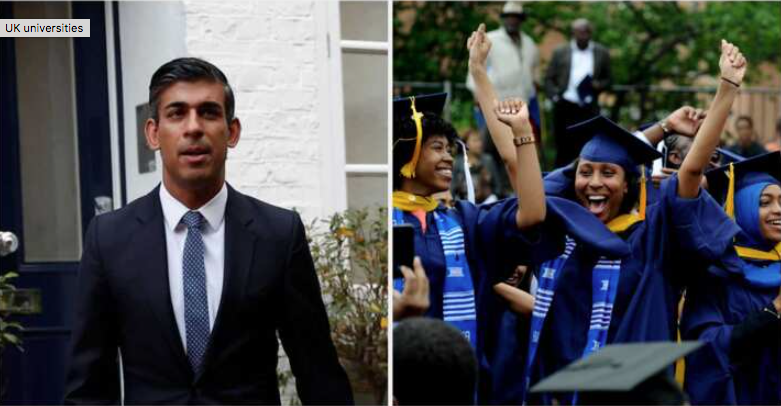
The Home Office of the United Kingdom announced that it had commenced the implementation of its policy banning Nigerian students and other overseas students from bringing in dependents via the study visa route.
In a post on X (formerly Twitter), the Home Office reiterated that only those on postgraduate research or government-sponsored scholarship students will be exempted from the development.

“We are fully committed to seeing a decisive cut in migration. From today, new overseas students will no longer be able to bring family members to the UK. Postgraduate research or government-funded scholarships students will be exempt,” the Home Office said.
Meanwhile, Financial Times on Friday reported the chief executive of Universities UK, Vivienne Stern, who represents more than 140 universities, said the sector was facing the prospect of a “serious overcorrection” thanks to immigration policies that deterred international students from coming to study in Britain.
“If they want to cool things down, that’s one thing, but it seems to me that through a combination of rhetoric, which is off-putting, and policy changes . . .[they have] really turned a whole bunch of people off that would otherwise have come to the UK,” Stern told the Financial Times.

Stern’s plea came as it emerged that some top universities, including York, which is a member of the elite Russell Group, were being forced to soften their entry requirements in order to maintain numbers of overseas students.
“The government needs to be very careful: we could end up with, from a policy point of view, what I would consider a serious overcorrection,” she added.
With the £9,250 domestic tuition fee effectively frozen for the past decade, UK universities have increasingly relied on non-EU students to make ends meet, with fees from non-EU students now accounting for nearly 20 per cent of sector income.
Universities are warning privately that numbers have softened sharply this year following a series of hostile policy moves by the government, with indications that enrolments may have fallen by more than a third from key countries, including Nigeria and India.
One senior university insider told the FT that the sector as a whole had been “spooked” by data that showed the number of international students taking up places in January 2024 was “way below the bottom end of projections for everyone”.
In January, Sunak highlighted changes in government policy to stop international graduate students from bringing family members to the UK, adding the policy was “delivering for the British people.”
The government also announced in December that it was reviewing the so-called “graduate route” enabling international students to work in the UK for two years after they graduate and announced a crackdown on “low-value courses”, even though only 3 per cent are failing to meet criteria set out by the regulator.
Data from Enroly, a web platform used by one in three international students for managing university enrollment, showed that deposit payments were down 37 per cent compared to last year.
A new analysis for UK by consultants PwC found that the combination of falling international student numbers, frozen tuition fees, rising staff wage bills, and a softening in UK student numbers was leaving the sector facing a perfect storm.
“You take those things together, and you’ve got a big problem,” Stern said, warning that the government needed to wake up to the risk posed to a sector that contributes £71bn to the UK economy every year.
The PwC analysis was based on 2021-22 financial returns for 70 UUK members in England and Northern Ireland and found that about 40 per cent are expected to be in deficit in 2023-24, falling to 19 per cent by 2025-26.
However, Paul Kett, a former senior Department for Education official who now advises PwC on education, said the numbers reflected assumptions about spending and income growth that now looked highly optimistic given the policy environment.
The PwC analysis found that if the growth in international students stagnated in the 2024-25 academic year, the proportion of universities in the financial deficit would rise from 19 per cent to 27 per cent — but if numbers started to fall between 13 and 18 per cent then four-fifths would be in deficit.
On the other side of the ledger, it found that increasing fees by 10 per cent for UK undergraduates in 2024-25 would shrink the share of universities in deficit from 19 per cent to 7 per cent.
The report said the effects of declining international enrolments could be compounded by other negative shocks, such as a rise in spending growth or a fall in domestic student numbers. It warned that mounting financial pressure could force universities to cut provision and delay investment, compromising quality for students.
Stern argued three interventions were necessary to put the sector on a stable footing: uprating tuition fees in line with inflation, increasing government teaching grants and stabilising the international market by dialing down negative rhetoric and ending question marks over the graduate route.
“You can take these individual scenarios that PwC looked at, and think that any one of them could tip a large number of institutions into a very difficult position, but the problem is that lots of those things are happening at once,” she said.
Robert Halfon, higher education minister, said: “We are fully focused on striking the right balance between acting decisively to tackle net migration, which we are clear is far too high, and attracting the brightest students to study at our universities,” he added.
The PUNCH



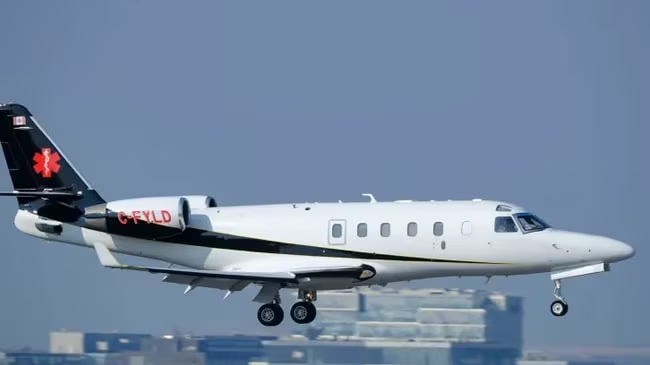
There are grave fears for the passengers of a private plane that suddenly vanished mid-flight, sparking a major search off the coast of the US.
US authorities say the Gulfstream G100 lost contact with air traffic control about 2am local time on Saturday (4pm Saturday AET) while flying from L.F. Wade International Airport in Bermuda to Boston Logan International Airport.
The US Coast Guard said the Federal Aviation Administration alerted it after contact was lost with the aircraft – which plummeted from 23,500 feet to 11,000 feet in just three minutes, according to FlightAware data.
“We are praying for a safe outcome,” a spokesperson for Latitude Air Ambulance, which operates the missing plane, told City News.
A search is now under way off Nantucket in the air and on water as crews work to locate the missing jet, the Coast Guard said. Data from FlightRadar24 showed a number of aircraft searching south of the island.
Six people are missing after a private jet vanished, sparking a major search off the coast of Nantucket in the US.
The plane was en route from Bermuda to Boston when it vanished.
“Air & surface crews have launched in search of the aircraft. Updates will be provided here as info becomes available,” the Coast Guard Northeast District said on X.
The plane was carrying out a medical evacuation in Bermuda – a British overseas territory in the north Atlantic Ocean, according to Clarence Togeretz, Director of Flight Operations at Latitude Air Ambulance.
“We always get rather concerned when our crew doesn’t report to us in a timely manner,” he told NBC News.
“But I will say that again, optimistically and positively, that doesn’t mean that the worst has happened.”
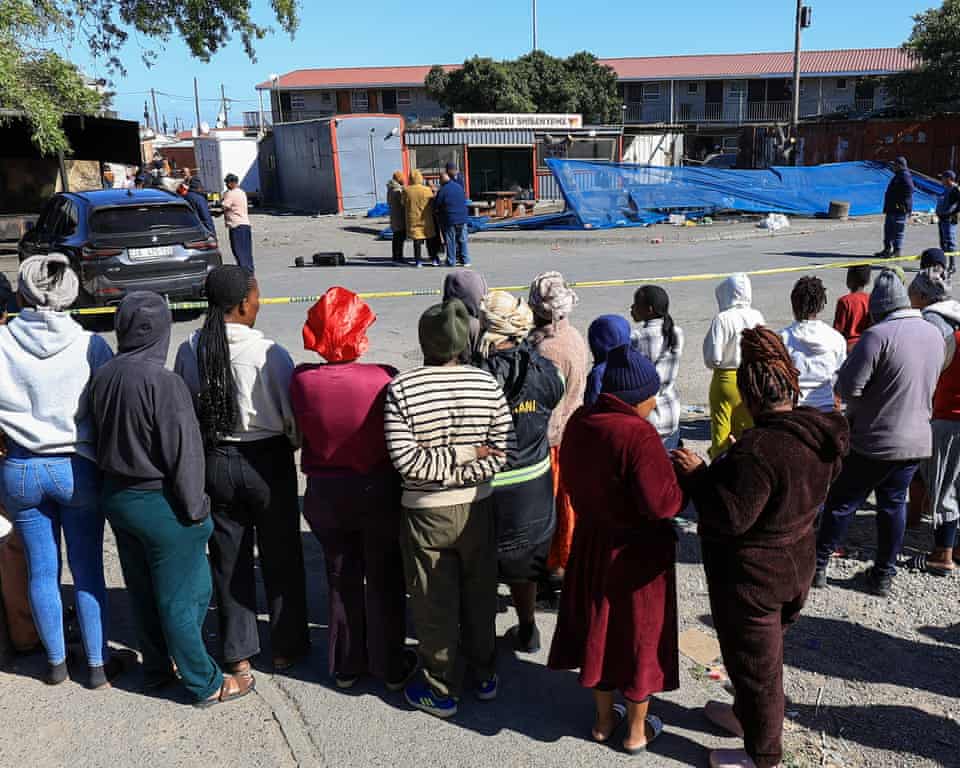
Seventeen people were killed when eight gunmen stormed a bar close to Johannesburg on Saturday evening, with 15 more injured.
In a separate shooting in the early hours of Sunday morning, 10 people were killed outside an entertainment venue in a township near Cape Town and a further 11 were injured.
South Africa has one of the highest murder rates in the world and has struggled to contain gang-related gun violence in recent years. Police have not indicated a motive for either of the latest attacks.
In Johannesburg, gunmen opened fire on customers outside the bar before continuing the attack inside and torching two vehicles before fleeing.
Police said thirteen men and four women were killed.
Deputy provincial police commissioner Maj Gen Fred Kekana said the attack may have been a retaliation for an incident last month, in which one person was killed and another wounded, according to AFP news agency.
Speaking at the scene, he said police had clear pictures and in some cases names for the suspects.
In Cape Town, five victims died at the scene and a further five people died in hospital.
No arrests had been made in either case on Sunday morning.
The two mass shootings came days after 11 people were killed in the city of Duban when gunmen stormed a house in the KwaMakhutha township.

Illegal weapons are prevalent in South Africa and gun violence has been a persistent problem for decades, with about 60 murders recorded every day in the country of 62 million.
But a recent spate of mass shootings has raised fears that the problem is deepening, with violence often linked to turf wars between gangs engaged in drug trafficking and illegal mining.
In February, President Cyril Ramaphosa called organised crime “the most immediate threat to our democracy, our society and our economic development”.
Earlier this year the military was deployed alongside police in areas with the highest murder rates in an effort to reduce armed violence.
On Saturday a tenth woman’s body was found in Ekurhuleni, to the east of Johannesburg, with local police saying they were unable to rule out a serial killer operating in the area with similarities between the deaths. (BBC)
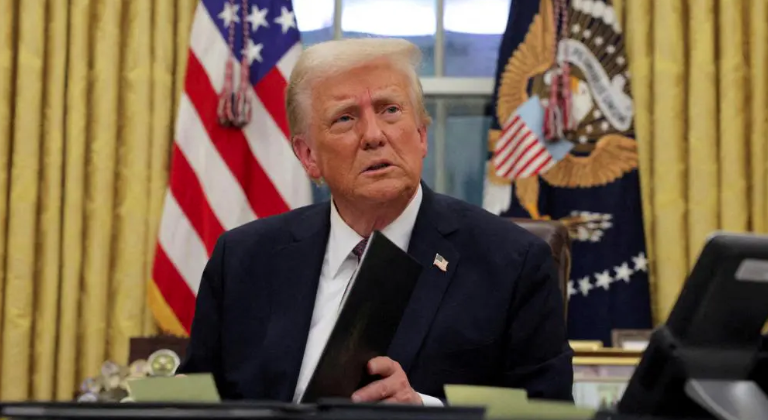
The United States has deported more than 25,000 people under secretive agreements with 35 countries to take migrants with no ties to those nations, according to an investigation published Monday.
Since US President Donald Trump took office in January 2025, Washington has been signing deals with developing countries to take migrants who cannot legally be sent home.
The investigation by Forbidden Stories found the administration has earmarked $410 million to be paid directly to the receiving countries, or to UN agencies to facilitate the returns.
At least 25,447 people had already been deported to third countries by August 31, 2026, according to data compiled by Forbidden Stories with a consortium of international journalists.
The vast majority — around 20,000 — were sent to Mexico, but the rest were dispersed to 27 other countries across Latin America, Africa, and the Pacific, and agreements have been finalised with seven more.
The deals vary, including over which nationalities can be deported and whether people with criminal records can be accepted.
An AFP investigation earlier this year found Washington is using visa bans and restrictions on African countries to strongarm them into accepting deportees.
Lawyers told AFP that deportees were being thrown into a “legal black hole”, held without charge in countries where they have no ties and few if any rights.
Forbidden Stories said 49 of Africa’s 54 countries had been approached about accepting third-country deportees.
A little-known State Department division called the Office of Remigration, created in May 2025, has handled most of the negotiations and payments, according to Forbidden Stories.
The office is headed by Christian Jove Ehrhardt, a 41-year-old diplomat who previously worked as a security officer.
The report details his visits to Cameroon, which signed a memorandum of understanding with the US in December on accepting deportees. A week later, it also signed a five-year health assistance programme worth nearly $400 million.
The following month, the State Department said it would provide a further $30 million to the UN Refugee Agency (UNHCR) in Cameroon to “facilitate the voluntary return of refugees and combat illegal immigration.”
The first plane carrying deportees arrived in Cameroon on January 14.
– Payments –
Other agreements have involved direct payments to governments.
Palau, a small Pacific island nation with a population of under 18,000, signed an agreement in December 2025 to accept up to 75 third-country nationals in return for $7.5 million.
However, only three people have so far been sent under the agreement.
In Eswatini, 32 people have arrived since July 2025 out of a possible 160 under an agreement worth more than $5 million. It has accepted deportees with criminal records, the investigation found.
Of the $410 million planned for the agreements, internal State Department records showed that $81 million was earmarked for signatory governments.
The rest was intended for aid organisations, including more than $178 million for the UN’s International Organisation for Migration, and $123 million for UNHCR.
The agencies have faced criticism over their involvement, although UNHCR told Forbidden Stories that it was not party to the bilateral agreements and that US funding was being used in line with its mandate to strengthen asylum systems.
An IOM spokesperson told Forbidden Stories that the agency’s decisions to accept funding rested “on a single question: whether our engagement will improve the lives of the migrants affected. In these instances, we believe strongly it does.”
-
 Faith1 day ago
Awka Anglican Diocese Rejects Ibezim’s Suspension, Threatens to Leave Church of Nigeria
-
News2 days ago
BREAKING: Mbah Extends Enugu Movement Restriction to 10pm, Scraps Keke Ticketing
-
Politics1 day ago
Nigeria’s Weak Opposition and the Cost of One-Party Dominance: Can the Opposition Rebuild Before 2027?
-
News2 days ago
2027: Keke Riders Endorse Mbah, Tinubu
-
News3 days ago
Enugu Approves ₦32bn Legacy Gratuity Payment, Begins Disbursement Next Week
-
News20 hours ago
Catholic priest dies as crucifix falls on him during Mass
-
News14 hours ago
Corruption turning Nigerian Courts to ‘market stalls’ — Retired Justice Augie
-
News2 days ago
2027: Opposition to name single presidential candidate before polls – Lukman