Connect with us

News

London Court jails Nigerian man three years for flogging son

Published

on

Spread the love
An appeal court in London, the United Kingdom, has sentenced a Nigerian man to three years in jail for physically abusing his nine-year-old son.

The offender, 66, initially got away with 22 months imprisonment at the end of his trial at the Crown Court in Woolwich, South-east London, which the government disagreed with.

Following the government’s appeal against the trial court’s sentence, the Criminal Division of the Court of Appeal of England and Wales in London raised the punishment to three years jail term.

“The sentence of 22 months imprisonment will be quashed and replaced by a sentence of three years imprisonment,” the Court of Appeal ordered in its judgement delivered on 22 December 2022.

The trial Crown Court in Woolwich had sentenced the offender to a suspended sentence order, comprising a custodial term of 22 months, suspended for 12 months, with a two-month electronic curfew between 7.00 p.m. and 7.00 a.m.

He was also ordered to pay £500 in compensation to his son, whose name was withheld by the court because of his age, and costs in the sum of £250. A victim surcharge, meaning a fine, was also to apply, although the amount was not disclosed.

Maduka College Advert

The names of all the parties connected to the case and the part of London where the crime was allegedly committed were not given in the court judgement, a copy of which was obtained by PREMIUM TIMES. The court withheld the names because the case revolves around a child.

The UK government, through the Solicitor General for England and Wales, appealed against the sentence imposed by the Crown Court of Woolwich, describing it as unduly lenient.

It maintained that the trial court, imposing a 22-month custodial sentence, did not consider “any aggravating factors increasing the seriousness of the offence”.

How it happened

The offender was born in Lagos, Nigeria, and moved to the United Kingdom in 1990.

At the time of this offence, he lived in London with his wife, his stepdaughter, aged 17, and his two biological children – the victim and his sister. His wife also had two adult sons who did not live with them.

His wife, the victim’s mother, during the lockdown when school children had migrated to online classes, was informed that the victim had not been attending his online school classes for two days. As a result, she barred him from playing computer games and told the father about the development.

On 22 January 2021, she left home to visit her eldest son leaving the victim with his sisters. Their father came home from work to find the victim using the computer.

According to the court documents, the father repeatedly struck him across the back using metal sticks or rods, which he retrieved from a basket next to the television in the living room. He also used his belt repeatedly to strike him on the back, arms and shoulders.

The nine-year-old son cried very loudly; one of his sisters witnessed the assault, while the other, who was upstairs at the time, heard his cries.

“When the physical assault had come to an end, the offender told E to hold a metal stick above his head and face the garden. He remained in this stress position for some two hours,” the court said.

‘E’, in this case, was the victim.

Two days later, the mother came home to find her son in pain.

“She saw the marks on his body. She confronted the offender, who admitted what he had done at that stage but did not accept that his actions were wrong.”

She took her child to the hospital, where he was found to have multiple horizontal bruises across his back and arms, linear in appearance and consistent with the use of a metal stick-like implement. He also had bruises on his shoulders and his head, as well as cuts to his hands.

The metal sticks used by the offender were provided to the police, and the father was arrested on 25 January 2021.

He said at that stage that he felt very remorseful but, when interviewed, denied assaulting the little boy, his son or any of his children with a stick or belt and denied putting him in a stressed position.

Instead, he blamed his wife. He said she had encouraged the kids to fabricate allegations against him because she was upset with him over citizenship and her family’s entry into this country.

The father was charged and remanded on bail with conditions which included a qualifying (electronically-monitored) curfew.

He pleaded not guilty throughout the pre-trial period, and the trial commenced on 10 June 2021 with cross-examination of the children.

The case was listed for further hearing between 6 and 10 June 2022. The recorded evidence of the children was played to the jury, and the mother gave live evidence.

After the prosecution had closed its case, the mother discovered text messages that her husband, the convict, had sent to her in January 2021 in which he had warned her and the victim not to say anything about what had happened.

On 10 June 2022, he pleaded guilty to cruelty to a person under 16 years old and was sentenced on 12 October 2022 by the Crown Court in Woolwich.

Solicitor General’s argument

The solicitor general’s office, through its lawyer, B. Lloyd, opposed the sentence passed by the trial court.

Although it acknowledged the judge correctly placed the offence in the right category of the relevant sentencing guideline, it insisted that a term significantly longer than 22 months imprisonment was merited.

He pointed out that the trial judge recognised that there was evidence during the trial of assault or general abusive behaviour involving other children in the family but did not count it as an aggravating factor against the offender.

“In short, the downward adjustment to 22 months, taking into account all aggravating and mitigating factors, was simply far too great,” Mr Lloyd had told the Court of Appeal in making a case for a longer sentence. “It did not reflect the overall seriousness of this offence.”

Defence

But the defence lawyer, N. Carter, justified the sentence imposed by the trial judge.

Ms Carter said the judge followed a considered and balanced approach and that the final sentence that he imposed could not be said to be unduly lenient.

She argued that the offender did not have deliberate disregard for his son’s welfare but instead wanted to instil proper standards in him.

“His offending was not of a sadistic or cruel nature. The victim and his siblings were clearly otherwise well looked after and provided for. All of this, coupled with the offender’s good character, justified the custodial term of 22 months,” she argued.

Court of Appeal’s judgement

In its judgement, the Court of Appeal said the trial Crown Court in Woolwich overlooked “multiple aggravating factors” in imposing its sentence.

“First, and significantly, there was the presence of other children. This was a significant factor in the facts here, given that one eight-year-old sibling was in the room when the offending occurred, and another was in a position to hear the victim’s distress. This was to witness the punishment of one child, instilling fear in others of similar treatment so far as they were concerned,” the three-member panel wrote in their judgement.

According to the court, there was also the failure to seek medical help, and the offender wrongly sought to blame others.

There was also an attempt to conceal his offence through text messages sent to his wife, the court said.

The panel noted that on the face of the Woolwich judge’s sentencing remarks, the judge appears to have been concerned about how to recognise the time spent by the offender on curfew.

“The judge should not have been distracted by that factor, at least at the outset; it was not relevant to the question of determining the correct length of a custodial sentence,” the panel wrote.

Having heard arguments from both sides, the court held that the offence warranted a custodial term of not less than three years, adding that there was no proper basis for the judge to have reached a custodial term outside the range for “Category 2A offending”.

“For all these reasons, and seen in this light, the term that the Judge imposed was not only lenient but unduly so,” it said.

Premium Times

News

Tinubu meets APC Governors at Presidential Villa

Published

on

President Bola Tinubu
Spread the love

President Bola Tinubu is currently meeting with governors elected on the platform of the All Progressives Congress (APC) at the Presidential Villa, Abuja.

The meeting, involving members of the Progressives Governors Forum (PGF), commenced shortly before 4pm on Thursday, following a separate session of the National Economic Council (NEC) chaired by Vice President Kashim Shettima.

As of the time of filing this report, the meeting was still ongoing, with details of the agenda yet to be made public.

The engagement comes amid heightened political activities ahead of the 2027 general elections, eight days after the official commencement of campaigns in line with the timetable released by the Independent National Electoral Commission (INEC).

It also comes five days after the APC released the list of members of its Presidential Campaign Council for the 2027 elections.

Maduka College Advert

The campaign council is headed by former Zamfara State Governor, Senator Abdulaziz Yari, who was appointed Director-General.

The meeting between Tinubu and the APC governors is expected to provide an opportunity for discussions on political coordination, mobilisation and other issues concerning the party ahead of the 2027 elections.

The Progressives Governors Forum has remained a key platform for coordination among APC governors, while the President has continued to engage party leaders and elected officials as the party prepares for the elections.

Continue Reading

News

SEDC set to launch 15 Agromechanisation projects across S’East

Published

on

Spread the love

…Says “We’re bringing back Okpara’s agro-industrial revolution”

….Hails Gov Mbah’s proactiveness, promises communities bountiful benefits

The South East Development Commission, SEDC, says it is set to reignite the agro-industrial revolution that made the defunct Eastern Region the fastest growing economy in the world between 1954 and 1964.

The Commission said it was embarking on three Agromechanisation projects, one in each of the three senatorial zone of Enugu, Abia, Imo, Anambra, and Ebonyi State, in partnership with the state governments, starting with Enugu.

The Commission gave the assurances at Nomeh, Nkanu East Local Government Area of Enugu State during a community engagement with leaders and stakeholders of the community on the proposed Nomeh Agromechanisation Project.

In his detailed presentation, the Executive Director, Natural Resources, Agriculture, and Rural Development (NRARD) at the SEDC, Dr. Clifford Ogbede, said the project would also provide numerous direct and indirect job and business opportunities, making agriculture attractive to the youths again

Dr. Ogbede, who was represented by his Technical Adviser at Commission, Dr. Chris Uwadoka, explained that the projects would also attract local and foreign investors, giving Ndigbo in diaspora the opportunity to be part of rebuilding the South East.

Maduka College Advert

“We could all recall that the Eastern Region economy was at a point rated as the fastest growing economy in the world. That means that we were ahead of many leading economies of today in term of growth. And at the root of it was agriculture, thanks to the visionary leadership of the former Premier of the region, Dr. Michael Okpara.

“So, after thorough brainstorming sessions, the SEDC came up with a blueprint to restore the region’s lost glory, starting with agriculture,” he said.

Commending Governor Mbah for his proactiveness in laying out a robust and elaborate agricultural blueprint for Enugu State, he said the Agromechanisation project would also be cited at Elugwu Akwu, Oji River LGA in Enugu West Senatorial District and Nkpologwu, Uzo Uwani LGA in Enugu North Senatorial District to the benefit of the host communities and South East.

“Governor Mbah nominated Nomeh for the programme. It is a good thing for this community because SEDC is going to bring the best possible agricultural knowledge into the territory, bring specialists, agro-entrepreneurs, improved seeds with greater yields, and support the local farmers.

“So, it is a good thing that has come to the Nomeh community. It’s something to be cheered, cheerful about.

“Also, there’s something happening amongst youth, especially in the South East. They are averse to agriculture. They are walking away from agriculture that their parents depended on because it is back-breaking.

“The labour is much, but the yield is little and you hardly have enterprises, companies that are running on the back of agricultural produce.

“Therefore, this Project is going to attract agricultural enterprises that will give employment to the youth, and give them knowledge. They will see how it is done. They will earn a living for themselves,” he added.

He strongly dismissed the notion that the Agromechanisation Project was a ploy to grab grazing lands for cattle herders.

“There is absolutely nothing like that. This is an entirely South East initiative for the benefit of the South East, then the nation. It is very untrue and not part of the blueprint,” he concluded.

In his remarks, the Enugu State Liaison Officer to the Commission, Chief Edeani Edeani, said the Federal Government and Governor Peter Mbah were determined to use agriculture to fight insecurity.

“With such massive agromechenisation projects across the South East, our spaces will be more effectively and gainfully occupied and governed. Also, the youths will be gainfully employed,” he stated.

Speaking, a community leader and Senior Special Assistant to the Governor on Media, Uche Anichukwu, thanked President Bola Ahmed Tinubu for establishing the SEDC after many failed attempts by Ndigbo under previous administrations.

“I worked at the national parliament for several years, and I am very much aware of the many attempts to set up a commission without success. It was either the bill did not scale through the parliament or it was denied presidential assent. But on 24th July, 2024, President Tinubu graciously signed into law the legal framework creating the SEDC to rebuild infrastructure and serve as a platform for a coordinated regional development,” he said.

He lauded the SEDC Managing Director, Mark Okoye, and his team for launching out with agriculture as a pivot for the economic revival and growth of the region, noting that they had brought “a totally fresh approach to running regional development commissions.”

“As a community, we are most grateful to the President and Governor Peter Mbah for choosing Nomeh to host the pilot project. We do not take it for granted.”

On his part, the traditional ruler of Nomeh Unateze, HRH Igwe Israel Okonkwo Mbah, who was represented by the traditional prime minister, Chief Daniel Anikpuma, said the Nomeh Unateze Agromechanisation Project would bring back the pre-civil war glory of the community.

“It is a sort of bringing back the glory of Nomeh-Unateze, a bustling railway and agricultureal town in the past. Before the war, we had UAC, Leventis, and several other produce trading companies here. The war broke out, and everything stopped.

“Today, the SEDC and the Enugu State Government have remembered Nomeh Unateze and come with mechanised farming to reactivate our community. We believe it is going to bring massive development and we embrace it with a grateful heart,” he stated.

Likewise, the town union government of the community, speaking through Engr. Uchenna Anyanwu, threw its weight behind the project, assuring that necessary machinery would be put in place to ensure the smooth execution and security of the project.

Another community leader, Mrs. Veronica Onwude, said the project had given the people more hope, as the women, their husbands and youths would be more gainfully employed.

Continue Reading

News

BREAKING: NLC General Secretary, Ugboaja, is dead

Published

on

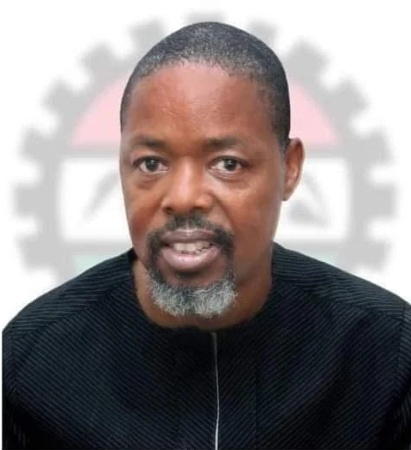
General Secretary of the Nigeria Labour Congress, Emmanuel Ugboaja
Spread the love

The General Secretary of the Nigeria Labour Congress, Emmanuel Ugboaja, has died at the age of 60 after a protracted illness.

Details surrounding his death remained sketchy as of the time of filing this report.

The NLC President, Joe Ajaero, announced Ugboaja’s death to members of the Congress National Executive Council during their ongoing meeting in Enugu, Enugu State, according to Tribune newspapers.

Ajaero reportedly read a letter from the deceased’s family informing delegates of his passing.

Ugboaja, a veteran trade unionist and lawyer, had served as the NLC General Secretary since August 2019, following the ratification of his appointment by the Congress’s National Executive Council at a meeting in Kano. He succeeded the retiring Peter Ozo-Eson.

Maduka College Advert

As General Secretary, Ugboaja was responsible for coordinating the administrative and strategic operations of the labour centre, including relations with the NLC’s affiliate unions, industrial relations, negotiations with government and employers, policy implementation and nationwide mobilisation.

His tenure coincided with some of the most significant confrontations between organised labour and successive governments over wages, workers’ welfare and economic policies.

One of his early major assignments was the negotiation surrounding the implementation of the N30,000 national minimum wage approved by the Federal Government in 2019. The disagreement over implementation brought the government and organised labour close to industrial action before an agreement was eventually reached.

Ugboaja remained involved in subsequent negotiations and campaigns on workers’ wages and welfare.

In April 2026, he signed an NLC directive urging workers in states that had yet to fully implement the 2024 National Minimum Wage Act to participate in street rallies on May Day, reflecting his role in translating the decisions of the Congress into nationwide mobilisation.

Born on May 15, 1966, Ugboaja studied Law at the University of Calabar, graduating in 1987.

He initially spent about four years in private legal practice before joining the trade union movement in 1993.

According to the NLC’s historical biography, his entry into the labour movement made him the first Nigerian lawyer to work full-time for a trade union.

He began his trade union career with the National Union of Chemical, Footwear, Rubber, Leather and Non-Metallic Products Employees, an affiliate of the NLC, where he rose to become General Secretary between 2000 and 2005.

Ugboaja later served as Coordinator, Advocacy and Mobilisation, at the Alliance for Credible Elections between 2006 and 2009, before joining the NLC Secretariat in 2009.

His death comes at a significant period for Nigeria’s labour movement, which has remained engaged with the Federal Government and state governments over the implementation of the new minimum wage, workers’ welfare and the wider economic impact of ongoing reforms.

The NLC is expected to make further statements on Ugboaja’s death and funeral arrangements.


Continue Reading

Trending

Maduka College Advert