Politics
The opaqueness of National Peace Committee in the election space

By Sam Otuonye
Peace building is a complex and multifaceted endeavour, consisting of many different elements ranging from conflict prevention and early warning systems; mediation and conflict management; post-conflict reconstruction; disarmament, demobilization, and re-integration.

It also covers the aspects of human rights and justice; the role of religious, political and community leaders, grassroots organizations, regional, continental and international bodies in ensuring a peaceful ecosystem.
The National Peace Committee, which oversees the signing of Peace Accord by Presidential Candidates, and their party chairmen, chaired by Gen. Abdulsalami Abubakar (retd), has been on this trajectory since 2015. It is an agreement that is meant to be binding on the presidential candidates and their party chairmen to ensure a peaceful and orderly conduct of their campaigns and rallies devoid of violence, intimidation, insults, incitements, misinformation and disinformation.
According to General Abubakar, “It is to commit the presidential candidates and their party chairmen to accept the outcome of the elections as long as it is adjudged to be free, fair and credible. It is also to commit them to seek legitimate and peaceful means of addressing any concerns that may arise thereafter”.

The accord is signed twice within each electoral cycle; first one, before the commencement of campaigns and the second, few days to the polls.
In fact, the signing of Peace Accord that came into being in 2015, was an action taken because of the violent eruptions in some parts of Northern Nigeria, occasioned by the incumbent President Buhari’s consistent outcry against election rigging in 2003,2007, and 2011, which led to destruction of lives and properties.
Since the emergence of this Gentleman Agreement, the electoral environment has remained more chaotic and violent except in 2015, when former President Goodluck Jonathan , on his own volition, yielded to the agreement, as a perfect gentleman, nationalist, democrat, and true patriotic Nigerian and conceded defeat to President Buhari – when he could have vehemently and flagrantly rejected, nullified, and trashed the election result into the dust bin, and match the consequences with all military and paramilitary might as Commander- In-Chief of the Armed Forces. But he chose the path of peace, noting that; his ambition is not worth the blood of any citizen. Posterity will profoundly be kind to him.
The elections of 2019 and the current 2023 have witnessed the worst, with the 2023 adjudged by majority of Nigerians as a disaster. There were myriad cases of political killings, maiming, arson, ballot box snatching, gun-running, and all kinds of violence.
All these electoral malfeasance happened after signing the ‘revered’ Peace Accord, administered by some select senior citizens that are adjudged honourable. They include, Abdulsalam Abubakar, Bishop Matthew Kukah, Aliko Dangote, etc. According to data from INEC, 50 attacks have been taken place on their offices between 2019 and 2022 across the country. Re-living the numerous and unabated political violence across the country, the Chairman of National Peace Committee, during the last signing of 2023 peace accord, opined, “As a nation, we have to put a stop to all these…”.
But do they have all it takes to put a stop to political violence and politician’s rascality? Do they have the force of law? What are the terms of their engagement as a committee? In a recent interview with the Punch Newspaper, a legal silk, Prof. Mike Ozekhome (SAN) said “The accord signing may not have the force of law; but it certainly has moral authority and political suasion. To the extent, it is a necessary tool for checking the ever-recurring political brigandage and electoral thuggery, and freebooting. We need sanity in our political space and electoral process; otherwise, the entire election will be imperiled”.
In a similar line of thought, Mr. Hamza Lawal, the Chief Executive of Connected Development (CODE), an Advocacy Group, noted that, “the essence of signing Agreements anywhere in the world are legally binding, provided they were not done under duress. Hence, accords signed in the past and even the one recently signed last week (referring to 2023 second accord) are binding on all signees, but whether the signees will abide by the same is a different conversation altogether” .
Now, the conversation beckons! On Saturday, the 25th of February, 2023, Nigerian Citizens swarmed out en mass to cast their votes for their preferred presidential and national assembly candidates. That of the president was topmost on their mind because of the donkey years of ineptitude leadership that has brought tears and sorrow to the citizenry. They wanted a change and a desperate one at that.
They did cast their vote; waited for their vote to be counted, uploaded onto the Bimodal Voter Accreditation System (BVAS) and transmitted to the INEC Result Viewing Portal (IREV) for public viewing but they got the shock of their generation as the over-promised and publicized real time on-line electronic facilities were said to have ‘technical hitches’ and unable to transmit. And the primordial manual system was quickly latched on to actualize the covenant of the evil stakeholders. The peoples’ choices were brazenly subverted and now the screams of anger have rented the Nigerian hemisphere.
Divergent stratagems were deployed to execute this sordid orchestration; from cash crunch and fuel scarcity to late arrival of voting materials and officials, insufficient voting materials, under-age voting, thuggery, and alleged buying of votes and electoral officials in high and low places.
The National Peace Committee and the concomitant Peace Accord did not deter orchestrators of these crisis-spinning acts from indulging in them let alone nip them in the bud. Naturally, it should have been expected that the National Peace Committee would diligently follow through the task by way of proactively monitor, and sniff intelligence and critical information across political party lines, security agencies, INEC, and up to the presidency with a view to advising, cautioning, harmonizing, reconciling, mediating, and even escalating, where and when necessarily.
The committee is supposed to have the first-charge election observation; before the foreign observers, civil society organizations, etc. It should not retire into inactivity after administering the accord. Nobody hears official statements from them on the developing foul situations threatening the peace of the election and country.
Gen. Abdusalami Abubakar (retd.) has softly asked INEC to take note of the allegations of misconduct trailing the presidential election but he should do beyond that, given the hellish thick cloud of darkness hanging above the peace of the nation. They should, as a committee issue a strong worded directive to INEC and the presidency and follow it up diligently and vigorously. Many elder statesmen, senior citizens, patriots and well-meaning Nigerians have loudly cautioned INEC against doing anything untoward to the mandate of the Nigerian voters.
Former president Obasanjo has written a two-page memo drawing the attention of INEC and the presidency to the imminent consequences of perverting the will of the people. He stated in the memo,”At this stage, we do not need wittingly or unwittingly to set this country on fire with greed, irresponsibility and unpatriotic act of those who allegedly gave money to INEC officials for perversion and those who collected the blood money”. He made a daring appeal to the government and also proffered solution.
The former president said, “Let me appeal to the chairman of INEC, if his hands are clean, to save Nigeria from the looming danger and disaster, which is just waiting to happen. If the chairman can postpone elections four days to the election, he can do everything to rectify the errors of the last two days – no Bimodal Voter accreditation System (BVAS), no result to be acceptable, and no upload through server, no result to be acceptable. Where BVAS and servers have been manipulated or rendered inactive, such results must be declared void and inadmissible for election declaration”.
Obasanjo, who said he has personally spoken with president Buhari on the issues, further proffered solution by calling for the setting up of an INEC Committee, which would comprise the chairman of the Nigerian Bar Association (NBA), to sort out all the grievances by Nigerians regarding the election with a view to resolving them.
The words of former president Obasanjo are strategic, soothing, uplifting, and peace searching. When the sage speaks, wisdom beckons! That is what is expected from the National Peace Committee as a body constituted and authorized by the Federal Government of Nigeria to superintend over the signing of peace agreement by political party candidates and their party chairmen for the purpose of free, fair, and credible elections.
It should carry out this task openly and under no cover as Nigerians would want to see and feel their pulse on these anomalies. It is therefore expedient for the National Peace Committee to make itself more visible in addressing issues that run counter to the signed Peace Accord during and after elections.




The Chairman of Ezza South Local Government Area in Ebonyi State, Hon. Chinedu Mkpuma, has directed political parties and groups to obtain prior approval from his office before organising political campaigns and gatherings in the area.
The directive follows a recent security breach in Amaezekwe community amid growing concerns over political violence ahead of the 2027 general elections.
In a statement made available to journalists in Abakaliki, Mkpuma expressed concern over the security situation, saying the measure was necessary to protect lives and property, maintain public order and prevent further security breaches.
While acknowledging the constitutional rights of citizens to freedom of association and peaceful assembly, the chairman insisted that all political gatherings within the local government area must receive prior approval from his office.
He warned that anyone who violates the directive would face appropriate action in accordance with the law.
Meanwhile, the Labour Party governorship candidate, Eze Oko, has condemned the reported killings and alleged attacks on opposition parties in the state, calling on political leaders to end violence and intimidation.
Oko questioned the alleged targeting of opposition members and urged youths to resist attempts by politicians to use them as instruments of violence.
He called for a level playing field for all political parties and candidates, insisting that political competition should be based on ideas, manifestos and records of performance rather than violence.
The Labour Party candidate also cautioned political leaders against making inflammatory statements capable of escalating tensions during the electioneering period.
He urged candidates seeking re-election to allow their achievements to speak for them rather than allegedly engaging political thugs to intimidate opponents.
Oko further appealed to youths to reject political thuggery and violence, while extending his condolences to the families of those reportedly killed in the incident.
The development comes as political activities gather momentum ahead of the 2027 general elections, amid renewed calls for security agencies to investigate reported attacks and ensure that all political parties can operate without intimidation.
The directive applies specifically to Ezza South Local Government Area. The information available does not establish that the Ebonyi State Government has imposed a statewide ban on political campaigns and gatherings.
Opposition leaders under the G-100 coalition have said discussions among major presidential hopefuls on the emergence of a consensus candidate to challenge President Bola Tinubu in the 2027 general election are progressing steadily.
The coalition said leading opposition candidates had begun engaging one another on possible cooperation ahead of the polls, expressing optimism that a common candidate would emerge from the ongoing negotiations.
The group disclosed this in Abuja on Thursday during the inauguration of its legal and media committees, established to provide the necessary framework for inter-party negotiations and collaboration.
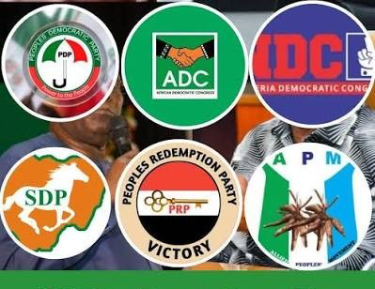
The parties participating in the initiative are the African Democratic Congress (ADC), Nigeria Democratic Congress (NDC), Peoples Redemption Party (PRP), Social Democratic Party (SDP), Peoples Democratic Party (PDP) and Allied Peoples Movement (APM).
Among the presidential hopefuls being considered are former Vice-President Atiku Abubakar of the ADC, Peter Obi of the NDC, Donald Duke of the PRP and Adewale Adebayo of the SDP.
National chairmen of the participating parties and other representatives attended the meeting.
Speaking at the event, SDP National Chairman, Prof. Sadiq Umar Abubakar Gombe, who inaugurated the committees, said the coalition was putting in place the structures required to facilitate negotiations and cooperation among the parties.
He disclosed that party leaders had been engaging presidential aspirants, adding that the candidates themselves had also commenced discussions on possible collaboration before the end of the year.
“Our ambition is to present a candidate that can defeat APC and form the next government. And we’re making very good progress,” Gombe said.
He described the feedback from the participating parties and presidential hopefuls as encouraging, expressing confidence that outstanding issues would be resolved before the 2027 general election.
Although the coalition has yet to disclose the formula for selecting its preferred candidate, Gombe said it was moving beyond political declarations to establish a structured process for achieving its objective.
“Today, we take a deliberate step from intention to structure. The work of this coalition will be judged not only by the strength of our convictions, but by the discipline, precision and unity with which we carry it out,” he said.
Legal Committee to Address Electoral and Constitutional Issues
Gombe described the legal committee as a critical component of the coalition’s efforts to establish a workable and legally sound framework for cooperation.
The committee, comprising national legal advisers of the participating parties and other senior legal representatives, is expected to review outstanding legal disputes involving the parties, examine the actions of the Independent National Electoral Commission (INEC) in relation to relevant Supreme Court judgments and advise the coalition on available legal options.
It will also scrutinise working-group documents and negotiated agreements, identify potential legal risks, recommend safeguards and establish mechanisms for resolving disputes before any coalition agreement is adopted.
Gombe warned that overlooking critical legal provisions could jeopardise the entire process.
“We cannot afford surprises. A single overlooked clause can undo months of honest negotiation,” he said, urging members to demonstrate diligence, transparency and independent judgment.
Media Committee to Coordinate Coalition’s Messaging
The media and publicity committee, comprising national publicity secretaries and spokespersons of the presidential campaign councils of the participating parties, will coordinate the coalition’s public communication strategy.
Its responsibilities include harmonising public statements, coordinating media engagements and announcements, and ensuring consistency in the coalition’s positions.
The committee is also expected to establish procedures for authorising joint statements and consult the legal committee on sensitive constitutional and legal issues.
Gombe urged members of both committees to operate within their respective mandates, coordinate their activities and submit regular reports to the coalition’s leadership.
Coalition Cites Economic Hardship, Insecurity
The SDP chairman said the coalition was responding to the need for credible political alternatives amid the country’s economic and security challenges.
He noted that insecurity, rising living costs, unemployment and declining purchasing power continued to affect Nigerians, adding that the performance of the Tinubu administration should be assessed against its record and policy outcomes.
According to him, persistent policy failures, declining public confidence, institutional weaknesses and inadequate accountability could become entrenched if the concerns of citizens were not adequately addressed.
“Any decision concerning the continuation of the present administration under President Bola Ahmed Tinubu must be assessed against its record, its policy outcomes, and its capacity to address the country’s pressing problems,” he said.
Gombe maintained that no administration was above public scrutiny, stressing that political office should be regarded as a responsibility entrusted by the electorate rather than an entitlement.
He said the opposition was committed to presenting credible alternatives, defending constitutional democracy and ensuring that political debates remained peaceful, informed and focused on the national interest.
“The strength of this coalition will not be measured by the number of parties represented here, but by our unity of purpose, discipline, credibility, and commitment to the Nigerian people,” he said.
He urged the participating parties to place national interest above personal ambitions and partisan differences, warning that the coalition’s success would depend on their ability to work together towards a common objective.
Politics
Mike Igini: Politicians Infiltrate Agencies Responsible for Election Personnel as Electoral Laws Go Unenforced
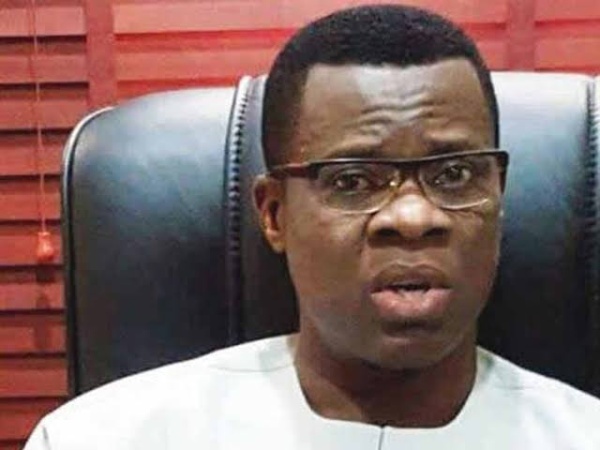
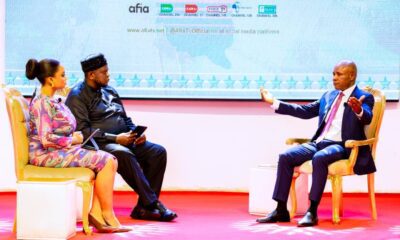
Former Independent National Electoral Commission (INEC) commissioner Mike Igini has warned that politicians are infiltrating agencies responsible for supplying election staff, raising concerns about the commission’s ability to conduct credible elections in 2027.
Speaking during an interview with ARISE NEWS on Tuesday, Igini said political interference in the recruitment process could expose INEC to problems caused by other institutions, while the failure to enforce electoral laws remained his greatest concern ahead of the next general election.
“What happened is that politicians infiltrate those agencies. They infiltrate those agencies and create liability for the INEC itself as an institution. The laws are no longer enforced. That is my greatest worry about this election.”
Igini spoke about the recruitment of ad hoc staff, the use of technology. “The most important staff that Nigeria should focus on will be the presiding officers.”
He said the presiding officers play a central role at polling units, where votes are cast and recorded. “At the polling unit, the presiding officer, at the ward, war collection officer, Nigeria can go to section 25 to see.”
Igini said INEC must pay close attention to the integrity of the people deployed to manage elections. “The state has failed to protect the vote of Nigerian people. How can you pay 26.7 billion? Yet those people cannot be held accountable?”
He also warned that Nigeria’s electoral challenges reflected wider problems with leadership and the rule of law. “The crisis of Nigeria is a leadership recruitment process.”
He said the country could not resolve its economic problems without addressing its political system, If we cannot fix the politics, we cannot fix our economy.”
Igini also expressed concern that the rule of law was giving way to the influence of individuals.
“And that today, where we are supposed to be under the rule of law, we are now under the rule of men.”
He said openness was necessary to build public confidence in the electoral process. He rejected secrecy as a response to calls for transparency.
“The call for openness and transparency can never be answered by secrecy.”
Igini also challenged the argument that political parties and candidates could not publish their own election results. “The argument that candidate political party cannot publicise their result is wholly incorrect.”
He said the polling unit remained central to the electoral process and stressed the importance of protecting the results recorded there.
“And so, at the heart of this election is the polling unit. That’s the key.”
He also warned that weaknesses in the process could allow people to announce results without proper authority. “So somebody can come and impersonate tomorrow and just announce electoral results. This story happened in 2023. We’ve not sorted it out till date.”
Igini said technology was important to the conduct of elections and warned that organisations that failed to adapt risked falling behind. “Any organisation that failed to embrace the benefit of technology will be overtaken by the chaos or decay and decline.”
He also raised concerns about attempts to intimidate journalists and citizens reporting on electoral matters, saying such actions violated their rights. “The attempt to intimidate media, houses, intimidate Niger citizens, that they cannot report, is a violation of section 39.”
Igini said the polling unit remained the key point at which voters’ choices must be protected.
“The power of the people at the polling unit is awesome.”
He also warned that public officials must be held accountable for their actions. “What I said that we need to build more prisons because many of the characters you see today in public offices, they are simply candidates for prison.”
Igini said Nigeria must protect elections as a means of ensuring the peaceful transfer of power. “We have to be very careful, because the greatest promise of democracy is periodic election for peaceful transfer of power.” (AriseNews)
-
 Features1 day ago
Kogi’s Kidnapping Crisis: Why Do Forests Remain Safe Havens for Criminals Under Ododo’s Watch?
-
News2 days ago
“It’s not debatable, we can’t go back,” Mbah Backs Tinubu on Fuel Subsidy Removal
-
News1 day ago
Kidnappers kill seven-year-old boy after ransom demand
-
News2 days ago
Mbah: Enugu Now Produces 120 Million Litres of Water Daily, Expands Agricultural Investment
-
Politics2 days ago
Mike Igini: Politicians Infiltrate Agencies Responsible for Election Personnel as Electoral Laws Go Unenforced
-
Politics9 hours ago
2027: Atiku, Obi, Duke, Others in Talks on Single Opposition Candidate – Coalition
-
News7 hours ago
Macron Postpones Planned Visit to Nigeria Until 2027
-
News6 hours ago
Enugu CP Orders Probe into Death of Izuchukwu During Police Raid