Politics
2023: APC, PDP unsure of Generals’ support

About 78 days to the 2023 presidential election, the ruling All Progressives Congress (APC), and the opposition Peoples Democratic Party (PDP) are still uncertain whom the former Military Generals are supporting for the presidency. Since 1999, the retired Generals have played a role in who becomes the Nigerian President.
In 1999, the retired General decided that former Military Head of State, Gen. Olusegun Obasanjo should become the President, even when the democratic culture was against it.

Obasanjo, on the platform of the Peoples Democratic Party, defeated Chief Olu Falae of AD/APP, the preferred candidate of the democratic culture. Since then, the retired Generals had decided, overtly or covertly, who becomes the President of the country.
In 2003, Major General Muhammadu Buhari (rtd) squared it up against then president Obasanjo in his second term. Buhari did the same against the Late Umaru Musa Yar’Adua and Goodluck Jonathan in 2007 and 2011, respectively.
In 2015, Gen Buhari recorded an upset when he defeated the incumbent Jonathan and repeated the same feat against Atiku Abubakar in 2019.

Unlike previous elections in which two major political parties dominated the poll, things have changed as the political space has widened to accommodate more parties and candidates. Eighteen political parties and their candidates are jostling to succeed Buhari.
But the race has been reduced to a four-horse race. They are: Peter Obi running on the platform of the Labour Party (LP), Bola Tinubu, All Progressives Congress (APC), Atiku of the opposition PDP and Rabiu Kwankwaso of the New Nigeria People Party (NNPP).
To this end, every presidential candidate had gone to pay homage to the retired Generals, especially Olusegun Obasanjo, Ibrahim Babangida, Theophilus Danjuma, Abdulsalam Abubakar, Abubakar Gusua and many more.
A chieftain of the APC and former Minister of Works and Housing, Chief Adeseye Ogunlewe in a previous interview said the military had always had their hands in who becomes the president of the country.
He said: “There has never been 100 per cent zoning in any election in Nigeria. In 1999 and 2003, Alex Ekwueme contested against former President Olusegun Obasanjo.
In 2011, Abubakar Atiku contested against President Jonathan. The issue of zoning doesn’t matter at all for anybody who is a serious contender… you can still contest. The party can never and the Constitution does not allow discrimination to that level. You cannot say we have zoned and only that area would bring candidates.
“It is not like that. Everybody who believed there was a decision to zone to the South West in 1999 is not correct because the original structure of G37 was led by Ekwueme and no Yoruba man was at the forefront of that struggle at that time.
Bola Ige also joined them later, but the main actors that fought against national structure, apart from NADECO, was the G37 and it was coordinated and managed by Ekwueme.
“When it came to decision-making, Ekwueme and Shagari were President and Vice-President foisted by the military. When the military wanted to give back, they would give it to people they drove away from the government? They believed it would be dangerous. That is why they decided to give it to someone, who was part of them. That was why they gave it to Obasanjo, who can protect them.
“There is an underlying decision-making process in Nigeria that is not known to all of us- everybody wants to protect himself. How do you allow someone that is perceived as your enemy to take over the government of the country and the power of the presidency is too enormous to be toyed with. Everybody is being careful.
“Probably, in the next 10 years, most of the generals who participated in the coup would have gone. Maybe, Nigeria would have been more stable. They are still very predominant in the government of Nigeria.
“They cannot excuse themselves. They cannot pretend that they don’t care. They must care. They must anticipate probable problems and that is what is playing out in Nigeria, which people are not seeing.
“But it will take time for them to exit and there will be a fresh set of people who did not participate in all the atrocities the military had committed since 1966. Until all of them leave the stage, Nigeria cannot have proper democracy because of their fear. I really appreciate all their fears.
Look at the history. They foisted some people; they removed them from power.
They gained grounds; they established, they have oil blocs and they are now wealthy to determine who is going to succeed them or who is going to be president of Nigeria and you want them to give it to somebody they don’t trust? It is difficult.”
According to a source, ahead of the 2023 polls, the retired Generals have zeroed on a candidate, and Olusegun Obasanjo is the one communicating that to Nigerians.
Chief Olusegun Obasanjo has spoken highly of the Labour Party’s presidential candidate, Peter Obi, even though all other major presidential candidates have visited the Generals.
The source claimed that the Generals were resolute on the choice of Peter Obi as Presidential candidate, a position that former President Olusegun Obasanjo is always communicating.
The source said Obasanjo represents the Generals and if you listen to and read what Obasanjo says, it indicates that the Generals have endorsed Peter Obi.
The former President had always warned the Independent National Electoral Commission (INEC) not to conduct an election that would not be generally acceptable.
The Generals’ position as communicated by Obasanjo is that the Labour Party candidate, Peter Obi stands a better chance to change the fortunes of the country.
A retired General told Sunday Telegraph that “you don’t expect all the Generals to speak on the same issue at the same time. They have taken a position and their position is being communicated by Chief Olusegun Obasanjo.
“They have met and listened to all the major presidential candidates and they Nigehave taken their decision on who to support.
“They are also a serious bloc of support for the Presidential election, especially. If you had watched well no other Presidential candidate had been mentioned by the Generals for support. The only mention of the Generals in support of the Presidential candidate is Peter Obi to the extent that there was an allegation that Lt. Gen. Theophilus Danjuma gave Obi a private jet.
Meanwhile, one-time Commandant, Training and Doctrine Command (TRADOC), Nigerian Army, Major General Ishola Williams (rtd), has said that the absence of a retired General on the ballot constiute one good thing about the 2023 general elections.
General Williams, made this known in an exclusive chat with Sunday Telegraph in response to what he makes of the development.
“This is good for Nigeria,” General Williams enthused. “It is the first time that nobody knows who will become the President of Nigeria. Secondly, the first time that there are three political parties unlike the previous years where two parties dominated others and you consider others as mushroom parties. Although the Constitution of Nigeria does not allow for an Independent candidate, it allows them an option of a third party unlike when the dominant parties are foisted on them.
He continued: “Also, one of the three candidates is younger, in age and in terms of exposure is less than the two others and is giving them a run for their money.
“Furthermore, if you read the lip and the body language of the president, he has said that everybody should vote for the party and candidate of their choice. He has indeed shown that he is for nobody and is for everybody.”



Politics
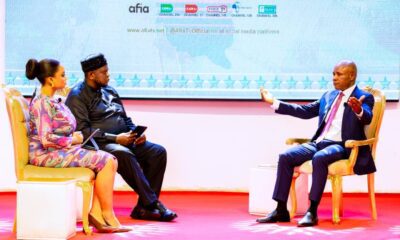
Mike Igini: Politicians Infiltrate Agencies Responsible for Election Personnel as Electoral Laws Go Unenforced
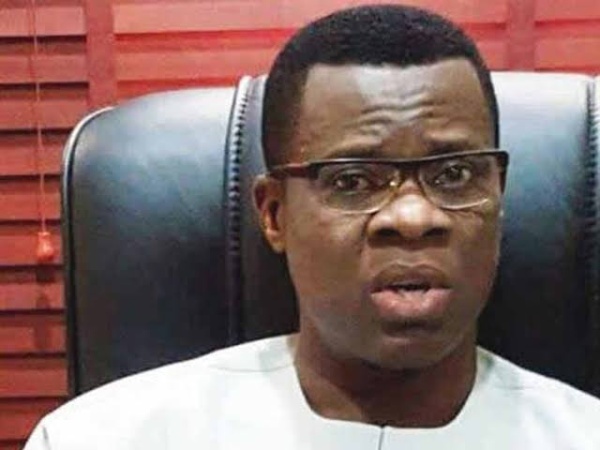
Former Independent National Electoral Commission (INEC) commissioner Mike Igini has warned that politicians are infiltrating agencies responsible for supplying election staff, raising concerns about the commission’s ability to conduct credible elections in 2027.
Speaking during an interview with ARISE NEWS on Tuesday, Igini said political interference in the recruitment process could expose INEC to problems caused by other institutions, while the failure to enforce electoral laws remained his greatest concern ahead of the next general election.
“What happened is that politicians infiltrate those agencies. They infiltrate those agencies and create liability for the INEC itself as an institution. The laws are no longer enforced. That is my greatest worry about this election.”
Igini spoke about the recruitment of ad hoc staff, the use of technology. “The most important staff that Nigeria should focus on will be the presiding officers.”
He said the presiding officers play a central role at polling units, where votes are cast and recorded. “At the polling unit, the presiding officer, at the ward, war collection officer, Nigeria can go to section 25 to see.”
Igini said INEC must pay close attention to the integrity of the people deployed to manage elections. “The state has failed to protect the vote of Nigerian people. How can you pay 26.7 billion? Yet those people cannot be held accountable?”
He also warned that Nigeria’s electoral challenges reflected wider problems with leadership and the rule of law. “The crisis of Nigeria is a leadership recruitment process.”
He said the country could not resolve its economic problems without addressing its political system, If we cannot fix the politics, we cannot fix our economy.”
Igini also expressed concern that the rule of law was giving way to the influence of individuals.
“And that today, where we are supposed to be under the rule of law, we are now under the rule of men.”
He said openness was necessary to build public confidence in the electoral process. He rejected secrecy as a response to calls for transparency.
“The call for openness and transparency can never be answered by secrecy.”
Igini also challenged the argument that political parties and candidates could not publish their own election results. “The argument that candidate political party cannot publicise their result is wholly incorrect.”
He said the polling unit remained central to the electoral process and stressed the importance of protecting the results recorded there.
“And so, at the heart of this election is the polling unit. That’s the key.”
He also warned that weaknesses in the process could allow people to announce results without proper authority. “So somebody can come and impersonate tomorrow and just announce electoral results. This story happened in 2023. We’ve not sorted it out till date.”
Igini said technology was important to the conduct of elections and warned that organisations that failed to adapt risked falling behind. “Any organisation that failed to embrace the benefit of technology will be overtaken by the chaos or decay and decline.”
He also raised concerns about attempts to intimidate journalists and citizens reporting on electoral matters, saying such actions violated their rights. “The attempt to intimidate media, houses, intimidate Niger citizens, that they cannot report, is a violation of section 39.”
Igini said the polling unit remained the key point at which voters’ choices must be protected.
“The power of the people at the polling unit is awesome.”
He also warned that public officials must be held accountable for their actions. “What I said that we need to build more prisons because many of the characters you see today in public offices, they are simply candidates for prison.”
Igini said Nigeria must protect elections as a means of ensuring the peaceful transfer of power. “We have to be very careful, because the greatest promise of democracy is periodic election for peaceful transfer of power.” (AriseNews)
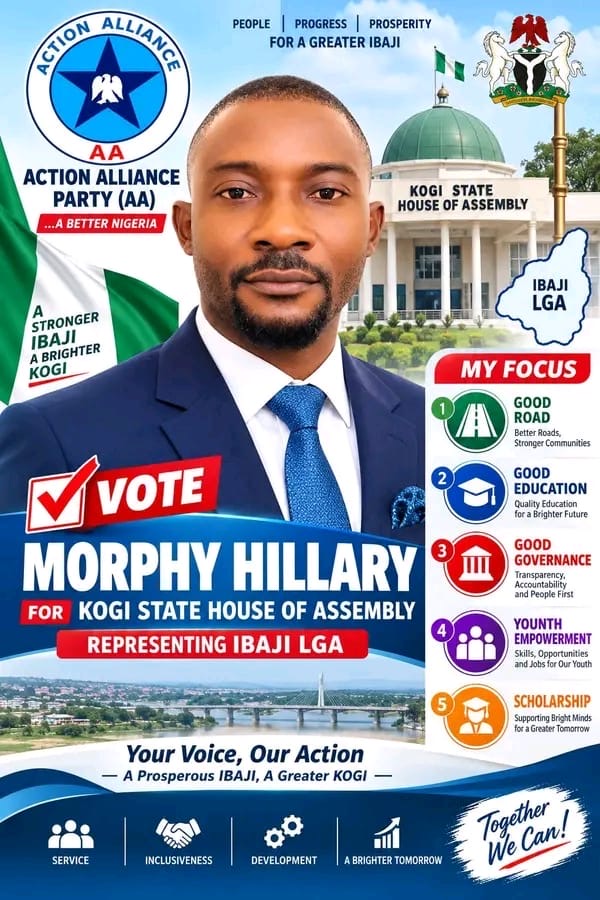
…Promises to prioritise roads, agriculture, education, electricity and peace
IYANO, Kogi State — The African Action Alliance(AA) candidate for the Kogi State House of Assembly seat representing Ibaji Local Government Area, Ugbaje Friday, has unveiled a development agenda focusing on road infrastructure, agriculture, education, electricity and peaceful coexistence among communities.
Friday, who hails from Iyano Ward in Ibaji, said his proposed legislative agenda would address critical challenges confronting residents and promote economic growth and improved public services across the local government.
Roads, Flooding and Rural Connectivity
The AA candidate identified poor road infrastructure and recurrent flooding as major obstacles to transportation, trade, education, healthcare delivery and other economic activities in Ibaji.
He said he would advocate the construction and rehabilitation of roads designed to withstand flooding and improve connectivity among communities.
According to him, better road networks would ease movement, improve access to essential services and enable farmers to transport their produce to markets more efficiently.
Agriculture and Economic Development
Highlighting agriculture as a major source of livelihood in Ibaji, Friday said he would pursue policies and legislative initiatives to strengthen the sector and support local farmers.
He noted that the area produces rice, yam and other agricultural commodities, adding that attention should also be given to processing, storage, transportation and market access to reduce post-harvest losses and improve farmers’ earnings.
He said a stronger agricultural value chain could create economic opportunities and support the growth of local enterprises.
Education and Electricity
Friday also pledged to make education a priority, promising to advocate improved school infrastructure and increased government investment in the education sector across Ibaji.
On electricity, he said he would seek government intervention to address persistent power supply challenges, noting that provision of electricity would benefit households, schools, healthcare facilities and small businesses.
He maintained that access to essential infrastructure and public services was critical to improving living standards and accelerating development in the area.
Peaceful Coexistence and Conflict Resolution
Addressing the issue of communal conflicts, the AA candidate said dialogue, reconciliation and cooperation would be central to his approach to promoting peace in Ibaji.
He pledged to work with traditional rulers, community leaders, youth groups, women’s organisations, security agencies and relevant government institutions to address the causes of disputes and encourage peaceful resolutions.
Friday stressed that sustainable development would be difficult to achieve without peace and cooperation among communities.
Constituency Projects and Legislative Priorities
The candidate said that, if elected, he would seek to facilitate constituency projects in critical sectors, including roads, education, healthcare, water supply, electricity and agriculture.
He also pledged to sponsor bills and support legislative measures aimed at addressing the needs of Ibaji residents and advancing their welfare.
He listed infrastructure development, agricultural support, education, electricity, community peace and effective constituency representation among the key areas of his proposed legislative agenda.
Calls for Credible Electoral Process
With the Kogi State local government council elections scheduled for October 17, 2026, Friday called on the Kogi State Independent Electoral Commission to ensure a transparent, credible and lawful electoral process.
He urged the electoral body to adhere to established procedures, ensure proper counting of votes and protect the integrity of the election.
The AA candidate also appealed to residents of Ibaji to support his candidacy and participate actively in the democratic process as he seeks to represent the local government in the Kogi State House of Assembly.
He said his campaign would remain focused on the interests of the people, peaceful coexistence and sustainable development.
For enquiries and further engagement:
* Email: morphyhillary@gmail.com
* Phone: 08038275895
Ugbaje Friday is the African Action Congress candidate seeking election to represent Ibaji Local Government Area in the Kogi State House of Assembly.
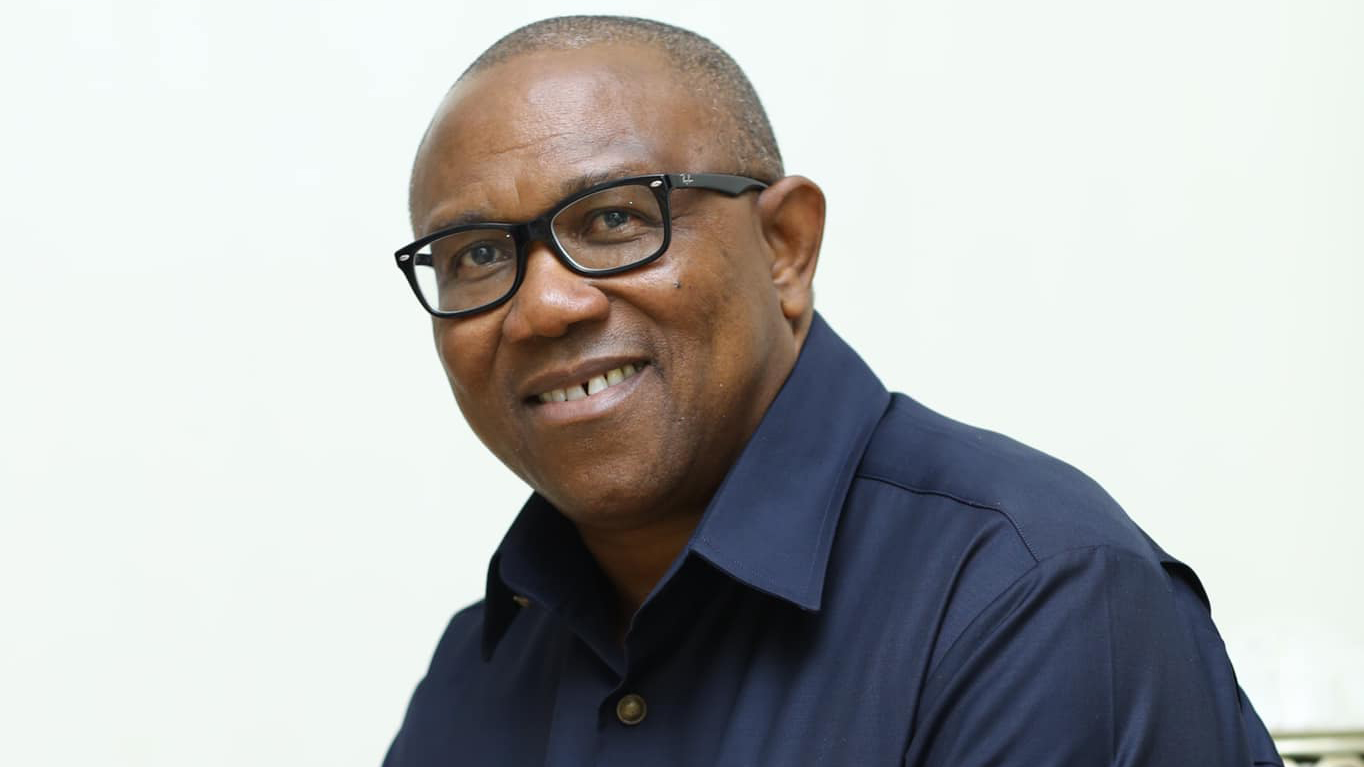
The Peter Obi Media Office has accused Vice-President Kashim Shettima of applying double standards in his treatment of opposition leaders, questioning why he would demand respect for former Vice-President Atiku Abubakar while reportedly describing Peter Obi as “diminished”.
In a statement issued on Sunday, October 18, 2026, the spokesman of the Peter Obi Media Office, Idris Zekeri Jnr., criticised Shettima’s reported remarks, describing them as contrary to the principles of political decency and mutual respect.
The office said the apparent contrast between Shettima’s call for respect for Atiku and his alleged disparagement of Obi raised questions about consistency, political tolerance and the treatment of opposition figures in Nigeria’s political space.
Zekeri argued that although Shettima had the right to disagree with Obi politically, such differences should not prevent him from extending the same courtesy he demanded for Atiku to other opposition leaders.
“Although Shettima has the right to oppose Obi, it is difficult to understand why he would demand respect for one opposition leader while casually dismissing another,” the statement said.
The media office questioned what it described as selective respect, insisting that political disagreements should not determine which opposition figures deserve dignified treatment.
According to the statement, the issue was not whether Shettima supported Atiku or opposed Obi, but whether the principle of respecting political opponents should apply equally, regardless of their regional backgrounds, political affiliations or electoral ambitions.
The office also maintained that Obi had conducted his political engagements with decorum, focusing on governance and public policy rather than personal attacks against political opponents.
It challenged Shettima to compare their respective records as former governors of Borno and Anambra states, claiming that Obi’s performance in key areas of governance surpassed that of the Vice-President.
The statement highlighted Obi’s record in fiscal discipline and investments in education and healthcare during his tenure as governor of Anambra State, arguing that his achievements should be assessed on the basis of verifiable facts.
It urged Shettima to provide evidence to counter Obi’s record if he disagreed with the former Anambra governor’s achievements, rather than resorting to personal descriptions.
“If Shettima contests any aspect of Obi’s record, he should present the facts rather than resort to political name-calling,” the statement added.
The media office further called on political leaders from the South-East, particularly members of the All Progressives Congress (APC), to reflect on the implications of the Vice-President’s reported comments.
It criticised South-East political figures who had allegedly shown disrespect towards Obi, arguing that political loyalty should not come at the expense of defending the dignity of fellow Nigerians.
The office insisted that no political affiliation should justify a situation in which respect was demanded for one opposition leader but withheld from another.
“Nigeria needs a contest based on records and ideas, not selective respect and political denigration,” the statement said.
It added that the Nigerian electorate, rather than political rhetoric or dismissive remarks by public office holders, would ultimately determine Obi’s political relevance.
-
 News3 days ago
FG confirms Ebola case in FCT, identifies 44 contacts
-
Features20 hours ago
Kogi’s Kidnapping Crisis: Why Do Forests Remain Safe Havens for Criminals Under Ododo’s Watch?
-
News2 days ago
“It’s not debatable, we can’t go back,” Mbah Backs Tinubu on Fuel Subsidy Removal
-
News3 days ago
Afenifere leader, Fasoranti, dies at 100
-
News2 days ago
Mbah: Enugu Now Produces 120 Million Litres of Water Daily, Expands Agricultural Investment
-
News20 hours ago
Kidnappers kill seven-year-old boy after ransom demand
-
News3 days ago
APC Campaign Council Denies Plot to Assassinate Atiku, Says Security Intact
-
Politics2 days ago
Mike Igini: Politicians Infiltrate Agencies Responsible for Election Personnel as Electoral Laws Go Unenforced