Politics
Enugu Guber 2023: My exit from PDP to contest under Labour Party not act of desperation

The Labour Party governorship candidate for Enugu State, Hon. Chijioke Edeoga, says he left the People’s Democratic Party, PDP not out of desperation but to answer the call by the people of the state to serve.
He was reacting to allegations that he reneged on the peace pact and accord he signed with 17 other governorship aspirants of the PDP ahead of the guber primary to support whoever emerged victorious in the primary election.

Edeoga, who served as two-term commissioner under the administration of Governor Ifeanyi Ugwuanyi before venturing into the 2023 guber race, declared that he had no apology for ditching the ruling party to contest on the Labour Party platform.
“We are in a precarious and challenging time in Enugu State and Nigeria. The crisis of this time does not allow for any kind of hesitation because the fortunes of our children are clearly in doubt. The fact of the mis-governance now and in the past years has become obvious and the consequences have combined to the extent that all men of goodwill must act. So, it is not desperation of ambition. It is a call; it is a response to the urgent demands of these times.
“There is a domestic crisis; absolute lack of employment opportunities for the youths of Enugu State and Nigeria in general; no prospect of employment; not one single sustainable employment outfit has been created in Enugu State in the past seven years. The anger of our youths is boiling over.

“There is insecurity everywhere and even our farmers cannot go to the farms again. The villages are occupied by terrorists; 14 villages in my home town in Mgbuji are presently occupied by terrorists with beautiful names.
‘They kill, they rape and they maim and people keep asking questions about what we are doing. Things that the government should do in the daily cost of living are not done and there is no doubt that people who mean well, who see service as what it ought to be must rise to the demands of these times. The times are precarious.
“My desire is a response to the multifarious cries that I have heard and these cries were there when I was running in the PDP,” Edeoga told newsmen in Enugu on Tuesday.
On the allegation that he dumped the PDP for LP out of desperation and disobedience to the decision of the party leaders and stakeholders on consensus, Edeoga said:
“When you say I’m not being a man of my own words and you talk about an MoU that you have not seen you are being judgmental. You have not read that MoU. The MoU speaks specifically about not going to court. Its intentions were that the outcome of that primary should not be challenged in court and that we should conduct ourselves in a democratic manner. So, nowhere in the MoU did it intend to circumscribe anyone’s democratic rights to aspire.
“The MoU was a matter that was agreed by some aspirants in the PDP family and it was within a contest in the firm belief that the primary itself will be conducted according to democratic norms and its outcome will be acceptable to the majority of Enugu State people.
“If the outcome of that primary, which the PDP, which was before then the dominant party in Enugu State conducted was acceptable to everybody, the loud and ominous silence that greeted its outcome wouldn’t have happened.
“The popularity that Labour Party has garnered and continued to gain, especially since I became a candidate wouldn’t have been strong. It won’t be strong if the outcome of PDP primary was in consonance with the wishes of the majority of Enugu State people because, ideally, delegates should carry out the express wishes of the people they represent.
“Those delegates of the PDP should represent the dominant opinion of Enugu people which means that if another party had come, it would have been received with lukewarm support, but that is not the case in Enugu State.
“My entry into the Labour Party in addition to Peter Obi’s previous entry has galvanized Enugu State in such a manner that has never been before. So, it shows you that there is a dissonance, that there is disconnect between the outcome of that primary and people of Enugu State.”
Giving further reasons why the PDP at the national level could no longer enjoy the support of the electorate in the state and the south east, Efeoga said: “I said sometime that as at the time we did our primary, the PDP at the national level had not conducted its primary for the presidential election and the president and vice presidential candidates had not emerged. For the first time in several years, the legitimate expectations of the Southeast that the PDP will be a platform where they can realize their aspiration was dashed by the choice of another Northerner to replace an outgoing Northerner; the clear marginalization of the Southeast in the choice of the vce president. It is one of the things that made me make up my mind against the PDP in addition to other things. I decided not to continue after I left the PDP, but I don’t own myself.
“There are other people following me whose insistence was that I should adopt a platform and that any platform I adopted, they will follow me so that the battle to save Enugu State can begin. There is no desperation and there is no human being in the world that cannot change his mind. It is only a stone that does not change its mind and it will be cast to the sea when the need arises; it is only a tree that does not move in case of emergency and the tree will bend. So, I have no apology for stepping out again on another platform.
“I have done nothing that is abhorrent; I have done nothing that is abnormal. I have done the right thing. The fight that I have received from the PDP shows me that I have done the right thing, that I am hitting the right ball and we are resolved, we are determined to go. Changing one’s mind is not a sin and I will change again if occasion demands for the good reason and the right direction. “



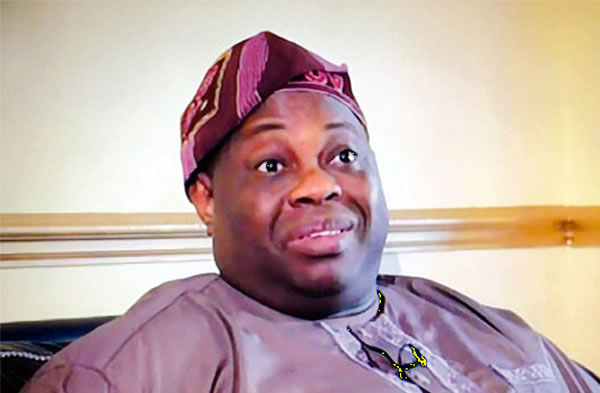
A chieftain of the African Democratic Congress, Dele Momodu, has said Peter Obi could defeat President Bola Tinubu in the South-East and parts of the South-South in the 2027 presidential election.
Momodu said Obi, the Nigeria Democratic Congress’s presidential candidate in the 2027 election, remained popular in the two regions and could pose a major challenge to Tinubu’s re-election bid.
He stated this during an interview on Arise Television on Wednesday, while discussing the opposition’s chances in the 2027 general election.
“I can tell you something. Soludo is the same. I can bet my life on it that Peter Obi will humiliate and disgrace Soludo in Anambra state. I have no question about that,” Momodu said.
He described Obi as a “rock star” in the South-East and South-South, arguing that his popularity could affect Tinubu’s electoral prospects in the regions.
“Peter Obi is a rock star. Where he comes from, especially in the South-East and the South-South,” he said.
Momodu, however, declared his support for former Vice-President Atiku Abubakar, who is also seeking to challenge Tinubu in 2027 under the ADC.
He said he would welcome calls for opposition leaders to unite, noting that their ability to work together could influence the outcome of the election.
“I’m supporting Atiku, but I will be very happy when people say, ‘Oh, if you people don’t come together, you are going to lose election,’” he said.
According to Momodu, Tinubu would face a difficult task if Obi retained his influence in the South-East and South-South, as the President would need substantial support across the southern part of the country while also competing in the North.
“The scenario is different this time. Peter Obi will humiliate Tinubu and all his supporters in the South-East and some parts of the South-South. And that’s dangerous for Tinubu,” he said.
He added that Tinubu would need to secure the three southern regions to strengthen his chances of victory, while also seeking support in the North.
“For Tinubu to win, he needs to lock down all the three regions in the South, and he now has to go and struggle in the North, where, number one, he was supported last time by President Muhammadu Buhari,” Momodu said.
Tinubu won the 2023 presidential election, while Obi finished third behind Atiku, who contested on the platform of the Peoples Democratic Party.
Obi secured significant support in the South-East and parts of the South-South during the 2023 election, while Tinubu’s victory was supported by votes from several parts of the country.
The 2027 presidential election is expected to feature renewed competition among major political parties, with opposition figures facing calls to build a common platform to challenge the ruling All Progressives Congress.
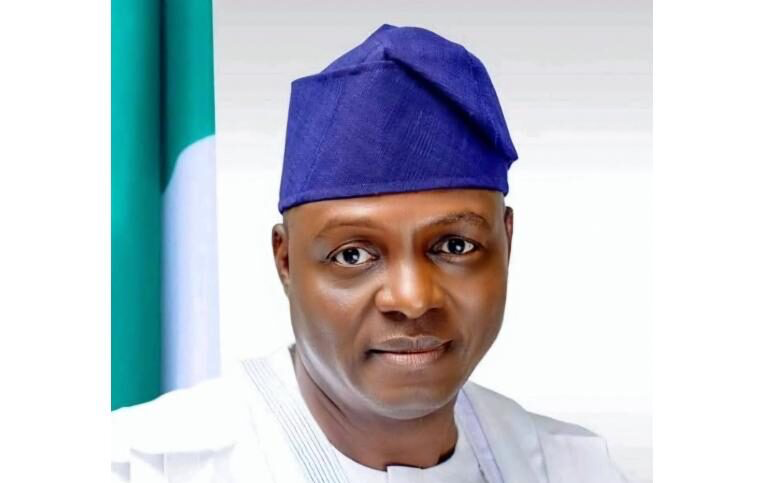
The National Chairman of the All Progressives Congress (APC), Professor Nentawe Goshwe Yilwatda, has charged members of the party’s Presidential Campaign Council to unite national and grassroots structures, communicate the achievements of President Bola Ahmed Tinubu’s administration and mobilise Nigerians for his re-election in 2027.
Speaking at the inauguration of the APC Presidential Campaign Council, Professor Yilwatda described the assignment as a collective responsibility requiring effective coordination, discipline, strategic communication and sustained engagement with Nigerians.
In a statement signed by his Special Adviser on Media and Information Strategy, Abimbola Tooki, he said the party’s campaign must be anchored on the administration’s record, an honest acknowledgement of prevailing challenges and a credible vision for the country’s future.
According to him, the administration’s economic reforms and investments in roads, power, gas, railways, ports, agriculture and digital connectivity must be clearly communicated to Nigerians, with emphasis on their impact on productivity, employment, commerce and national development.
“Our responsibility is to explain what has been achieved, what is progressing and what remains to be done. We must demonstrate how these reforms and investments will translate into practical improvements in the lives of Nigerians,” he said.
The APC National Chairman emphasised that the success of the campaign would depend on the effective collaboration of national leaders, governors, legislators, state chapters, local government structures and ward members to ensure that the party’s message reaches every community.
He also underscored the importance of women, youths and persons with disabilities, calling for their meaningful participation and leadership in the campaign process.
“Our women are indispensable to party organisation and community mobilisation. Our youths must be engaged as partners in shaping Nigeria’s future, while persons with disabilities must enjoy full, accessible and inclusive participation in our democratic process,” he stated.
Professor Yilwatda urged party members to approach the assignment with confidence, while warning against complacency.
“Confidence is not complacency. It is the determination to prepare thoroughly, work together and earn the trust of the people,” he said.
He noted that the APC would seek Nigerians’ support for President Tinubu’s re-election in 2027 by presenting evidence of progress, explaining the administration’s policies and outlining the work that remains to be done.
He stressed that the campaign must directly address citizens’ concerns about the cost of living, security, employment, education, healthcare, agricultural productivity and economic opportunities.
The National Chairman also called for issue-based and peaceful political engagement, recognising the legitimate role of the opposition in a democratic society.
“The APC will present its case with confidence, defend its record with facts and trust Nigerians to make their choice through a credible democratic process,” he said.
Professor Yilwatda reaffirmed the commitment of the APC National Working Committee to working closely with the Presidential Campaign Council and all party structures to achieve their shared objectives.
He charged members to remain united and focused, declaring that the party had a vision to communicate, a future to build and the confidence of Nigerians to earn.
“One mission, one responsibility: to work together, communicate effectively and earn the mandate of Nigerians for President Bola Ahmed Tinubu in 2027.”
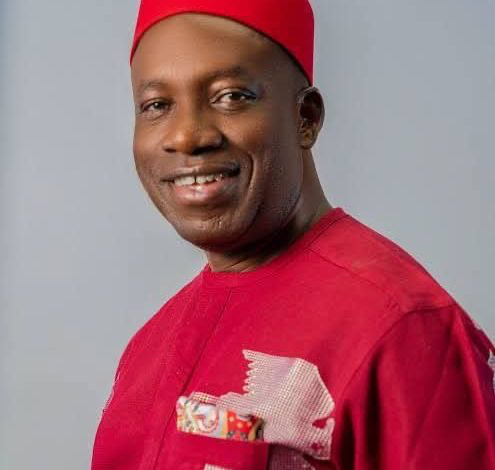
Anambra State Governor, Prof. Chukwuma Soludo, has been appointed a member of the All Progressives Congress (APC) 2027 Presidential Campaign Council list released last night.
This is despite the fact that he is the National Leader of the opposition All Progressives Grand Alliance (APGA).
Similarly, Federal Capital Territory (FCT) Minister Nyesom Wike, the National Leader of the opposition Peoples Democratic Party (PDP) and Osun State Governor, Senator Ademola Adeleke of the opposition Accord Party (AP), are on the expanded and all-inclusive team headed by President Bola Ahmed Tinubu.
Other members include Presidential Adviser on Policy and Coordination, Hadiza Bala Usman, former Ogun State Governor Ibikunle Amosun, former Lagos State Governor Akinwunmi Ambode, Aviation Minister Festus Keyamo, and former House of Representatives member Patrick Obahiagbon.
Also named as members are former Osun APC governorship candidate Bola Oyebamiji, former National Legal Advisers Dr. Muiz Banire and Babatunde Ogala, Chief Ayiri Emami, Victor Giadom, Magnus Abe, and former Ogun State Governor Gbenga Daniel.
The list, according to a report by The Nation, reflects inter-party cooperation and harmony based on the shared vision of propelling the country to the horizon of progress.
The report quoted a statement by APC National Secretary, Senator Ajibola Basiru, as saying that the campaign council will be inaugurated tomorrow in Abuja.
-
 News1 day ago
2027: Why I wont attend every campaign rally – Tinubu
-
Features1 day ago
Aguleri/Umuoba Anam Crisis: The Bloody Battle Between Close Neighbours
-
News1 day ago
EFCC probes Atiku over alleged corruption committed as Vice President
-
News6 hours ago
How Senator Mandiya died after bathroom fall in Abuja Home – Ningi
-
News1 day ago
‘Anyone who attempts suicide and fails will go to jail,’ says Akpabio
-
News3 days ago
Mbah orders impartial Police Probe into Enugu political violence, vows accountability
-
News4 hours ago
Senate fumes over death of NYSC Corps member at Enugu Camp, orders probe
-
Features3 days ago
Enugu Political Flashpoint: Mbah orders Impartial Probe as NDC Incidents Trigger Controversy