Business
Petrol will cost ₦462/litre without subsidy, says NNPCL
…Daily consumption hits 68m/ltr
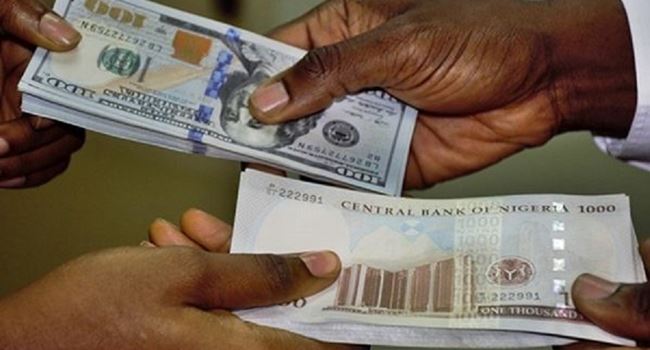
Without Federal Government’s subsidy on premium motor spirit (petrol), consumers would be paying N462 per litre, the Nigerian National Petroleum Company Limited, NNPCL, has disclosed.
Mr. Garba Deen Muhammad, Group General Manager, Group Public Affairs Division, NNPC LTD, in a statement at the weekend, explained that presently the government was paying N297 per litre for the 68 million litres of petrol consumed daily.
Despite questions being raised about the volume of petrol consumed in the country, NNPCL has insisted that between January and August 2022, the total volume of Premium Motor Spirit (PMS) imported into the country was 16.46 billion litres, which translates to an average supply of 68 million litres per day.
It also disclosed that import in the year 2021 was 22.35 billion litres, which translated to an average supply of 61 million litres per day.
Mr. Muhammad stated: “The NNPC Ltd notes the average daily evacuation (Depot truck out) from January to August 2022 stands at 67million litres per day as reported by the Nigerian Midstream and Downstream Petroleum Regulatory Authority, NMDPRA. Daily Evacuation (Depot loadouts) records of the NMDPRA do carry daily oscillation ranging from as low as 4 million litres to as high as 100 million litres per day”.

The company pointed out that “rising crude oil prices and PMS supply costs above PPPRA (now NMDPRA) cap had forced oil marketing companies’ (OMCs) withdrawal from PMS import since the fourth quarter of 2017.
“In the light of these challenges, NNPC has remained the supplier of last resort and continues to transparently report the monthly PMS cost under-recoveries to the relevant authorities.
“NNPC limited also notes the average Q2, 2022 international market determined landing cost was US$1,283/MT and the approved marketing and distribution cost of A46/litre. The combination of these cost elements translates to retail pump price of N462/litre and an average subsidy of N297/litre and an annual estimate of N6.5 trillion
on the assumption of 60 million litres daily PMS supply. This will continuously be adjusted by market and demand realities.
“NNPC Ltd shall continue to ensure compliance with existing governance framework that requires participation of relevant government agencies in all PMS discharge operations, including Nigerian Ports Authority, Nigerian Midstream and Downstream Petroleum Regulatory Authority, Nigerian Navy, Nigeria Customs Service, NIMASA and all others”.
NNPCL noted that it “recognizes the impact of maritime and cross border smuggling of PMS on the overall supply framework. NNPC also acknowledges the possibilities of other criminal activities in the PMS supply and distribution value chain.
“As a responsible business entity, NNPC will continue to engage and work with relevant agencies of the Government to curtail smuggling of PMS and contain any other criminal activities”.
NNPCL had two weeks ago deducted N448.78 billion from Federation Account revenue in August for petrol subsidy. The amount was exclusive of the N482.57 billion incurred in the month of July for petrol subsidy.
NNPCL in a presentation to the Federation Accounts Allocation Committee, FAAC, meeting for the month of August also stated that outstanding charge N1.044 trillion has been carried forward.
The July figure brought to N2.212 trillion the amount so far charged to the Federation Account for petrol subsidy in 2022. The total amount charged for last year was N1.573 trillion.

Business
Nova Bank Appoints Jude Anele as Managing Director/CEO
…Meets CBN Capital Requirements, to Open Eight New Branches in 2026.
NOVA Bank Limited has announced the appointment of Jude Anele as its Managing Director and Chief Executive Officer, following the approval of the Central Bank of Nigeria.
The appointment comes at a pivotal moment in the Bank’s evolution, following its transition from merchant banking to commercial banking and the successful completion of its recapitalisation programme ahead of the March 31, 2026, regulatory deadline.
Anele brings more than 33 years of banking experience across West and Central Africa, with deep expertise in retail /commercial banking, corporate banking, risk management, institutional transformation and executive leadership. Over the course of his career, he has led complex banking operations, strengthened governance frameworks, delivered sustainable revenue growth and built high-performance teams.
The appointment reflects the Board’s strategic commitment to consolidating NOVA Bank’s commercial banking platform while accelerating growth across its Corporate, Commercial and Retail segments, as well as priority markets.
Speaking on his appointment, Anele said he was honoured to assume leadership of the Bank at a defining stage of its growth.
“Nova Bank has built a strong institutional foundation defined by regulatory compliance, capital strength, disciplined governance and a clear commercial mandate. Our focus now is execution — deepening customer relationships, expanding responsibly across priority markets, strengthening risk discipline and delivering sustainable value to our shareholders,” he said.

The Bank’s Chairman, Phillips Oduoza, also expressed confidence in the new leadership.
“The Board is pleased to welcome Mr. Jude Anele as Managing Director and Chief Executive Officer. His depth of experience, strategic clarity and proven leadership record align strongly with NOVA Bank’s growth ambitions,” Oduoza said. He added that with recapitalization completed ahead of the regulatory timeline, the Bank is entering a new phase defined by scale, stability and structured expansion.
NOVA Bank also confirmed that it has met the recapitalization requirements set by the Central Bank of Nigeria ahead of the regulatory deadline, reinforcing its capital adequacy and long-term financial stability. The capital raise, supported by new and existing shareholders, further strengthens the Bank’s balance sheet and positions it for disciplined growth.
In 2025, Global Credit Rating reaffirmed NOVA Commercial Bank’s national scale long- and short-term issuer ratings of BBB(NG) and A3(NG) respectively, while Agusto & Co. reaffirmed the Bank’s “Bbb” rating with a stable outlook, reflecting its strong capital base, sound liquidity position and resilient asset quality relative to its risk profile.
NOVA Bank currently maintains operations in Lagos, Abuja, Owerri and Port Harcourt, with plans to open eight additional branches across key commercial hubs in 2026 as part of its expansion strategy.
The commissioning of the Bank’s regional office in Owerri marked a significant milestone in its South-East and South-South growth strategy. The event attracted government officials’business leaders and Nigerians in diaspora and underscored NOVA Bank’s commitment to supporting enterprise development and economic growth.
NOVA Bank Limited is a commercial bank licensed and regulated by the Central Bank of Nigeria. Commencing operations in 2018 as a merchant bank, the institution transitioned to a commercial bank in 2024 and provides retail, SME, corporate and commercial banking services through its Phygital model—an integrated approach combining physical branch presence with digital banking infrastructure.

Business
Dangote reduces fuel price by N100 as global crude slumps
The Dangote Refinery on Tuesday reduced its petrol gantry price by N100, from N1,175 to N1,075 per litre.
The move followed a slump in global oil prices, with Brent crude dropping to $89 per barrel from over $100 on Monday.
Officials of the refinery confirmed the development to newsmen, adding that diesel prices have also been reduced.
They stated that petrol supplied via coastal distribution channels will now sell for N1,050 per litre, reflecting a slight differential for marine logistics.
Similarly, diesel is now N1,430 per litre at the gantry, representing a N190 reduction from the earlier price of N1,620 per litre.
According to oilprice.com, Brent crude prices witnessed a dramatic reversal on Tuesday, plunging nearly 27 per cent from the previous day’s high of $119 per barrel to as low as $87 per barrel.

The Dangote Refinery reportedly blamed global crude volatility for the repeated price hikes, citing tensions arising from the US-Iran conflict.

Business
BREAKING: Soludo shuts Onitsha market for one week over prolonged sit-at-home
Anambra State Governor, Professor Chukwuma Soludo, has ordered the closure of the Onitsha Main Market for one week following traders’ failure to comply with the state government’s directive to disregard the Monday sit-at-home order.
The governor gave the directive on Monday during an on-site visit to the market, along with some of his aides and other government officials.
Soludo warned that the closure could be extended if traders fail to comply with the directive, adding that security agencies have sealed the market to enforce the order.

Anambra state governor, Chukwuma Soludo
The governor described the development as the latest—and perhaps most drastic—salvo in a protracted struggle over control of economic life in the South-East on Monday.
Soludo said that despite repeated assurances of enhanced security and appeals to reclaim public spaces, many traders at the iconic market once again chose to keep their stalls locked.

According to him, their absence amounted to a quiet rebellion that nonetheless spoke volumes about the lingering climate of fear.
Soludo said, “The government cannot stand by while a few individuals willfully undermine public safety and disregard official directives meant to restore normalcy. This is plain economic sabotage.
“We are not going to allow this. The closure is a protective measure for law-abiding citizens.”
He, however, issued a stern warning that if the market fails to reopen after the one-week shutdown, it will be sealed for one month.
Related News
Monday sit-at-home peaceful civil protest, not a crime, IPOB tells Soludo
Nigeria in safe hands under Tinubu, says Ekwunife
Anambra to deduct workers’ salaries over IPOB sit-at-home
“You either decide that you are going to trade here or you go elsewhere. I am very serious about this,” the governor added.
The scene at the market on Monday was marked by tense enforcement, as a joint task force comprising police, army, and other security agencies was seen securing the perimeter.
As the gates remain locked this week, the standoff in Onitsha highlights the broader struggle to abolish the Monday sit-at-home.
When the market is scheduled to reopen next Monday, attention will be on the traders—whether they will return to their stalls following the state’s show of force, or whether empty aisles will deliver a different verdict.
The outcome may determine not just the fate of the market, but the rhythm of economic life in Anambra State on Mondays.
The state government had earlier directed traders and businesses to continue normal activities on Mondays as part of efforts to restore economic stability and end disruptions caused by recurring sit-at-home observances.
Meanwhile, PUNCH Online had reported on Saturday that the state government would begin pro-rata salary payments for workers across the state as part of efforts to end the Monday sit-at-home.
The state Commissioner for Information, Law Mefor, disclosed this to journalists in Awka, noting that effective February 2026, civil servants’ salaries would be paid according to attendance on Mondays.
Mefor said the decision was reached during the end-of-tenure retreat of the Anambra State Executive Council held in Awka, which reviewed the administration’s activities over its concluding four-year tenure and outlined priorities for the new term beginning on March 17, 2026.
According to government sources, the shutdown will initially last one week. However, authorities warned that if the market fails to fully reopen by next Monday, the closure will be extended to one month, a move that could have far-reaching economic consequences for traders and supply chains across the South-East and beyond.
“This is no longer about fear or compliance under duress. It is about restoring law, order, and economic sanity,” a senior government official said.
Onitsha Main Market serves as a commercial nerve centre for millions of traders and consumers nationwide.
The state government insists that continued observance of sit-at-home undermines public safety efforts, emboldens criminal elements, and projects Anambra as unsafe for business and investment.
The government also issued a stern warning to market unions, transport operators, and individuals suspected of enforcing or promoting the sit-at-home order, stating that anyone found aiding or abetting the practice would face legal and regulatory sanctions.
Security agencies have reportedly been placed on alert to ensure compliance and protect traders willing to open their shops.
While some traders welcomed the government’s firm stance, describing it as long overdue, others expressed fear and uncertainty, citing security concerns and past incidents of violence linked to defiance of sit-at-home orders.
The Anambra State Government, however, reassured residents that adequate security measures are being put in place to protect lives and property, urging traders to cooperate in the interest of collective economic survival.
As the countdown to next Monday begins, all eyes are now on Onitsha Main Market—where the decision to reopen or remain shut could shape the economic direction of Anambra State in the weeks ahead.

-
News1 day agoJAMB: Gunmen abduct UTME candidates, others
-
News23 hours agoBillionaire trader Habby Forex hospitalized in Canada, undergoes surgery
-
News3 days agoConvention: Mark-led ADC expels Bala, Abejide, eight others
-
News2 days agoCybersecurity breach hits CAC as Nigerian Agency confirms unauthorised access to system
-
News6 hours agoJAMB to release Thursday’s UTME 2026 results today
-
News2 days ago2027: Tinubu will lose before 10am on election day – Ex-ADC spokesperson
-
Politics2 days agoAtiku says 2027 presidential election will be his last outing
-
News2 days agoAkanu Ibiam Airport gets first international certification